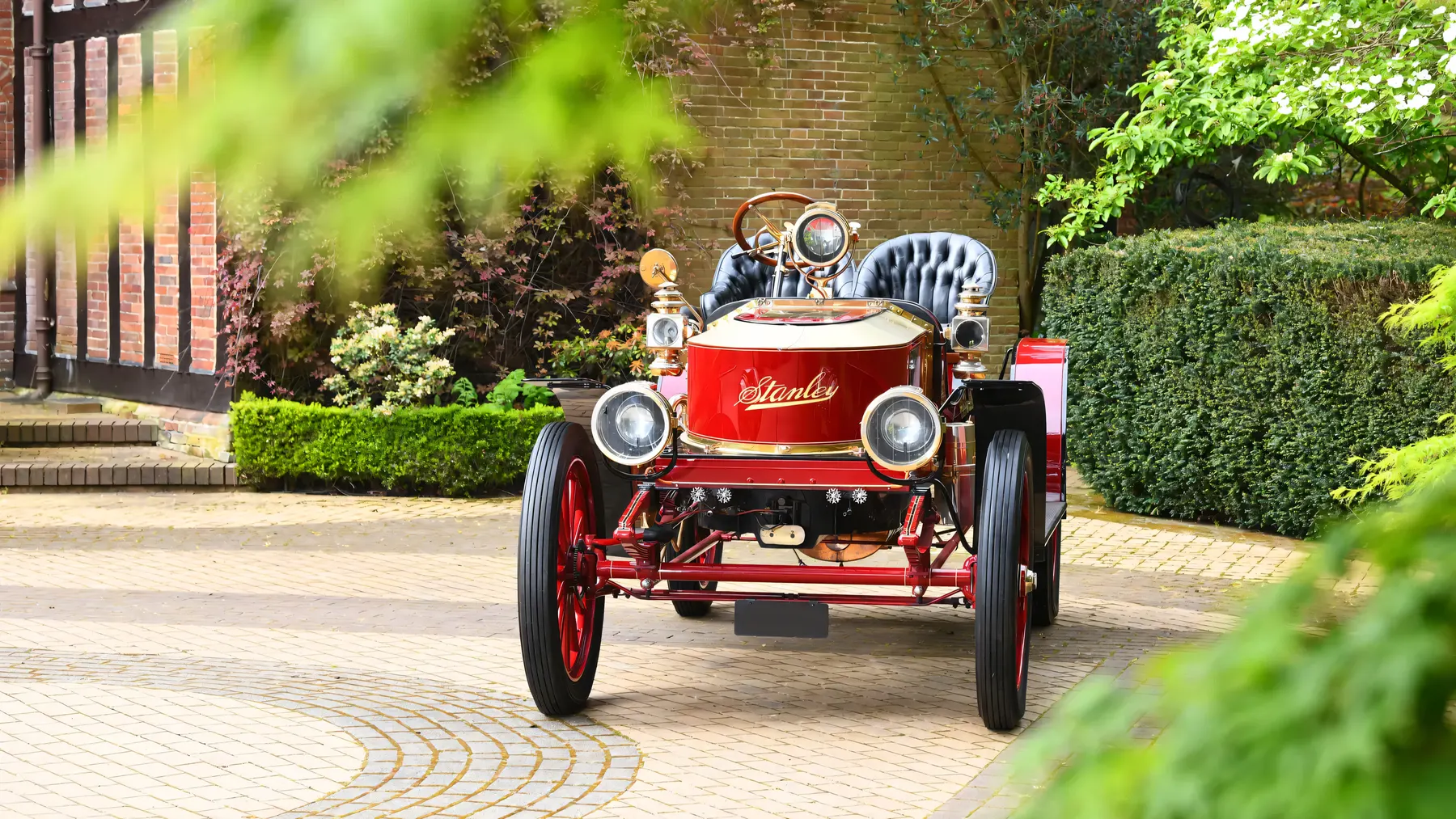
1908 Stanley Model K Semi-Racer
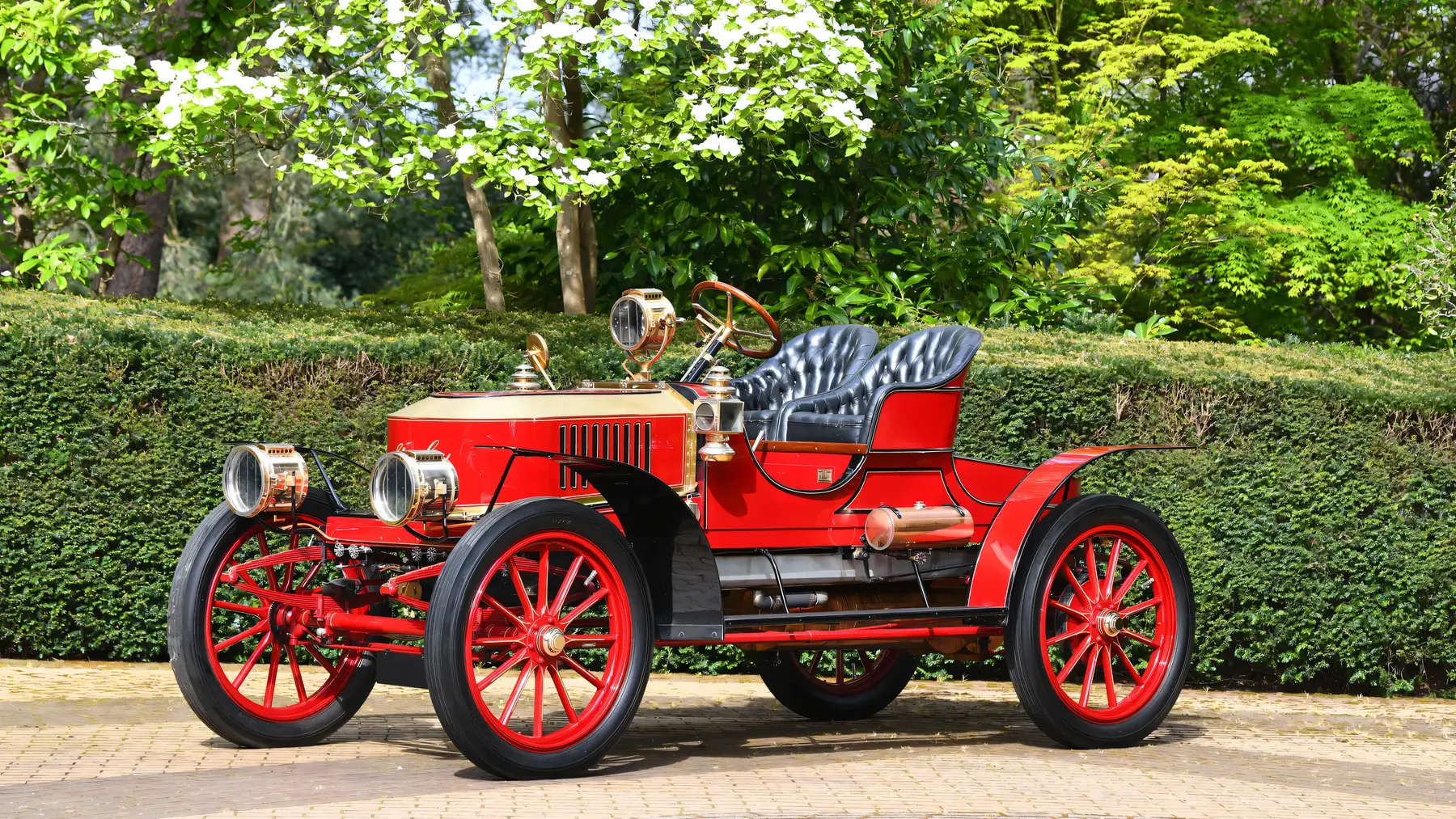
Twenty-six. That’s the entire production run of the Stanley Model K Semi-Racer - a number so small it barely registers as a footnote in conventional automotive history, yet every one of those cars represented something genuinely audacious: a factory-built muscle car, decades before the term existed, powered by steam.
To understand why the Model K matters, you have to understand the Stanley brothers themselves. Francis and Freelan Stanley weren’t tinkerers dabbling in self-propelled curiosities. By the 1890s, they were already confirmed sportsmen, deeply embedded in horse and harness racing culture. Speed wasn’t an abstract aspiration for them - it was a competitive instinct. When they turned to building steam-powered automobiles at the turn of the century, that instinct followed them into the workshop. Racing wasn’t a marketing department’s idea at Stanley; it was personal.
That competitive drive reached its spectacular apex at Ormond Beach, Florida, in January 1906. The Stanleys had built a purpose-designed streamlined racer - a low-slung, cigar-shaped machine that looked more like a torpedo than an automobile - and drove it to a land speed record of 127.66 mph. For context, this was a world record set by a steam car, in an era when internal combustion engines were still sorting themselves out. The power plant responsible was a formidable unit: a twin-cylinder engine paired with a 30-inch diameter boiler. For 1906, this was the strongest machinery Stanley had ever built, and it had just made history.
The Model K was born directly from that triumph. Stanley had already offered a sporting variant for 1906 - the 20-horsepower Model H Gentleman’s Speedy Roadster - but for 1907 they went further. They took the record-breaking engine and installed it, fitted now with a somewhat smaller boiler, into a lightweight three-passenger roadster body. The catalog called it a “semi-racer,” which was both honest and understated. This was essentially a detuned pre-war racing car made road-legal and commercially available. The Model K remained in production through 1910, and when the run ended, just 26 examples had been built.
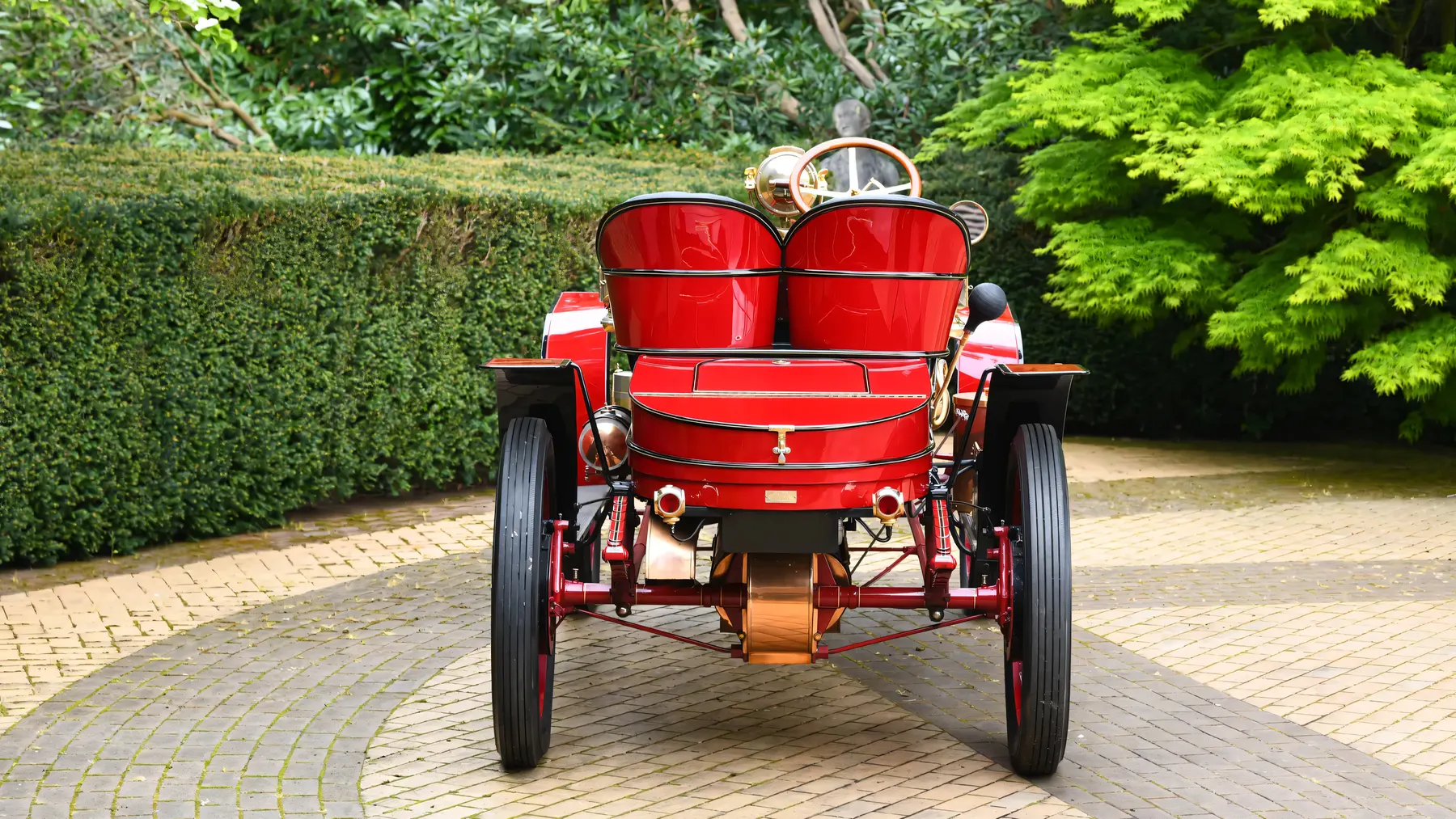
The engineering at the heart of the Model K deserves serious attention, because steam propulsion in this era operated on principles that most modern enthusiasts find genuinely surprising. A Stanley steam car produces its torque instantly and in full measure from standstill - there’s no gearbox, no clutch, no rev-building drama. The twin-cylinder engine drives the rear axle directly, and the power delivery is smooth, linear, and relentless in a way that early internal combustion engines simply couldn’t match. The 30-horsepower rating, by the standards of 1907, was substantial. Combined with the car’s light construction - wood-framed bodywork, following the period’s standard practice - the power-to-weight ratio placed the Model K in an entirely different performance category from most of its contemporaries.
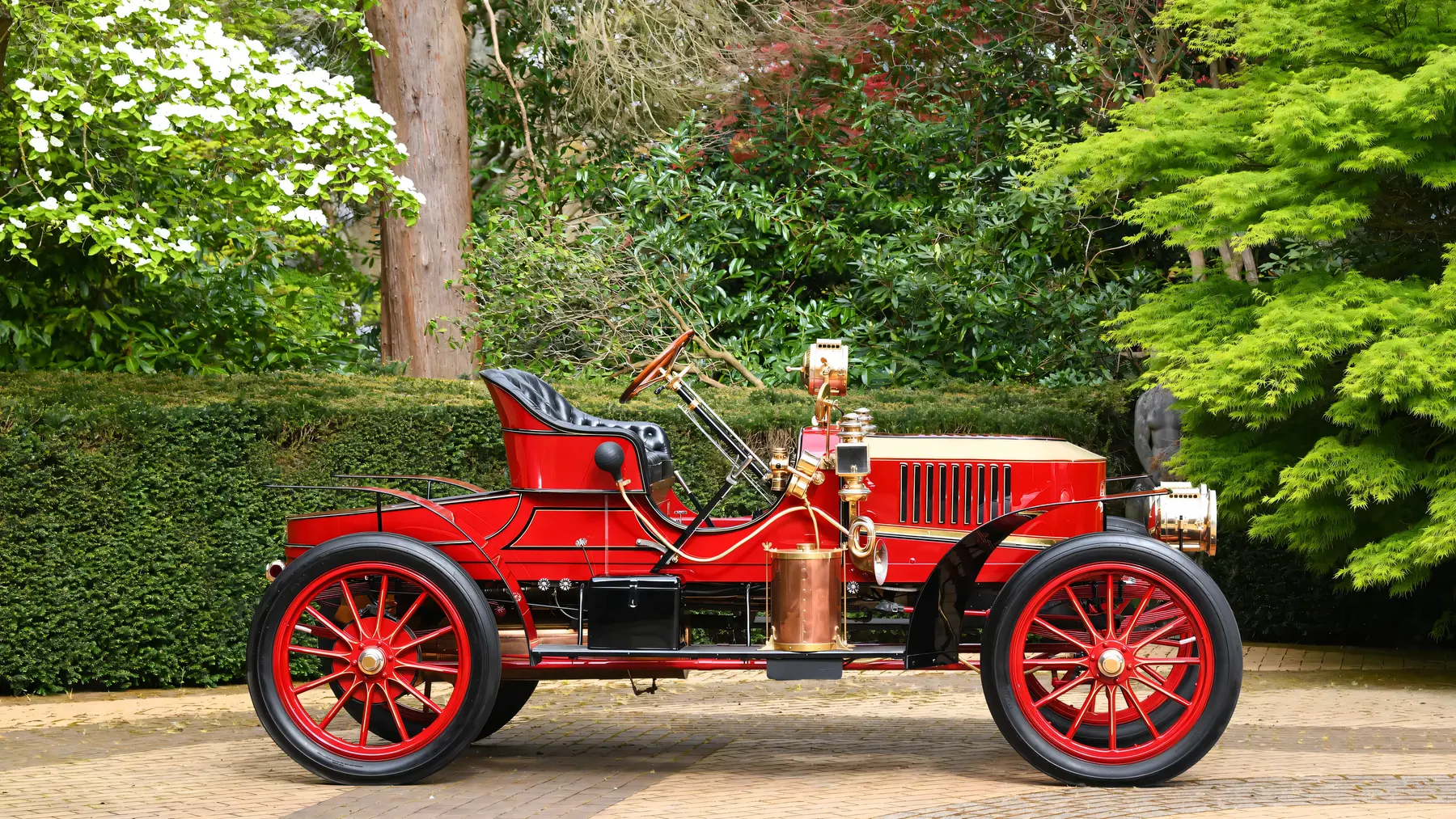
The boiler, of course, is the critical component and the one that demands the most respect from its operator. The Stanley system was non-condensing, meaning exhaust steam was simply released into the atmosphere rather than recovered and recycled. This produces the characteristic trailing plume that makes a Stanley at speed such a theatrical sight, as though the car is generating its own weather. It also means the water supply requires regular attention on longer runs, but this is part of the ownership ritual that Stanley enthusiasts have always embraced rather than resented. The driver’s workplace includes pressure gauges alongside the speedometer and clock - instruments that demand a level of engagement with the mechanical process that modern driving simply doesn’t offer.
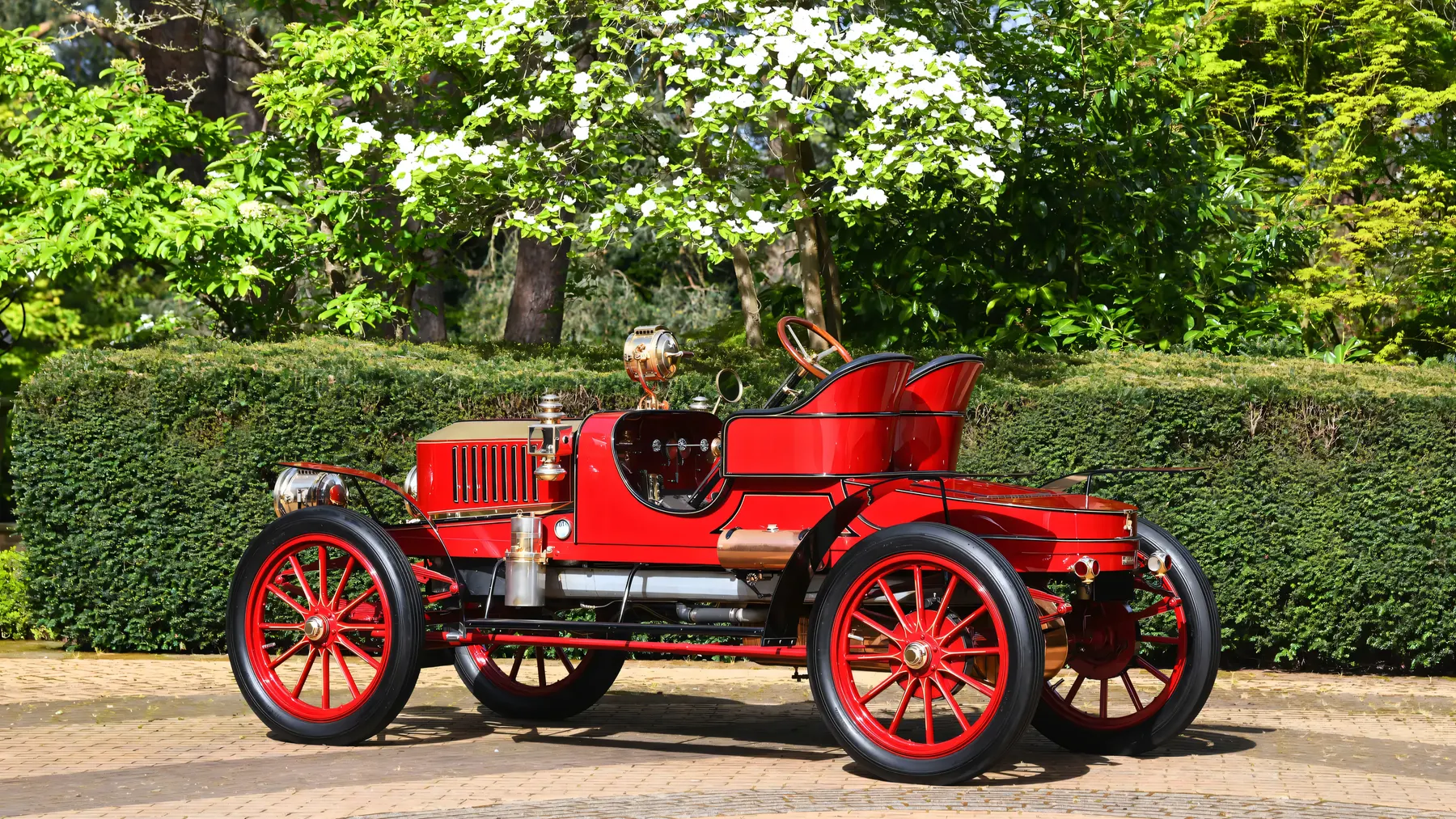
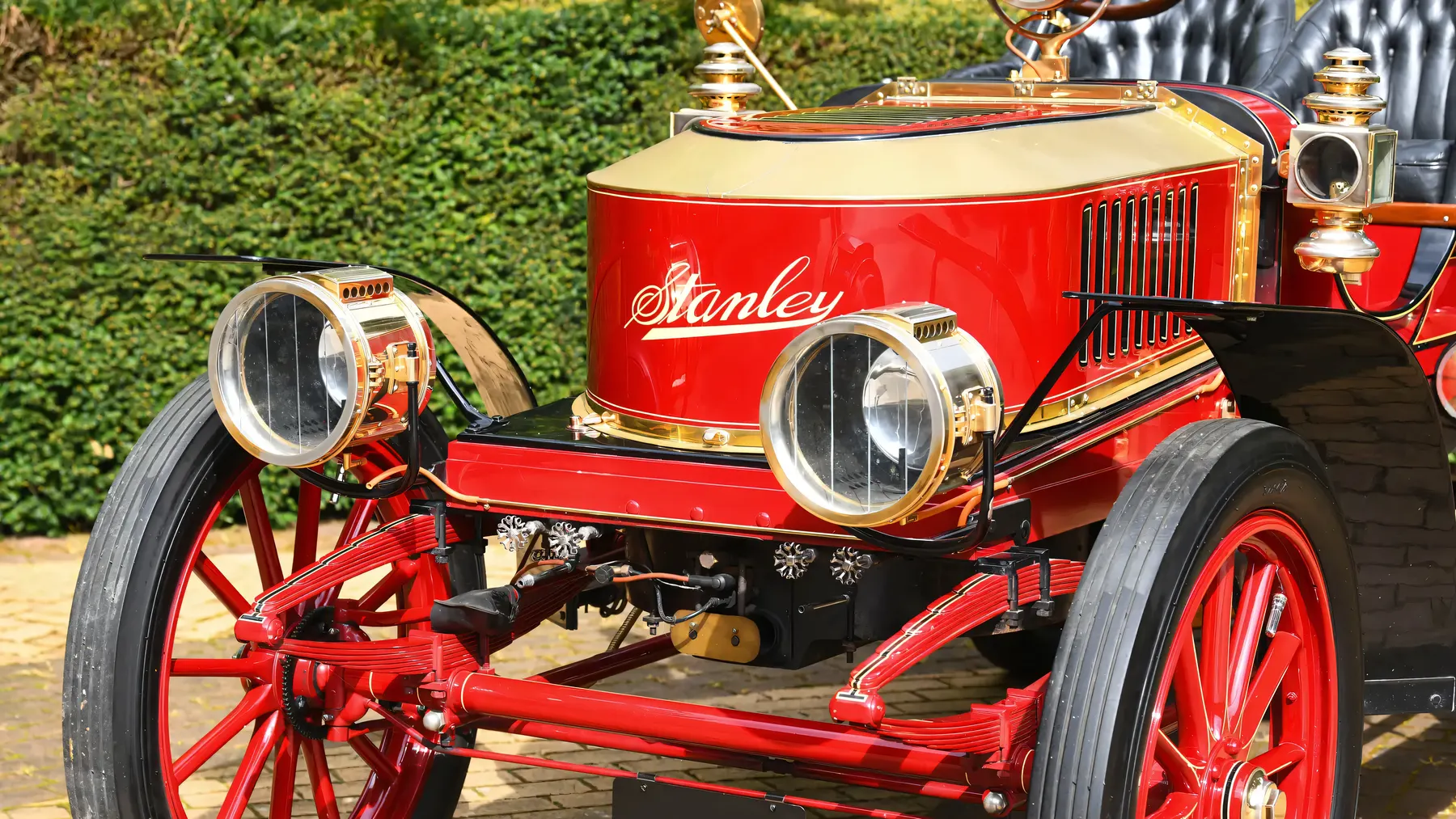
Aesthetically, the Model K presents what’s often described as a “coffin-nose” front profile - a distinctive, elongated snout that gives the car an aggressive, purposeful stance quite different from the upright, carriage-like appearance of many Edwardian contemporaries. It reads as a car that means business, which is appropriate given its origins. The typical period specification includes brass gas lamps, twin bucket seats, and instrumentation that’s sparse by later standards but perfectly functional. There’s a purity to the package that comes from function driving form - this was a machine designed first to go fast and second to look appropriate doing so.
On the road, driving a Model K is reported to be an exercise in managed theatrics. The acceleration is genuinely impressive for its era, the silence - save for a faint hiss - deeply unusual, and the handling demands respect rather than aggression. The steering is direct, the brakes (original drum units, though hydraulic upgrades are now widely accepted in the touring community for practical safety reasons) are modest by any subsequent standard, and the whole experience asks the driver to be thoughtful rather than reactive. This is a car that rewards smooth inputs and punishes impatience. High-speed stability, by virtue of the car’s light weight and relatively high center of gravity, is something to be treated with appropriate caution rather than tested enthusiastically.
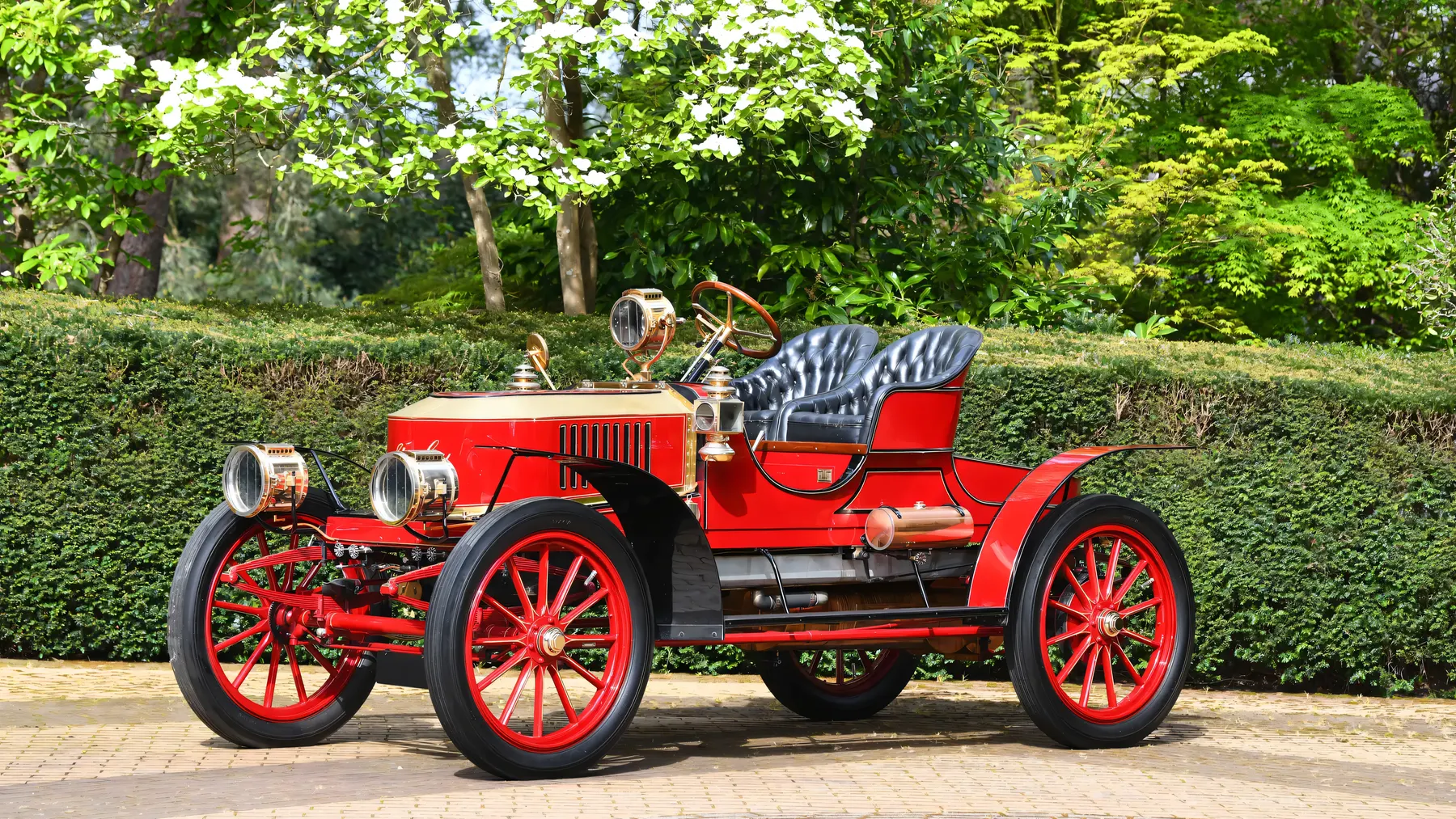
The Model K’s genuine weaknesses are inseparable from its era and its engineering philosophy. Non-condensing steam means range is a constant negotiation with water availability. The boiler requires careful management - temperature, pressure, and water level all demand attention - and operating one competently has a genuine learning curve. These aren’t criticisms of the design so much as inherent characteristics of the technology, but any honest assessment has to acknowledge that the Model K asks considerably more of its driver than virtually any contemporaneous gasoline automobile.
The survival story of the Model K fleet is itself a reflection of the car’s peculiar status. Of the 26 built, more than a dozen are known to exist today, a remarkable attrition rate for century-old machinery. Yet only two of those survivors qualify as “Cars of Record” in the Stanley Register - vehicles with fully documented provenance from the point of manufacture. The majority of existing examples have been assembled from period components combined with newly constructed wooden bodywork and chassis, following the same construction methods Stanley used originally. Within the Stanley community, this approach is broadly accepted and respected, particularly for cars intended for active touring use. The philosophy is pragmatic and, arguably, true to the spirit of the original owners, who were drivers first and historians second.
The Model K never achieved mass-market recognition in the way that some of its gasoline-powered contemporaries eventually did. Twenty-six cars is a tiny number even by Edwardian cottage-industry standards, and the collapse of the Stanley Motor Carriage Company in 1924 - by which point steam propulsion had lost the commercial argument decisively to internal combustion - ensured that the brand’s legacy would be one of enthusiast reverence rather than mainstream celebrity. But within the antique automobile world, the Model K occupies a genuinely significant position: it was among the earliest purpose-built performance variants offered by any manufacturer, an ancestor of the muscle car concept by half a century, and evidence that the desire to take a race-winning formula and sell it to private buyers is as old as the automobile itself. That impulse never went away. Stanley just had it first.
Related Notes
- Le Mans and the Pre-War Racing Era - The Stanley’s 1906 Ormond Beach land speed record is a defining pre-war racing achievement directly comparable to the early motorsport culture this note covers.
- The Olympia Motor Show and the Interwar Show Car Tradition - The Edwardian show-car and road-legal performance variant culture the Model K participated in is the exact tradition this note examines.
- Pebble Beach Concours d’Elegance - Stanley steam cars are iconic entrants at Pebble Beach and the Concours d’Elegance circuit, where the surviving Model Ks regularly appear.
- Concorso d’Eleganza Villa d’Este - Pre-war American machinery including steam cars is a celebrated category at Villa d’Este; the Model K is precisely the type of survivor showcased there.
- Monobloc Engine Construction - The Stanley’s twin-cylinder direct-drive powertrain is a fascinating counter-example to conventional piston engine development; this note provides the gasoline engineering context.
- The Bentley 6½-Litre Chassis - Engineering Overview - Both cars share the same Edwardian high-performance ethos of engineering power delivery directly for speed, using the chassis as a race-bred platform.
- The Bentley Boys - The Bentley racing culture of wealthy private buyers chasing speed with factory-performance variants directly mirrors the Stanley Model K’s commercial philosophy.
- W.O - W.O. Bentley was a contemporary of the Stanley brothers operating in the same early racing world; his philosophy of road-legal performance engineering parallels theirs.