1954 Ferrari 625 F1
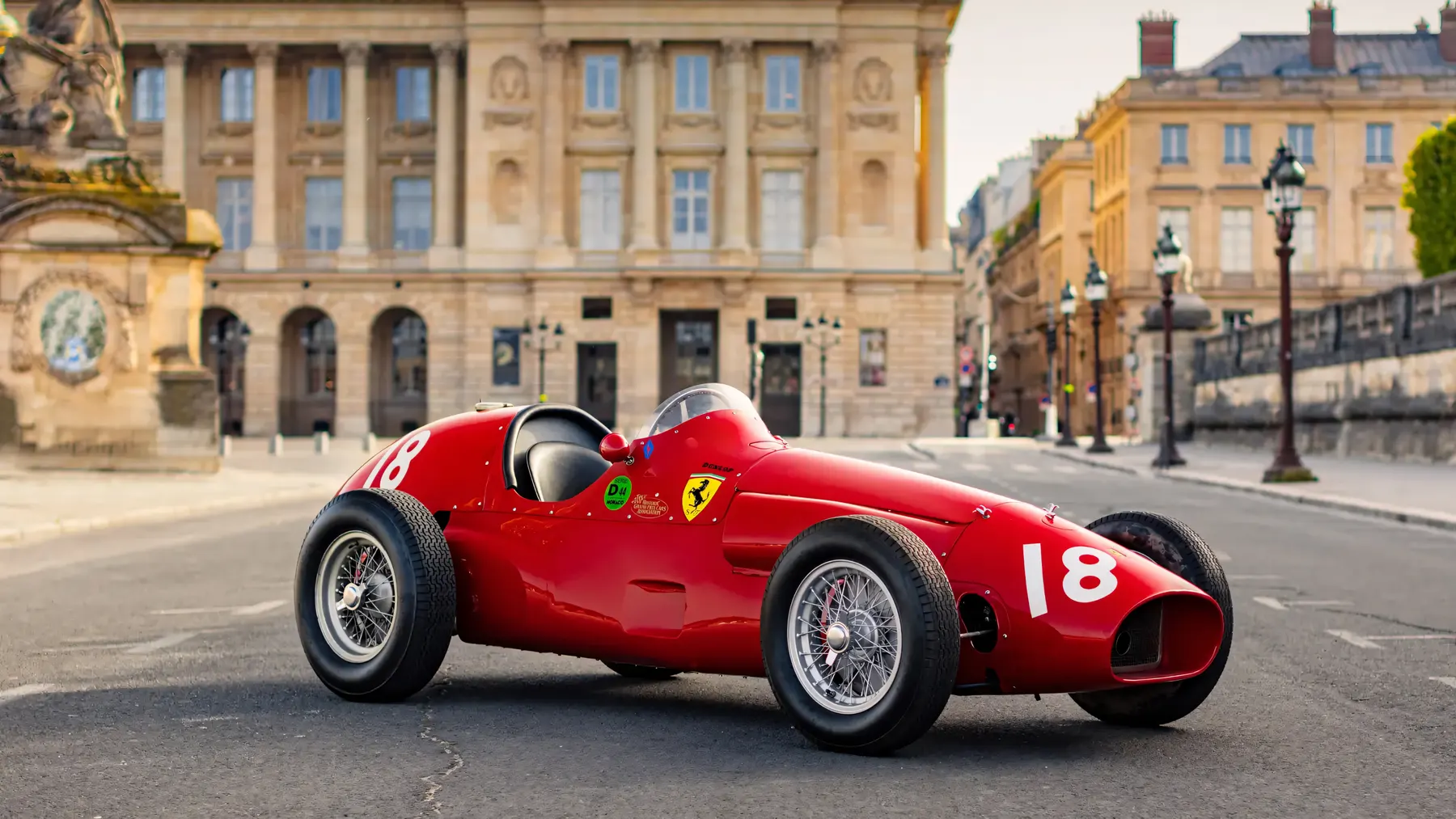
When Ferrari rolled out the 625 F1 in 1954, it wasn’t just another race car, they were adapting to survive. The early 1950s had been a rollercoaster for Formula One. The sport’s governing body had temporarily switched championship races to Formula Two rules in 1952 and 1953 due to a shortage of competitive teams. Ferrari dominated those two seasons with their 500 F2, a car so effective it won 30 of 33 races. But when Formula One returned to its original engine regulations in 1954, Ferrari needed a fresh approach. Enter the 625 F1: a quick-thinking evolution of their existing design, built to keep pace with a new era of competition.
The roots of the 625 F1 trace back to Aurelio Lampredi, the engineer behind Ferrari’s earlier success. In 1950, Enzo Ferrari tasked Lampredi with creating engines that could rival Alfa Romeo’s dominant supercharged V12s. Lampredi’s answer was a simpler, naturally aspirated inline-four for the 500 F2,which turned out to be a stroke of genius. When Formula One temporarily adopted F2 rules in 1952, Ferrari was ready. Alberto Ascari piloted the 500 F2 to back-to-back championships, losing only once in two seasons.
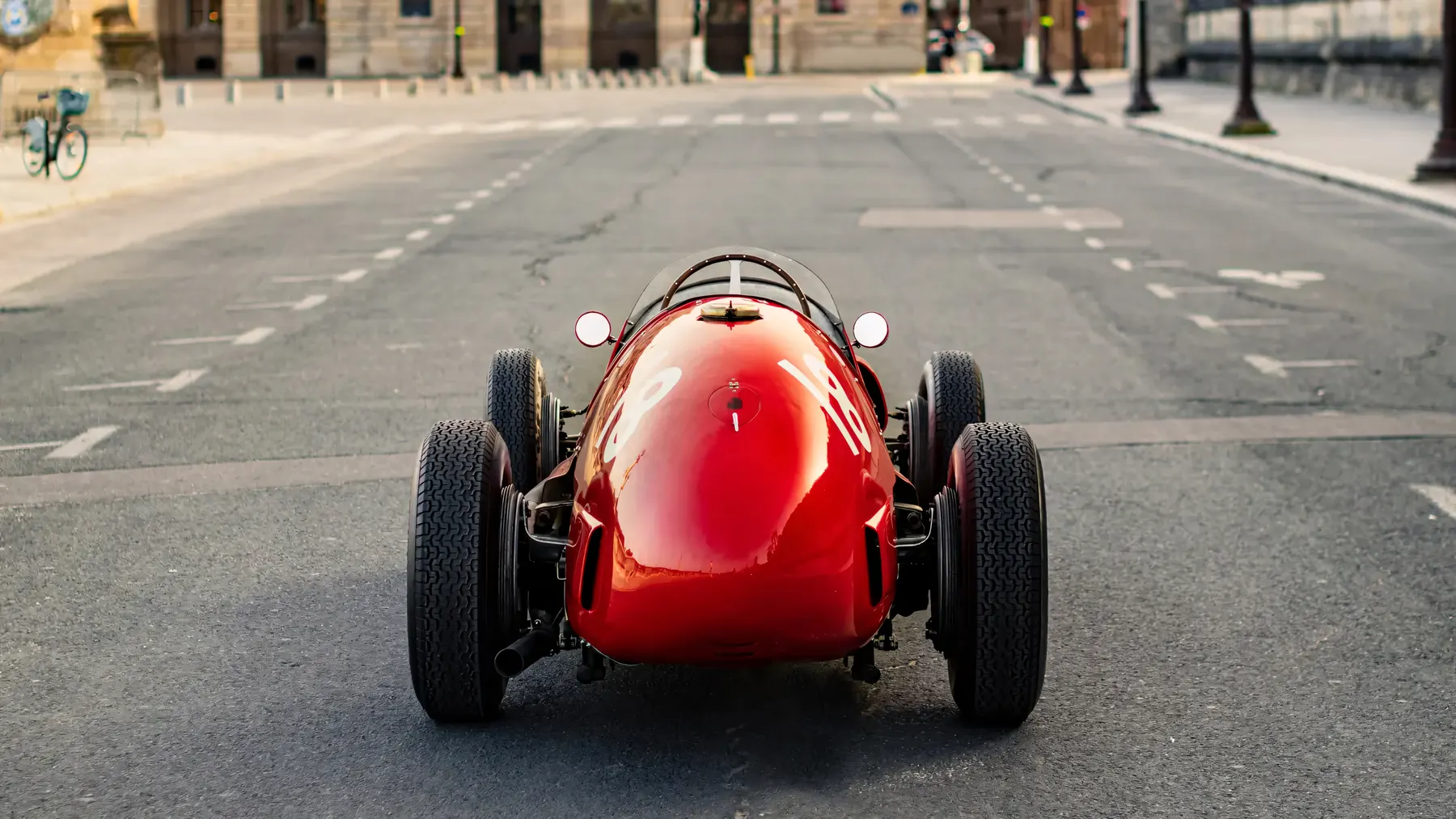
But by 1954, Formula One’s rulebook changed again, requiring larger 2.5-liter engines. Instead of starting from scratch, Ferrari enlarged Lampredi’s existing four-cylinder engine to 2.5 liters, creating what became known as the 625 F1. This wasn’t revolution, it was intelligent evolution. They retrofitted existing 500 F2 chassis with the bigger engine, tweaking the suspension and bodywork to handle the extra power. The result? A car that bridged Ferrari’s past dominance with an uncertain future.
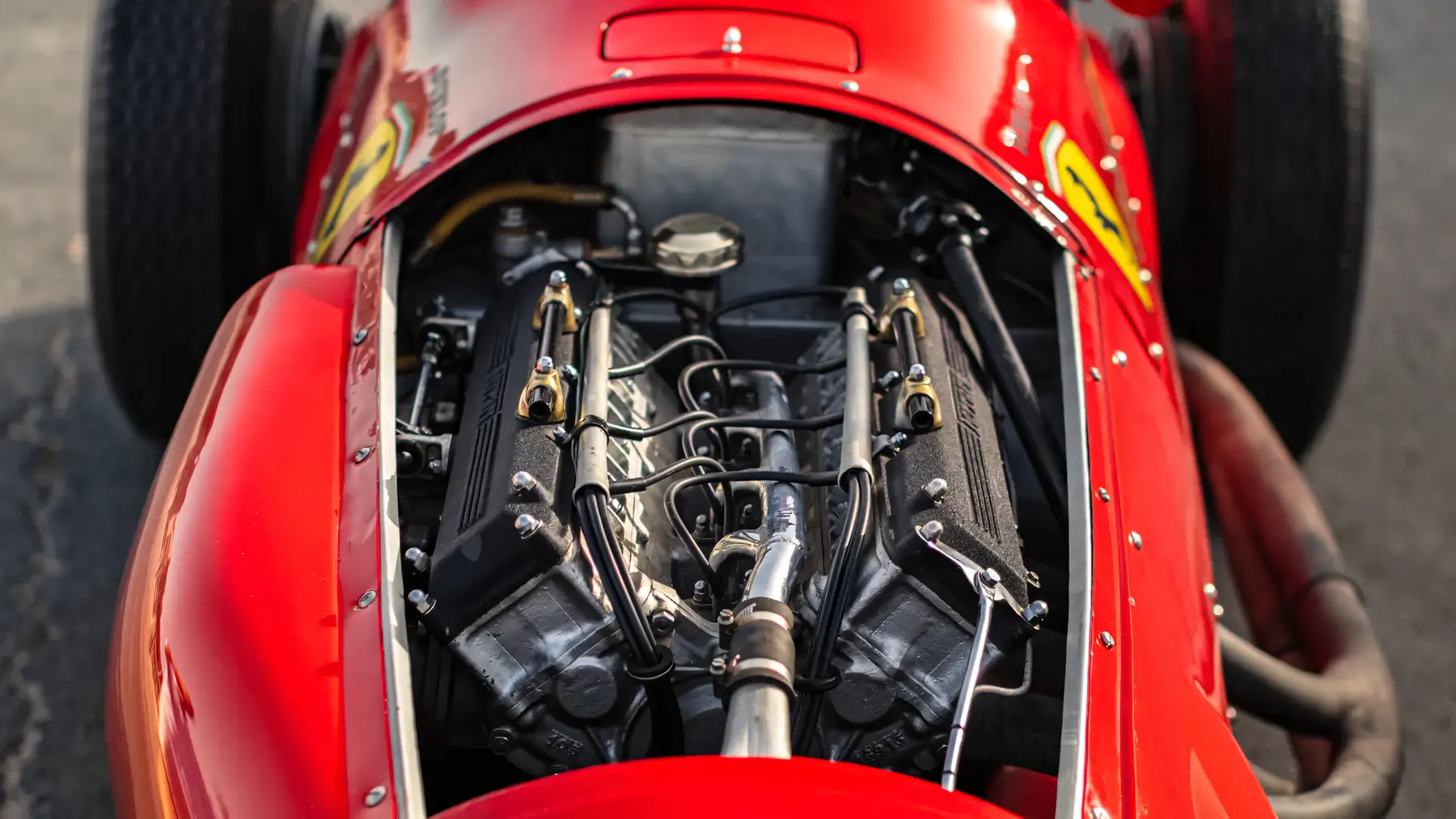
The 2.5-liter inline-four engine was a purposeful shift away from the brand’s storied V12 heritage. Ferrari engineer Aurelio Lampredi reimagined racing powerplants by focusing on durability and mechanical simplicity. Compared to the intricate V12s, this four-cylinder unit used 65% fewer moving components, shed 42 kilograms in weight, and resisted overheating under prolonged stress. These advantages came with an auditory twist, the engine’s rugged, guttural exhaust note contrasted sharply with the high-pitched wail of multi-cylinder rivals, earning it comparisons to industrial machinery rather than precision instruments.
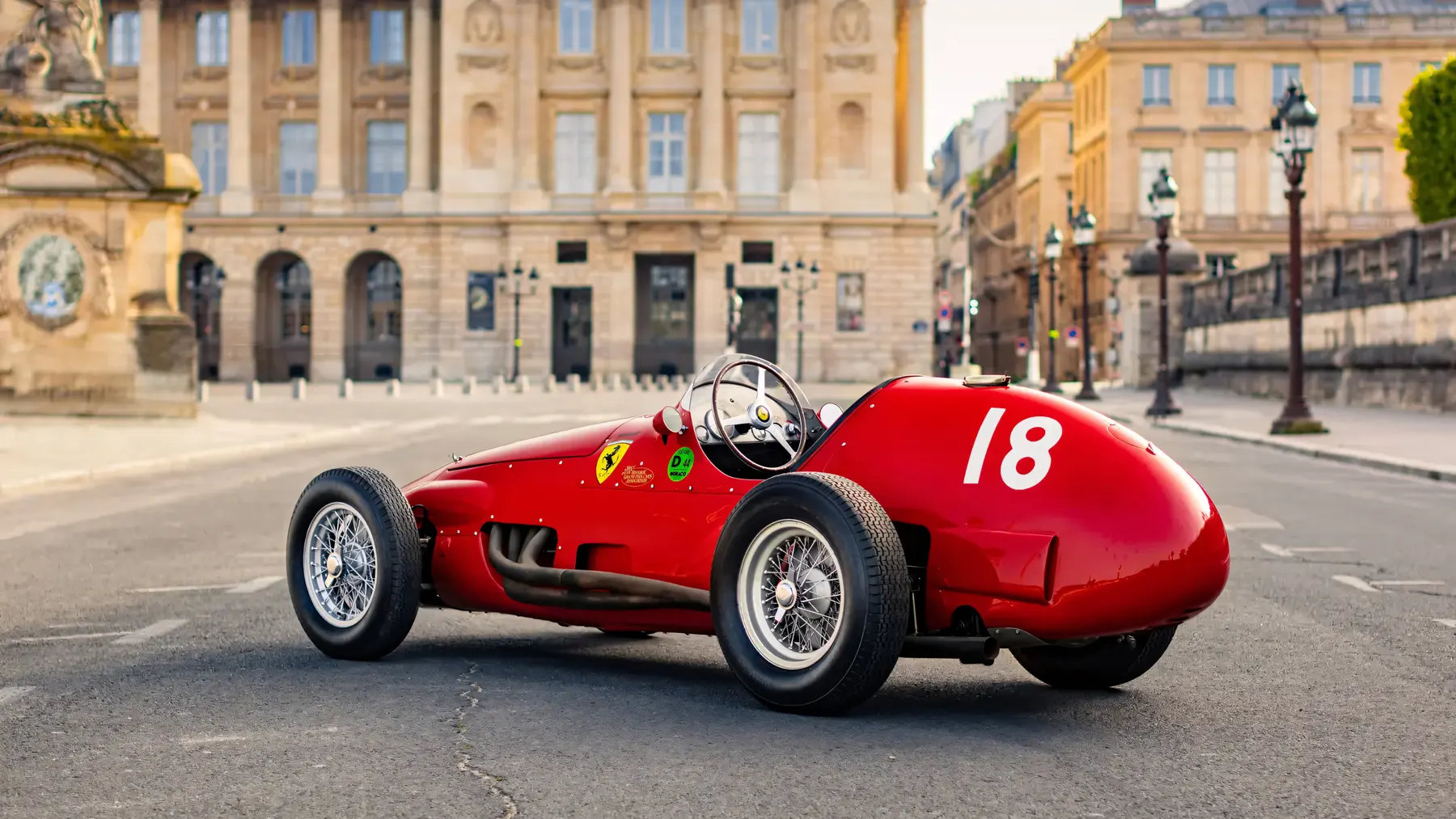
What made the 625 F1’s powerplant remarkable wasn’t just its pared-down design but the calculated innovations embedded within. A dry-sump lubrication system prevented oil starvation during aggressive cornering, a non-negotiable feature for endurance racing where mechanical failure meant instant defeat. Engineers doubled down on reliability with dual spark plugs per cylinder, each ignited by independent magnetos. This redundancy meant the engine could sustain ignition even if a magneto faltered, a lifesaver during long races where pit stops weren’t guaranteed. To maximize power, twin Weber 50DCO3 carburetors fine-tuned the air-fuel mixture, pushing output to 230 horsepower at 7,000 rpm, a 45 hp leap over the preceding 500 F2 model and a figure that held its own against competitors.
While rivals like Mercedes-Benz’s fuel-injected W196 or Maserati’s high-revving 250F seemed more advanced on paper, the 625 F1 carved out its niche through practicality. Privateer teams, understaffed and underfunded compared to factory squads, gravitated toward its straightforward mechanics. The inline-four forgave rough treatment, thrived in diverse weather conditions, and spared crews from constant adjustments. Where cutting-edge engines demanded obsessive tuning and specialist knowledge, Lampredi’s creation let drivers focus on racing rather than nursing temperamental machinery. This rugged dependability became its anthem, proving that raw technological complexity didn’t always trump intelligent, purpose-driven design. The 625 F1 wasn’t just an engine; it was a strategic answer to the real-world chaos of 1950s Grand Prix racing.
The 625 F1’s chassis borrowed heavily from its predecessor. Built around a lightweight tubular steel frame, it featured a 2,160 mm wheelbase, short by modern standards but typical for the era. Up front, double wishbone suspension with transverse leaf springs provided precise steering feedback. At the rear, a De Dion axle paired with trailing arms kept the wheels planted during acceleration.
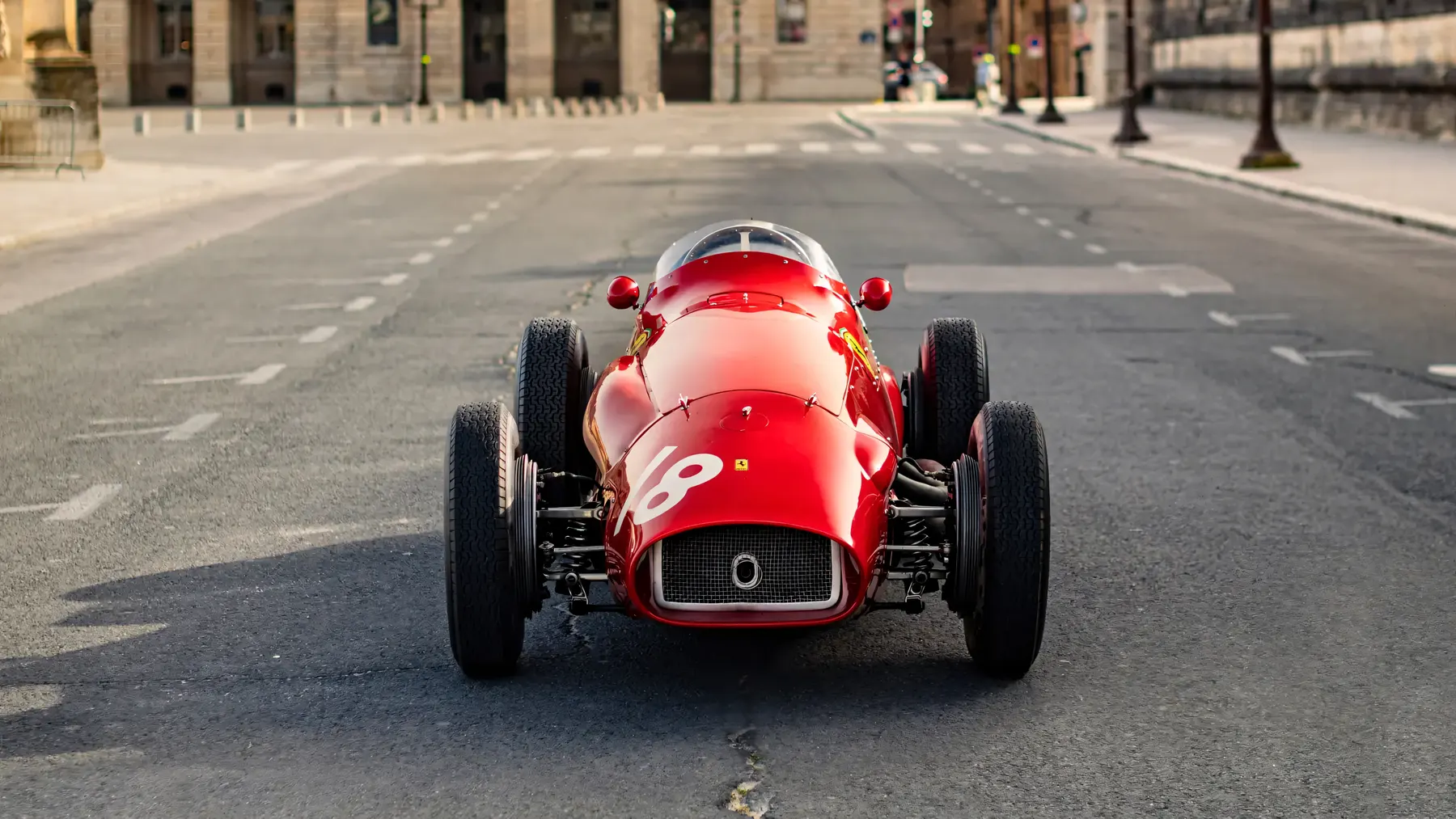
Drum brakes all around might seem primitive today, but they were effective for their time. Drivers like Maurice Trintignant praised the car’s balanced braking, which allowed late dives into corners. The bodywork, hand-formed from aluminum, was minimalist, no aerodynamic frills, just a narrow cockpit and a bulbous nose channeling air to the radiator.
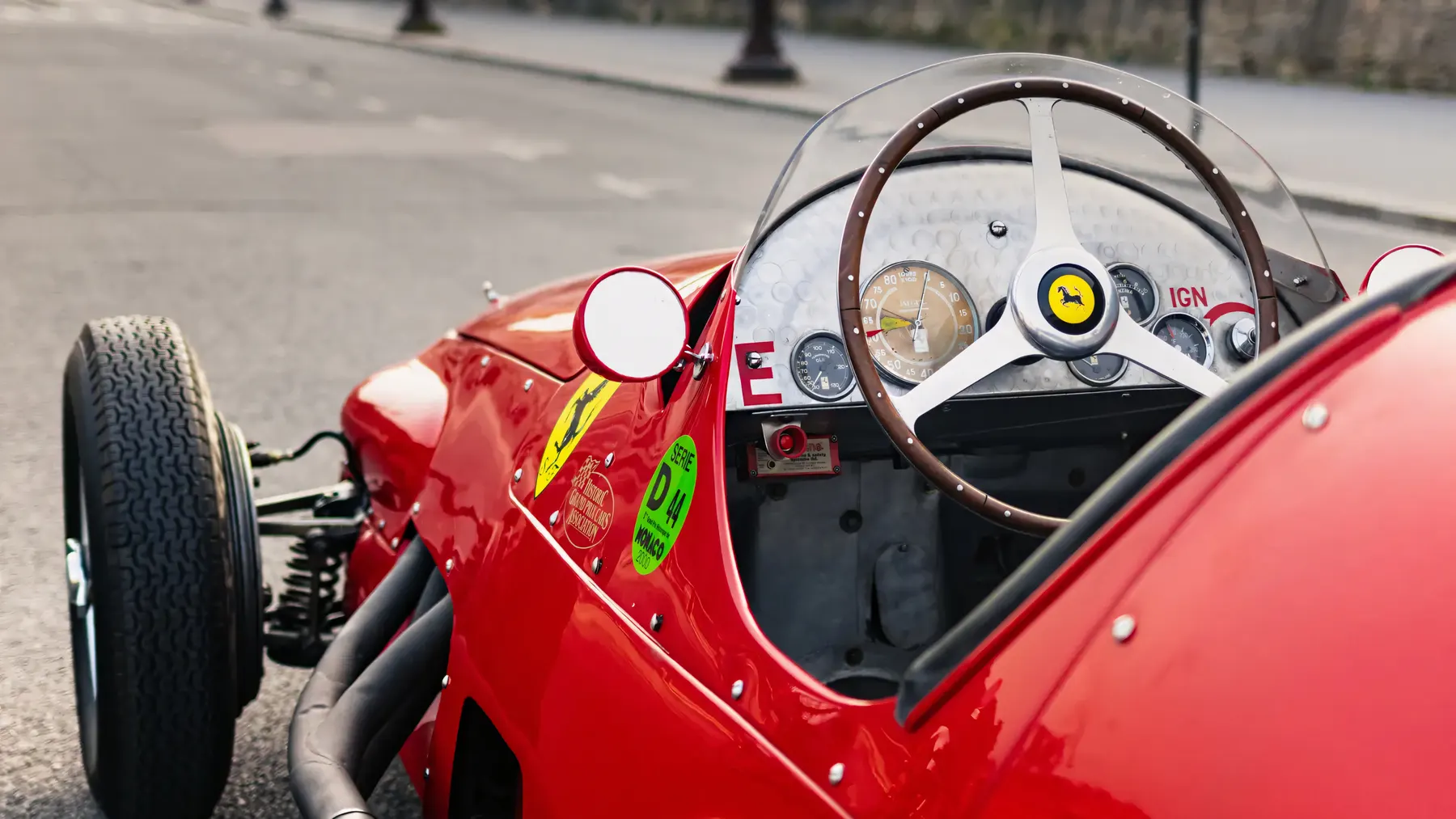
Steering was unassisted, demanding physical effort at low speeds. “You wrestled it through tight corners,” recalled Mike Hawthorn, who drove both Ferrari’s works cars and privateer entries. “But once you were moving, it felt alive.”
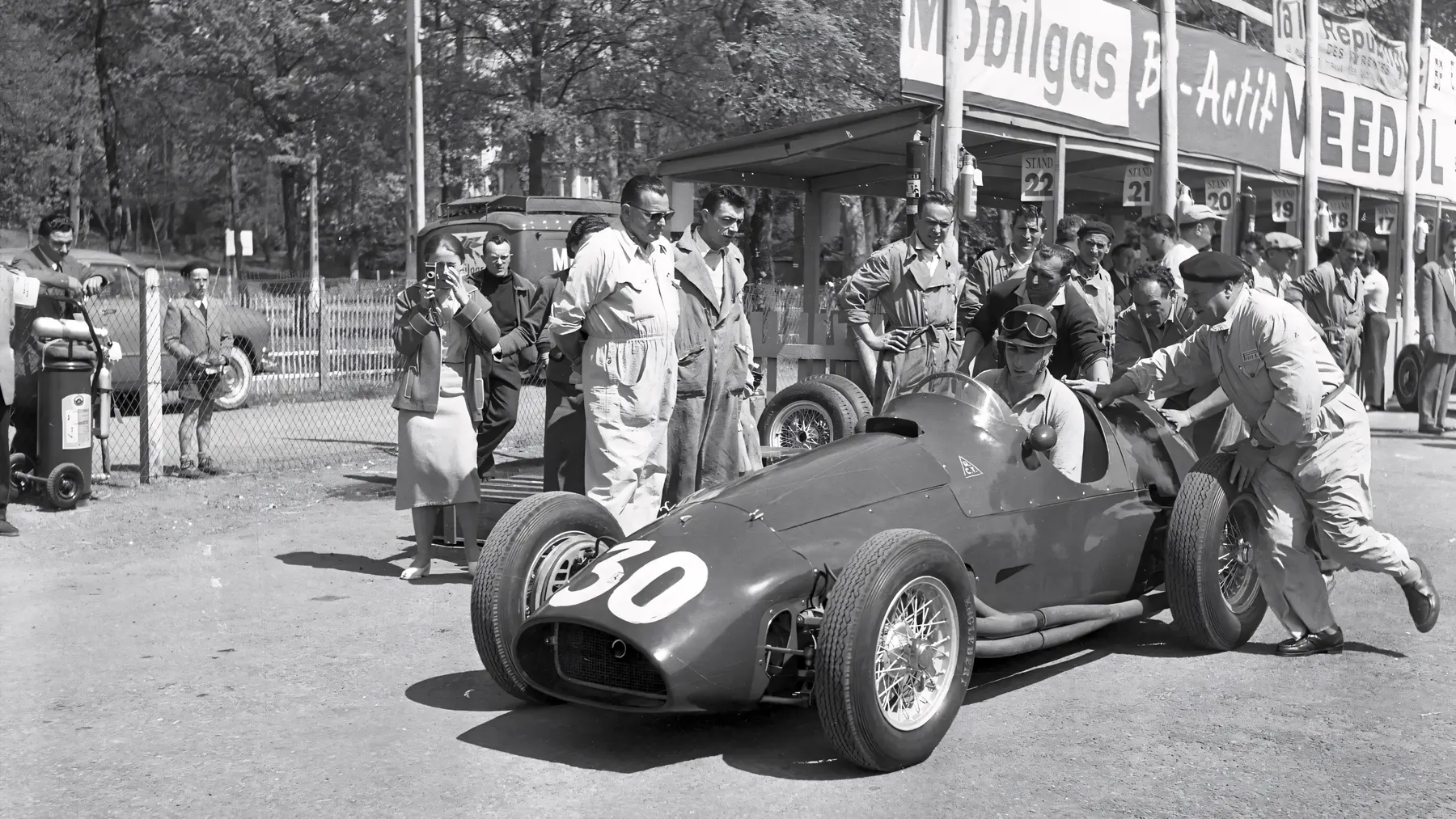
The 625 F1’s career peaked during a transitional period. In 1954, Mercedes-Benz returned to F1 with the streamlined W196, while Maserati’s 250F combined agility with a powerful straight-six engine. Ferrari, meanwhile, split resources between F1 and sports car racing.
The 625 F1’s greatest moment came at the 1955 Monaco Grand Prix. Trintignant, driving for Scuderia Ferrari, qualified fourth. In a rain-soaked race filled with crashes, he kept the Ferrari steady while rivals faltered. Juan Manuel Fangio’s Mercedes led early but retired with transmission issues. Trintignant took the checkered flag, marking Ferrari’s first F1 win under the new regulations.
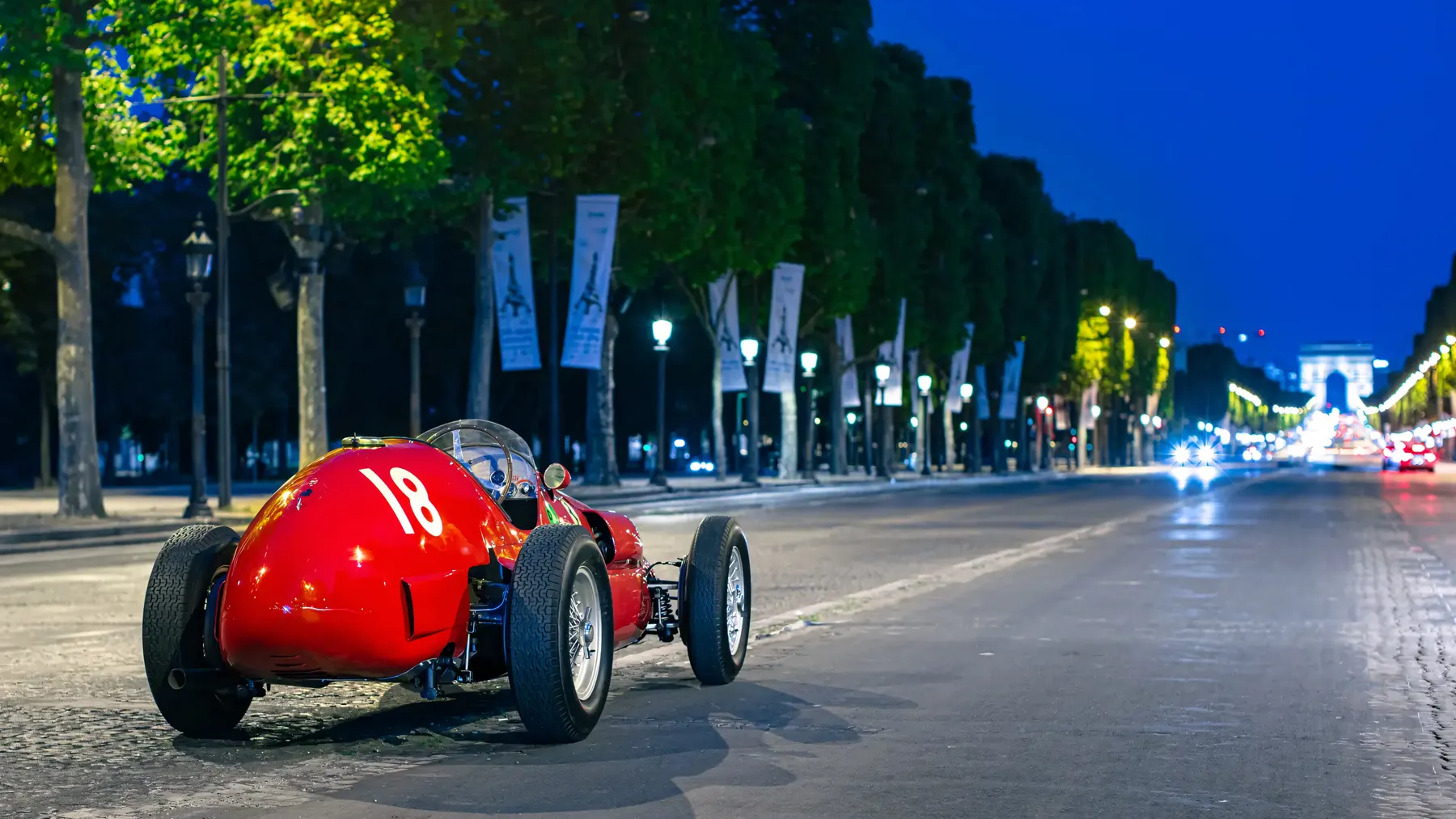
But such triumphs were rare. The 625 F1 only won two championship races, Monaco in 1955 and Argentina in 1956,and often trailed the Mercedes and Maseratis. Reliability kept it competitive: In the 1954 French GP, José Froilán González finished second despite a misfiring engine. Privateers like Ecurie Rosier and Scuderia Centro Sud also ran 625 F1s, capitalizing on their durability in endurance events.
Contemporary reviews of the 625 F1 were mixed. Fans missed the symphonic V12s Ferrari had retired, and the inline-four’s gruff exhaust note drew comparisons to tractors. “It’s fast, but it’s not beautiful,” wrote journalist Denis Jenkinson.
Drivers, however, appreciated its straightforwardness. Ascari, who left Ferrari for Lancia in 1954, later admitted the 625 F1 was “easier to drive consistently fast” than more temperamental rivals. Privateers loved its affordability, a used 625 F1 cost half as much as a Maserati 250F,and ease of maintenance. Mechanics could rebuild the Lampredi engine in hours, not days.
The 625 F1’s significance lies in what it enabled. Its engine design influenced Ferrari’s sports cars, including the 500 Mondial and 750 Monza, which dominated endurance racing. The knowledge gained from refining the Lampredi four-cylinder also informed Ferrari’s later V6 and V8 engines.
More importantly, the 625 F1 kept Ferrari relevant during a turbulent time. When Lancia’s financial collapse handed Ferrari their futuristic D50 chassis in 1955, the team had the resources to integrate it quickly, thanks partly to steady results from the 625 F1.
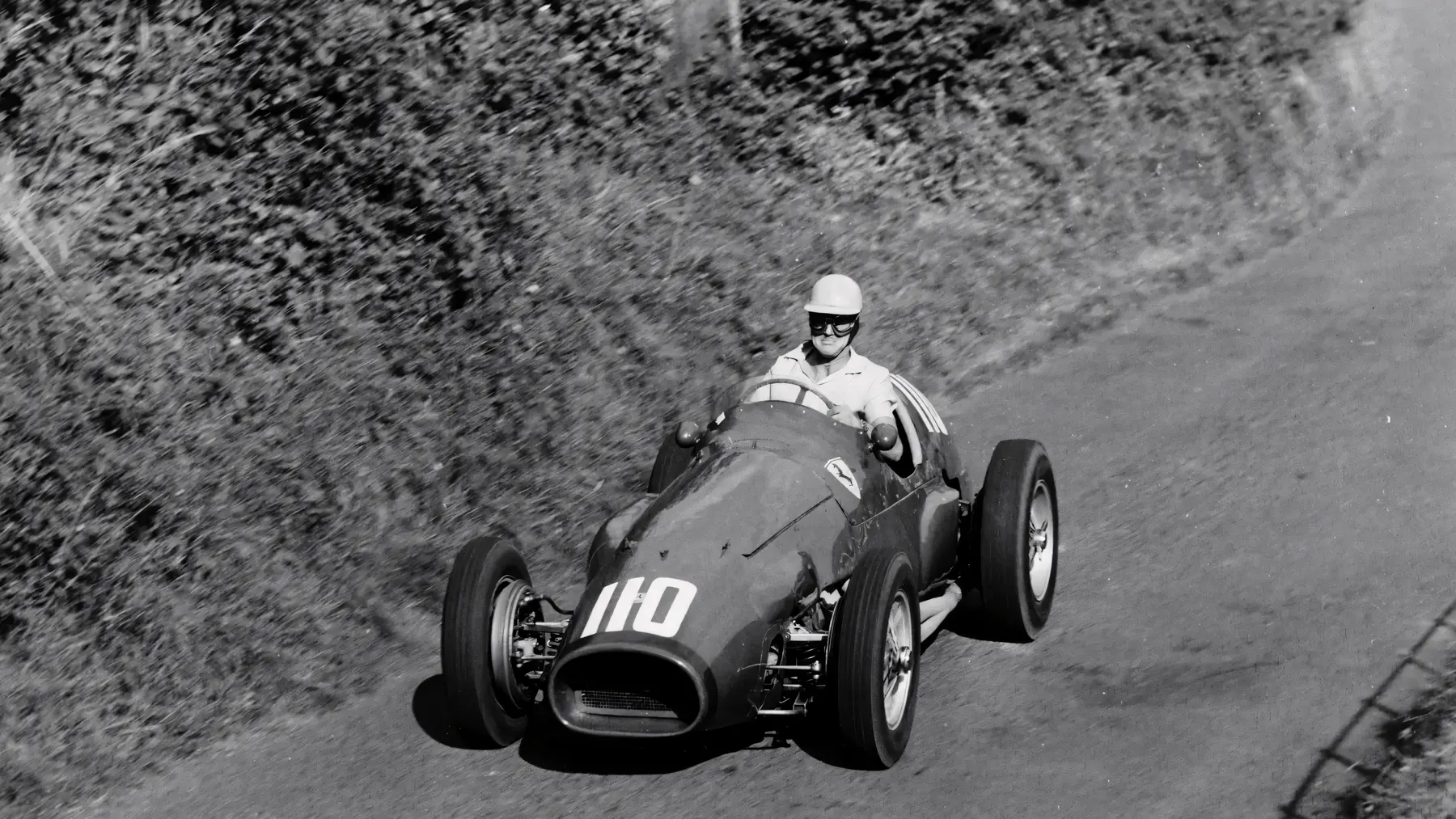
Today, fewer than ten original 625 F1s exist. One sold at auction in 2019 for €3.4 million, a testament to its historical value. These cars are regulars at historic races like the Goodwood Revival, where their rugged charm contrasts with the delicate prima donnas of later eras.
Driving a 625 F1 today is a visceral experience. The unassisted steering weights up alarmingly at low speeds, the drum brakes require careful modulation, and the engine’s torque curve demands short, precise shifts. Yet on open circuits, it comes alive, a reminder of when racing was as much about endurance as outright speed.
The Ferrari 625 F1 may not have the star power of the 250 GTO or the raw dominance of the 500 F2. But it represents a critical pivot in Ferrari’s history,a car born from pragmatism, designed to keep a team afloat in turbulent waters. Without it, Ferrari might not have navigated the 1950s to become the dynasty we know today.
For enthusiasts, the 625 F1 is more than a relic. It’s a lesson in adaptability: proof that sometimes, survival is the ultimate innovation.