1965 Citroën 2CV 4x4 'Sahara'
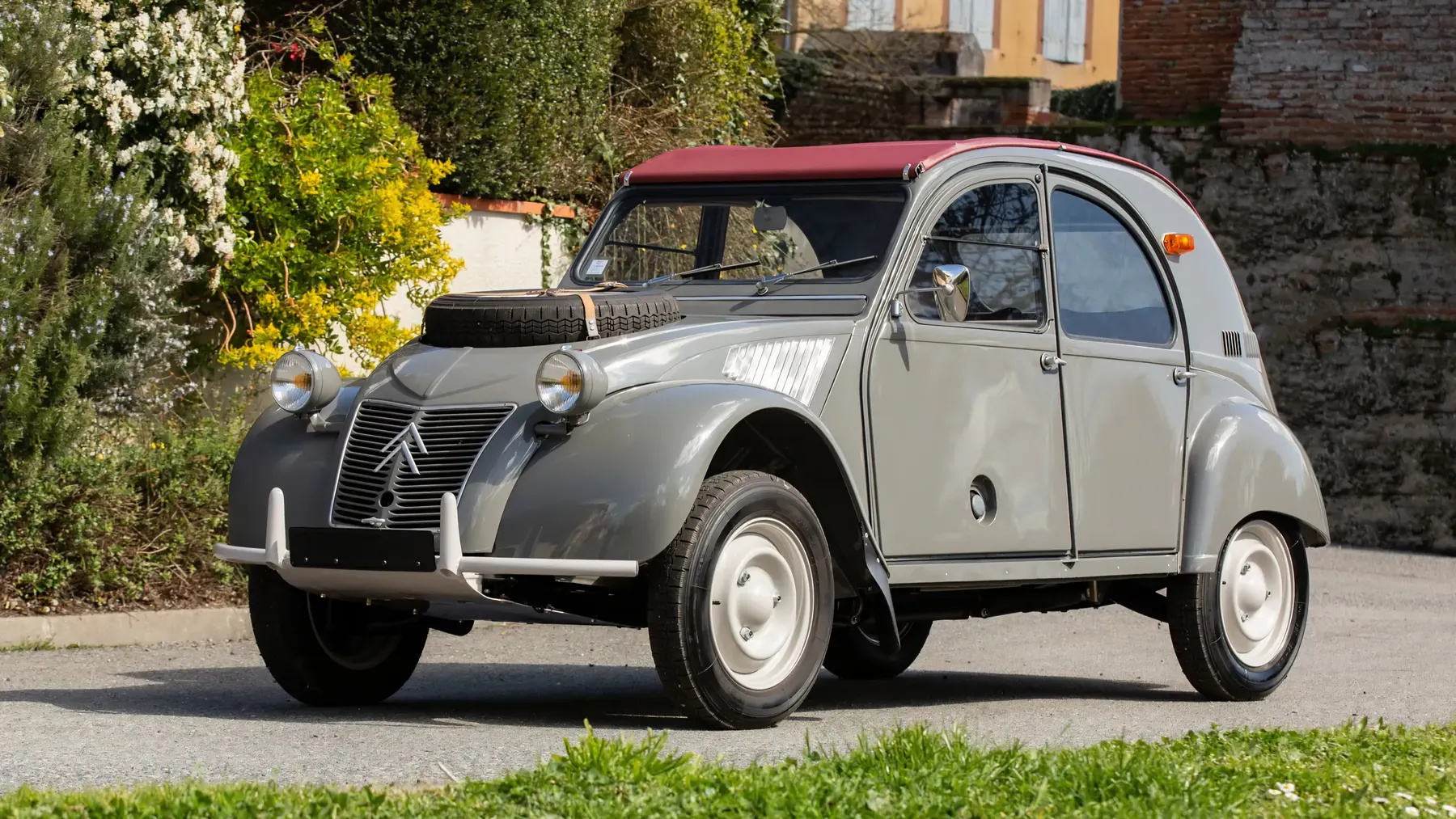
The sound hits you first, not the typical putt-putt of a standard 2CV, but a curious stereo effect. Two air-cooled flat-twins working in unison, one burbling up front, another identical unit chattering away behind the rear seats. This is the Citroën 2CV 4×4 ‘Sahara’, perhaps the most eccentric solution to four-wheel drive ever put into production. While Land Rover and Jeep tackled off-road challenges with brawny engines and complex transfer cases, Citroën simply installed two complete powertrains in their humble peoples’ car and called it a day. The result was as brilliant as it was bizarre.
The story of the Sahara begins in the late 1950s when France still maintained vast colonial territories across North Africa. Standard 2CVs had proven remarkably capable on the rough roads of rural France, but the punishing terrain of the Sahara Desert and Atlas Mountains demanded something more. Colonial administrators, utilities, and the French military needed vehicles that could traverse sand dunes and rocky passes while maintaining the 2CV’s legendary reliability and simplicity.
Initial inspiration came from resourceful Citroën dealers in Morocco and Algeria who had crafted their own crude 4×4 conversions. The factory took notice, and development of an official dual-engine solution began. Jacques Duclos, who had conducted the market research that led to the original 2CV, reportedly championed the project. By December 1960, the first production Sahara models rolled out of Citroën’s factory, a testament to French engineering creativity.
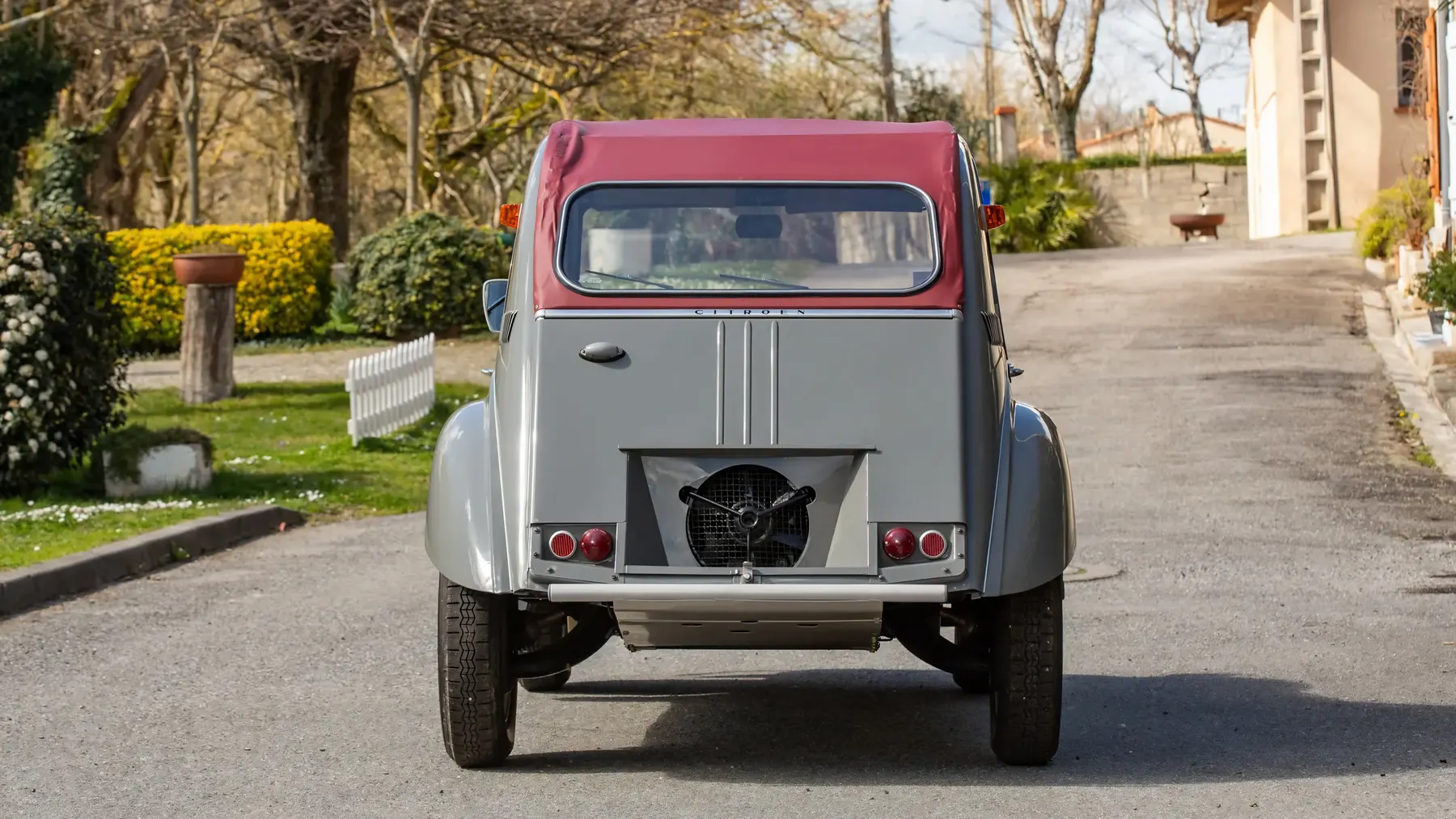
The Sahara’s technical solution remains unique in automotive history. Rather than developing a conventional 4×4 system with transfer cases and differentials, Citroën simply installed two complete 425cc engines, one in the traditional position up front, and a second, identical unit mounted backward in the trunk area. Each engine powered its respective axle independently.
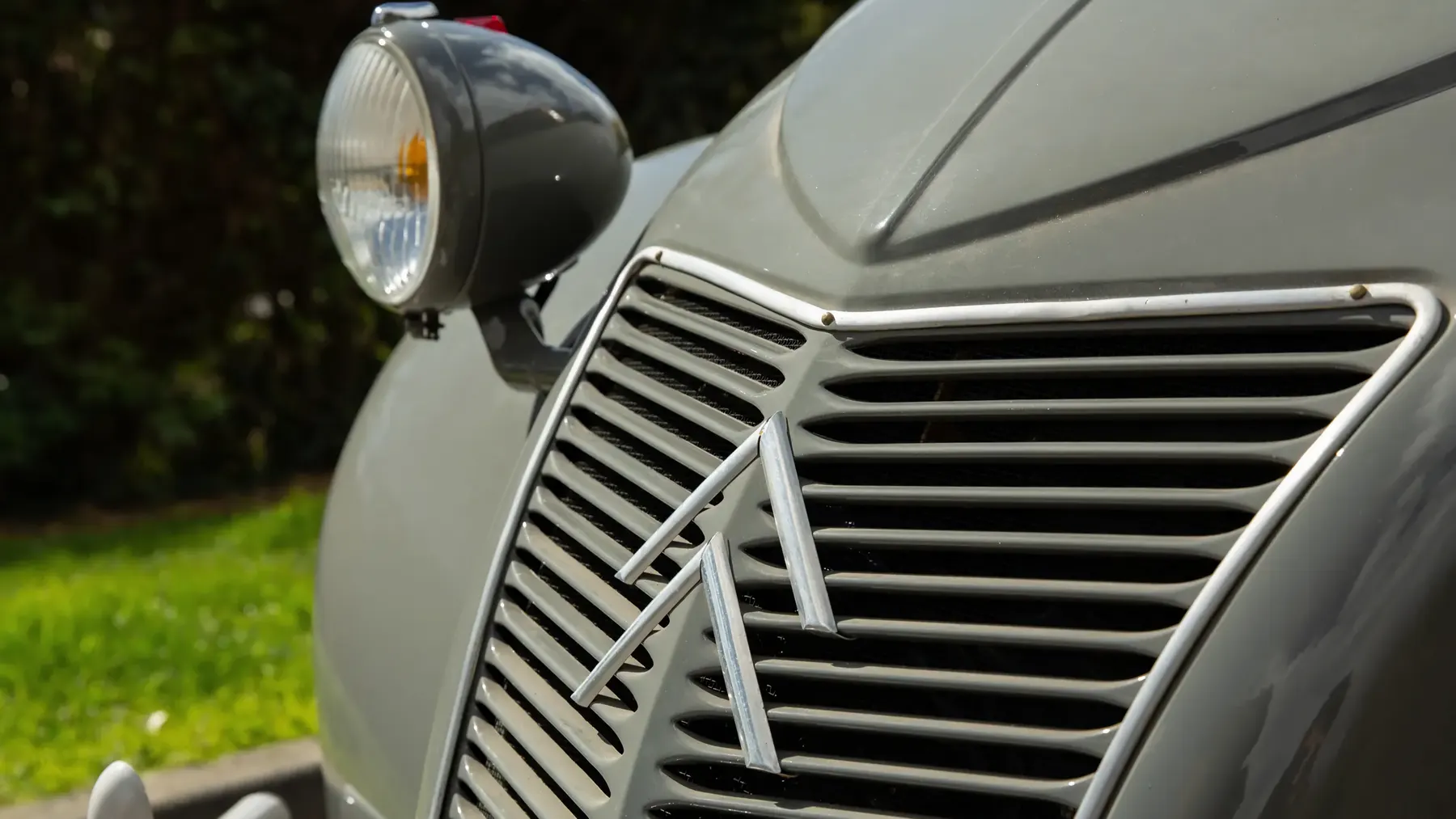
What made this system truly remarkable was how the controls worked. Despite having two engines, the Sahara featured just one accelerator pedal, one clutch pedal, and one gearshift. The pedals operated both clutches simultaneously through a clever linkage system. The single gearshift controlled both gearboxes via a connecting rod running underneath the car. This allowed the driver to operate both powertrains as if they were a single unit.
Each engine had its own ignition key, however, which opened up fascinating operational possibilities. Drivers could run on just the front engine, just the rear engine, or both together depending on terrain and needs. This redundancy proved invaluable in remote areas, if one engine failed, you could still make it home on the other.
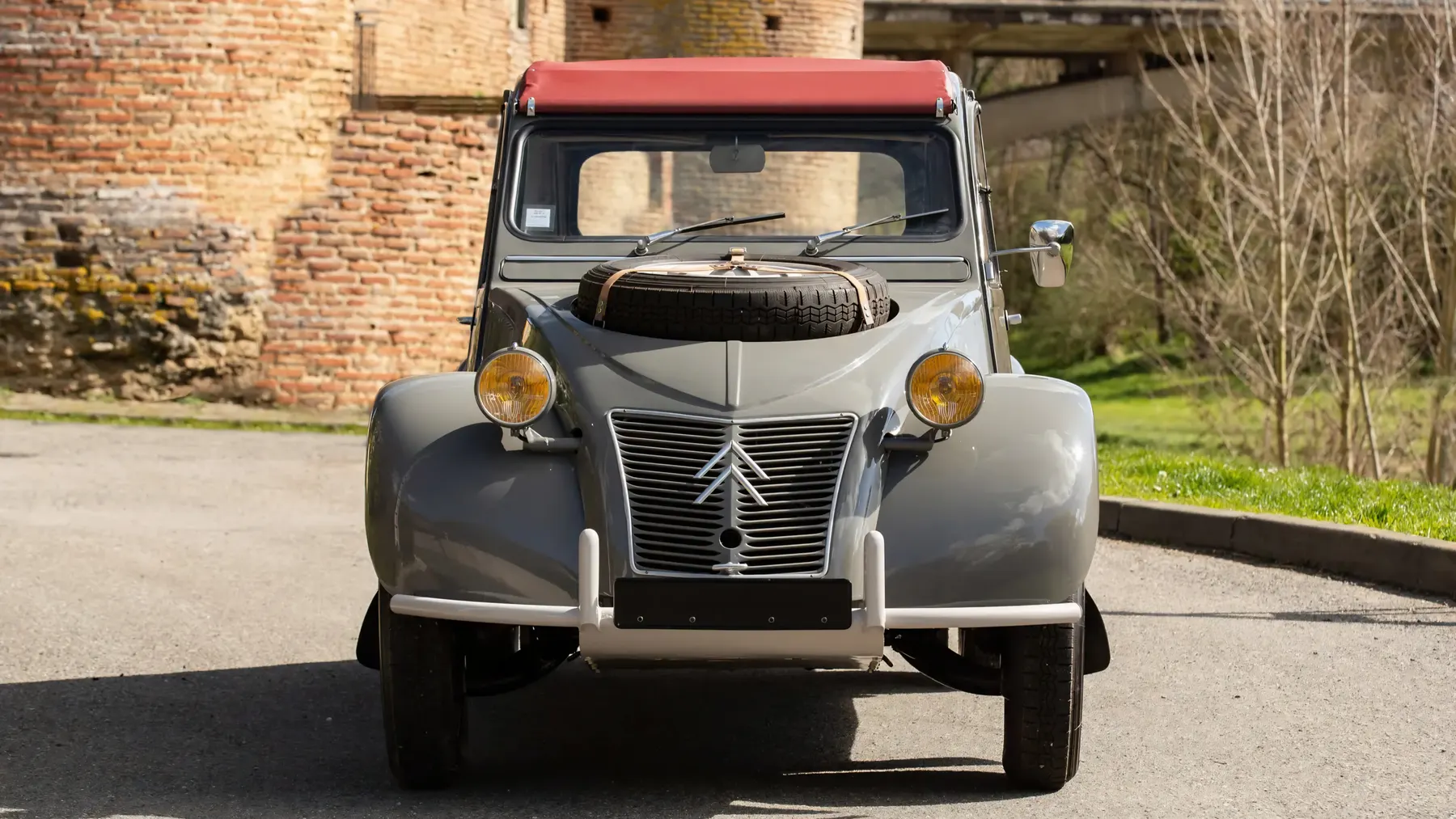
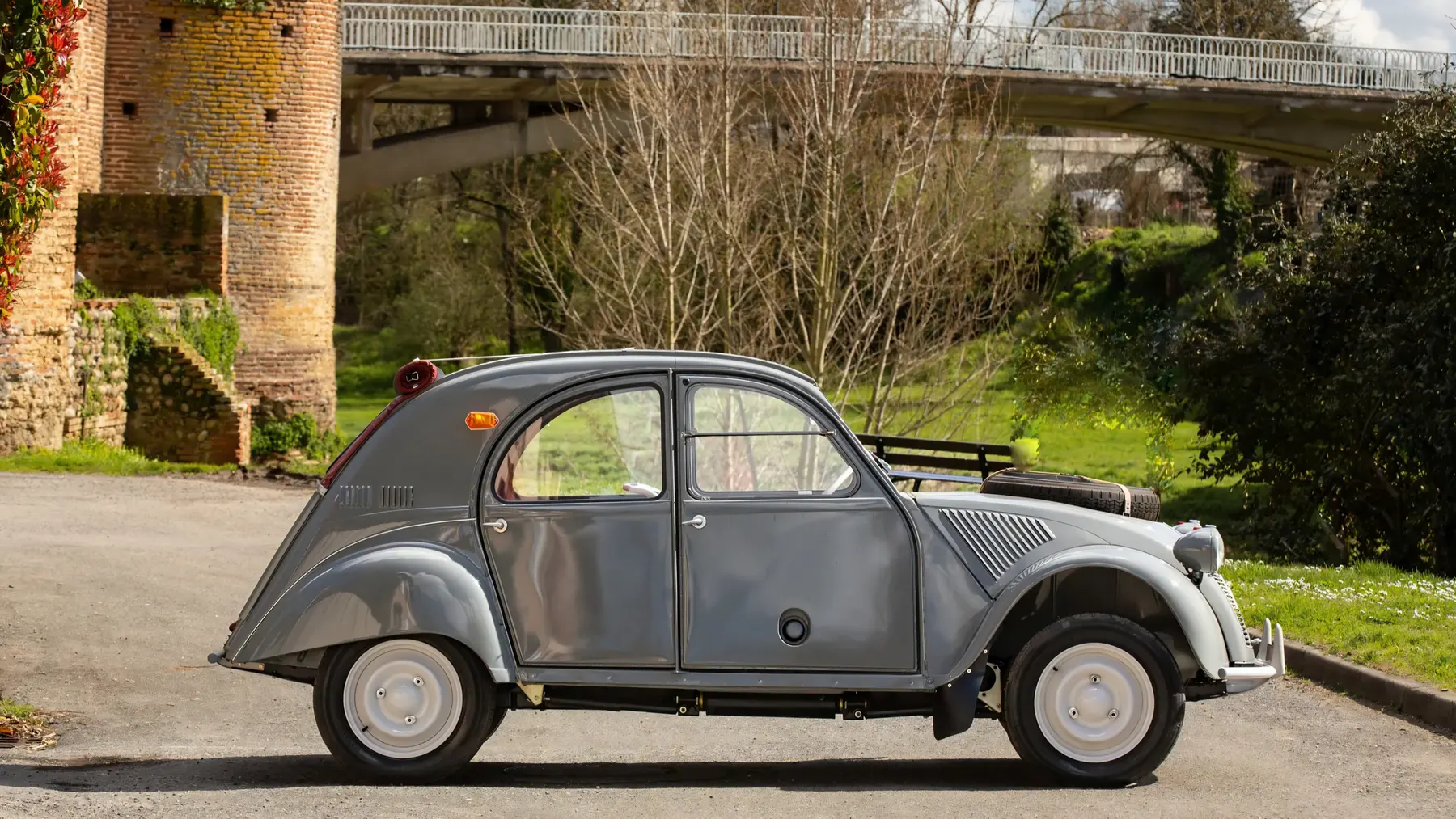
Fuel was stored in two separate 15-liter tanks located under the front seats, each feeding its respective engine. The spare tire migrated from its usual location to be mounted prominently on the bonnet, freeing up space for the rear engine.
On paper, the Sahara’s performance figures wouldn’t impress modern SUV buyers. When running on a single 12-horsepower engine, top speed was a modest 65 km/h. With both engines fired up, that increased to approximately 105 km/h on flat terrain, still hardly blistering, but a respectable improvement.
But raw speed wasn’t the point. The Sahara’s true talent emerged when the pavement ended. Its four-wheel drive system provided exceptional traction across loose sand, mud, and rocky terrain. Because each axle had its own dedicated power source, the Sahara maintained continuous drive to at least some wheels even when others lost traction.
The 2CV’s inherently excellent suspension further enhanced off-road capability. The interconnected suspension system, designed to smooth out France’s bomb-cratered post-war roads, provided remarkable articulation and wheel travel. Combined with the car’s light 800 kg weight, the Sahara could traverse terrain that would stop much larger four-wheel drives.
Modern off-road enthusiasts who’ve driven surviving examples report that the Sahara climbs grades of up to 45 degrees with surprising ease, and handles side slopes that would tip most vehicles. The independent operation of front and rear axles creates an effect similar to locking differentials, but with a more progressive, controllable power delivery.
Visually, the Sahara maintained most of the standard 2CV’s unmistakable silhouette, with several notable modifications. Beyond the distinctive bonnet-mounted spare tire, careful observers would notice additional cooling vents for the rear engine, a second filler cap (for the rear fuel tank) on the opposite side of the car, and slightly higher ride height.
The interior retained the 2CV’s minimalist charm while accommodating the dual-engine setup. The rear cargo area was naturally reduced to house the second engine, though it remained surprisingly usable. The dashboard featured additional gauges and switches to monitor and control both powerplants.
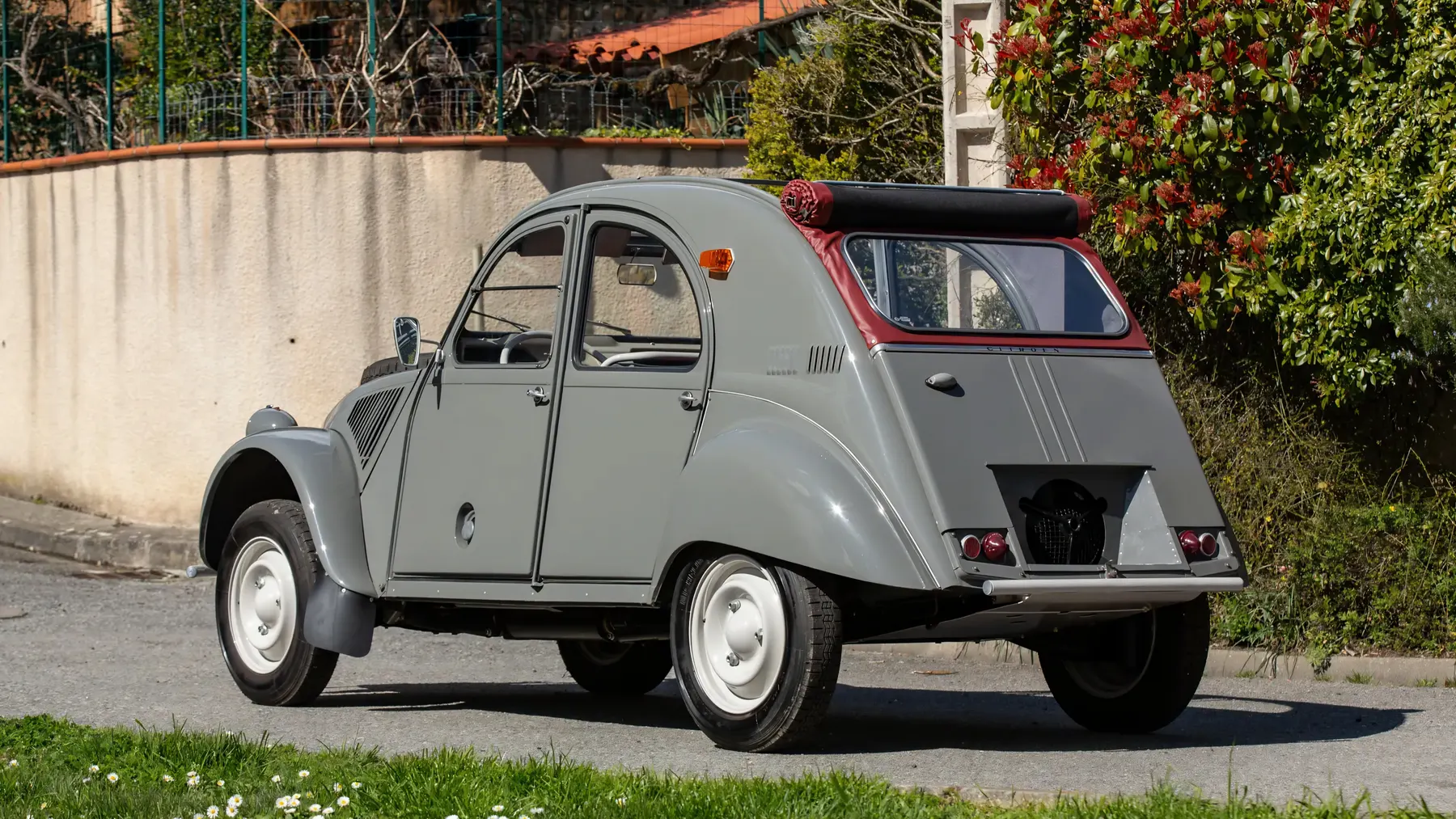
Construction remained typically 2CV, with a corrugated steel hood, detachable fabric roof, and those characteristic flip-up side windows. The body sat on the standard 2CV platform chassis, though reinforced to handle the additional weight and stresses of off-road use.
Early Saharas were distinguished by their visible external hinges and other pre-1960s 2CV design details. As the standard 2CV evolved through the 1960s, so did the Sahara, incorporating the same exterior updates as its single-engined siblings.
When introduced, the Sahara found immediate favor with its intended audience. Colonial administrators appreciated its ability to reach remote villages, while utilities and postal services valued its reliability in harsh conditions. The French military acquired several examples for reconnaissance and liaison duties.
Colonial officials often relied on the Sahara to navigate muddy and flooded terrains where heavier vehicles, such as Land Rovers, frequently got stuck. The Sahara was able to maneuver around obstacles and maintain reliability in conditions that defeated more complex vehicles. This practicality made it a valuable tool for operations in remote and difficult regions.
The Sahara cost nearly twice as much as a standard 2CV, limiting its appeal to those who truly needed its capabilities. Its thirst was another consideration, when operating on both engines under load, fuel consumption could reach 12 liters per 100 kilometers, considerably more than the famously economical standard 2CV.
The automotive press of the era found the Sahara fascinating, if somewhat perplexing. “An engineering solution that only the French would conceive,” wrote one British journalist in 1962, simultaneously puzzled and impressed. French magazines were more enthusiastic, celebrating its innovative approach and genuine capability.
Perhaps the Sahara’s greatest endorsement came from the Swiss postal service, which purchased a significant number for delivering mail in mountainous regions. These yellow Sahara mail cars became legendary for their reliability, continuing their routes through deep snow and across alpine passes that halted other vehicles.
Production of the Sahara ended in 1971 after approximately 694 examples had been built, with one final car mysteriously produced in 1971. The model’s demise coincided with France’s diminishing colonial presence and the development of more conventional 4×4 vehicles within the growing Citroën-Peugeot group.
Today, the Sahara is among the most collectible of all 2CV variants. Survivors are rare, perhaps fewer than 100 remain worldwide, and prices reflect this scarcity, with exceptional examples commanding well over €100,000. Most surviving Saharas reside in museums or specialist collections, though a dedicated few owners still use them as intended, tackling off-road trails that would challenge much newer 4×4s.
The Sahara’s influence extends beyond its limited production numbers. It demonstrated an approach to four-wheel drive that prioritized simplicity and redundancy over complexity, a philosophy that still resonates in remote regions where mechanical reliability trumps electronic sophistication. The Méhari 4×4, introduced in 1979, incorporated lessons learned from the Sahara, albeit with a more conventional single-engine solution.
For 2CV enthusiasts, the Sahara represents the pinnacle of the model’s adaptability. From a car designed to mobilize France’s rural population emerged a genuine off-roader capable of crossing deserts and mountains with unflappable reliability. It embodies the 2CV’s core philosophy, ingenious simplicity applied to solve real-world problems.
While most automotive 4×4 systems have followed the conventional transfer case approach pioneered by Jeep and Land Rover, the Sahara stands as a monument to thinking differently. It reminds us that effective solutions need not be obvious ones, and that sometimes the most elegant answer is simply to double what already works.
The 2CV 4×4 Sahara remains one of motoring’s most charming eccentrics, a car that tackled serious challenges with a whimsical approach, yet proved remarkably effective doing so. In our age of electronic four-wheel drive systems with multiple terrain modes and differential locks, there’s something refreshingly straightforward about Citroën’s solution: if you want to drive all four wheels, give each axle its own engine. Problem solved, French style.