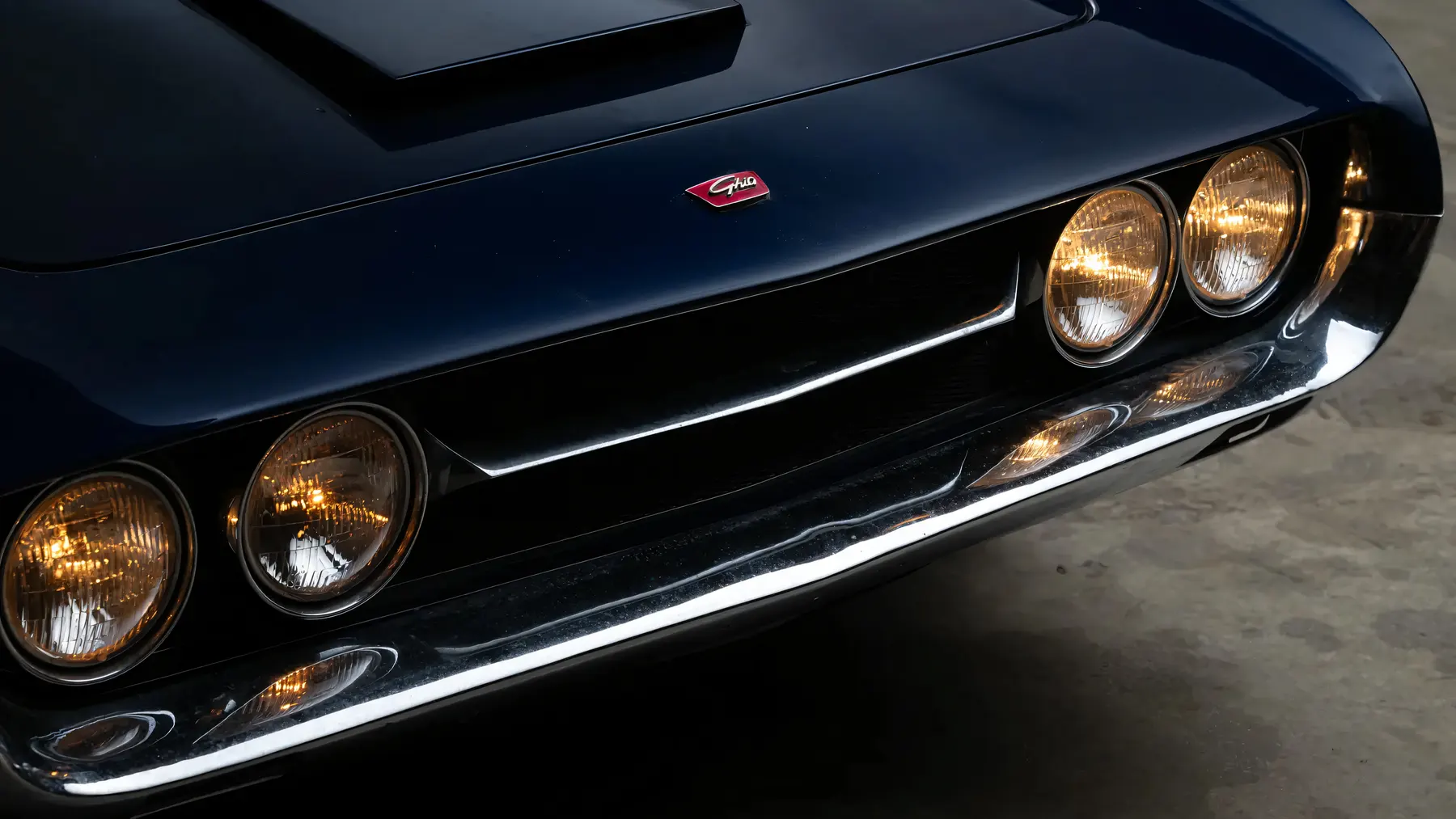
1966 Ghia 450 SS
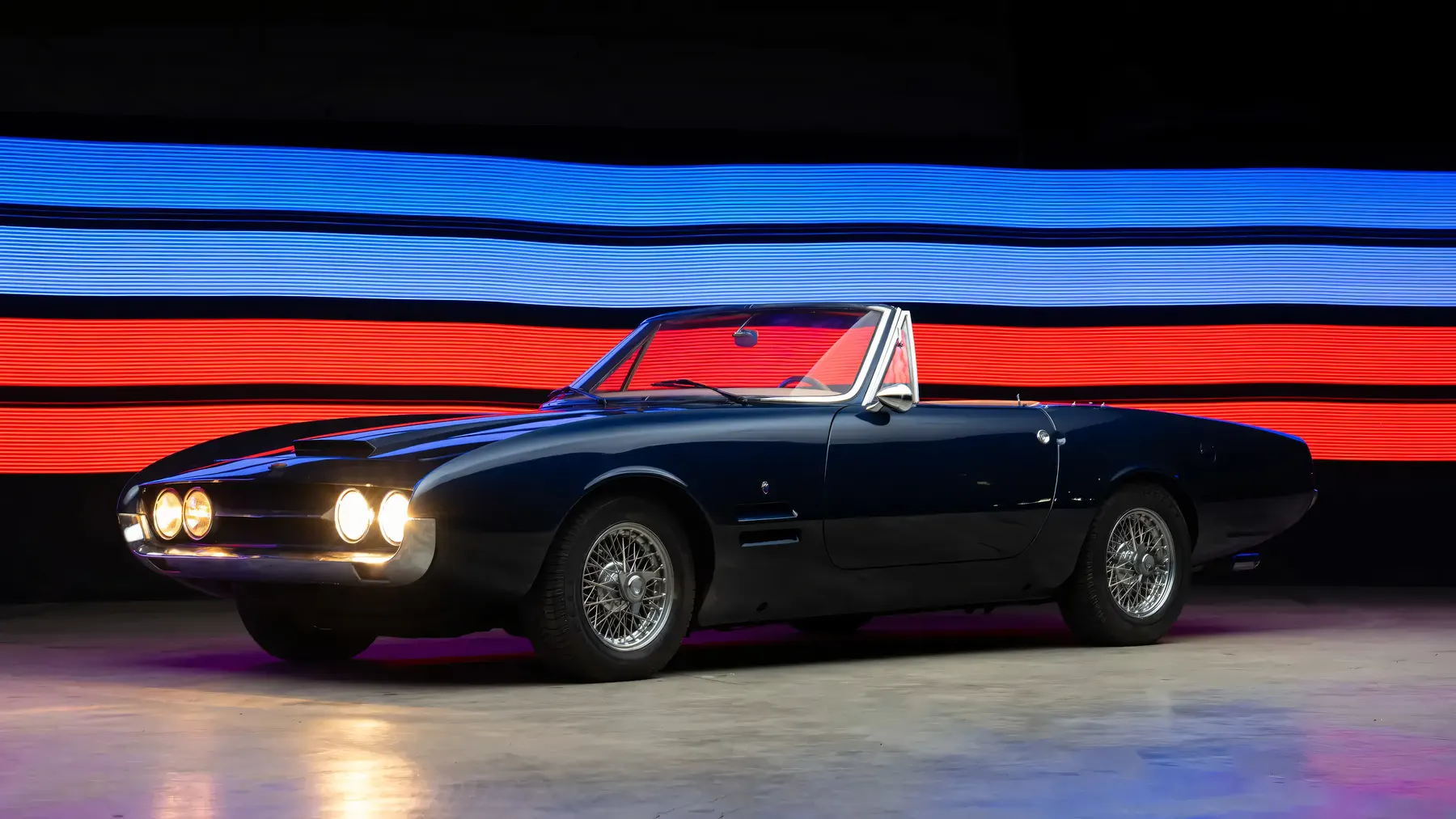
The Ghia 450 SS was a breathtaking, brutally short-lived creation born from an unlikely collision between Hollywood ambition and Turin craftsmanship - a car that dressed Plymouth Barracuda mechanicals in some of the most sensuous Italian coachwork the 1960s ever produced.
The genesis of the model belongs not to any engineer or board of directors, but to a 25-year-old Beverly Hills film producer named Burt Sugarman. In early 1965, Sugarman encountered a photograph of the Ghia G230S prototype on the cover of Road & Track and became immediately transfixed. He flew to Turin, walked into Carrozzeria Ghia’s studios, and proposed something that had no obvious precedent: take that flowing Italian shape, convert it to a proper open roadster, and power it with an American V8. The pitch landed squarely in Ghia’s comfort zone. The coachbuilder had maintained a close working relationship with Chrysler for years - the Karmann Ghia itself being the most famous product of that transatlantic dialogue - and a deal was struck to supply Plymouth Barracuda Formula S drivetrains as the mechanical foundation for the new car.
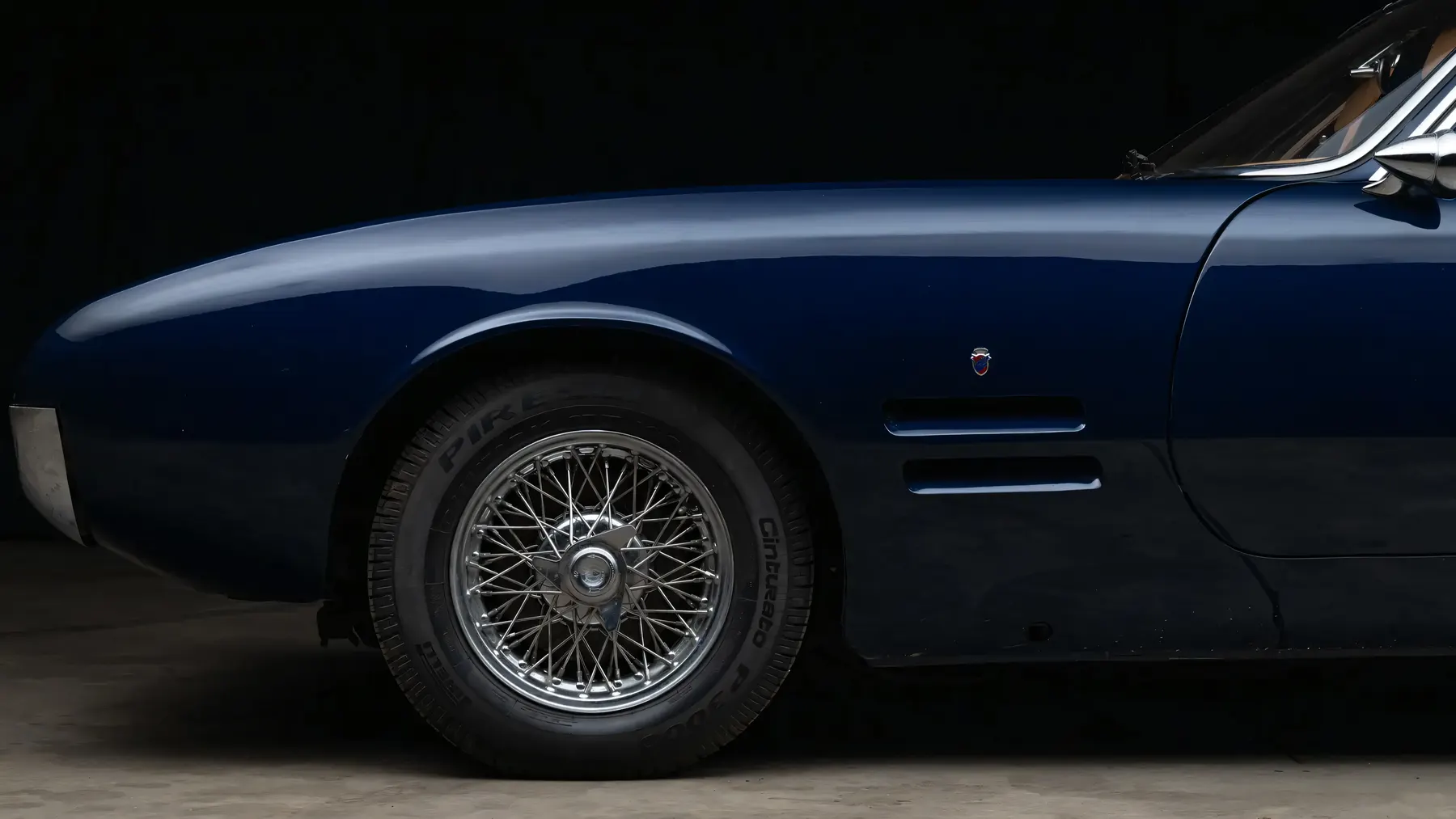
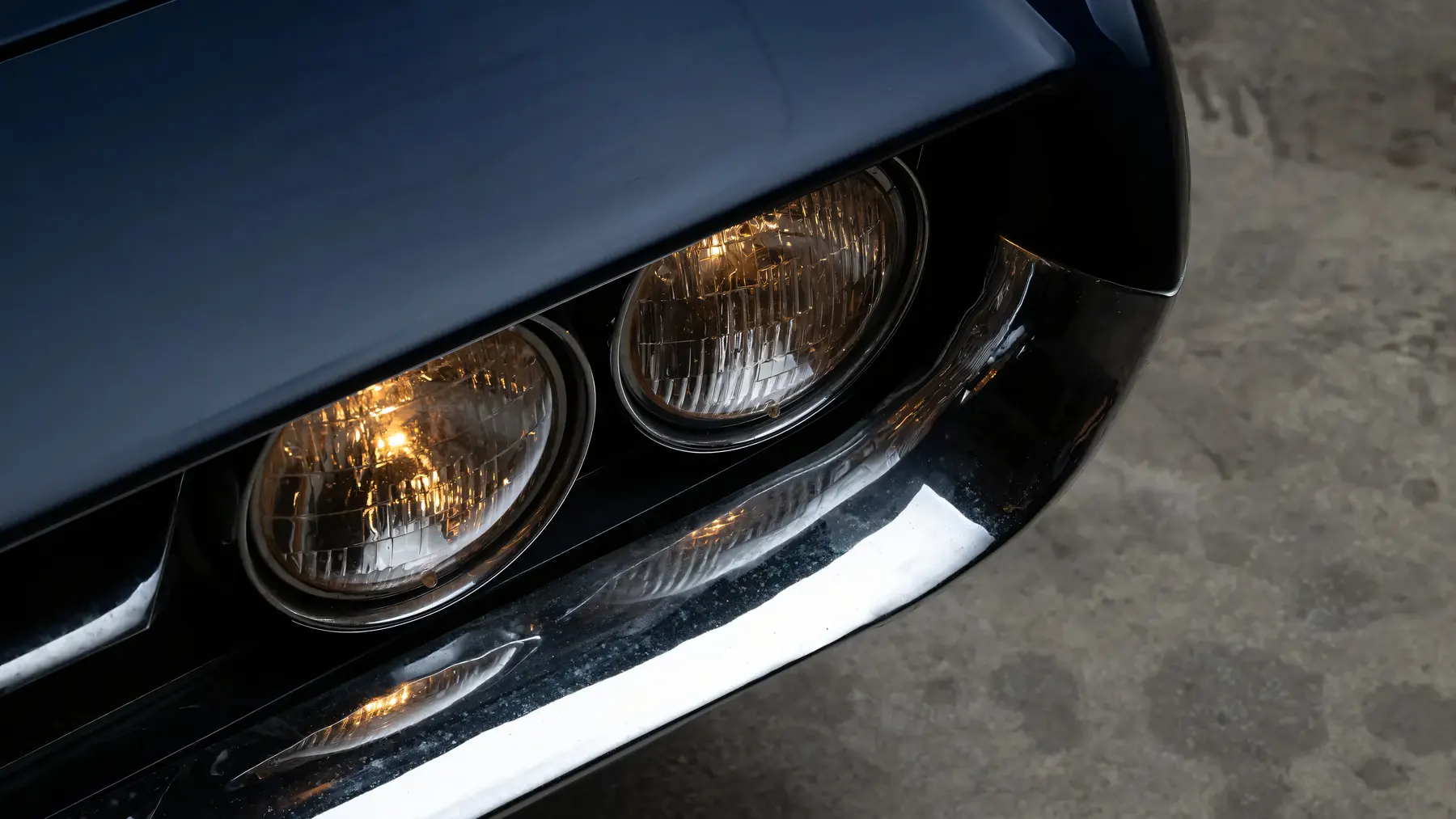
The design that emerged from those Turin studios was the work of more than one hand, a fact that has generated minor historical controversy ever since. The initial concept and bodywork were primarily the work of Sergio Sartorelli, Ghia’s resident designer, who established the car’s distinctive compound-curve flanks, the long nose, and the tapered tail. Giorgetto Giugiaro, who had only just joined Ghia in late 1965 as the project was approaching completion, refined the front bumper, grille treatment, and rear fascia - contributions that were meaningful but not originating. Giugiaro would later be more often credited than Sartorelli in popular accounts, which says more about how quickly his subsequent reputation grew (the Maserati Ghibli, also first shown in 1966, announced him to the world) than about the actual division of creative labour.
The car was first shown in Turin in November 1965 and then formally unveiled at the 1966 Geneva and Turin motor shows. What the audience saw was a two-door, two-plus-two convertible of exceptional elegance, riding on a semi-monocoque steel chassis built entirely by hand at Ghia’s factory. The bodywork was steel throughout, shaped without dies by craftsmen who worked panel by panel. Every 450 SS that left Turin was, in the most literal sense, a unique object - no two were dimensionally identical, and each arrived at its Beverly Hills destination with a small gold plaque affixed to the glovebox inscribed with the phrase “Specially Built For…” and the owner’s name.
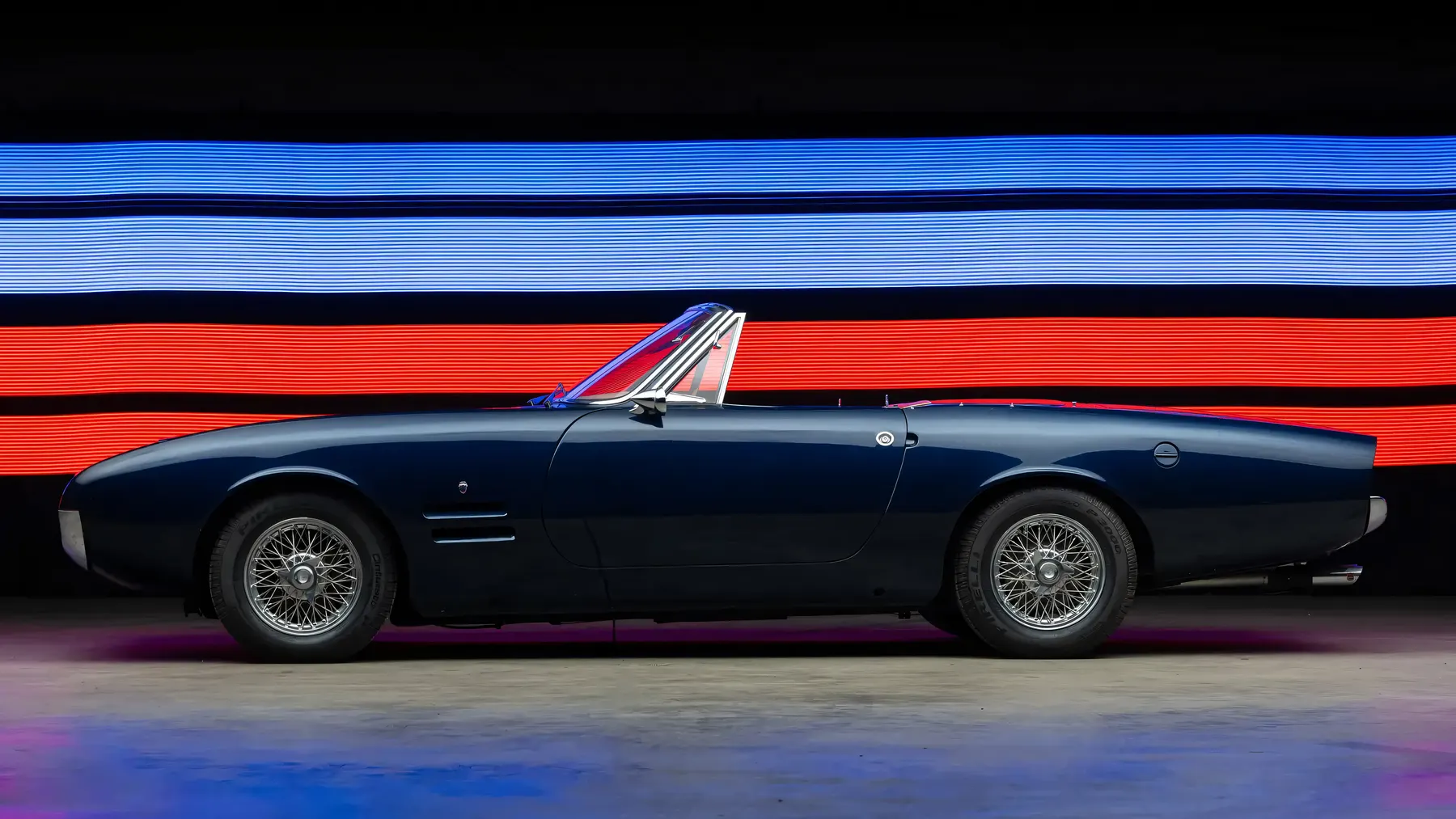
The name itself was straightforward enough: 450 referred to the displacement of the Chrysler V8 in approximate metric terms - the engine was actually a 4,474 cc (273 cubic inch) unit, the same “Commando” V8 used in the Barracuda Formula S. In its road specification, this engine developed 235 bhp at 5,200 rpm and 280 lb-ft of torque at 4,000 rpm, fed through a single Carter four-barrel carburettor. Transmission options were either a four-speed manual or the three-speed TorqueFlite automatic that Chrysler had developed through its American passenger car programme. The drivetrain was thoroughly proven and - crucially for a car sold into the California luxury market - genuinely reliable, a contrast to the temperamental European exotics that occupied the same price territory.
The chassis geometry diverged meaningfully from the Barracuda’s in one key dimension: wheelbase was shortened to 2,492 mm (compared to the Barracuda’s 2,692 mm), and overall length was reduced to 4,521 mm, making the car 254 mm shorter than its American donor. It was also 152 mm lower, giving the 450 SS a ground-hugging stance that the Barracuda, with its pony car proportions, never achieved. Kerb weight came in at approximately 1,280 kg - competitive for a car of this size and sophistication. Front suspension was fully independent; the rear relied on a live axle, which was the Barracuda’s arrangement carried over without modification. Front disc brakes provided the primary stopping power, with Kelsey-Hayes drums at the rear. Top speed was rated at 200 km/h (124 mph), a figure that felt entirely credible given the power-to-weight relationship.
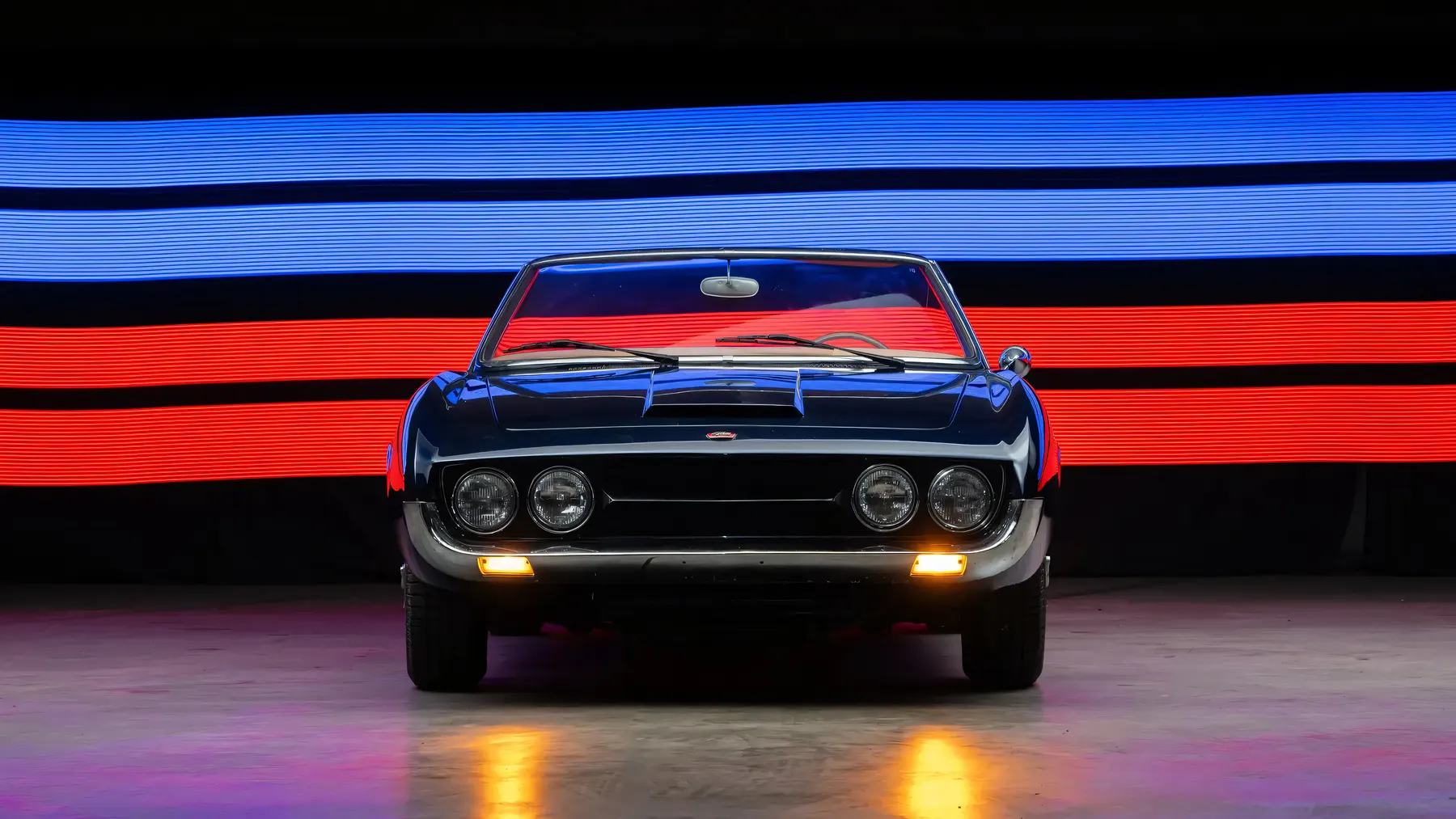
The 450 SS was available exclusively through Sugarman’s Beverly Hills operation, initially under the banner of “Ghia of America,” and the price - $11,000 to $13,100 depending on the source and the year - positioned it above the Ferrari 330 GTC of the same period in the American market, which was a bold statement. The only options were a removable steel hardtop at $600 and air conditioning at $700, which in Southern California was less an option than a necessity. Beyond those two choices, buyers could specify their own exterior colour and interior trim, which meant that no two cars in the eventual production run were configured identically. The client list that assembled around this offering was predictably Californian in flavour: Wilt Chamberlain acquired one, as did Johnny Carson, and the car appeared at social events across Beverly Hills with the regularity that expensive novelties tend to achieve when they are both beautiful and genuinely rare.
How rare, precisely, remains a matter of minor disagreement. Production figures vary across sources between 52 and 57 examples, with the discrepancy possibly reflecting cars at various stages of completion at the time the project ended in 1967 or differing methodologies for counting hand-built vehicles that arrived individually rather than in batches. The consensus figure most often cited by specialists is 57, of which approximately 37 are believed to survive today. At auction, well-preserved examples have traded between $121,000 and $220,000 over the past decade, a valuation that reflects the car’s genuine rarity and the strength of its design rather than any particular motorsport or cultural legacy of the sort that inflates values for more famous names.
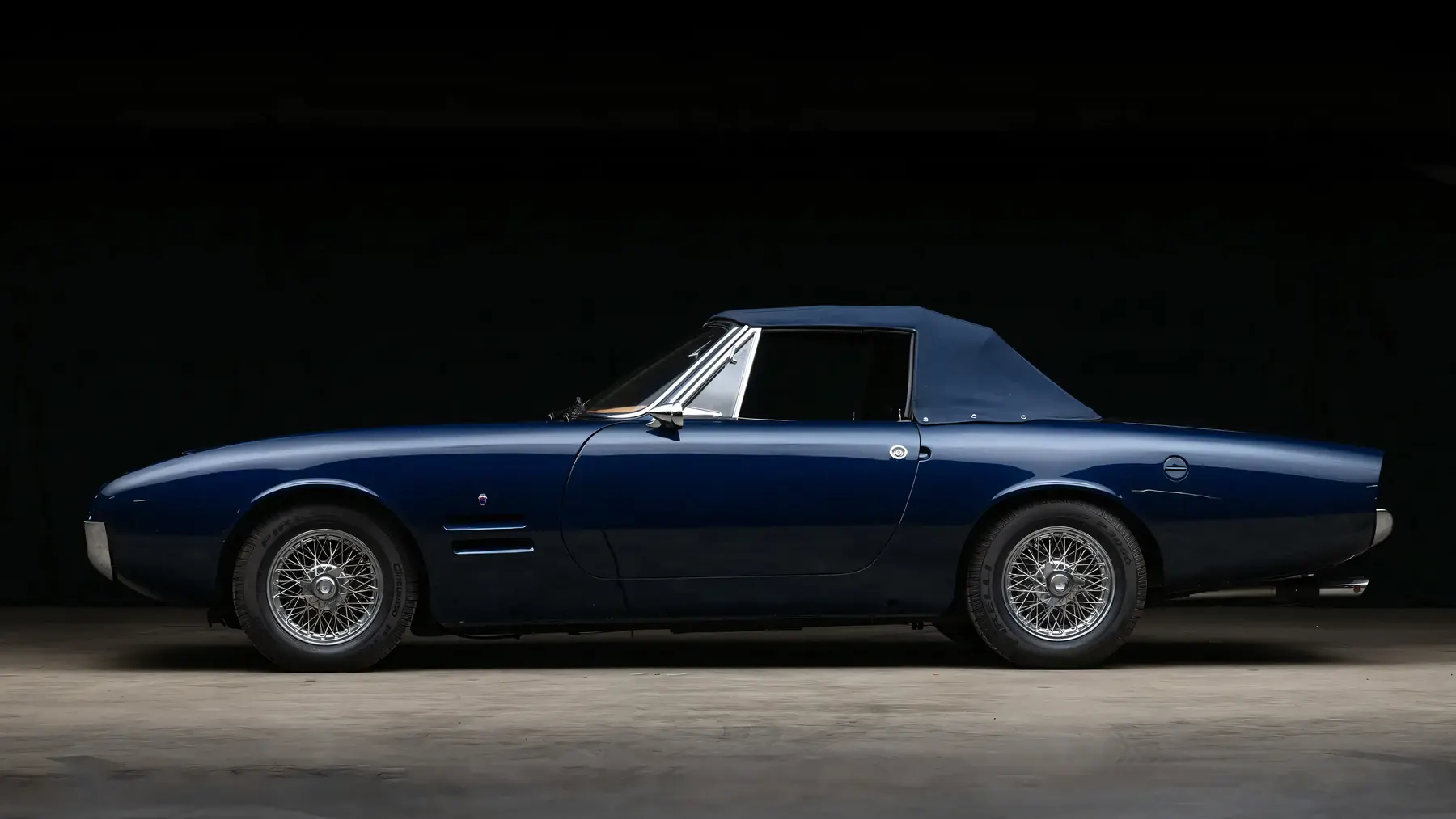
The honest assessment of the 450 SS as a driving machine requires some calibration of expectations. This was not a sports car in the focused, weight-conscious European tradition. The combination of American running gear with coachbuilt Italian bodywork produced something more accurately described as a luxury boulevard convertible - sophisticated, stylish, and capable of genuine speed in a straight line, but not a car that asked its driver to engage with the corners. The live rear axle and considerable frontal area placed natural limits on dynamic ambition, and the TorqueFlite automatic (the choice of most buyers) delivered its power with the relaxed, unhurried manner that Chrysler had optimised for American highways rather than Alpine switchbacks. In California traffic - which was the car’s natural habitat - this was rarely a disadvantage.
What the 450 SS genuinely achieved was something more interesting than outright performance: it demonstrated that handbuilt Italian coachwork could coexist with American mechanical dependability at a price point that European exotica of the same visual ambition could not match. The engine was cheap to maintain and reliable to a degree that no contemporary Ferrari or Maserati could claim, and Ghia even provided buyers with an edited Plymouth Barracuda owner’s manual to underscore the point. Any competent American mechanic could service the drivetrain; the exotic body was the expensive part.
The brevity of the production run was not the result of any particular failure so much as the inherent economics of hand-building a car in Turin for a single Beverly Hills dealership. The project worked at 57 cars in the sense that it produced something beautiful and found enough buyers. It could not have worked at 5,700 cars, because the craftsmanship that made each 450 SS distinctive was also the thing that made scaling impossible. Ghia moved on; Sugarman returned to television production; and the cars scattered across California garages where many of them would spend the next several decades in varying states of preservation.
The cultural position of the 450 SS is one of elegant obscurity - a car known intimately by a small community of specialists and Italian coachwork enthusiasts, and virtually unknown to everyone else. It has never quite acquired the cinematic or celebrity mythology that its original clientele might have promised; no film scene has made it iconic, no racing result has amplified its reputation. What it has is the quiet authority of genuine quality: Giugiaro’s refinements visible in every photograph, Sartorelli’s original proportions holding up across sixty years of changed tastes, the TorqueFlite still pushing warm California air through the carburettor of the surviving examples at concours events where it is, reliably, the only one present. That particular species of rarity - not the rarity of destruction, but the rarity of a thing so specific and considered that it was only ever made in very small numbers for very particular people - is the quality the 450 SS carries without effort, and it is why the model’s story, modest in scale and unfinished in resolution, continues to reward anyone who takes the time to find it.