1970 Mercedes-Benz 280 SE 3.5 Cabriolet
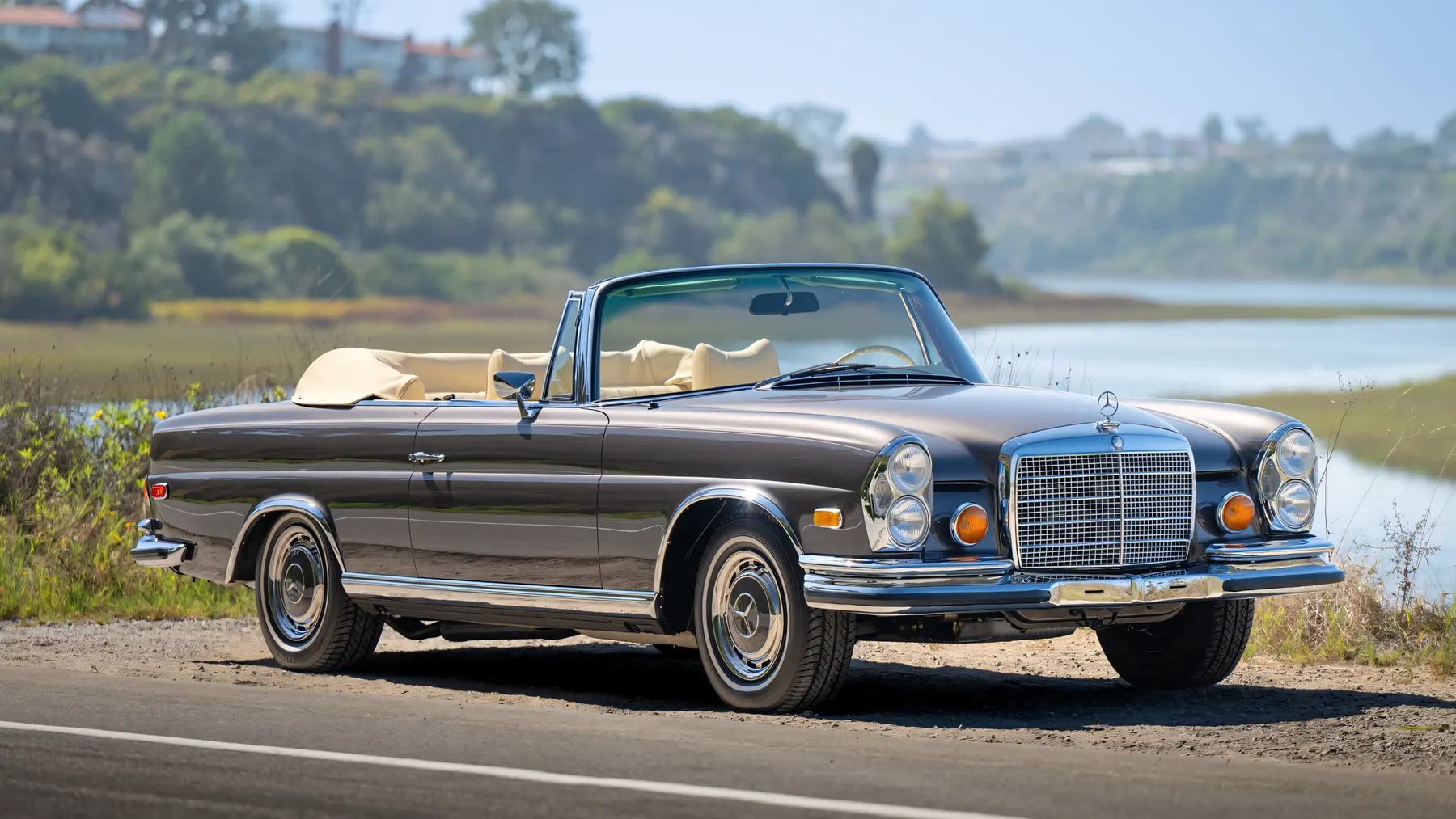
In the enchanted realm of classic cars, where every curve tells a story and every engine note is a symphony, a chapter is devoted to a masterpiece that epitomises the marriage of performance and sophistication,the 1970 Mercedes-Benz 280 SE 3.5 Cabriolet. As we embark on this journey through time, let the wind in your hair and the hum of a V-8 engine transport you to an era where elegance was not just a choice but a way of life.
The story begins in August 1961 when Mercedes-Benz introduced the 280 SE as a successor to the 220, a design that would endure for over a decade. Internally designated W111, this classic model evolved over the years, receiving various engines that propelled it into the echelons of automotive royalty. However, it was the autumn of 1969 that witnessed the emergence of something truly extraordinary,the 280 SE 3.5 Cabriolet.
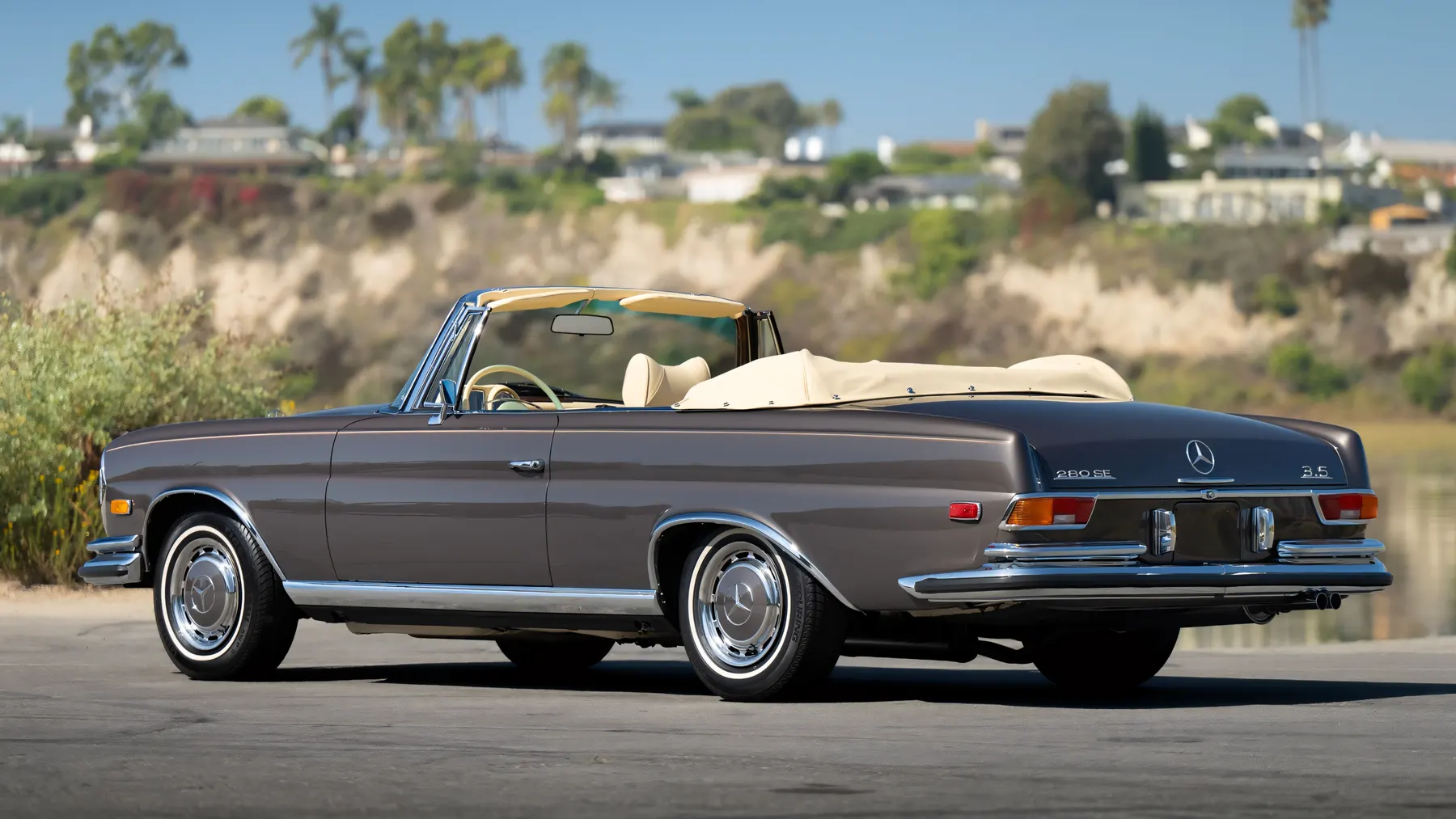
The design, an embodiment of Paul Bracq’s artistry, featured the iconic upright headlights and crisply creased flanks. Yet, under the hood, it housed a new heartbeat,an all-new 230-horsepower V-8 engine equipped with Bosch D-Jetronic electronic fuel injection. This marked a turning point for Mercedes-Benz, introducing fully independent suspension and four-wheel disc brakes to complement the newfound power.
The 280 SE 3.5 was a manifestation of luxury and exclusivity. The Cabriolet variant, a limited-production gem, offered a retreat for four under a meticulously crafted fully lined top. The process of creating each top required more than 16 hours of hand labour, a testament to the dedication Mercedes-Benz poured into this creation. On average, only 13 280 SE 3.5 Cabriolets rolled off the assembly line each week, making it a rare gem in the automotive cosmos. The total production, spanning from 1969 to 1971, culminated in 1,232 units,a testament to its exclusive nature.
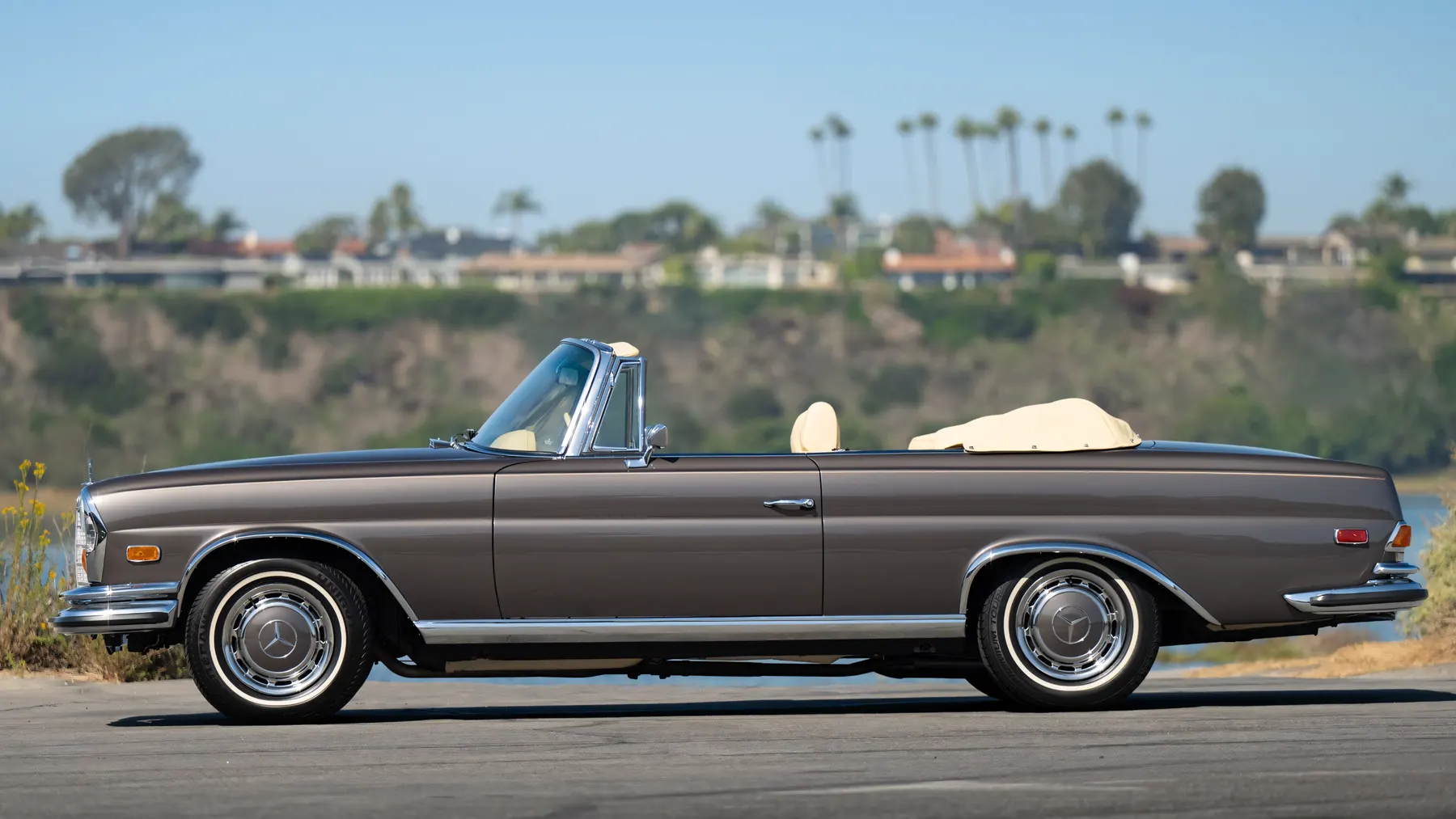
In essence, the 280 SE 3.5 Cabriolet was the final opus in Mercedes-Benz’s tradition of truly hand-built production automobiles. It was the coda, the concluding symphony in a lineage of superb engineering and coachbuilding.
What sets the 280 SE 3.5 apart is not just its exterior allure but the potent engine beating beneath its elegantly sculpted hood. The M116 3499 cc V8, a brand-new creation, heralded a new era for Mercedes-Benz. With 200 horsepower at 5800 rpm, a top speed of 210 km/h (130 mph), and a 0-100 km/h (62 mph) time of 9.5 seconds, the 280 SE 3.5 was a powerhouse on wheels.
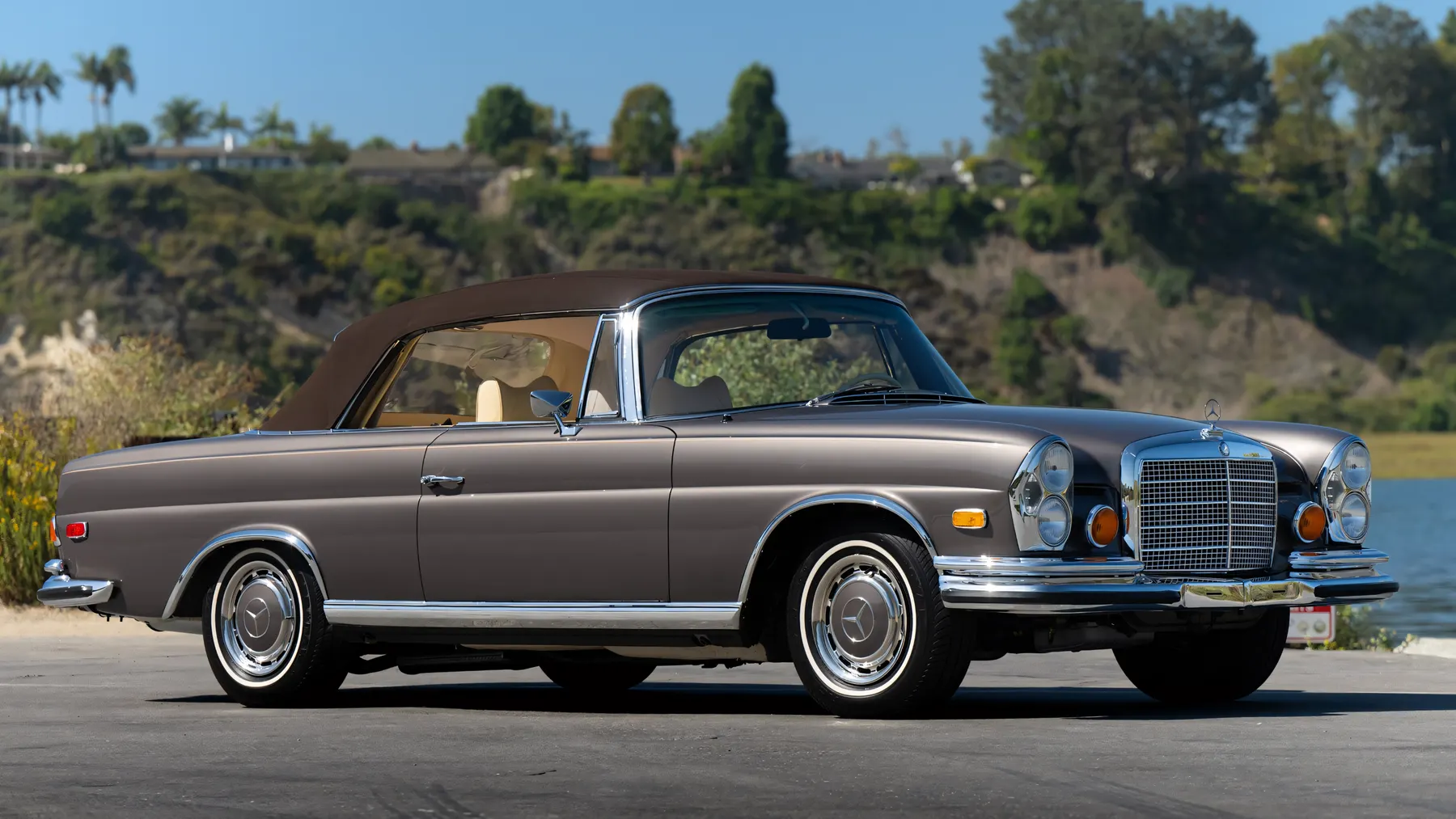
Contrary to popular belief, the lower, wider grille incorporated in the facelifted model was not a side-effect of enlarging the engine compartment. It was a deliberate move, a modern touch to rejuvenate the ageing design. The front and rear bumpers were modified, adorned with rubber rub strips, while the rear lenses adopted a flatter, cleaner design. This refresh, affectionately referred to by the Germans as the “flachkühler,” marked a new era while retaining the timeless elegance of the 280 SE.
As the 1970s dawned, the automotive landscape was evolving, and the 280 SE was destined to bid adieu. In August 1969, the 280 SE 3.5, the first Mercedes post-War coupé with more than 3 litres, was introduced. This marked the beginning of the end, with changes aimed at modernising the ageing design. The last 280 SE rolled off the production line in January 1971, with the 280 SE 3.5 concluding its journey in July of the same year.
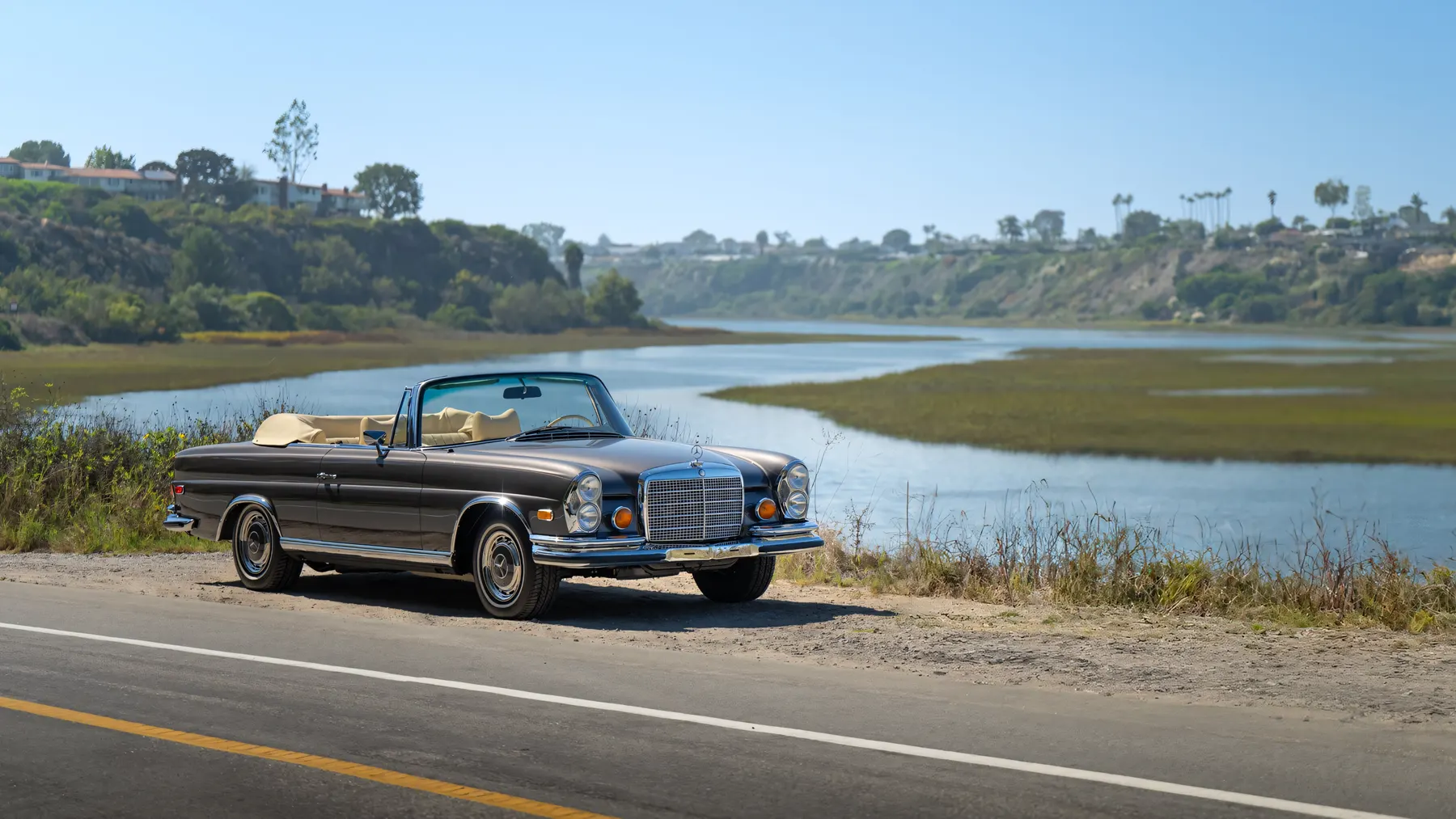
The total production numbers over the decade tell a tale of automotive legacy: 16,902 units of 220 SEb, 6,213 units of 250 SE, 5,187 units of 280 SE, and 4,502 units of the 280 SE 3.5. Excluding the 3,127 W112 300 SE models, the grand total of 2-door W111 models stood at 32,804, with 7,456 being convertibles.
The 280 SE’s indirect replacement was the C107 SLC, a hardtop coupé version of the SL roadster. However, the true successor of the W111/12 coupé emerged in the form of the C126 (SEC) coupé in 1981. As the R107 SL grew larger and more focused on luxury, it assumed the role of the top-range convertible, leaving the four-seater convertible absent from Mercedes-Benz’s lineup for nearly two decades until the A124 in 1992.
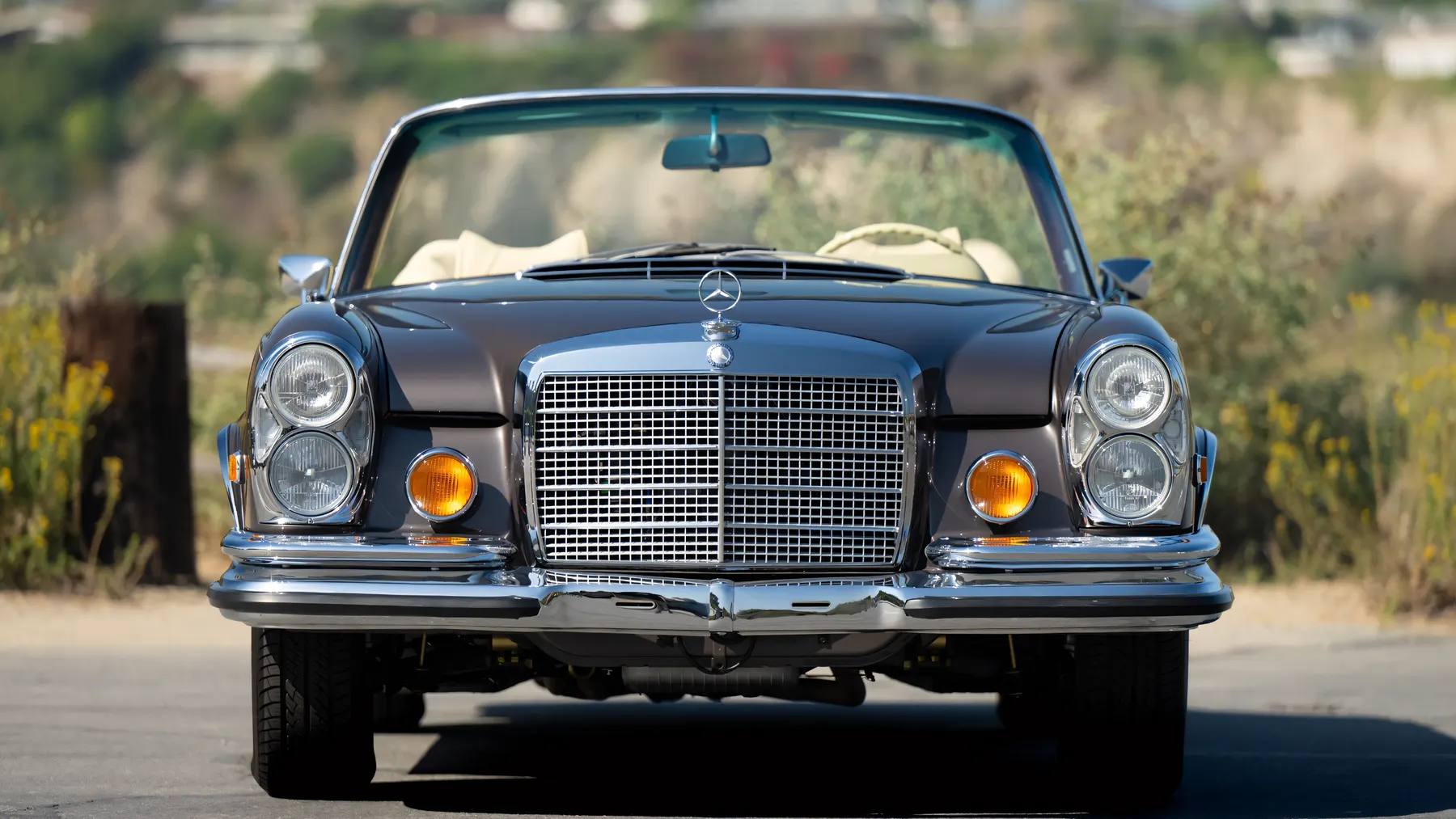
The 1970 Mercedes-Benz 280 SE 3.5 Cabriolet was a statement, a testament to an era when cars were not just means of transportation but expressions of craftsmanship and luxury. It marked the culmination of a decade-long journey, embodying the ideals of superb engineering and design tradition that Mercedes-Benz held dear.
As we reflect on this automotive legend, it’s not merely about horsepower and speed. It’s about the indelible mark left by a car that wasn’t just a mode of transport; it was an embodiment of a lifestyle,an era where elegance wasn’t an option but a way of life. The 280 SE 3.5 Cabriolet, with its graceful lines and powerful heart, echoes through time as a symbol of automotive artistry.