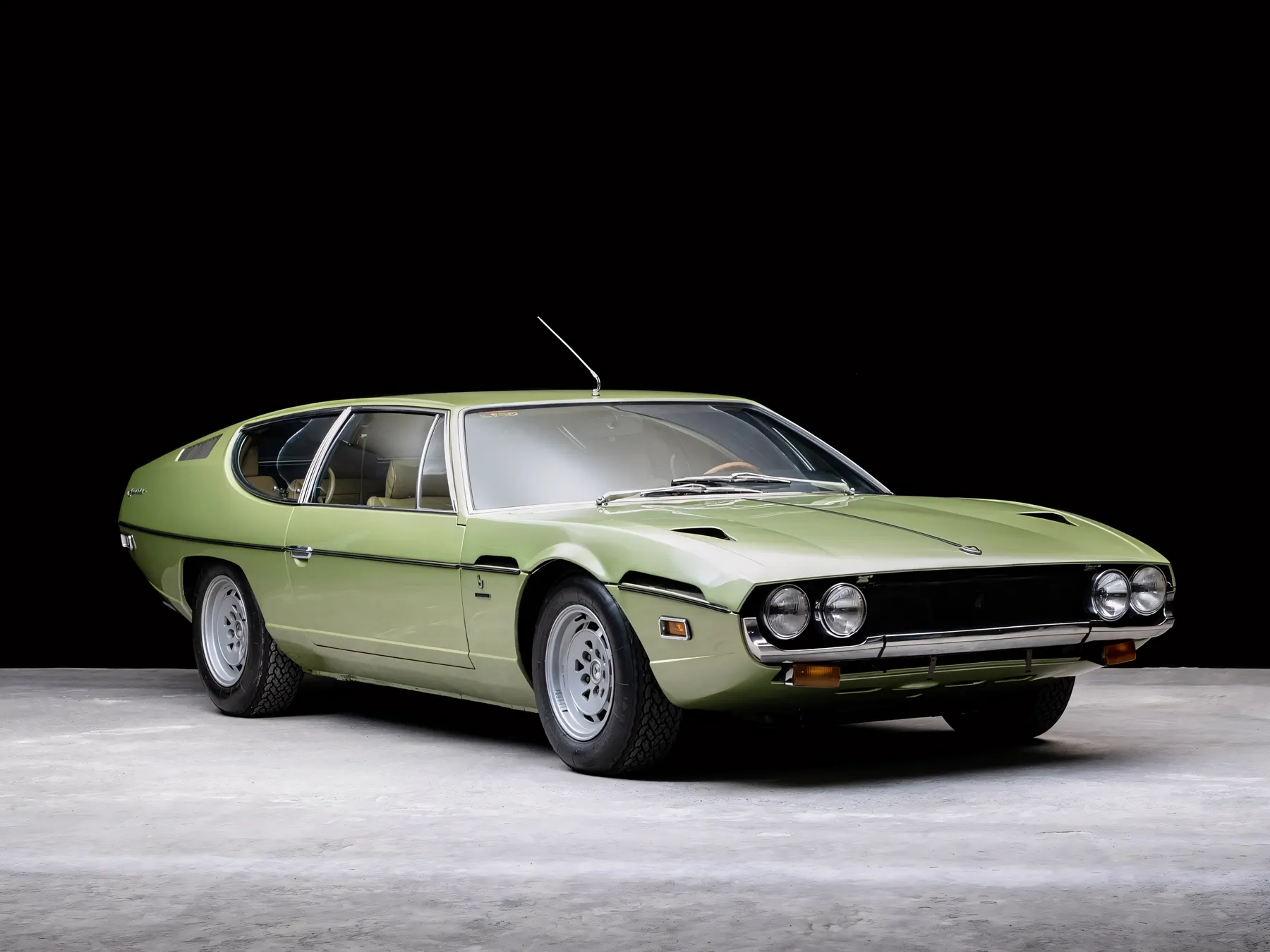
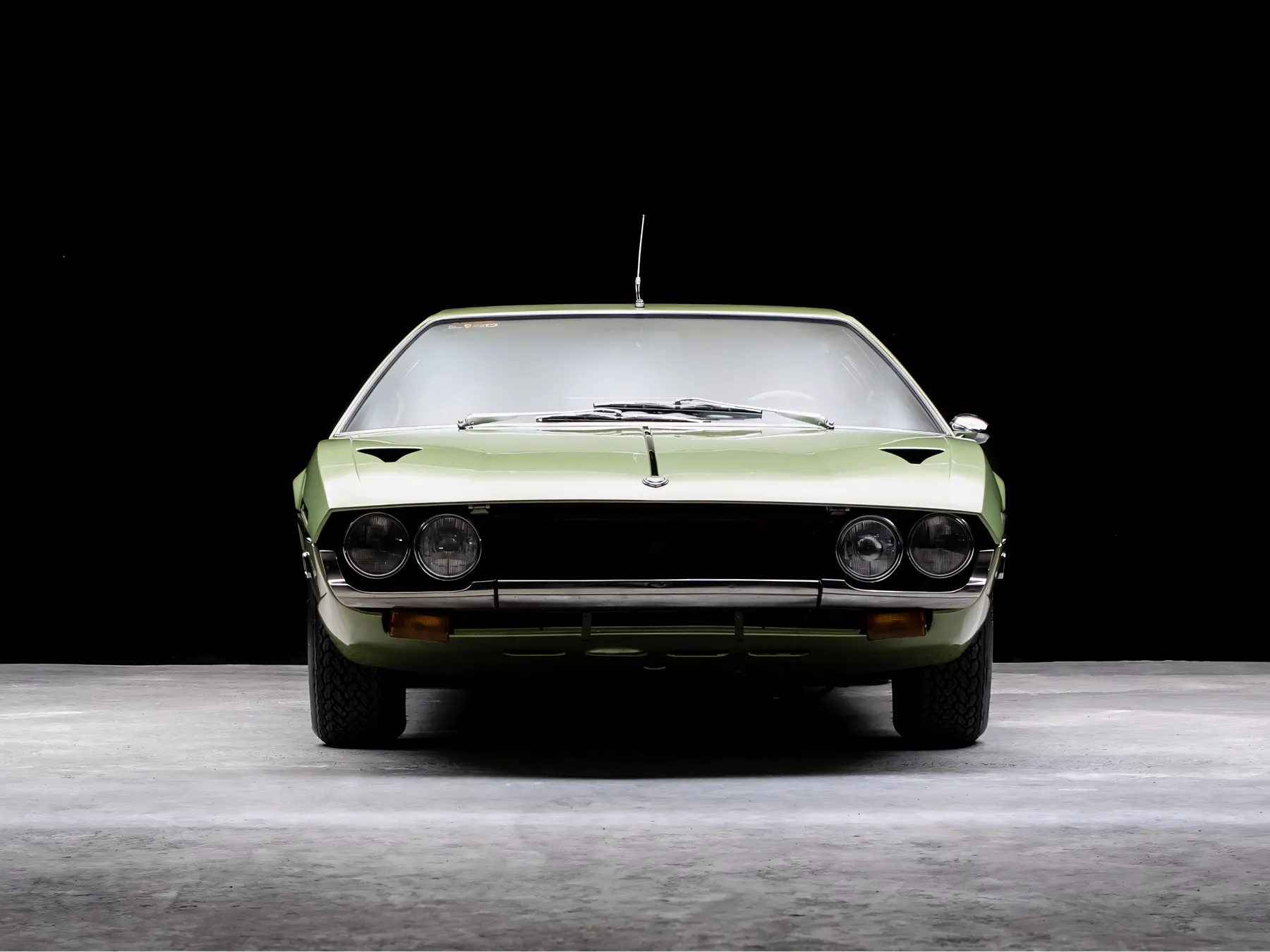
1972 Lamborghini Espada Series II by Bertone
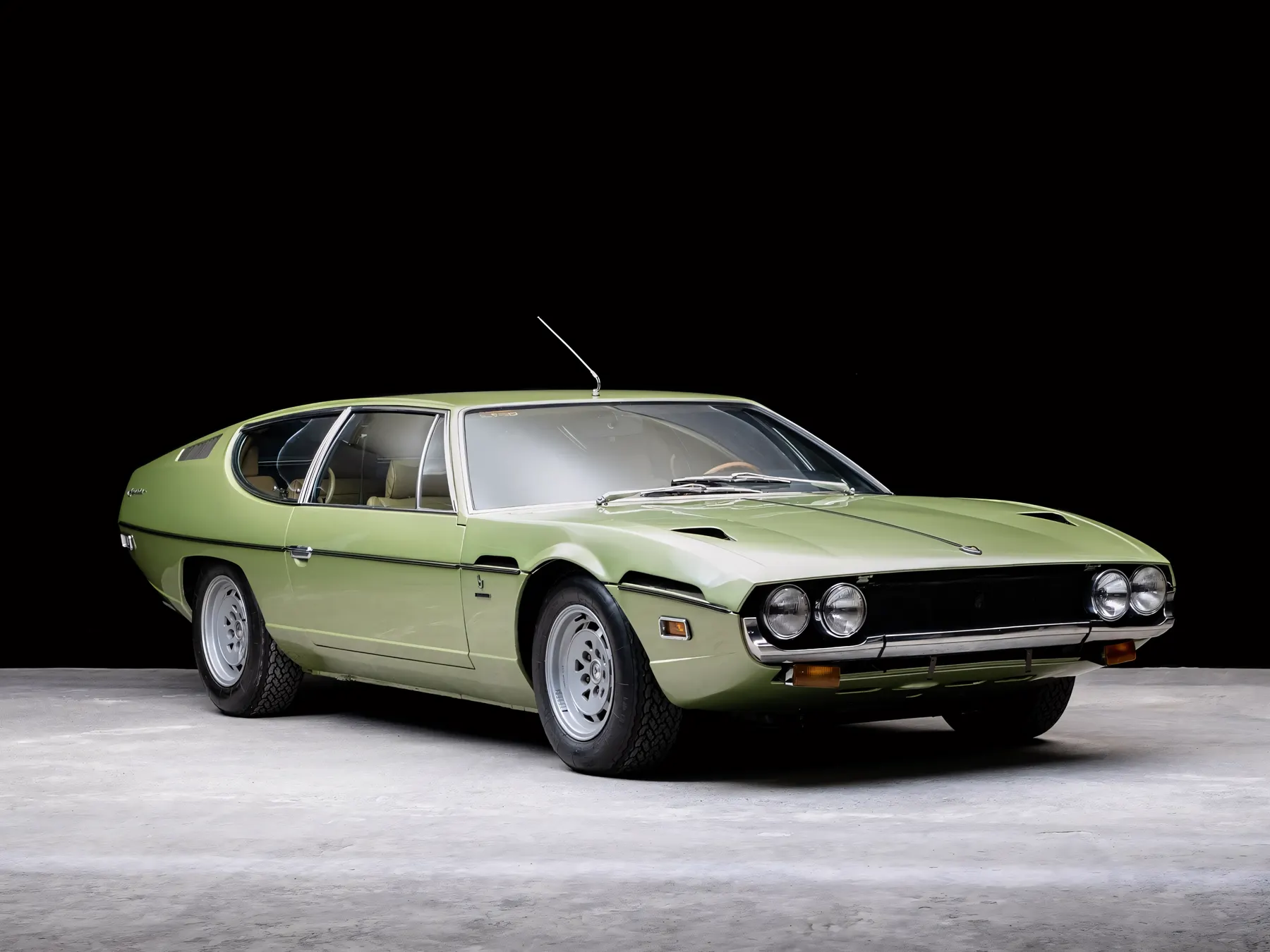
In the automotive kingdom of grand touring coupés, one name reigns supreme – the Lamborghini Espada. Born in the heart of Italy’s automotive prowess, this four-seater GT transcended the boundaries of style and performance, leaving an indelible mark on the roads it graced. In this chapter, we delve into the evolution of this iconic masterpiece, focusing our lens on the 1972 Lamborghini Espada Series II.
The genesis of the Espada’s allure lies in the brilliant mind of Marcello Gandini, the maestro behind the design curtains at Bertone. Drawing inspiration from his own creations, the Lamborghini Marzal and the Bertone Pirana, Gandini sculpted a vision that would resonate with enthusiasts for generations to come. The result? A breathtaking fusion of elegance and aggression.
What’s in a name? For the Espada, everything. “Espada,” translates to “sword” in Spanish, a fitting moniker for a car that embodies the precision and grace of a torero’s weapon. The Espada, a four-seater grand tourer, danced alongside the Islero and the legendary mid-engine Miura, bringing a bold alternative to the table.
During its decade-long reign, the Espada underwent a fascinating metamorphosis. The first series, S1 (1968–1970), set the stage with its daring design. As time marched on, the S2 (1970–1972) took centre stage at the 1970 Brussels Motor Show, revealing a host of interior and mechanical enhancements. Notable changes included a revamped dashboard, a wood-trimmed fascia, and an increase in power output to 350 horsepower.
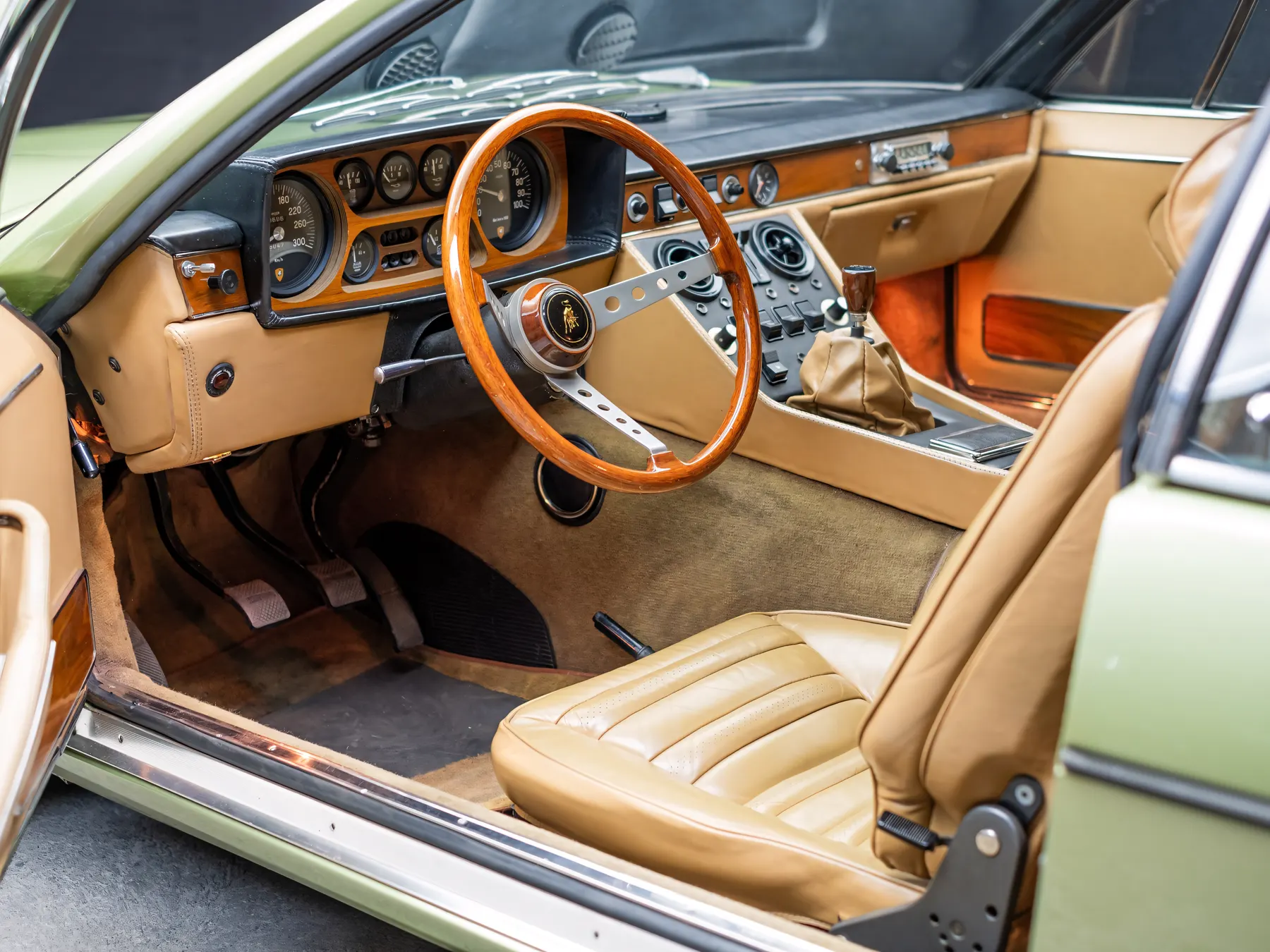
The Series II Espada, with its 575 units rolling off the assembly line, marked a pinnacle in mass production for Lamborghini. Notable improvements included the elimination of the grille covering the vertical glass tail panel, an all-new dashboard, and a redesigned centre console. The power was no exception, boosted to 350 horsepower through a higher compression ratio of 10.7:1. Ventilated Girling discs replaced the solid discs, ensuring stopping power matched the car’s newfound potency.
Solid discs initially graced the Espada’s underbelly, but with the Series II, vented discs brought an upgrade in stopping prowess. Power steering, a luxury in its own right, would later be offered in the Series III Espadas. The Series I and II Espadas cruised on Pirelli Cinturato 205VR15 tires, with Series II cars sporting the broader 215/70VR15 Cinturato CN12 variant.
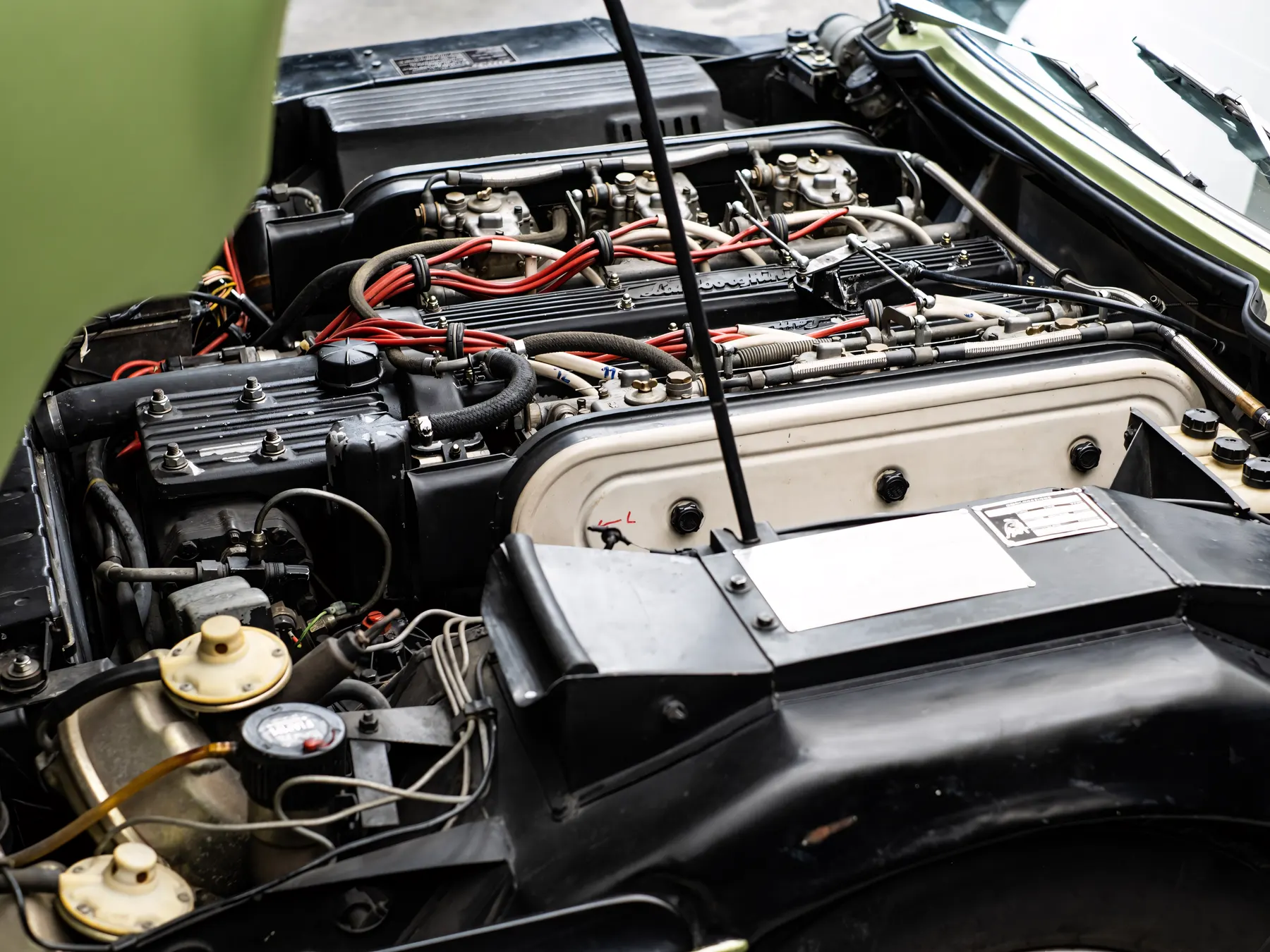
The beating heart of the Espada lay in its engine, with a cylinder bore of 82 mm and a stroke of 62 mm. The Series I engines boasted a compression ratio of 9.5:1, evolving to 10.7:1 in the Series II/III. Power output ascended, with Series I cars flexing 325 horsepower at 7,200 rpm, while the Series II/III roared with 350 horsepower at 7,500 rpm.
As the Series II Espada graced the roads with its sleek silhouette, it not only embraced the legacy of its predecessors but carved its own niche in the automotive pantheon. A true testament to the marriage of style and substance, the 1972 Lamborghini Espada Series II stands tall as a living legend on wheels.