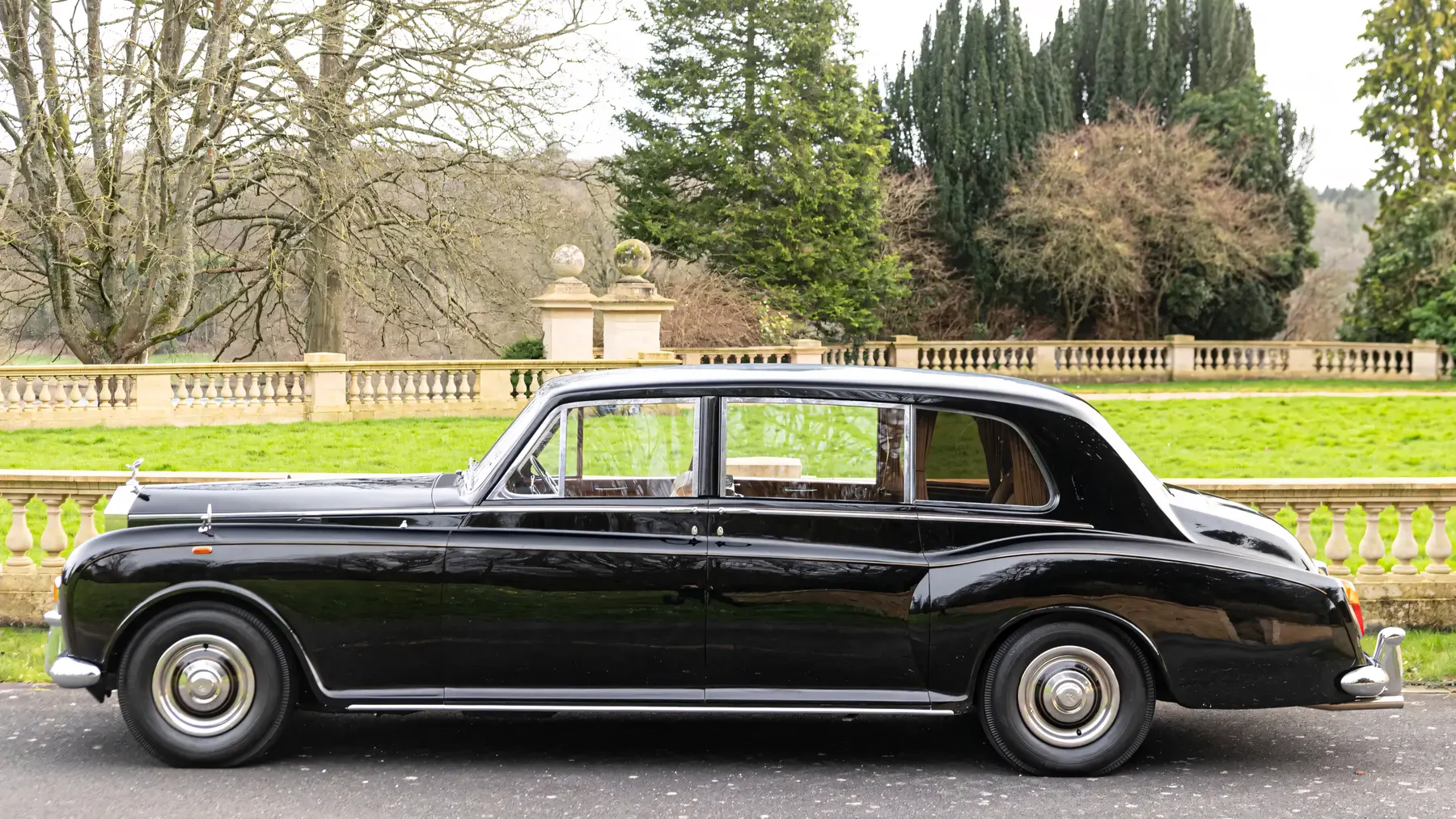
1972 Rolls-Royce Phantom VI Limousine by Mulliner Park Ward
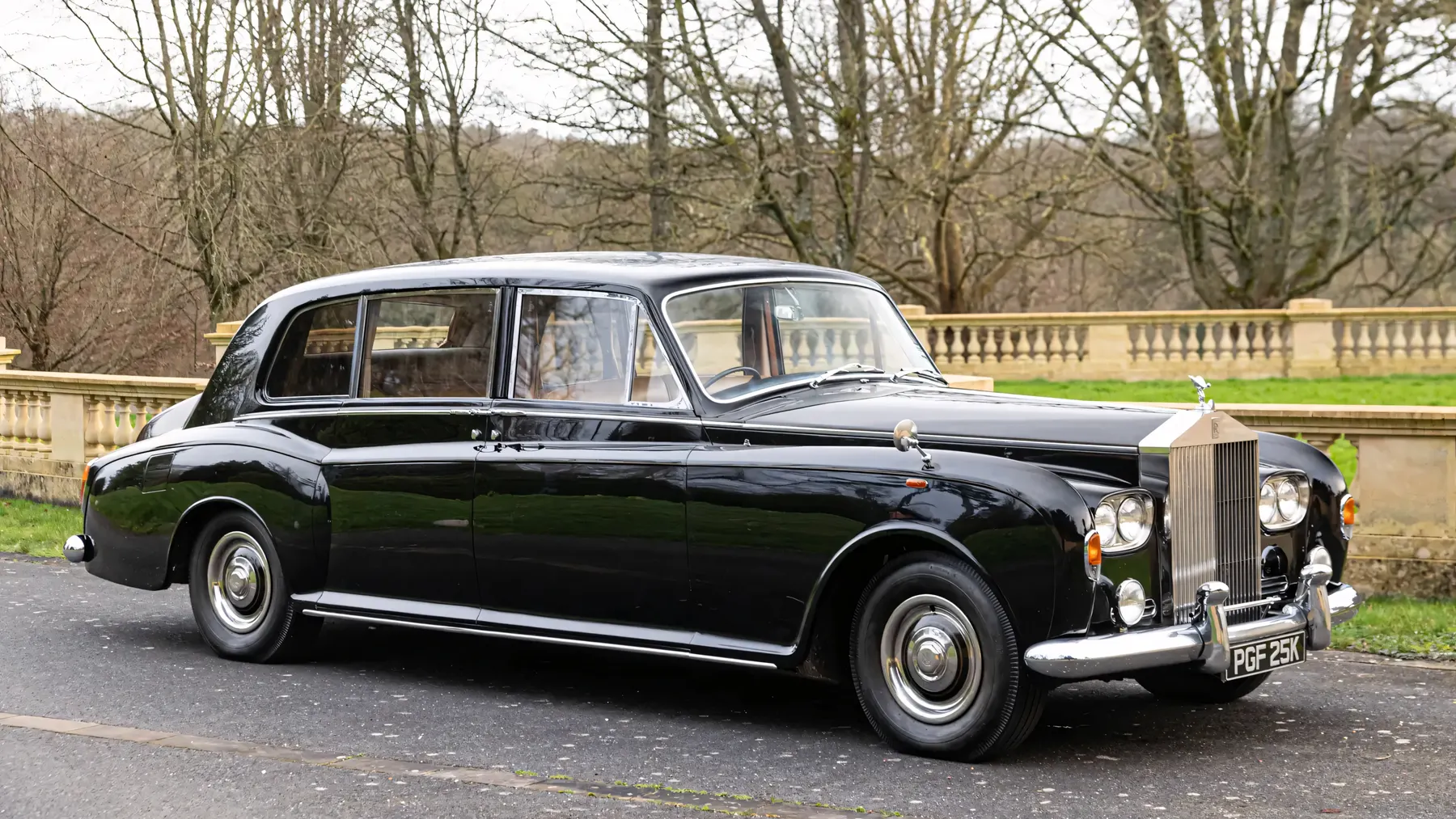
Between 1968 and 1991, Rolls-Royce created just 374 examples of the Phantom VI, marking the company’s last model built around a separate chassis frame. This approach to construction-once universal among luxury automakers-had already become rare by the late 1960s, making each hand-built chassis a testament to traditional automotive craftsmanship. Nearly every one of these chassis received its bodywork from Mulliner Park Ward, the company’s in-house coachbuilder, with the entire finishing process consuming approximately 18 months per vehicle.
The chassis itself featured coil springs at the front paired with leaf springs and a live axle at the rear, while drum brakes handled stopping duties at all four corners. Under the bonnet sat a 6,230 cc V8 engine arranged in a 90-degree configuration, fed by twin SU carburettors and mated initially to a four-speed automatic gearbox. The engine’s dimensions-a 104 mm bore and 91.5 mm stroke-produced power delivered with the near-silence that had become a Rolls-Royce hallmark. In 1979, engineers enlarged the powerplant to 6,750 cc and paired it with a three-speed automatic transmission incorporating a torque converter. Stretching across a wheelbase of 3,683 mm and tipping the scales at roughly 2,500 kilograms, the Phantom VI could nonetheless maintain anything from walking pace to speeds exceeding 100 mph.
Most customers chose the traditional limousine body, though a handful of landaulets also left the workshop. Inside, the rear compartment offered folding occasional seats that faced forward, a glass partition separating passengers from the driver, and a cocktail cabinet finished in burled wood veneer. The Phantom VI pioneered dual-zone climate control as standard equipment, becoming the world’s first production car with separate air conditioning systems for front and rear compartments. This innovation replaced an initial single-unit system that proved inadequate for managing the vehicle’s substantial interior volume.
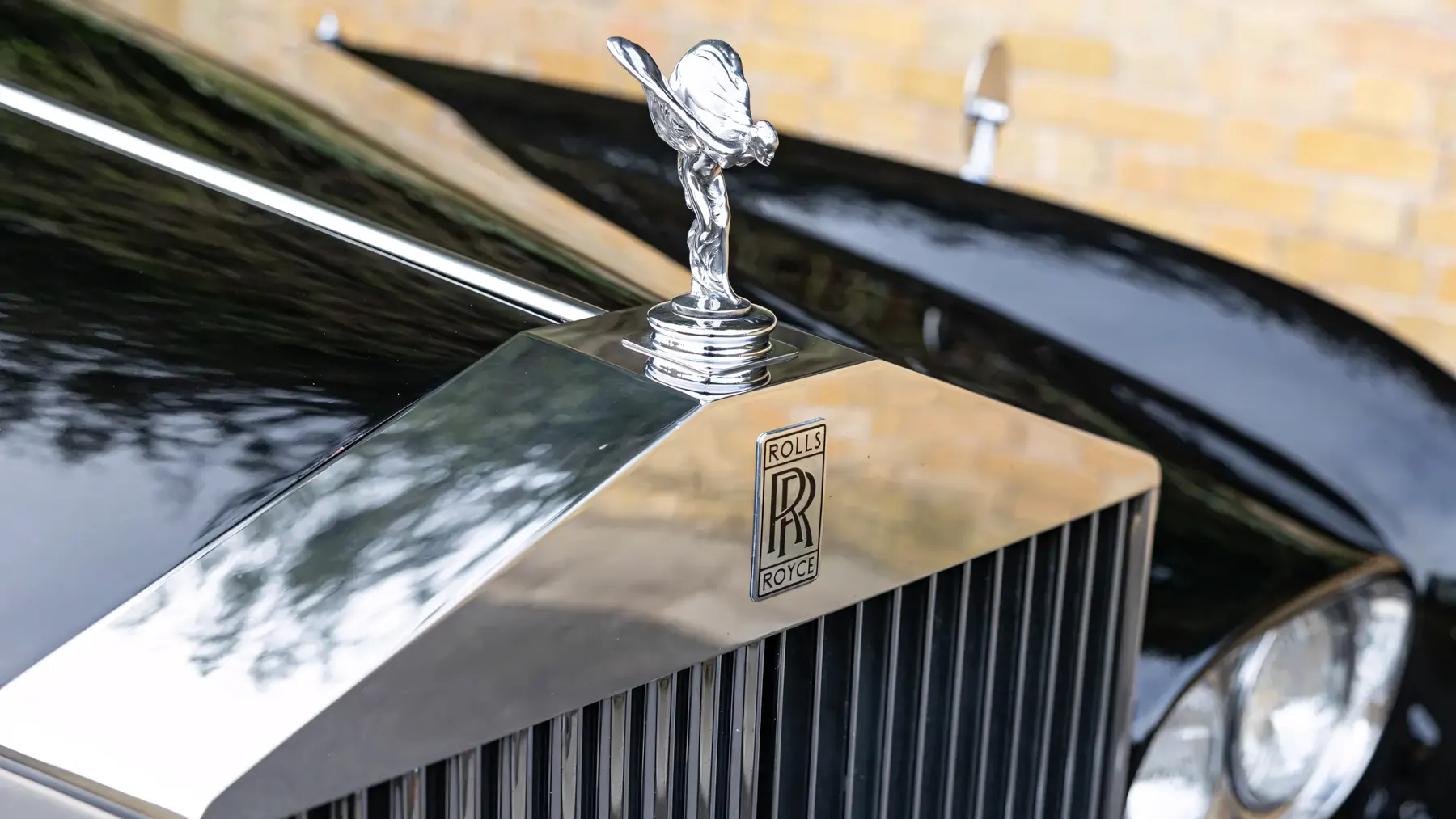
Queen Elizabeth II owned two Phantom VIs-a 1977 Silver Jubilee Car presented by the Society of Motor Manufacturers and Traders, and a more conventional 1986 model. These automobiles served as her primary state cars until 2002, when two Bentley State Limousines joined the royal fleet. When Her Majesty traveled in them, the traditional Spirit of Ecstasy mascot gave way to a figure of Saint George slaying the dragon. The final chassis left the factory in 1990, though completed vehicles emerged through 1992 as coachbuilders worked through their backlog.