1982 Aston Martin V8 Vantage '6.3-Litre Conversion'
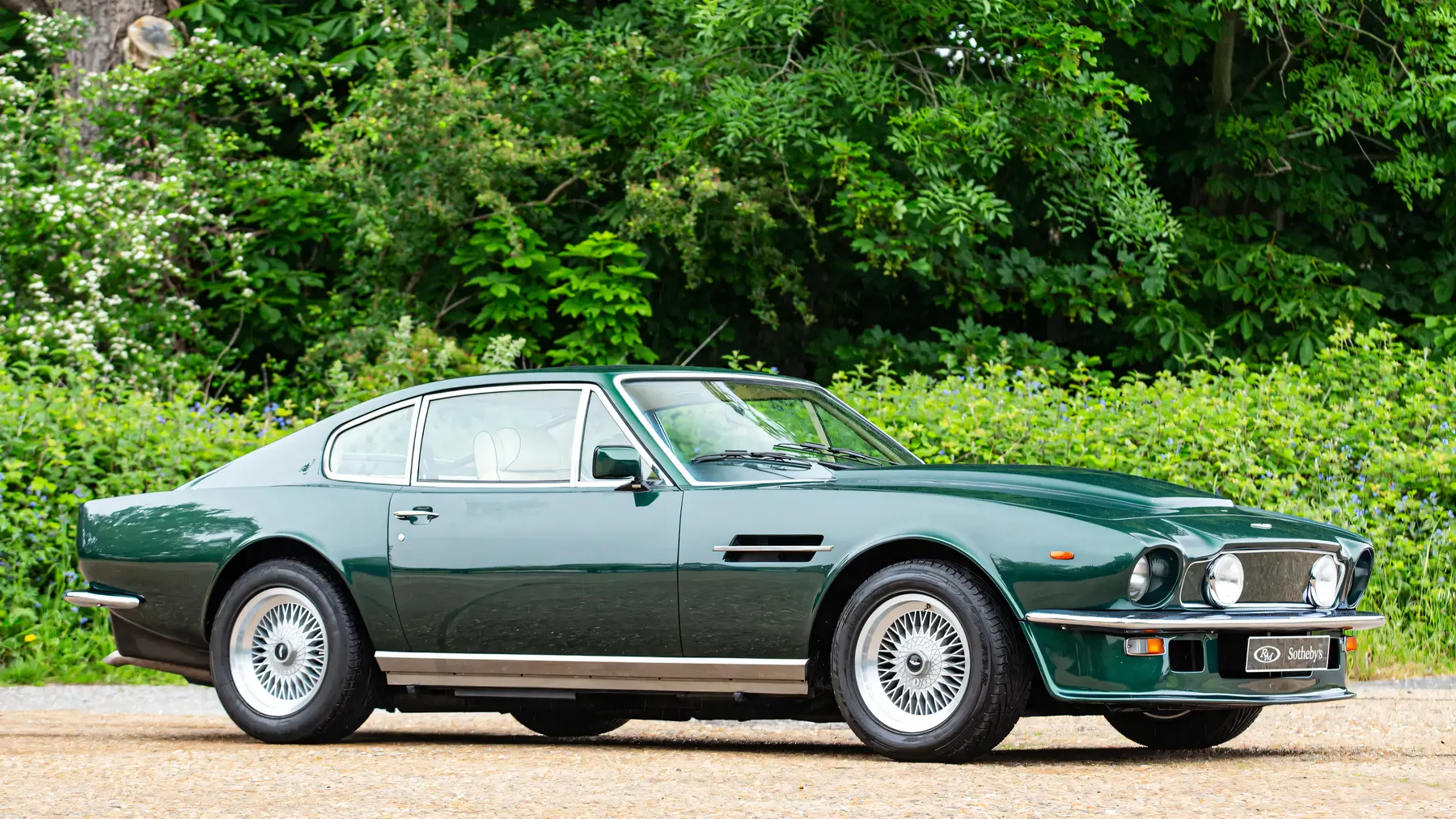
The engine that powered Aston Martin’s most exotic and coachbuilt 1980s creation - the razor-edged, Zagato-bodied V8 - was also available, quietly and without fanfare, as a factory conversion for the Vantage sitting in your garage. Newport Pagnell called it the 6.3-Litre Conversion, and the very existence of such a thing tells you everything about what the V8 Vantage was and what made it singular among British performance cars of its era.
The Vantage’s story begins in February 1977, when Aston Martin unveiled what Autocar magazine greeted with barely contained astonishment. The brief was straightforward enough in principle: take the Series 3 V8 - itself a car with lineage stretching back to the square-fronted DBS - and extract substantially more performance from it. The engineers at Newport Pagnell achieved this with a combination of high-performance camshafts carrying a polynomial profile, larger inlet valves, higher compression ratios, and four 48IDF Weber carburettors mounted on new inlet manifolds. The result was approximately 380 bhp, enough to slingshot the car to 60 mph in 5.3 seconds - one tenth of a second quicker than the Ferrari Daytona - and on to a claimed 170 mph top speed. “Britain’s First Supercar” was not a marketing slogan someone invented in a boardroom; it was a factual verdict the press arrived at independently.
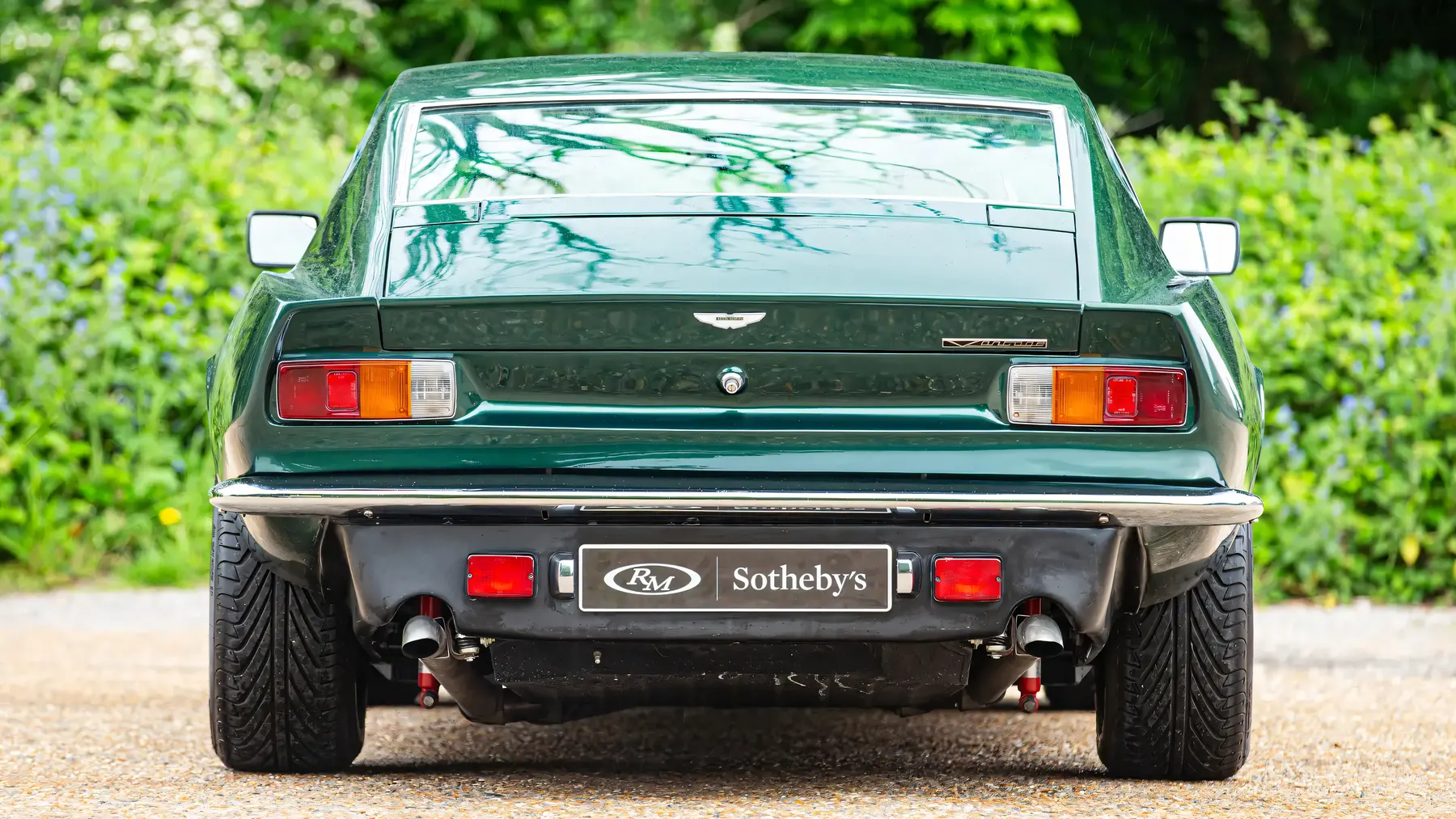
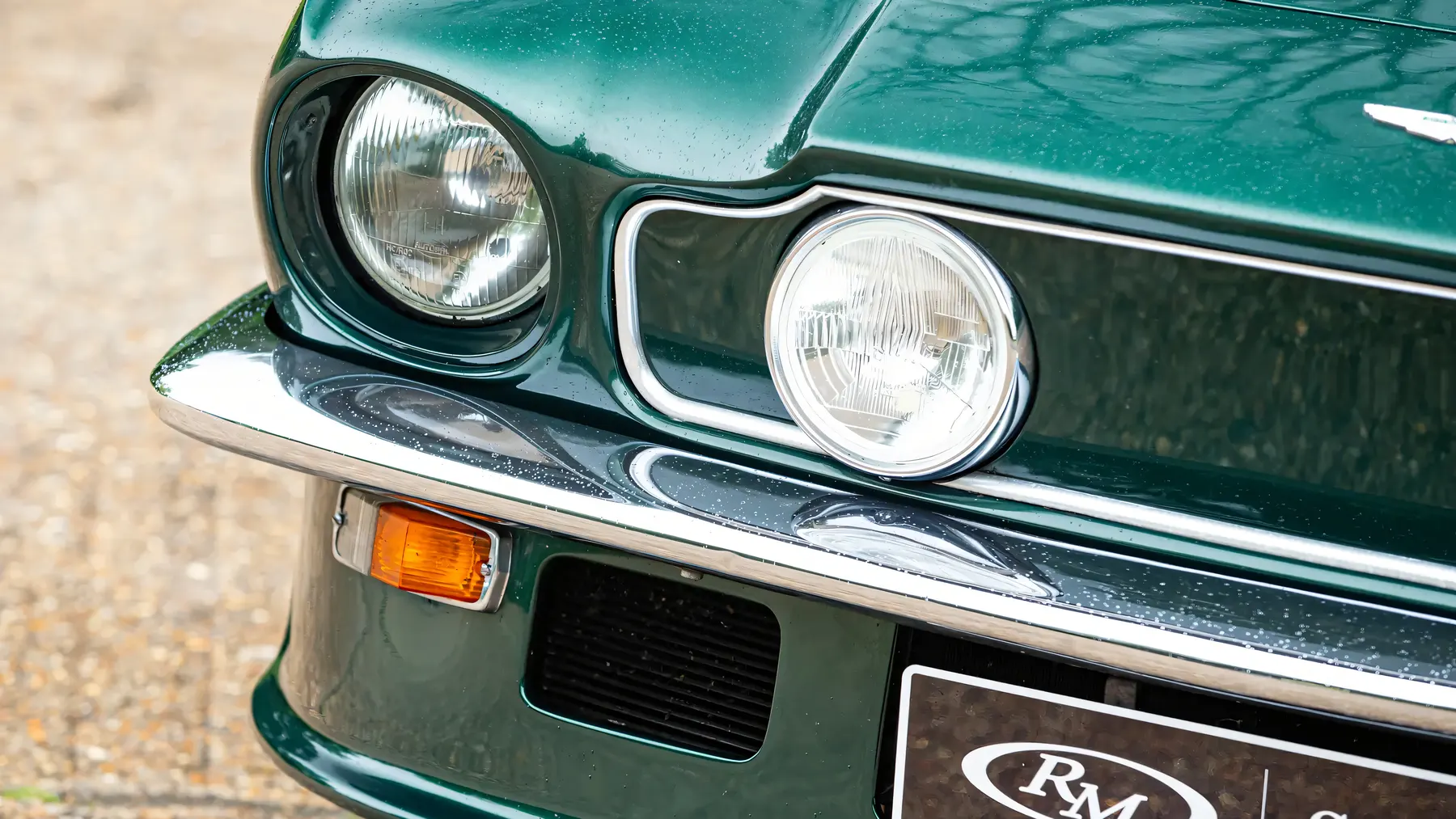
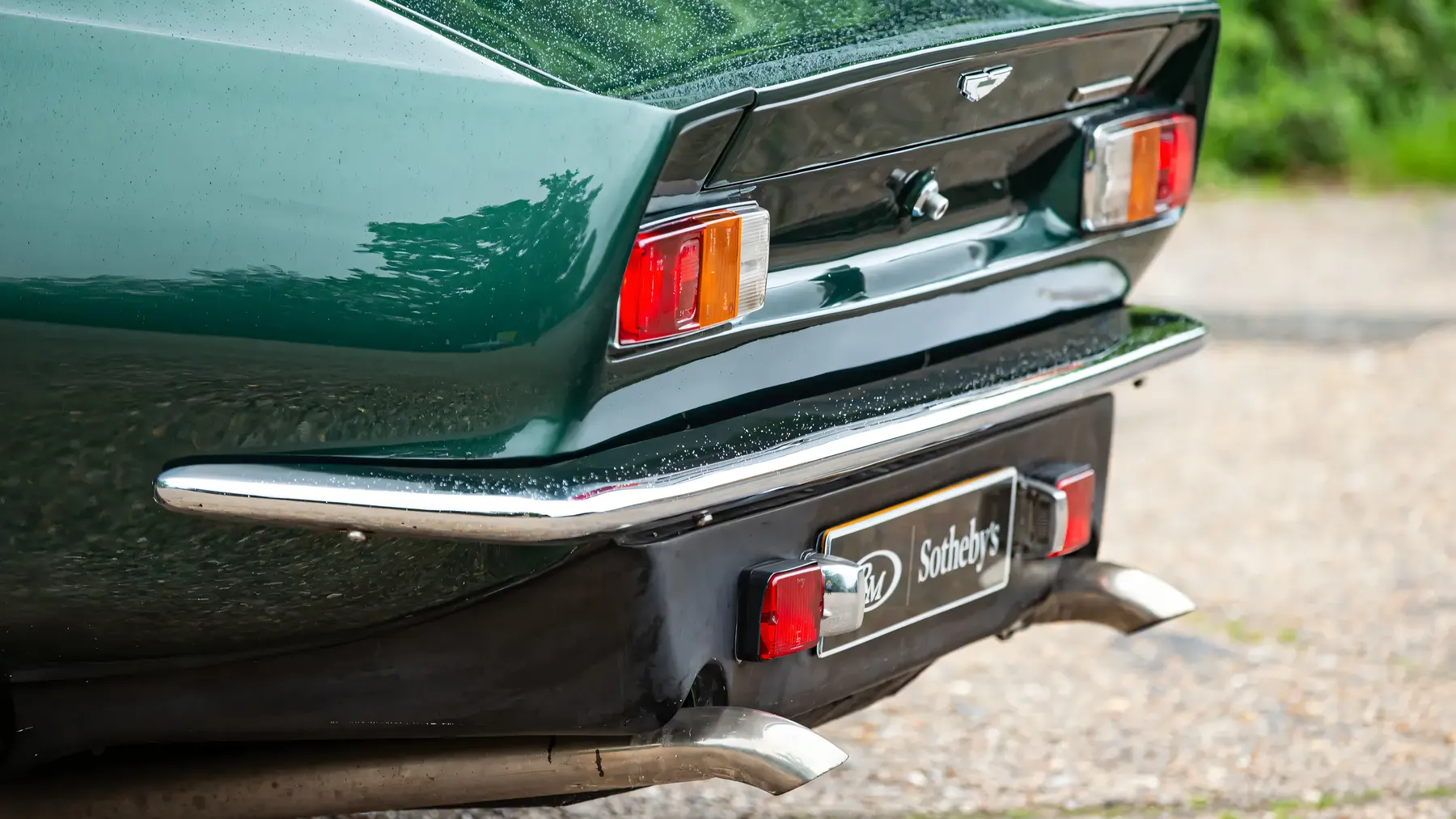
What separated the Vantage visually from the standard V8 was immediately obvious and purposeful. The radiator grille was blanked off entirely - wind tunnel testing at MIRA had shown it contributed little to cooling while meaningfully increasing drag - and twin 7-inch Cibie spotlights took its place. The bonnet received a sealed power bulge rather than an open scoop, and a rear bootlid spoiler tidied the aerodynamics at speed. These weren’t styling flourishes; each had an engineering rationale that the development team could justify in data. The overall shape, descended from William Towns’ DBS body, was already elderly when the Vantage appeared, but the blunt muscularity of those modifications gave it the visual authority the standard car lacked.
The model evolved meaningfully across its twelve-year production span. The first series of 38 genuine Vantage coupés gave way in late 1978 to the Oscar India variant - named for the NATO phonetic date of its October 1st introduction - which integrated the rear spoiler more elegantly into a tea-tray arrangement and raised power slightly to around 390 bhp. Then, from 1986, came the the 580 X-Pack, which fitted Cosworth pistons and Nimrod racing-type cylinder heads to push output to 403 bhp, with the optional big-bore aftermarket treatment - 50mm carburettors and a straight-through exhaust - nudging that figure toward 432 bhp. But above even the X-Pack sat the 6.3-Litre Conversion, a factory-performed procedure that stroked and bored the 5.3-litre unit to full 6.3-litre displacement and - in standard factory tune - produced figures in the region of 420 to 450 bhp depending on specification. This was the same engine architecture shared with the V8 Zagato, and that lineage mattered: the Zagato was built in tiny numbers at enormous expense as Aston Martin’s statement of ultimate intent, and having its mechanical heart available as a retrofit for the Vantage gave the conversion a cachet that went beyond the horsepower figure on the invoice.
The conversion was performed at Newport Pagnell Works Service, and a factory letter confirming the work was issued to the owner - a detail that matters because it distinguishes genuine factory conversions from the various independent engine enlargements that the aftermarket also offered. The crackle-finish black cylinder heads became the identifying mark of an authentic Works unit. Combined with a shortened rear axle ratio, large-bore exhaust, performance handling package, and 16-inch alloy wheels, the complete specification represented the most capable iteration the old Newport Pagnell platform could deliver in road-going form. The dog-leg five-speed manual gearbox - with first gear back and to the left, away from the working gate - underlined the sporting intent, its layout borrowed from competition thinking and offering a pleasingly mechanical connection between driver and drivetrain.
On the road, the 6.3-litre Vantage is an experience built on scale and torque rather than revs and precision. Motor Sport magazine’s 1978 road test of the standard Vantage described the acceleration as “simply stupendous and relentless,” noting that the tachometer moved so quickly under hard acceleration there was barely time to shift before hitting the advisory 6,250 rpm limit. Add the additional displacement and torque of the 6.3-litre conversion and the character intensifies: the car pulls with a directness that feels almost hydraulic, the V8 producing its power in a wide, unbroken swell rather than the sharp peak-and-fall of a high-revving engine. Classic Driver’s road experience of a Works-converted 6.3-litre Vantage described it as a car where “all 6.3 litres are unleashed” in a manner that leaves no ambiguity about what the machine is doing.
What the Vantage cannot disguise is its age. The steering, hydraulically assisted but ancient in its geometry and rack calibration, requires constant small corrections at speed and delivers only approximate information about what the front tyres are actually doing. Motor magazine’s independent test of the standard Vantage in 1978 could manage only 148 mph against Aston Martin’s 170 mph claim - a gap significant enough to require acknowledgment - and the braking system, with its 285mm three-piston front calipers, struggles to haul the car’s considerable weight down from serious velocities with the conviction the engine deserves. Aston Martin Works would later introduce an AP Racing-developed brake upgrade specifically to address this shortcoming, an implicit acknowledgment that the standard system was not equal to the power outputs the conversion programme had made possible. The body, hand-built at Newport Pagnell with the panel tolerances that come from craftsman labour rather than automation, could vary noticeably between examples.
None of which diminished the Vantage’s cultural standing. When the 1987 James Bond film The Living Daylights needed a car for Timothy Dalton’s debut as 007, it was the V8 Volante - the convertible sibling of the Vantage coupé - that appeared, owned personally by Aston Martin Lagonda chairman Victor Gauntlett. The car returned in No Time to Die and is set to appear again in the 2026 franchise installment 007 First Light, a cultural longevity that speaks to the Vantage’s grip on the popular imagination. Even Rowan Atkinson’s Johnny English Strikes Again used a red V8 Vantage - a car Atkinson himself had purchased six months before filming - which suggests the model’s iconic status had penetrated well beyond the serious enthusiast community.
The 6.3-Litre Conversion sits at a particular intersection in Aston Martin’s story: the point at which the old Newport Pagnell platform reached its ultimate expression before the Virage replaced it in 1989. It represents a factory that knew, with the unsentimental clarity that comes from decades of hand-building cars, exactly what its product was capable of - and had the engineering confidence to push it there in writing, with a letter to prove it. For Aston Martin collectors and marque historians, a properly documented 6.3-litre Vantage occupies a place that no subsequent model has quite replicated: the raw, pre-digital version of British supercar ambition, taken to its furthest factory-sanctioned extreme, produced in a country that was still, improbably, competing with Ferrari and Porsche on its own stubbornly individual terms.