2009 Mercedes-Benz CLK 63 AMG Black Series Coupé
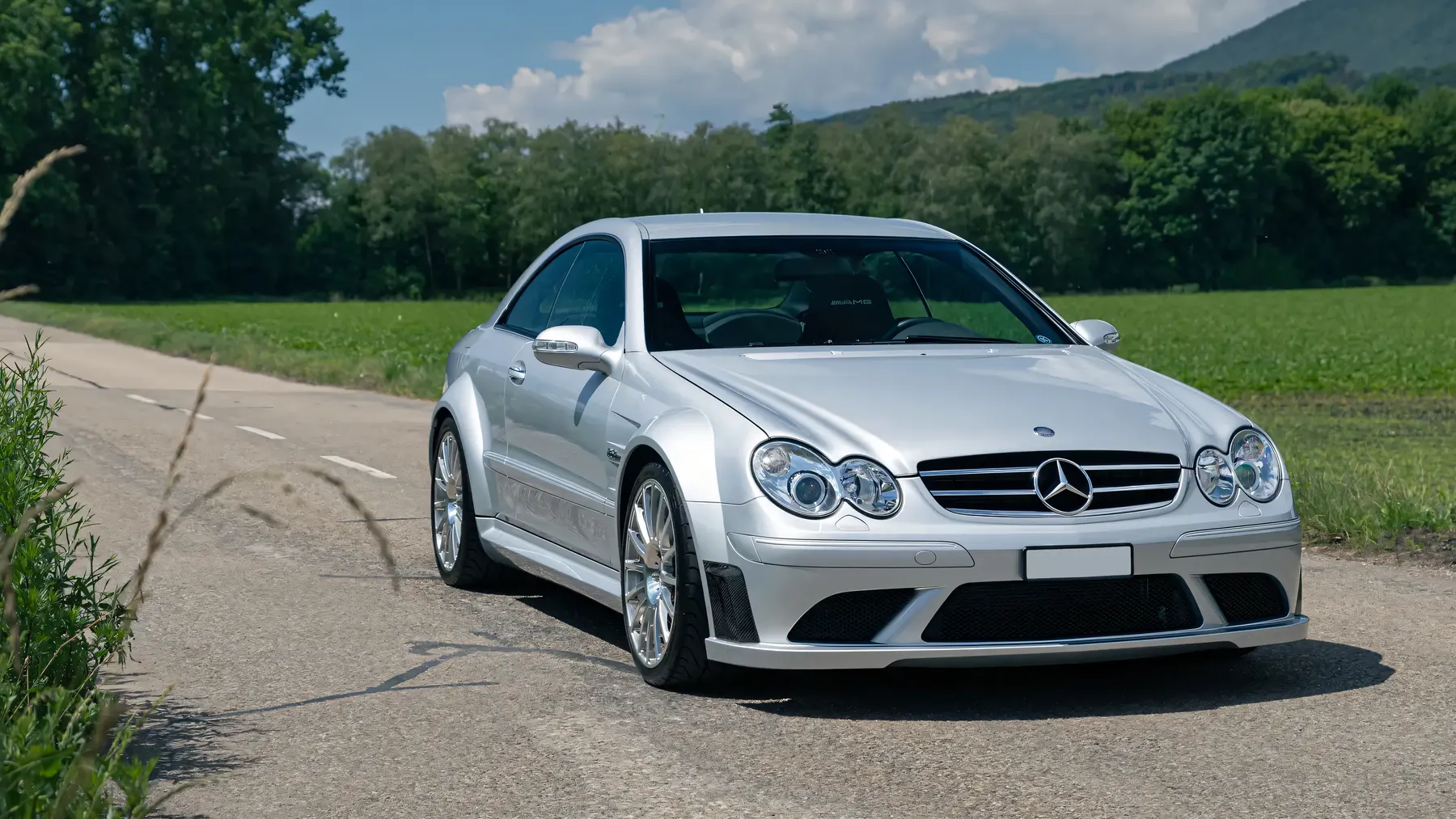
When the 2007 Formula 1 World Championship descended into the most politically charged title fight of the modern era - Alonso and Hamilton trading sabotage allegations and legal filings as the championship went to the final lap of the final race - it was a wide-bodied Mercedes that commanded the most unchallenged authority on any circuit that year. The CLK 63 AMG Black Series, commissioned as the official FIA Formula 1 Safety Car for both the 2006 and 2007 seasons, had the singular distinction of being the only car on a grand prix circuit that every driver was legally obliged to follow.
That motorsport connection wasn’t incidental marketing. AMG built just two dedicated F1 Safety Car variants of the Black Series, but the influence ran deeper than two special-build coupés. The entire technical philosophy of the production car - its dramatically widened stance, its adjustable competition-grade suspension, its M156 engine tuned far beyond the limits of ordinary road use - drew directly from what AMG’s engineers had learned making a grand tourer fast enough to stay ahead of Formula 1 machinery under controlled conditions. What they produced in the road car was something more uncompromising than the starting point suggested.
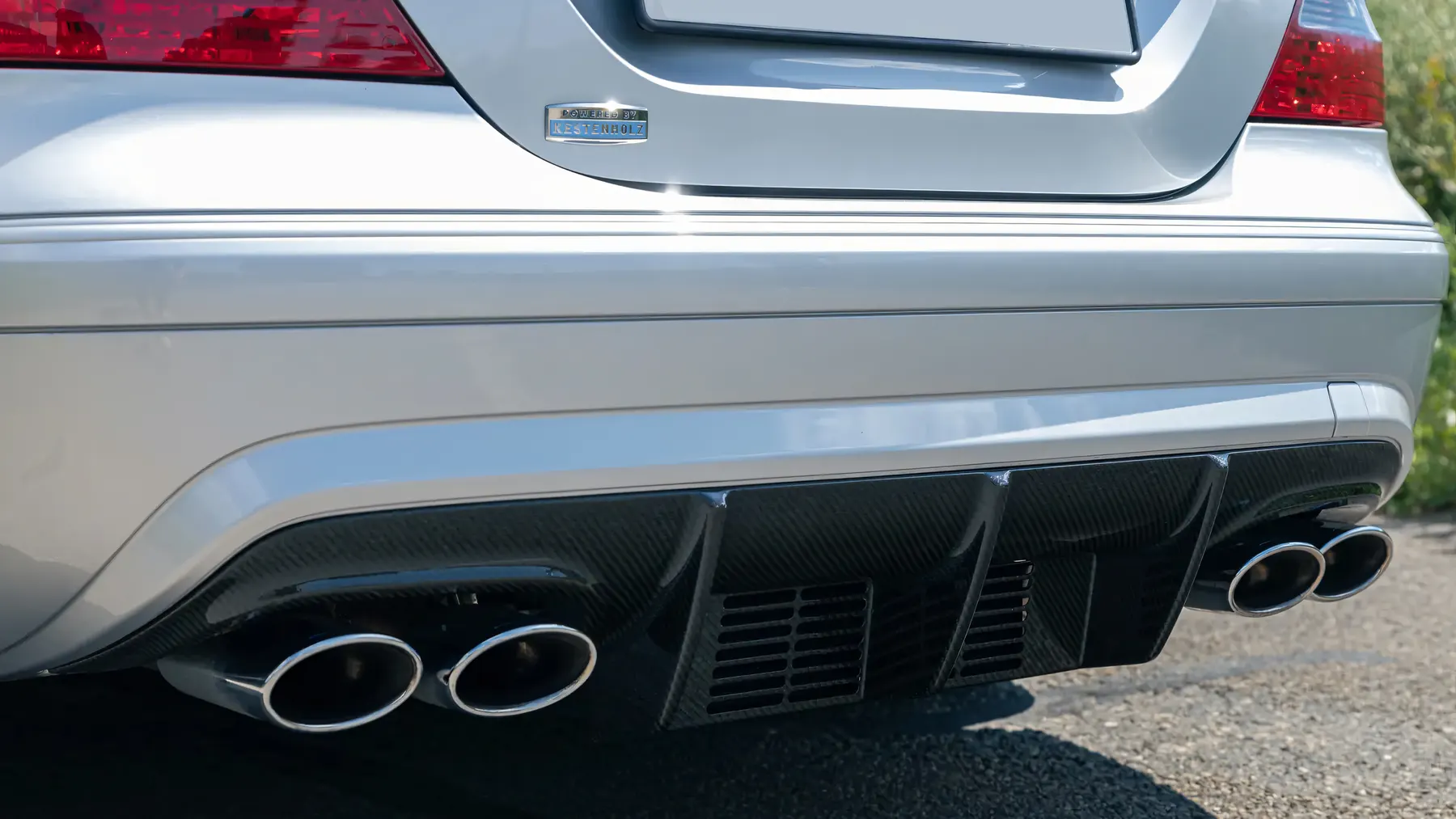
The Black Series designation itself was only two years old when the CLK 63 arrived in 2007. The nameplate had been inaugurated by the SLK 55 AMG Black Series in 2006 - a hardtop conversion of a roadster, designed originally for a proposed Asian racing series - and AMG immediately understood what the formula could become. The CLK 63 was the second model to wear the badge, and it escalated the philosophy considerably: where the SLK 55 Black Series produced 400bhp and weighed substantially less, the CLK 63 answered with 507bhp from a free-breathing 6.2-litre V8 and an entirely reimagined body structure. It was AMG’s first Black Series car aimed squarely at the American market, and it had the dimensions to prove it.
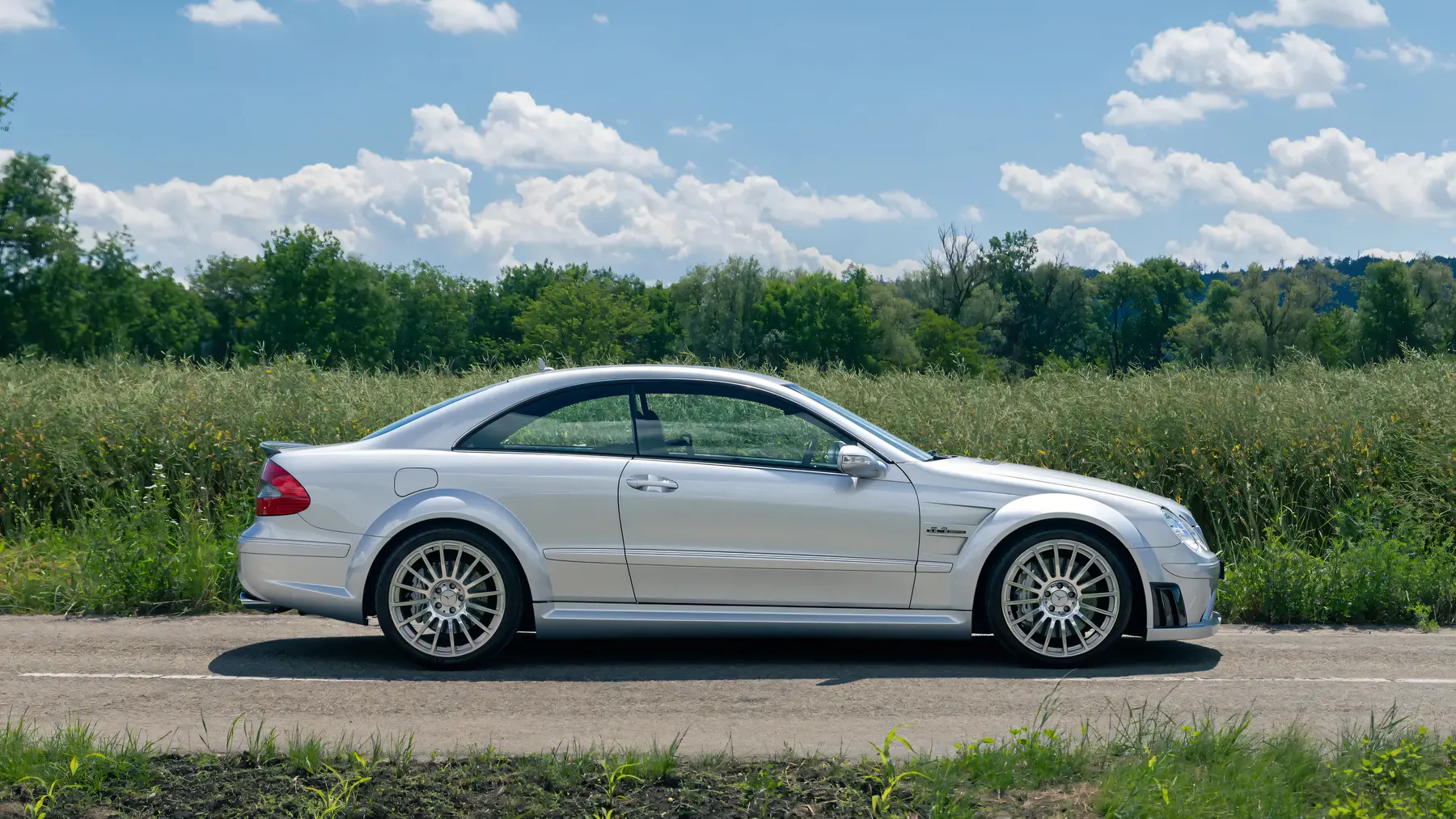
The basis was the W209 CLK coupé - a platform introduced in 2002, already approaching the end of its commercial life by the time the Black Series arrived. AMG’s response to an aging architecture was characteristically extreme: they widened the front track by more than 75 millimetres and the rear by 66 millimetres, fitted entirely new flared fender stampings, and developed a suspension system so adjustable it reads like a specification sheet from an endurance racing programme. Spring rate, ride height, damper compression and rebound, front camber, rear track width - all individually tunable by the owner or their race technician. Strut tower braces front and rear added structural rigidity that the original C209 shell had never contemplated. It was, in effect, a different car inhabiting a familiar silhouette.
The M156 engine at the centre of this transformation displaces 6,208cc and produces 507bhp at 6,800rpm with 630Nm of torque at 5,250rpm, a redline sitting at 7,200rpm. These are figures achieved without a single turbocharger or supercharger - through old-fashioned displacement and precision engineering - and the experience of that engine at full chat is categorically different from anything force-induction produces. The power builds through the mid-range with a mechanical directness that peaks in a genuinely dramatic final thousand revs. AMG’s hand-built policy - one engineer, one engine - applied here as it did across the range, and the claimed 0–100km/h time of 4.2 seconds represented a 0.3-second improvement over the already rapid standard CLK 63 AMG, with a governed top speed of 300km/h.
The transmission options available to Black Series buyers were, by modern standards, a limitation: the seven-speed AMG Speedshift 7G-Tronic automatic was the only choice. No manual gearbox was offered, which disappointed a subset of purists who felt that 507bhp deserved a more direct mechanical connection. The Speedshift’s paddle shifters provided reasonable engagement, and in Sport mode the box would hold gears to the redline rather than upshifting prematurely, but it was a torque-converter automatic in an era when Porsche’s PDK was already demonstrating what a dual-clutch system could feel like. It served the engine’s output without ever genuinely enhancing it.
Dynamically, the Black Series walked an interesting line between grand tourer and circuit tool. The suspension adjustability was genuine and exploitable - owners preparing for track days could lower the ride height, stiffen the dampers, and dial in aggressive front camber to transform the car’s handling character entirely. Road-mode setup retained enough compliance for daily use, though the Pirelli P Zero Corsa tyres (265/30 R19 at the front, 285/30 R19 at the rear, mounted on 19-inch forged alloys ) communicated unambiguously through the steering that this was not a car for casual commitment. Turn-in was sharp to the point of demanding respect; direction changes carried the snap of a car tuned for racetracks first and autobahns as a courtesy. The 360mm composite discs with six-piston front calipers and 330mm four-piston rears were fade-resistant and consistently powerful.
The kerb weight of 1,760kg remains the car’s most uncomfortable fact. For a coupé of this price and intent - £99,517 new in the United Kingdom, roughly $135,000 in the United States - that mass was a philosophical contradiction AMG never fully resolved. The Black Series programme demanded wider tracks, stiffer suspension, larger brakes, and a body structure rigid enough to exploit all of it, and every one of those requirements added kilograms. A contemporary Porsche 911 GT3 weighed several hundred kilograms less. The Black Series answered that gap with torque rather than diet, which worked splendidly on circuits with long straights but made itself felt in tight technical sections where the mass couldn’t be entirely disguised.
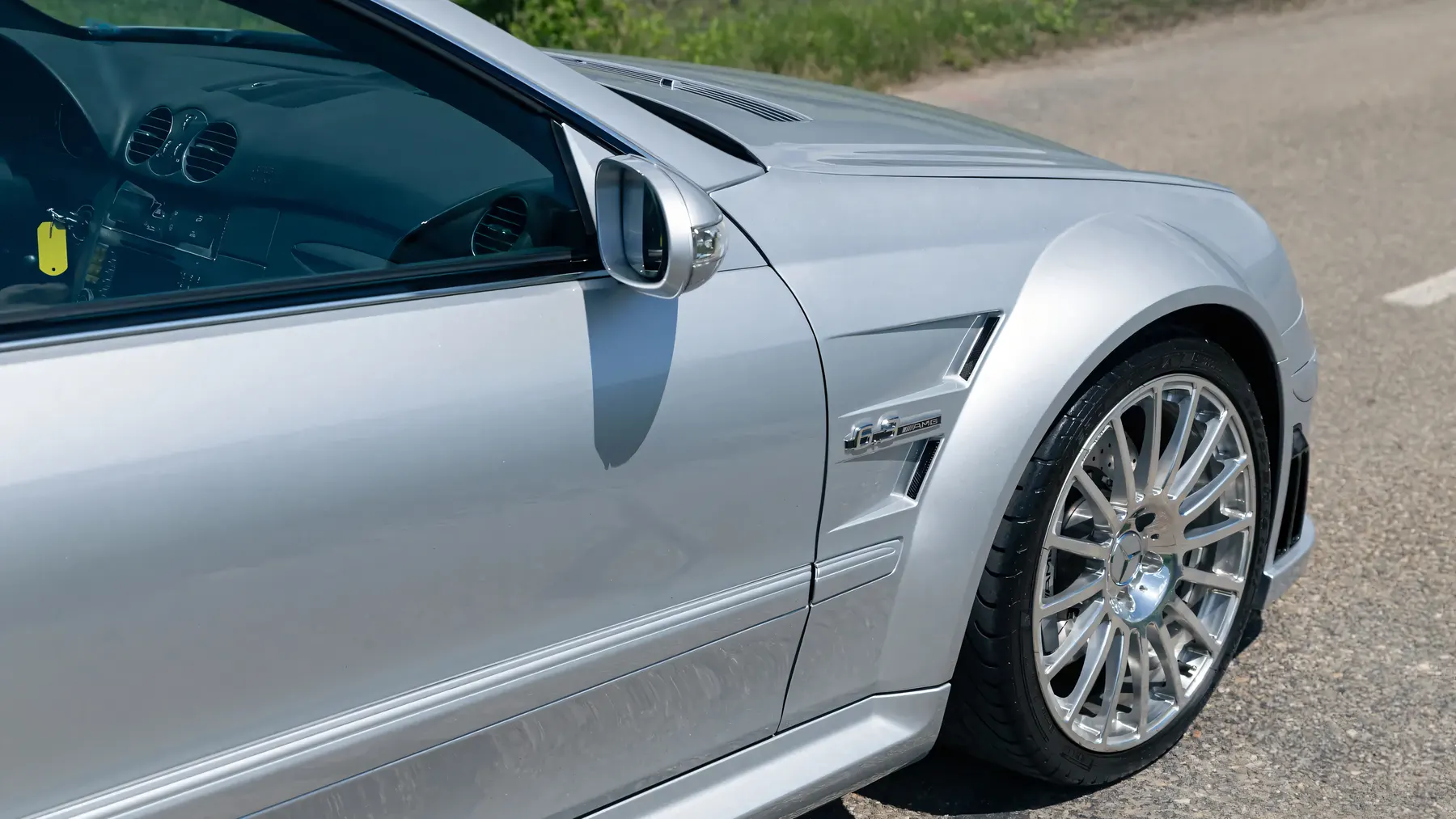
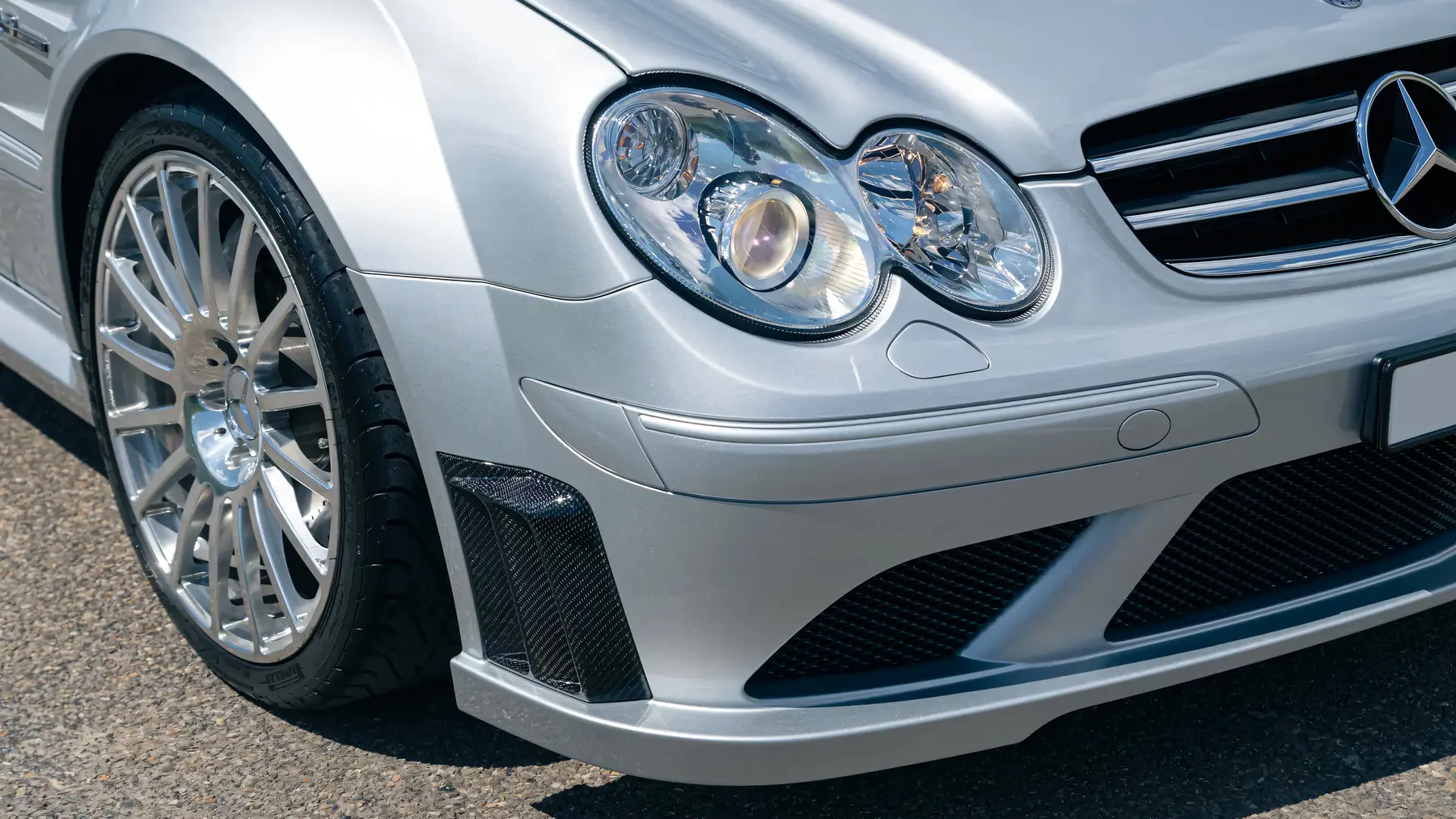
Visually, the Black Series made exactly the statement AMG intended. The flared arches are not subtle additions to a standard CLK - they transform the car’s proportions entirely, giving it a planted, muscular stance that the production CLK 63 AMG, despite its considerable presence, simply couldn’t achieve. Carbon high-gloss trim, bucket seats developed in collaboration with the race car programme, and the deliberate absence of a folding roof completed the narrative. This was a car that looked modified even in standard specification, which is a difficult trick to pull off on a production line of 500 units.
That production ceiling - just 500 examples built across the model’s run from 2007 to 2009 - was both a commercial decision and an honest acknowledgement of what the car was. AMG did not build the CLK 63 Black Series for volume, and it has aged accordingly. Values in the collector market have proved remarkably stable, with the car now trading at or above its original sticker price in well-kept examples. Buyers who acquired one from new were typically people who understood the relationship between physical performance and mechanical excellence at an instinctive level - the car attracted that sort of owner.
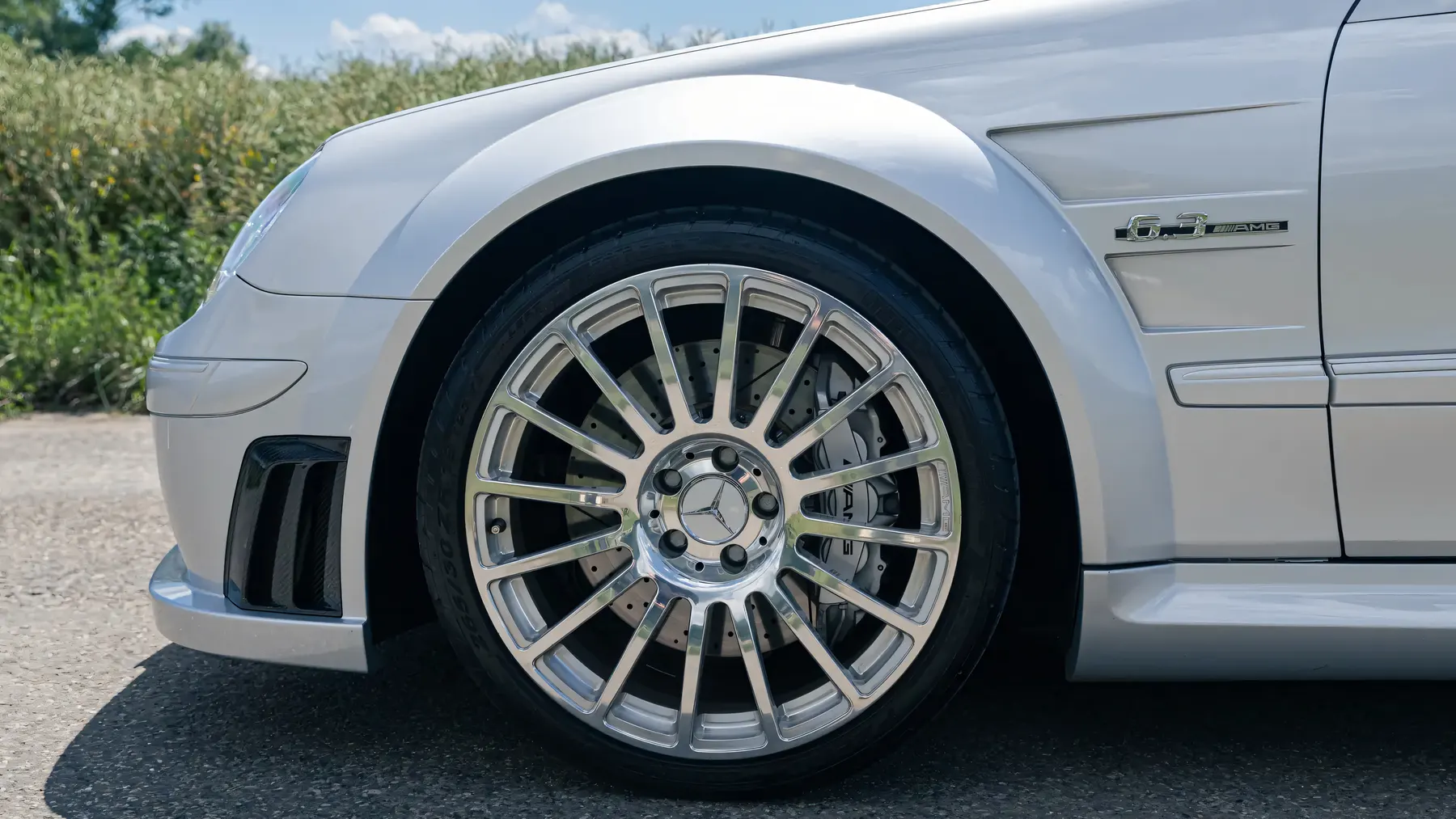
The CLK 63 AMG Black Series arrived at a specific moment in AMG’s history: before the turbocharged era fully took hold, before weight reduction became a marketing priority, and while the naturally aspirated V8 still represented the highest expression of the company’s engineering ambition. It was, as AMG cars go, gloriously contradictory - wide and heavy, extreme and adjustable, simultaneously a product of late-platform desperation and genuine creative ambition. What followed it in the Black Series lineage - the C 63, the SL 65, and eventually the SLS AMG Black Series with its 622bhp and 8,000rpm redline - was more refined, more focused, and arguably more complete. But none of them had the particular distinction of being road cars that once kept Formula 1 grids in formation, lap after lap, at circuits where the clocks never lied about anything.