Kissel Model 6-55 'Gold Bug' Speedster: Wisconsin's Jazz Age Show-Off
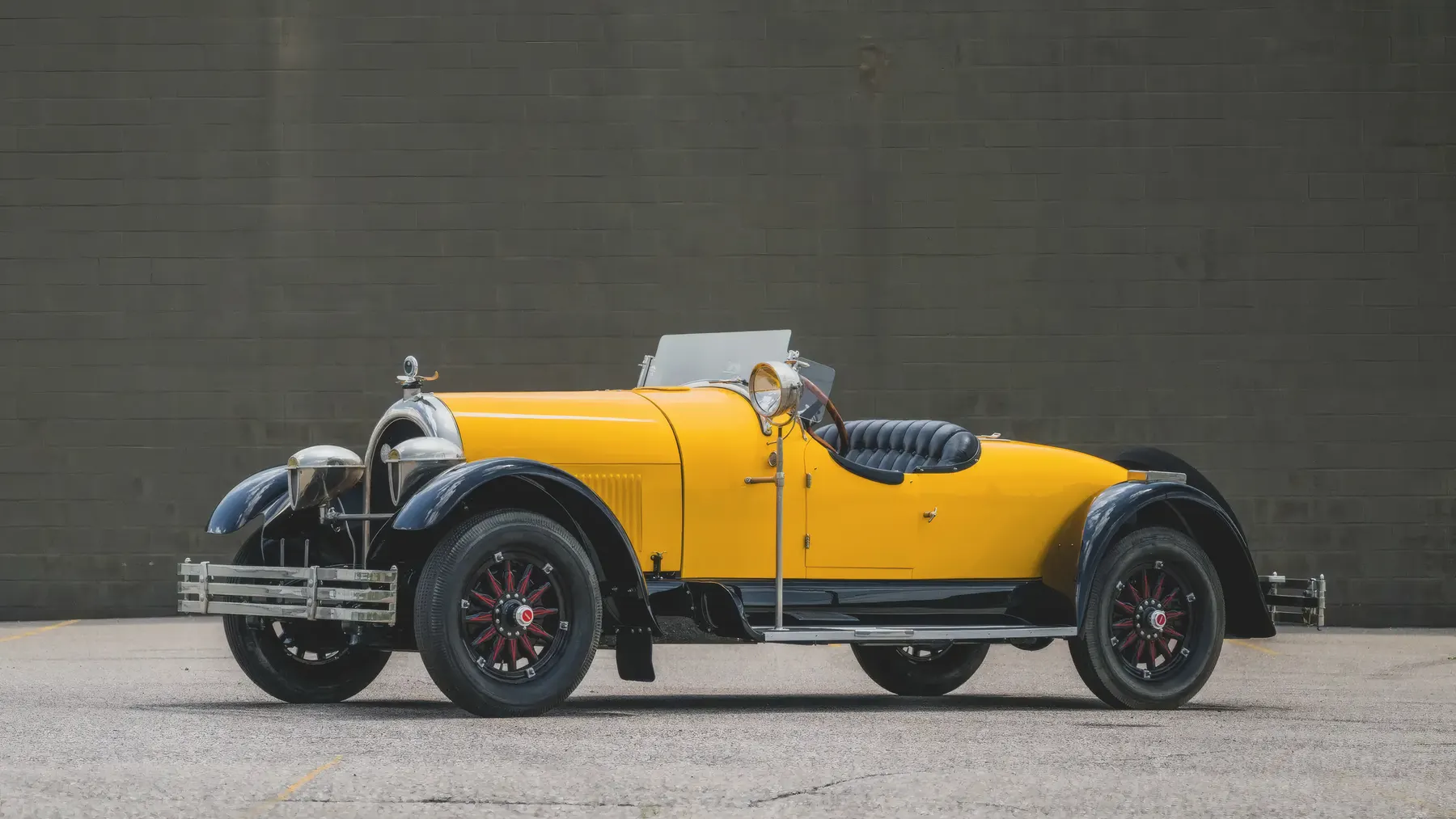
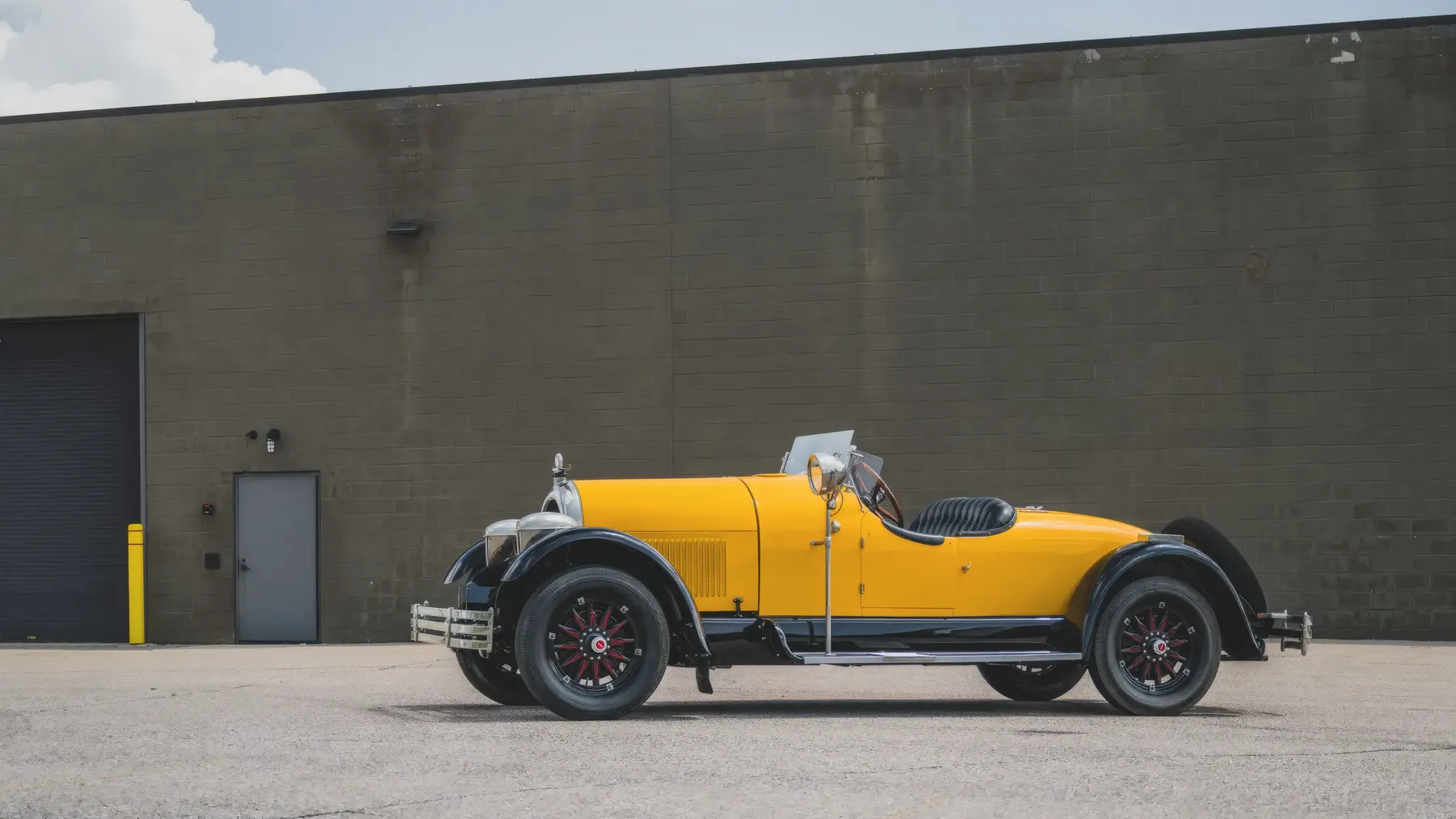
1926 Kissel Model 6-55 'Gold Bug' Speedster




Images: Darin Schnabel / RM Sotheby's
The Kissel Gold Bug looked as though it had wandered out of the Indianapolis paddock, yet the engine beneath its louvred bonnet was a long-stroke, side-valve six that preferred to pull rather than rev. That gap between the promise of the bodywork and the temperament of the drivetrain is the key to the Model 6-55 Speedster, the later and more mature chapter of a design the Kissel Motor Car Company of Hartford, Wisconsin, sold for most of the 1920s. It was never a sports car in the sense a European enthusiast would have meant in 1925. It was a hand-built, unashamedly theatrical two-seater that sold on style, flexibility and the pleasure of being looked at.
Kissel had been selling racy-looking cars since the 1909 G-9 Semi-Racer, in the era of the Stutz Bearcat and Mercer Raceabout, but it chose not to sponsor a race team. Sieber suggests the sporty models mainly pulled buyers into showrooms, where many left with something more sedate. The Speedster’s reputation was therefore built on appearance and showroom appeal rather than results, which sets expectations for everything that follows.
The recipe came from outside the factory. Conover T. Silver, Kissel’s New York distributor, liked dressing American chassis in European-flavoured bodies, and in 1917 he took his ideas to Will Kissel and body engineer Fritz Werner. What emerged, the KisselKar Silver Special Speedster, had a low, racer-cut body, no running boards and, on the first batch of roughly fifty cars, no doors at all. Show crowds loved it; practicality was less kind. The KisselKar Klub’s researchers note that Will Kissel recorded how hard it was for women in tight skirts to get in and out, so a right-hand door arrived once car production resumed after the First World War, with a second door, cycle-style wings and step plates in place of running boards appearing to follow in early 1921. Sources disagree on whether the debut came in New York in January 1918 or Chicago in January 1919, a muddle not helped by Kissel’s July-to-June model year.
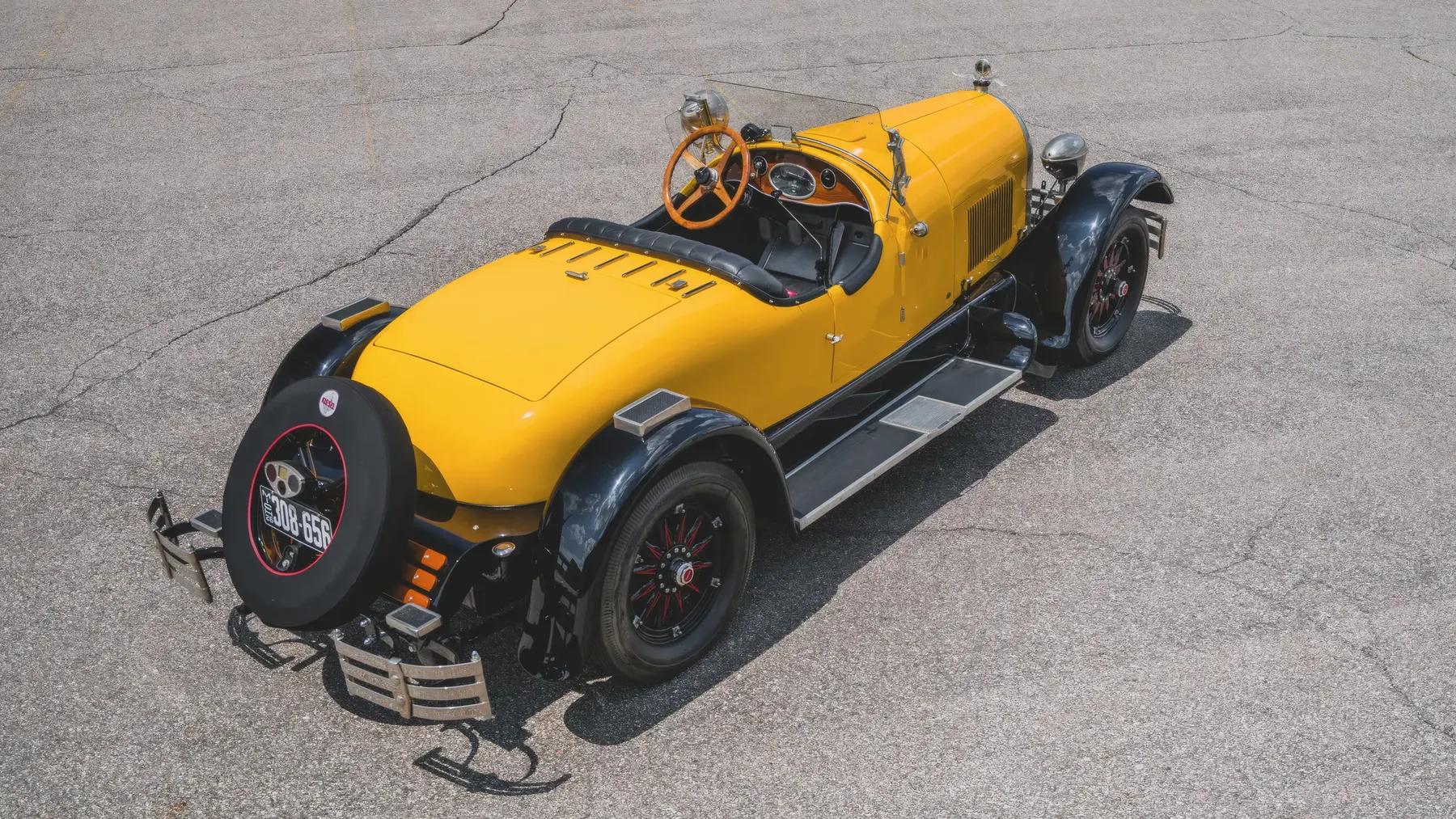
The nickname came from a newspaper. W. W. “Brownie” Rowland of the Milwaukee Journal toured Wisconsin in a chrome-yellow Speedster in 1919 to campaign for better roads, and readers were invited to name the car. Accounts of what followed differ. Bill Boddy, writing in Motor Sport, described a reader ballot with a five-dollar prize; Bonhams’ catalogue text refers to a contest that drew more than 500 entries; the KisselKar Klub says a young girl allegedly coined it, referring to the car’s colour and shape. Ronald Sieber, who has written on the speedster tradition, stresses that “Gold Bug” was never an official company designation, although RM Sotheby’s says the factory soon adopted it. Either way it stuck, and it suited a low, round-tailed car finished in what Boddy calls Kissel’s canary-yellow house colour, with desert sand as the alternative.
Underneath, the 6-55 was the end point of a long Kissel evolution. The firm’s own L-head six began as the Hundred Point Six, or 6-38, of 1915, with a bore and stroke of about 83 x 127 mm. It grew into the Custom Built Six, the 6-45, and became the 6-55 from the 1923 model year, staying in production until 1928. The KisselKar Klub’s reading of the parts lists is that each stage was largely a re-bore and re-stroke of the one before, with revised rather than redesigned components. One oddity stands out: the 6-55 was actually smaller than the 6-45 it replaced. The stroke dropped from about 140 mm to 130 mm while the bore stayed near 84 mm, trimming capacity from roughly 4.7 litres to about 4.3 litres. The sources do not say why, though a shorter stroke generally makes higher engine speeds less punishing, so a bid for smoothness is a reasonable guess. Quoted power varies. The 6-45 is usually given as 61 bhp, while descriptions of the 6-55 run from about 55 to 61 bhp.
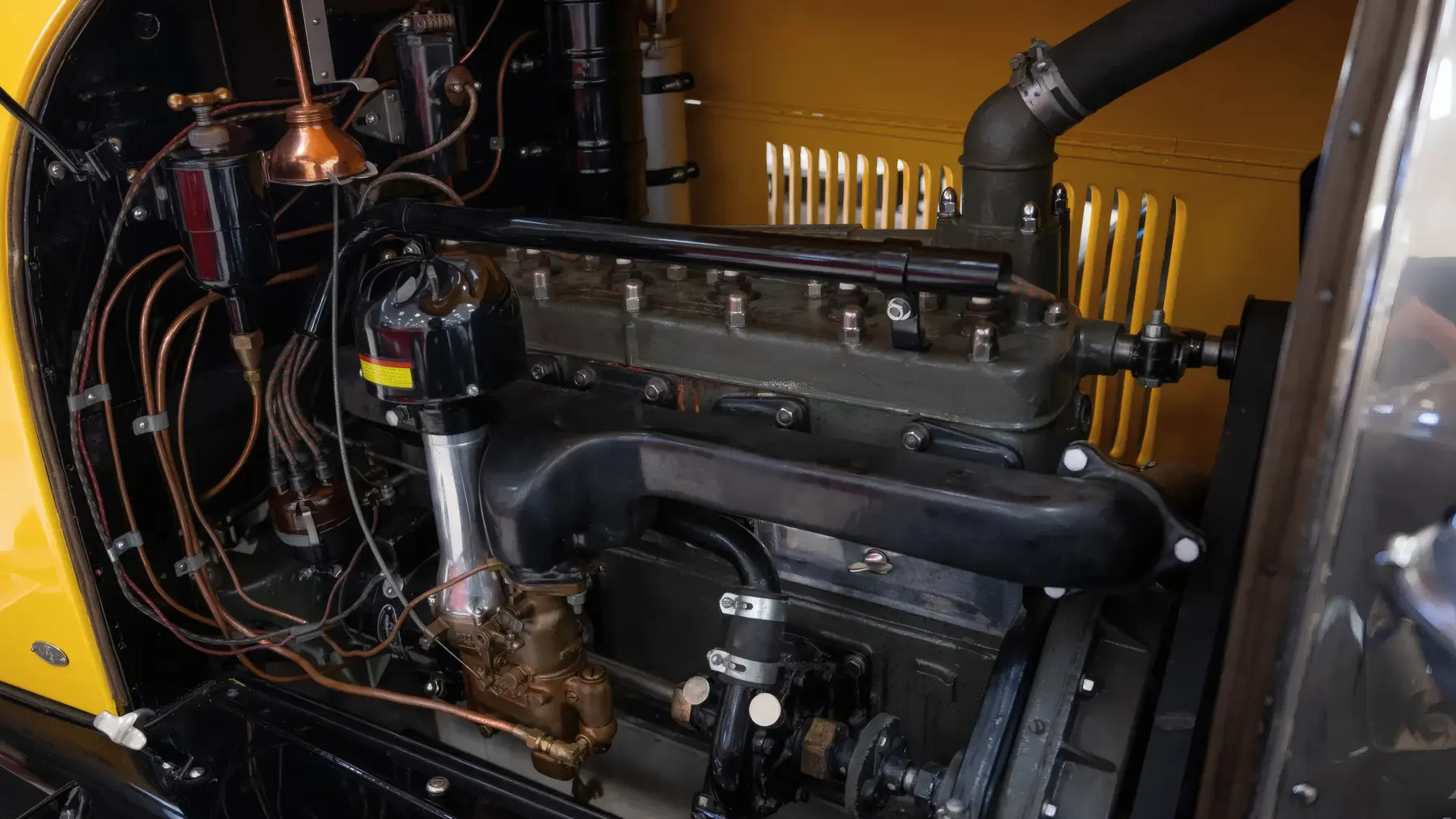
Power reached the rear wheels through a three-speed manual gearbox and, if a closed six-cylinder Kissel tested in Britain in 1925 is any guide, very tall gearing, with overall ratios of 14, 10.4 and 4.49 to 1. The engine kept improving through the run. As the 6-55 matured it gained full-pressure oiling, a timing chain in place of timing gears, and a carburettor that migrated from the left of the block to the right, while Boddy notes that cast-iron pistons gave way to Lynite aluminium ones around 1926. Sources differ on exactly when some of these changes arrived, so treat the sequence as reliable and the dates as approximate.
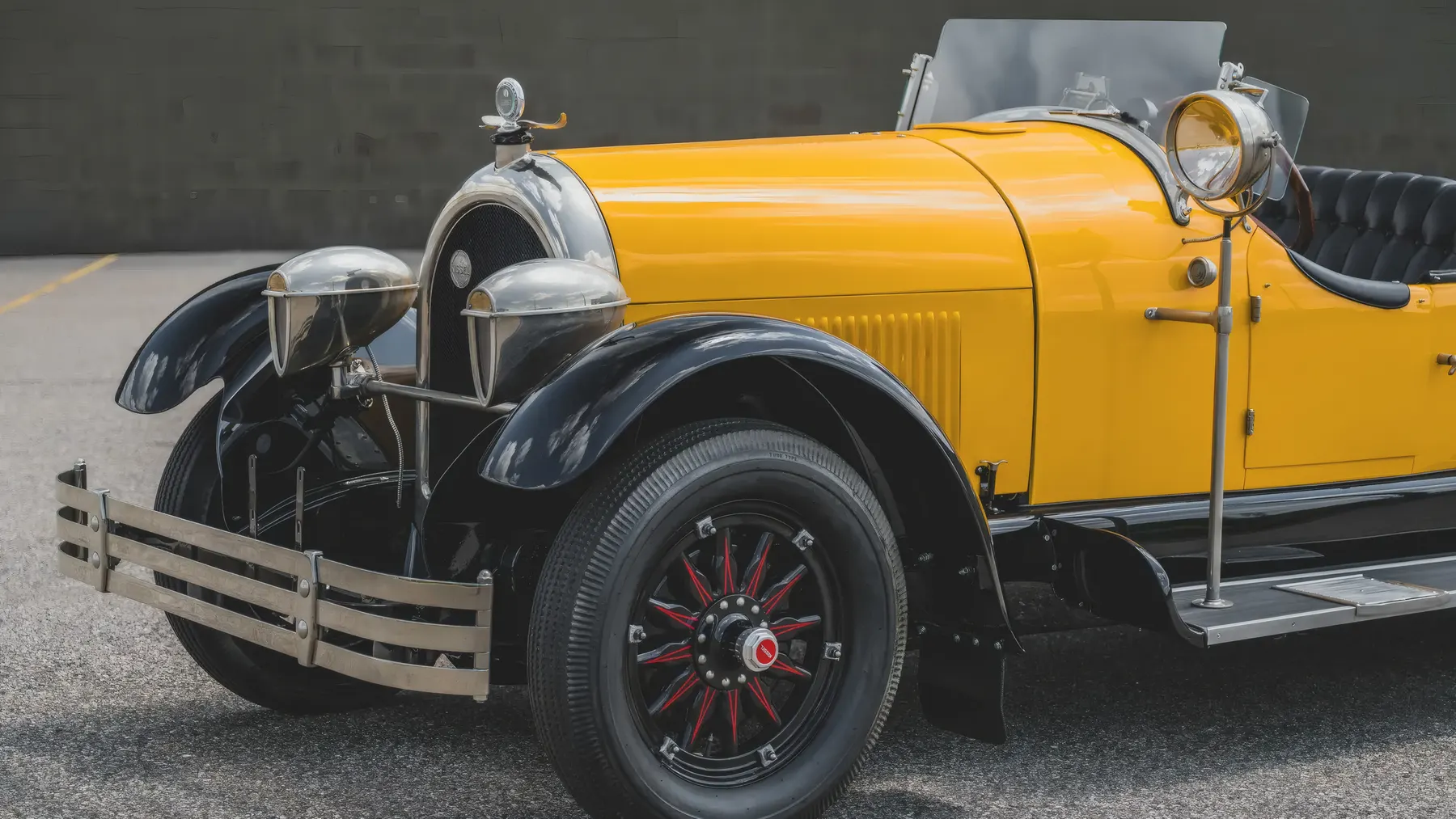
The Speedster’s body was the real showpiece. Kissel’s double-drop chassis frame let the body sit low, and the company built its bodies in-house in the wood-framed coachbuilding tradition that Werner, trained at Opel, had brought with him. Low sides, cycle-style wings with no running boards, an abbreviated windscreen and a hood that folded jack-knife fashion into the rounded rear deck gave the car its racer-for-the-road stance. The KisselKar Klub describes the tail as bumble-bee or turtle-back in style. Enthusiasts tell the generations apart by details: the 1918 originals had 27 bonnet louvres a side, the 6-45 and 6-55 had 19, and the later straight-eight Speedster had 24. The slide-out outrigger seats that made early cars famous gave way to fittings for a golf bag on each rear wing, and a rumble seat was available for those who wanted four-up motoring. Bonhams’ catalogue text observes that the later cars have a cleaner, more refined look closer to the Classic era, and many Kissels now hold Full Classic status with the Classic Car Club of America.
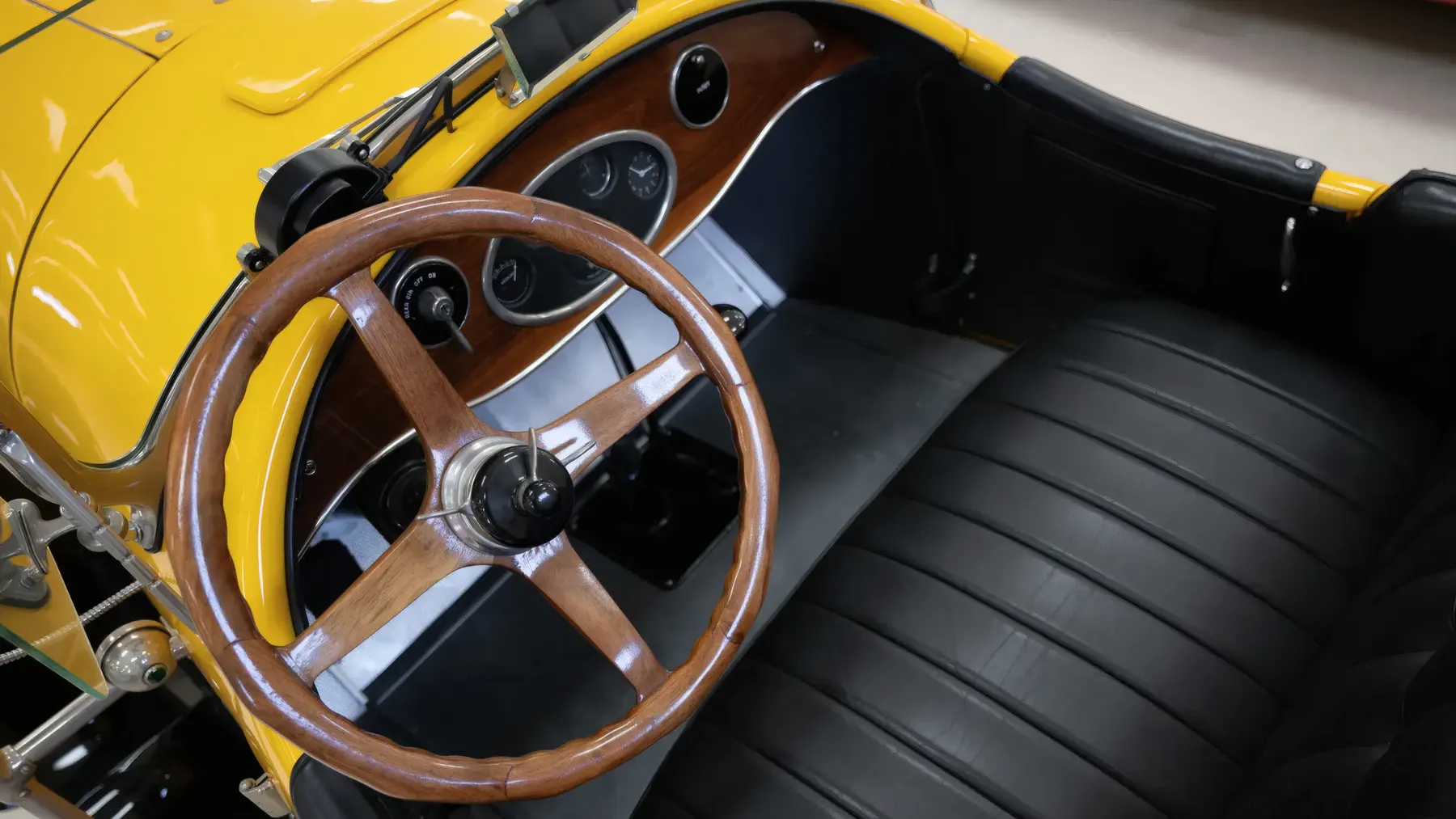
Positioning is where the 6-55 gets interesting. In 1925 the base price was $1,795 before options, according to a specialist dealer’s description, which kept the Speedster in “Custom Built” territory, the slogan Kissel leaned on from 1919. Balloon tyres and Lockheed four-wheel hydraulic brakes were extras, the latter at first a $75 option. Around 1925 the six was joined by a Lycoming-derived straight-eight, the 8-75, and in 1928 the White Eagle Speedster took the idea upmarket with a straight-eight that Sieber rates at 115 bhp. Britain briefly got a taste: the American Motors Export Corporation imported Kissels from 1924, listing the Speedster at £650 and taking a stand at Olympia in 1925, though Boddy judged the adventure over by 1926. The celebrity roll call is long, with Fatty Arbuckle, Ralph DePalma, Greta Garbo and Al Jolson among the names usually quoted. Amelia Earhart’s famous yellow “Yellow Peril”, which she drove from Los Angeles to Boston with her mother in 1924, was a 1923 Model 45, the 6-55’s immediate predecessor, and is now preserved at Denver’s Forney Museum.
How many were built is genuinely uncertain. Production reports that survive for 1920 and 1921 put Speedsters at roughly a fifth of Kissel’s car output, and extrapolating from that, the KisselKar Klub’s editor guesses at about 2,700 Speedsters across 13 years, give or take 600, while conceding that nobody knows. RM Sotheby’s, by contrast, says 50 to 100 a year. Survivor counts are steadier, with 37, about 40 and 42 appearing in various sources, which is a thin population when Kissel built around 29,000 vehicles in total.
Driving evidence is thinner than the legend. There is little verifiable period testing of the Speedster itself. The best modern account is Michael Bowler’s test of an earlier 6-45 for The Automobile, quoted in an RM Sotheby’s catalogue. He found it started easily, with throttle and ignition-advance levers on the steering wheel, and ticked over sweetly. The gears were noisy in first and second, but so much torque meant changes could be kept to a minimum, and the car loped along at 45 mph with the hood down. His verdict was “a charming touring car”. That is a different thing from a sports car, and the 6-55’s shorter stroke and later refinements presumably shifted the balance only slightly. Boddy relays a claim from American owners that a Speedster would cruise all day at 85 mph, which deserves scepticism given the power on offer. The closed British-market six he describes managed about 60 mph, returned 17 to 18 mpg, had slightly hard springing and heavy steering on full lock with no castor return, and drew praise for its Lockheed brakes. A lighter Speedster would likely have been brisker, but the chassis manners may be a fair indication.
For all its glamour, the 6-55 Speedster was a compromised piece of business. The performance never matched the pose: a side-valve six making somewhere between 55 and 61 bhp, through a three-speed box, in a car whose appeal rested on looking quick, was always going to feel relaxed rather than rakish. Braking was a second weakness. Early Speedsters had rear-wheel mechanical brakes only, and even in the mid-1920s hydraulics on all four wheels were listed as an extra, so a buyer who did not specify them was left with the older mechanical system on a car that looked fast. The packaging had its own problems. The outrigger seats of the early cars perched passengers beside the rear wheel, which RM Sotheby’s catalogue wryly describes as a job for the brave or the foolhardy, and the low top, abbreviated windscreen and side curtains suggest weather protection that was token at best. Commercially it was worse. Boddy judged Kissels mainly too highly priced, and the KisselKar Klub identifies the company’s labour-intensive wooden-bodied tradition as its Achilles heel once mass-produced steel bodies undercut it. Speedsters were around a fifth of car output in the years for which reports survive, which was never going to carry the firm.
Kissel’s decline was fast once the market turned. A possible merger with Nash fell through, an alternative with Packard was refused according to Boddy, and a receiver was called in during 1930. The Speedster outlived the company as its public face, which is why a Wisconsin maker of fire trucks, taxis and hearses is remembered by most enthusiasts at all. The 6-55 is the Gold Bug at its most developed: an engine refined across more than a decade, hydraulic brakes on the options list, and a body that had shed the awkward entry of the first cars and, in most cases, the perilous outrigger seats. It is also the version that exposes the limits of the formula, a handsome, modestly powered and expensive two-seater from a firm still building wooden bodies by hand while mass producers moved to steel. The 40-odd survivors are what is left of that bet, and they explain why the Gold Bug is remembered less as a performance car than as the most vivid thing a small Wisconsin independent ever built.
Technical data
Performance Specifications
| 6-45 Speedster (predecessor) | 6-55 Speedster | |
|---|---|---|
| Engine series | MY1918-MY1923 | MY1923-MY1928 |
| Layout | Kissel-built L-head inline six | Kissel-built L-head inline six |
| Bore x stroke | 84 x 140 mm | 84 x 130 mm |
| Displacement | c. 4,650 cc* | c. 4,330 cc |
| Power | 61 bhp | 55-61 bhp* |
| Transmission | Three-speed manual | Three-speed manual |
| Brakes | Rear-wheel mechanical (1920 car) | Rear-wheel mechanical on earlier cars; Lockheed four-wheel hydraulic an option from c. 1924 |
| Seating | Two plus outrigger seats | Two; rumble seat optional; golf-bag fittings |
| Base price | Not corroborated | $1,795 (1925)* |
| All Speedsters, 1918-1930 | Estimated c. 2,700 +/- 600 (KisselKar Klub) versus 50-100 a year (RM Sotheby’s)* |
Sources
- The Kisselgraph, Vol. 40 No. 2 (December 2014), KisselKar Klub: “Thinking About Early Kissel ‘Gold Bugs’”
- KisselKar Klub: Kissel Visual Essay (February 2023)
- Motor Sport Magazine: “Forgotten makes: The Kissel Kar” (Bill Boddy, January 1996)
- RM Sotheby’s: 1920 Kissel Model 6-45 ‘Gold Bug’ Speedster, Hershey 2013 catalogue (model background)
- Hyman Ltd: 1925 Kissel 6-55 Gold Bug Speedster (dealer model background)
- Ronald Sieber: “Kissel: Three Generations of Speedsterism”
- Forney Museum of Transportation: 1923 Kissel Speedster (Gold Bug)
- Old Cars Weekly: Forney Museum feature (2010)
- Bonhams: 1926 Kissel 6-55 Gold Bug Speedster, Scottsdale 2015 catalogue (model background)
- Bonhams: 1926 Kissel 6-55 Gold Bug Two-Passenger Speedster, Scottsdale 2014 catalogue (model background)
Join the discussion
Comments
Loading comments…
Leave a comment
Share a detail, memory, or perspective. Every comment is reviewed before publication.