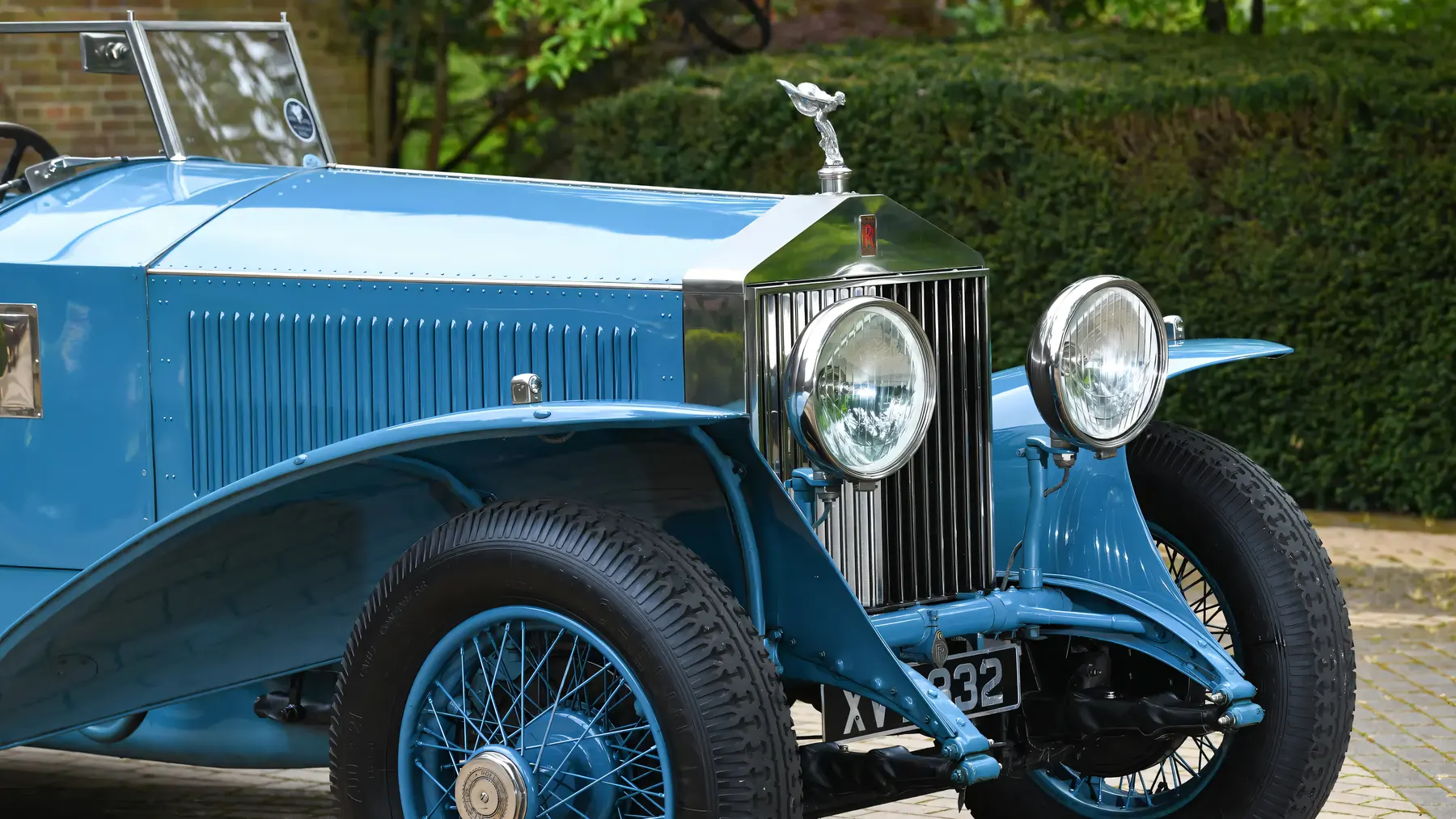
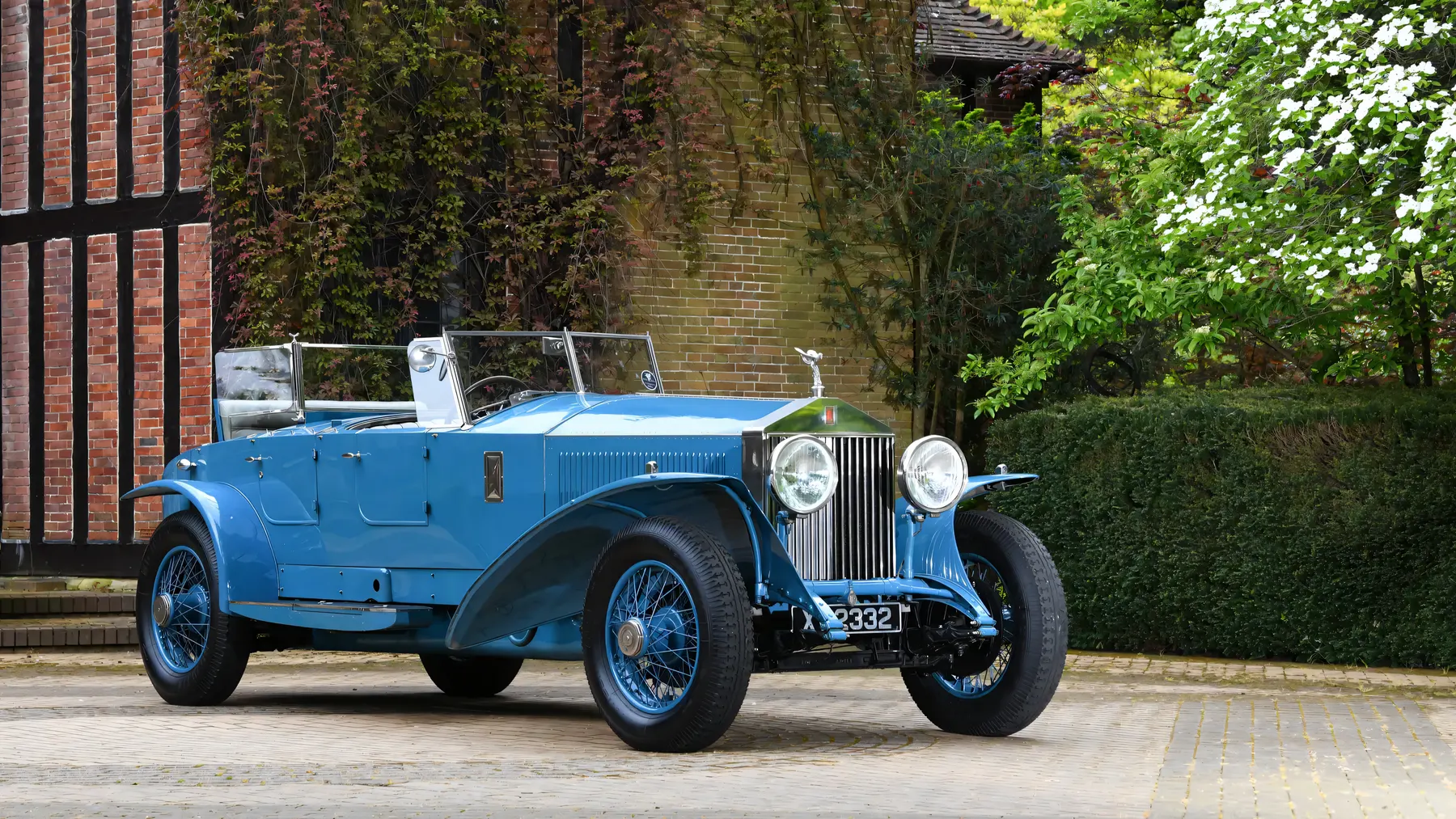
1928 Rolls-Royce Phantom I Sports Tourer in the style of Jarvis
There is a peculiar tension at the heart of the Rolls-Royce Phantom I Sports Tourer - the tension between a firm whose very reputation rested on whisper-quiet refinement and a world increasingly captivated by speed. That Rolls-Royce even attempted to reconcile these competing impulses says a great deal about the pressures bearing down on Crewe’s predecessors at Derby in the middle years of the 1920s. That the attempt produced something genuinely thrilling is, in hindsight, something close to a miracle.
When the New Phantom arrived in 1925 as the replacement for the long-lived Silver Ghost, it represented both evolution and a quiet admission that the old 40/50 model had finally run its course after nearly two decades. The fundamental engineering advance was the adoption of a pushrod-operated overhead-valve straight-six engine displacing 7,668cc, constructed as two groups of three cylinders with a single detachable head - a significant departure from the Silver Ghost’s side-valve arrangement and one that Rolls-Royce’s engineers claimed delivered roughly a third more power. The factory, with characteristic Edwardian restraint, described the output merely as “sufficient.” What they chose not to specify numerically was, of course, entirely deliberate. The chassis underneath was, if one is being candid, rather less radical: it was largely the same ladder frame that underpinned the Silver Ghost, suspended by semi-elliptical springs at the front and cantilever springs at the rear, a carry-over arrangement that prompted more than a few observers to call the New Phantom a glorified Super Ghost. The description was not entirely unkind, but it stung nonetheless.
Rolls-Royce built the Phantom simultaneously at Derby in England and at their Springfield, Massachusetts facility in the United States, with the American operation producing cars from 1926 through 1931. The two versions diverged in small but telling ways. British cars received a four-speed gearbox; Americans made do with three speeds. Wheelbases differed too - the standard 143 1⁄2-inch measurement applied to both, but the long-wheelbase options diverged, with the British variant stretching further at 150 1⁄2 inches to accommodate the grander formal coachwork favoured by the peerage. Americans who purchased chassis from Springfield could specify standardised bodies through Brewster & Company, which Rolls-Royce had acquired in 1926, with evocatively named options running the gamut from the Derby Touring Sedan to the Newmarket Convertible Sedan and the Chatsworth Town Car. The French coachbuilder Hibbard & Darrin also supplied bodies that were shipped across the Atlantic and mounted on Springfield chassis - a transatlantic arrangement that speaks to the New Phantom’s genuinely international ambitions. A plain chassis would set an American buyer back $13,335, which translates to something in the region of $250,000 in today’s money.
It was in Britain that the more interesting engineering story unfolded, however. By the mid-1920s, the Bentley Boys were dominating Le Mans and filling the newspapers, and the contrast with Rolls-Royce’s patrician aloofness was becoming commercially uncomfortable. Sir Henry Royce - a man who, we are told, was never entirely convinced that motor racing had much relevance to the proper business of making excellent motorcars - nonetheless authorised a series of experimental chassis to explore what a sporting Phantom might look like. The first, chassis 10EX, received a specially tuned version of the standard overhead-valve engine and an open tourer body by Barker. The result was disappointingly modest: the Barker body’s traditional construction, evolved from horse-drawn carriage methods, carried too much weight for the enhanced power to make a meaningful difference. Royce’s young designer Ivan Evernden was dispatched to address the problem, lowering the car, reducing the windscreen height, fitting new wings and a revised rear section. The reworked 10EX was noticeably quicker. Encouraged, Rolls-Royce commissioned three further experimentals - 15EX, 16EX, and the definitive 17EX - bodied by Hooper, Barker, and Jarvis of Wimbledon respectively.
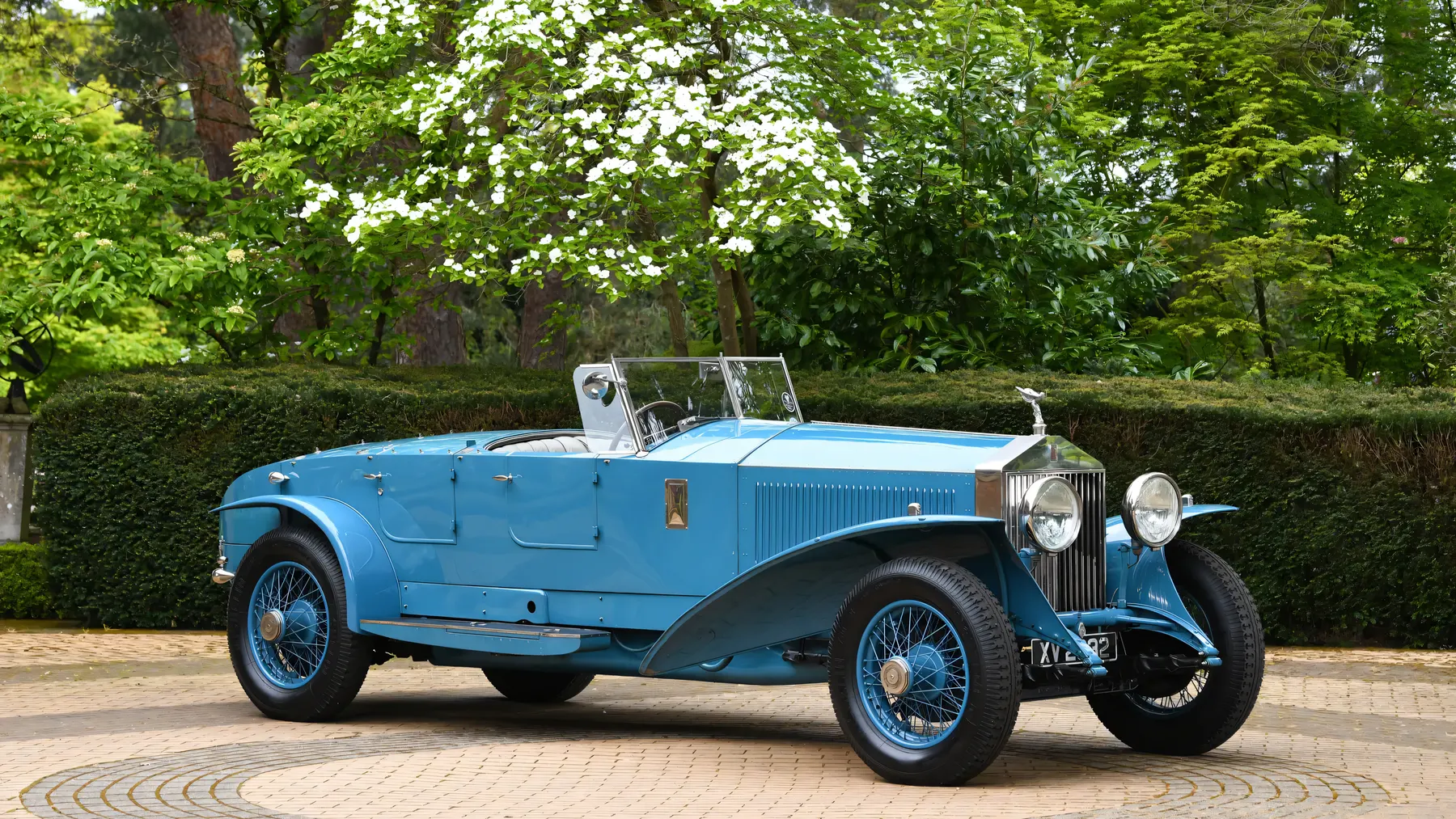
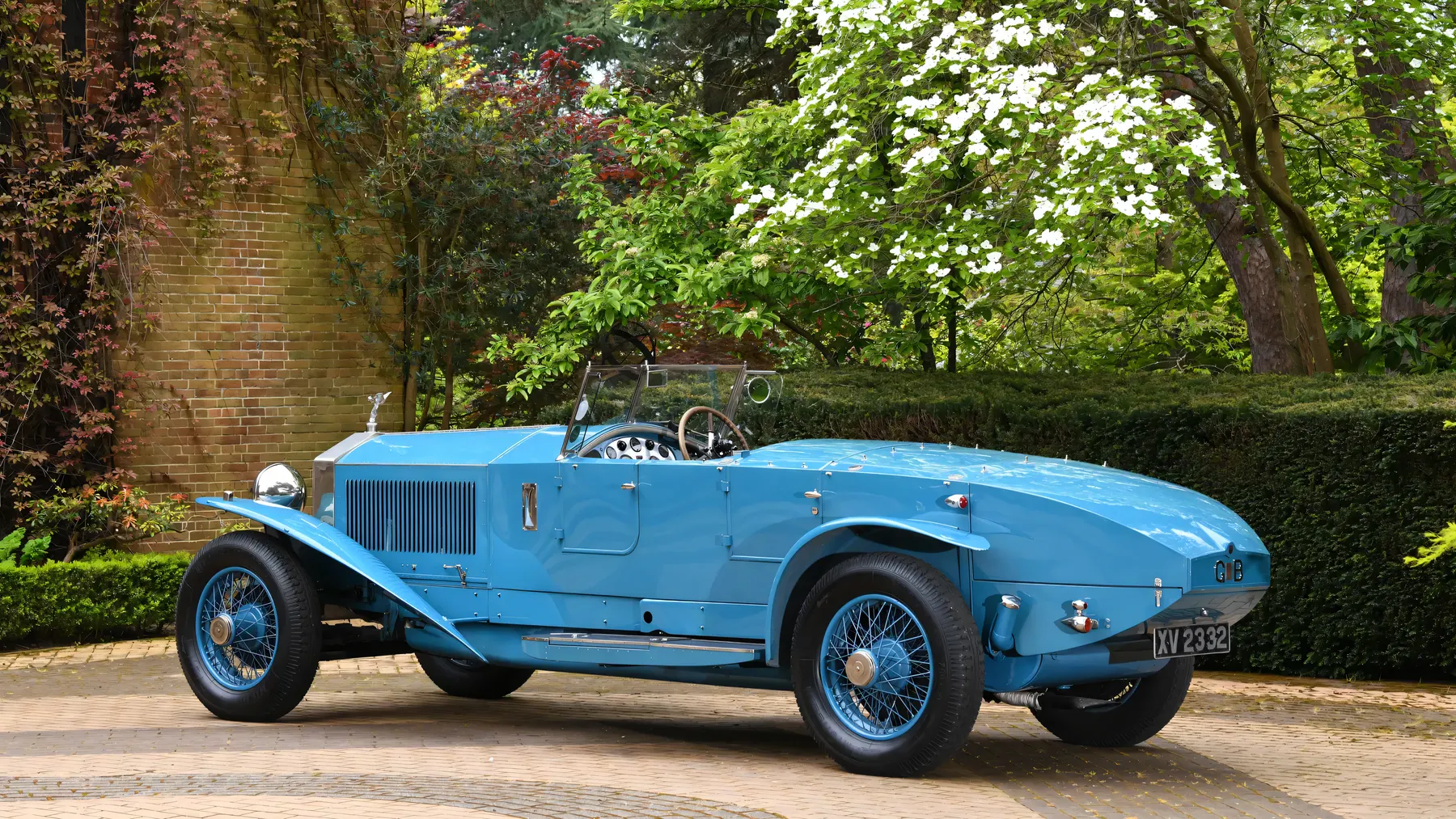
It is 17EX, completed in 1928, that earns the Phantom I Sports Tourer its place in the history books, and it is here that the Jarvis connection becomes genuinely fascinating. Jarvis of Wimbledon were no ordinary coachbuilders. They were the firm responsible for the streamlined bodywork on Sir Malcolm Campbell’s record-setting Bluebird, and the torpedo-shaped body they crafted for 17EX wore the same Sax Blue livery that Bluebird had made famous - a chromatic gesture that was, emphatically, no coincidence. The engine fitted to 17EX was itself enlarged to approximately 7.8 litres, the aluminium cylinder heads that arrived across the Phantom I range in 1928 were specified, and a modified camshaft was installed, all with the singular purpose of achieving 100 mph without requiring modifications to the chassis. The body Jarvis produced to make this possible was a masterpiece of purposeful aerodynamic thinking for its era: a long, tapered torpedo form with broadly flared open lightweight wings, a dramatically low profile, and a tail section that concealed a hidden rear occasional seat behind its rakish curves. It was a Rolls-Royce as Rolls-Royce had never quite looked before.
Drive one of these sporting Phantoms today and you understand immediately why the configuration attracted such attention. The 7.7-litre engine, even in standard trim, pulls with a broad, effortless torque that modern cars can match in headline figures but rarely replicate in character - it is an engine that seems to breathe rather than rev, gathering pace with a kind of unhurried authority that makes the speed feel incidental. The four-wheel brakes, employing a servo-assistance system licensed from Hispano-Suiza, were considered genuinely progressive for the period. In the lighter, lower Sports Tourer configuration, with the aerodynamic coachwork doing its work at speed, the Phantom I reveals an athleticism entirely absent from the formal saloon and limousine bodies that comprised the great majority of its production. The steering is direct enough by the standards of the era, and the chassis communicates with the driver in a way that the heavier coachwork simply deadens.
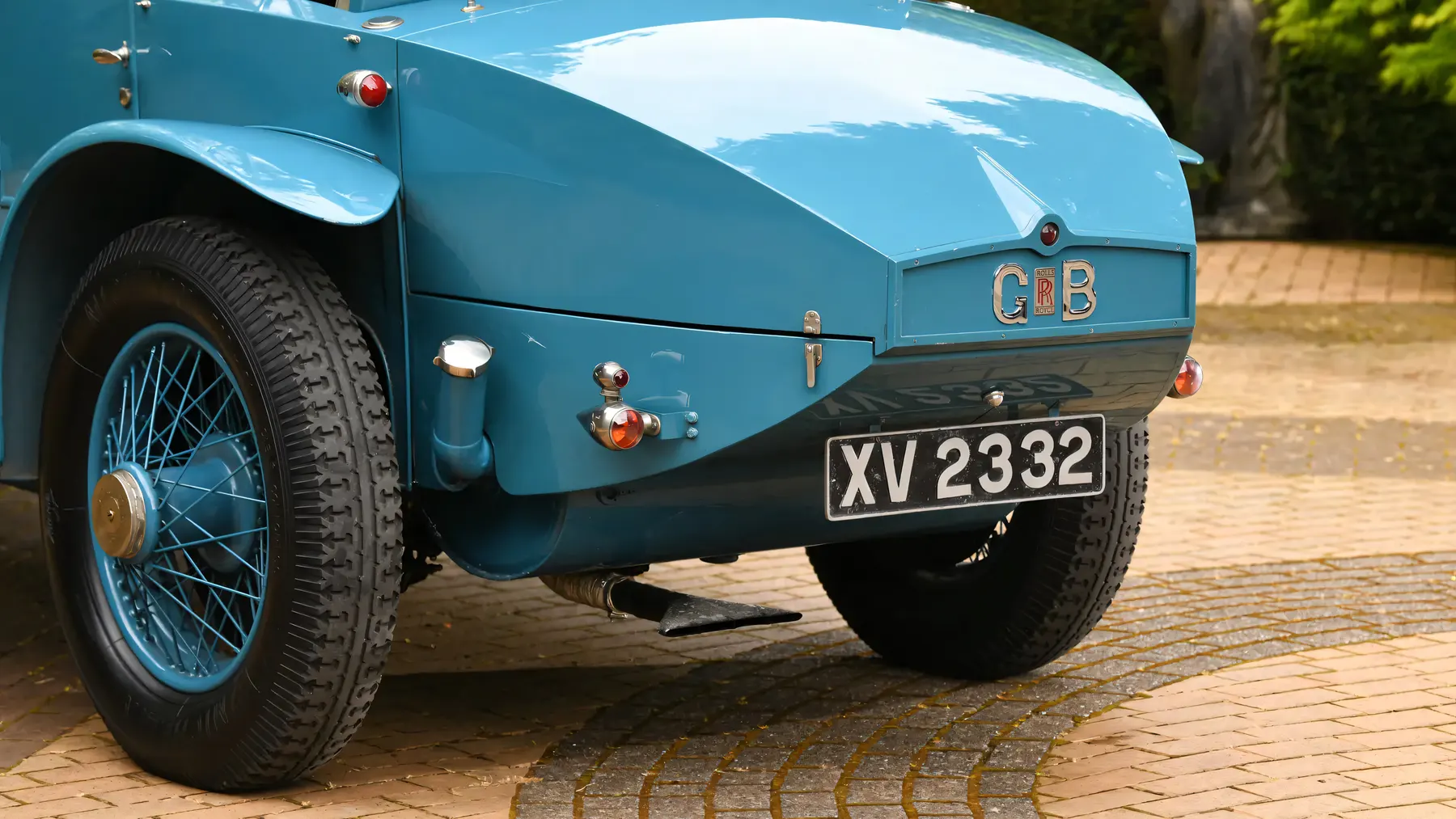
The honest assessment of the Phantom I’s engineering, however, demands acknowledgment of its compromises. The decision to carry over the Silver Ghost’s chassis was expedient but limiting; the cantilever rear suspension that served perfectly well under a formal landaulet became a more compromised proposition when asked to manage the greater dynamic loads of spirited driving. The 1928 switch from cast iron to aluminium cylinder heads, whilst improving performance, introduced corrosion problems that would plague owners and their mechanics for years afterward. The British cars’ lubrication systems required an almost comical dedication from their owners - up to fifty Enots nipples demanding attachment of a special pressure gun at 500, 1,000, and 2,000-mile intervals - whilst American buyers enjoyed the considerably more convenient centralised Bijur system that accomplished the same task with a single pump stroke. It is the kind of difference that makes one wonder whether Rolls-Royce’s Derby engineers and their Springfield counterparts were, in some respects, working from rather different assumptions about how these cars would actually be used.
What makes the Sports Tourer variant particularly significant within the Phantom I’s story is precisely its rarity and its exceptionalism. Of the 3,509 Phantom Is built across both factories - 2,269 from Derby, 1,240 from Springfield - the great majority wore coachwork of imposing formality from the great British houses: Barker, Park Ward, Hooper, Mulliner, and Windovers in Britain; Brewster and Fleetwood in America; and a cosmopolitan array of continental specialists from Saoutchik and Kellner in Paris to Erdmann and Rossi in Berlin and Zagato in Italy. The sporting torpedo bodies were a tiny fraction of production, cars built against the grain of the marque’s character and, ultimately, against the grain of what Henry Royce himself actually believed in. The experimental chassis were factory exercise, not a commercial programme, and the production Sports Tourers that followed - bodied by independent coachbuilders inspired by 17EX’s example - existed in a world where a Bentley 4 1⁄2-litre offered a more genuinely integrated sporting experience at a lower price.
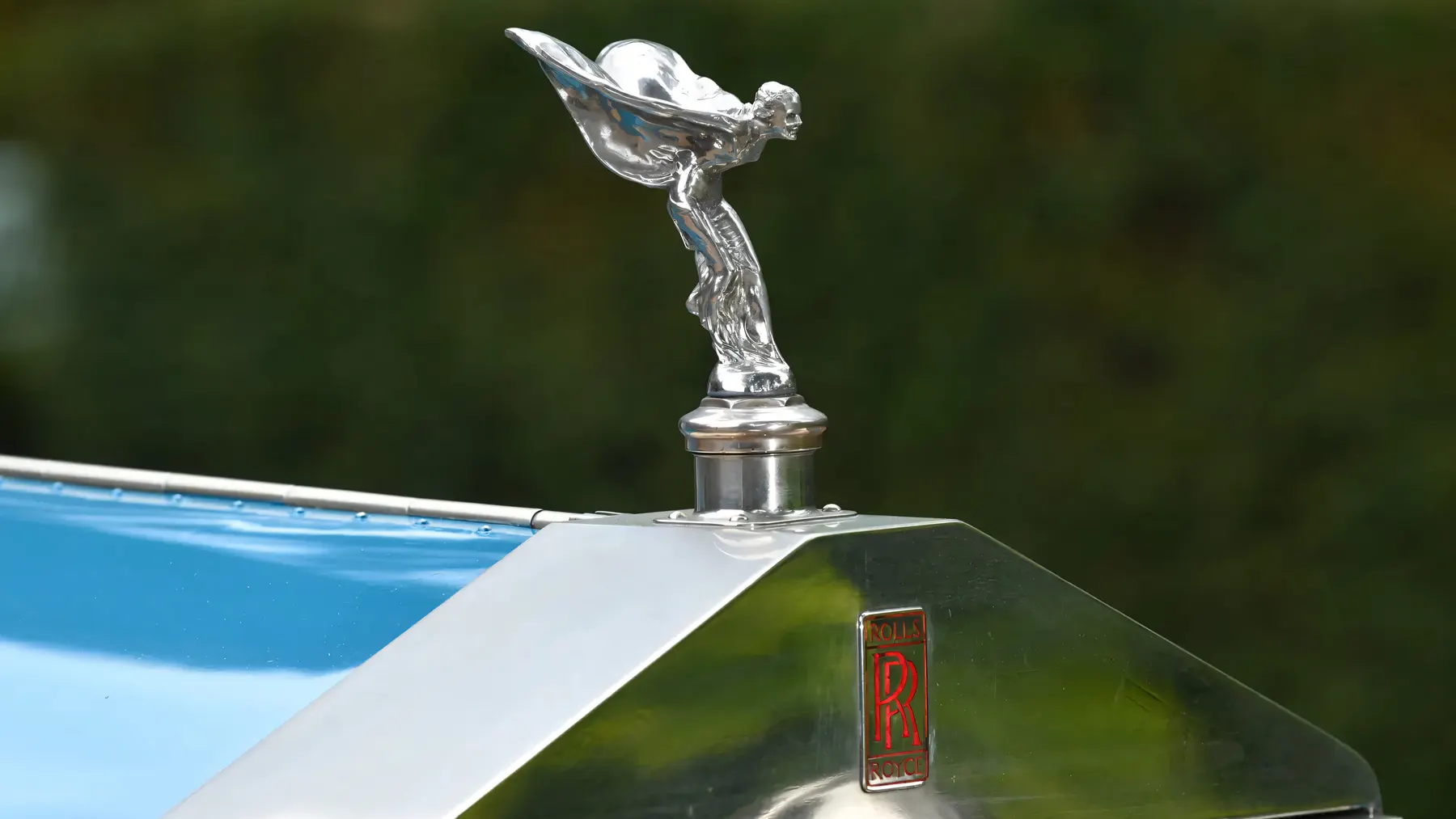
After exhaustive factory testing, 17EX itself was sold just before Christmas 1928 to the Maharaja of Jammu and Kashmir, Hari Singh Bahadur, where it joined a collection of at least 26 Rolls-Royces. Its subsequent peripatetic career through the hands of Indian collectors, an Italian enthusiast, a Dutch entrepreneur who would later revive Spyker, a disastrous 2004 appearance at Pebble Beach where the engine refused to hold water, and an eventual triumph at Villa d’Este in 2006, reads like a picaresque novel. The car won the Trofeo Rolls-Royce at Villa d’Este for the most elegant Rolls-Royce in 2006, and has since competed in the Flying Scotsman, the Rallye des Alpes, and appeared at Retromobile in Paris for the Voitures des Maharajahs exhibition. It is, by any measure, a car that has lived rather than merely survived.
The Phantom I’s reception in the period was warm but not unconditional. The motoring press recognised immediately that the new engine represented a genuine advance over the Silver Ghost’s ageing architecture, and the four-wheel braking system with Hispano-Suiza servo assistance was praised as a meaningful safety improvement in a period when many contemporaries were still offering two-wheel braking. But the conservative chassis, the carried-over suspension geometry, and the inevitable comparisons with the outgoing Silver Ghost kept the reception respectful rather than rapturous. The car sold well - over 3,500 examples across four years of production before being replaced by the Phantom II in 1929 is a respectable achievement at these price levels - but it was understood by knowledgeable observers to be a transitional design, a bridge between the Silver Ghost era and whatever Rolls-Royce would produce when they had finally worked out what the modern luxury car needed to be.
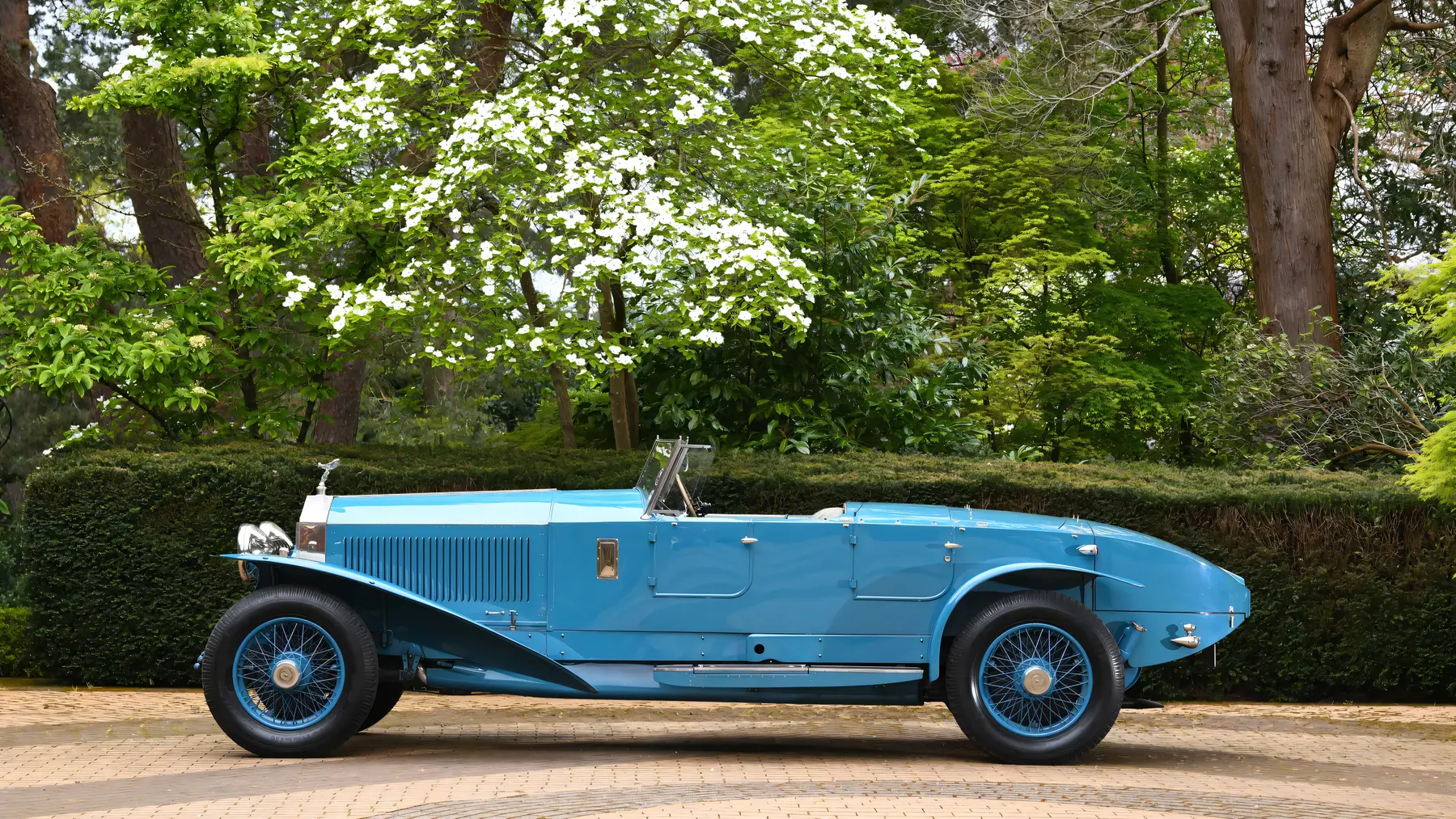
What the Phantom I Sports Tourer ultimately represents is Rolls-Royce’s most sustained attempt to reconcile its identity with the sporting enthusiasms of the 1920s - and the result, 17EX in particular, stands as evidence that the reconciliation was possible, if not commercially pursued with the conviction it deserved. The name “Phantom I” itself was never actually used by the factory during the car’s production life; it is a retrospective designation coined by enthusiasts after the Phantom II’s arrival, and only latterly adopted by Rolls-Royce themselves. There is something poetic about that - a car known in its own time as simply the New Phantom, reaching back and acquiring a bolder identity from history. The Sports Tourer variant, in that light, feels entirely appropriate: a car that the factory built quietly and carefully, that the world promptly named something more glamorous, and that turned out to be rather more exciting than anyone at Derby was perhaps entirely comfortable admitting.
The Rolls-Royce Phantom I Sports Tourer in the Style of Jarvis draws its lineage directly from chassis 17EX and its landmark torpedo bodywork. The 17EX story is documented in Lawrence Dalton’s Rolls-Royce: The Derby Phantoms and has been widely referenced in concours scholarship.