1928 Rolls-Royce Phantom I 'Boattail' Light Allweather Tourer by H.J. Mulliner
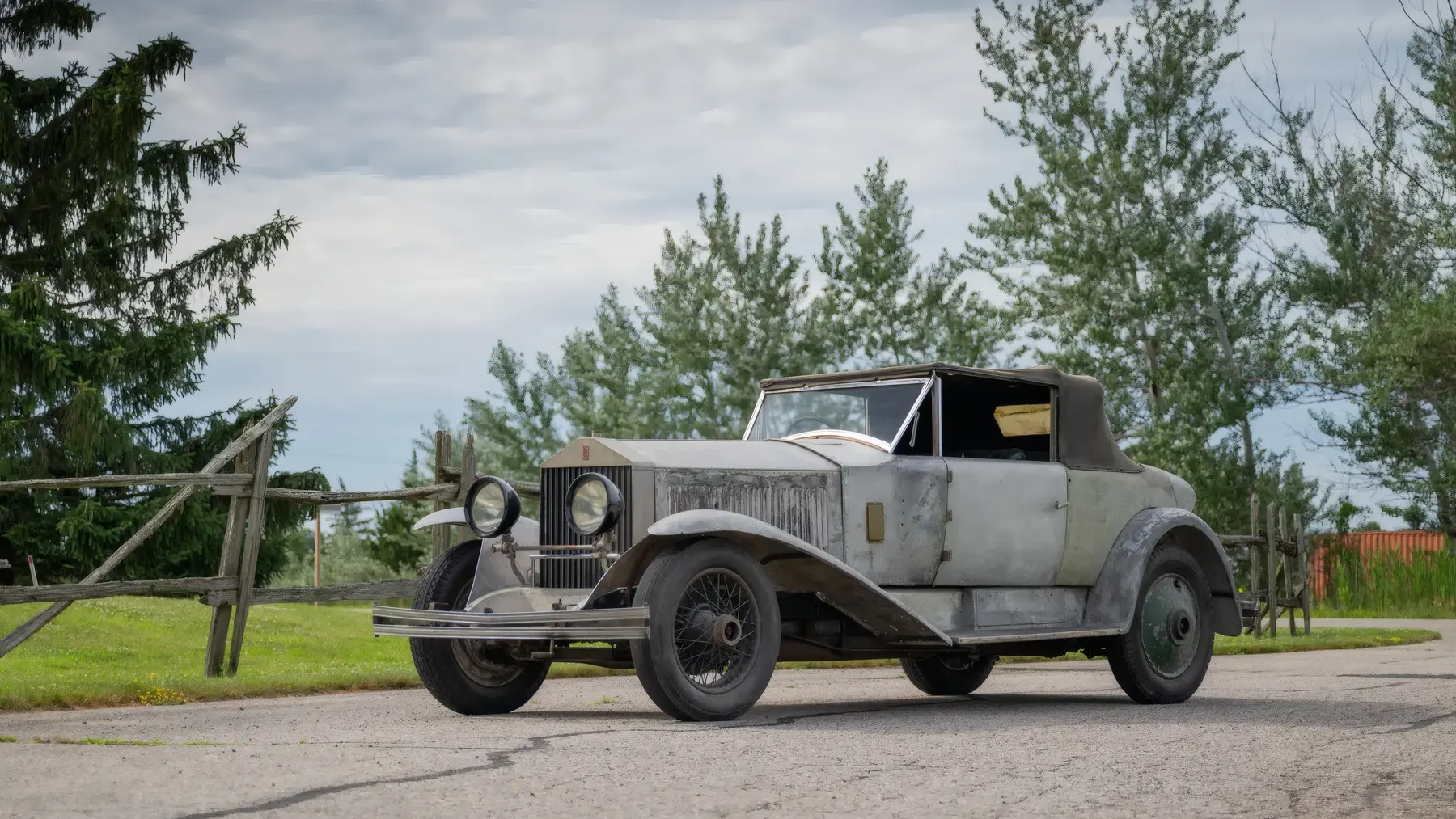
The boattail is a lie - or rather, a magnificent contradiction. H.J. Mulliner built its reputation on restraint: the long, composed limousine bodies, the formal sedancas, the kind of coachwork that whispered rather than shouted. And yet, sometime in 1928, out of the Chiswick works at Bedford Park emerged something that looked as though it had been drawn by a man who had just watched a mahogany speedboat cut across the Solent and decided that four wheels and a Rolls-Royce chassis would do just as well. The Phantom I ‘Boattail’ Light Allweather Tourer is, in the most precise sense, a one-off commission - a single bespoke body on a single chassis - and that specificity is inseparable from what makes it worth discussing at all.
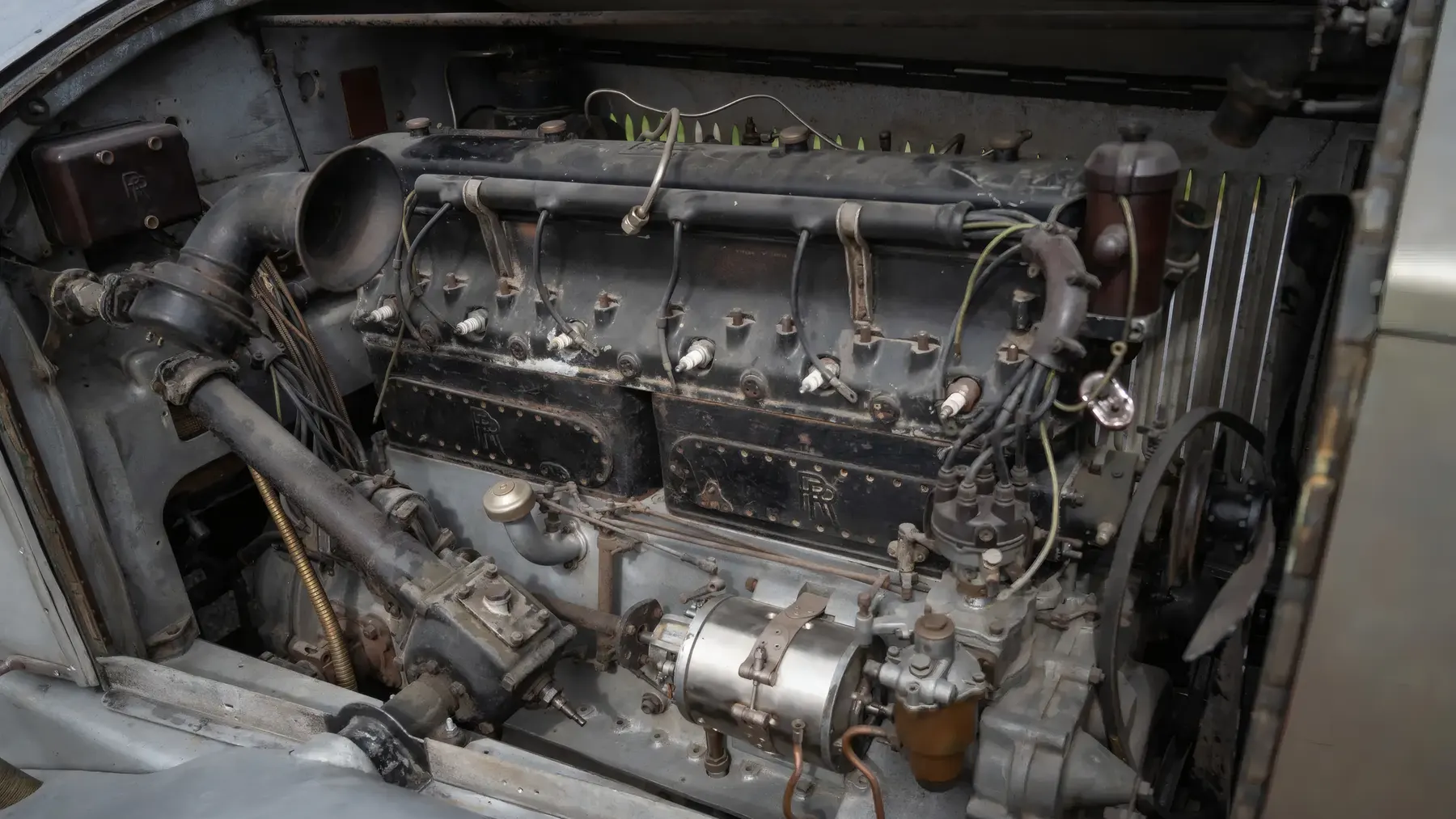
To understand what H.J. Mulliner achieved here, you first need to appreciate the canvas they were working on. The Phantom I - never officially called that by Rolls-Royce, who introduced it in 1925 simply as the “New Phantom” - was the company’s direct successor to the Silver Ghost, and it represented a genuine engineering step forward rather than mere cosmetic evolution. The engine retained the Silver Ghost’s basic architecture of a straight-six, but the crucial change was the adoption of pushrod-operated overhead valves in place of the Ghost’s side-valve arrangement. Constructed as two groups of three cylinders sharing a single detachable head, it displaced 7,668cc - a bore of 108mm against a long, undersquare stroke of 139.7mm - and Rolls-Royce famously refused to state its power output, saying only that it produced “sufficient” power. Independent figures from the period suggest something in the region of 95–108 bhp, delivered at a leisurely 2,300–2,750 rpm, a number that tells you everything about the engine’s character: it wasn’t about peak output, it was about torque spread across an unhurried rev range.
The chassis carried over the Silver Ghost’s frame, with semi-elliptic springs at the front and cantilever springs at the rear, but the real technical talking point was the four-wheel braking system - servo-assisted and developed under licence from Hispano-Suiza, a patent that gave Rolls-Royce braking capability that most of its British contemporaries couldn’t match. A four-speed manual gearbox drove through a torque tube to the rear axle, and the whole platform - sold as a rolling chassis only, with no factory body - could be specified in two wheelbases, the longer UK version stretching to 3,823mm. Rolls-Royce produced 2,269 examples of the UK-built Phantom and a further 1,240 at their Springfield, Massachusetts plant before the Phantom II replaced it in 1929, making the Phantom I a relatively plentiful basis for coachwork. Relatively, of course, is doing heavy lifting in that sentence.
H.J. Mulliner itself had been operating under some form of the Mulliner family name since the 1760s, when the Northampton branch of the family began hiring out carriages. Henry Jervis Mulliner incorporated his London company in 1897 and, by 1900, had established a proper coachbuilding operation in Mayfair - one of his early clients being C.S. Rolls himself, who had a Silver Ghost body built there. The firm moved to Bedford Park, Chiswick, in 1906, and by the 1930s virtually its entire output was being fitted to Rolls-Royce and Bentley chassis. That focus gave Mulliner a depth of understanding of the Rolls-Royce platform that more generalist coachbuilders couldn’t easily replicate - they knew how those chassis moved, how they loaded, where the structure could be lightened and where it couldn’t.
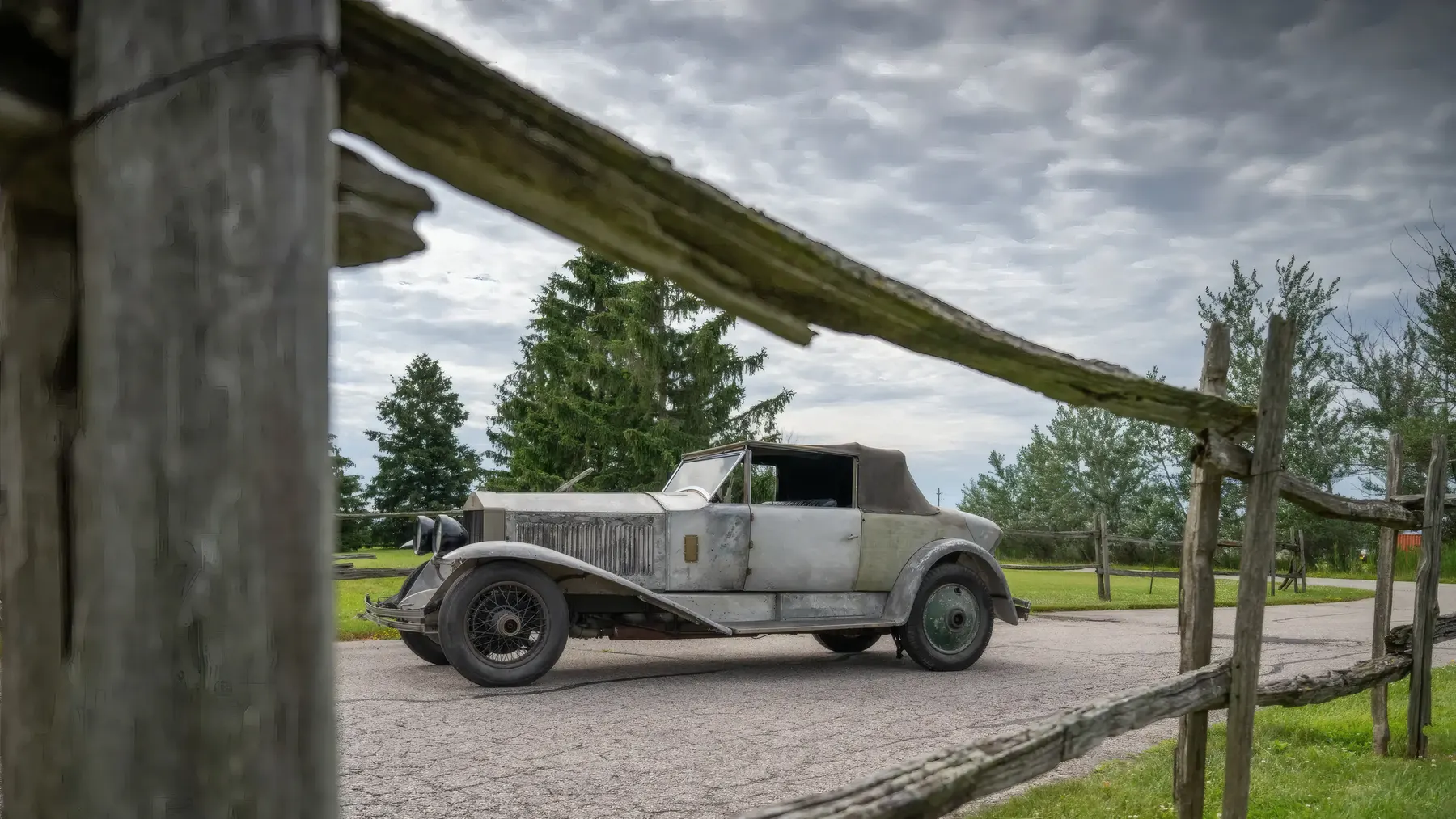
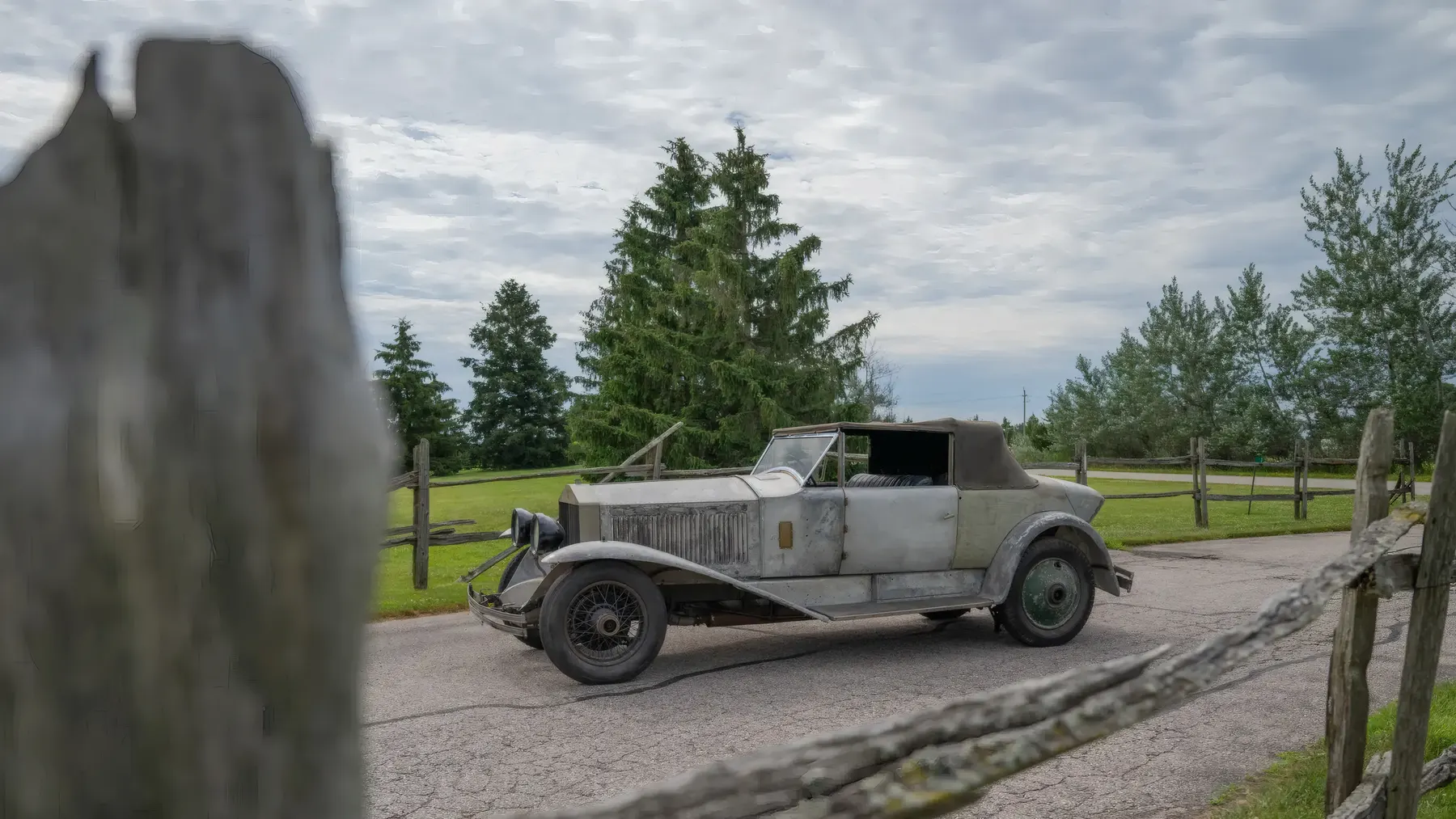
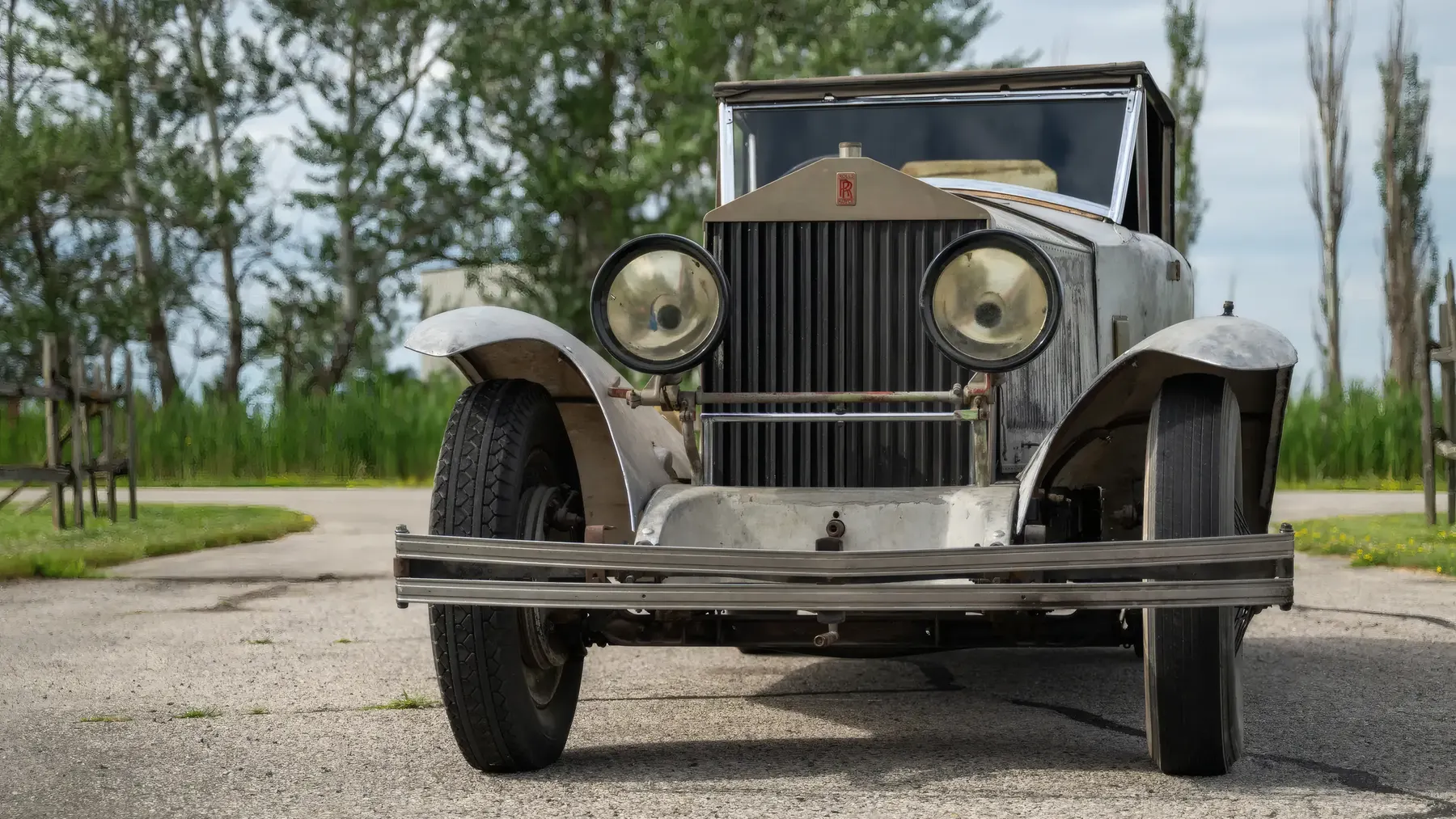
The brief for the Phantom I Boattail was, by the standards of the day, unusually sporting. The commission called for a “Light Allweather” body - the Allweather designation indicating a convertible hood arrangement, in this case a disappearing fabric top rather than a fixed roof - built in aluminium rather than the steel or composite wood-and-fabric construction more common at the time. The boattail itself is a tapered rear deck in which the bodywork narrows to a point, borrowing directly from the nautical aesthetic of racing motorboats, and it requires a specific structural approach: the rear body has to be stiff enough to hold its shape without the support that a conventional boot lid or trunk provides. The interior was specified in a 2+2 configuration - the front two passengers in a proper open cockpit, the rear two accommodated in what would have been snug but usable space within the tapered tail. Full nickel-plated exterior fittings, adjustable black-painted radiator shutters, a louvered bonnet, and Barker-style “dippable” headlights completed the specification. The running boards were designed to carry up to 45kg of luggage - a detail that reveals the intended use: this was not a car for a drive around the park, but a machine for actual overland touring.
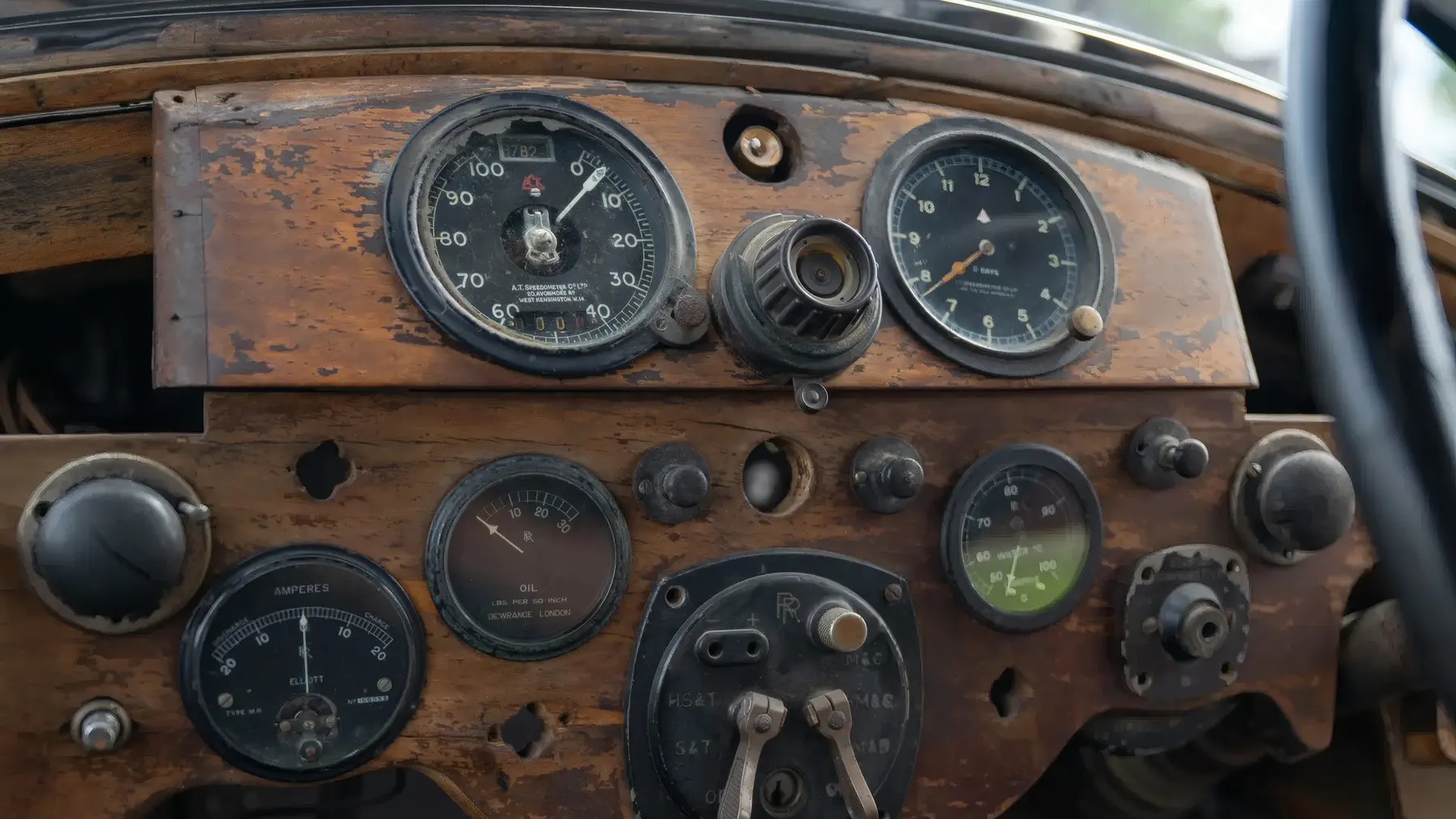
The performance specification was taken seriously. A high-speed rear axle ratio was specified, and the dashboard carried a 100 mph speedometer - not a decorative gesture in 1928 but a genuine statement of intent. Top speed on a standard Phantom I varied with body weight, but lighter open coachwork could push the car to around 80 mph, and the combination of the high-ratio axle and the reduced mass of an aluminium allweather body would have kept the Boattail near the top of that range. By 1928 standards, on the roads of Britain or the Continent, 75–80 mph in open air was not merely quick; it was properly exhilarating, with none of the aerodynamic cocooning that modern cars impose between driver and velocity.
The driving experience of any Phantom I is characterised by a particular kind of deliberate authority. The steering is slow and precise rather than quick and playful, the gearchange requiring a thoughtful double-declutch that rewards patience and punishes hurry. The engine’s torque plateau means you can lug it in a higher gear where a lesser engine would demand a downshift, and the Hispano-Suiza braking system - while genuinely impressive by 1920s standards - operates on cable and rod rather than hydraulics, meaning that brake feel is firm but requires firm pressure. In a conventional, heavy Phantom limousine body, all of this trades as stately. In an aluminium boattail, with the wind buffeting freely past a low rakish windscreen and the whole structure sitting noticeably lighter on its springs, the same mechanical character reads differently - less ceremony, more genuine performance.
The allweather body format itself was a practical innovation for serious motorists. The disappearing hood, when stowed, left a cleaner silhouette than a bulky landaulette arrangement, and the allweather seal, when raised, gave considerably more weather protection than a conventional touring hood. The boattail rear section reinforced the structure where a conventional trunk or luggage rack would have added weight at the tail. The aluminium coachwork, beyond its aesthetic merit, represented a considered weight-saving that gave the Phantom I Boattail a livelier demeanour than most of its platform siblings.
The drawbacks are real and worth naming plainly. The Phantom I’s cylinder head change to aluminium in 1928 introduced a corrosion compatibility problem with the iron block - a matter that caused owners grief and was a design misstep Rolls-Royce had to work around rather than around which it had thought ahead. The chassis design itself, carried over from the Silver Ghost, was beginning to show its age by the late 1920s: the cantilever rear springs produced a somewhat wayward response to road irregularities that more modern independent systems would have avoided. And the allweather convertible format, for all its versatility, involves compromises in rigidity - no open car of this era achieves the torsional stiffness of a closed body on the same frame, and the longer UK wheelbase amplifies any flex through the scuttle.
The cultural register in which the Phantom I Boattail sits is specific and rather wonderful. The boattail form was a direct borrowing from the world of racing motorboats and early racing cars - a visual language that said “speed” at a time when most luxury coachwork was saying “dignity.” Several Phantom I chassis received boattail treatment from various coachbuilders, each interpreting the form slightly differently: some with aeroscreens and exposed cycle wings, some with more integrated flowing bodywork, some in polished metal. What H.J. Mulliner brought to the form was the particular restraint of a firm that knew how to be elegant - the nickel fittings and louvered bonnet are sporting details, but they are not vulgar ones.
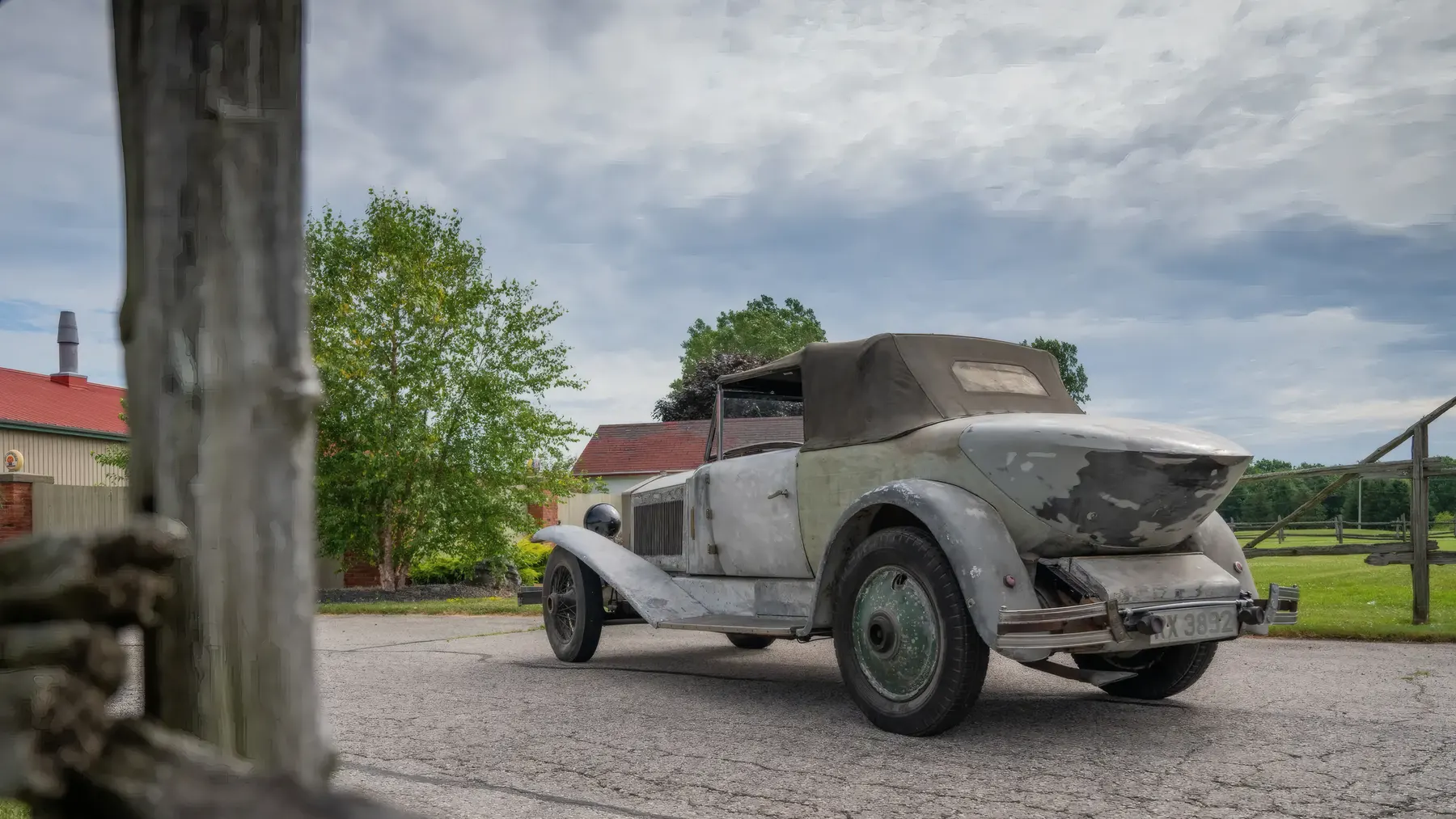
The fact that this particular body is believed to be a one-off even within the boattail genre is telling. Mulliner wasn’t standardising the form; they were solving a specific brief for a specific customer with specific ambitions - and they solved it with aluminium, a disappearing hood, a high-speed axle and a speedometer calibrated to 100 mph. That is a coherent engineering and aesthetic argument, not a styling exercise.
The critical reception that surrounds the Phantom I Boattails in general - and Mulliner’s interpretation in particular - has always reflected the tension between what a Rolls-Royce was supposed to be and what these cars demonstrably were. In concours circles, the boattail body style commands significant attention precisely because it breaks so decisively from the formal limousine idiom that dominates Phantom I coachwork. Auction houses and collectors treat authenticated examples of sporting open coachwork on the British Phantom I as among the most desirable of the 2,269 built, with the rarity of genuinely lightweight aluminium allweather bodies adding further weight to that assessment.
What the H.J. Mulliner Phantom I ‘Boattail’ Light Allweather Tourer ultimately represents is a brief moment in the late 1920s when the most prestigious motorcar chassis in England could be, if you asked the right coachbuilder in the right way, something that looked absolutely nothing like a Rolls-Royce was supposed to look - and was better for it.