1951 Allard K2
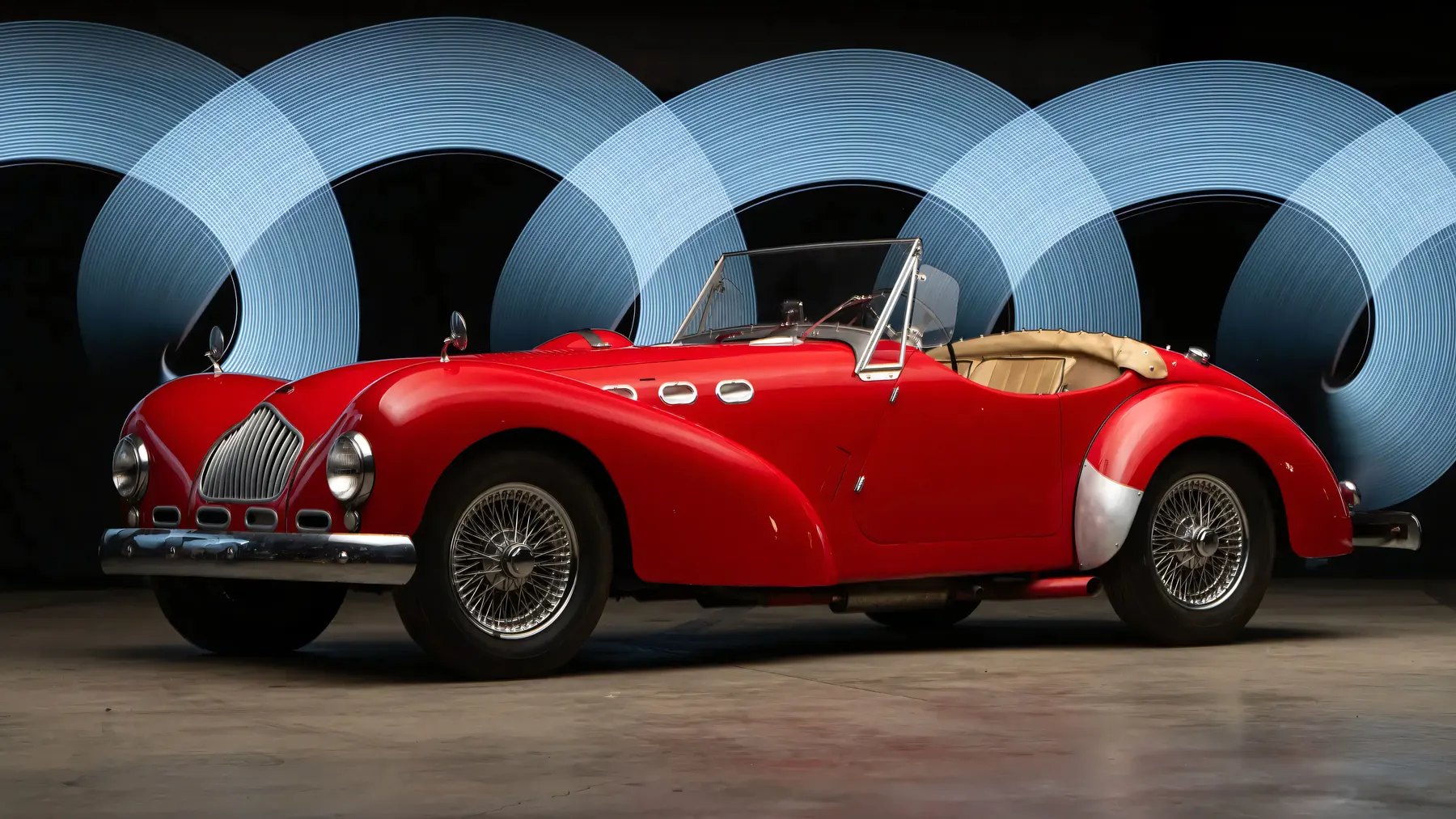
Perry B. Fina’s speed shop on West 54th Street in Manhattan was not, on any given day in early 1951, what you would call a quiet place. New Allards arrived off the docks at regular intervals, crated and half-finished - British-built bodies and rolling chassis that had crossed the Atlantic aboard steamships like the SS American Clipper, waiting to have their hearts installed. That the heart in question was American - usually a Cadillac or Chrysler V-8 - was precisely the point. Sydney Allard had understood something before almost anyone else: that the most exciting sports car in the world was not a product of any one country’s tradition, but a collaboration between British weight savings and American cubic inches.
The K2 sits at a fascinating intersection within Allard’s short but blazingly productive catalogue. Where the J-series was nakedly, almost belligerently a racing machine - a device for winning events rather than crossing continents - the K-series represented Allard’s acknowledgment that some customers wanted both speed and a degree of civilised touring. The K2, produced from 1950 through 1952 in a run of approximately 119 examples, was the refined evolution of the earlier K1, sharing its fundamental architecture but reclothed in smoother, more considered aluminium bodywork that carried a distinct Streamline Moderne sensibility. It was a sports-tourer in the most genuine, unironic sense of the phrase: fast enough to embarrass purpose-built racing cars, comfortable enough - just - to use on a road.
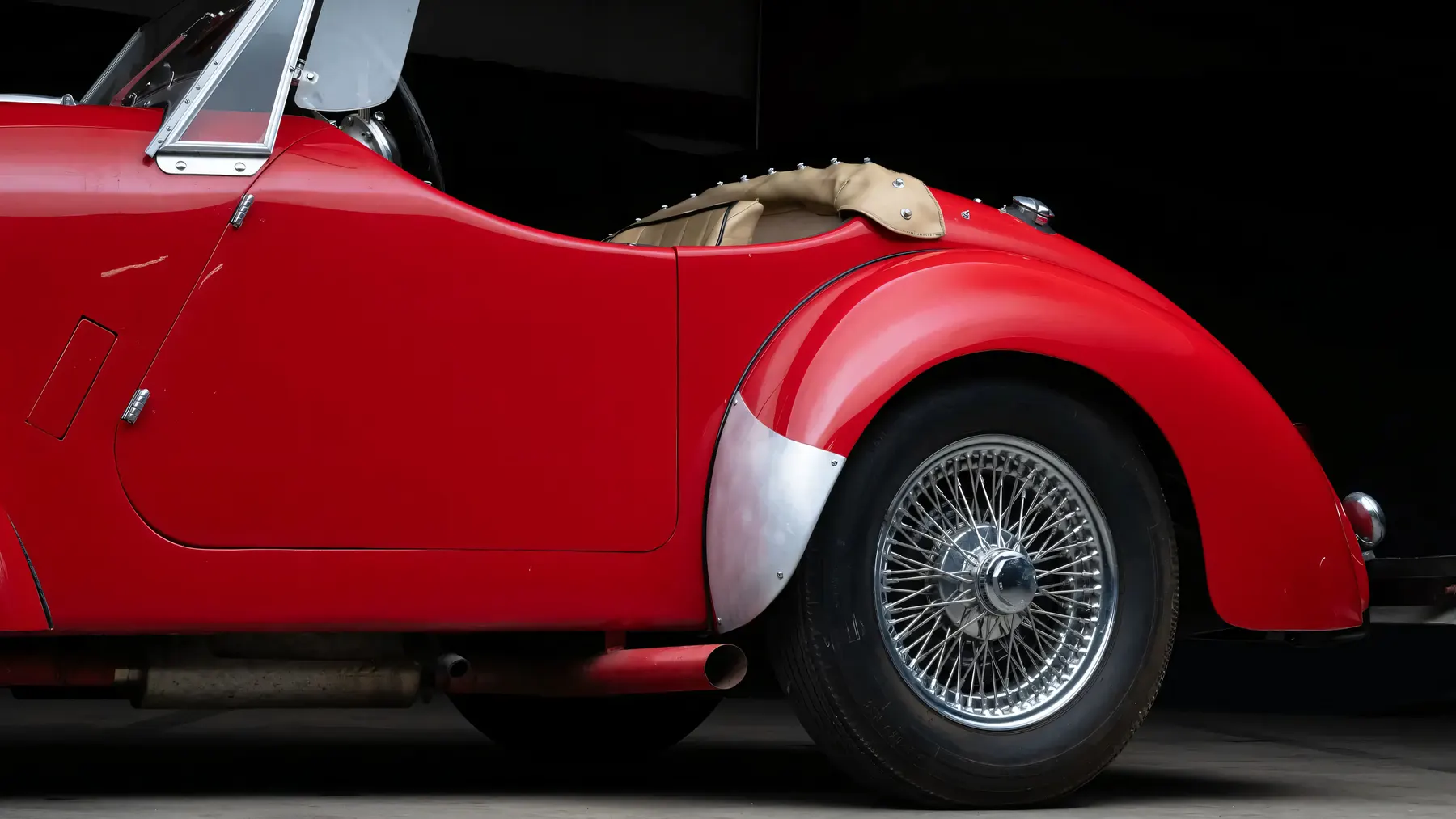
The starting point for the K2 was the same divided front axle and steel chassis underpinnings that underpinned the J-series, with the K2’s wheelbase measuring 2,692mm - long enough to accommodate a genuine second seat and a small measure of luggage, but no longer than that. The suspension received meaningful development over the K1: coil springs replaced leaf springs at the front, improving compliance and reducing the harshest edges of the original car’s behaviour. At the rear, most K2s ran a live axle on transverse leaf springs as standard, with a de Dion arrangement offered as an upgrade for those who wanted the more sophisticated setup - only seven cars were so fitted. Four-wheel hydraulic drum brakes handled retardation, which, given what the engines were capable of, required a degree of confidence in their operator.
Those engines are the central fact of the K2’s existence. From the factory, Allard supplied the car with a choice of British Ford or Mercury flathead V-8 units displacing either 3,622cc or approximately 3,900cc. These were competent if unspectacular options, and they account for a relatively small proportion of K2s as they exist today. The real machine - the K2 as most enthusiasts understand it - arrived when American buyers, guided by dealers like Fina and West Coast distributor Al Moss, fitted Cadillac or Chrysler overhead-valve V-8s. The Cadillac 331 cubic-inch unit, displacing 5,425cc and producing around 160 bhp in standard form but considerably more with the dual four-barrel carburetor setups that were commonly fitted, transformed the K2 into something genuinely alarming. That 331 pushing through a three-speed manual gearbox into an aluminium body weighing approximately 1,089kg dry gave a power-to-weight ratio that contemporary European machinery could rarely match.
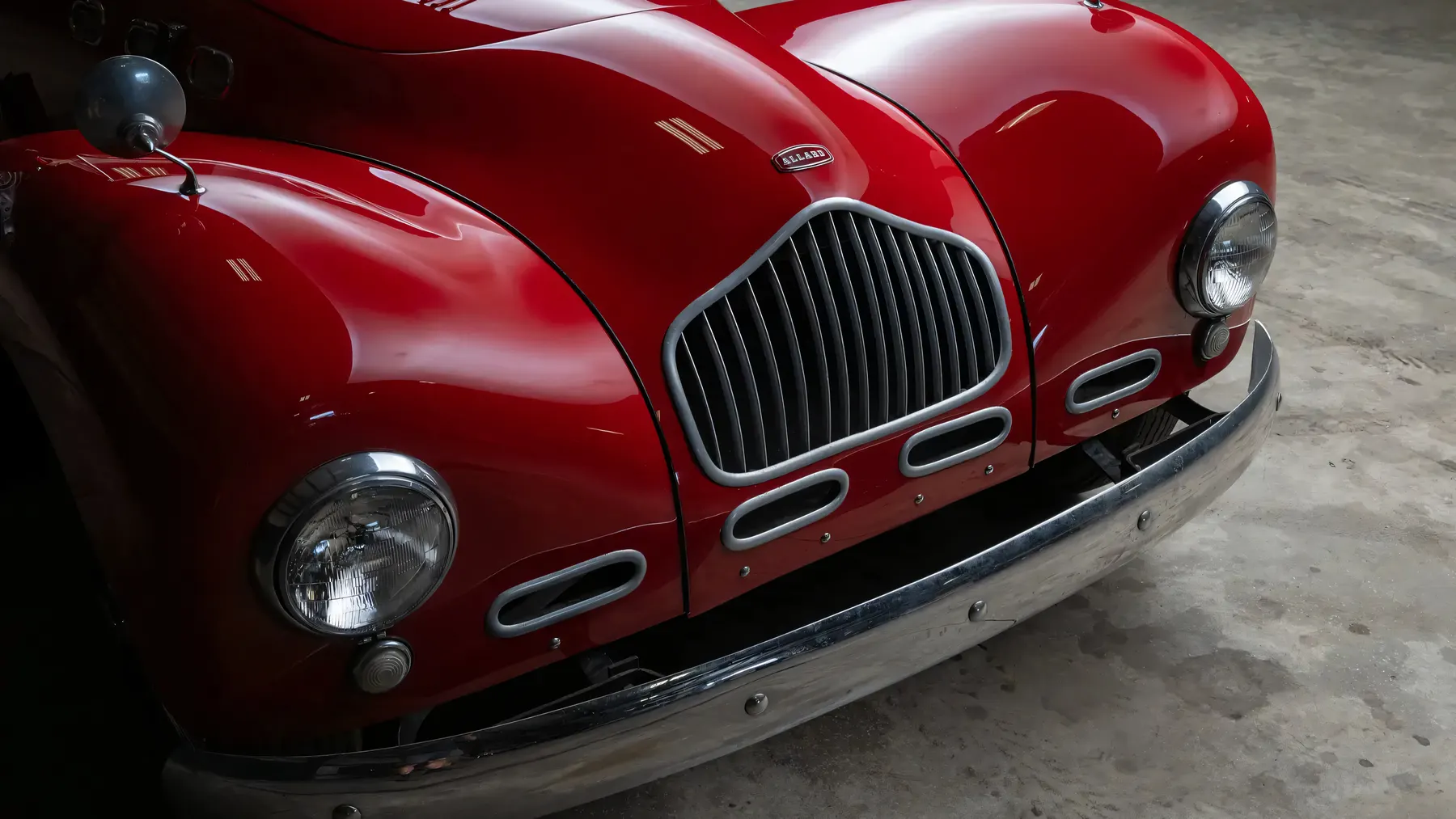
The design itself deserves careful attention. Allard’s coachwork department reclothed the K2 in aluminium panels that drew a clear line between the raw, cycle-winged aesthetic of earlier British sports cars and the swept, more aerodynamically considered forms that would define the 1950s. The three porthole vents punched into the engine compartment sides - an unmistakable styling gesture borrowed in spirit from Buick’s trademark portholes but executed in Allard’s own idiom - appeared here for the first time across the range, as did the pentagonal grille that would become a house signature. These two details alone give a K2 an identity so specific that it reads correctly at a glance, from any angle, at any distance. The open cockpit, separate front fenders sweeping rearward, chrome wire wheels, and the side-exit exhaust that snakes from beneath the sill complete a visual statement that is simultaneously purposeful and theatrical.
Behind the wheel, a Cadillac-engined K2 demands a particular kind of relationship. The steering is direct and communicative in the way that only unassisted, large-diameter setups - Allard used Marles worm-and-sector boxes, with many cars retaining the celebrated Bluemels Brooklands steering wheel as original equipment - can be. The divided front axle setup, which Allard developed in-house following work originally pioneered by Ford engineer Leslie Ballamy, gives the front end an unusual feel: it loads up progressively, warns you honestly, and then departs with relatively little drama if you’ve been paying attention. What it doesn’t do is reward inattention. The rear, with its live axle and all that torque from the Cadillac unit, makes its preferences known on wet tarmac in ways that are entirely legible but require active management. Top speeds in the region of 130 to 140 mph were quoted for well-tuned examples, and these were not optimistic numbers.
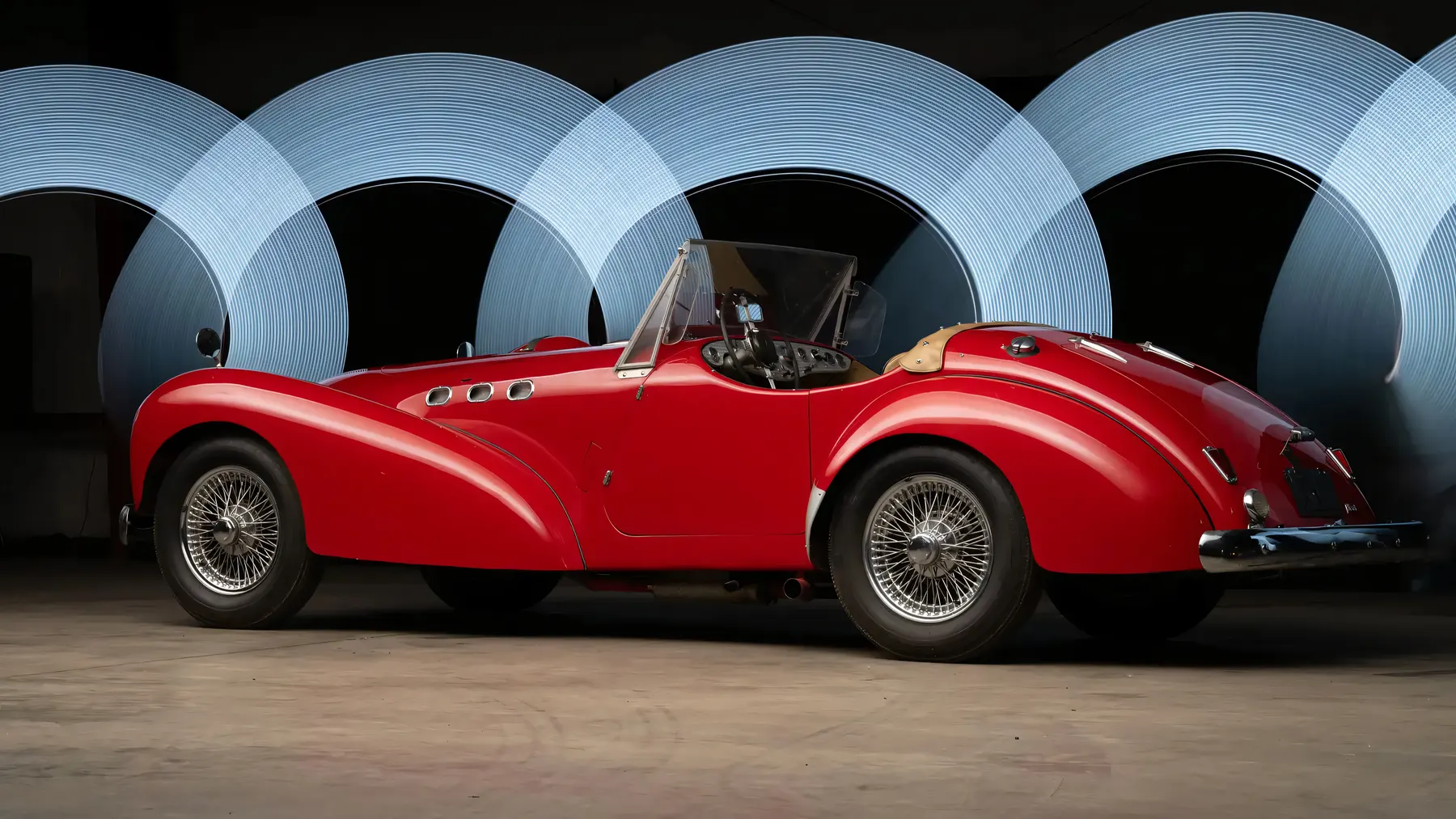
The K2’s competition record reflects exactly this character. Allard K2s collectively compiled around 40 first-place finishes, 32 second places, and 30 third places across American and European events during their competitive heyday. Both Carroll Shelby and Zora Arkus-Duntov - the latter serving as a technical advisor to Allard before eventually rescuing the Corvette at General Motors - raced K2s in the early 1950s. The lineage runs directly to Sydney Allard’s own third-place finish at the 1950 24 Hours of Le Mans, achieved in the related J2, making clear that the K2 inherited its motorsport credibility from genuinely proven machinery rather than marketing ambition.
The strengths of the K2 are obvious and substantial. It is light, powerful, beautifully proportioned in the way that aluminium-bodied hand-built cars from this period tend to be, and it carries a motorsport heritage that is documented and verifiable rather than merely claimed. The pentagonal grille and portholes ensure it is never mistaken for anything else. Its eligibility for vintage racing events worldwide - including some of the most prestigious historic racing categories - means it remains a living, competitive object rather than a static showpiece.
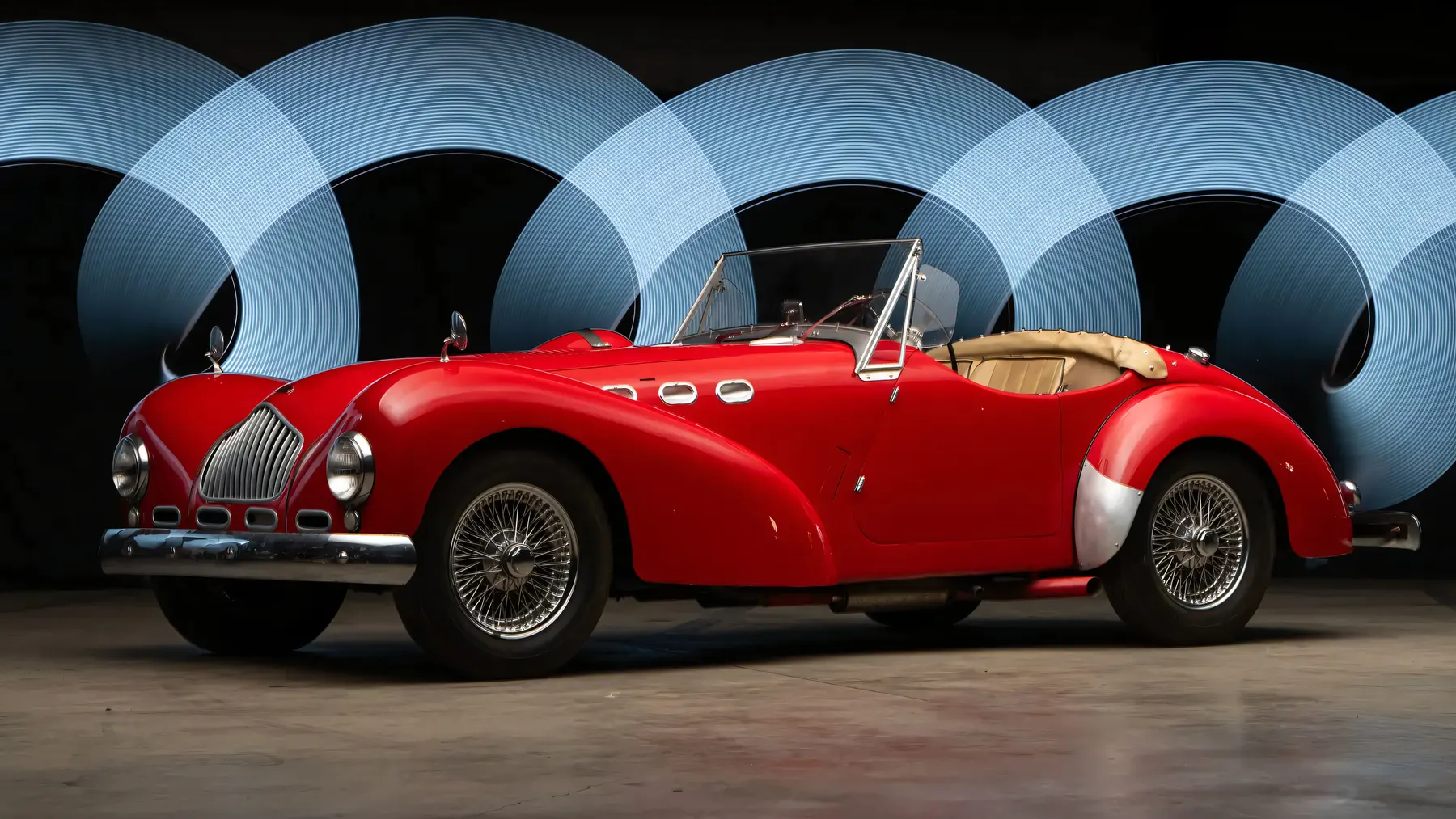
The honest drawbacks are equally worth stating. Refinement, by any objective measure, is not present. The cockpit is intimate to the point of austerity: British-market interior standards of 1950 were not generous, and the K2, even in touring-oriented K-series trim, offers no concessions to isolation from mechanical noise, road surface texture, or weather. The gearbox - typically a three-speed unit - is coarse by the standards of what followed, and requires deliberate, unhurried operation to avoid embarrassment. The braking, sufficient for the road speeds of its era, draws careful thought on a modern historic circuit. And the dependence on a third-party fitment for the car’s defining engine means that build quality across the K2 population is variable; the installation was only as good as the workshop that performed it, and not every shop in early 1950s America matched Perry Fina’s standards.
None of this diminishes the K2’s significance. Sydney Allard arrived at the transatlantic performance formula - lightweight British chassis, American V-8 muscle - before Carroll Shelby formalised it into the Cobra, before Jim Tojeiro sketched the AC Bristol’s successor, before the formula became a genre rather than a radical idea. The K2 was Sydney Allard operating at the height of his intuition: understanding that the fastest way around a circuit in 1950 was not necessarily a Ferrari or an Aston Martin, but something rawer, cheaper, and more honest about what performance actually requires. The critical reception of the era bore this out. Motor magazine’s 1951 road test of a Cadillac-powered Allard J2 - the K2’s close sibling - described it as “the finest sports motor bike on four wheels ever conceived,” praising both its handling and its performance as “outstanding”. The K2 shared enough of that character to earn similar respect.
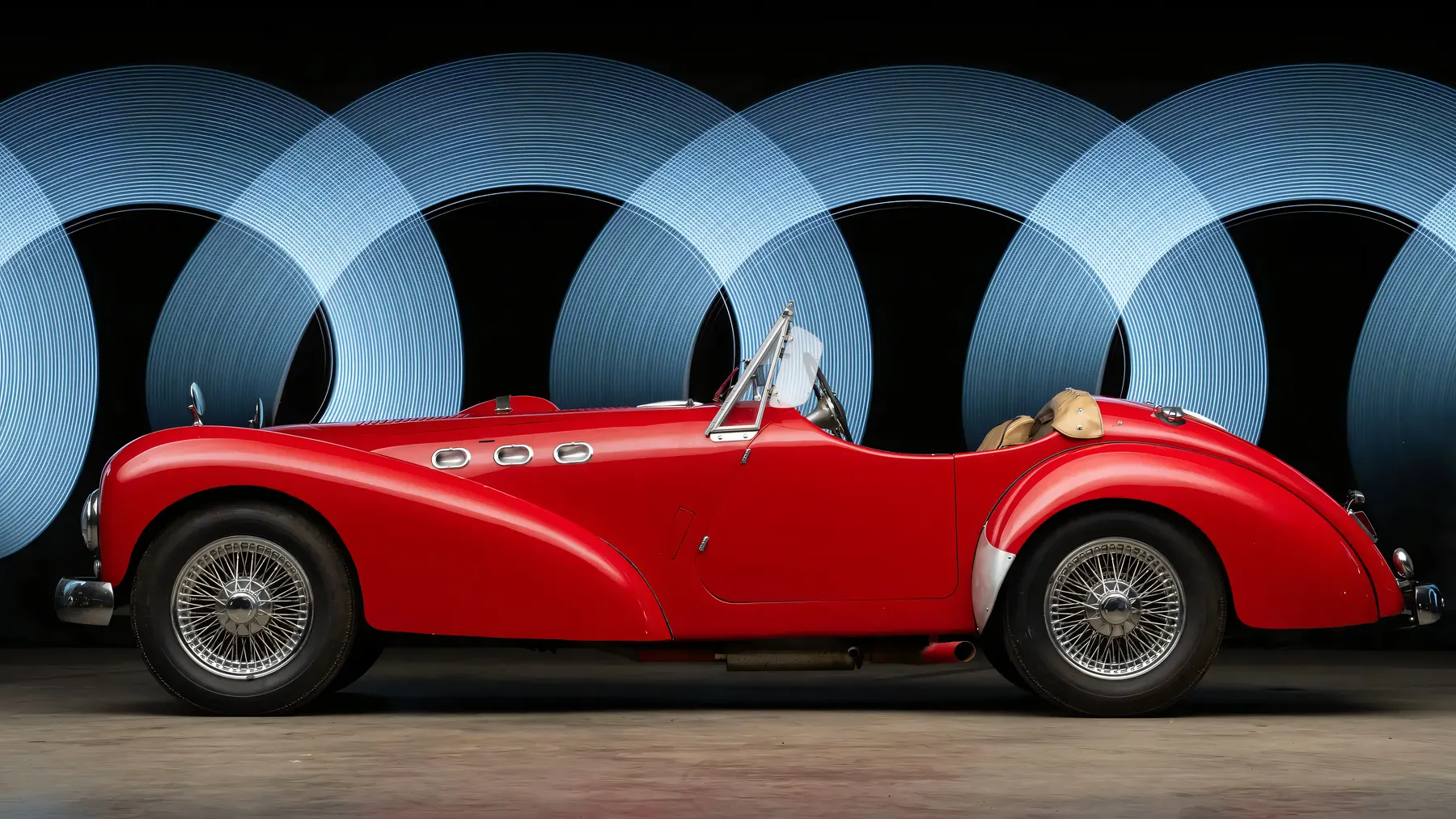
What makes the K2 specifically compelling today, beyond nostalgia, is the rarity of its formula. By the time Allard ceased production in 1958, the window in which a small, inventive British manufacturer could compete outright with European exotica had already begun to close. The K2 exists in the gap between those two worlds: too sophisticated to be a trials special, too raw to be a grand tourer, too fast and too rare to be ignored. It is precisely the car that the post-war moment required, built by the man who understood that moment most clearly.