1952 Lancia Aurelia B53 Cabriolet by Pinin Farina
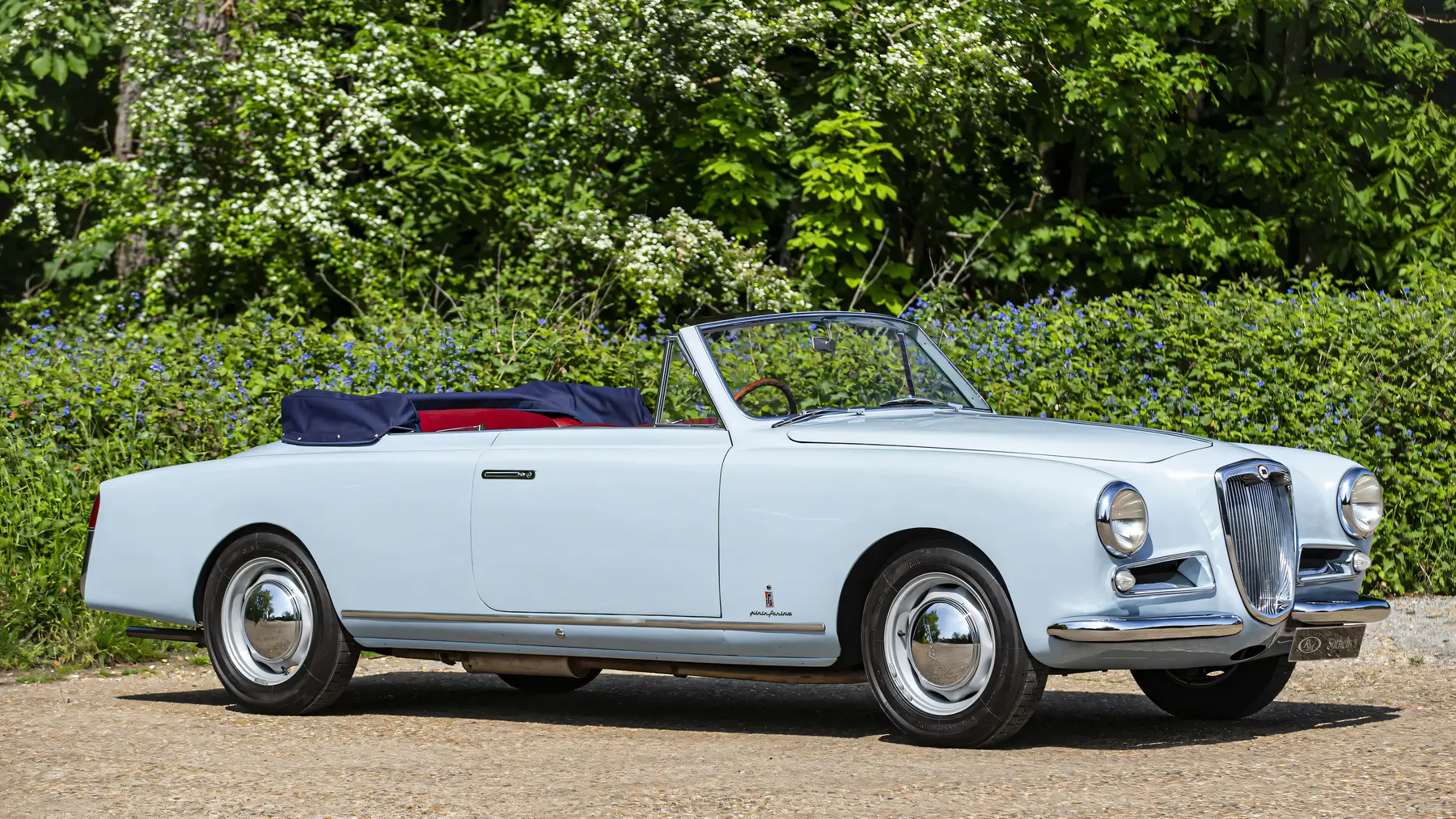
At the 1953 Brussels Motor Show, amid the European motor industry’s careful return to elegance after wartime austerity, a Pinin Farina-bodied Lancia cabriolet occupied its stand with the kind of quiet self-assurance that needs no amplification. It asked nothing of the viewer except attention, and rewarded it generously. The work had already been done - in a machine shop in Chivasso, at a drawing board in Turin, and in the hands of artisans who understood that genuine luxury is architecture, not ornament.
The Lancia Aurelia B53 Cabriolet represents one of the finest and most rarefied expressions of the autotelaio philosophy that defined the Aurelia programme from the moment of its Turin debut in April 1950. When Gianni Lancia’s engineers unveiled the B10 berlina alongside a rolling platform chassis ready for coachbuilder interpretation, the company was making a deliberate statement about how it understood the hierarchy of Italian motoring. The berlina was for many; the autotelaio was for the few - specifically for carrozzerie such as Allemano, Viotti, and, most presciently, Pinin Farina, who could transform an engineering masterpiece into an aesthetic one. Production of these chassis (first the B50, then the B51) reached 584 units across the initial 1.8-litre era, but demand was constrained by the engine’s modest outputs and the considerable expense of coachbuilt completion.
The B53 designation is both specific and consequential. When Lancia upgraded the coachbuilder platform in 1952 to accept the 2-litre engine already doing duty in the B21 berlina, it created two chassis variants: the B52, carrying a 2,860-millimetre wheelbase for normal bodywork, and the B53 - the long-wheelbase version at 2,910 millimetres, designed deliberately to support heavier, more elaborate bodies without structural compromise. Of the combined 184 units produced across both, only 86 were B53s. It is a restricted canvas upon which every brushstroke carries real weight.
The mechanical foundation beneath a Pinin Farina cabriolet on this platform is one of the most intellectually ambitious packages assembled for road use in the immediate postwar era. Francesco de Virgilio’s 60-degree V6 - developed under Vittorio Jano, and the world’s first production V6 engine - displaces 1,991 cc and produces approximately 70 brake horsepower in its B21 state of tune. In 1952, in a grand cabriolet, that figure delivered a driving experience defined by refinement rather than urgency. The 60-degree bank angle was not chosen casually; it achieves near-perfect primary and secondary balance without the mechanical complexity of a counterbalanced crankshaft, giving the Aurelia’s V6 a smoothness at low revs that larger-displacement British and German rivals genuinely could not match. The block and cylinder heads are entirely in aluminium, with cast-iron liners - a weight-consciousness that permeates the entire car.
What happens behind that engine is where the Aurelia’s real engineering character resides. Rather than a conventional gearbox attached to the engine, Lancia mounted the four-speed transmission in unit with the differential at the rear axle - a combination transaxle integrating gearbox, clutch, and differential, with inboard drum brakes incorporated to reduce unsprung weight at the corners. The front suspension deployed Lancia’s characteristic sliding pillar design, a legacy of the pre-war Aprilia, while the rear of the B53-era cars used semi-trailing arms - an arrangement that cooperated well with the transaxle’s weight distribution under normal driving conditions. Perhaps most significant of all, the Aurelia was the first production car in the world fitted with radial-ply tyres as standard equipment, which, combined with the near-even fore-aft weight distribution, delivered handling composure that outclassed most of its contemporaries.
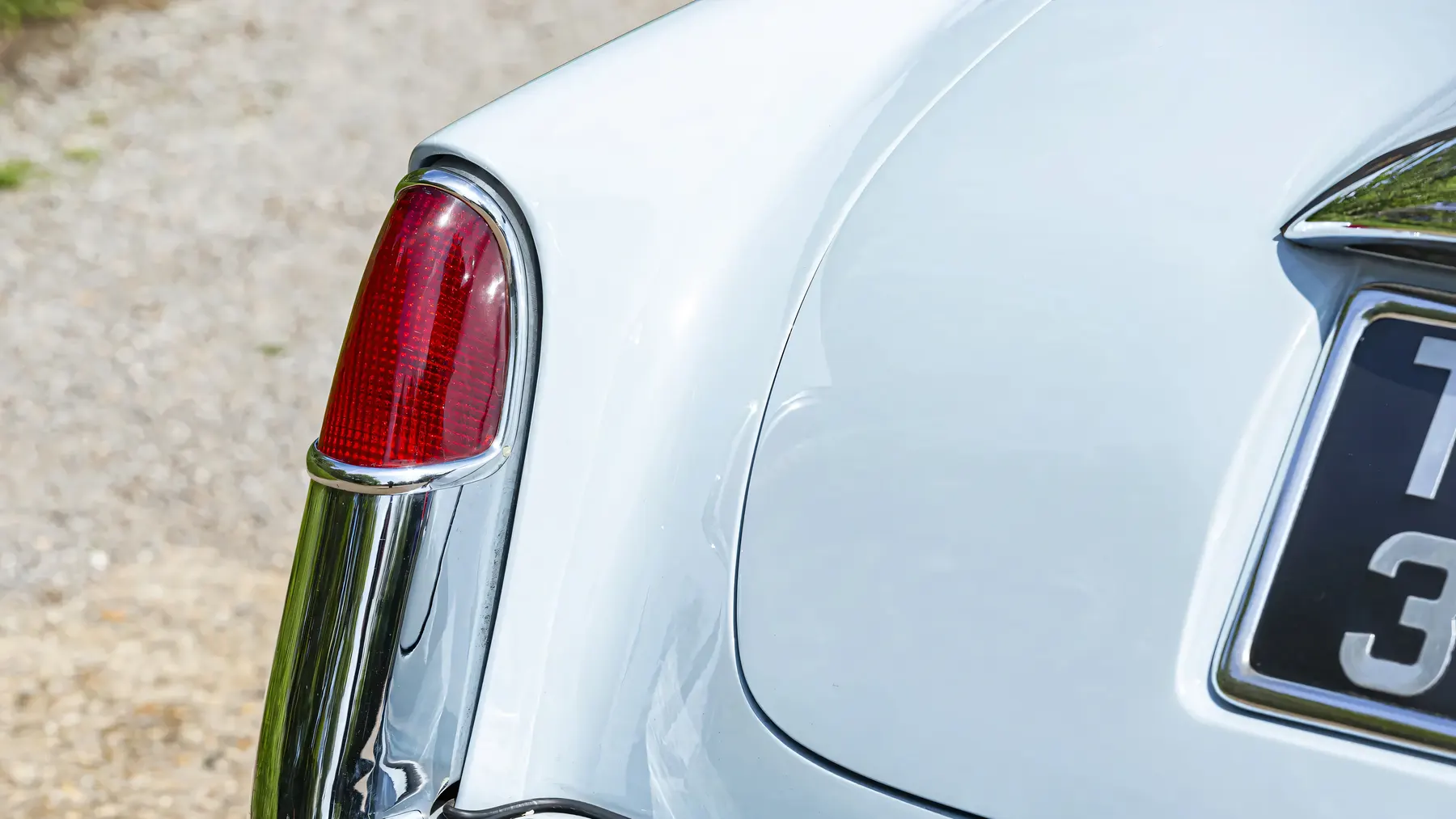
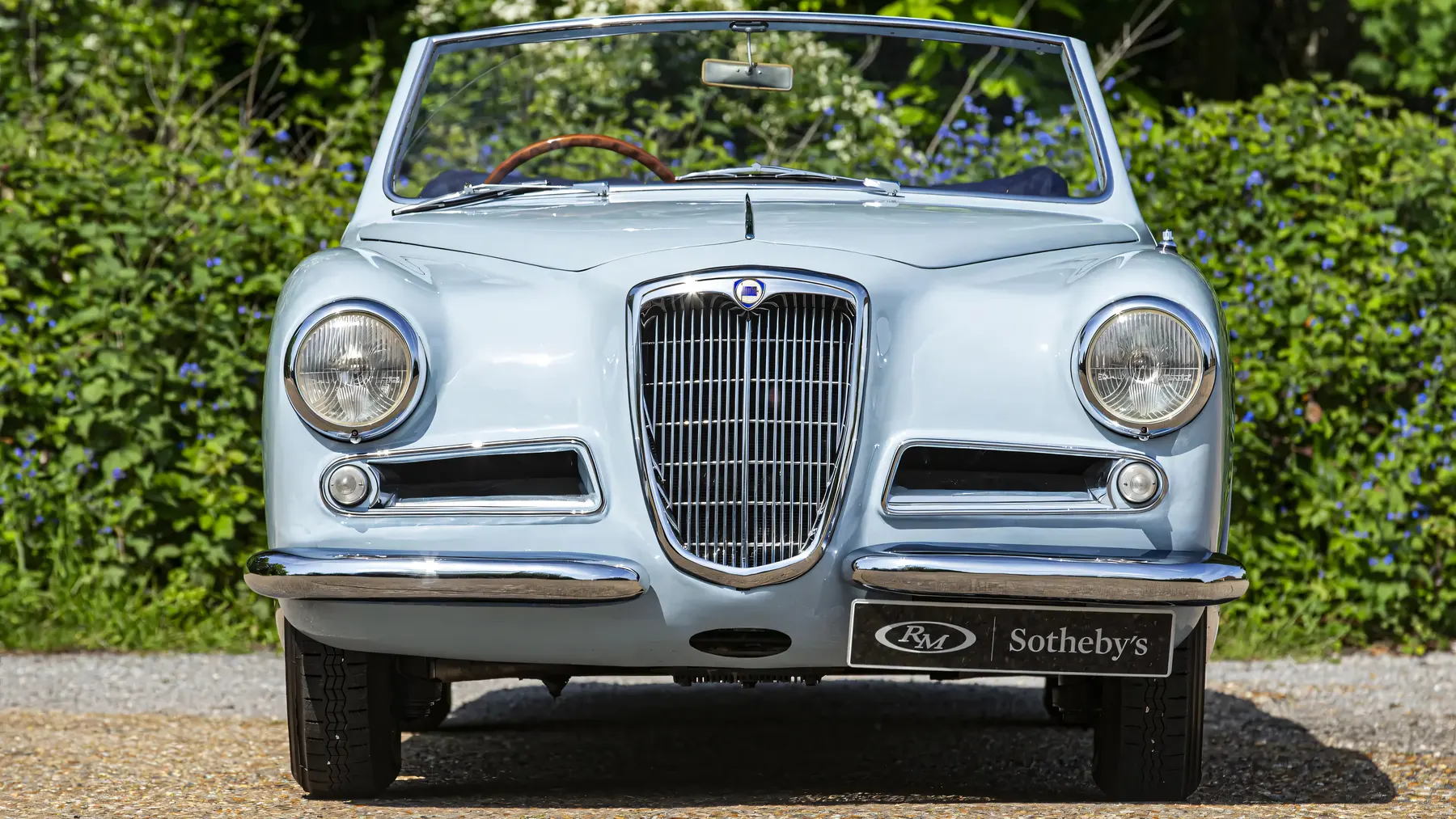
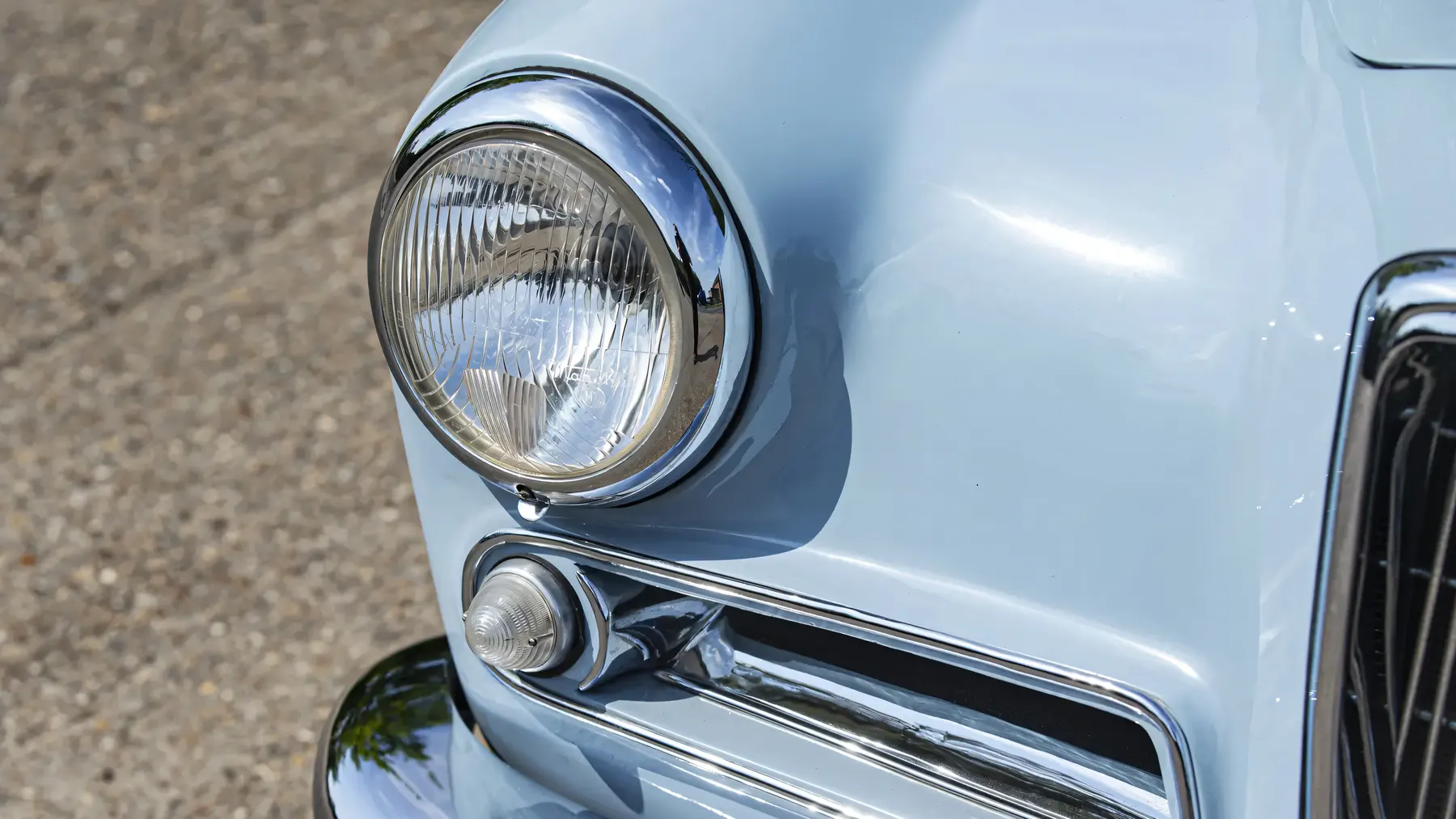
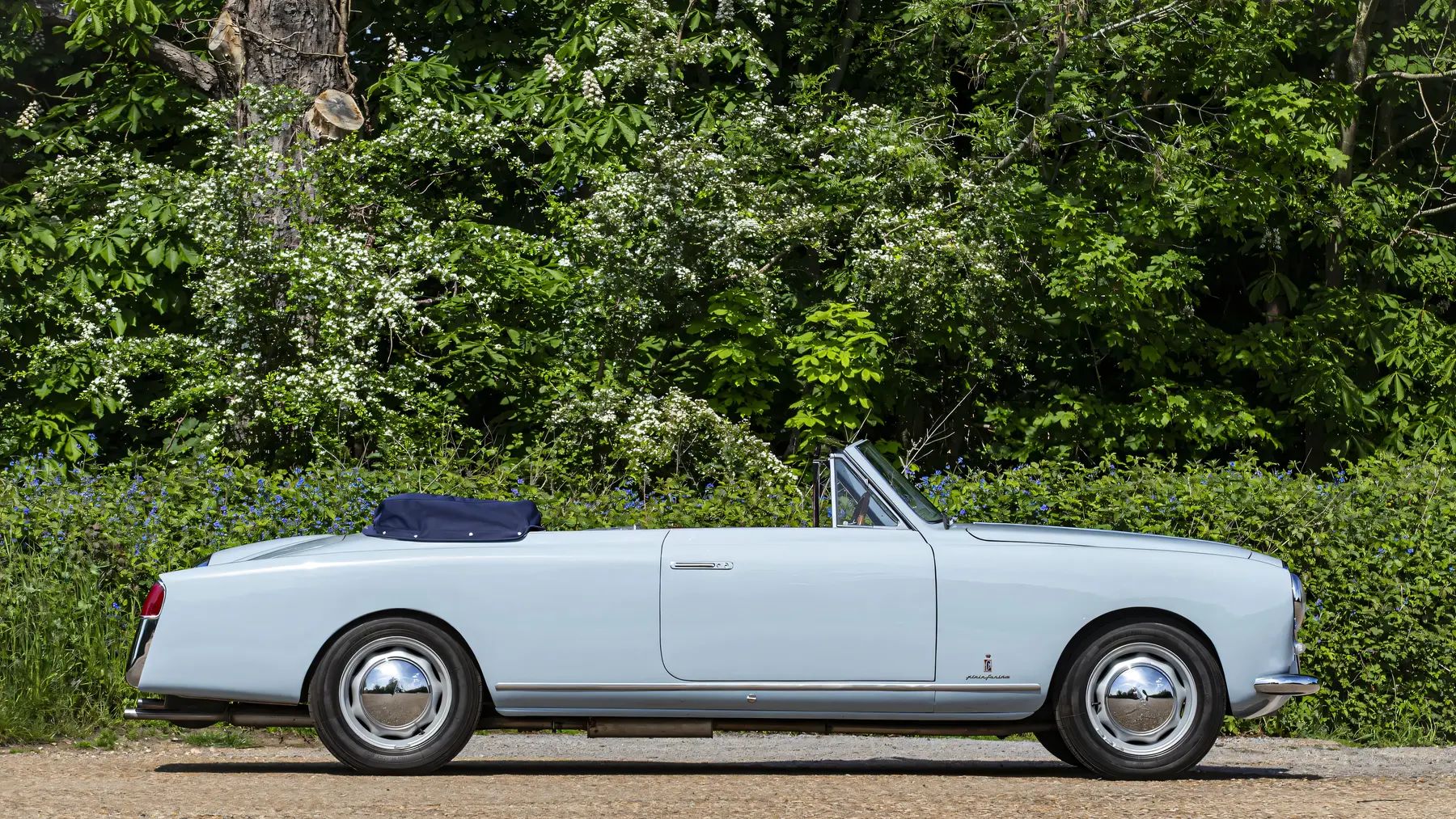
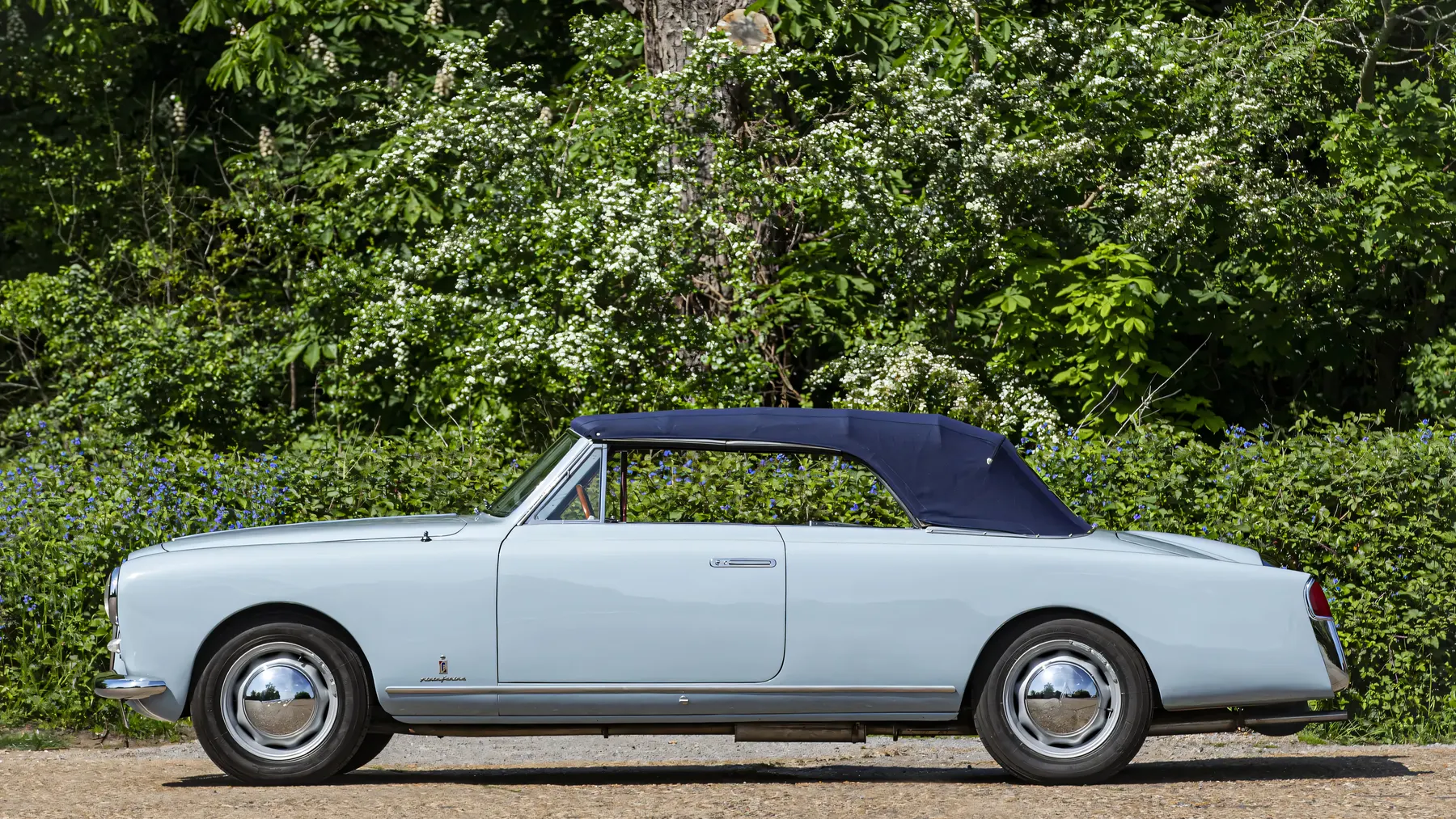
Pinin Farina - who would formalise that surname as Pininfarina in 1961 - brought to the B53’s generous wheelbase a cabriolet body conception that remains among the most fluent expressions of early 1950s Italian open-car design. The two-plus-two body uses the long platform to develop a horizontal, ground-hugging proportion that flows from a composed, upright nose through generous front wings into a well-resolved passenger compartment. The rear is handled with particular restraint: a soft, tapered tail that neither over-dramatises the nascent tailfin movement then emerging from American studios nor retreats into provincial dullness. When the hood is raised, the car maintains its architectural integrity; when lowered, the rear deck reads as a coherent whole. This is the work of a studio already thinking about the relationship between car and occupant as a compositional problem, not merely a functional one. Altogether, Pinin Farina built just under three hundred cabriolets across the full autotelaio range - a figure that includes approximately 265 standard examples and around twenty with special fittings.
On the road, the B53 Cabriolet announces its character early. The V6’s torque curve is broad and accessible, without the peakiness that characterises many sporting engines of the period - this is not a unit that demands to be worked hard through a narrow powerband. The transaxle provides genuine mechanical engagement, though the shift action demands patience rather than speed. The long linkage between the cockpit and the rear-mounted gearbox introduces a deliberateness that cannot be tuned away by mechanical adjustment alone; it is simply the physical consequence of an elegant engineering idea. Experienced drivers learn quickly to be precise rather than quick, and the gearbox rewards that respect. At a competent cruising pace - realistic rather than headline-hunting - the Aurelia settles into a composed, flowing rhythm that suits the car’s grand-touring character perfectly. The sliding pillar front suspension resists dive under braking and holds the car’s nose line through corners with a composed rigidity, though it offers less lateral compliance than the more modern wishbone front ends appearing elsewhere in European motoring during the same period.
The genuine strengths of the B53 Cabriolet are inseparable from the quality of conviction behind its design. It was built during a moment in Italian coachbuilding that was genuinely experimental - not yet systematised into the codified idioms of the later 1950s - and the quality of materials reflects a clientele that expected their commission to endure across generations. The aluminium-intensive construction philosophy, in both the powertrain and the body panels, gave the Aurelia a competitive power-to-weight ratio for its class. And the transaxle concept, despite its shift-quality penalty, was prescient in ways the original engineers likely understood but couldn’t fully demonstrate at the time: Alfa Romeo, Ferrari, and eventually Porsche and Lamborghini would each revisit the rear-mounted or mid-rear gearbox arrangement for dynamic and weight-distribution reasons, and it remains a preferred solution in serious GT machinery today.
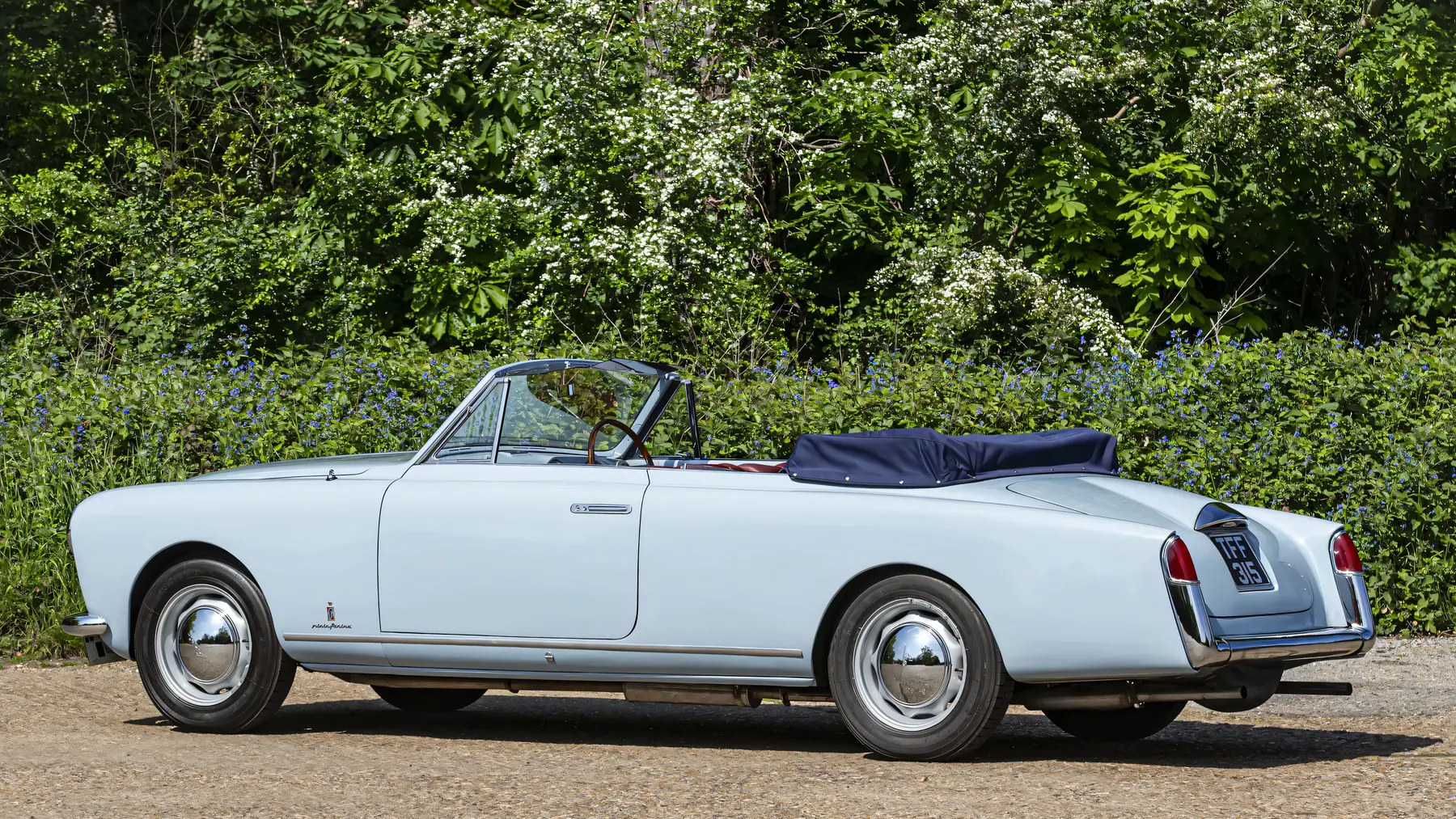
The compromises, however, deserve honest acknowledgement. Seventy brake horsepower driving a coachbuilt body weighing well over a tonne is not a formula for urgency, and the B53 Cabriolet was never designed to challenge the B20 Gran Turismo Coupé on any sporting metric. It is a grand touring machine in the older, pre-performance sense of that phrase - a vehicle conceived for covering long distances with grace and comfort, not for exploiting mountain passes. The semi-trailing arm rear suspension of the early autotelaio cars, while well-composed under normal conditions, could behave unpredictably at the handling limit in a manner that Lancia itself later acknowledged by switching to a de Dion tube arrangement for the fourth-series B20 and all B24 models. The rear transaxle’s mechanical complexity, while admirable in principle, created maintenance considerations that grew more demanding with age - this is not a car that tolerates indifference from its custodians. And with only 86 B53 chassis built before production closed in late 1952, sourcing sympathetic components requires the kind of specialist knowledge and network that inevitably limits accessibility.
The cultural significance of the Aurelia autotelaio programme extends well beyond its modest production numbers. At a moment when Italy’s industrial north was actively reasserting its creative identity after the war, the cabriolet bodies produced by Pinin Farina and their peers served as tangible proof of artistic continuity - that the great carrozzeria tradition had not merely survived but evolved with purpose. These were not revival exercises or nostalgic gestures. They were forward-looking statements of intent, shown at Brussels, Turin, and Paris to audiences that included the press, the prosperous, and the style-conscious. Lancia’s decision to offer the autotelaio in the first place was an act of industrial confidence in Italy’s artisan workshops, and the B53 chassis, as the large-body variant at the culmination of the 2-litre programme, represents the fullest expression of that investment in craft.
Critical reception of the broader Aurelia range was consistently enthusiastic about its engineering ambition. Contemporary road tests praised the berlina’s exceptional refinement relative to its price, and the coachbuilt cabriolets attracted sustained attention at the salons where they were presented. Detailed contemporary press road tests of the cabriolets themselves are relatively rare - reflecting both the cost of the cars and the fact that the sporting B20 coupé naturally attracted the most journalistic attention. The cabriolets occupied a quieter prestige, understood by their intended audience and appreciated by sight rather than scrutinised by stopwatch. That gap between press coverage and cultural weight is, in retrospect, telling: the B53 cabriolet was always a car made for people who already knew.
What the Lancia Aurelia B53 Cabriolet by Pinin Farina represents, ultimately, is a very specific kind of Italian automotive confidence - the willingness to engineer a platform so thoughtfully that the world’s finest coachbuilders would want to clothe it, and the conviction that the open car was worth the considerable expenditure of talent, time, and material that a B53 commission demanded of everyone involved. The B20 coupé made Lancia’s name in the motoring press and on race tracks. The B53 cabriolet quietly affirmed that the company understood something deeper: that the most enduring cars are built for people who intend to live with them for a very long time, and that the discipline of designing for that relationship produces work that outlasts any lap record.
Related Notes
- Italian Coachbuilding Houses
- 1961 Ferrari 400 Superamerica SWB Coupé Aerodinamico by Pininfarina
- 1960 Maserati 3500 GT by Touring
- 1968 Ferrari Dino 206 GT by Scaglietti
- Modern Materials Carbon Fiber and Aluminum
- Concorso d’Eleganza Villa d’Este
- Pebble Beach Concours d’Elegance
- 1951 Lancia Aurelia B20 GT Coupé Series I
- Vittorio Jano and the Engineering Legacy of Lancia
- The Autotelaio Tradition - Rolling Chassis Coachbuilding in Postwar Italy
- The 1953 Brussels Motor Show
- Radial-Ply Tyres and the Revolution in Road Handling