1960 Maserati 3500 GT by Touring
Juan Manuel Fangio collected his fifth and final Formula One world championship behind the wheel of a Maserati 250F in 1957, a result that should have been the defining triumph of the Modena firm’s postwar story. Instead, it preceded near-financial ruin. The cost of running a works racing programme at the front of grand prix competition had quietly been hollowing out Maserati’s accounts for years, and by 1958, the factory team was withdrawn entirely. What came next was not a retreat - it was a pivot that would shape the entire character of the company for decades, and the car that embodied it was the 3500 GT.
Maserati had been inching toward a viable road car business since the late 1940s with the A6 series, but those cars were handmade in tiny numbers - barely a dozen a year - more proof of concept than commercial enterprise. What the company needed was a genuine series-produced grand tourer, something that could compete with Ferrari and Aston Martin in the salons of Geneva and the garages of wealthy Americans, while actually turning a profit. Chief engineer Giulio Alfieri, the man from Parma who had shaped Maserati’s competition machinery, was handed the brief. The 3500 GT was his answer, developed in parallel with the frantic demands of Maserati’s final Formula One season, and introduced at the 1957 Geneva Motor Show as two rival prototypes - one by Carrozzeria Touring, one by Carrozzeria Allemano. Touring’s proposal, a white 2+2 nicknamed the Dama Bianca, won the assignment, and production began before Christmas of that same year.
The nameplate eventually covered a small family of variants, each building incrementally on what Alfieri had established. The original coupé, the Tipo 101, ran from 1957 until the early 1960s with three twin-choke Weber carburettors and a four-speed ZF gearbox before a five-speed unit became available. Then came the GTi of 1961, which swapped the Webers for a Lucas mechanical fuel injection system and became, in doing so, the first fuel-injected Italian production car - a genuinely historic footnote that rarely receives the attention it deserves. Running alongside both was the open Spyder, bodied not by Touring but by Carrozzeria Vignale to a Michelotti design, launched at the 1959 Paris Salon on a ten-centimetre shorter wheelbase with a steel body rather than Superleggera aluminium construction. By the time the last cars left the factory in 1964, 2,226 coupés and convertibles had been built - modest by modern standards, remarkable by Maserati’s own history.
The engine is where the 3500 GT’s soul lives, and it is an engine that refuses to let you forget where it came from. Alfieri took the 3,485cc DOHC inline-six from the Maserati 350S sports racer, which was itself related to the 250F’s grand prix unit, and civilised it for road use - switching to a wet sump oil system, adjusting accessories, and turning down the wick just enough. The result retained dual ignition, meaning twelve spark plugs where most engines would have six; glance into the engine bay and the bank of cylinders can read convincingly like a twelve-cylinder. With the Weber setup, the engine produced 220 PS at 5,500 rpm; the fuel-injected GTi raised that to 235 PS at the same point, with the additional benefit of more torque lower in the range - 260 lb-ft at 4,000 rpm compared to 224 lb-ft at 4,500 rpm for the carburetted motor. Bore and stroke measured 86 mm by 100 mm, a long-stroke configuration that gives the unit its distinctive low-end authority.
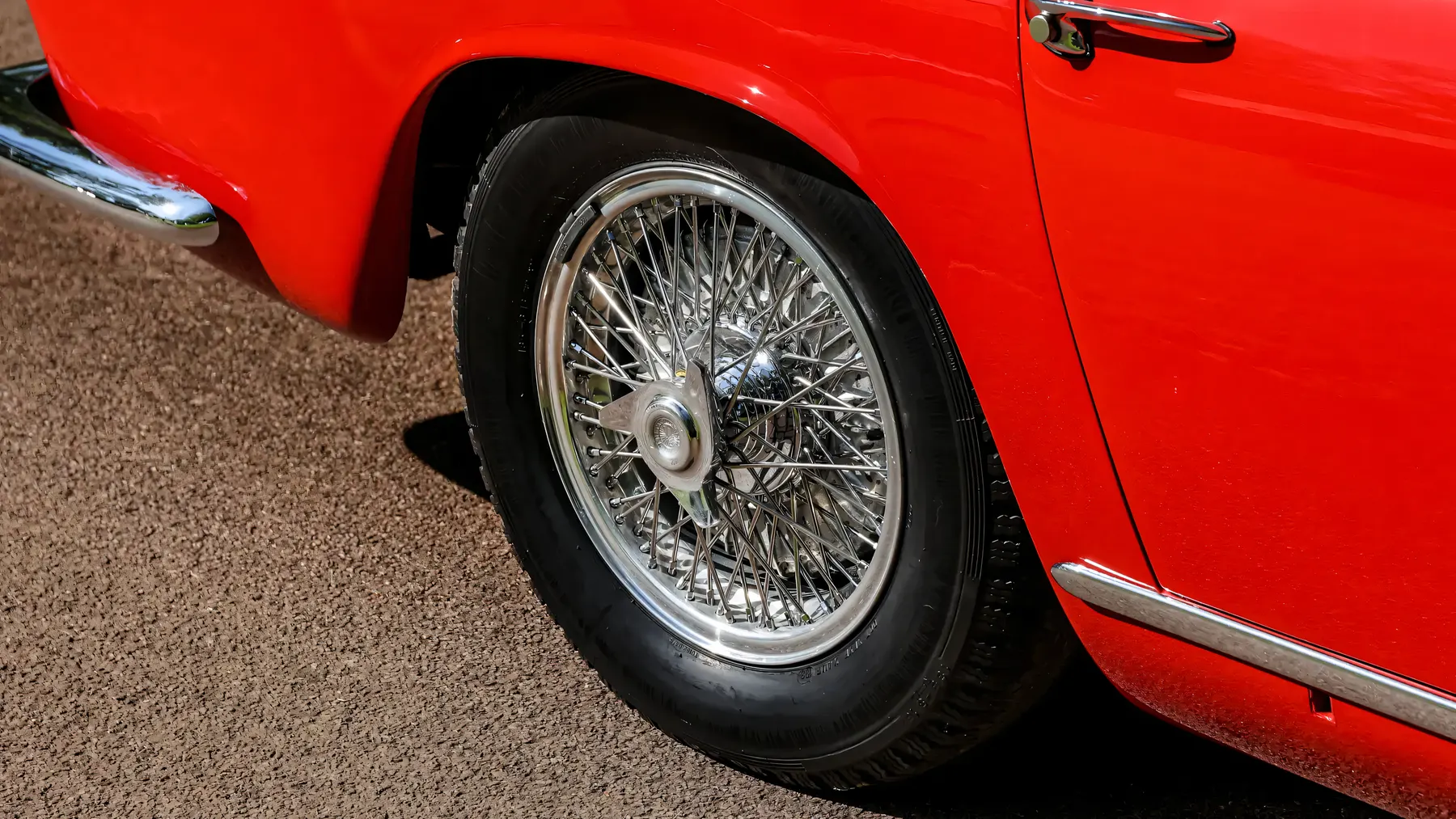
For the chassis, Alfieri assembled an international parts bin with unusual pragmatism. Italy’s tax structure made buying in specialist components from domestic suppliers commercially unworkable, so he travelled to Britain and sourced Girling brakes, Alford & Alder suspension components, a Salisbury live rear axle, and a Borg & Beck clutch; the ZF gearbox came from Germany. Italian pride was maintained through Weber carburettors, Magneti Marelli twin ignition, and Borrani wire wheels as an option. The frame itself was a multi-tubular Superleggera structure, over which Touring laid hand-formed aluminium panels using their patented technique - a construction method that achieved a respectable 1,300 kg dry weight for a car of this size and ambition.
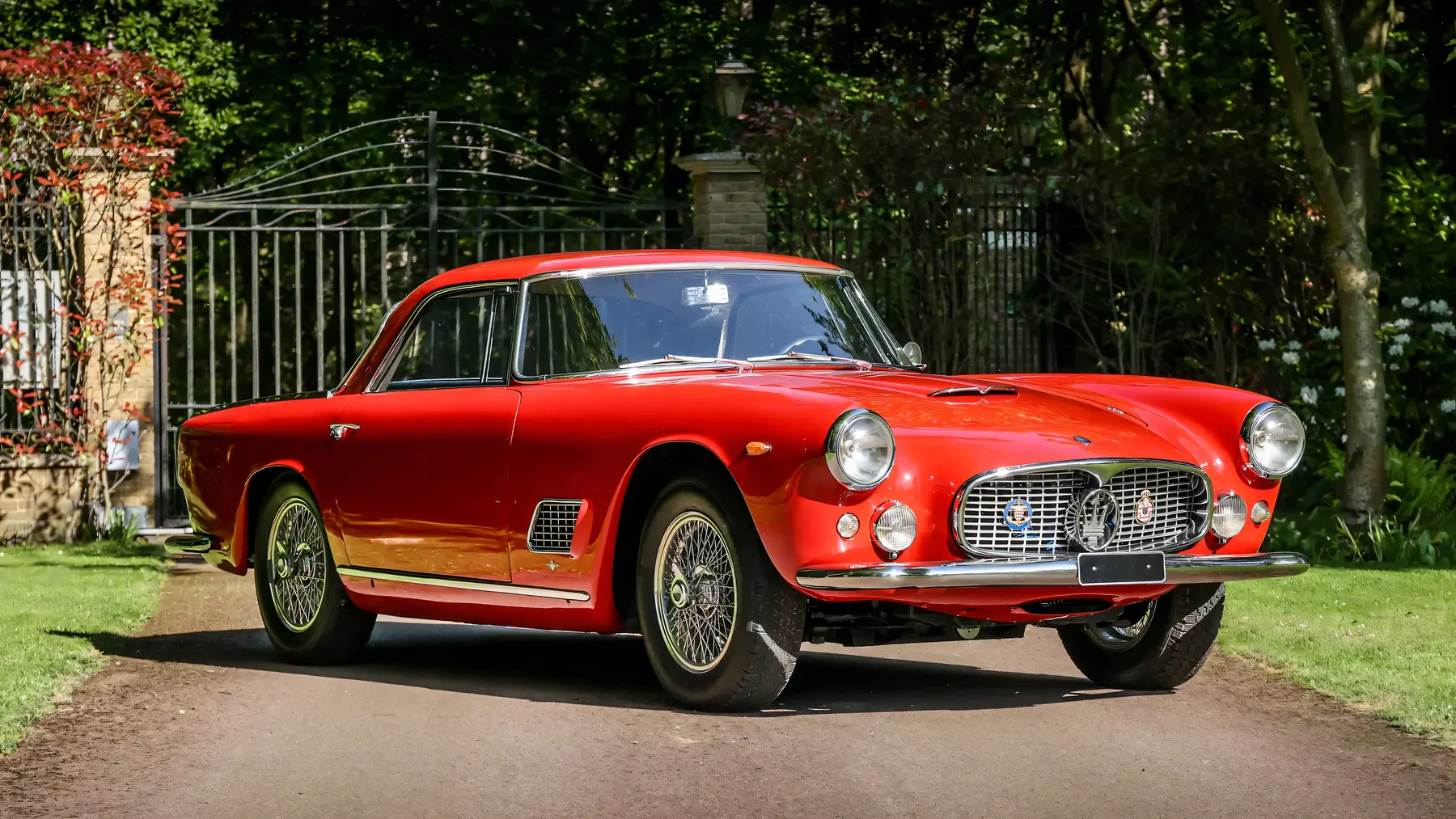
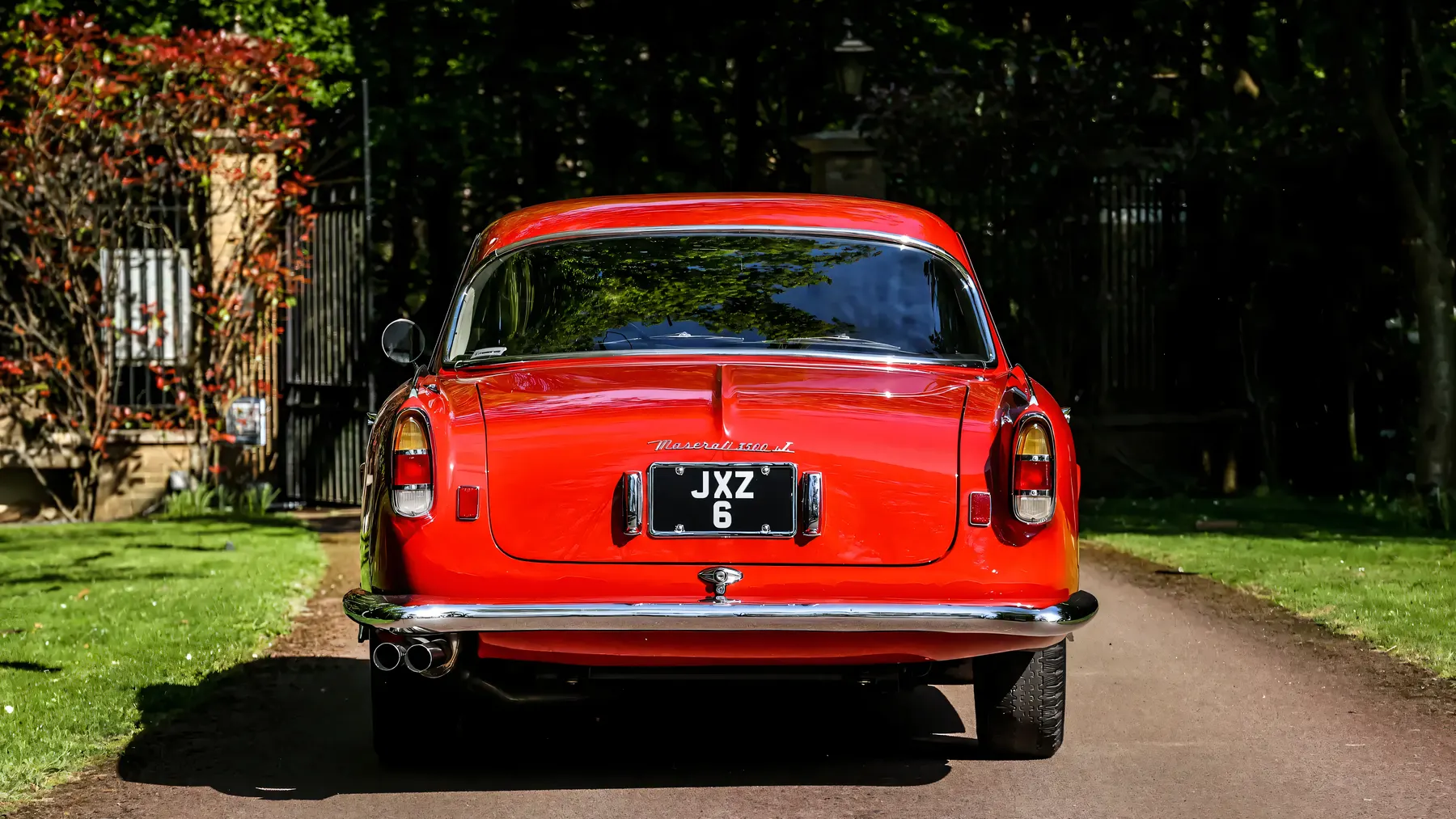
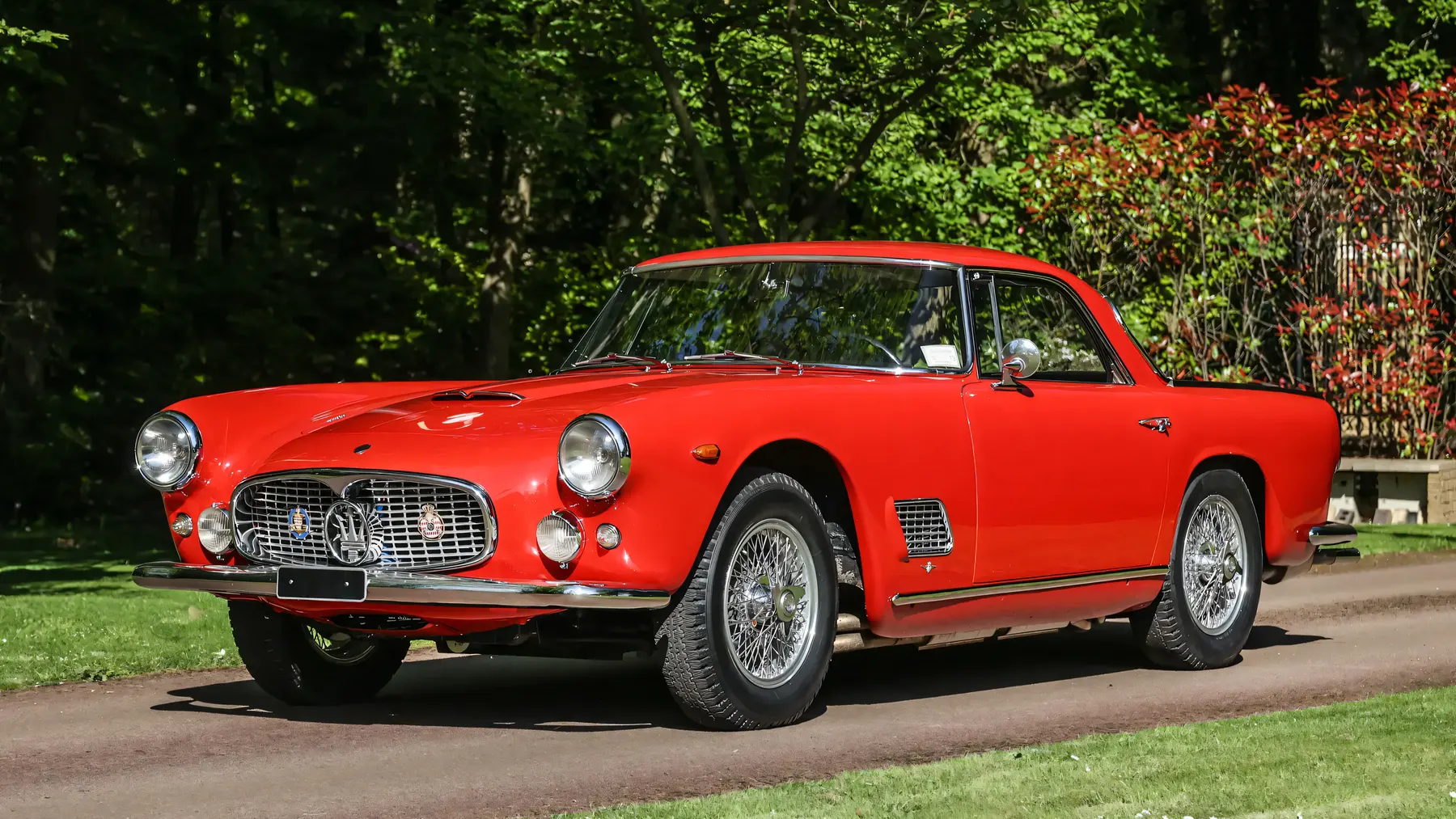
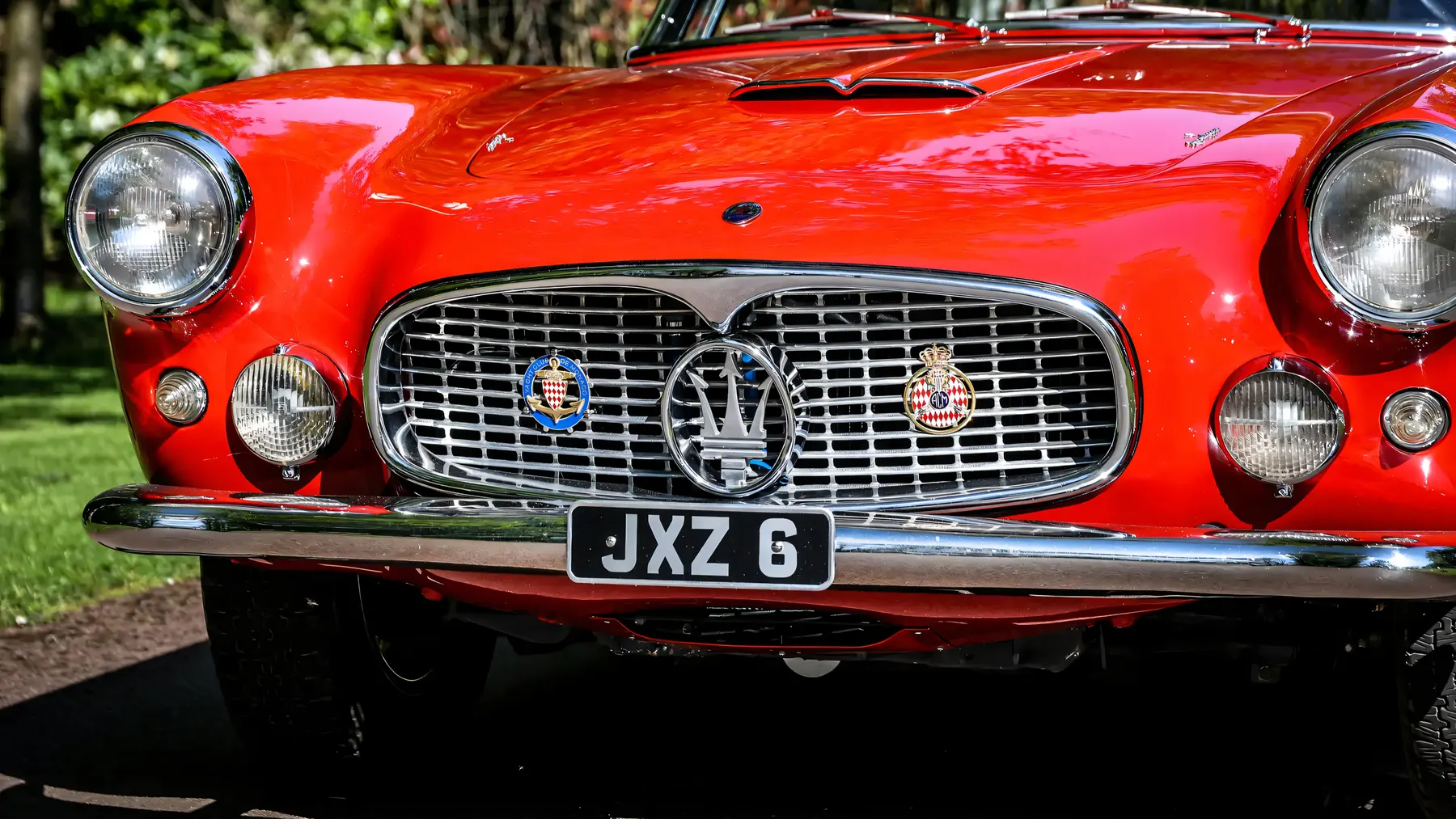
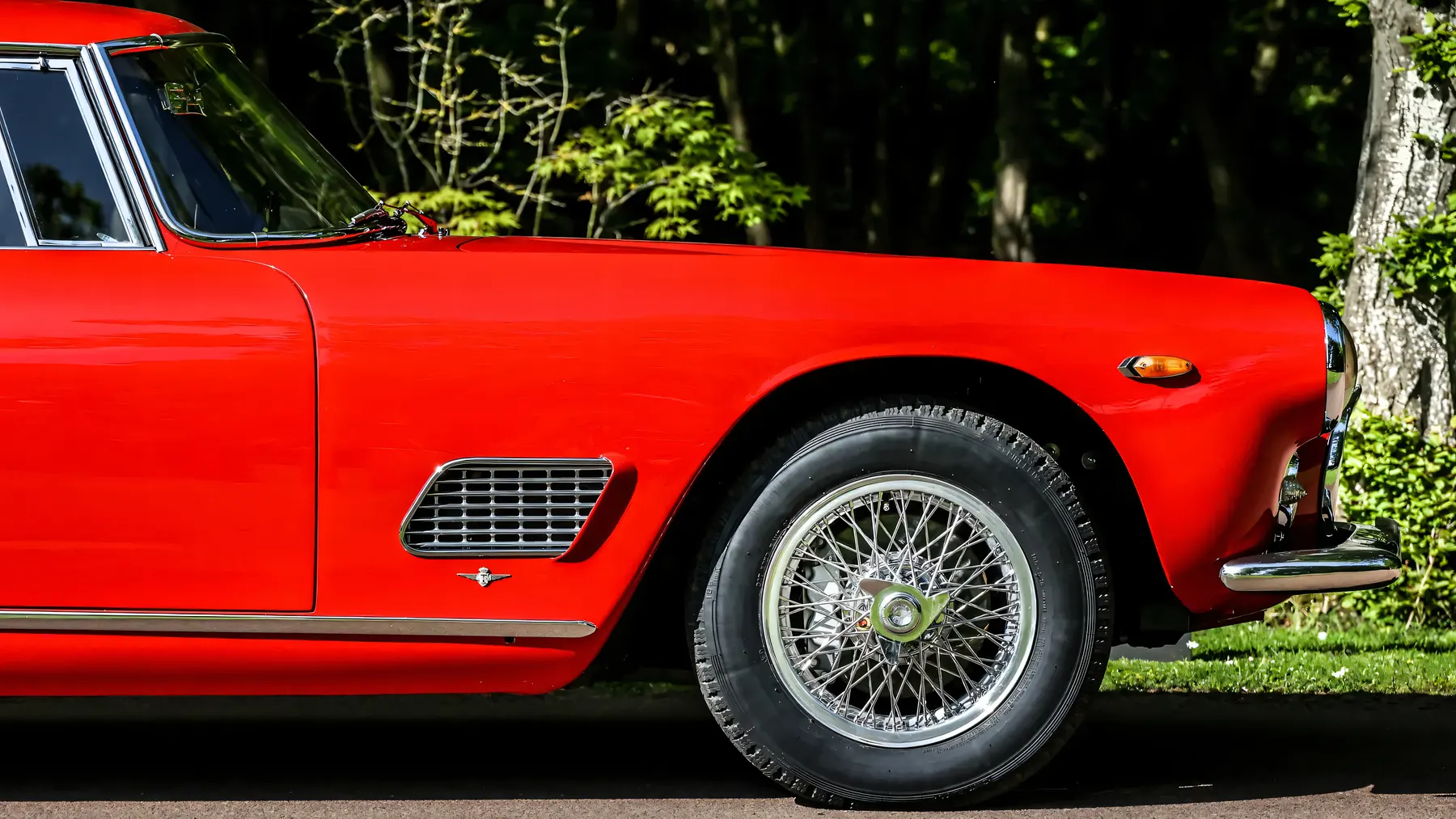
Carrozzeria Touring’s body for the 3500 GT is distinguished, attractive and tasteful without ever being truly daring. The long bonnet, gently curved roofline, and restrained use of chrome produce something that reads as confident rather than flamboyant, occupying a more disciplined aesthetic register than many contemporary Ferraris. The 2+2 cabin is arranged around full leather trim and Jaeger instruments, the British gauges lending an unexpected transalpine blend to the dashboard. Early cars wore Pirelli Stella Bianca cross-ply tyres on 16-inch steel wheels; later models moved to the Pirelli Cinturato radial, a tyre that suited the car’s long-legged highway character considerably better. The GTi coupé received a gently revised exterior - a lowered roofline, longer nose, revised grille and rear lighting - giving it a slightly more focused appearance without abandoning the essential Touring language. Interior dimensions were genuinely 2+2 rather than optimistically so, and Jaeger instruments were a constant throughout the run.
On the road, the 3500 GT makes its priorities very clear, very quickly. It is a car built to cover ground efficiently and in comfort, not to be exploited through mountain passes. The engine is at its best between roughly 90 and 120 mph, spinning at an unhurried 3,900 rpm while the exhaust settles into a deep, rasping note that distinguishes it immediately from any Ferrari of the period. One long-term owner put it succinctly: “It was built to go 100 mph at 3,900 rpm, cross continent. That’s where it sings, that’s where it feels best.” Owners have reported long-distance fuel economy of 26 mpg - a figure that would shame many lighter and less powerful cars from the same era. The 0–62 mph time of around 7.5 seconds and a top speed in the region of 143 mph made the Weber-carburetted coupé genuinely competitive with its contemporaries, and the GTi’s injection system trimmed the sprint to approximately 7 seconds flat.
The 3500 GT is not, however, without its dynamics compromises, and the most significant one is structural rather than tunable. The live rear axle on semi-elliptic leaf springs is the engineering arrangement of a lorry applied to a grand tourer, and it behaves accordingly on anything other than smooth surfaces. Body roll in faster corners is pronounced enough to discourage enthusiastic secondary-road driving. Early examples with finned drum brakes front and rear demand planning at higher speeds, though the optional and later standard fitment of disc brakes substantially improved matters from 1959 onwards. The Lucas fuel injection on the GTi, while historically significant, was notoriously temperamental when not functioning correctly - the sort of system that rewarded owners who understood it and frustrated those who did not. These are not deal-breaking flaws, but they do define the car as a committed grand tourer rather than a sports car, and drivers approaching it with the wrong expectations invariably come away disappointed.
What Alfieri achieved with the 3500 GT transcends its individual engineering choices. He essentially invented the template that Maserati would follow for the next fifteen years - a race-derived engine in a well-appointed tubular chassis, with coachwork by a great Italian carrozzeria, aimed at a wealthy international clientele who wanted both performance and refinement. The Maserati 5000 GT of 1959 used the 3500’s chassis; the Sebring 2+2 of 1962 drew directly from its mechanicals; the Mistral carried its conceptual DNA to a new generation. Every subsequent Maserati GT until the Ghibli owed something structural or philosophical to what this car worked out. And the GTi’s place in Italian automotive history as the first production car from that country fitted with fuel injection is a distinction that deserves more acknowledgement than it typically receives.
The critical reception during the car’s active life was broadly positive but coloured by the long shadow Ferrari cast over everything Italian and fast from Modena. Road & Track’s 1959 road test found the car “unusually large for an Italian sports car and, as we later discovered, unusually heavy” - accurate observations that were really code for the car’s GT priorities being mistaken for sporting shortcomings. Enthusiast opinion since has gradually recalibrated. Hagerty, in a 2024 assessment, asked whether the 3500 GT might be the world’s most undervalued classic car, noting that it drives like a 1960s machine where a comparable contemporary Ferrari feels distinctly mid-1950s - higher refinement, greater tractability, and ownership running costs that remain accessible. The irony of the car’s market position is that the same qualities that make it genuinely pleasurable to use - the robust off-the-shelf componentry, the understressed engine, the unpretentious practicality - have kept its values lower than the myth-laden alternatives.
The 3500 GT’s story is ultimately one of an organisation discovering what it was really for. Maserati entered the car’s development as a racing team that also made road cars; it emerged as a road car manufacturer that maintained a racing identity. The 3500 GT made that transformation commercially viable and, in the Touring coupé, gave it a face elegant enough to remain genuinely desirable sixty-five years later - which is, when you think about it, rather more than most financial rescue operations manage to produce.