BMW 501 Sechszylinder Cabriolet by Baur: A Hand-Built Baroque Angel
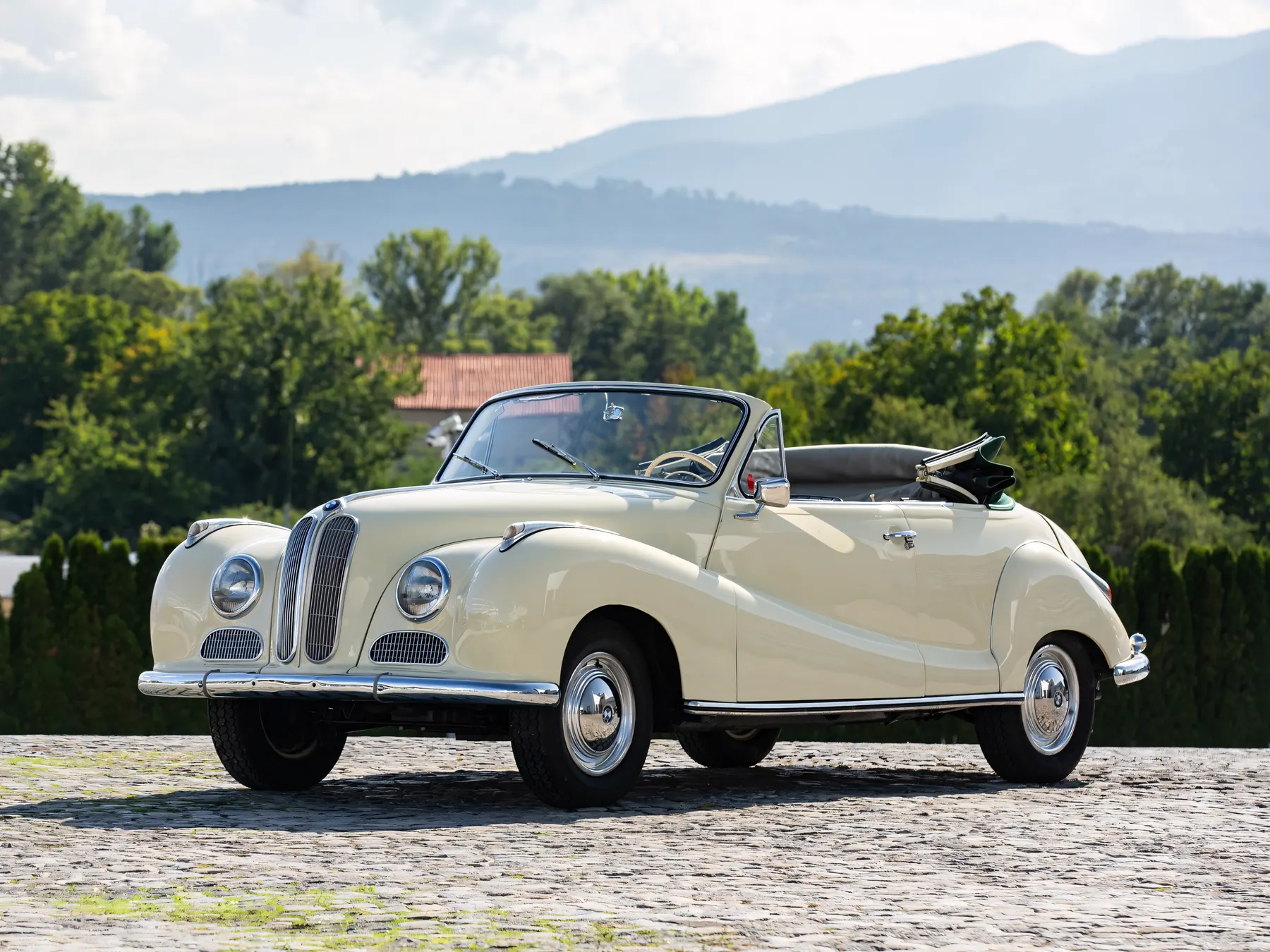
1955 BMW 501 Sechszylinder Cabriolet by Baur



Images: RM Sotheby's
When BMW set out to rebuild itself as a carmaker after the war, it did not have the luxury of starting with a clean sheet of paper. The Munich works had been bombed into uselessness, the historic Eisenach plant had been absorbed into the Soviet zone and eventually stripped of the right to even use the BMW name, and the only six-cylinder engine the company’s engineers could readily lay their hands on was a pre-war design inherited from the shelved BMW 326. Rather than use that limited inheritance to build something modest and profitable, sales director Hanns Grewenig pushed BMW toward the opposite instinct: a large, expensive, unapologetically prestigious saloon that would announce the company’s return among makers of serious luxury cars. That gamble became the BMW 501, and the cabriolet that Stuttgart coachbuilder Baur later built on its six-cylinder chassis is the rarest, most delicately finished expression of an idea that was, from the outset, an uneasy compromise between ambition and means.
The 501’s body was designed in-house by Peter Szymanowski, whose flowing, rounded lines were confident enough that BMW’s management briefly hedged its bet by commissioning Pininfarina to sketch an alternative; the Italian proposal was shelved for looking too close to Pininfarina’s own Alfa Romeo 1900 saloon, and Szymanowski’s design went forward instead. Unveiled at the first postwar Frankfurt Motor Show in April 1951, the car made an immediate impression, and the German public quickly nicknamed it “Barockengel” - Baroque Angel - for the sculpted, curved bodywork that recalled the ornamentation of that earlier era. It also made an impression with its price: more than fifteen thousand Deutsche Mark, roughly four times an average German’s annual salary at the time. Development problems delayed the start of production until late 1952, and even then BMW’s Munich factory still lacked the tooling to press its own body panels. The first 2,045 four-door saloon bodies were therefore built by Karosserie Baur in Stuttgart and shipped north for final assembly - an arrangement that, a few years later, would make Baur the obvious partner when BMW wanted a bespoke open version of the car.
Mechanically, the original 501 leaned heavily on the past. Its engine, the M337, was a development of the M78 unit fitted to the pre-war BMW 326, retaining that engine’s 1,971cc displacement while gaining a revised head, a new inlet manifold and a strengthened crankshaft. In this form it produced 65 bhp at 4,400rpm, driving through a four-speed gearbox that was, unusually, not bolted directly to the engine but mounted as a separate, shaft-driven unit further back in the chassis. That layout freed up valuable legroom for front-seat passengers, but it also meant a long and indirect linkage to the column-mounted gear lever, and the resulting shift action was famously vague. The rest of the underpinnings were more straightforward: a perimeter frame carried double-wishbone front suspension on torsion bars and a torsion-bar live rear axle, with a semicircular variant of rack-and-pinion steering. BMW also built in some genuinely progressive passive-safety thinking for the era, including a short steering column set well back in the car and a fuel tank tucked above the rear axle to reduce fire risk in a collision.
The six-cylinder engine evolved gradually rather than dramatically. The 501A and 501B of 1954 brought a mildly revised M337 good for around 72 bhp along with a price cut to help sales, and in the spring of 1955 BMW introduced the definitive 501/3, badged in period simply as the Sechszylinder - “six-cylinder” - to distinguish it from the V8-powered 501 that now sat alongside it in the range. The 501/3’s M337/3 engine grew to 2,077cc through a small increase in bore, with compression raised to 7.0:1 and a larger twin-choke Solex carburettor, yet peak power barely moved; the real gain was in torque, up to around 100 lb-ft at 2,500rpm, which made the car noticeably more tractable in everyday driving even if outright performance remained modest. Top speed for the Sechszylinder settled at roughly 90 mph. A period road test conducted by Auto- und Motorrad-Welt in March 1953 praised the saloon’s better-than-average aerodynamics, its comfortable ride and an unusually effective heater, and recorded fuel consumption of around 27 mpg - respectable figures for a large, hand-finished German saloon of the early 1950s, even if they said nothing about outright pace.
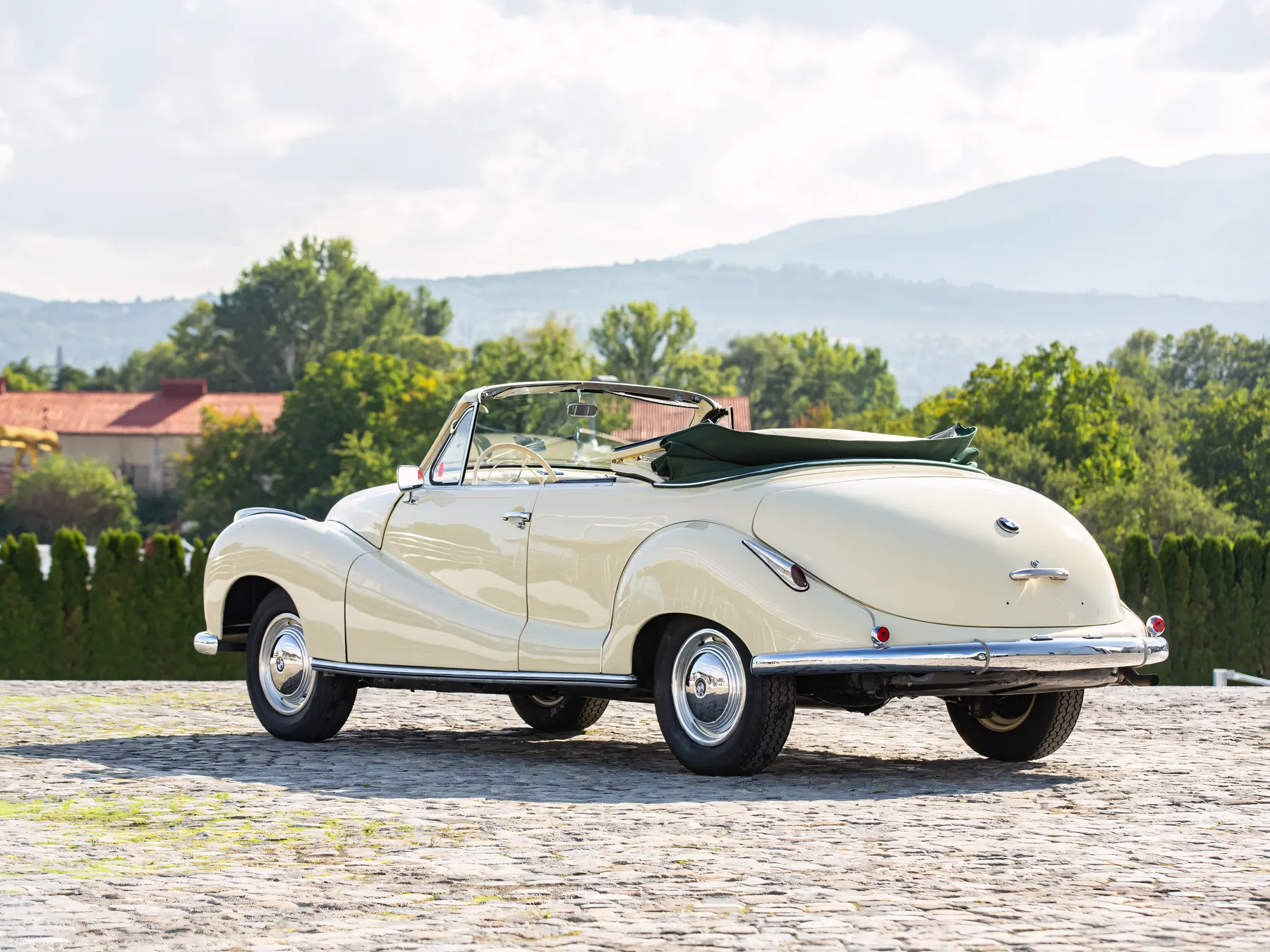
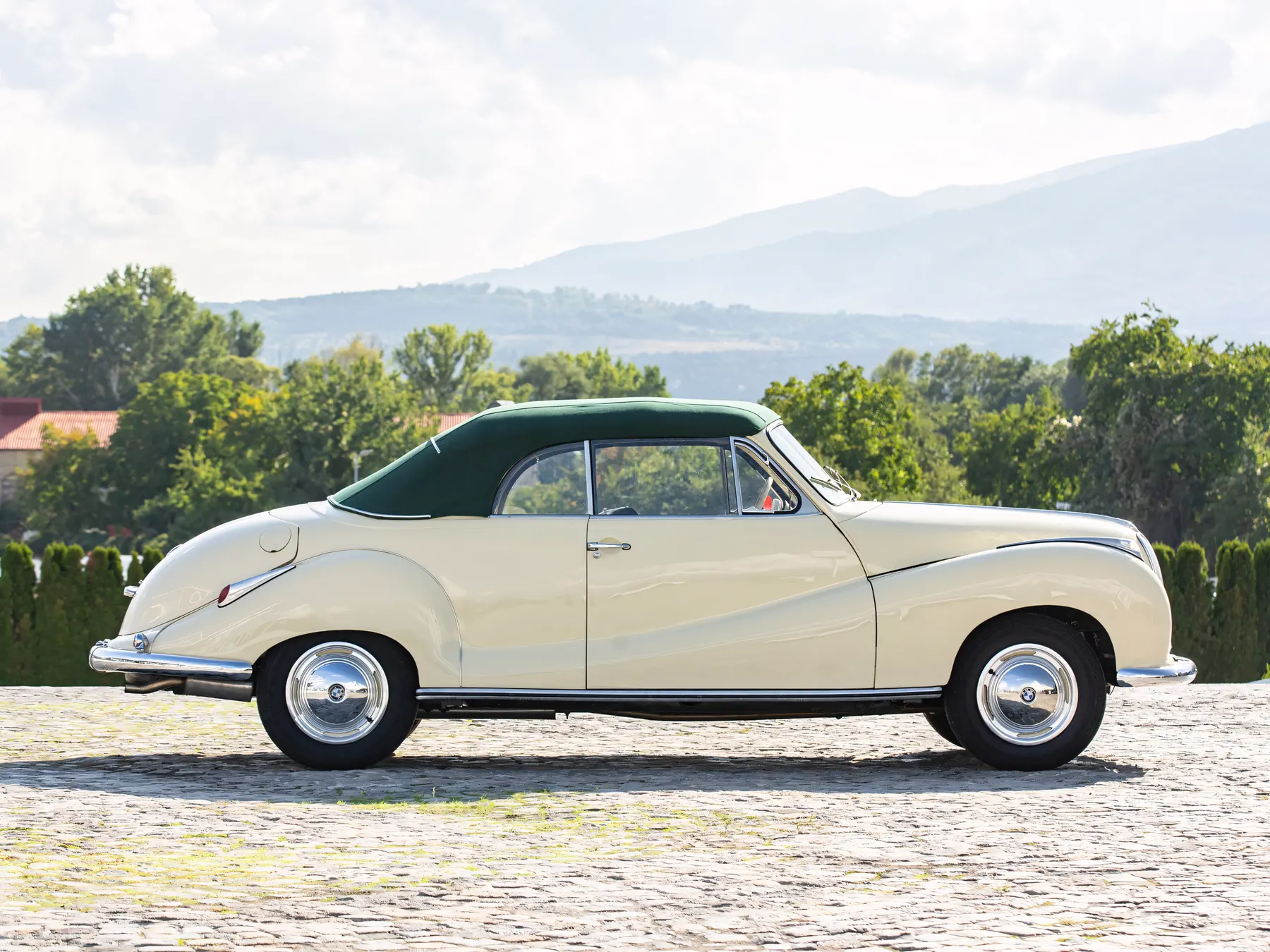
It was onto this six-cylinder chassis that Baur, a coachbuilder with a relationship to BMW convertibles stretching back to the 1930s, grafted its own bespoke two-door bodywork. Where the standard 501 was a formal four-door saloon, the Baur cars used a shorter, more sculptural two-door cabin that suited the model’s curved surfacing far better than the saloon’s slab-sided doors ever could, turning a car that could look ponderous in four-door form into something genuinely elegant with the roof folded away. Baur was not the only coachbuilder to open up the 501 - the Frankfurt firm Autenrieth built a small number of its own two-door cars - but it is the Baur-bodied cars, built through the official BMW dealer network on special order, that are most closely associated with the model today. Ordering one was an exercise in patience as well as expense: when the closely related V8-engined 502 cabriolet joined the Baur range for 1956, it carried a list price of DM21,900 and a delivery time that could run to six months, and a six-cylinder buyer working through the same bespoke process would have faced a broadly similar wait, if for a lower entry price.
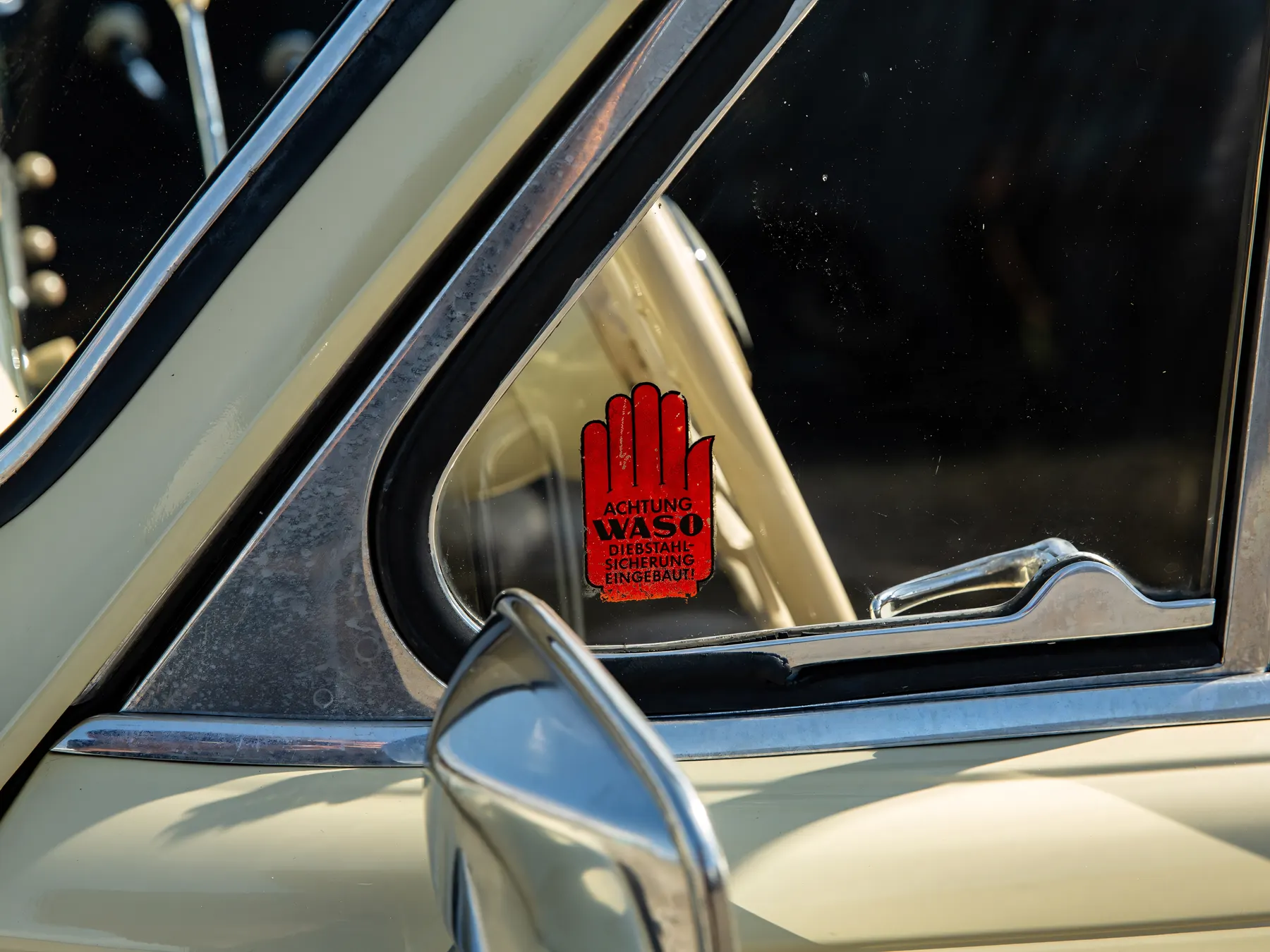
That expense and exclusivity translated into genuine rarity. Sources differ on the precise figure - some cite roughly 37 examples of the Sechszylinder cabriolet alone built by Baur between 1955 and 1958, others describe that number as combined cabriolet and coupé production for the six-cylinder engine - but either reading places total output in the same range as a handful of dozen cars, against 3,459 501/3 saloons built in the same run. It was also the rarer of Baur’s two open Baroque Angels: the visually similar but faster V8-engined 502 cabriolet that followed from 1956 ran to 57 examples, with a further 29 two-door 502 coupés alongside it, suggesting that most buyers willing to pay Baur’s premium for hand-built open coachwork also stretched to the extra performance of the eight-cylinder car. Meanwhile the vast majority of ordinary 501/3 saloons went on to considerably less glamorous careers - Bavarian police forces ran 501s as radio patrol cars into the 1960s, valued for being quicker than most vehicles a fleeing criminal could get hold of, while others ended their working lives as ambulances and hearses. Set against that backdrop, the tiny run of Baur cabriolets reads less like a factory afterthought and more like a deliberate, if commercially marginal, attempt to give BMW’s flagship a genuinely aspirational body to match its aspirational price.
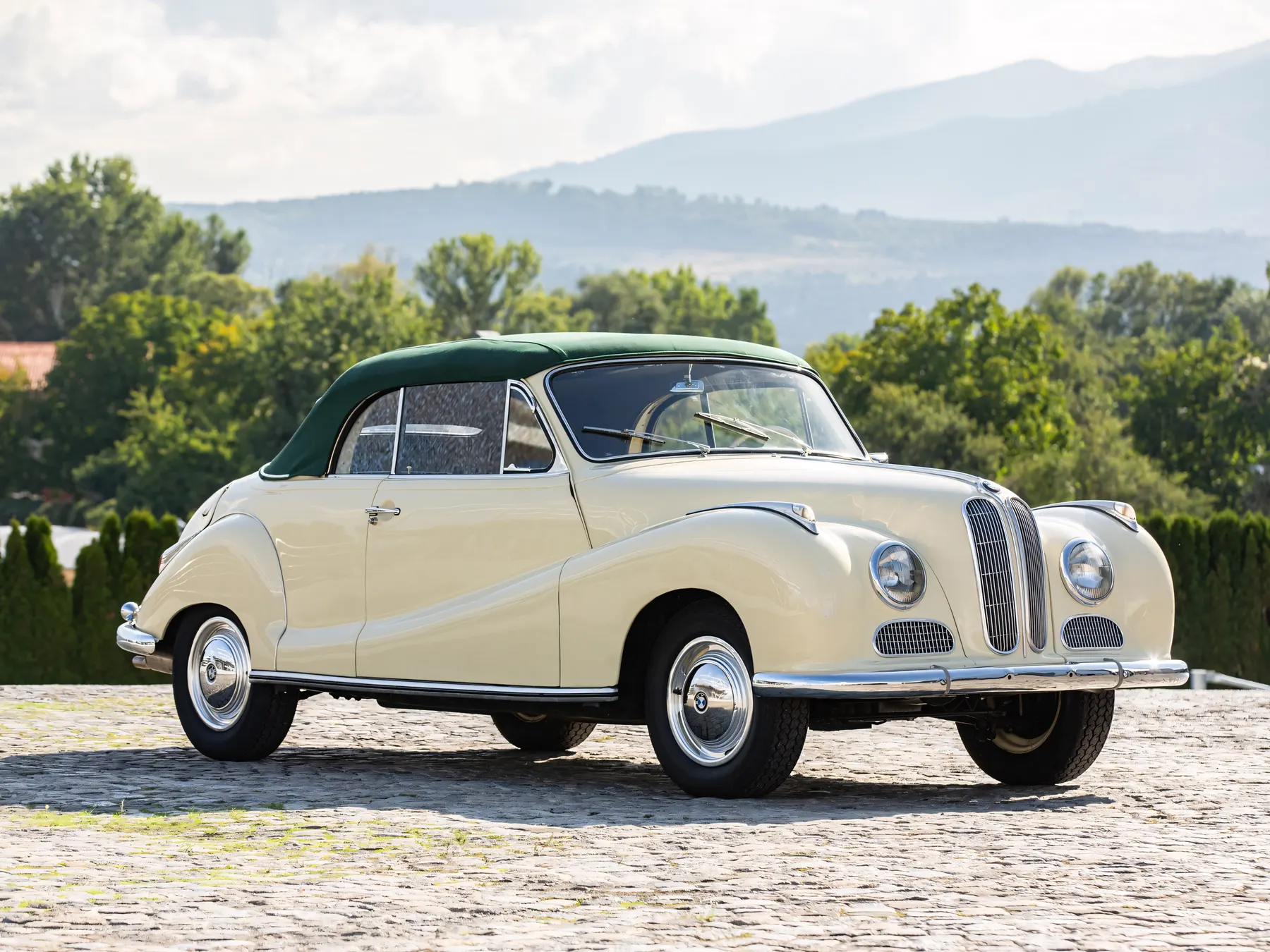
None of this changes the fact that the Sechszylinder was, and remains, a car defined as much by its shortcomings as by its craftsmanship. The 2,077cc six had to motivate a body that had come out considerably heavier than Szymanowski had originally calculated - the standard saloon’s dry weight ran to around 1,430kg even before Baur’s reinforced open bodywork added its own mass - and the earliest 65 bhp cars are reported to have needed around 27 seconds to reach 62 mph with a top speed of only 84 mph, figures that trailed the six-cylinder Mercedes-Benz 220, the 501 was explicitly positioned against. The enlarged 501/3 engine improved matters only modestly, trading a little more torque for essentially the same peak output, so even the definitive Sechszylinder remained a leisurely car to drive quickly by the standards of its price bracket. The remote, shaft-driven gearbox that freed up front legroom did so at a real cost to shift quality, with a linkage long and indirect enough that period testers and later historians alike singled it out as vague and imprecise. And the car’s fundamental price problem never went away: at roughly four times the average German salary, the 501 sold respectably against fellow six-cylinder makers like Borgward but never came close to Mercedes-Benz’s volumes, a shortfall in profitable scale that commentators later counted among the causes of BMW’s near-collapse and the threatened Daimler-Benz takeover at the end of the 1950s. None of that made the Baur cabriolet unpleasant to drive - the underlying saloon earned genuine praise for its ride and refinement - but it does mean buyers were paying handsomely for elegance and craftsmanship rather than outright pace, and anyone approaching the car expecting it to feel sporting in the way a modern BMW badge might suggest will find a comfortable, dignified cruiser instead.
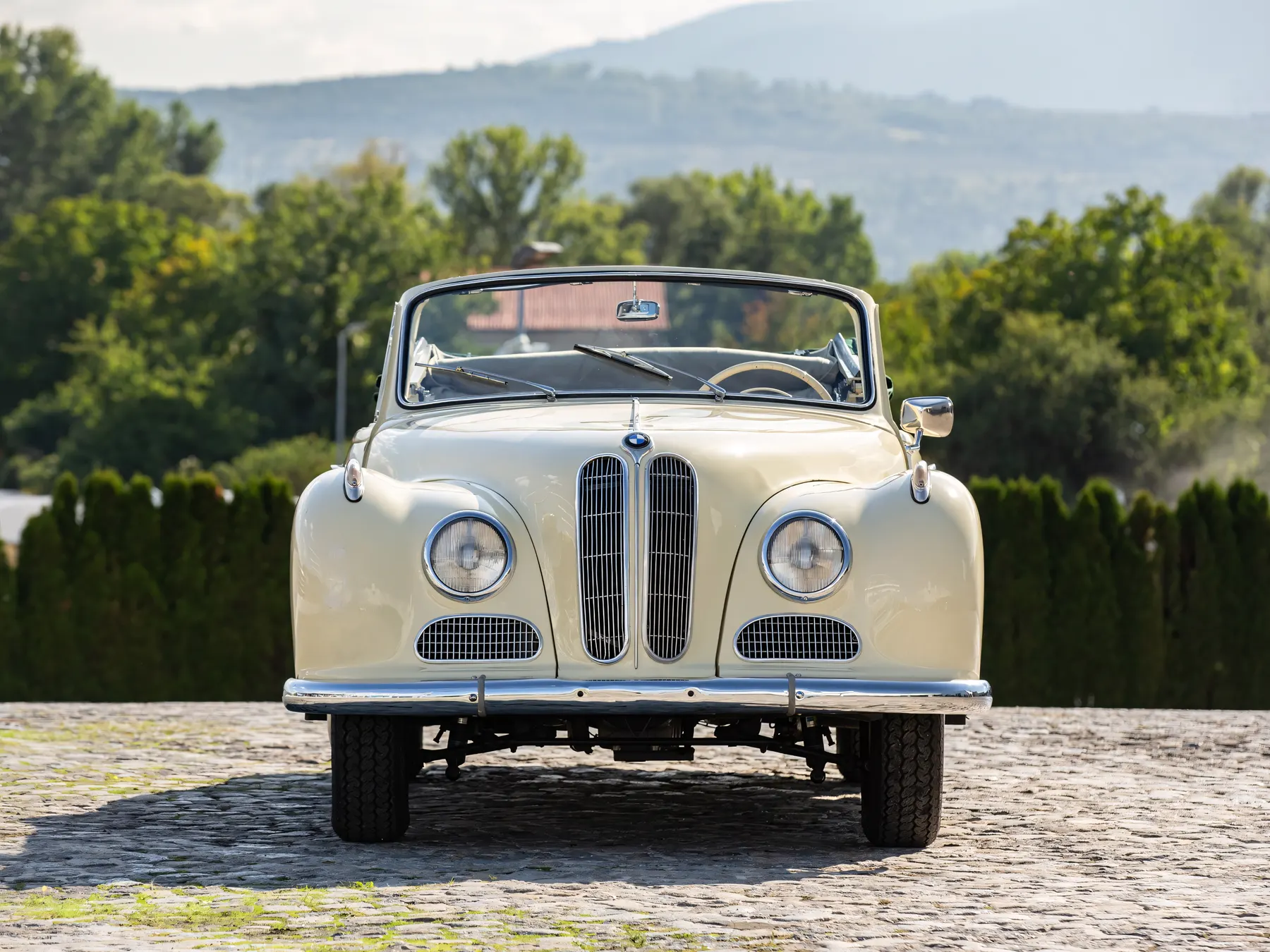
BMW’s own position was, within a few years of the last Sechszylinder cabriolet leaving Stuttgart, genuinely precarious. The 501 family, alongside its pricier 503 and 507 stablemates, has often been cited as an object lesson in a company reaching for prestige beyond what its production costs and dealer volumes could realistically support, and by December 1959 the firm came close enough to bankruptcy that its own board considered selling out to Daimler-Benz before a shareholder revolt and Herbert Quandt’s subsequent investment kept BMW independent. The profitable BMW 700 and, from 1962, the New Class saloons that followed set the company on the path toward the driver-focused identity it is known for today, leaving the baroque, hand-finished cars of the mid-1950s as relics of a very different, far more fragile BMW. Within that family, the Sechszylinder Cabriolet by Baur occupies a particularly narrow corner: mechanically related to thousands of saloons that spent their working lives as police cars and hearses, yet bodied by hand into something closer to a two-door showpiece, and rarer even than the V8-powered cabriolet it was built alongside.
Technical data
Performance Specifications
| Variant | Production | Engine | Power | Torque | Top speed | Kerb/dry weight |
|---|---|---|---|---|---|---|
| BMW 501 (original) | 1952–1954, 2,125 saloons built | 1,971cc OHV straight-six (M337/1) | 65 bhp @ 4,400rpm | ~95 lb-ft @ 2,000rpm* | 84 mph | ~1,430 kg (dry) |
| BMW 501A / 501B | 1954–1955, 3,327 saloons built | 1,971cc OHV straight-six (M337/2) | ~72 bhp @ 4,400rpm | ~96 lb-ft @ 2,500rpm* | n/a† | ~1,340 kg+ |
| BMW 501/3 “Sechszylinder” | 1955–1958, 3,459 saloons built; ~37 Baur cabriolets/coupés§ | 2,077cc OHV straight-six (M337/3) | ~72 bhp @ 4,500rpm | ~100 lb-ft @ 2,500rpm | ~90 mph | ~1,340 kg+ |
| BMW 502 Cabriolet by Baur (V8, for comparison) | 1956–1958, 57 cabriolets built | 2,580cc OHV V8 (M502/1) | 100 bhp @ 4,800rpm | n/a† | ~99 mph‡ | n/a† |
Sources
- RM Sotheby’s – 1955 BMW 501 Sechszylinder Cabriolet by Baur
- RM Sotheby’s – 1956 BMW 502 Cabriolet by Baur
- RM Sotheby’s – 1955 BMW 502 Coupé by Baur
- Wikipedia – BMW 501
- Wikipedia – BMW M337
- Wikipedia – Karosserie Baur
- BMW Historic Motor Club – BMW 500 Series
- Gallery Aaldering – BMW 501 Baur Cabriolet, 2-Door, 6-Cylinder, 1955
- Zwischengas – BMW 502 Classic Car Directory
- BMWBLOG – The 10-Hour Race for BMW: The 1959 Shareholders Meeting
Join the discussion
Comments
Loading comments…
Leave a comment
Share a detail, memory, or perspective. Every comment is reviewed before publication.