1956 Bentley S1 Saloon by James Young
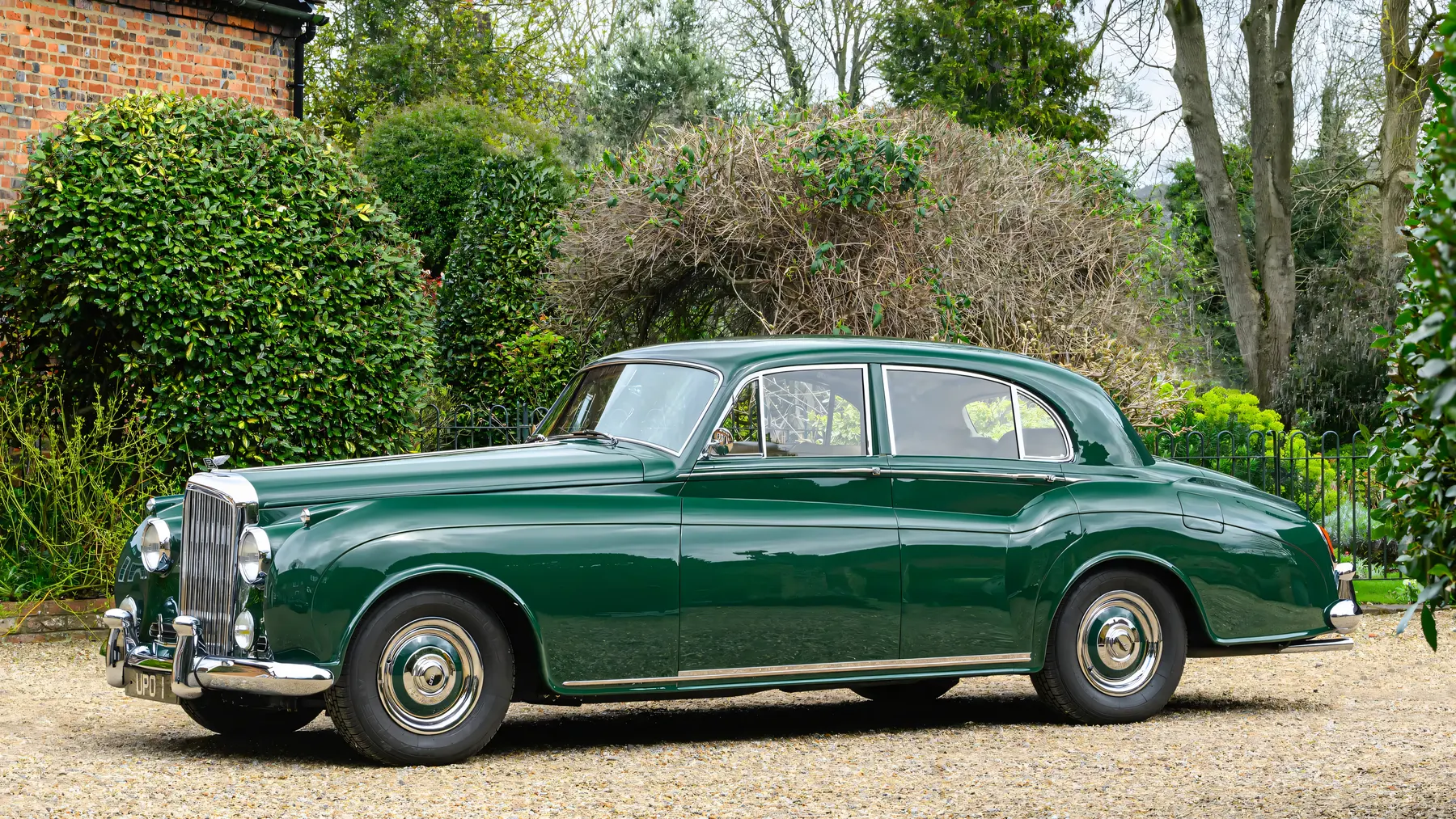
To order a Bentley S1 in 1955 was already to make a point about how you chose to move through the world. To then direct that order to a modest workshop on London Road in Bromley - bypassing the factory steel body that arrived with every other car off the Crewe production line - and commission James Young to clothe it entirely in aluminium was something else. It was to prioritise engineering purpose over mere extravagance, and to do so with a quietness that the car would carry for the rest of its existence.
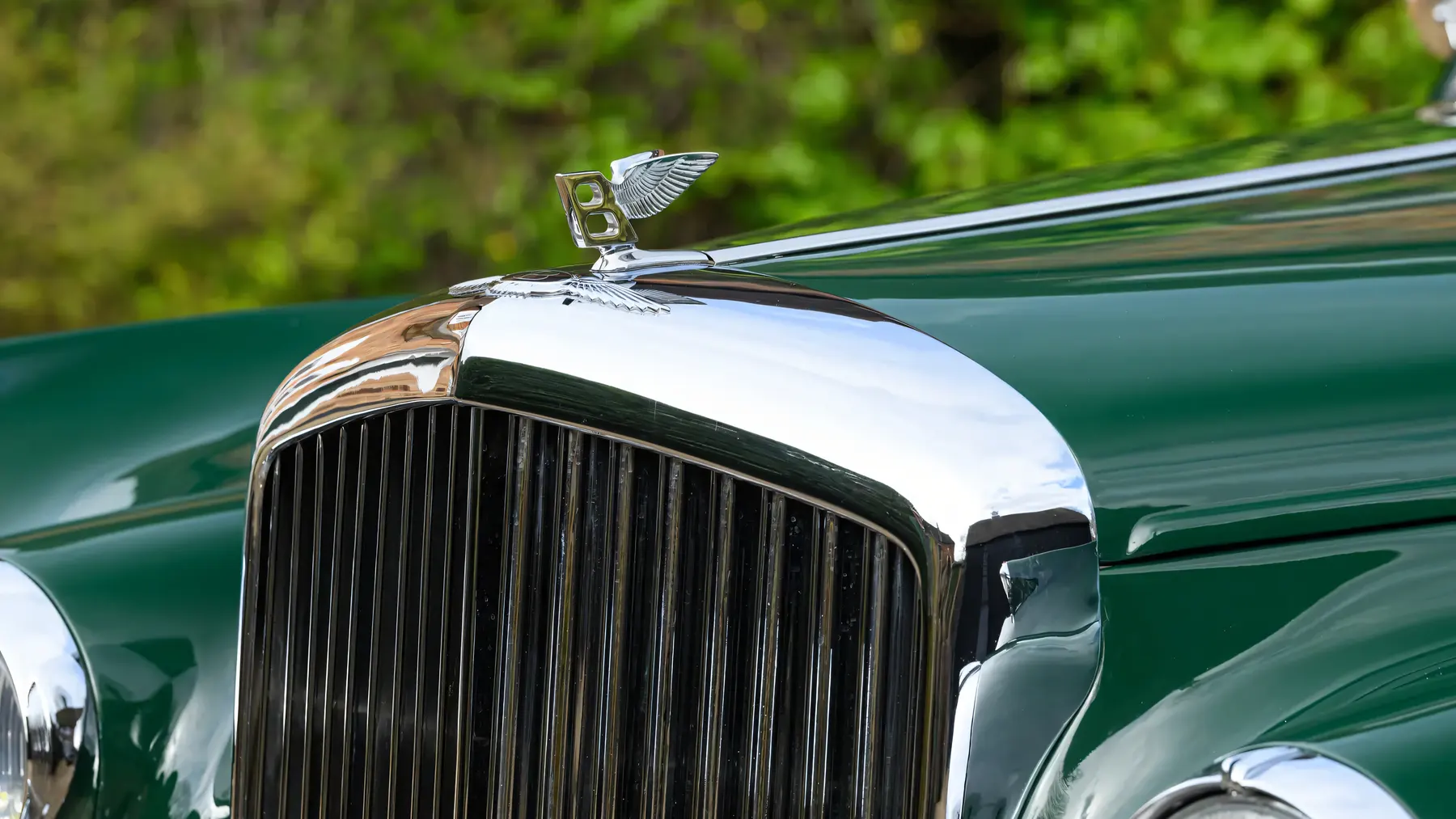
The S1 itself arrived in April 1955 as the successor to the Bentley R Type, and it is difficult to overstate how much of a landmark it represented - though not always for reasons the factory might have preferred to advertise. Sharing its underpinnings almost entirely with the simultaneously-launched Rolls-Royce Silver Cloud I, the S1 differed from its sister car in little more than its radiator grille shape and badging. What the Bentley faithful received was a superbly engineered motor car, but one that had largely abandoned the sporting pretensions that had defined the marque through its earlier decades. Badge engineering had been creeping into Crewe’s philosophy since the late 1940s; with the S1, it was fully established.
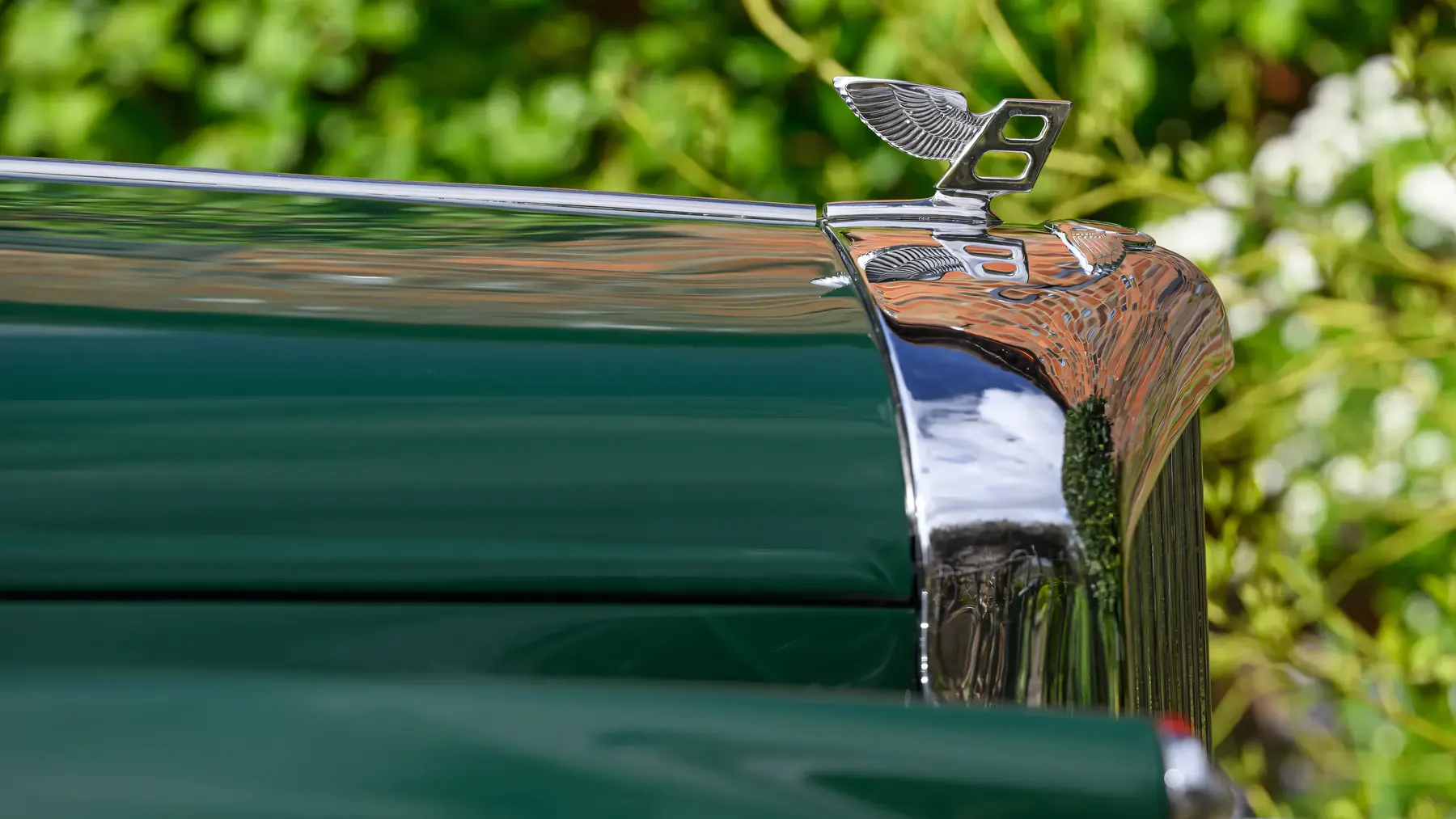
And yet the mechanical substance was genuine. Beneath the pressed-steel body sat a proper box-section steel chassis - a construction philosophy already somewhat old-fashioned in 1955 and destined to be replaced entirely when the Silver Shadow arrived a decade later. The engine was a 4,887cc straight-six: a cast-iron block with an aluminium cylinder head, fed by twin SU carburettors. In lineage terms, it was the final, most developed descendant of the engine first fitted to the Rolls-Royce Twenty back in 1922 - a powerplant stroked, bored, and refined over three decades into something of considerable refinement, if not particular excitement. A four-speed automatic transmission was standard from the outset, with electrically-operated rear damper control adding a degree of ride adaptability that few rivals could match.
Performance, assessed honestly, tells only part of the story. The Motor magazine’s 1957 road test produced a top speed of 103 mph and a 0–60 mph time of 13.1 seconds - figures that place the car firmly in the competent-rather-than-rapid category. Fuel consumption hovered around 16 miles per imperial gallon, and the test car, equipped with the optional power steering, was priced at £6,305 including nearly £1,800 in purchase tax. By the standards of a post-war Britain still adjusting to peace and prosperity, this was an enormous sum - and yet buyers were not, primarily, purchasing speed.
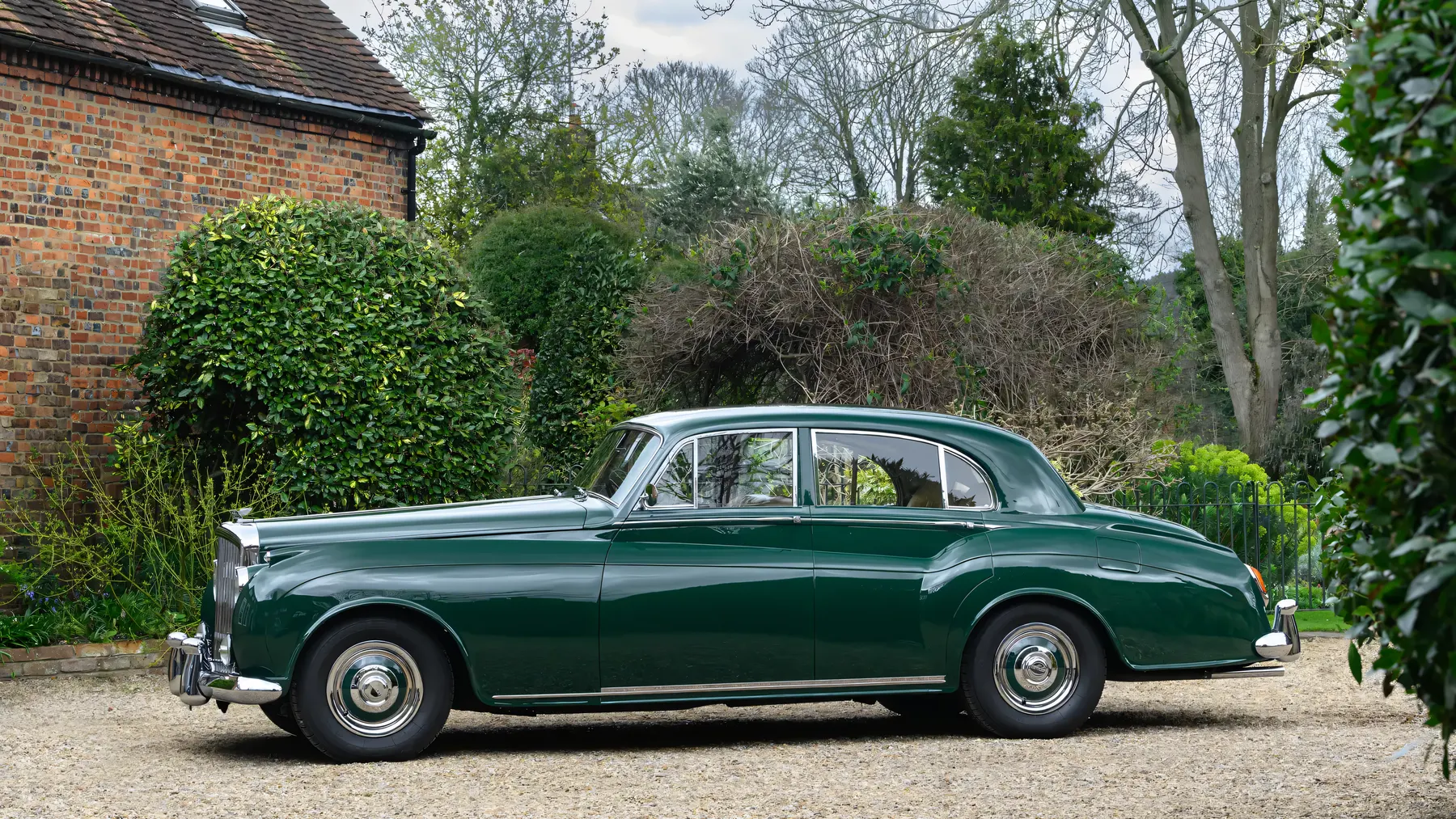
Where James Young enters the narrative, they do so with a specific and compelling proposition. The Bromley coachbuilder’s history stretched back to 1863 and the carriage trade; they had been constructing bodies on Bentley and Rolls-Royce chassis since 1908, and since Jack Barclay - the prominent London Rolls-Royce dealer - acquired the firm in 1937, James Young had become synonymous with a certain kind of discreet, technically accomplished coachwork. Under designer A.F. McNeil, who arrived from J. Gurney Nutting, the firm developed particular expertise in drum-free roof construction, parallel-opening doors, and interior appointments of exceptional quality. They were never the most adventurous coachbuilder by temperament, but they were among the most accomplished.
Their B10-style four-door saloon for the S1 standard chassis embodied a clear philosophy. By constructing the entire body in aluminium rather than the pressed steel that Crewe employed, James Young’s craftsmen produced something that weighed 150 kilograms less than the equivalent factory car. On a vehicle that tipped the scales at close to two tonnes, this was a meaningful reduction - roughly equivalent to removing three adult passengers before the engine had turned over once. The handling gain was real, even if the S1’s chassis was never designed to exploit it to its fullest potential, and there was a refinement argument too: less unsprung and sprung mass meant less inertia in the suspension’s secondary motions, translating to a subtly more responsive character through undulating roads.
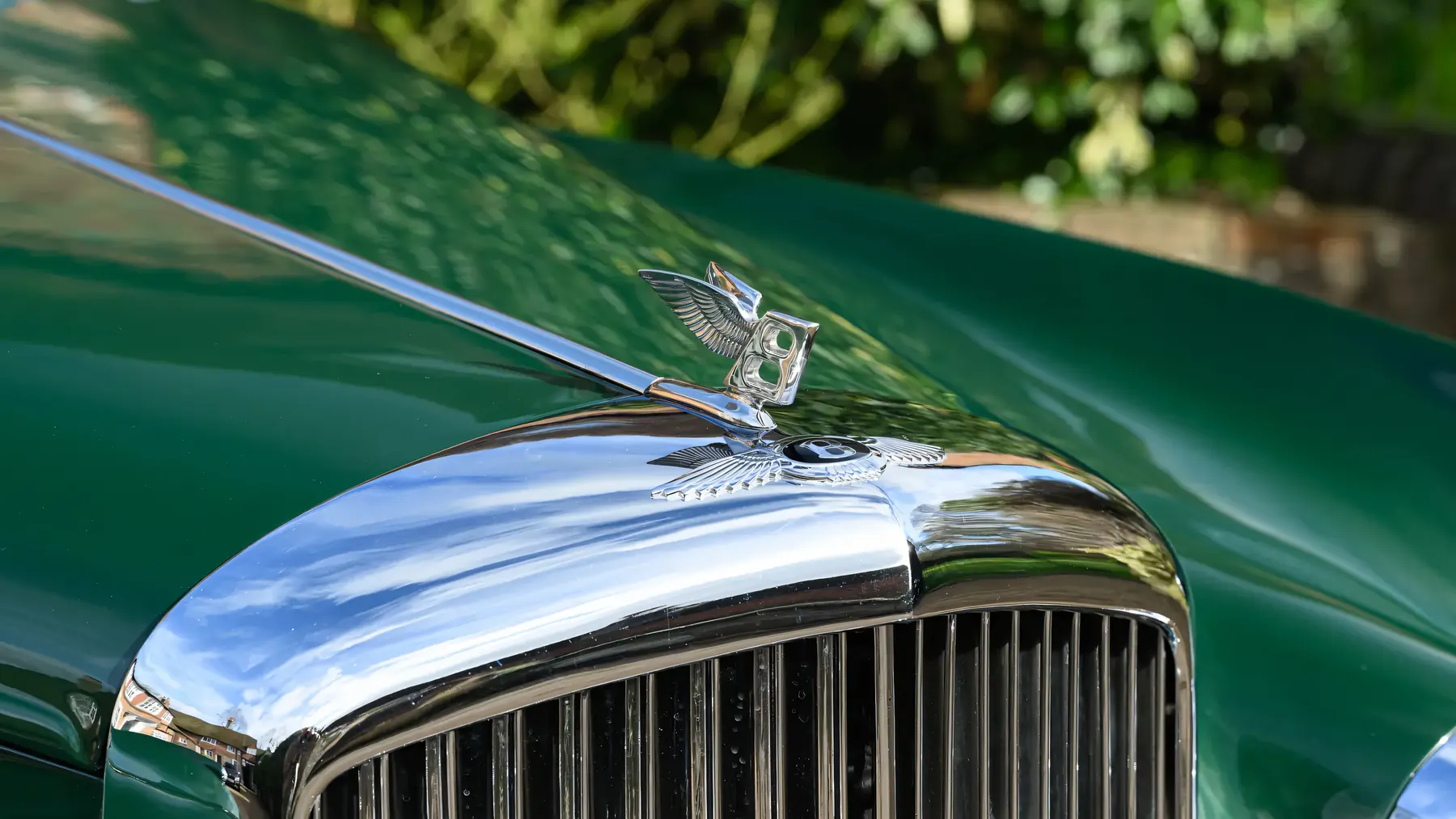
The B10 body carries James Young’s characteristic visual vocabulary without announcing itself loudly. The proportions are classically long and composed for a mid-1950s formal saloon, with a roofline that avoids the bluff uprightness of lesser coachwork. The door furniture, the window surrounds, the management of the shut lines - all reveal themselves gradually and reward close inspection in the way that the best coachwork always does. James Young never chased the dramatic gesture; their design language was one of accumulated subtlety, each detail resolved with the assurance of craftsmen who knew their work would be scrutinised for decades. Sitting on the standard 123-inch wheelbase - a 127-inch version became available from 1957 - the car manages to suggest both sleekness and stateliness without fully committing to either.
Inside, the James Young treatment applied leather and wood with the confidence of a firm that regarded the interior as the car’s primary statement, not an afterthought to the exterior. The S1 was already beautifully appointed in factory form, with Connolly leather, Circassian walnut veneer, and Wilton carpeting, but the coachbuilt version allowed a degree of personalisation that the pressed-steel car simply could not accommodate. Each of the 26 B10 aluminium saloons was, in a meaningful sense, genuinely individual - a quality that distinguishes them from even the finest production cars of their era.
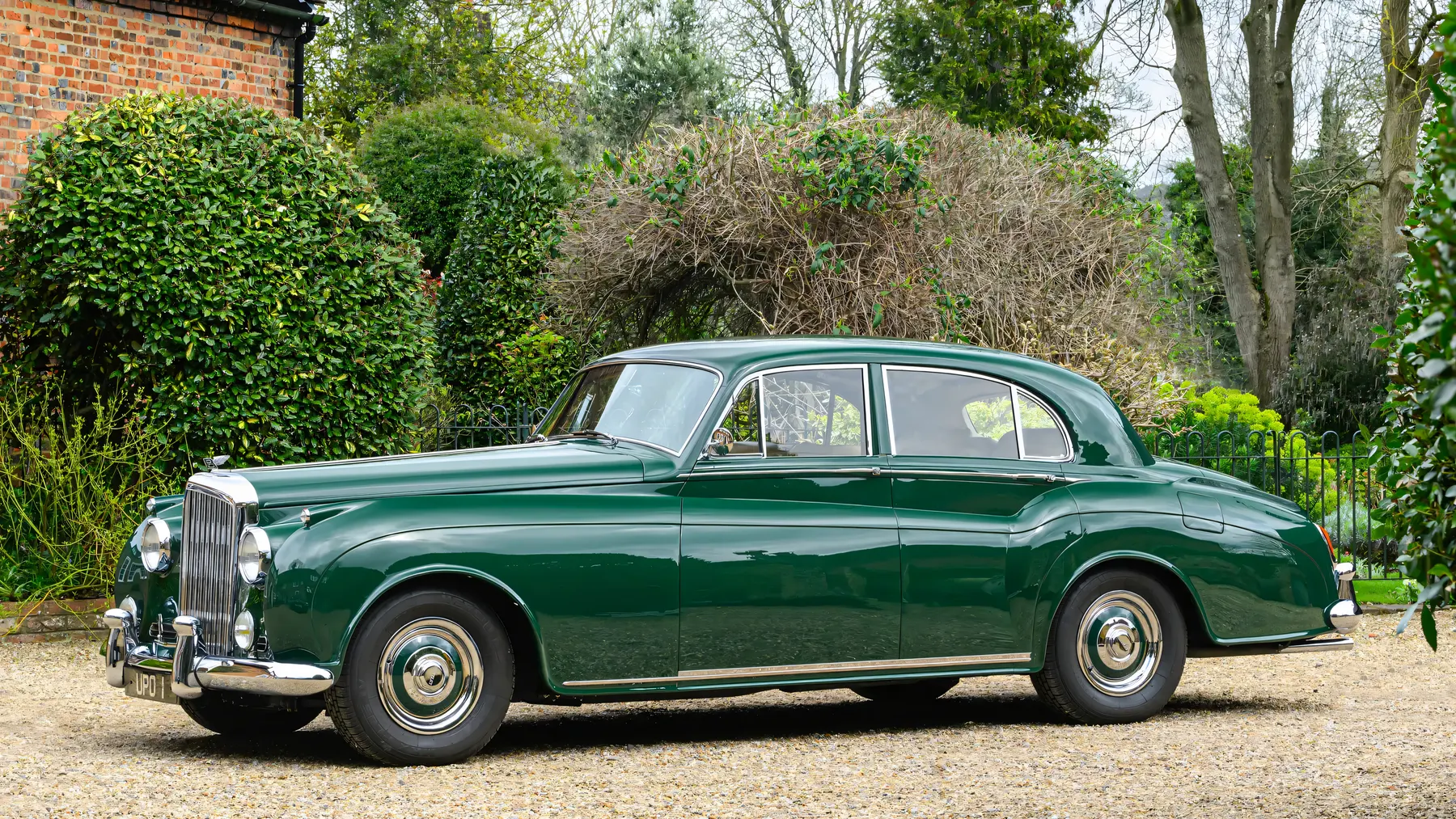
The reservations, when they accumulate, are largely the same ones that apply to the standard S1 - with one important addition specific to the aluminium body. The craft required to properly maintain or restore an aluminium skin has always been rarer and more expensive than for steel. Aluminium work-hardens, resists amateur panel-beating, and demands specialist welding techniques that cannot be approximated. The cars that have survived in good condition have generally done so because their owners possessed the means to find craftsmen who truly understood the material - a demanding requirement that has doubtless cost at least some survivors their structural integrity over the decades.
There is also the question of the S1’s fundamental character. This was not a driver’s car in any sporting sense, and James Young’s 150-kilogram saving did not transform it into one. The Continental version of the S1 chassis - available with dramatic coachwork from H.J. Mulliner, Park Ward, and James Young themselves - was an altogether more purposeful machine, lighter still, with a tuned engine and a high-ratio rear axle suited to sustained high-speed travel across the long, straight roads of Europe. The standard S1, even in aluminium form, remained fundamentally an owner-chauffeur motor car, a machine designed for the absorption of distance rather than the exploitation of corners. The steering communicated less than enthusiast drivers might have wished, and the automatic transmission - genuinely progressive for 1955 - encouraged a certain passivity that the Continental buyer, choosing a manual gearbox and a tuned engine, was specifically trying to escape.
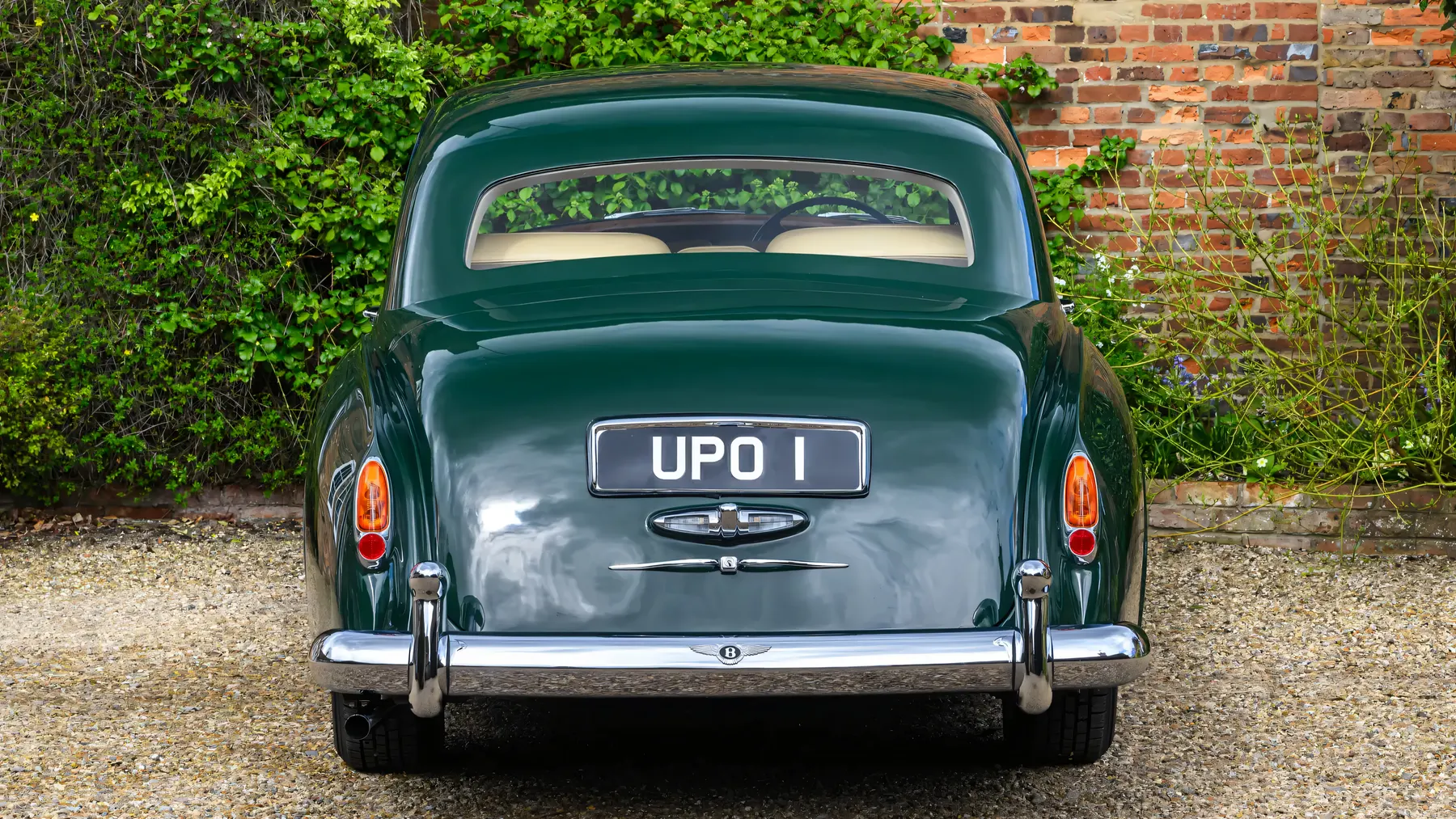
None of this diminished the car’s standing at the time, and it has not diminished it since. The S1 represented the end of an era for Bentley in ways that only became fully clear later: the last standard-production model with an independent chassis, the last powered by the direct descendant of that 1922 straight-six, the last before the Silver Shadow’s unitary construction changed everything. Within that context, the James Young B10 aluminium saloon occupies a precise and rather poignant position - a coachbuilt answer to what the S1 could be when the constraints of mass production were lifted, produced just as mass production was winning its argument definitively.
Contemporary specialist-press reaction was measured and approving. The Autocar and The Motor both treated the S-series with the kind of honest enthusiasm the car deserved - noting the extraordinary composure, the refinement, the quality of construction - without claiming the performance was anything more than adequate. The coachbuilt variants attracted less specific coverage given their small numbers, but within the community of informed buyers the James Young B10 aluminium saloon carried clear authority: it was the version for the buyer who had investigated the options and understood the engineering implications of each.
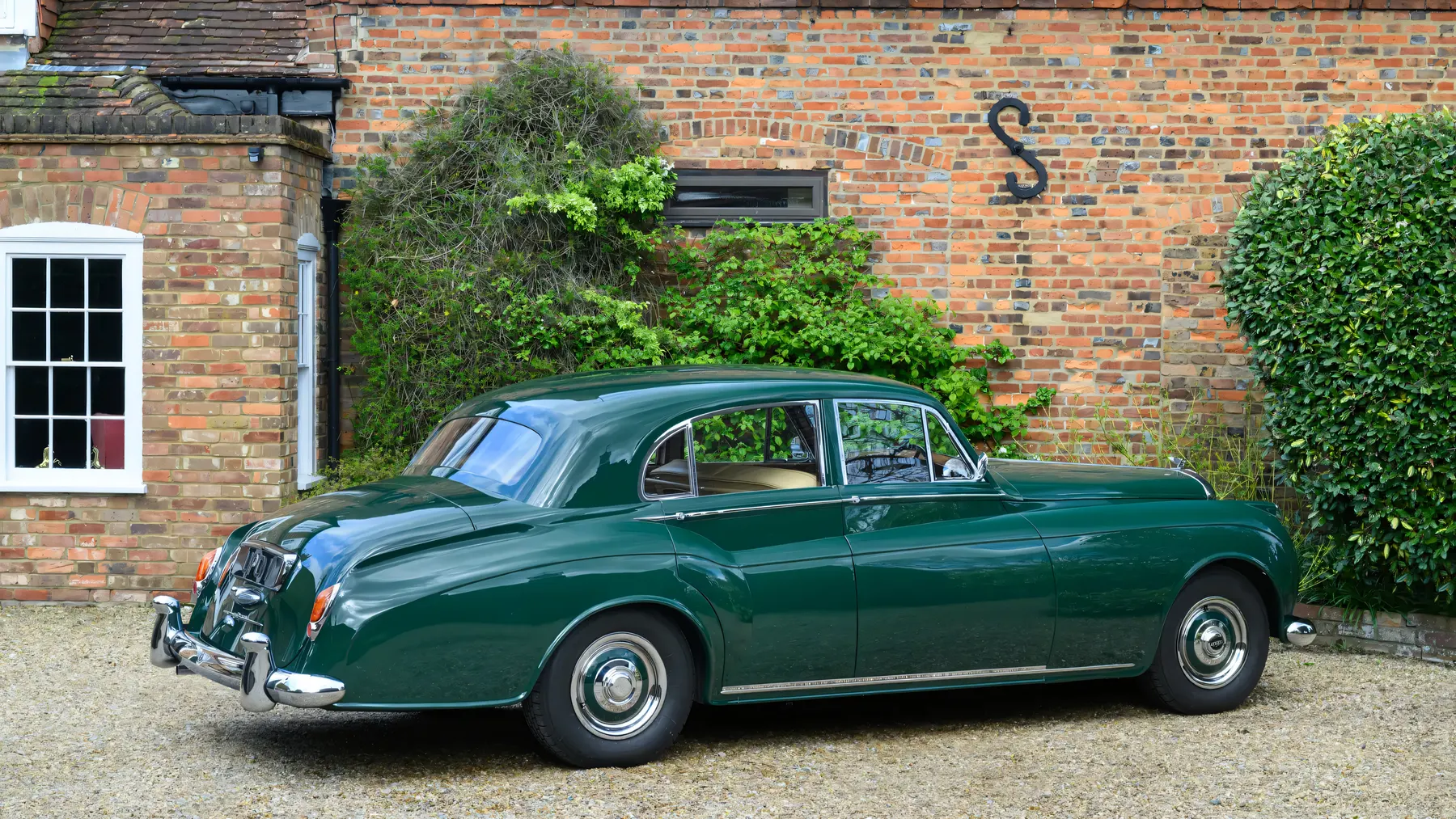
In the decades since, the surviving B10 aluminium saloons have found their natural home in concours competition and careful private collections. Their rarity concentrates attention; their aluminium construction rewards the obsessive preparation that serious concours requires; and their James Young provenance carries genuine historical weight within the Bentley Drivers Club and Rolls-Royce Enthusiasts’ Club communities. The cars that have been properly restored tend to show with a crispness and presence that reflects both the quality of the original construction and the discipline demanded of whoever entrusted themselves with the restoration.
What the B10 aluminium saloon ultimately represents is the last flourish of a particular craft tradition applied to a car that was itself the last of its kind. The coachbuilders who personalised great chassis were already in retreat in 1955; by the time the S3 arrived in 1962, James Young was completing fewer than 60 new bodies a year, almost entirely Continentals, and by early 1966 they had stopped altogether. The 26 B10 aluminium saloons for the standard S1 chassis were produced within that narrowing window, by craftsmen who understood that the age of the bespoke motor car was closing around them, and who appear, looking at the evidence, to have responded by doing their most considered work while the opportunity remained.
Related Notes
- 1930 Bentley 6½-Litre Le Mans Tourer in the style of Vanden Plas
- The Bentley Boys
- Bentley Mulliner Continuation Series
- Modern Materials Carbon Fiber and Aluminum
- Monobloc Engine Construction
- Italian Coachbuilding Houses
- Pebble Beach Concours d’Elegance
- Concorso d’Eleganza Villa d’Este
- Le Mans and the Pre-War Racing Era
- Newport Pagnell Factory and Hand-Assembly Tradition
- British Coachbuilding Houses
- 1959 Rolls-Royce Silver Cloud I Drophead Coupé Adaptation ‘Prototype’ by H.J
- Bentley R Type
- 1958 Bentley S1 Continental ‘Flying Spur’ Sports Saloon by H.J
- Rolls-Royce Silver Shadow and the End of the Separate Chassis