1960 Alfa Romeo Giulietta SZ
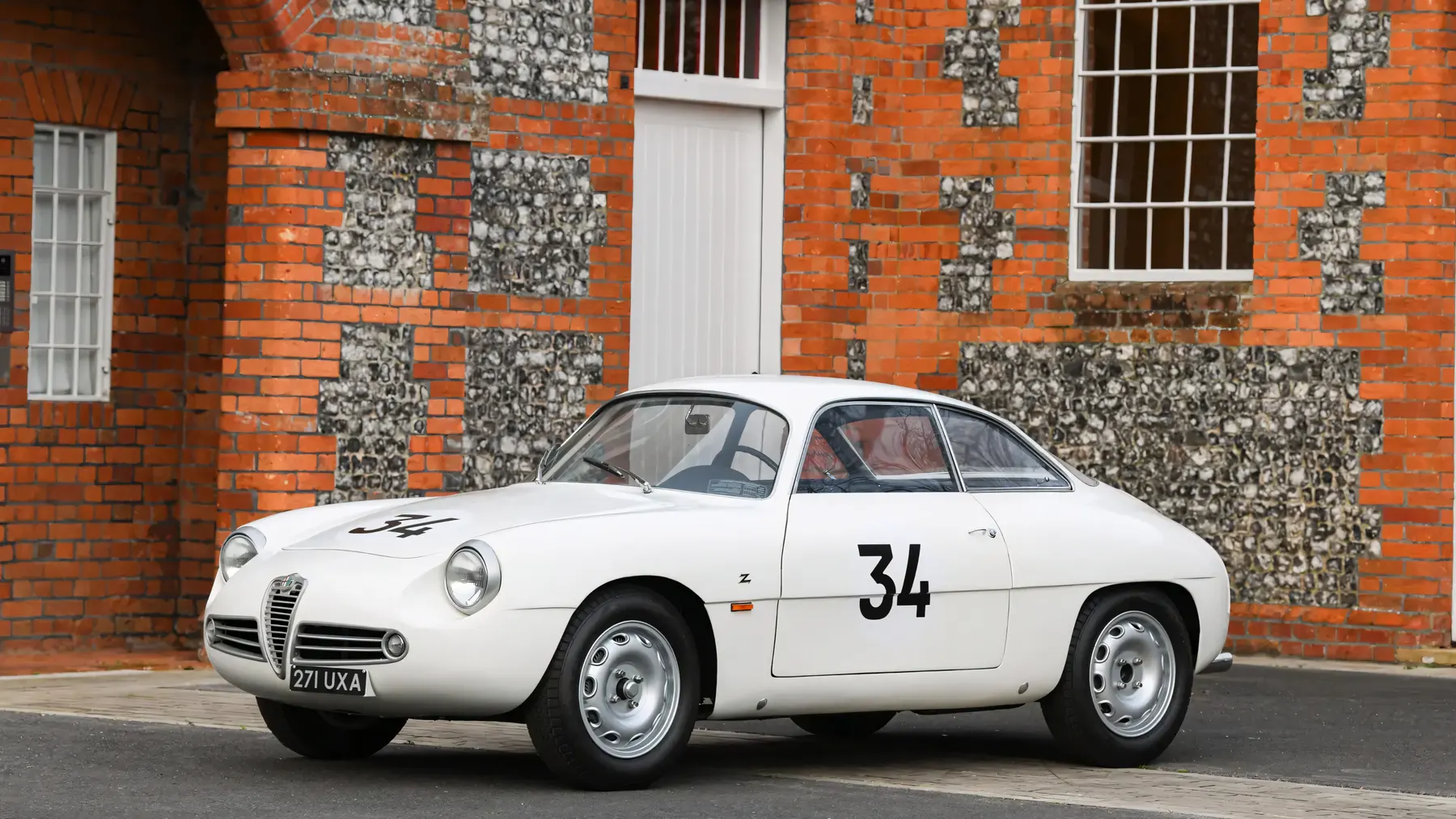
The story of the Alfa Romeo Giulietta SZ begins with an accident – literally. When a crashed Giulietta Sprint Veloce arrived at Zagato’s workshop in 1956, what emerged wasn’t just a repaired car, but a revolution. This wasn’t careful corporate planning; it was Italian automotive improvisation at its finest. Mechanics stripped the crumpled body, replaced it with hand-beaten aluminum, and created something leaner, lighter, and faster. Alfa Romeo took notice. Three years later, their collaboration with Zagato would birth the Giulietta Sprint Zagato – a car that blended race track aggression with Milanese elegance, rewriting rules about what small-displacement sports cars could achieve.
Post-war Europe demanded practical cars, but Alfa Romeo couldn’t shake its racing DNA. The standard Giulietta, introduced in 1954, was already a breakthrough – a nimble 1.3-liter coupe bringing Alfa’s twin-cam technology to the masses. But privateers wanted more. When Zagato rebodied that wrecked Sprint Veloce, shaving 120 kg off its weight, the results stunned Alfa’s engineers. Suddenly, their genteel coupe could keep pace with Porsches in mountain rallies.
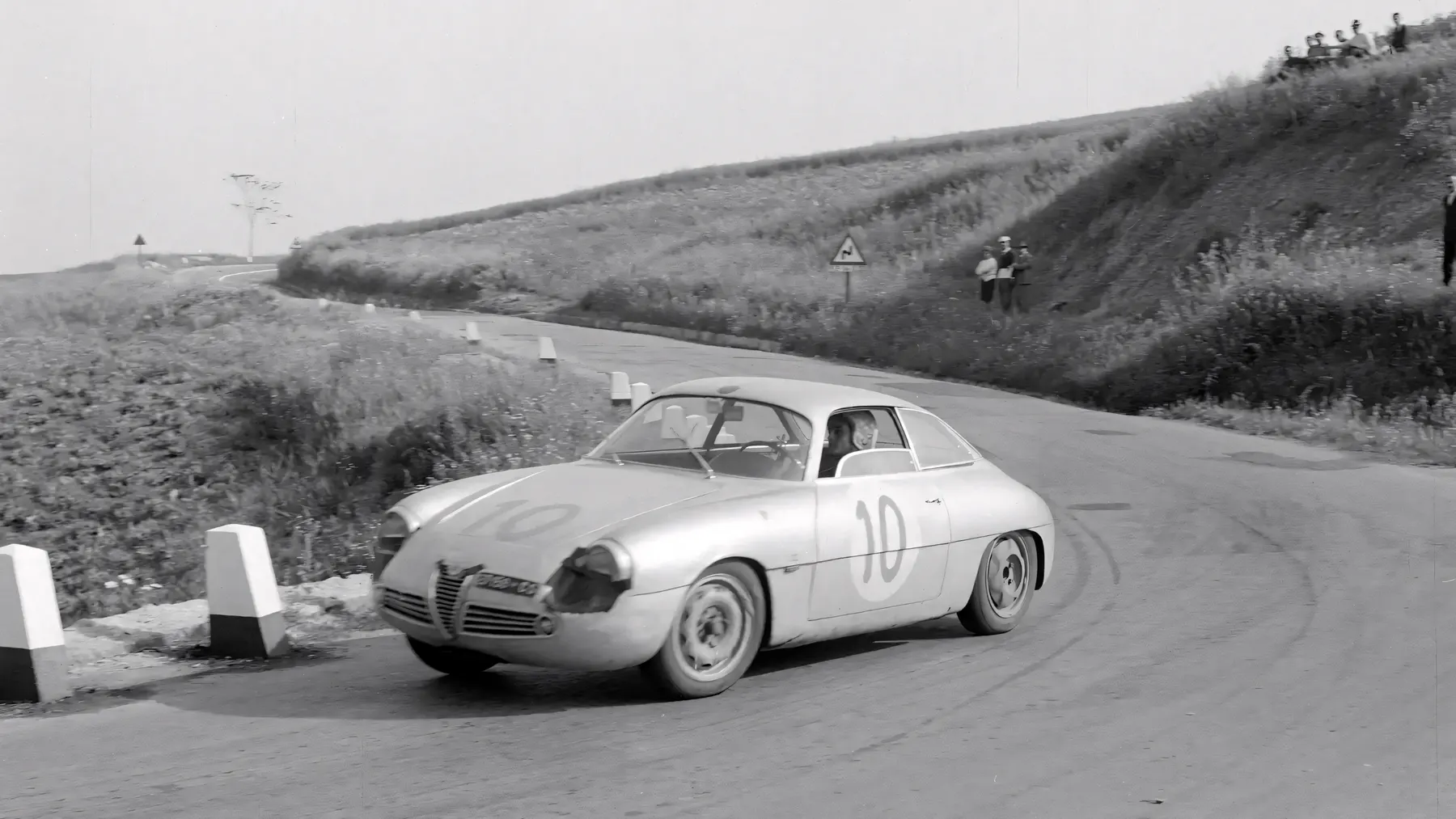
Alfa greenlit production, but with conditions. Zagato would hand-build the bodies in their Milan workshop, while Alfa supplied the chassis and engines. Only 217 left the factory from 1960-1962. These weren’t “special editions” in today’s marketing sense – they were purebred racers with number plates.
The SZ looks like it’s moving while parked. Ercole Spada, Zagato’s 23-year-old designer (yes, 23), crafted a shape that ignored fashion in favor of airflow. The front fenders swell like muscle around the wheels before tapering into a waistline that could make a Ferrari 250 SWB blush. Those plexiglass-covered headlights? Not just for style – they eliminated protruding units that disrupted wind flow at speed.
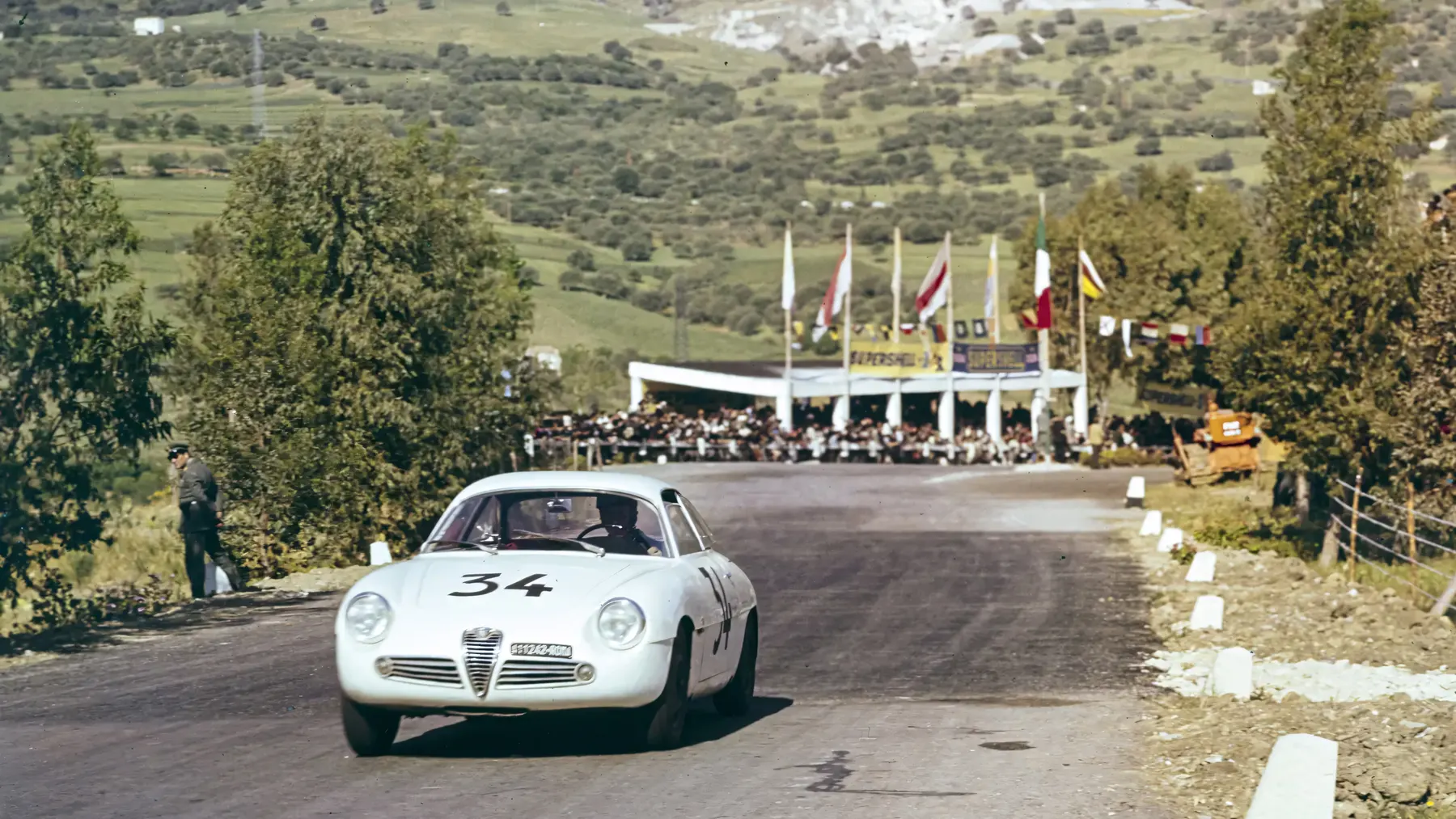
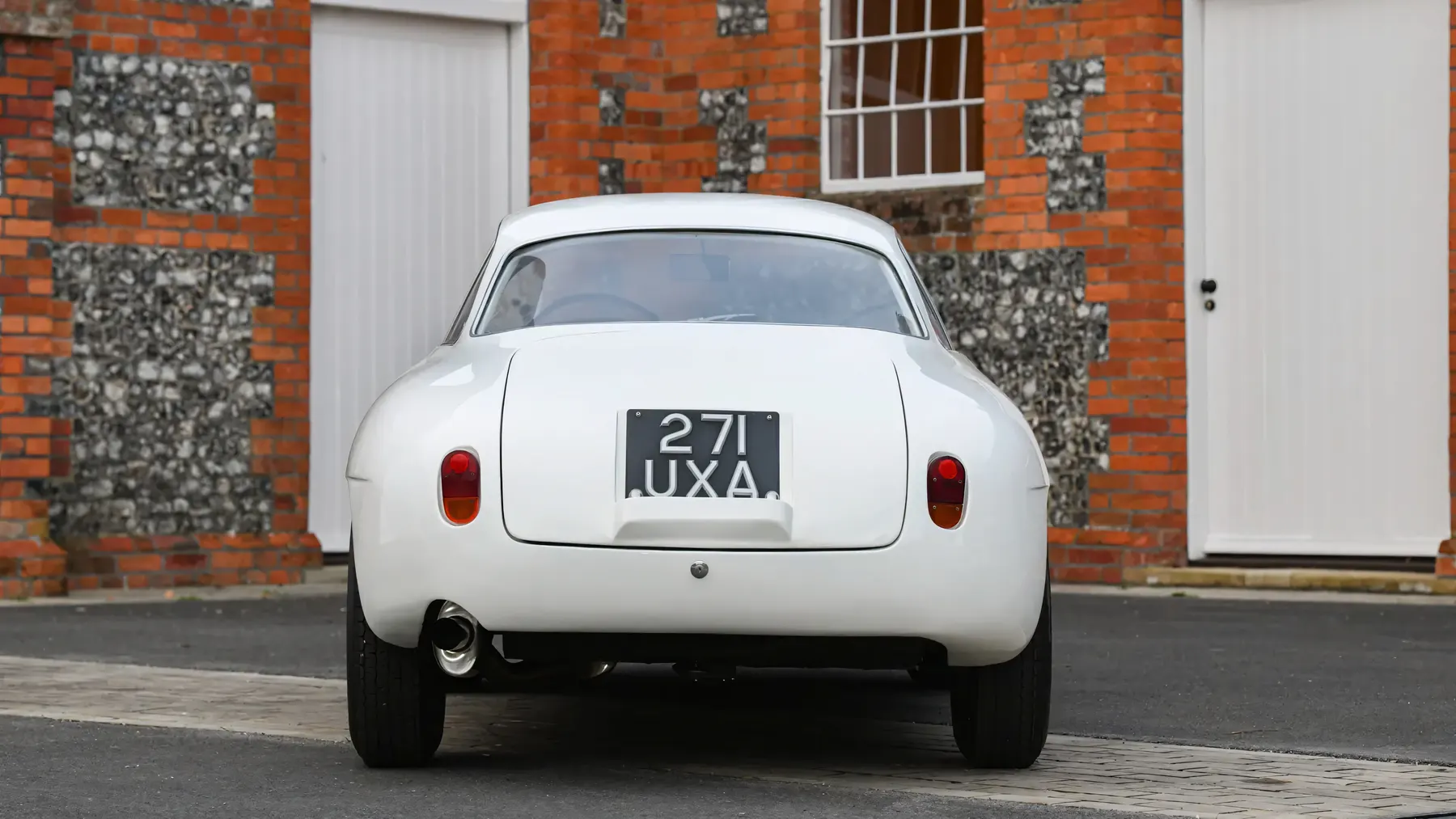
But the real magic sits overhead. Zagato’s signature “double bubble” roof wasn’t a styling quirk. The twin humps provided extra headroom without raising the roofline, maintaining aerodynamic efficiency. Early models (Coda Tonda) had rounded tails, but Alfa’s test drivers found unsettling lift at 160 kph. The fix? Literally cutting off the tail. The revised “Coda Tronca” (truncated tail) used a Kamm-back design – chopping the rear abruptly to create downforce. It worked.
Underneath that aluminum skin lay Alfa’s 1.3-liter twin-cam – a jewel of an engine. With hemispherical combustion chambers and dual Weber carburetors, it pumped out 101 hp. That doesn’t sound like much until you consider the SZ weighed just 780 kg – 230 kg less than a standard Giulietta. Power-to-weight ratio? 130 hp per ton – same as a 1970s Porsche 911S.
The chassis wasn’t exotic – same basic layout as the grocery-getting Giulietta sedan, but shortened and stiffened. Front suspension used double wishbones; the rear a live axle with trailing arms. Drum brakes all around (discs came later on Coda Tronca) required bravery, but saved weight. What transformed it was tuning – springs were stiffer, steering quicker, gear ratios tighter. This was a car that left factories with instructions to “run it hard for 500 km” before racing.
In 1961, an SZ averaged 147 kph over 10 laps at Monza – faster than Jaguar E-Types with triple the horsepower. How? Aerodynamics and stamina. The SZ dominated endurance events where fragility doomed bigger engines. At the 1962 12 Hours of Sebring, an SZ finished 14th overall – first in class, beating Porsche 356s.
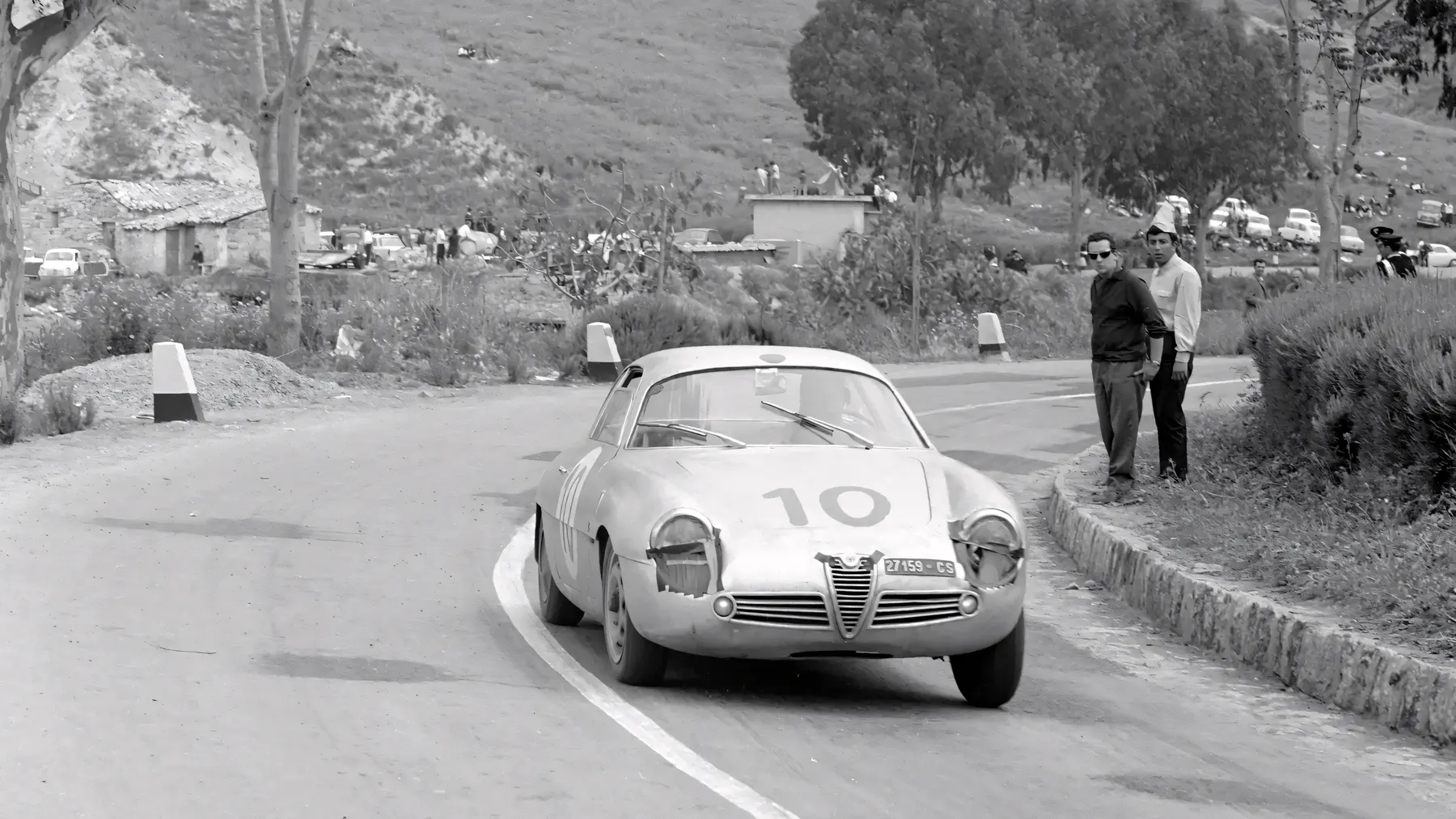
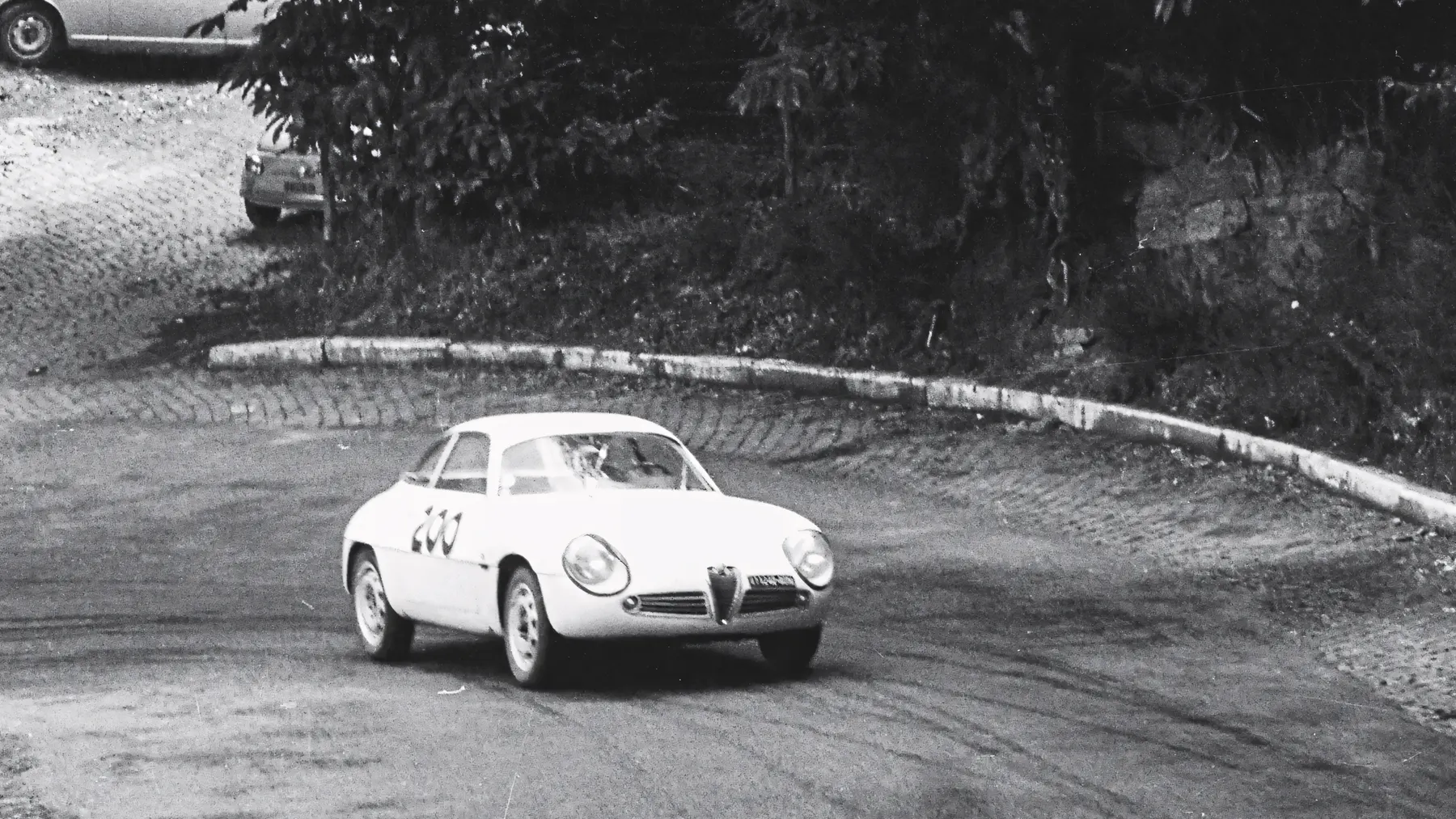
Hill climbs became its specialty. Swiss driver Michel Christen routinely embarrassed V8-powered cars on alpine passes. The SZ’s secret? Mid-corner agility. Drivers could flick it into bends, use the torquey engine to power out, and let aerodynamics stabilize it on straights. Over 100 SZs raced professionally – an astronomical number given only 217 were built.
Owners didn’t baby these cars. Italian businessman Guido Caccioli commuted in his SZ between Milan racetracks, once arriving at Monza with groceries still in the trunk. The cabin was spartan – vinyl seats, minimal gauges, a wafer-thin carpet. Wind noise? Deafening above 110 kph. Early cars lacked exterior door handles – you reached through the window.
Yet journalists praised its civility. British magazine Autocar noted in 1962: “It idles smoothly, doesn’t overheat in traffic, and the clutch is lighter than an Austin Mini’s.” That dual personality – tractable around town, terrier on track – made it beloved. Celebrities wanted in; Elvis bought one during his Army stint in Germany.
Alfa’s experiment proved small cars could out-race giants through intelligence, not brute force. Every modern hot hatch owes something to the SZ’s ethos. Later Alfa racers – the Giulia TZ1, 33 Stradale – followed its lightweight blueprint.
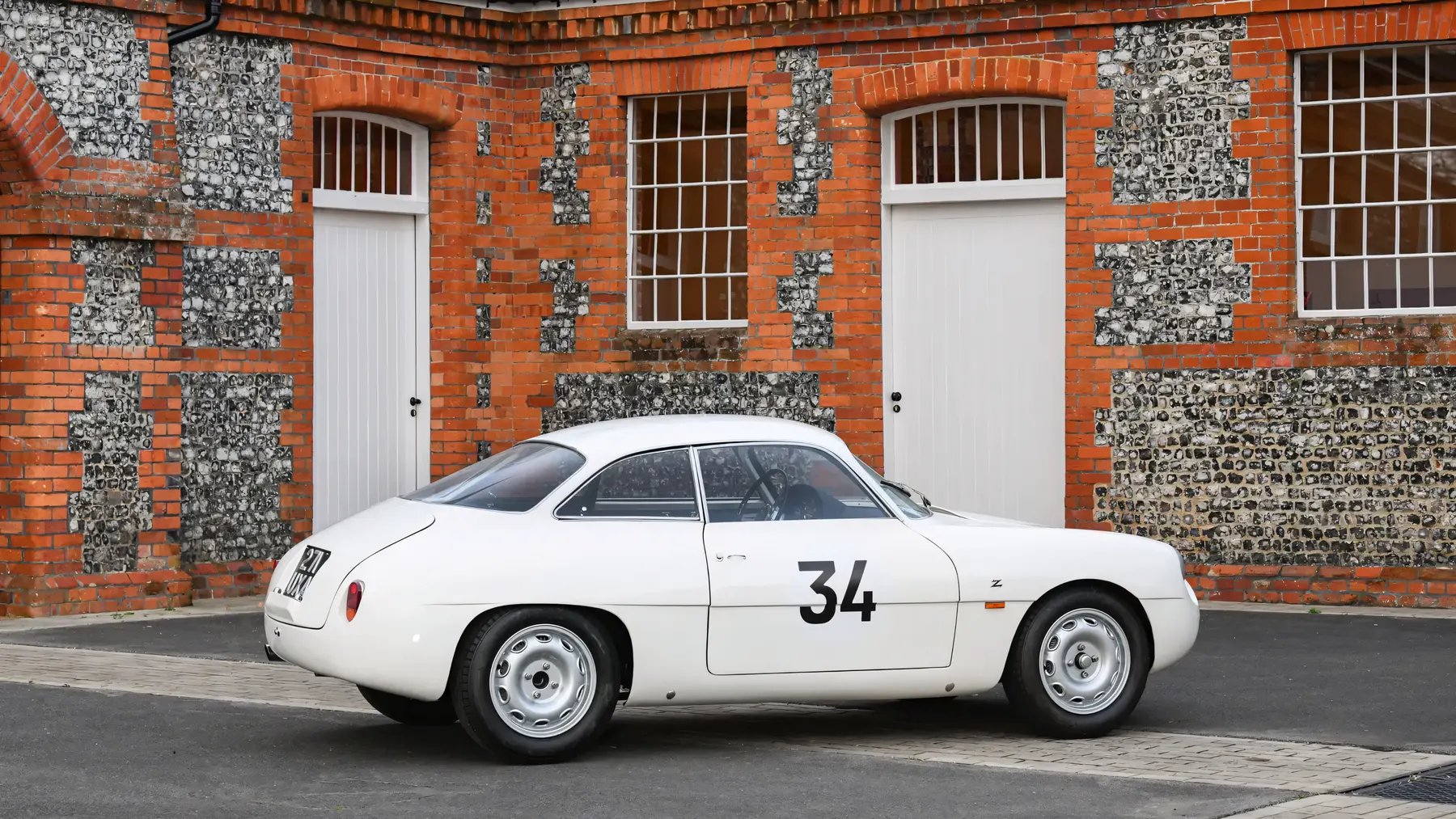
Collectors discovered the SZ late. In the 1980s, examples traded for under 20,000. Today concourse quality cars can go for 800,000. Part of that is scarcity – maybe 180 survive. But mostly, it’s respect. At historic races, SZs still humble larger cars. At Goodwood’s 2023 Revival, one diced with Jaguar D-Types, its four-cylinder wail cutting through V12 roars.
The SZ represents a time when racing tech wasn’t locked behind touchscreens. Owners adjusted valve clearances before Sunday drives. Zagato’s artisans shaped panels by eye – no CAD, just hammers and intuition. It’s raw, unfiltered motoring.
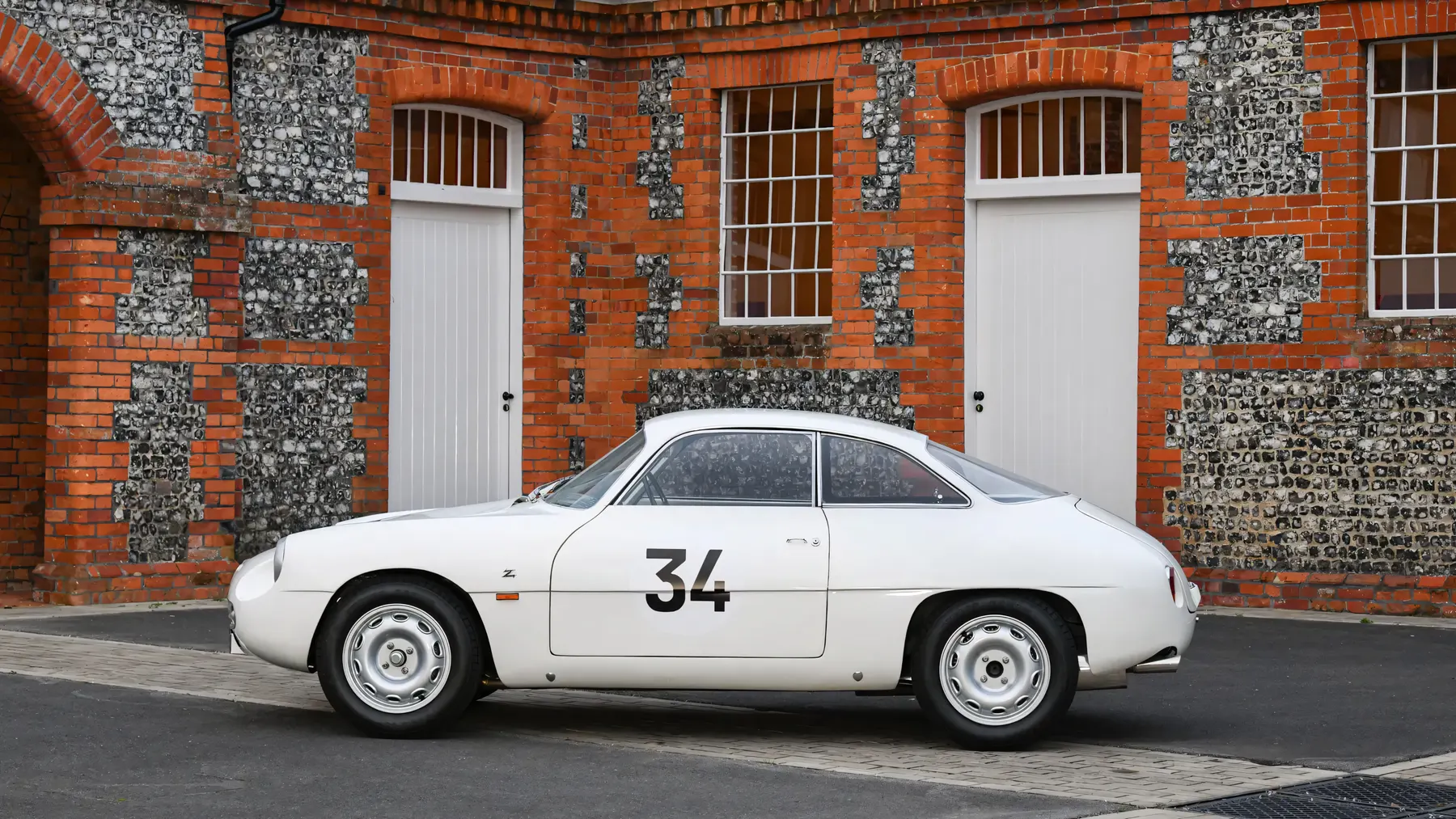
But there’s also timelessness in its solutions. Aerodynamics predating wind tunnels. Lightweight materials over horsepower bloat. A 63-year-old design still competitive against newer machines. The Giulietta SZ didn’t just win races – it validated ideas that still define great cars. Not bad for a parts-bin special that started life as a wreck.