1960 Ford Thunderbird Convertible
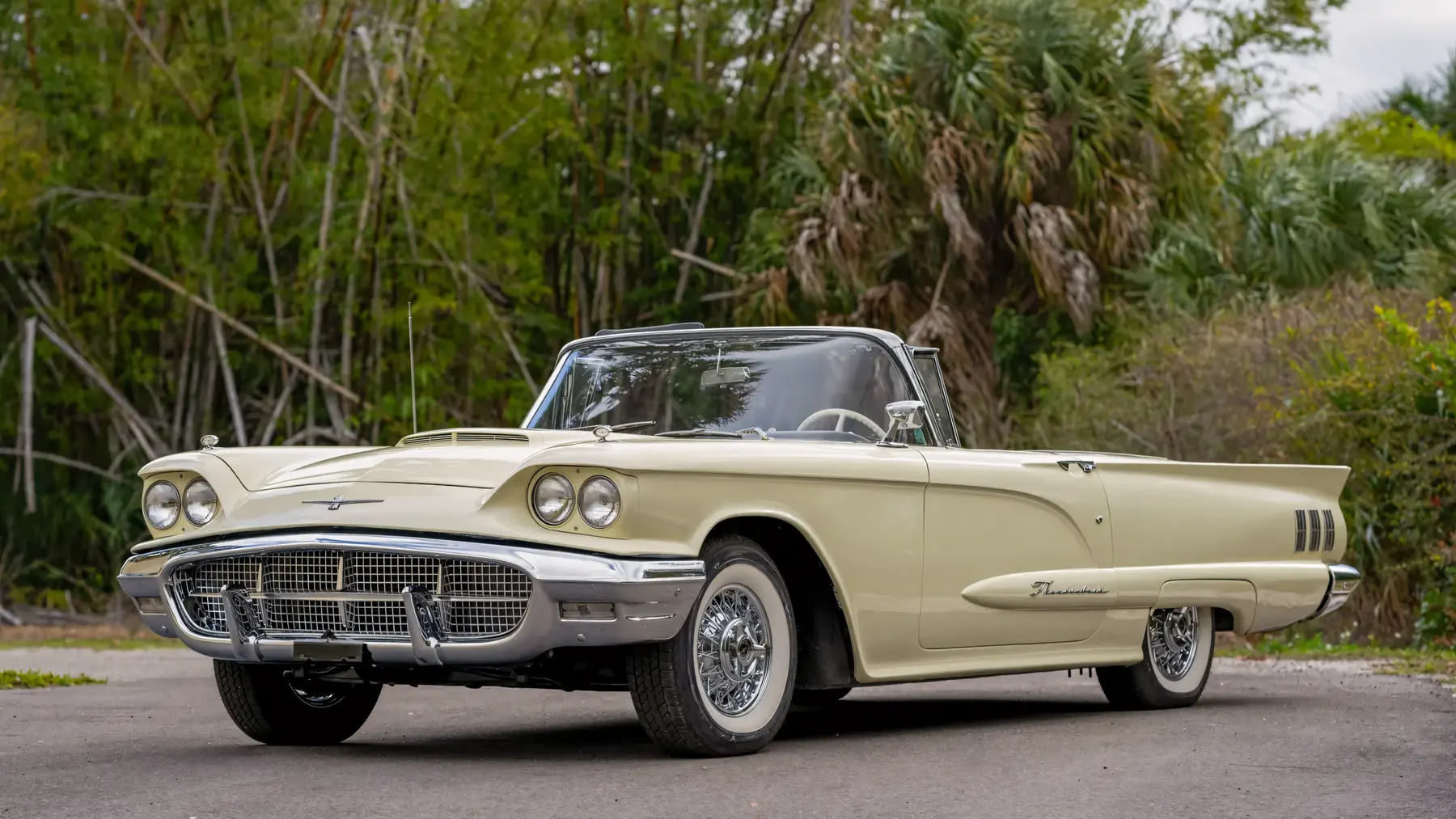
The Ford Thunderbird stands as a hallmark of American automotive innovation, blending luxury, performance, and style. Spanning decades of production from 1955 to 2005, with a brief hiatus from 1998 to 2001, the Thunderbird,often affectionately dubbed the “T-Bird”,carved a unique niche as a personal luxury car. Among its various body styles, the convertible remains a standout for its ability to capture the spirit of open-road freedom paired with refined elegance.
Introduced initially as a two-seat convertible in 1955, the Thunderbird was Ford’s response to the Chevrolet Corvette. Unlike its rival, the Thunderbird emphasized upscale luxury over sports car dynamics. This approach resonated with buyers, and the T-Bird quickly became an icon. Over the years, the Thunderbird’s design evolved through multiple generations, offering configurations such as four-seat convertibles, hardtops, and coupes. The second-generation (1958–1960) “Squarebird” was particularly transformative, adding rear seating and introducing a design that prioritized unibody construction for a sleek and spacious interior.
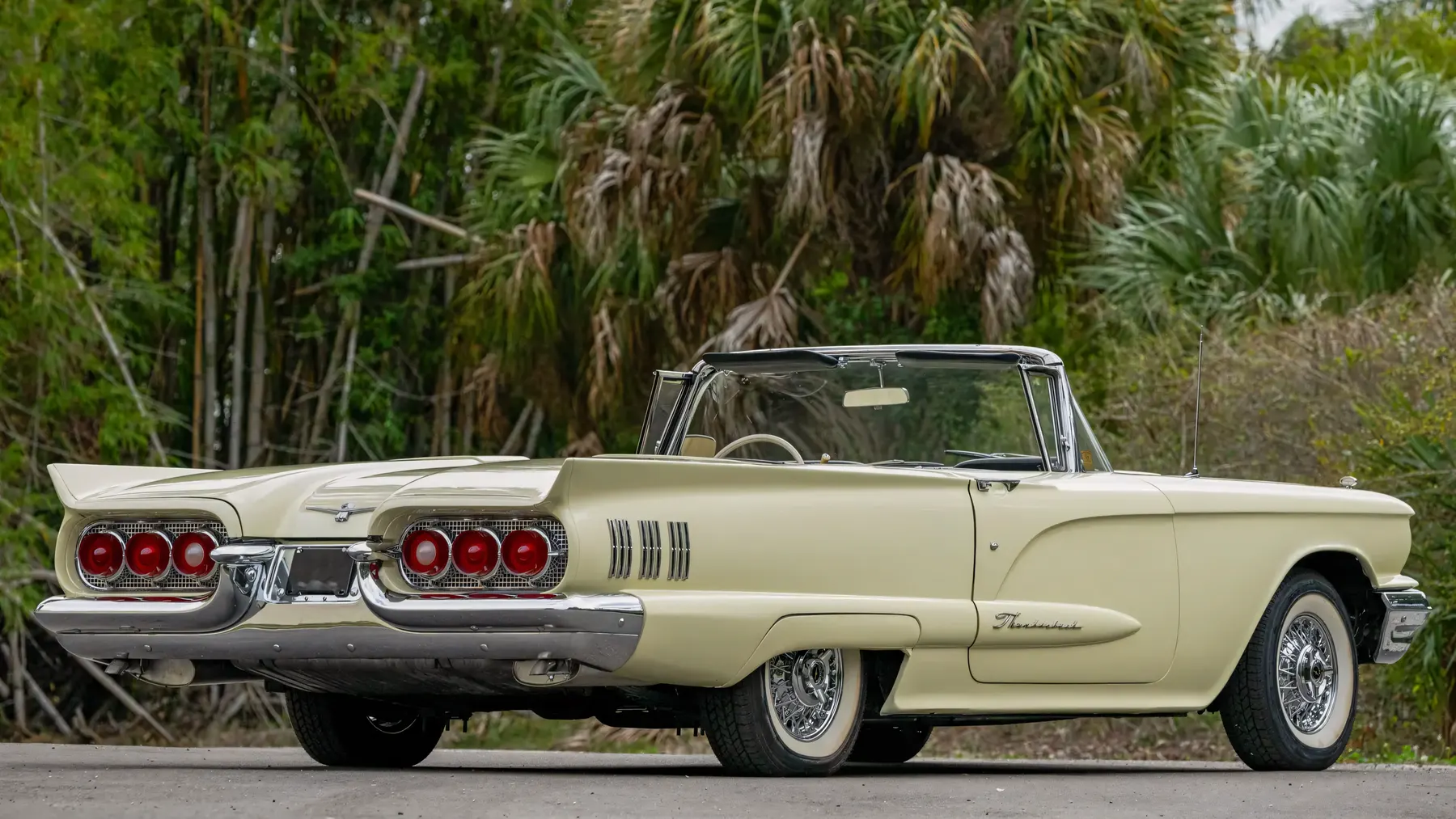
The Thunderbird’s aesthetic often set trends, with low-slung profiles, bold chrome accents, and distinct tailfins marking its earlier years. By 1960, features like a third tail light in the rear clusters and optional sunroofs, including the rare “Golde Edition,” showcased Ford’s attention to luxury and innovation. The stainless steel-bodied Thunderbirds produced in 1960 further demonstrated the car’s experimental edge, two of which remain preserved as automotive marvels.
From the outset, the Thunderbird’s engineering emphasized powerful yet refined performance. The second generation featured Ford’s robust 352 cu in (5.8 L) FE-series V8 engine, delivering 300 horsepower. Buyers could choose between a three-speed manual transmission or the advanced Cruise-O-Matic three-speed automatic, ensuring versatility for different driving preferences.
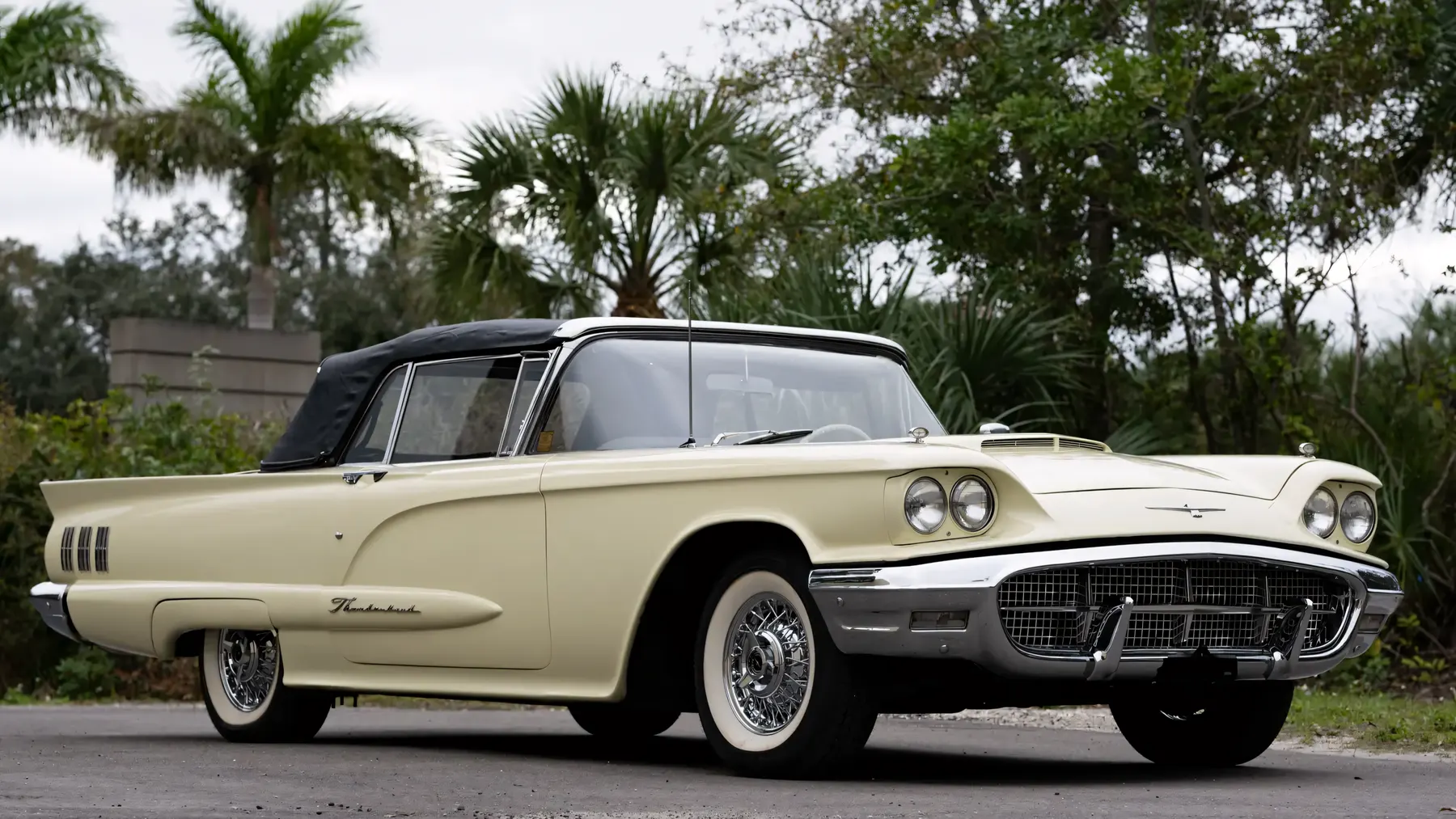
The car’s suspension and braking systems balanced comfort and control. Independent front suspension and coil springs provided smooth handling, while drum brakes ensure reliable stopping power. Though initially designed with innovative air springs, production models opted for conventional leaf springs to maintain reliability. This thoughtful engineering allowed the Thunderbird to perform confidently as a luxury cruiser.
Luxury and convenience defined the Thunderbird’s appeal. The interior featured bucket seats and a center console, creating a cockpit-like experience for the driver. The dashboard integrated advanced controls, emphasizing accessibility and modernity. Rear passengers enjoyed ample space, a rarity for personal luxury cars of the era.
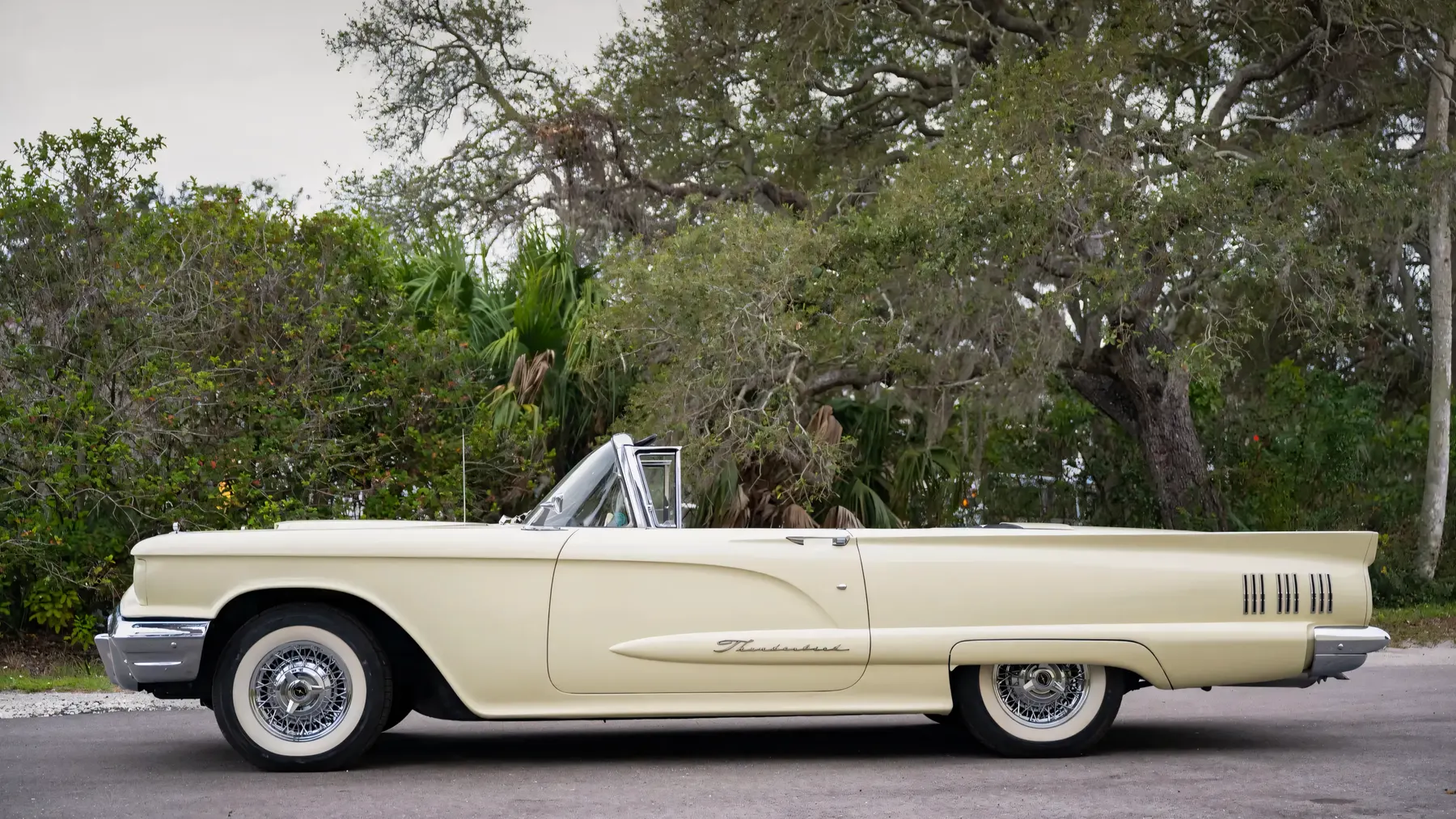
Optional features elevated the Thunderbird’s exclusivity. The “Golde Edition” sunroof added a touch of European sophistication, while air conditioning, premium audio systems, and power-operated accessories enhanced comfort. Every detail underscored the Thunderbird’s status as a premium vehicle for discerning buyers.
The Thunderbird’s journey mirrors broader trends in the American automotive industry. Its shift from a two-seat convertible to a four-passenger vehicle in 1958 marked the creation of the personal luxury car segment. This move, championed by Ford executive Robert McNamara, broadened its market appeal, leading to record-breaking sales. The 1958 Thunderbird won the prestigious Motor Trend Car of the Year award, cementing its place in automotive history.
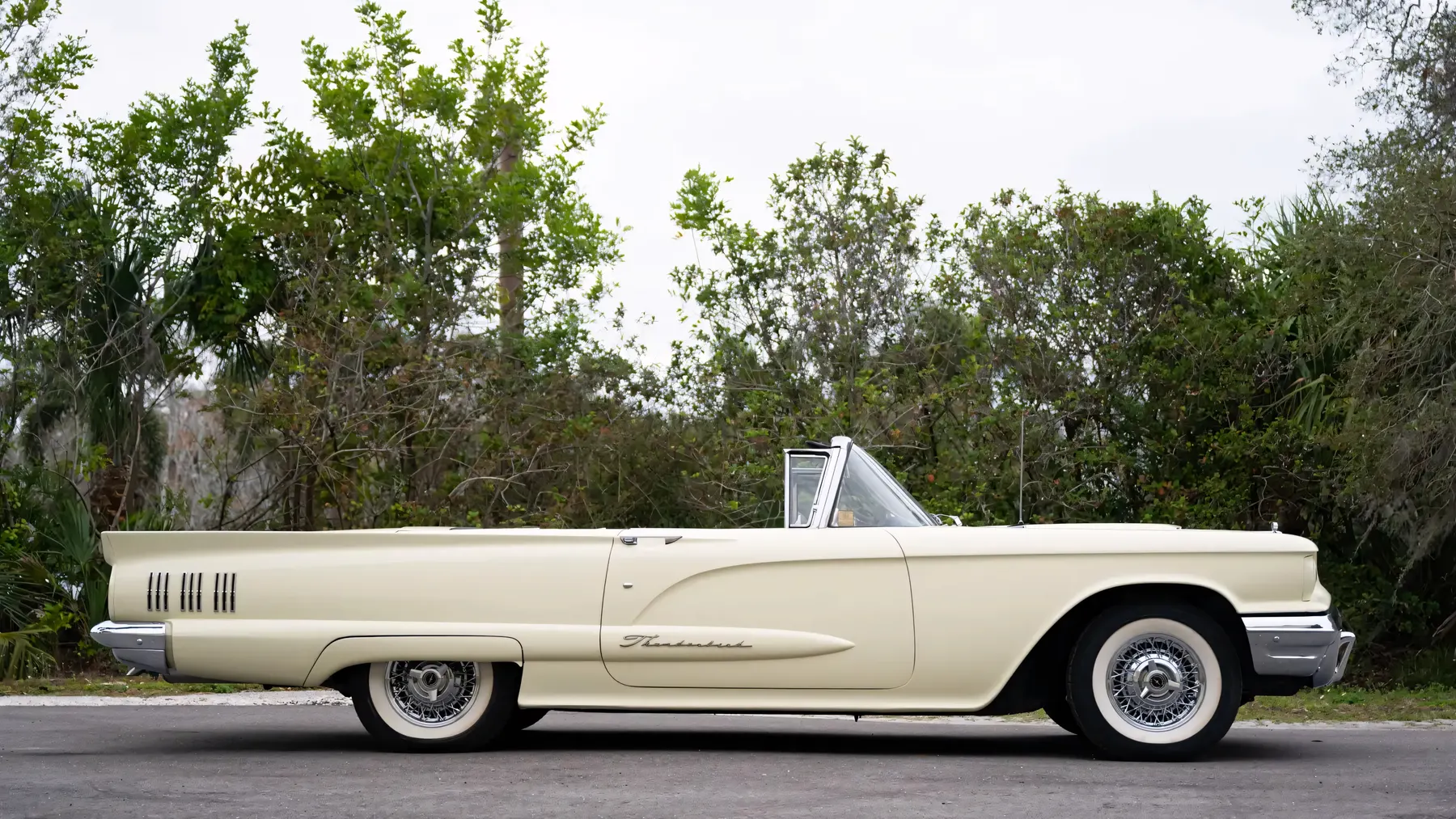
Over its lifetime, the Thunderbird produced over 4.4 million units, with the convertible models standing as enduring symbols of style and sophistication. Even as the market for large two-door coupes waned in the 1990s, the Thunderbird’s legacy remained intact. Its revival as a two-seat convertible from 2002 to 2005 paid homage to the original design, closing the chapter on an illustrious lineage.
The Thunderbird Convertible’s enduring appeal lies in its blend of timeless design, luxurious features, and confident performance. Its innovative unibody construction, powerful V8 engines, and trendsetting aesthetics set it apart from contemporaries. Models like the stainless steel Thunderbirds and the “Golde Edition” exemplify its unique place in automotive culture.
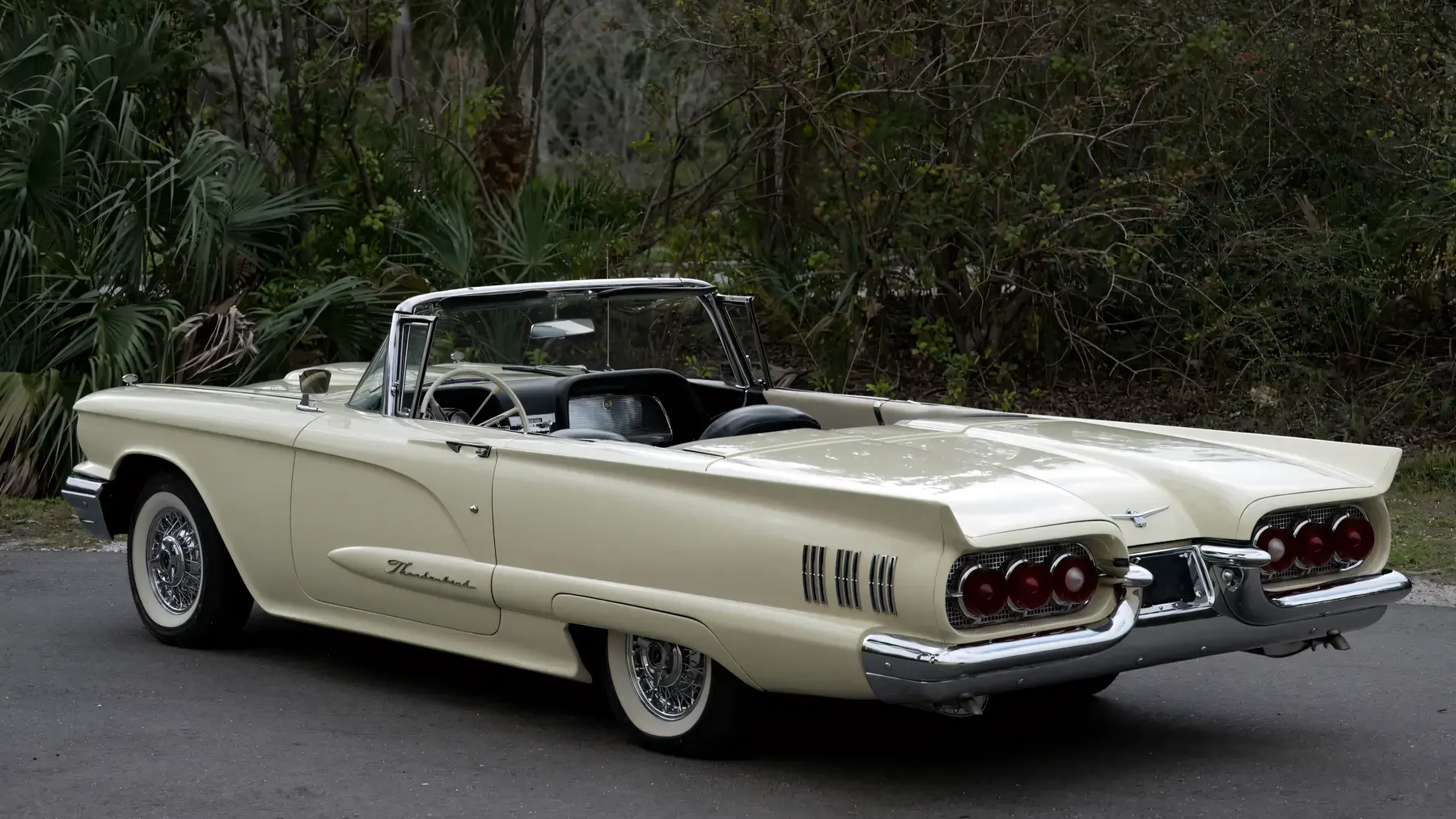
As a personal luxury car, the Thunderbird Convertible captured the hearts of drivers seeking elegance and adventure. Its legacy endures as a testament to Ford’s ability to create vehicles that transcend mere transportation, becoming cultural icons in their own right. Whether cruising down a coastal highway or displayed at a classic car show, the Thunderbird Convertible remains a symbol of American ingenuity and style.