Chevrolet Corvette C1: The Sports Car That Had to Earn Its Name
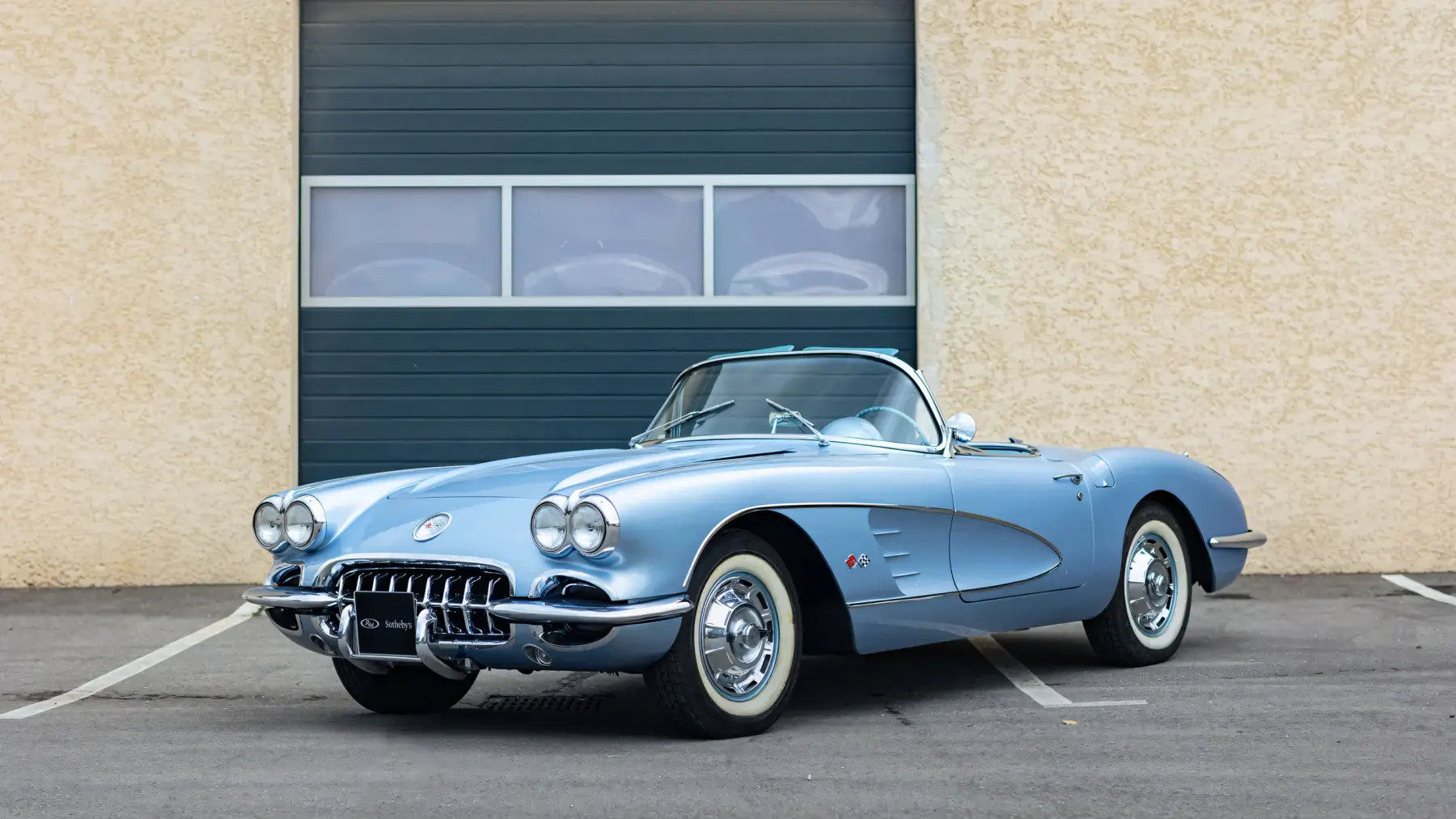
1959 Chevrolet Corvette
Images: Kevin Van Campenhout / RM Sotheby's
The Chevrolet Corvette arrived in 1953 with a fiberglass body, a crowd-stopping show-car silhouette, and a powertrain so mismatched with its sporting ambitions that early road testers could barely hide their frustration. Beneath Harley Earl’s curvaceous bodywork sat a 235-cubic-inch inline-six drawn from Chevrolet’s truck parts bin, producing 150 bhp and mated exclusively to a two-speed Powerglide automatic. For a car positioned as America’s answer to the Jaguar XK120, this was a fundamental contradiction between promise and delivery - and it nearly destroyed the nameplate before the decade was out.
That the Corvette survived its own origins is partly corporate politics, partly engineering reinvention, and partly the intervention of one Ukrainian-born engineer who transformed what could have been a permanent styling exercise into something with a legitimate claim to the sports car name. The first-generation Corvette, produced between 1953 and 1962 and universally known as the C1, spans a remarkable arc: from an underpowered roadster with the performance of a modest American family car to a fuel-injected machine capable of challenging its European contemporaries in direct comparison. Understanding that arc requires understanding just how close the entire programme came to cancellation.
Harley Earl had conceived the Corvette as a response to the European roadsters flooding the American market in the postwar years, and partly as a centrepiece for GM’s Motorama exhibitions. The 1953 show car generated intense public interest, and the corporation rushed a production version into dealerships the same year - too quickly, as events would demonstrate. Only 300 cars were built in that first year, all in Polo White with red interiors, all effectively hand-assembled, and all showing the inconsistencies inherent in a genuinely novel manufacturing process. The choice of fiberglass for the body was forward-thinking: the material allowed complex curved surfaces that would have demanded expensive steel tooling, and it gave the car a visual richness that flat-pressed sheetmetal rarely achieves. But the mechanical package underneath was borrowed from the corporate inventory with conspicuous haste.
The 1954 model expanded production to around 3,640 cars, but sales remained sluggish enough to alarm Chevrolet’s management. When Ford introduced the Thunderbird for 1955 - a conventionally engineered, V8-powered personal luxury car that outsold the Corvette substantially in its first year - the situation became genuinely precarious. Chevrolet produced fewer than 700 Corvettes in 1955. The programme stood at the edge of discontinuation, and within GM there were serious arguments for pulling the plug entirely.
What saved it was the 265-cubic-inch small-block V8 that engineer Ed Cole had developed, which arrived as a Corvette option partway through the 1955 model year. Producing 195 bhp and substantially lighter than the old six-cylinder, the small-block was finally capable of giving the car something resembling the performance its styling had always implied. A three-speed manual gearbox appeared alongside it. The mechanical transformation was immediate, even if the 1955 production numbers told a bleak story. The direction had been established, and the engineers who would build on it were already sharpening their arguments.
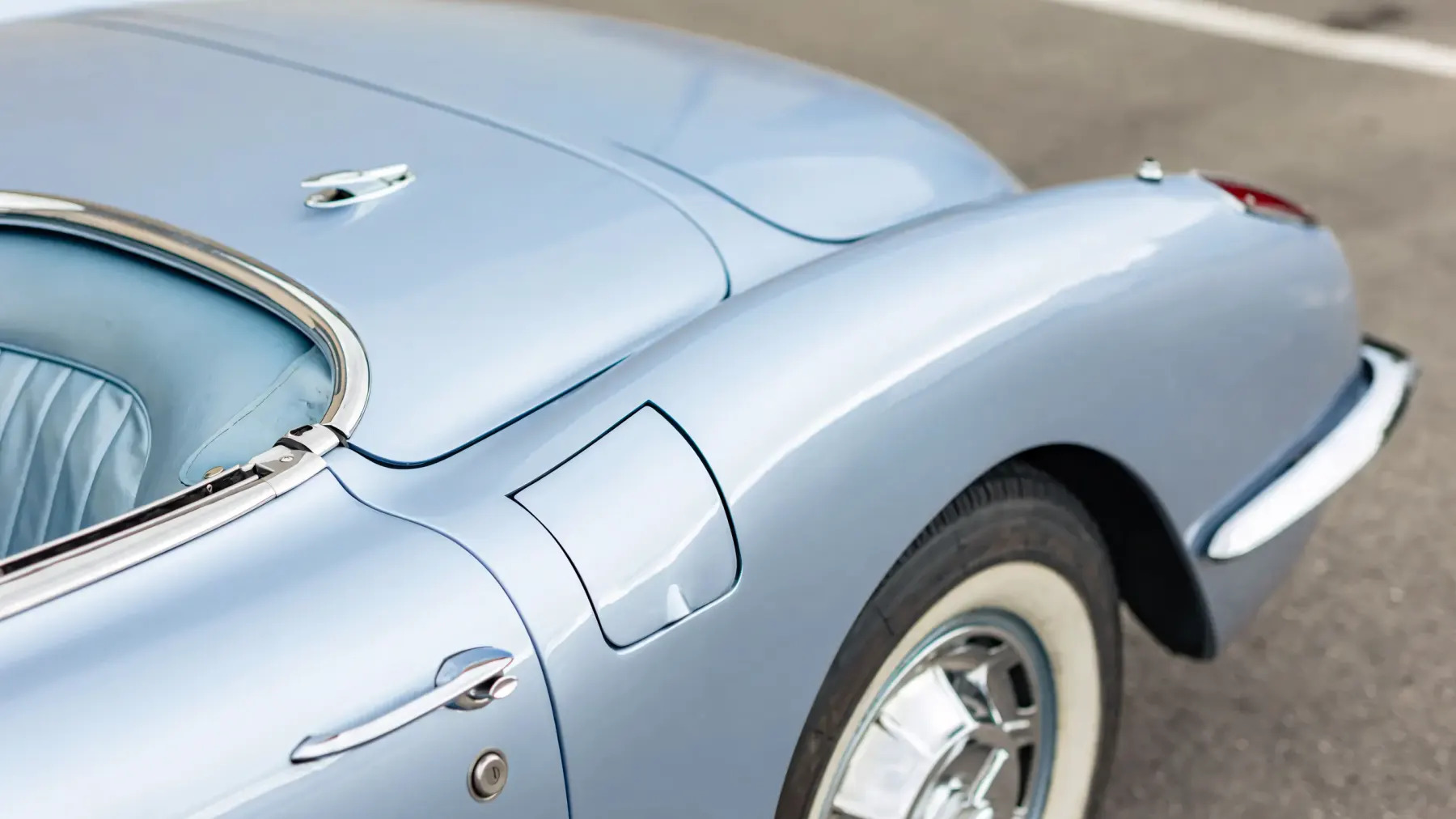
The most consequential figure in the Corvette’s reinvention was Zora Arkus-Duntov. A Russian-born engineer and competitive driver who had raced at Le Mans and possessed a deep understanding of European sports car engineering, Duntov had dispatched a memo to GM management in 1953 arguing that the Corvette had real potential being squandered by poor mechanical choices. Hired shortly after, he became the programme’s most effective internal champion and its most demanding development driver. His influence shaped the 1956 restyle profoundly - a redesign that replaced the original’s show-car ambiguity with a resolved and purposeful form. The new body featured concave bodyside coves, proper wind-up windows replacing the crude side curtains, and functioning external door handles that addressed a genuine safety concern: the 1953–55 cars had interior-only release mechanisms that raised serious questions about occupant egress in an emergency. That small detail illuminated how thoroughly the original had prioritised appearance over consequence.
Performance escalated through the latter half of the decade with a pace that European observers found striking. For 1957, the small-block grew to 283 cubic inches, and with it arrived the option that would define a generation of Corvette mythology: the Rochester Ramjet mechanical fuel injection system. In its highest state of tune, the injected 283 produced 283 bhp - exactly one horsepower per cubic inch, a figure that carried genuine totemic significance in American performance culture and was quoted endlessly in the automotive press. A four-speed close-ratio manual gearbox also became available in 1957, finally providing the mechanical toolkit that serious drivers had needed from the outset. Contemporary road tests of top-specification 1957 cars reported 0–60 mph times approaching six seconds, and peak torque from the fuel-injected unit approached 290 lb-ft, placing the Corvette in direct conversation with European sports cars that had previously regarded it with some condescension.
Duntov pursued the car in motorsport with characteristic intensity. At the Daytona Speed Weeks in 1956, a specially prepared Corvette recorded speeds above 150 mph over the flying mile. Factory-supported competition efforts produced the SR-2 racing machines, purpose-built for specific events and serving simultaneously as development testbeds. But the honest assessment of the C1 in international competition is that it remained a car demonstrating potential rather than winning championships. Against the purpose-built European endurance machinery - the Ferraris, Astons, and Listers that contested Le Mans and the Targa Florio during this period - the Corvette lacked the race-specific development depth and refined chassis engineering to mount sustained challenges at the front. Its motorsport significance in this era was more about feeding engineering lessons back into the production cars and building the car’s domestic reputation than about international podiums.
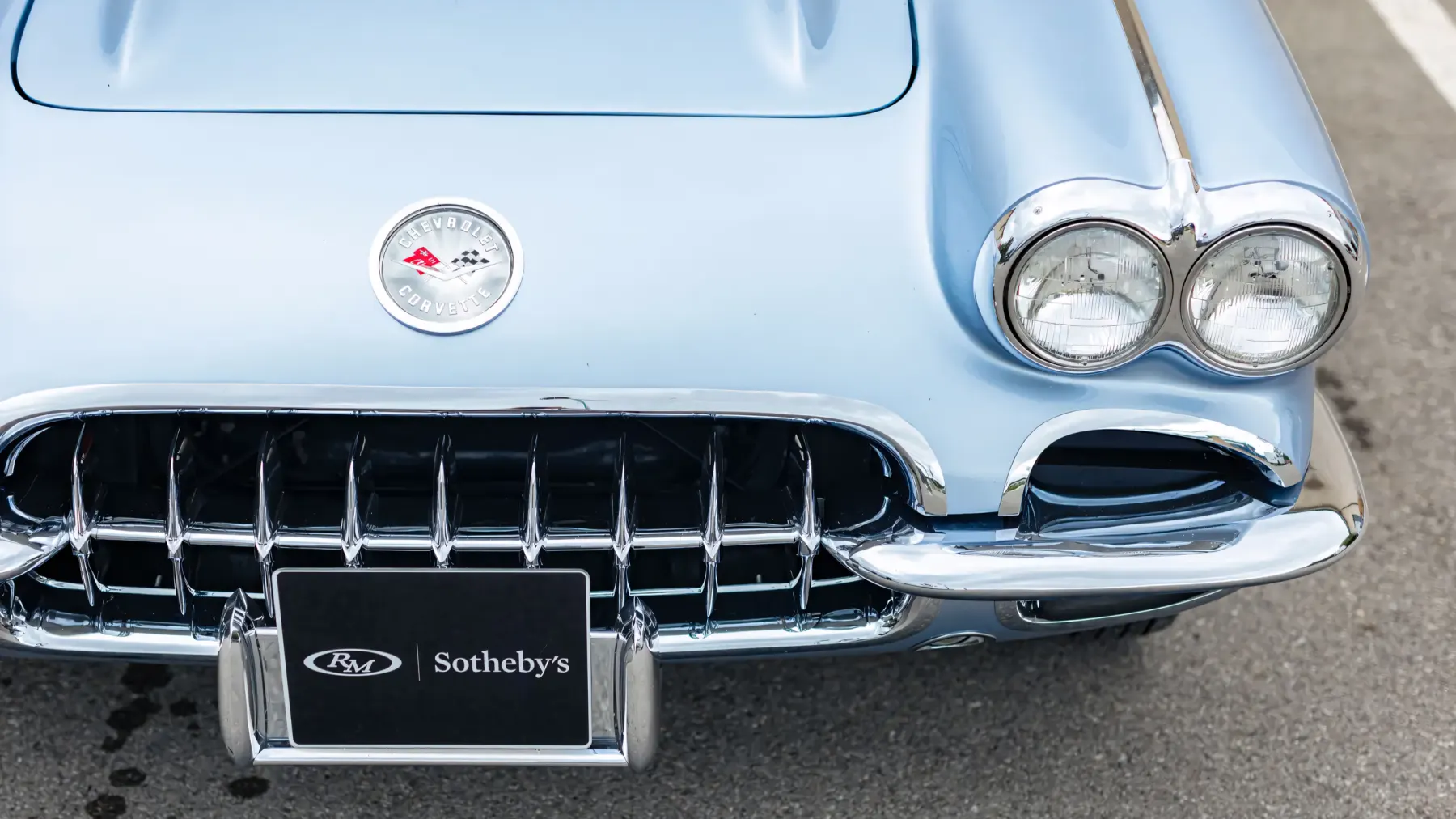
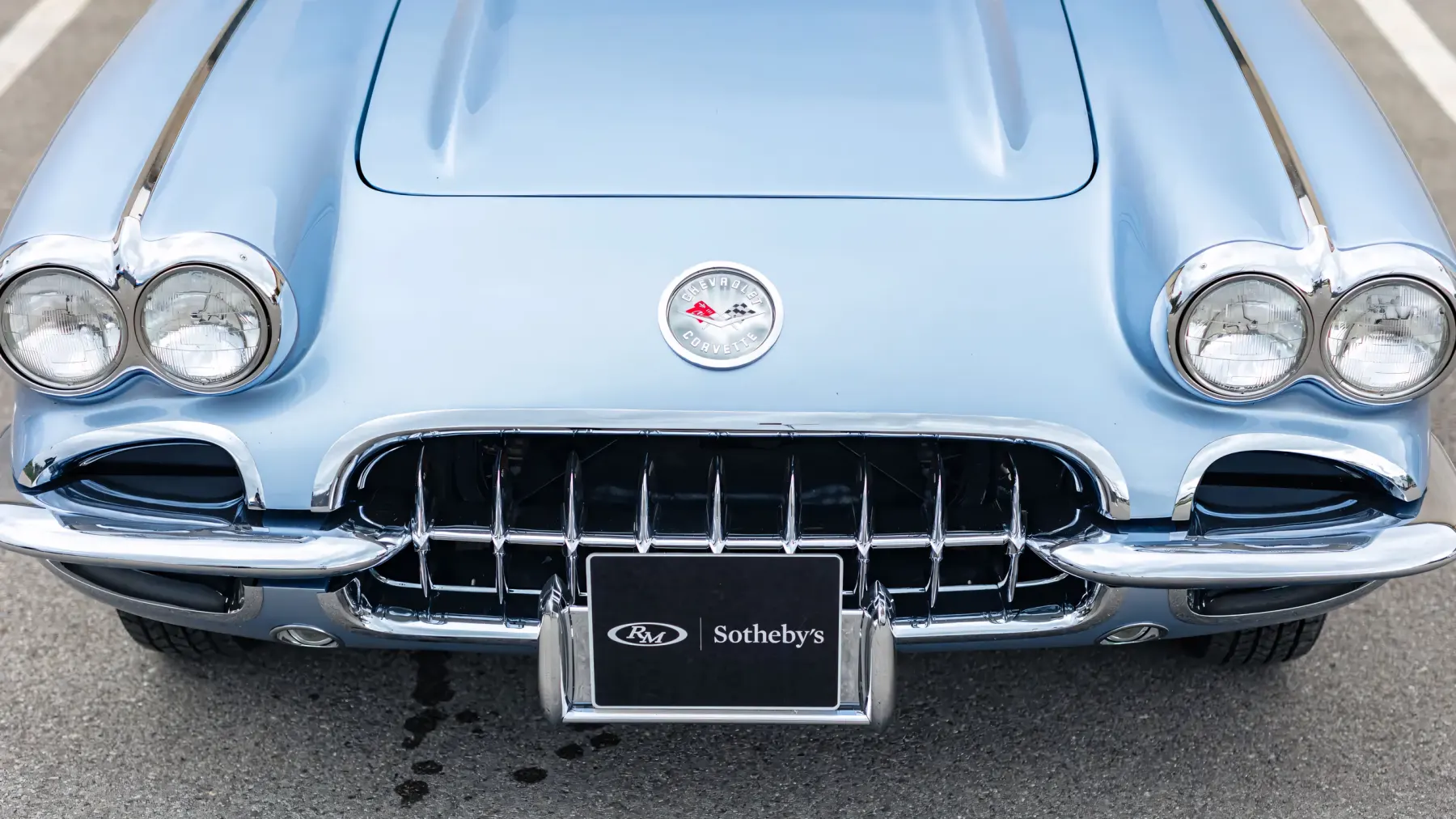
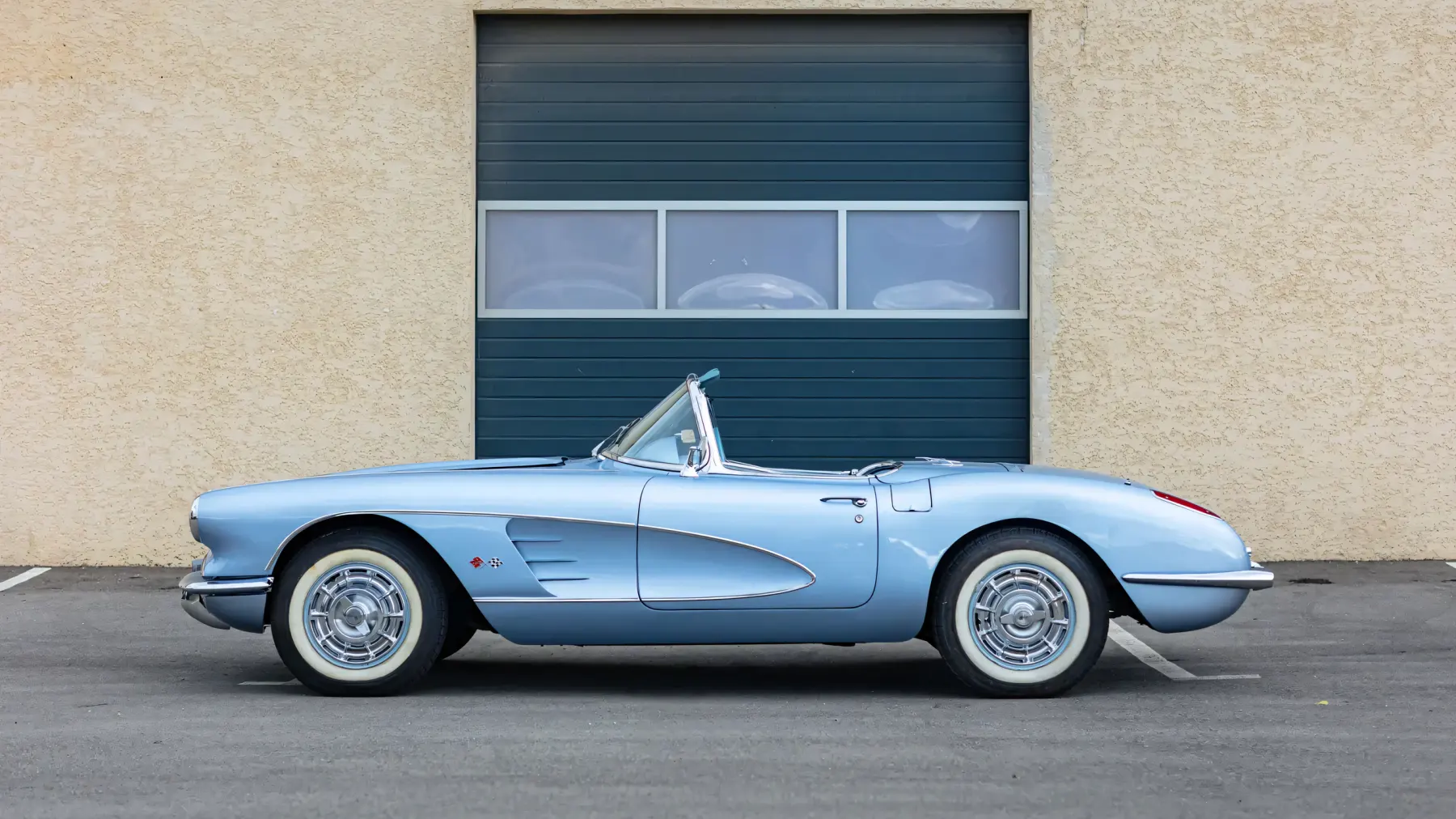
The 1958 restyle opened a more complicated chapter. Responding to the prevailing American taste for visual drama, the redesign introduced quad headlamps, chrome trim strips along the bonnet and boot lid, decorative louvres, and sufficient additional mass to blunt the edge the lighter earlier cars had developed. European automotive publications were notably unenthusiastic. The 1956–57 cars occupy a cleaner, more integrated aesthetic that many serious Corvette enthusiasts regard as the visual apex of the C1 range, and placing a 1957 and a 1958 side by side makes the philosophical retreat immediately apparent. The 1961–62 restyle recovered some visual coherence through a cleaner ducktail rear that deliberately previewed the C2’s coming direction, but the middle years of the C1 remain its most contested designs.
The mechanical limitations of the C1 demand honest scrutiny beyond the obvious misfire of the 1953–54 powertrain. Throughout the entire production run, the drum braking system was the car’s most persistent technical liability. By the time the late-model C1 was producing 300 bhp or more - and the 327-cubic-inch engine introduced for 1962 offered a fuel-injected output of 360 bhp - the drums were demonstrably inadequate for sustained hard driving. Jaguar had fitted disc brakes to the XK150S in 1958. Aston Martin employed discs on the DB4 from the same year. The Corvette did not gain them until the C2 arrived for 1963. This is not a footnote: on mountain passes or circuits, the drums faded quickly under repeated application, and experienced drivers learned to manage their technique accordingly - a significant concession in a car with genuine performance pretensions. The conservative decision to retain drums reflected production economics and supplier inertia rather than any engineering rationale, and it left the late C1’s performance envelope partially theoretical.
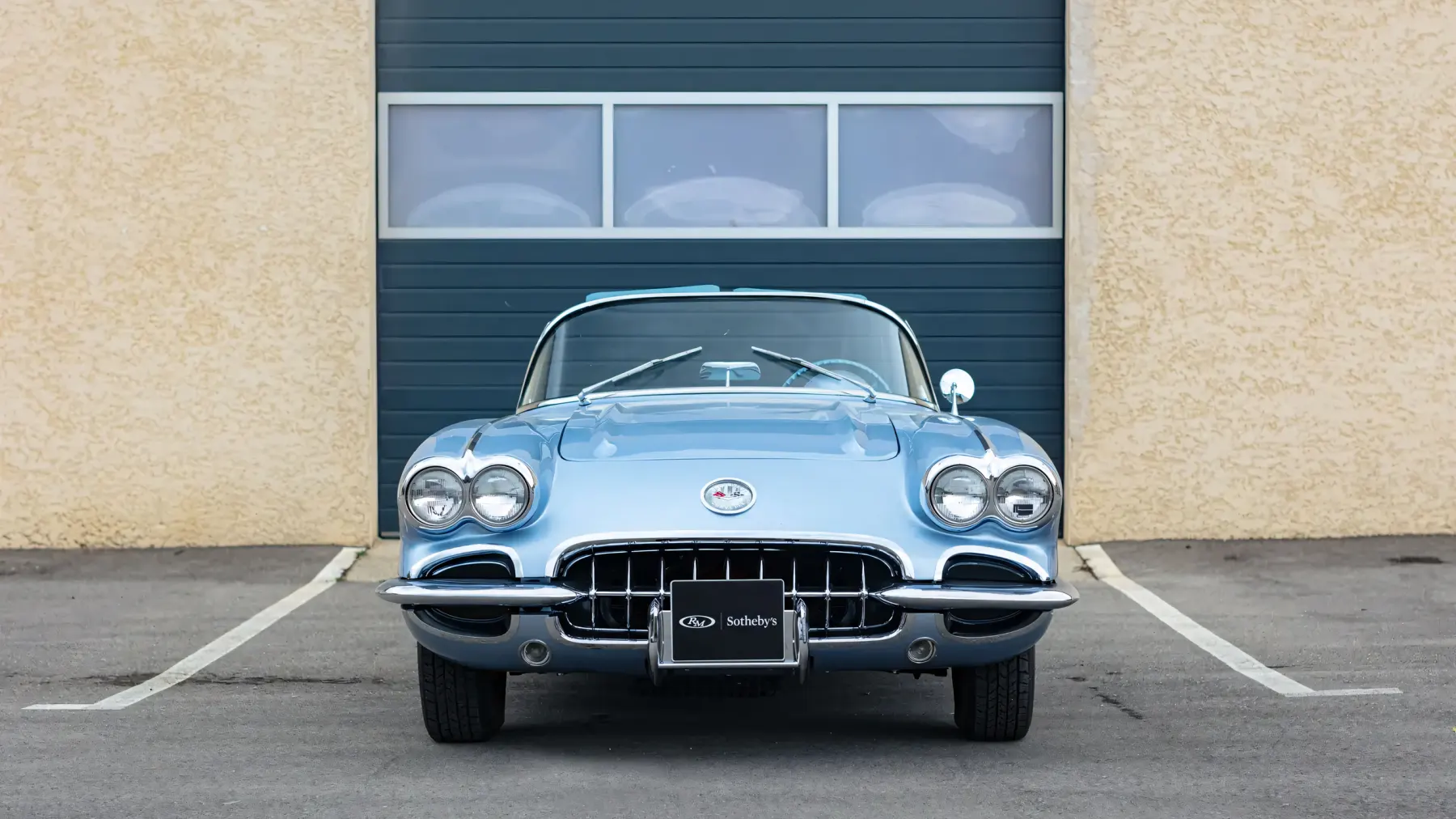
The fiberglass body construction brought its own ongoing compromises. Panel fit on the earliest cars varied noticeably, a consequence of the hand-intensive assembly process, and the material’s inherent flexibility meant structural creaking over broken road surfaces accompanied ownership throughout the decade. A Triumph TR3 or Porsche 356 of the same era might lack the Corvette’s horsepower, but their structures felt more composed on rough pavement. Weather sealing on the convertible top improved progressively across the model’s life but never achieved the tight fit that buyers in northern climates expected, and early gel-coat paint adhesion on the fiberglass panels was prone to crazing in ways that sheetmetal bodies were not. Buyers were, in a real sense, absorbing the developmental costs of a novel manufacturing philosophy.
Despite these compromises, driving a properly developed late C1 - a 1961 or 1962 car with the 327 and a four-speed gearbox - communicates something that the specifications alone do not fully capture. The small-block V8 is an instrument of genuine character: responsive through the throttle, mechanically direct in a way the later, larger-displacement engines amplified rather than reinvented. The four-speed gearchange is precise enough to encourage aggressive use. The steering is heavy by modern standards but communicative, with a feel for the road surface that the power-assisted systems of the era routinely blunted. The ride is firm but not brutal - Duntov had progressively worked up the suspension across nearly a decade, raising spring rates, revising damper tuning, and refining geometry toward something approaching genuine sporting competence. The result is a car that communicates its limits honestly enough that a skilled driver can work close to them with confidence. That quality, more than any specification, is what made the late C1 feel like the sports car the 1953 original had only pretended to be.
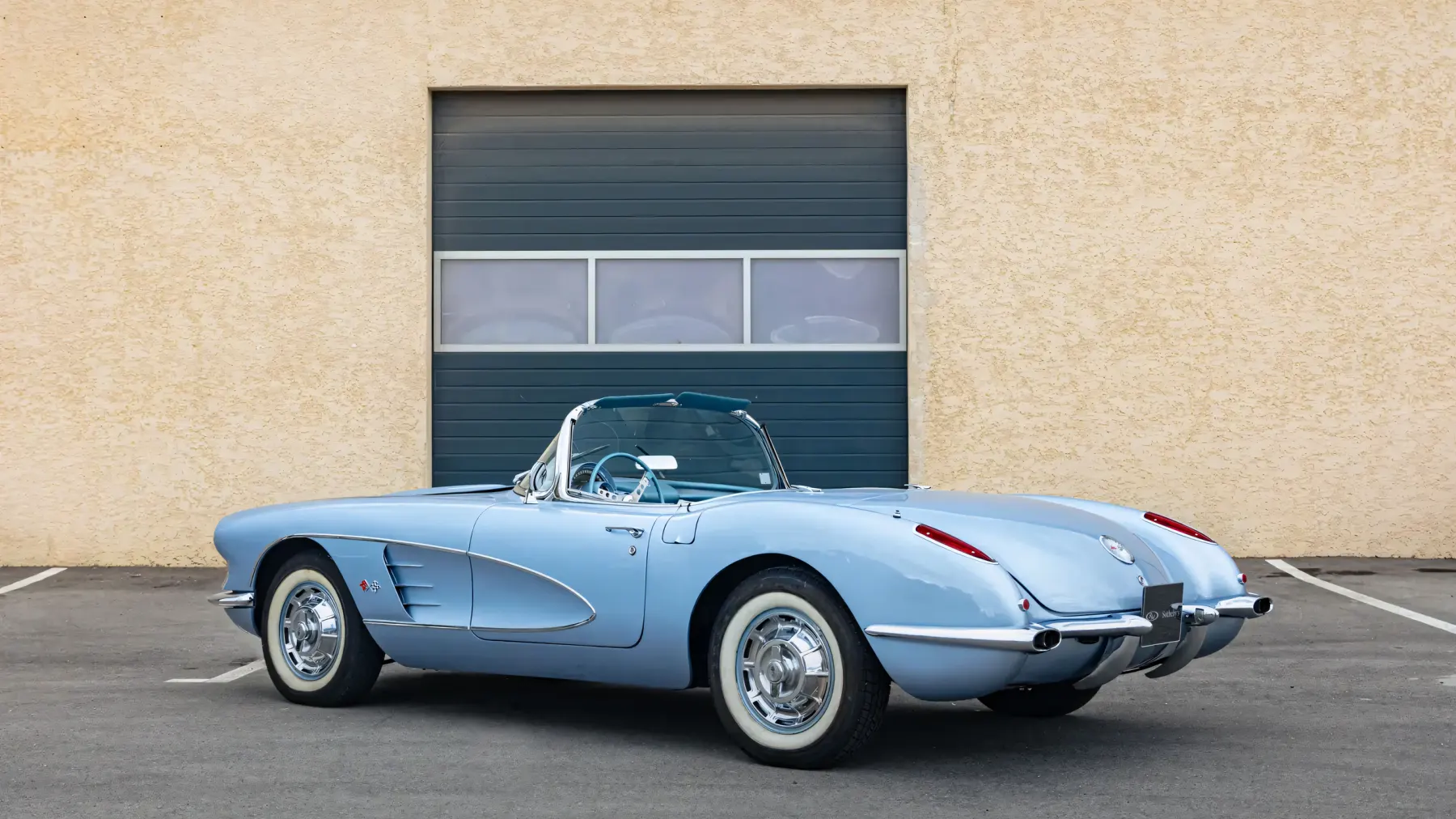
Total C1 production across the decade reached roughly 70,000 cars - a figure that reflects both the near-catastrophe of the early years and the genuine following the car eventually built. The C2 Sting Ray arrived for 1963 with independent rear suspension, an entirely new body, and the unambiguous status of a world-class sports car. But the C2 existed only because the C1 had endured its early failures long enough to find its identity - and because the engineers working within GM’s bureaucracy had been given just enough room to fix what the showroom floor had exposed.
What makes the C1 Corvette genuinely compelling as a historical subject is not the mythology surrounding its most celebrated variants, though the fuel-injected 1957 genuinely earns its reputation. It is the degree to which the model was forced to confront its own fundamental deficiencies publicly, in production, under credible threat of cancellation. The 1953 car and the 1962 car are separated by a greater philosophical distance than most nameplates achieve in twice the time. That distance - from truck-engined show prop to credible sports car - is the actual story of the C1, and it is a more interesting one than any of its performance figures alone could tell.