1962 Porsche 356 B 1600 Super 'Twin Grille' Roadster by D'Ieteren




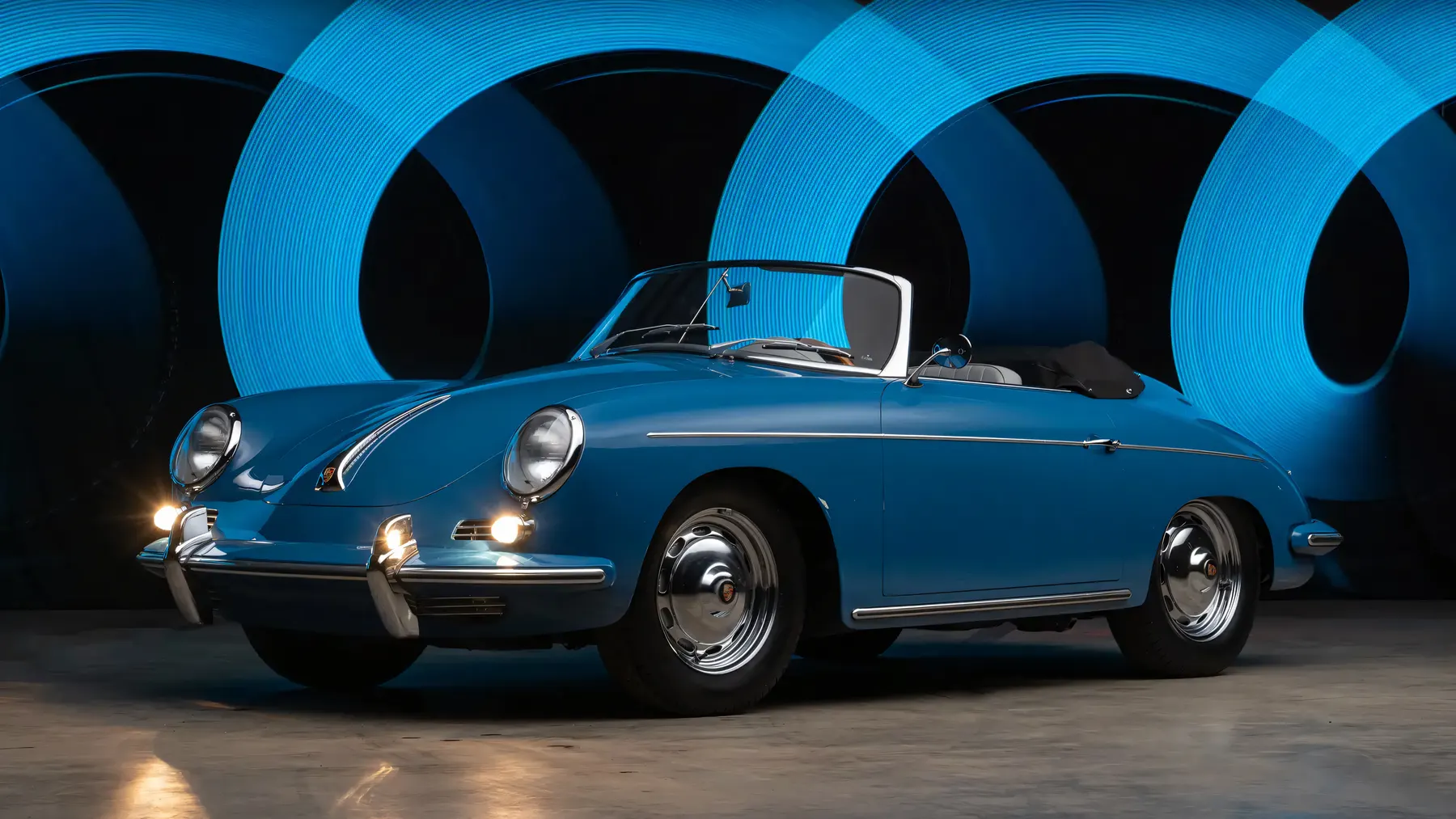
Walk into the Porsche factory museum in Zuffenhausen and you can follow the entire arc of the 356’s evolution on a single floor - from the crude, hand-beaten alloy body of the 1948 prototype to the polished, production-perfected 356 C. But to understand the Twin Grille Roadster, you have to walk past almost everything and stop right at the very end of the line, at the moment when Porsche was simultaneously closing one chapter and frantically preparing another. That is where this car lives: at a junction, a full stop, a farewell.
The story begins with the Speedster, that deliberately spartan machine Max Hoffmann convinced Porsche to build for the American market in 1954 - a cut-down windscreen, a rudimentary hood, side curtains instead of windows. It sold, but it divided opinion, and by late 1958 Porsche replaced it with the Convertible D, the “D” acknowledging its German coachbuilder, Drauz of Heilbronn. The Convertible D raised the windscreen, fitted proper wind-up door glass, and offered a hood that actually sealed against weather. It was the Speedster made civilised. When the 356 B arrived with its revised T-5 bodywork, Drauz continued building the open car under its new name - the Roadster - carrying forward the lineage.
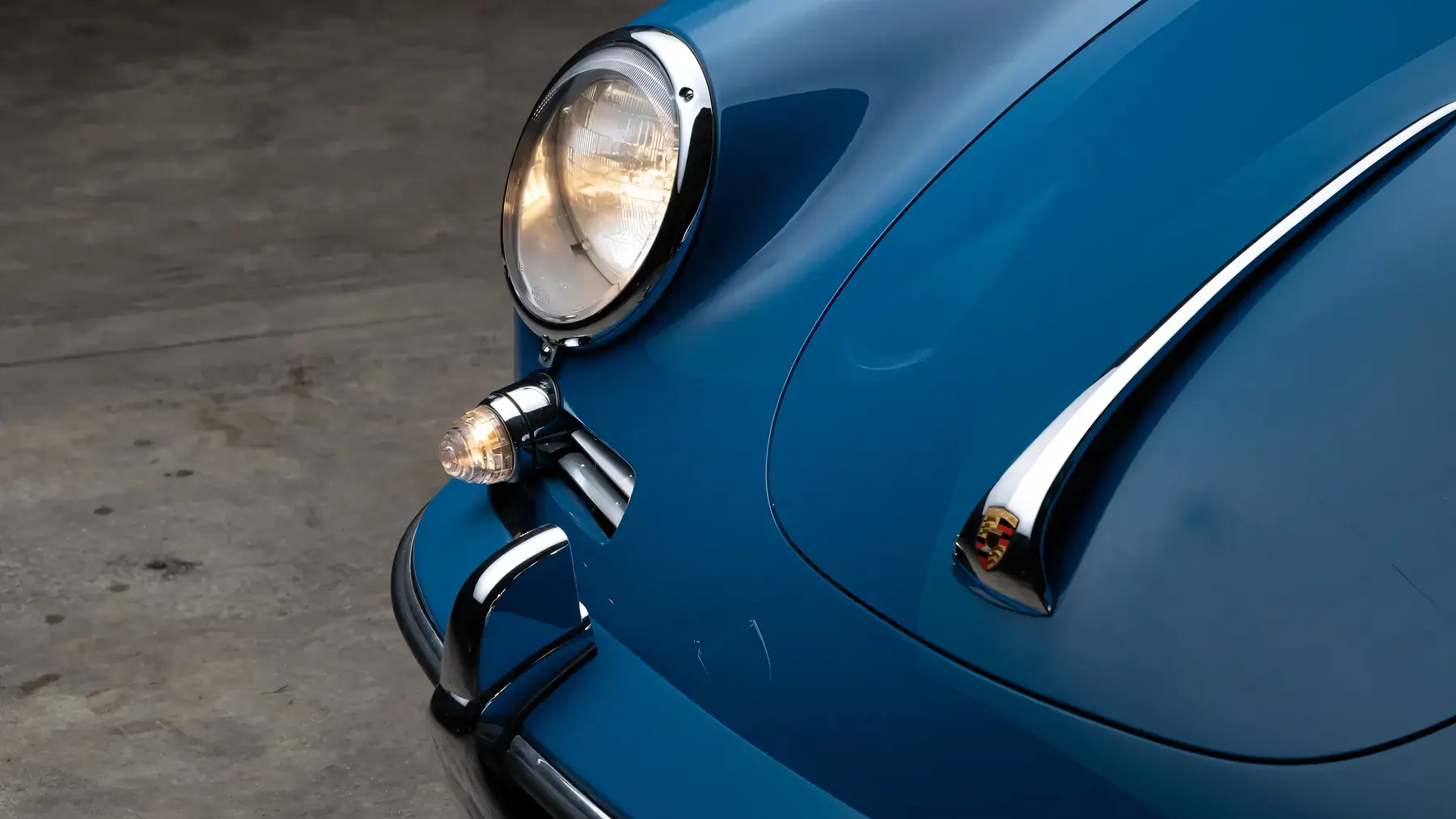
Then, in 1962, Porsche introduced the T-6 body. The changes were meaningful: a squared-off hood replacing the rounded nose of the T-5, a fuel filler repositioned to the right front fender, improved ventilation, and variable-speed wipers. For the closed cars, Drauz and Reutter handled production smoothly. But the Roadster presented a problem. Porsche’s assembly lines were already being configured for the incoming 356 C - a model that would not include a Roadster variant at all - and Drauz was stretched. So Porsche turned to D’Ieteren Frères, its Belgian distributor and coachbuilder, based in Brussels. The Belgians would complete the T-6 Roadsters: receiving platforms, building and painting the bodies, installing components, and shipping finished cars back out into the world.
The result was approximately 250 cars in total - some sources cite 248, others 249 - making the D’Ieteren Twin Grille Roadster one of the rarest production Porsches ever built. Of those, only a subset was fitted with the 1600 Super engine rather than the more potent Super 90, making the 1600 S cars a distinct minority within an already tiny population.
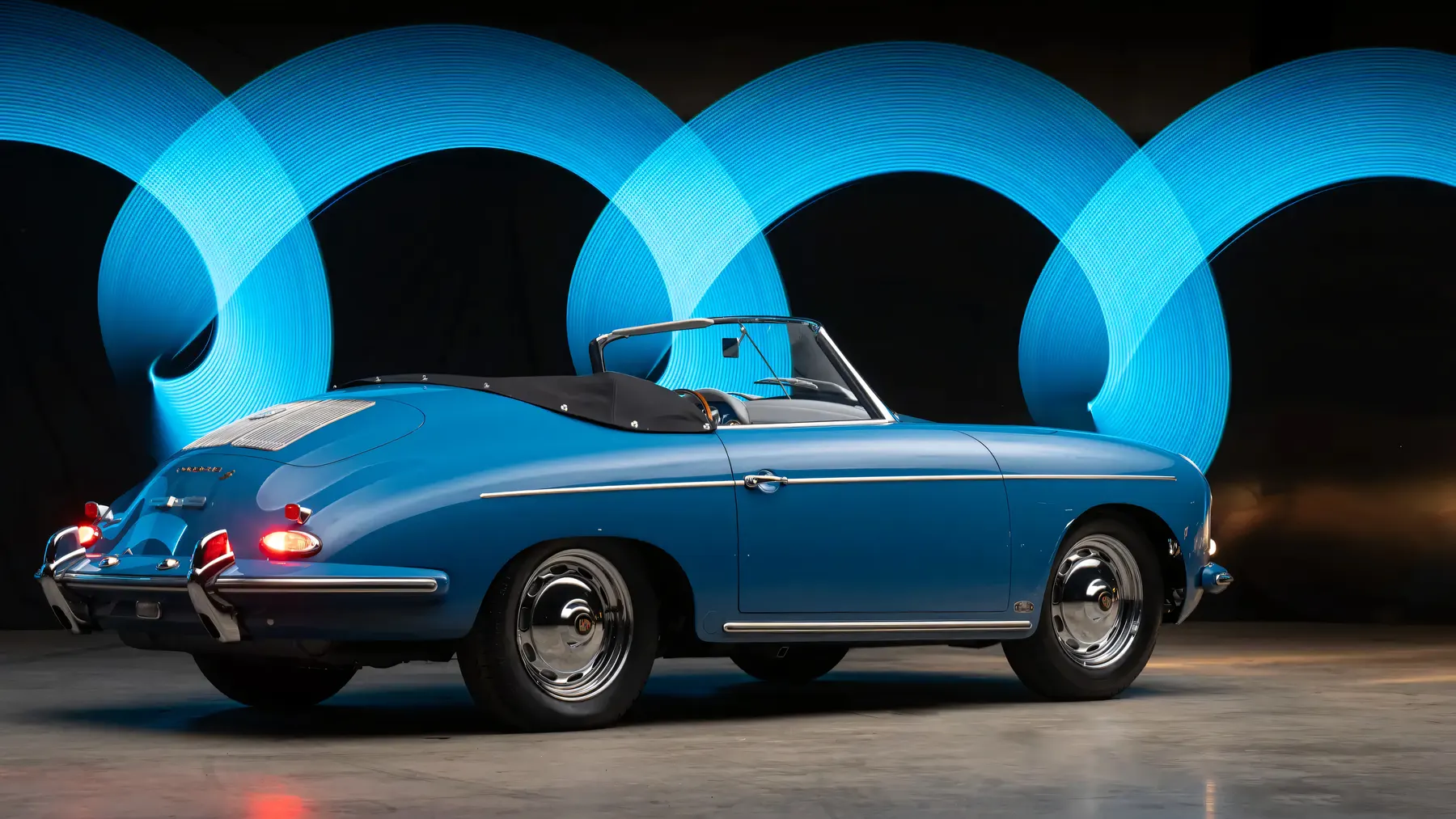
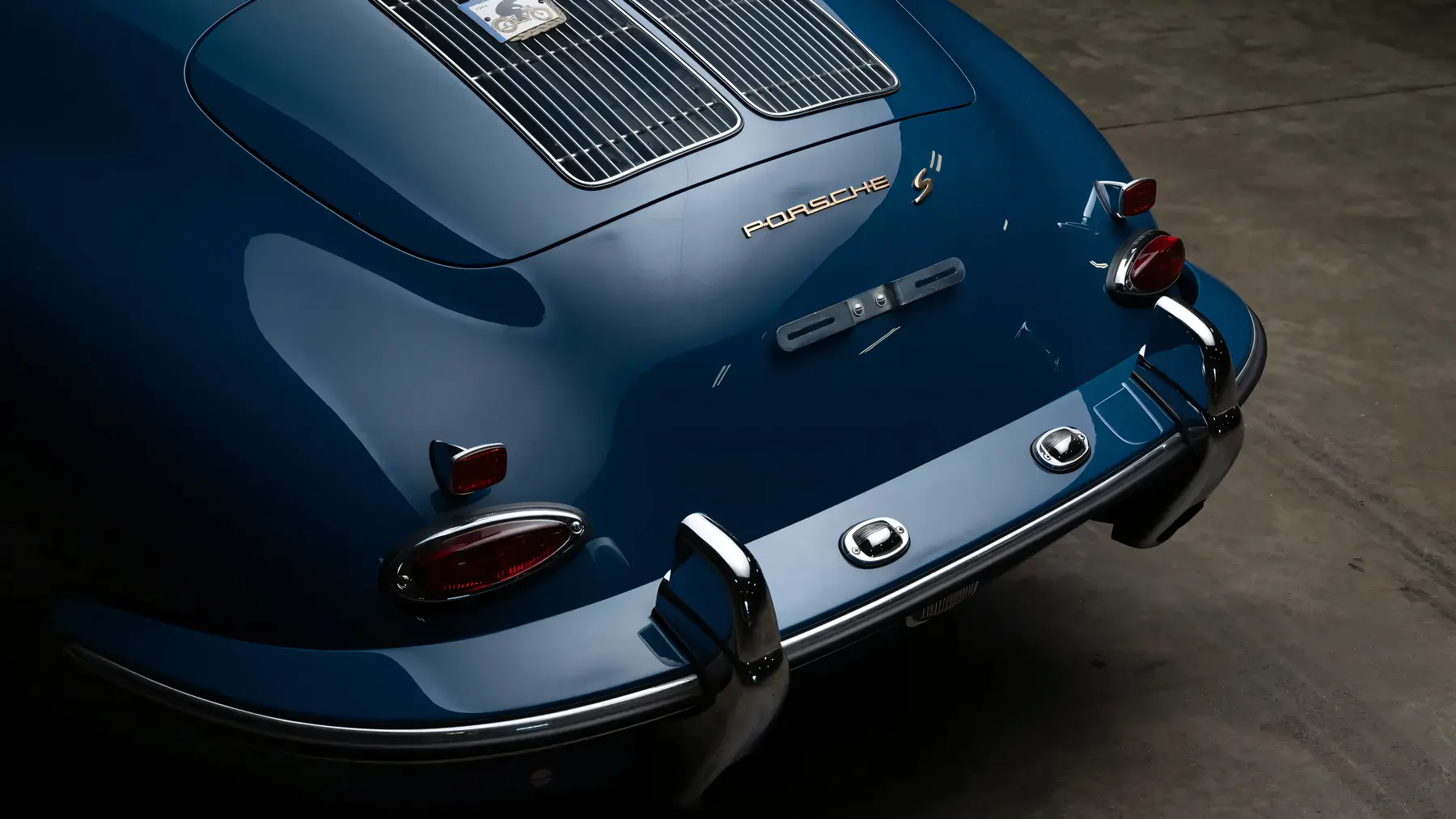
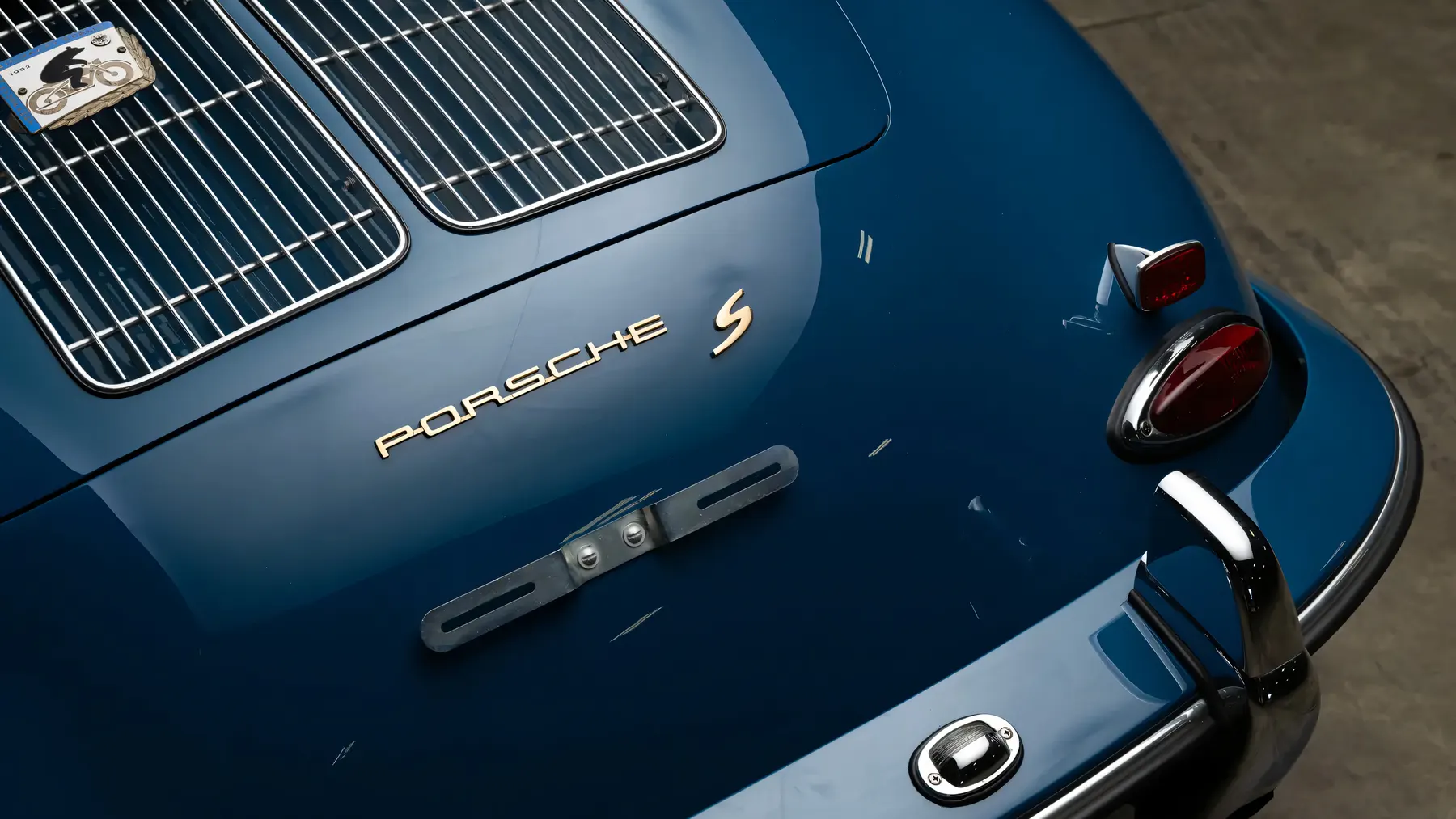
Identifying a T-6 D’Ieteren Roadster is straightforward for anyone who knows what to look for. The squared hood and the right-side fender fuel filler are T-6 hallmarks shared with all late 356 B models. But the giveaway - the detail that earned this car its informal name - is the engine lid. Where the Drauz-built Roadsters wore a single louvred grille, the D’Ieteren cars have twin ventilation grilles side by side, a subtly different solution that has become the model’s identifying signature. It is a small detail, but in the collector world it carries enormous weight.
The engine beneath those twin grilles, in the 1600 Super specification, is the Type 616/2 unit: a 1,582cc air-cooled flat-four breathing through two Zenith 32 NDIX carburettors, developing 75 bhp at 5,000 rpm and 85 lb-ft of torque at 3,700 rpm, with a compression ratio of 8.5:1. It shares its 82.5mm bore and 74mm stroke with its siblings, but the Super’s hotter cam profile and higher compression distinguish it clearly in character from the mild base 1600. The gearbox is a four-speed manual, driving the rear wheels through a layout that places both engine and gearbox behind the rear axle centreline - the configuration that gives all 356s their distinctive weight distribution and, in the hands of the unwary, their reputation for snap oversteer.
The kerb weight of a T-6 Roadster sits comfortably below 900 kg, which means 75 bhp feels genuinely adequate rather than apologetic. Top speed approaches 97 mph, and the character of the engine - mechanical, vocal, with that faintly industrial rasp that Porsche’s air-cooled units produce at the top of their rev range - rewards the driver who works it rather than loafs along in the wrong gear. The 356 in open form is not about outright performance in any modern sense. It is about momentum management: reading a road, carrying speed through corners on the chassis’s natural balance, feeling the steering - which is light, fast, and alive without power assistance - communicate the tarmac through your palms.
The rear-engine pendulum effect is real and worth acknowledging honestly. Push into a corner too hard and trail the brakes mid-arc and the tail will come around with a decisiveness that surprised more than a few 1960s drivers who expected something closer to a sports car’s neutral balance. Drum brakes at all four corners demand planning and a firm, progressive pedal. Neither of these things disqualifies the car - they are simply the physics of its configuration - but the Twin Grille Roadster is most rewarding when driven with discipline and smoothness rather than aggression.
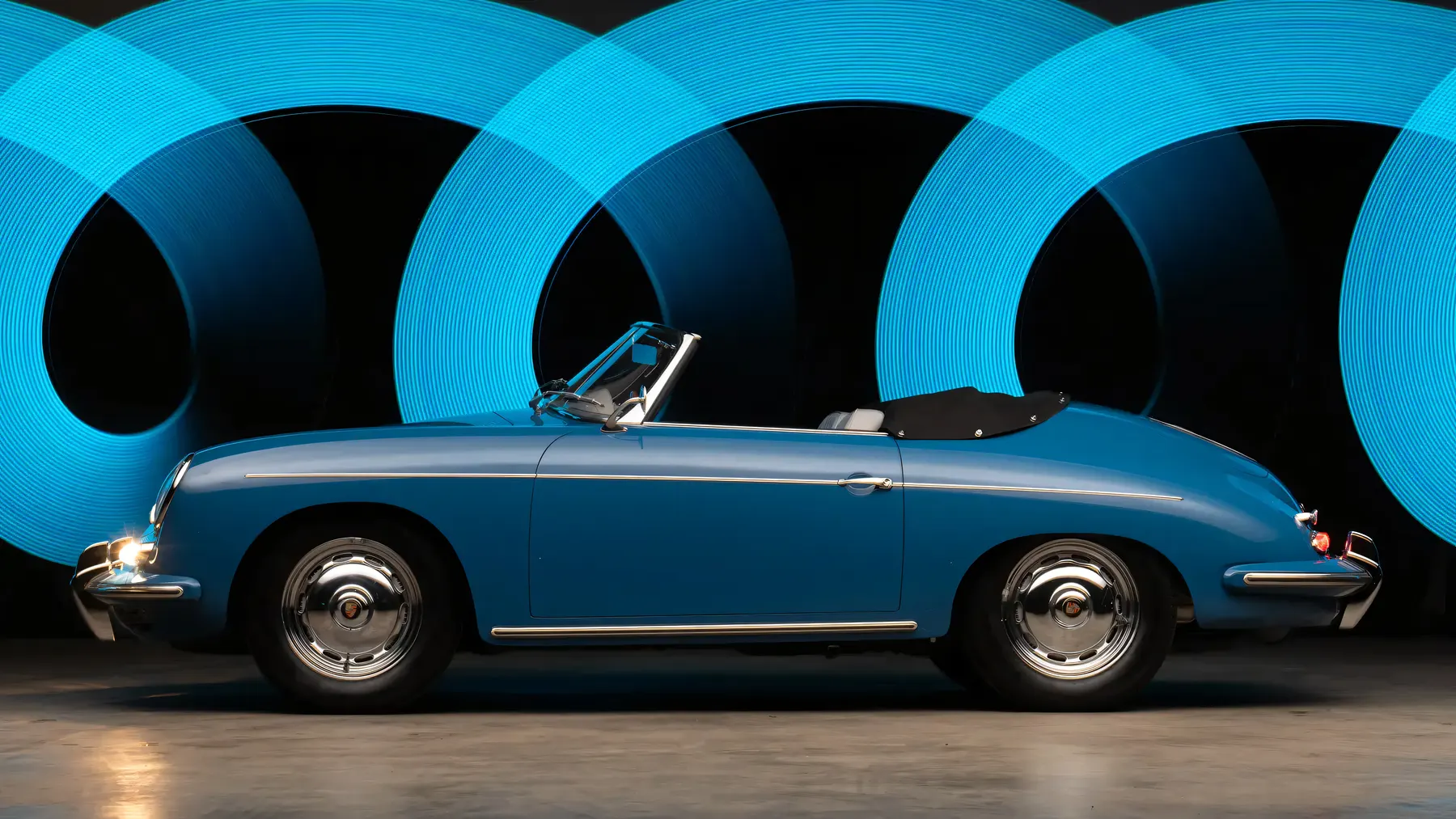
Where the car genuinely excels is in the open-air experience it provides. The Roadster’s hood, a proper-fitting item compared to the Speedster’s emergency blanket, means that a Twin Grille can actually be used in variable weather without the driver arriving soaked. Wind-up windows keep buffeting manageable at speed. The seats, adjustable in the T-6 specification, are snug rather than sporting, but the driving position - low, with the steering wheel angled toward you - creates an enveloping sense of involvement that taller cars never achieve.
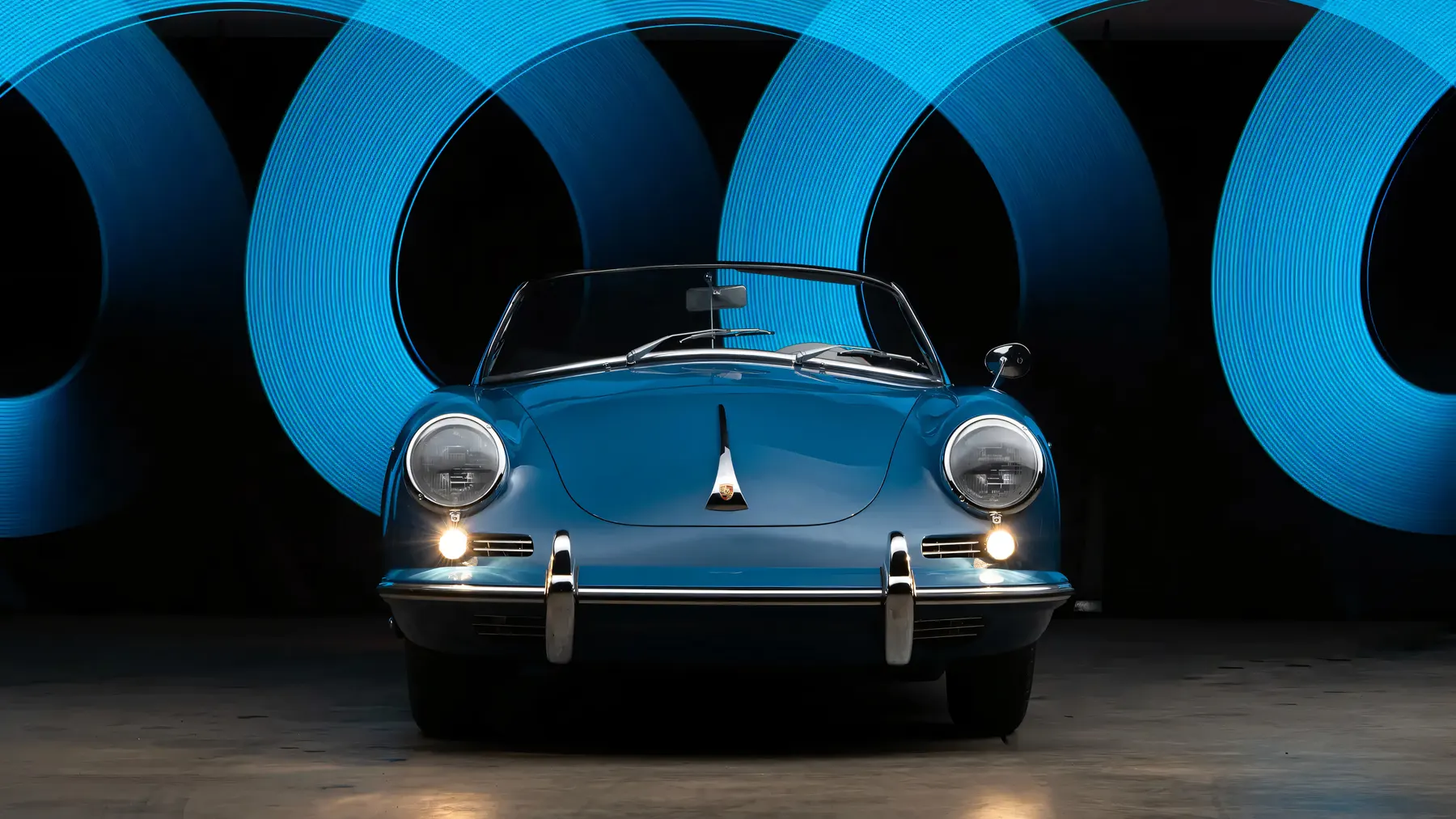
Finish was always a serious matter with these D’Ieteren cars. The Belgian shop had a reputation for careful paintwork, and examples that have survived in good condition testify to the quality of the original preparation. Osloblau - Oslo Blue - is one of those period Porsche colours that photograph beautifully but are even better in person: a cool, slightly greyed blue with depth, paired here with Grau interior trim for a combination that reads as understated and correct rather than showy.
The car’s California genesis is inseparable from its cultural context. John von Neumann’s Competition Motors, operating from Hollywood, was not just a dealership - it was the nerve centre through which Porsche entered American consciousness in the early 1950s. Von Neumann raced Porsches himself, distributed them across 144 West Coast dealerships, and cultivated a clientele that included Hollywood actors and serious amateur racers alike. A Twin Grille Roadster delivered through Competition Motors in the summer of 1962 was not a commodity transaction; it was an introduction into a community that defined what the sports car meant in postwar America.
The critical reception to the 356 in its final years was generally warm, with contemporary road testers noting the refinement of the T-6 models over earlier cars. What the press could not have known at the time was how the whole lineage would be reassessed once the 911 arrived and made everything before it look like prologue. That reframing, in retrospect, undersells the 356. It was not a rough sketch of the 911 - it was a complete, resolved design that happened to be followed by another complete, resolved design.
For the Twin Grille Roadster specifically, the collector market has reached its own verdict with considerable firmness. Examples with matching-numbers drivetrains - the original engine and gearbox bearing the correct stampings for the chassis - command significant premiums over those that have been rebuilt with replacement units. The logic is straightforward: these cars were never built in large numbers, almost none were kept as collector pieces at the time, and attrition across six decades has been relentless. A numbers-matching T-6 Roadster with documented Belgian coachwork and a traceable early delivery represents the convergence of rarity, authenticity, and historical provenance that the serious Porsche market consistently values most highly.
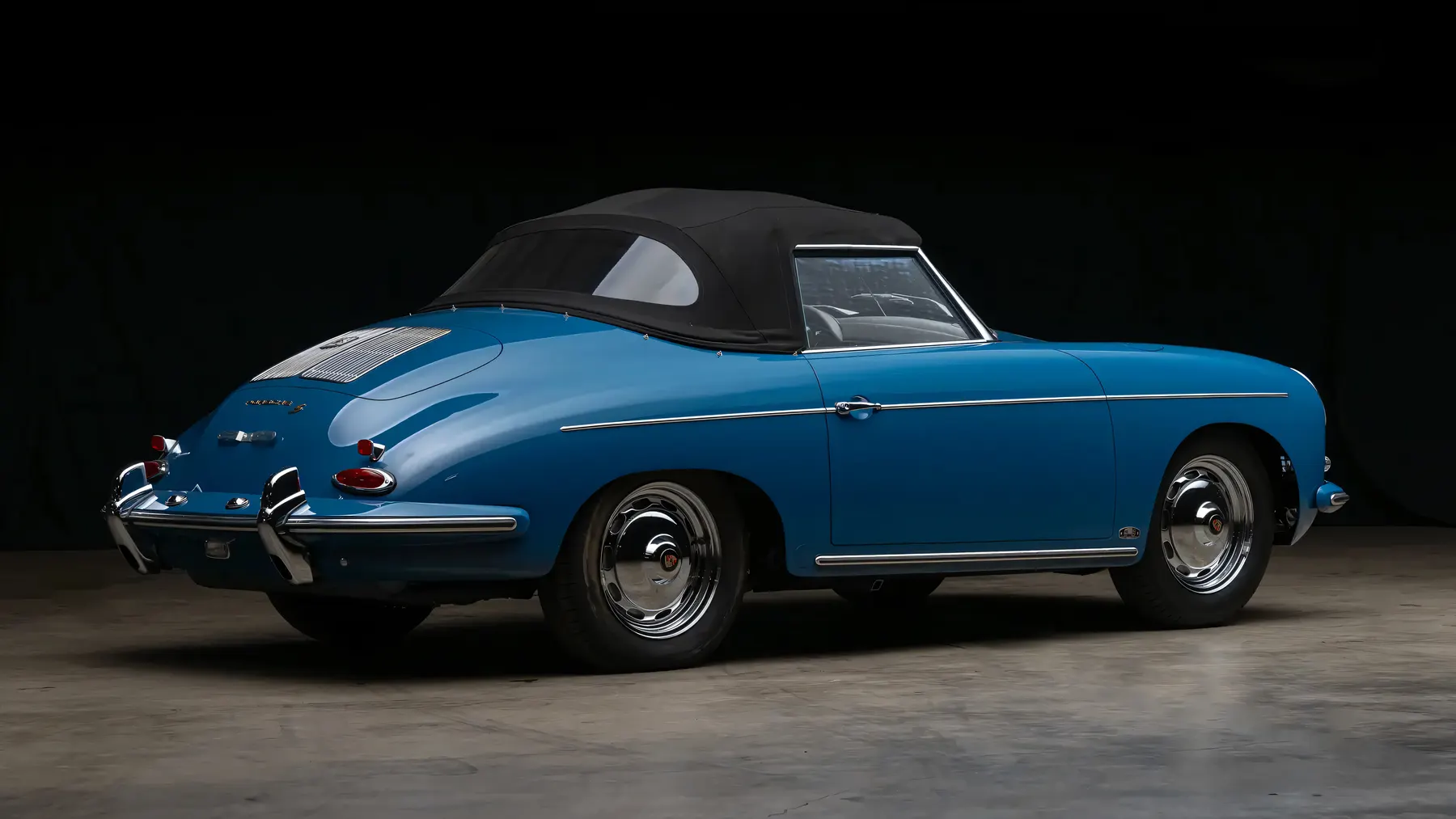
What the Twin Grille Roadster is not, and was never intended to be, is a racing machine or a particularly dramatic driving tool. It is a refined open touring car built at the precise moment that Porsche’s first generation was concluding its run - a car that carries more history in its twin grilles and Belgian bodywork than its modest displacement might suggest. The 356 C that replaced it had disc brakes and a cleaner body, but it had no Roadster, no open equivalent to this. When D’Ieteren closed its production run at roughly 250 cars, the chapter closed with them.
Join the discussion
Comments
Loading comments…
Leave a comment
Share a detail, memory, or perspective. Every comment is reviewed before publication.