1988 Lamborghini LM002
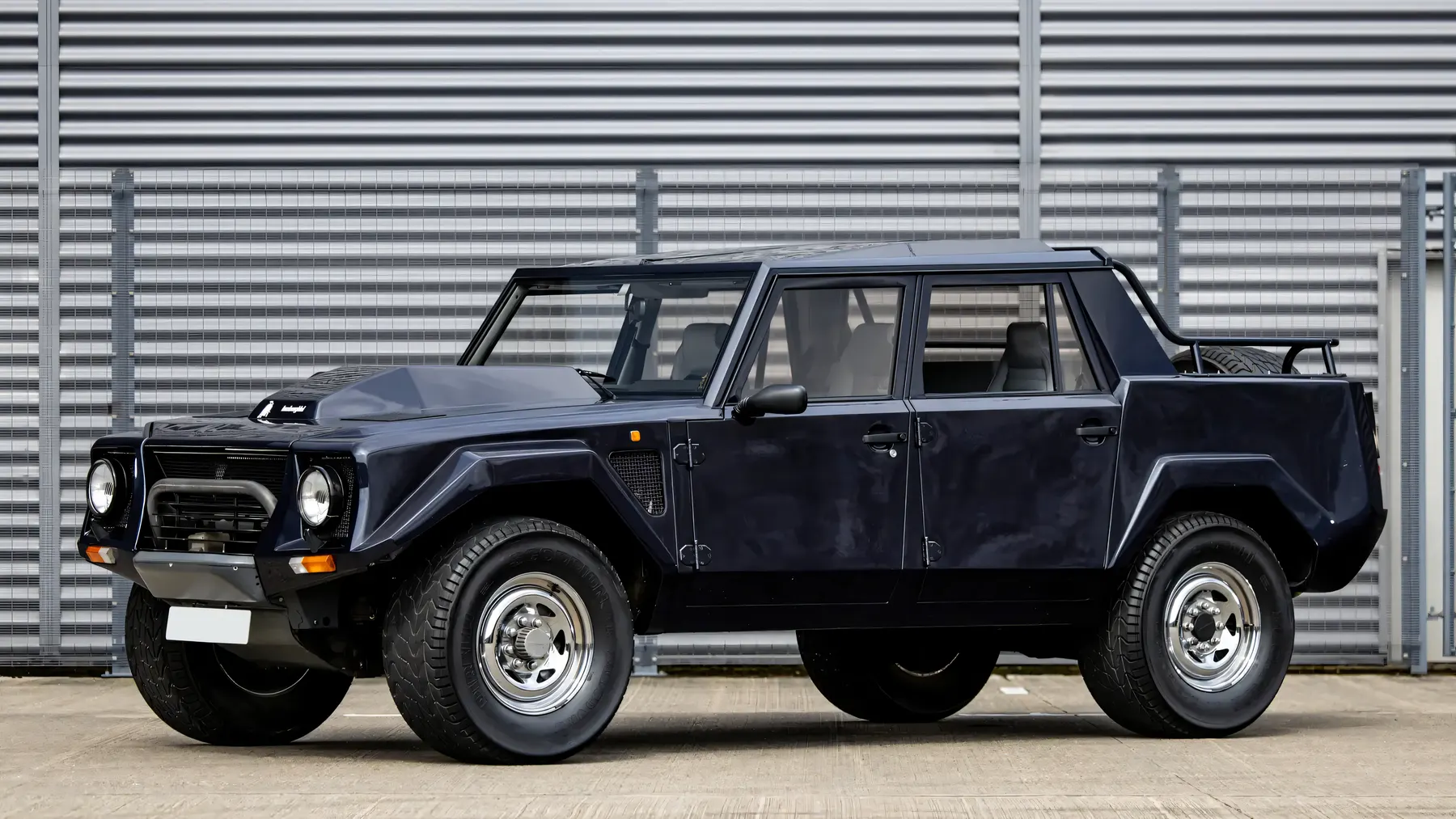
When Lamborghini’s engineers finally admitted that a rear-mounted engine was ruining everything, the solution they reached for was one of the most gloriously absurd in automotive history: lift the V12 out of the Countach and drop it nose-first into what was, by any honest reckoning, a military truck. That single decision - arrived at after two failed off-road prototypes and considerable embarrassment - gave the world the LM002, a machine so magnificently impractical and so defiantly over-engineered that nobody has quite managed to explain it away in the four decades since it first appeared.
The road to the LM002 was littered with false starts. Lamborghini’s first military vehicle, the Cheetah, arrived in 1977 wearing a rear-mounted Chrysler V8 and a set of ambitions aimed squarely at the oil exploration industry and the U.S. military. Neither bit. The follow-up LM001 swapped the Chrysler unit for an AMC V8 but kept the engine in the wrong place, producing handling characteristics that made serious off-road work deeply unpleasant. The rear-engined layout was simply incompatible with steep approach angles and unpredictable terrain - the physics were unkind, and no amount of Italian flair could disguise it. The breakthrough came with the LMA002, whose full designation - Lamborghini Mimran Anteriore - announced, right there in the acronym, that the engine had finally moved forward. That redesign required an entirely new tubular steel spaceframe, added roughly 500 kilograms to the kerb weight, and brought the Countach’s V12 into an off-road vehicle for the first time. Patrick Mimran, then just 26 years old and running Lamborghini with the kind of audacious confidence that only youth permits, promptly drove the prototype around the streets of Monaco during the 1982 Grand Prix. A military-spec prototype circulating the principality’s narrow streets during Formula 1 weekend was not subtle marketing. It was, however, extremely effective.
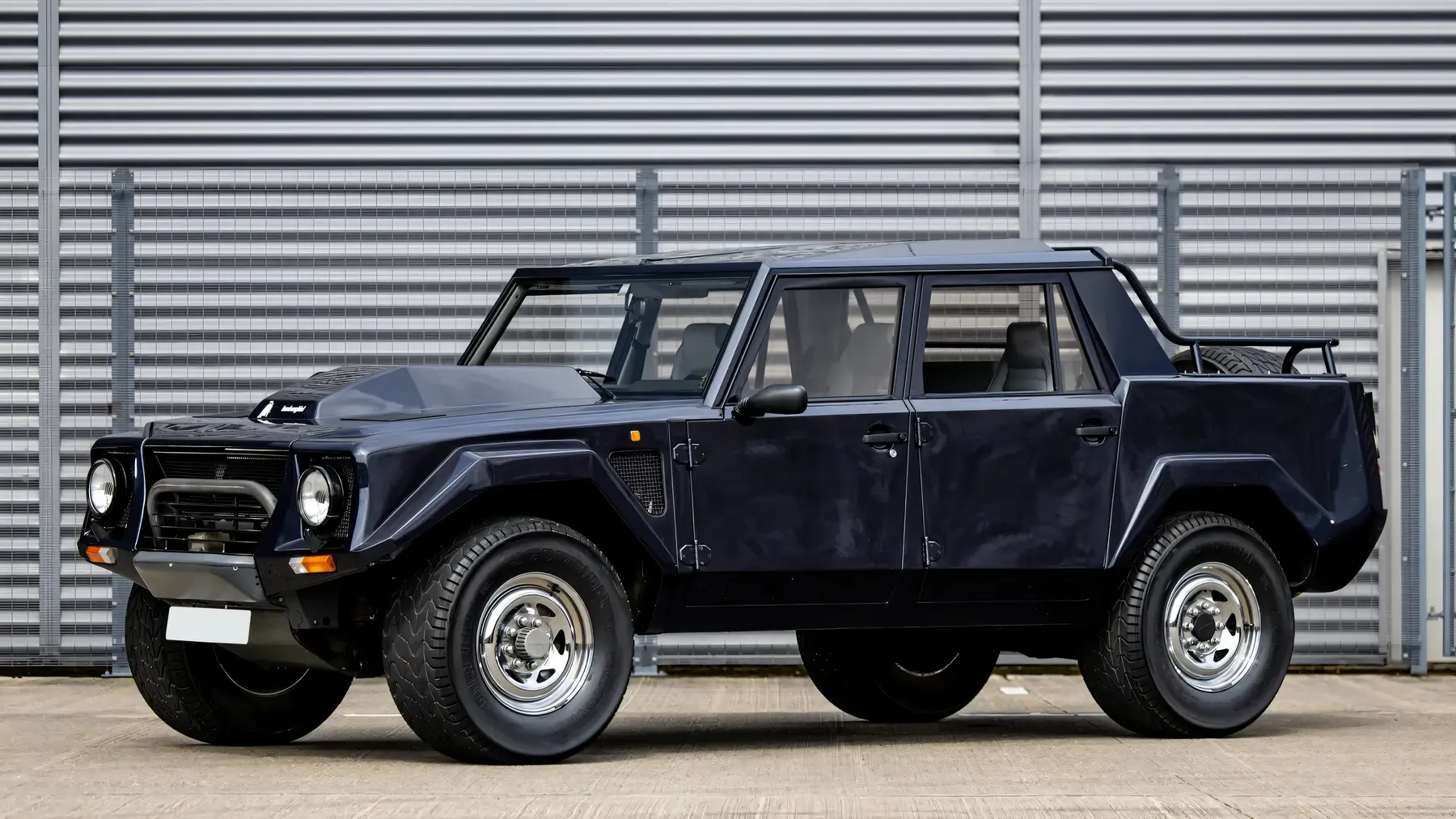
The production LM002 that debuted at the Brussels Motor Show in January 1986 was the result of years of further development, and it arrived wearing the “Rambo Lambo” nickname as though it had been tailored for it. Just over 300 examples would be built before production ended in 1993, a figure that seems simultaneously too few and too many - too few because Lamborghini apparently held orders for around 800 cars, too many because the laborious build process was quietly bleeding the company dry. Towards the end of the run came the LM/American, a special edition of sixty cars introduced at the 1992 Detroit Auto Show exclusively for the U.S. market, wearing OZ alloy wheels, chromed bumpers, and additional interior and badging embellishments that felt like Sant’Agata’s interpretation of American taste. It was a coherent final flourish, even if the purists preferred the earlier, cleaner specification.
For buyers who found the standard car insufficiently dramatic, Lamborghini offered a factory option that stops conversation at any gathering of automotive engineers: a 7.2-litre V12 derived from Class 1 offshore powerboat racing, displacing nearly a third more than the standard unit and producing torque figures that belonged in a different category of vehicle entirely. Almost nobody ordered it. The standard engine, after all, was already the 5.2-litre, 48-valve quad-cam unit from the Countach LP500S, fed through six dual-throat Weber carburettors and producing 444 brake horsepower in early production form - sufficient, as it turned out, to reach 62 mph in 7.8 seconds, which left contemporary Range Rovers looking positively agricultural by comparison. For those who wanted the LM002 to actually compete in the Paris-Dakar Rally, Lamborghini built two dedicated Evoluzione cars - one white, one orange - with upgraded suspension, a stripped-out cabin, full roll cage, plexiglass windows, and engine modifications pushing output to 600 PS. Funding for the programme evaporated before either car could contest the event officially, though ex-rally ace Sandro Munari did pilot one in the Rallye des Pharaons in Egypt and another in Greece, which at least proved the concept was not entirely theoretical.
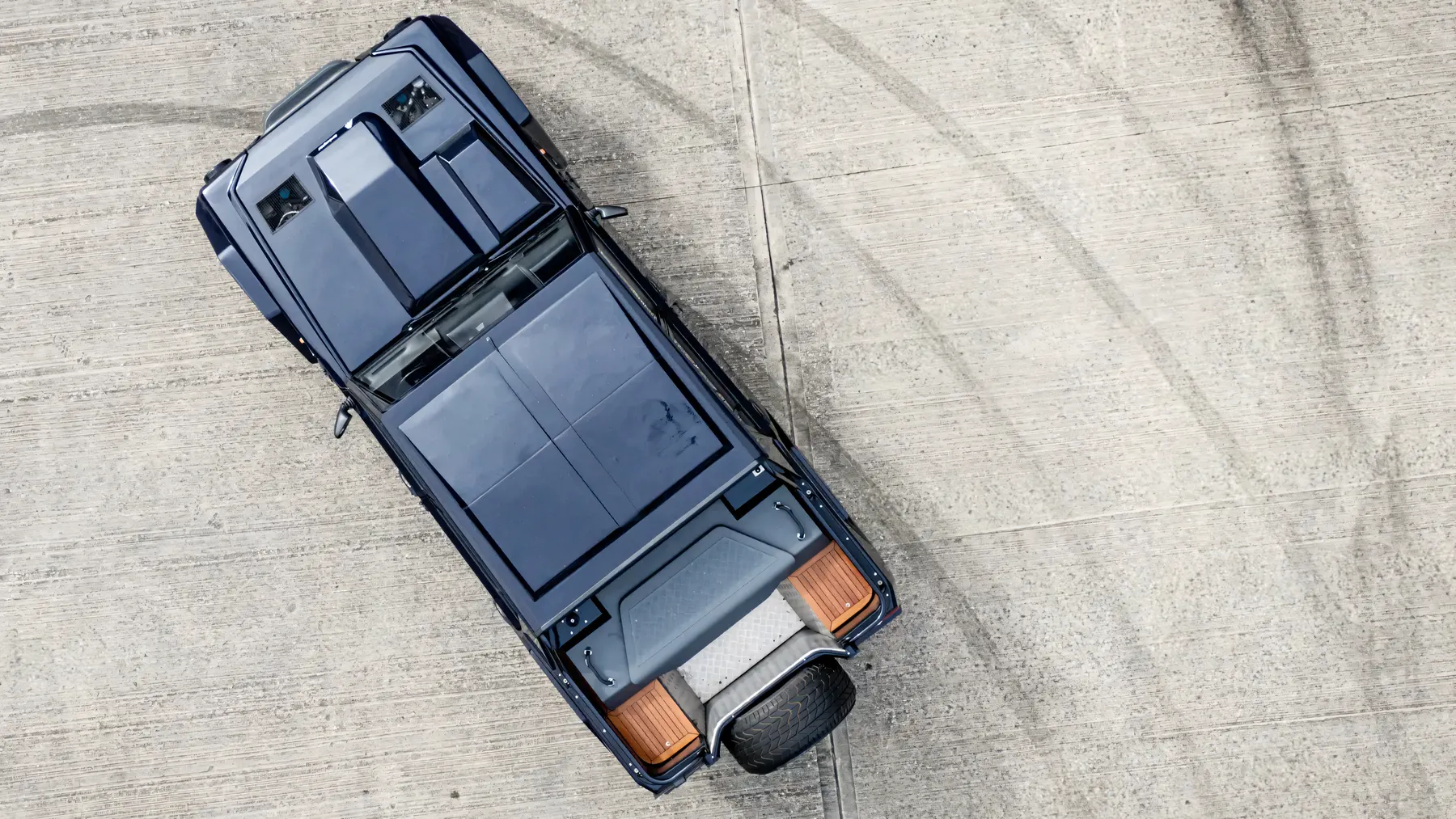
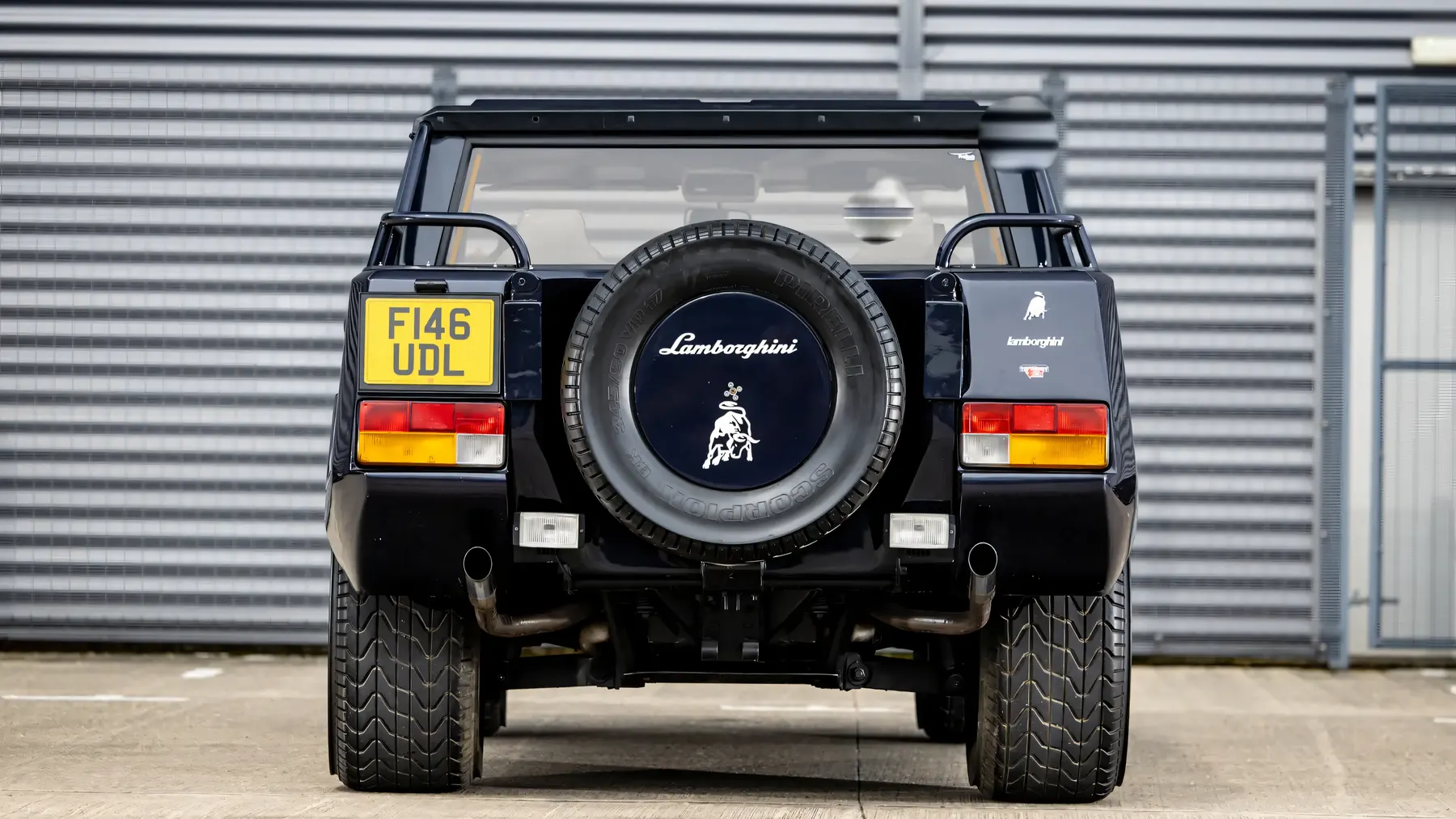
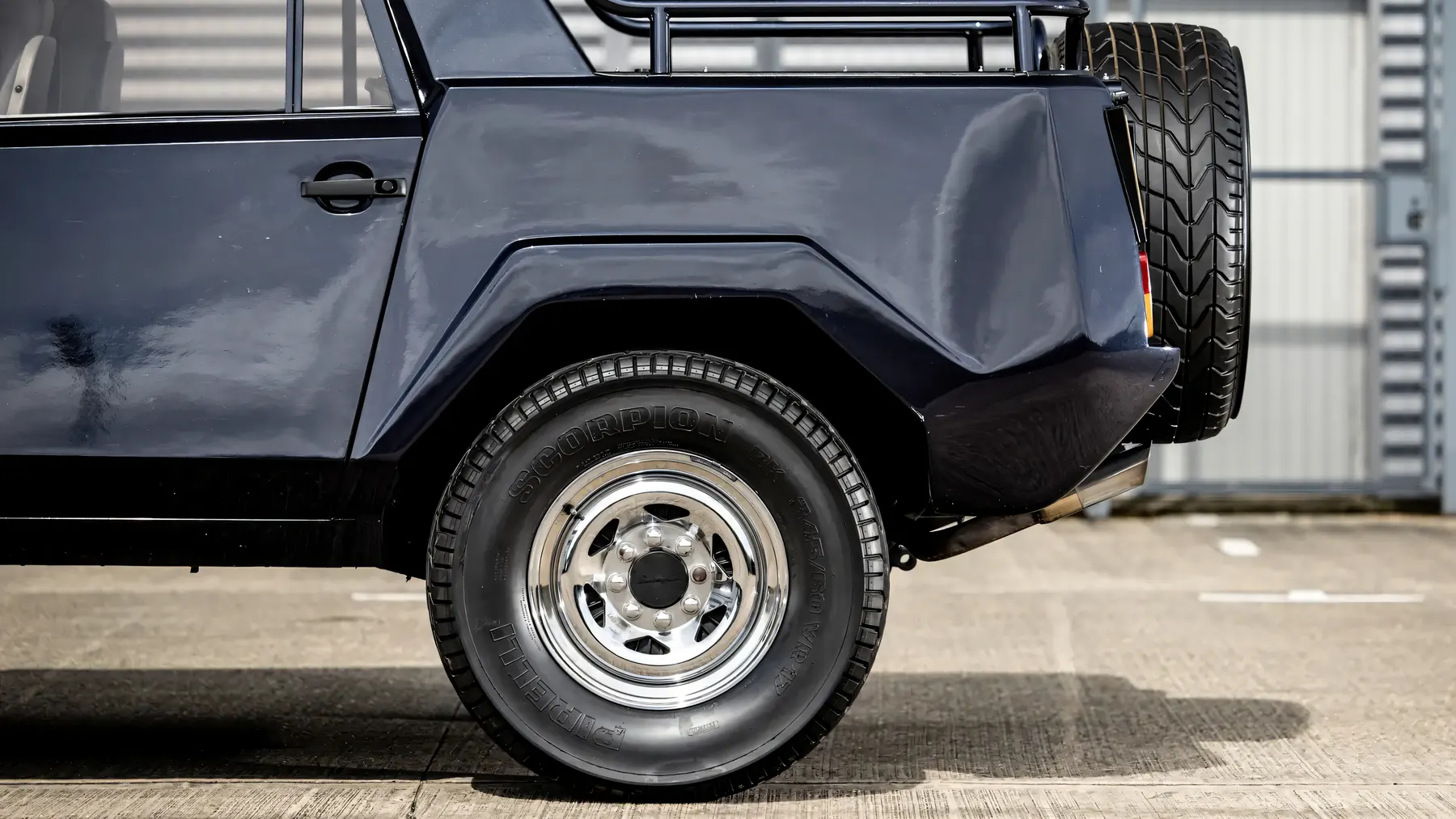
The engineering underneath the LM002’s blocky skin was genuinely sophisticated for something that arrived wearing the aesthetic of a military landing craft. Independent double-wishbone suspension at all four corners gave it a ride quality that surprised everyone who expected a truck-like battering. The five-speed ZF gearbox featured a dogleg first-gear pattern borrowed from racing practice, and the drivetrain included three self-locking differentials - the centre unit could be mechanically locked solid for the most demanding terrain. Pirelli had to develop entirely new tyres for the application, since nothing in production could cope with the LM002’s combination of laden weight, high speed, desert heat, and the need to run effectively when virtually flat. The result was the Scorpion, available in two tread designs - one for mixed use, one for sand - in a 345-millimetre width that was extraordinary even by today’s standards, and which could be driven essentially deflated without structural failure. The fuel tank held 169 litres, which sounds impressive until you start doing the arithmetic on what that V12 consumes under hard use.
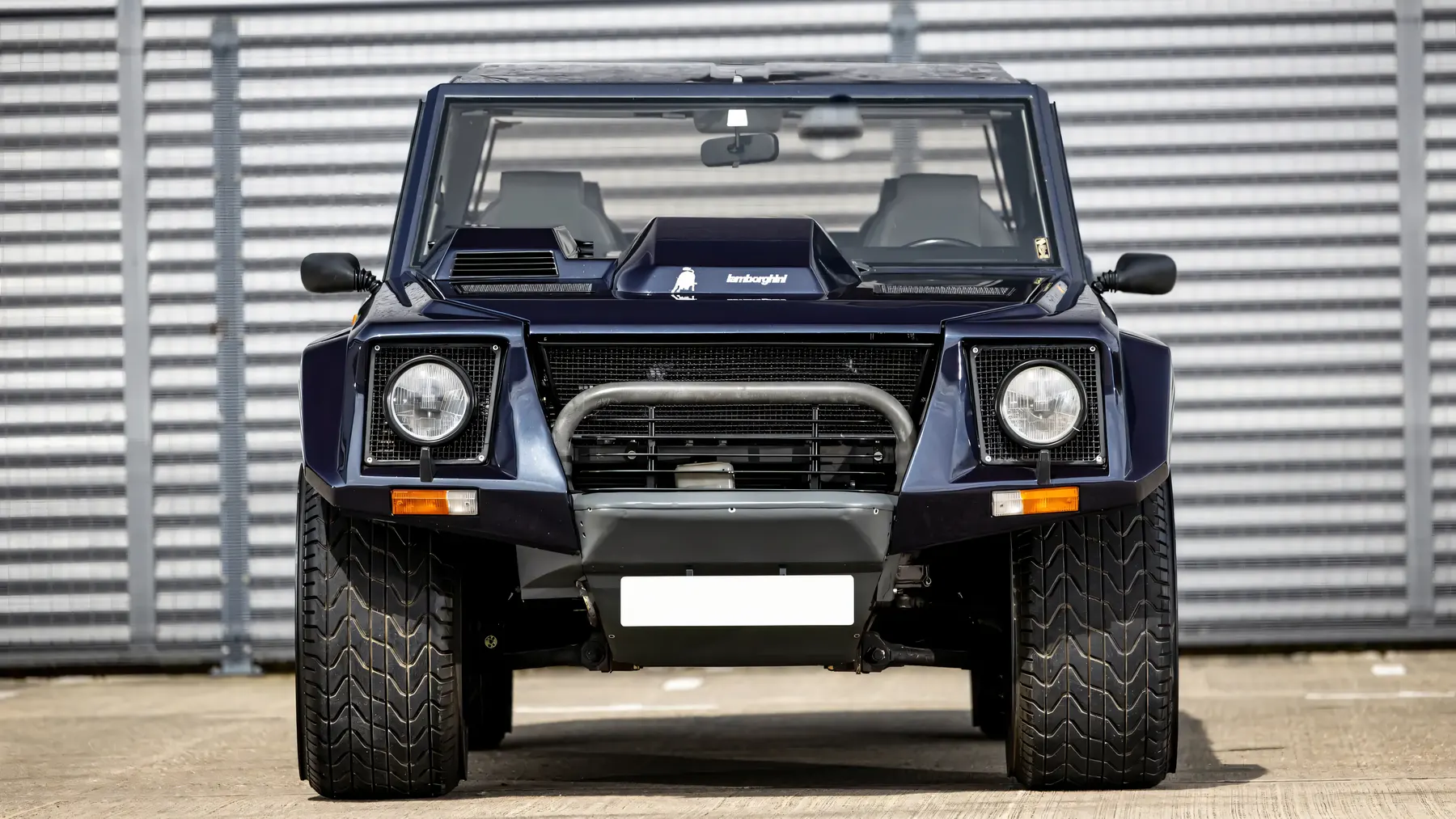
Aesthetically, the LM002 made no concessions whatsoever to contemporary automotive fashion, which was precisely what made it so compelling. The body panels were flat and angular, a direct consequence of the original military brief - every surface was designed to accept bolt-on armour plating, and the roof and doors could be removed entirely for open-air operations. The overall proportions were those of a shipping container that had been given wheels and a great deal of encouragement. Inside, however, the brief changed completely. Burled walnut met full leather trim, tinted power windows, air conditioning, and a premium stereo system mounted in a roof console - the kind of interior that would have been at home in a luxury saloon of the period, transplanted into something that could theoretically ford rivers. The tension between those two personalities - military instrument and luxury indulgence - was not a compromise so much as a deliberate positioning statement. This was a vehicle for people who wanted everything, including the contradiction.
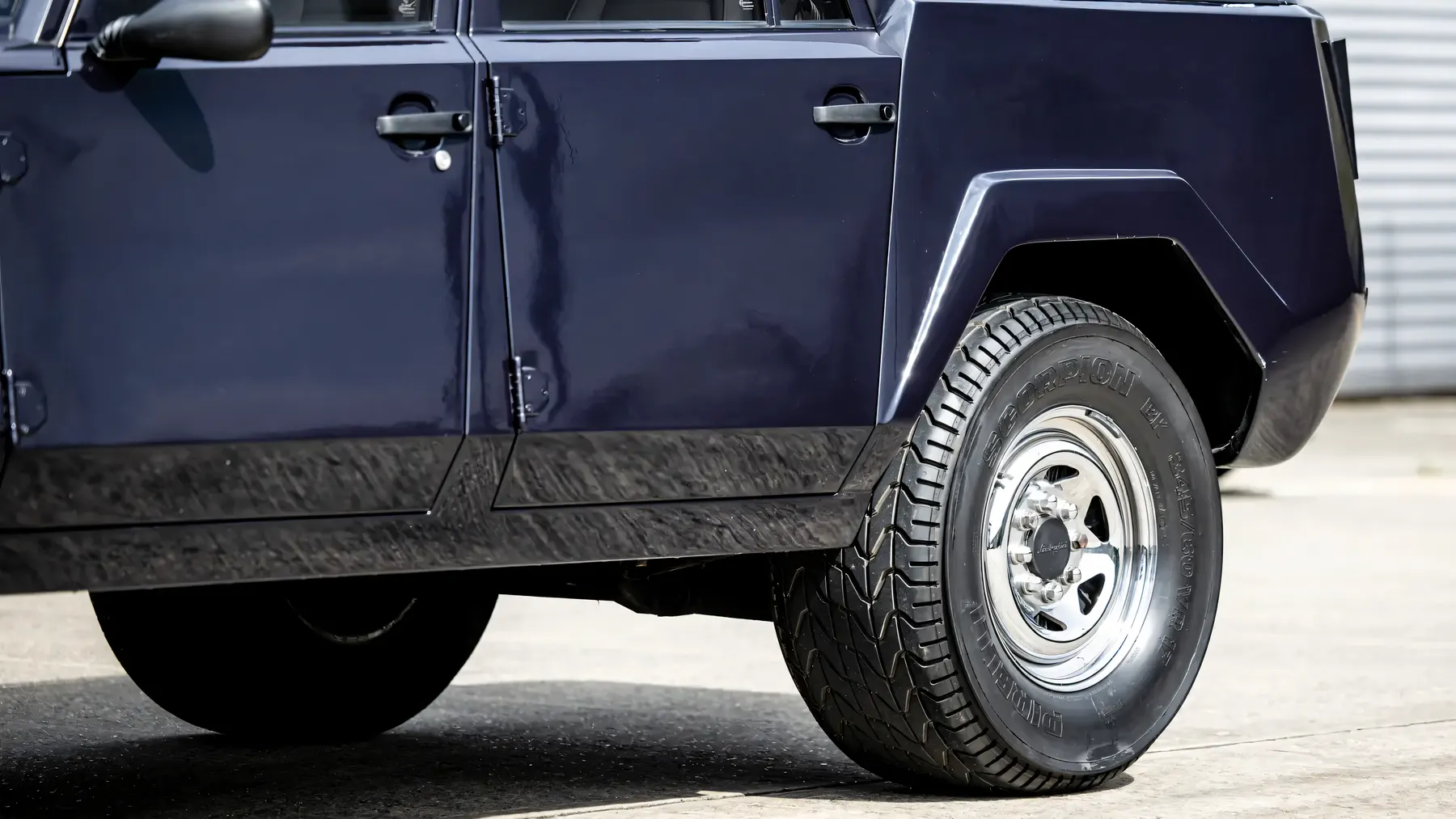
Driving the LM002 is an experience that resists easy summarisation. The first thing you notice is that the steering demands genuine physical commitment - those 345-millimetre Pirellis planted on the front axle weigh heavily on the power-assisted rack, and the wheel itself is small for the car’s proportions, requiring something approaching full-body effort in tight manoeuvres. The throttle operates in a manner that experienced LM002 drivers tend to describe as binary: you press it, nothing seems to happen, and then the V12 suddenly remembers its Countach origins and the revs climb at a rate that is, for a vehicle of this mass, genuinely startling. Braking requires similar commitment - you have to mean it, pressing with real conviction before any serious retardation begins. Car and Driver, testing an early example, recorded 70-to-0-mph stops in just over 200 feet, which they noted was substantially shorter than many contemporary road cars with considerably less weight to arrest.
On twisting mountain roads the LM002 surprises constantly. It corners notably flatter than you’d expect, the independent suspension doing quiet, diligent work that the exterior gives no hint of. There’s a deliberate quality to the responses - a pause between input and reaction that keeps you honest - but the overall accuracy is far better than the size and weight suggest it has any right to be. Off-road, it is simply in a different class. At speed over severe terrain, the suspension absorbs impacts with a suppleness that Car and Driver described as reminiscent of a sprinting tiger, and the combination of locked differentials and the V12’s torque makes genuinely steep, loose inclines feel almost casual. The high-profile Scorpion tyres spread the load on sand or snow in a way that nothing else of the period could match, and the approach and departure angles - a direct benefit of that flat, no-nonsense exterior - are genuinely impressive.
The ergonomic flaws, however, deserve honest documentation. The dogleg gearshift requires an awkward reach from the driver’s seat. The steering wheel’s position obscures the ignition switch. The windscreen wipers clear only half the driver’s forward field of vision - an oversight that would be unacceptable in a city car and borders on baffling in something that might be driven through a sandstorm. Rear legroom is, absurdly, tight, in a vehicle that appears large enough to park a supermini inside it. The right leg is cooked by the transmission tunnel on longer runs. The cabin reeks of petrol in a way that is either endearing or intolerable depending entirely on your constitution. These are not the quibbles of an overcritical reviewer - they are real frictions that accumulate over any serious drive. What redeems them entirely is the fact that the LM002 makes you feel so outrageously alive that none of it registers until you stop.
Its cultural footprint proved unexpectedly broad for something that sold in such small numbers. Keke Rosberg, Tina Turner, and Sylvester Stallone all owned examples - Stallone’s association gave the Rambo nickname its most obvious celebrity anchor, though the car hardly needed the reinforcement. Royalty bought them. Arms dealers reportedly bought them. Uday Hussein owned one, and the United States military detonated it in 2004 during an ostensible car-bomb test, which is perhaps the most uniquely ignominious end in automotive history. When Bashar al-Assad’s Presidential Palace in Damascus was opened after the fall of his regime, footage emerged of a red LM002 sitting among his collection alongside a Ferrari F40, a pairing that summarised the car’s peculiar ability to occupy the same space as the world’s most desirable road cars while remaining, undeniably, something entirely different. Turin coachbuilder Salvatore Diomante produced a one-off estate conversion for the Sultan of Brunei - enclosing the load bay and raising the roofline - which exists as a kind of apocryphal footnote, confirming that even by the standards of LM002 excess, there was still further to go.
Critical reception in period was complicated in the way that reception to genuinely novel things usually is. Journalists who applied ordinary car-test methodology found a machine that was heavy, thirsty, awkward to park, and expensive to maintain. Those who engaged with it on its own terms - as a supercar engine in a serious four-wheel-drive chassis, wrapped in luxury and pointed at any terrain its owner could contrive - found something that had no direct competition and no obvious precedent. Car and Driver concluded their test by calling it the best off-road machine they had ever encountered. Top Gear, testing one decades later, described the steering and braking as “comedically ineffective” while simultaneously communicating that the experience was unmissable. Both assessments are correct, which tells you more about the LM002 than either one alone.
What is easy to forget now, in the age of the Urus and every other 600-horsepower luxury SUV, is that the LM002 arrived before the genre existed. The Range Rover was its nearest cultural neighbour in 1986, and the LM002 outran it by nearly three seconds to sixty miles per hour. It predated the Porsche Cayenne by seventeen years and the Lamborghini Urus by three decades, and it did so without a template, without a market category, and without the slightest concession to the idea that a vehicle built for the desert needed to be easy to live with. It was ridiculous, it was brilliant, it consumed fuel at rates that seemed designed to destabilise oil markets, and it asked every driver who sat behind that leather-trimmed wheel to meet it at its own level. Most of them, by every account, were grateful for the demand.
Related Notes
- The 1980s Supercar era
- Italian Coachbuilding Houses
- 1989 Ferrari F40
- 1986 Ferrari Testarossa
- 1985 Ferrari 288 GTO
- Newport Pagnell Factory and Hand-Assembly Tradition
- Modern Materials Carbon Fiber and Aluminum