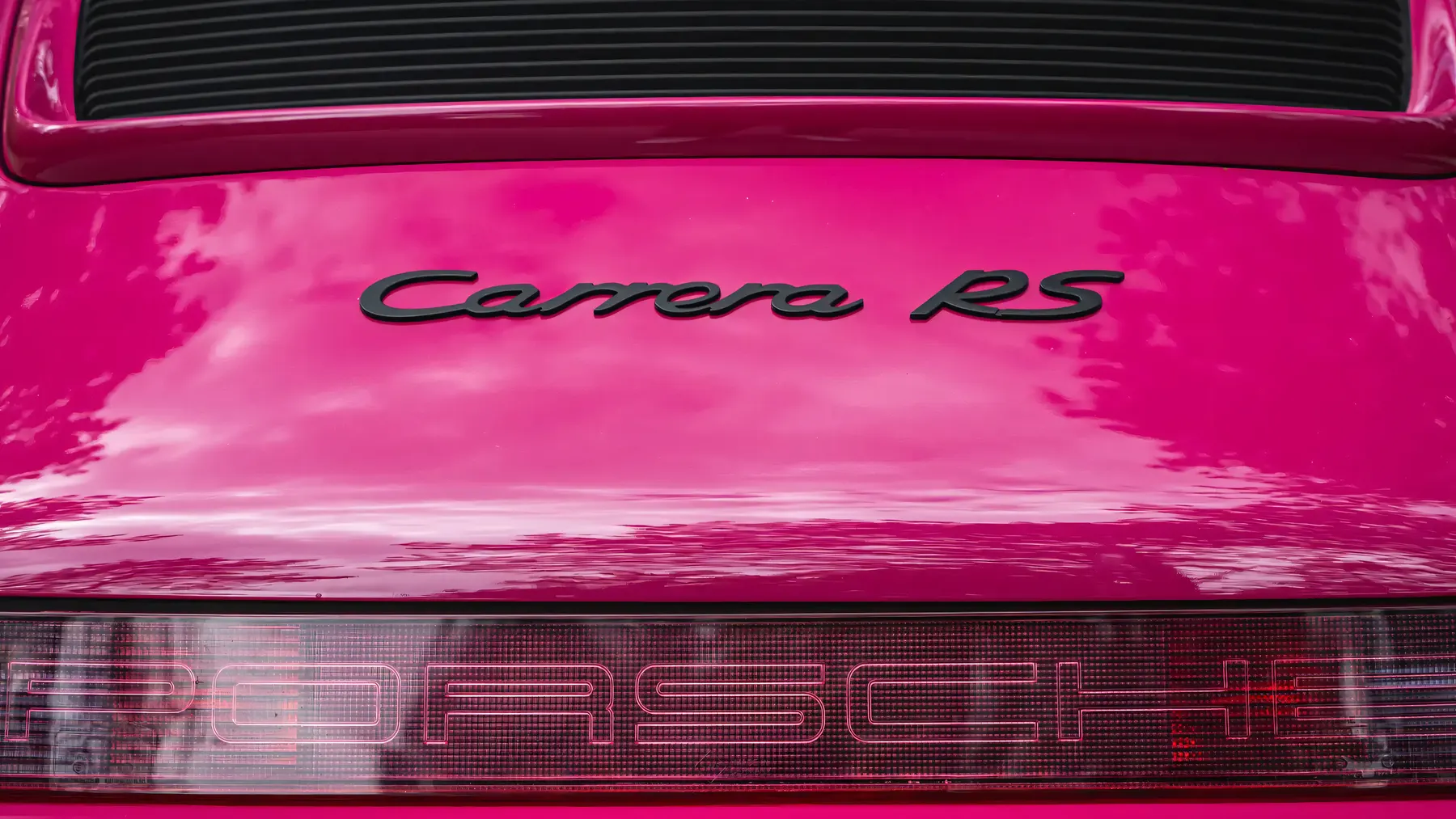
1992 Porsche 911 Carrera RS
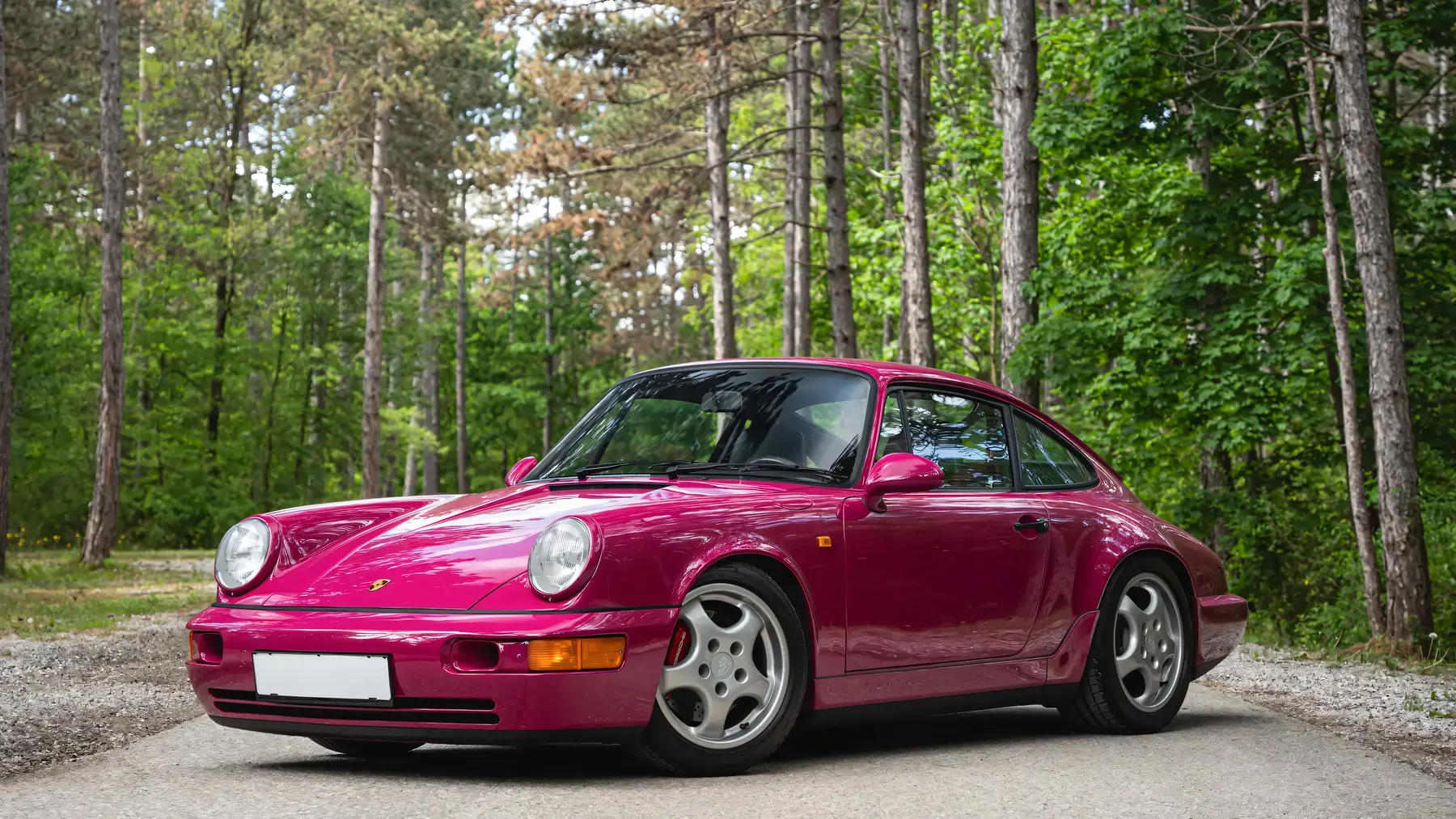
When Porsche’s engineers sat down in the late 1980s to reimagine what a pure driver’s 911 could be, they didn’t reach for more power. They reached for a bin liner. The 964 Carrera RS is, at its core, a deletion exercise - a car defined not by what was added, but by what was ruthlessly stripped away. And in doing so, Porsche accidentally created one of the most honest, unfiltered expressions of the rear-engined sports car formula ever made.
The 964 generation itself arrived in 1989 as a deeply revised 911, with Porsche claiming 85 per cent of the car was new compared to its Carrera 3.2 predecessor. Coil springs replaced the torsion bars that had defined 911 suspension for a quarter-century, a new 3,600-cc flat-six engine replaced the older unit, and the body gained smoother bumpers, a retractable rear spoiler, and revised aerodynamics. It was a more modern, more comfortable, more accessible 911 - and for the road-going Carrera 2 and Carrera 4 buyers it was aimed at, that was entirely appropriate. But Porsche had a problem. It needed a homologation car to qualify a lighter, faster 911 for the N/GT racing class, and the rules demanded a production run of at least 1,000 units to satisfy the requirement. The road car that emerged from that obligation became something far more significant than a regulatory checkbox.
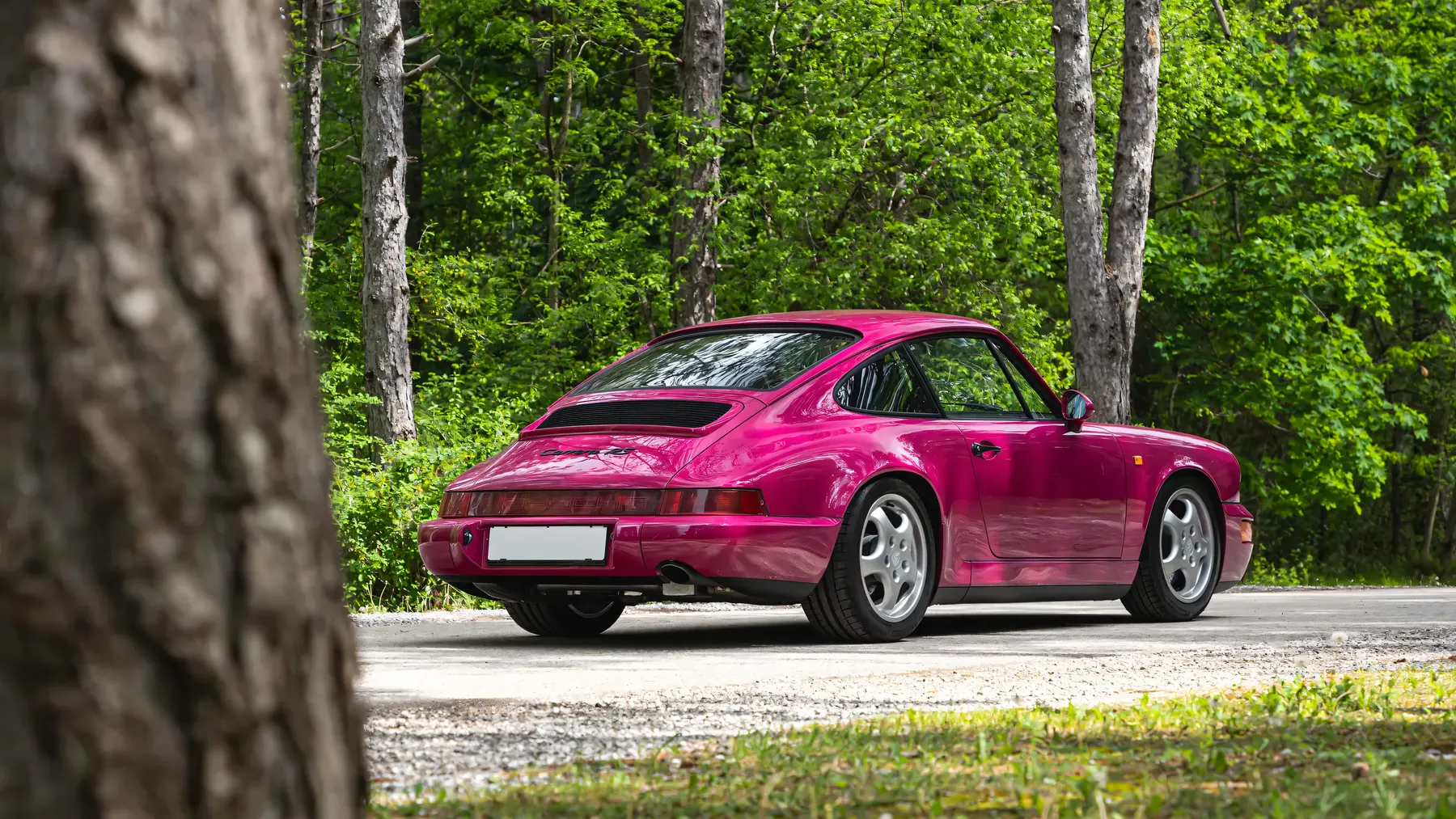
The Carrera RS debuted in 1992 and came in two main road-going flavours: the standard RS with its full-weight M001 specification, and the stripped-out Sport (M002) that is the version most enthusiasts picture when they close their eyes. There was also the RS America, a North American market variant that arrived for the 1993 and 1994 model years using the M64/01 engine rather than the RS-specific M64/03 unit, making it less pure from an engineering standpoint but critical for bringing the RS experience to a market that would otherwise have been left out. At the sharp end sat the RS/RSR 3.8, a barely disguised race car of which just 55 examples were built, motivated by the enlarged 3,746-cc M64/04 engine producing 300 bhp at 6,500 rpm and 265 lb-ft of torque, with a compression ratio raised to 11.6:1 - a car that makes the already-focused 3.6 feel almost civilised by comparison.
The heart of the standard 964 Carrera RS is the M64/03, a carefully hand-assembled evolution of the flat-six shared with the Carrera 2. Bore and stroke measured 100 mm × 76.4 mm, displacement sat at 3,600 cc, and compression ran at 11.3:1. Peak power was 260 bhp at 6,100 rpm with 240 lb-ft of torque arriving at 4,800 rpm - modest gains over the standard Carrera 2’s outputs, but achieved through genuine engineering rigour rather than easy tuning tricks. Pistons and cylinders were carefully matched, rubber engine mounts replaced hydraulic units to improve mechanical feel, and the flywheel was lightened to sharpen throttle response. The transmission was the G50/10, a five-speed manual with revised first and second gear ratios, a short-throw shift lever, and steel synchromesh in place of the standard car’s softer items - tangibly more purposeful under the hand, with the kind of mechanical directness that modern dual-clutch systems can replicate in speed but never quite in sensation.
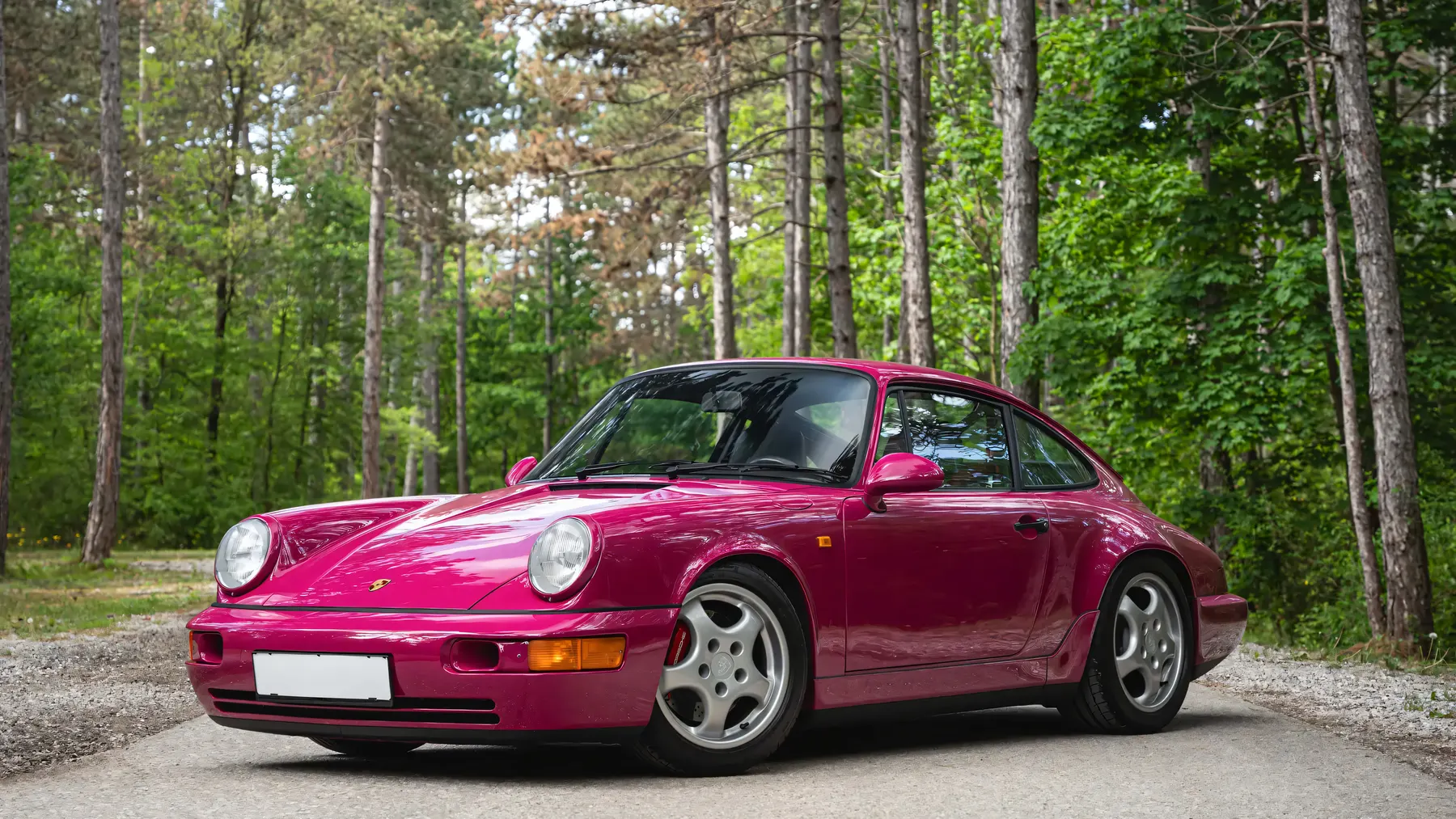
The chassis modifications were equally deliberate. Ride height dropped 40 mm versus the standard Carrera 2, springs and dampers were stiffened, and the stabiliser bars made adjustable. Power steering was deleted on left-hand drive cars, a decision that may have initially read as cost-cutting but proved to be a masterstroke of feel - the unassisted steering gives a directness and weighting that the standard 964’s system blunts. Turbo-specification brakes provided the stopping power, and the asymmetrical limited-slip differential allowed adjustable torque bias across the rear axle - critical for a car that would be driven in anger. Kerb weight for the Sport specification came in at around 1,195 kg, and the standard RS sat at approximately 1,230 kg. At a time when rivals like the Ferrari 348 and Honda NSX were adding weight and complexity in pursuit of refinement, Porsche was going in the opposite direction.
Aesthetically, the 964 RS reads the same language as every great RS Porsche - it communicates intent without ostentation. The ducktail rear spoiler, borrowed and slightly evolved from the legendary 1973 2.7 RS that inspired the whole lineage, sits fixed and purposeful where the standard 964’s spoiler rises and retreats automatically. It is a small but symbolically important distinction: the standard car deploys its spoiler when the computer decides you need downforce; the RS car assumes you always want it. The 425 mm body length and 1,650 mm width are unchanged from the donor car, but the dropped ride height and those wider Cup wheels - 7.5J × 17 inch fronts and 9J × 17 inch rears wrapped in 205 mm and 255 mm rubber respectively - give it a planted, muscular stance that the standard 964 lacks. Available colours ranged from the subdued to the theatrical, with Rubystone Red and Maritime Blue among the more vivid choices, though Grand Prix White remained the purest expression of the RS ethos.
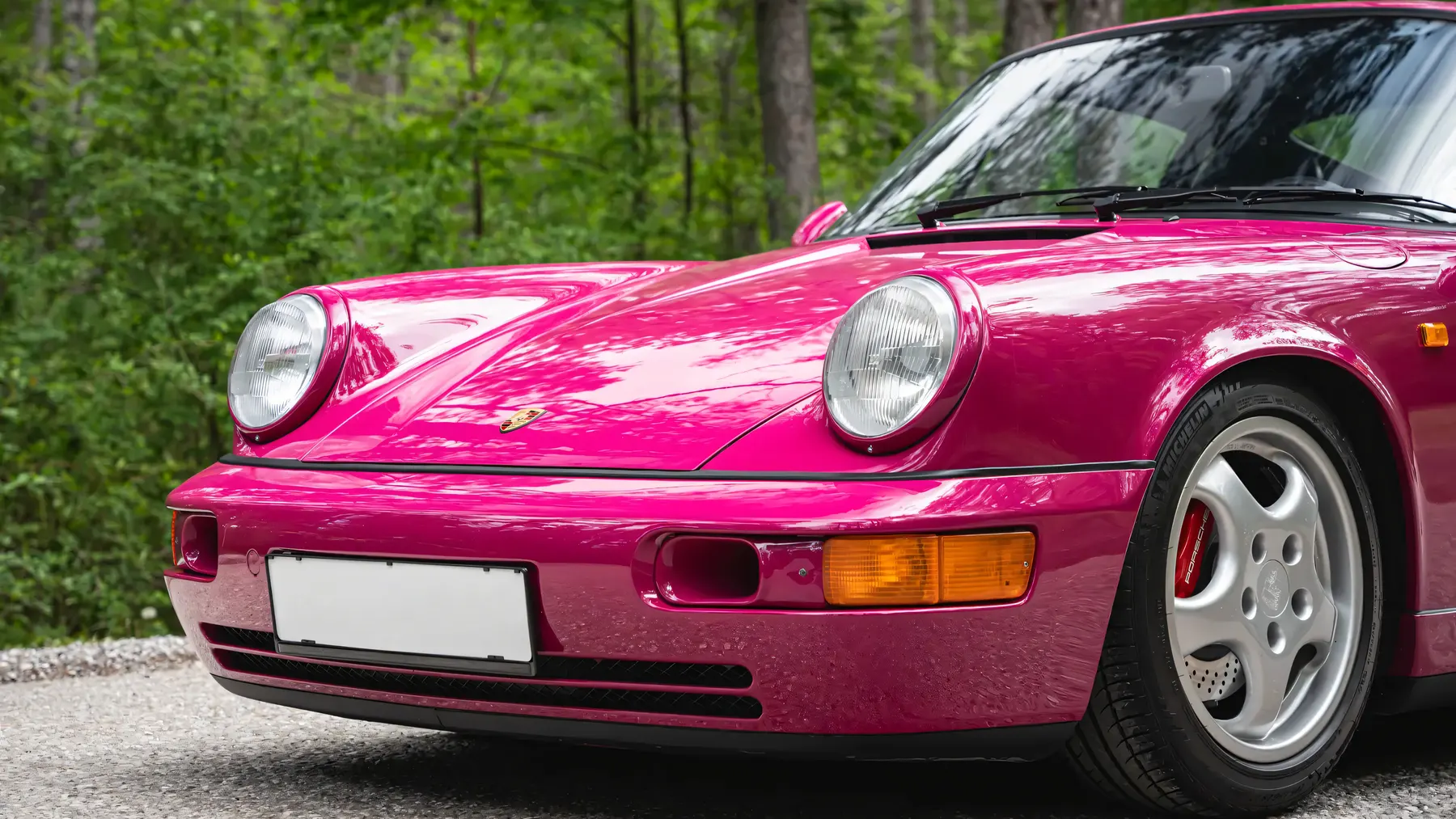
On the road - or better, on the track - the 964 RS reveals why the weight obsession matters more than the power figures suggest. The normally aspirated flat-six pulls cleanly from low revs and builds to a sharp, almost metallic crescendo approaching the 6,100 rpm power peak, but it is the car’s responses that distinguish the experience. Without power steering, the wheel telegraphs every surface change and every degree of attitude shift at the rear. The rear-engined weight distribution that makes standard 911s tricky for the uninitiated becomes, in the RS, a tool rather than a trap - the limited-slip differential helping to manage the rear’s eagerness under power, while the stiffer suspension prevents the pendulum effect from building unpredictably. It is not a forgiving car; push past the RS’s limits without awareness and the rear will rotate with conviction. But it warns you, consistently and honestly, which makes it a car that rewards learning rather than punishes curiosity.
The RS’s real innovations are partly invisible. The 92-litre fuel tank fitted in place of the standard 77-litre unit reflected genuine long-distance motorsport thinking - more practical for endurance events, more useful for owners who intended to use the car seriously. The interior deletions - door cards replaced with loops of fabric, no rear seats, the barest of carpeting - were not just about weight. They were a statement about purpose. Sitting in an RS Sport, surrounded by the structural bones of the car with minimal padding between you and the machinery, creates a psychological contract with the driver that no amount of optional sound insulation can replicate.
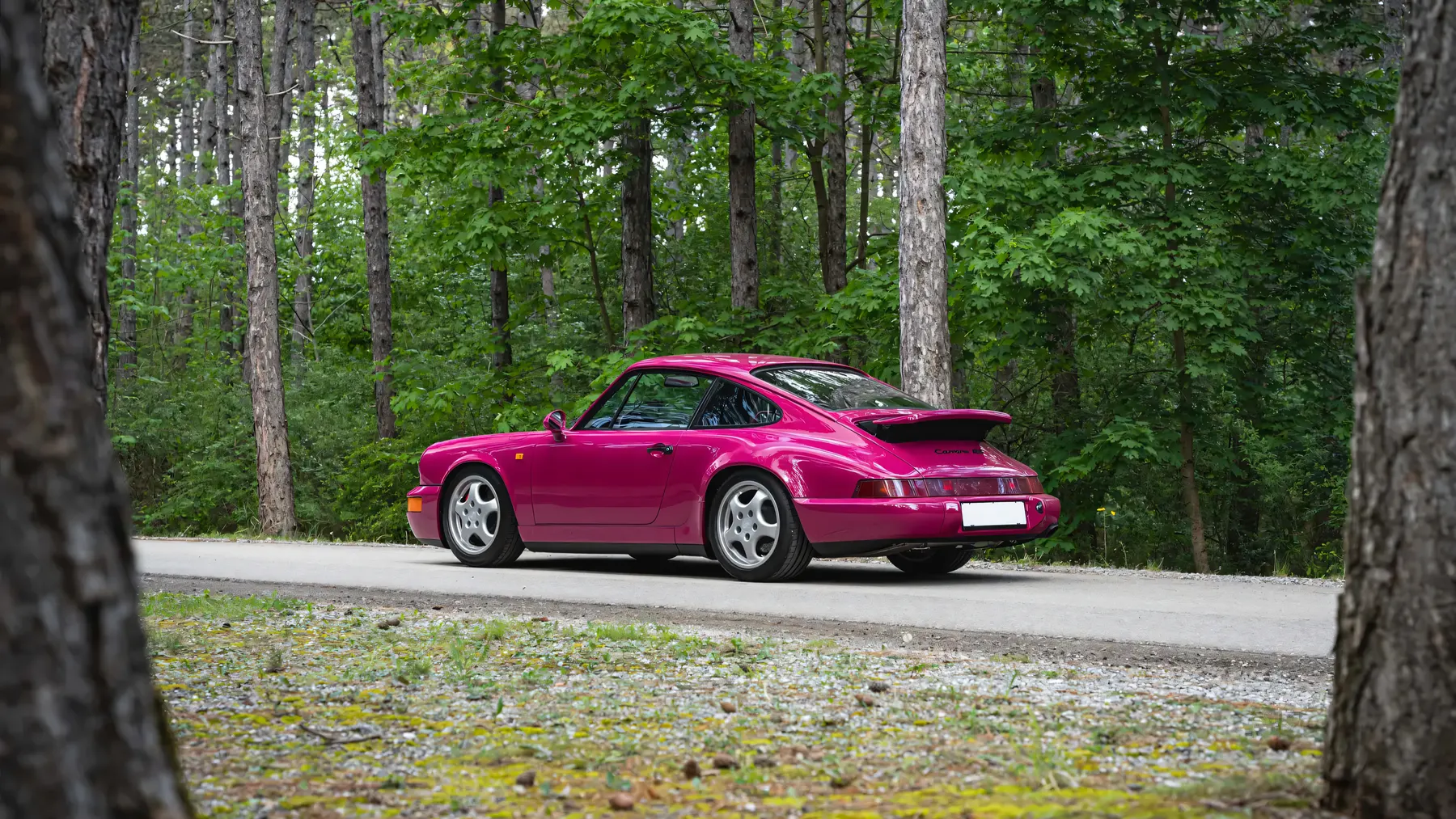
The drawbacks, though, are real. The 964 generation overall carries a reputation for intermediate shaft bearing failures - the IMS issue that haunts air-cooled Porsches of this era - and the RS is not exempt. The suspension, while brilliant in intent, is uncompromising enough to make the RS a genuinely tiring car on poor roads. Without power steering on left-hand drive cars, urban driving requires physical engagement that owners rarely anticipated when they first imagined motorway cruising in a sports car. And despite the weight reduction efforts, 1,230 kg in standard trim feels heavier than the headline suggests when compared to more recent lightweight specials - a reminder that 1992 engineering had its own constraints. The RS America variant, though an important market expansion, was diluted by the use of the less-tuned M64/01 engine and heavier specification, creating a car that wears the RS badge without quite carrying its full meaning.
The cultural and competitive significance of the 964 Carrera RS is difficult to overstate in the context of 1990s GT racing. The car formed the basis of the Carrera Cup single-make series that Porsche launched alongside it, providing a relatively accessible racing formula that produced a generation of drivers and maintained Porsche’s grassroots motorsport presence during a decade when the company was in genuine financial difficulty. The 3.8 RSR variant competed directly in the GT class of international endurance racing, and the fundamental architecture of the road car was sufficiently capable that it required little transformation to be competitive. In a broader historical sense, the 964 RS re-established the RS bloodline after a two-decade gap, reconnecting the 993, 996, and subsequent RS models to a lineage that might otherwise have felt like marketing rather than engineering heritage.
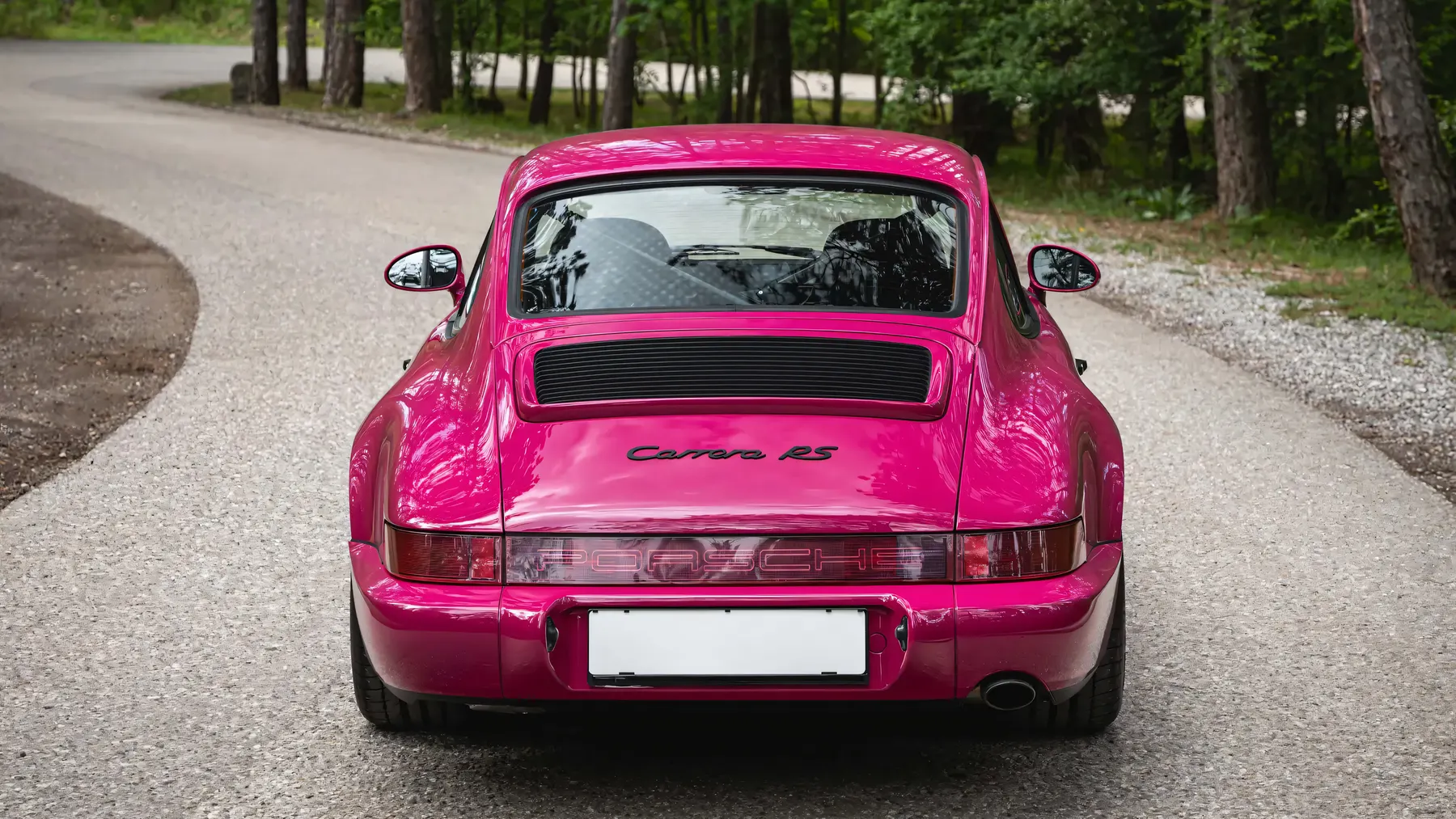
Reception at launch was overwhelmingly enthusiastic in specialist press, which recognised the car’s ability to combine road legality with genuine circuit capability at a price point that undercut many purpose-built track cars. The production run of approximately 2,276 examples exceeded the homologation minimum substantially, indicating that Porsche had correctly read demand even without a formal market study. In the years since, collector appreciation has been intense and largely consistent - the 964 RS has appreciated more aggressively than most 964 variants, reflecting both its rarity relative to mainstream Carrera 2 production and its status as an honest, pre-electronic-nannies sports car in an era when such things have become valuable. The RS America, by contrast, trades at a discount to European RS examples, a market signal that enthusiasts understand the specification differences even if the badge reads the same.
What the 964 Carrera RS ultimately represents is a Porsche caught between two instincts - the commercial pressure to modernise and broaden the 911’s appeal, and the engineering conscience that could not let the RS name attach itself to something less than the best the platform could offer. That tension produced a car of real integrity: not the fastest 911 of its era, not the most comfortable, certainly not the most forgiving, but perhaps the most complete expression of what the 964 platform was capable of when freed from the need to be anything other than exactly what it is.