Ferrari 348 TS: Ferrari's First Monocoque V8, Flaws and All
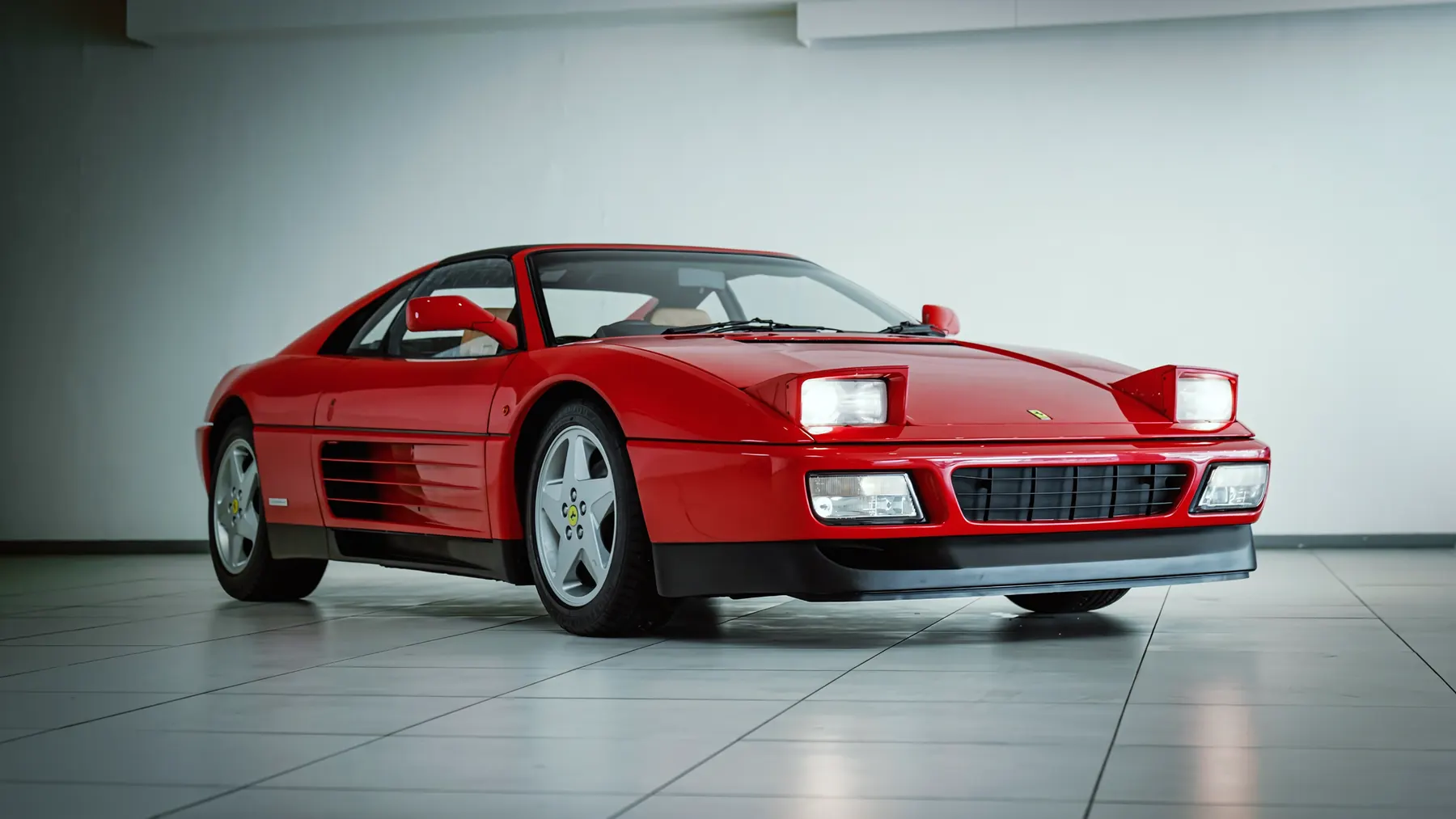
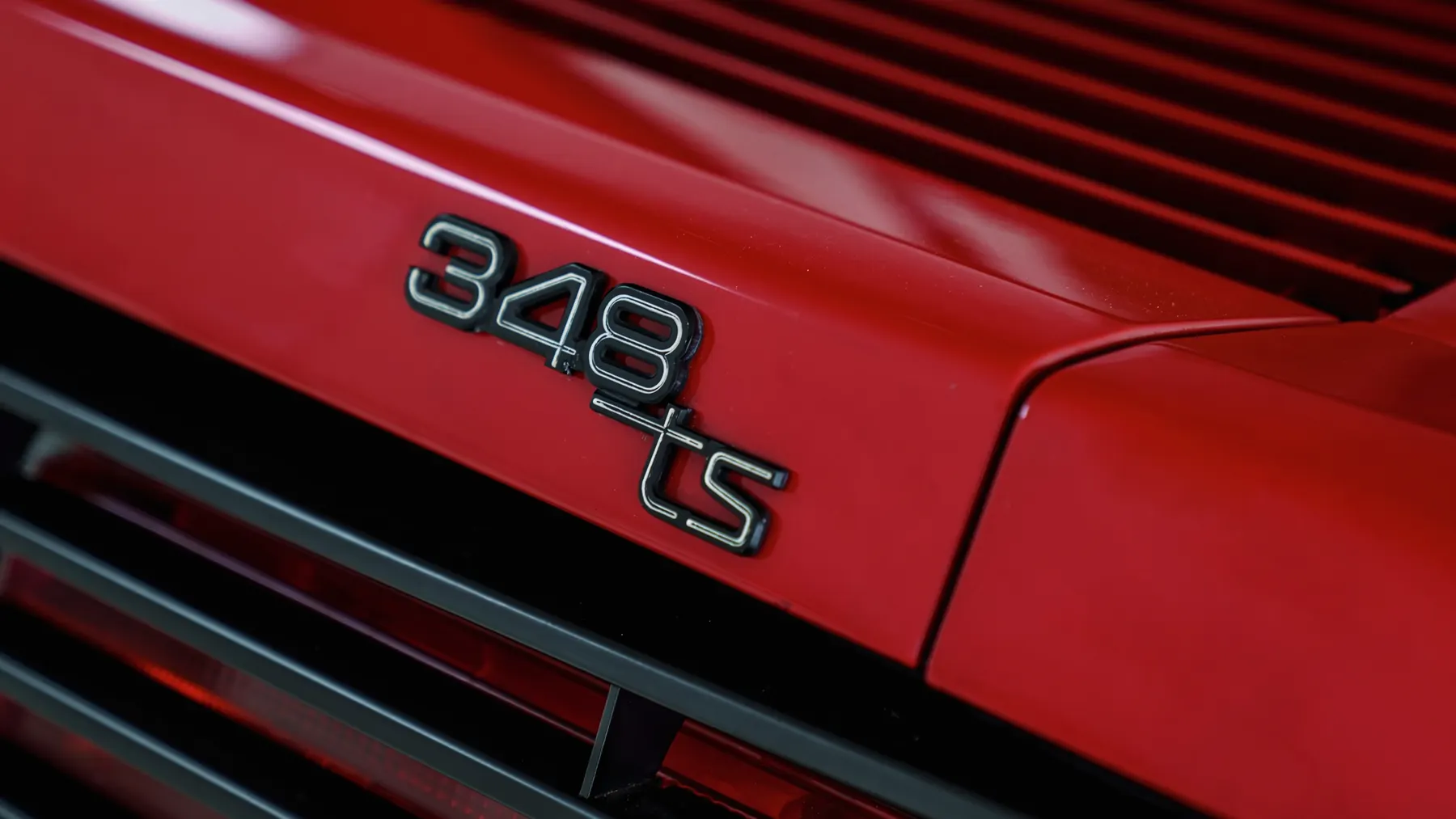
1992 Ferrari 348 TS




Images: OneSavage | sgcarshoot / RM Sotheby's
Turning an engine through ninety degrees sounds like a modest exercise in packaging, but in the 348 TS it changed how a small Ferrari behaved, for better and, in its first years, for worse. The 308 and 328 had carried their V8s across the car. The 348 ran its 3.4-litre engine front to rear and laid a five-speed gearbox across the chassis behind it, an arrangement Ferrari had first used on the Mondial t. The “t” in tb and ts stands for trasversale, and Ferrari thought enough of the layout to put it in the model name. Combine that with a pressed-steel monocoque in place of the tubular frames of the Dino, 308 and 328, and the car shown at Frankfurt in September 1989 was, in Supercar Nostalgia’s phrase, the first clean-sheet junior Ferrari since 1968. It was also the last mid-engined V8 developed under Enzo Ferrari’s direction and the first all-new Ferrari to appear after his death, which is a lot of expectation to hang on a two-seater with a lift-off roof panel.
That roof panel is what made it a TS. The targa top lifted out and stowed behind the seats, and the open version was the volume seller of the early 348 range. Forza counts 4,446 targas against 3,116 berlinettas, while the registry at dacorsa.com lists 4,228 ts built, so published tallies differ, but Forza’s numbers make the targa the best seller of the lot. Pininfarina’s body, overseen by Leonardo Fioravanti, borrowed the Testarossa’s side strakes and slatted tail panel and wrapped them in a rounder, more compact shape. The strakes did real work, feeding radiators that had moved to the car’s flanks, and moving them freed useful luggage space under the front lid, which mattered because the new layout left no luggage space at the back. Panels were steel apart from an aluminium front lid and engine cover and fibreglass bumpers. The wheelbase of 2,450 mm was 110 mm longer than the 328’s, the suspension was double wishbones with coil springs and gas-filled Bilstein dampers at each corner, and the engine and gearbox sat on a steel subframe that could be dropped out of the car as a unit. Brakes were ventilated discs all round with ABS, and Supercar Nostalgia notes a tyre compressor in place of a full-size spare. Taking the roof off any monocoque costs stiffness, and Ferrari reinforced the door gussets, hinge pillars and shut posts of the 1993 Spider specifically to recover torsional rigidity. That is a useful reminder of what the roof contributes, and Forza’s impressions of an early ts, with its squeaks and hint of flex, suggest the targa did not escape the penalty entirely.
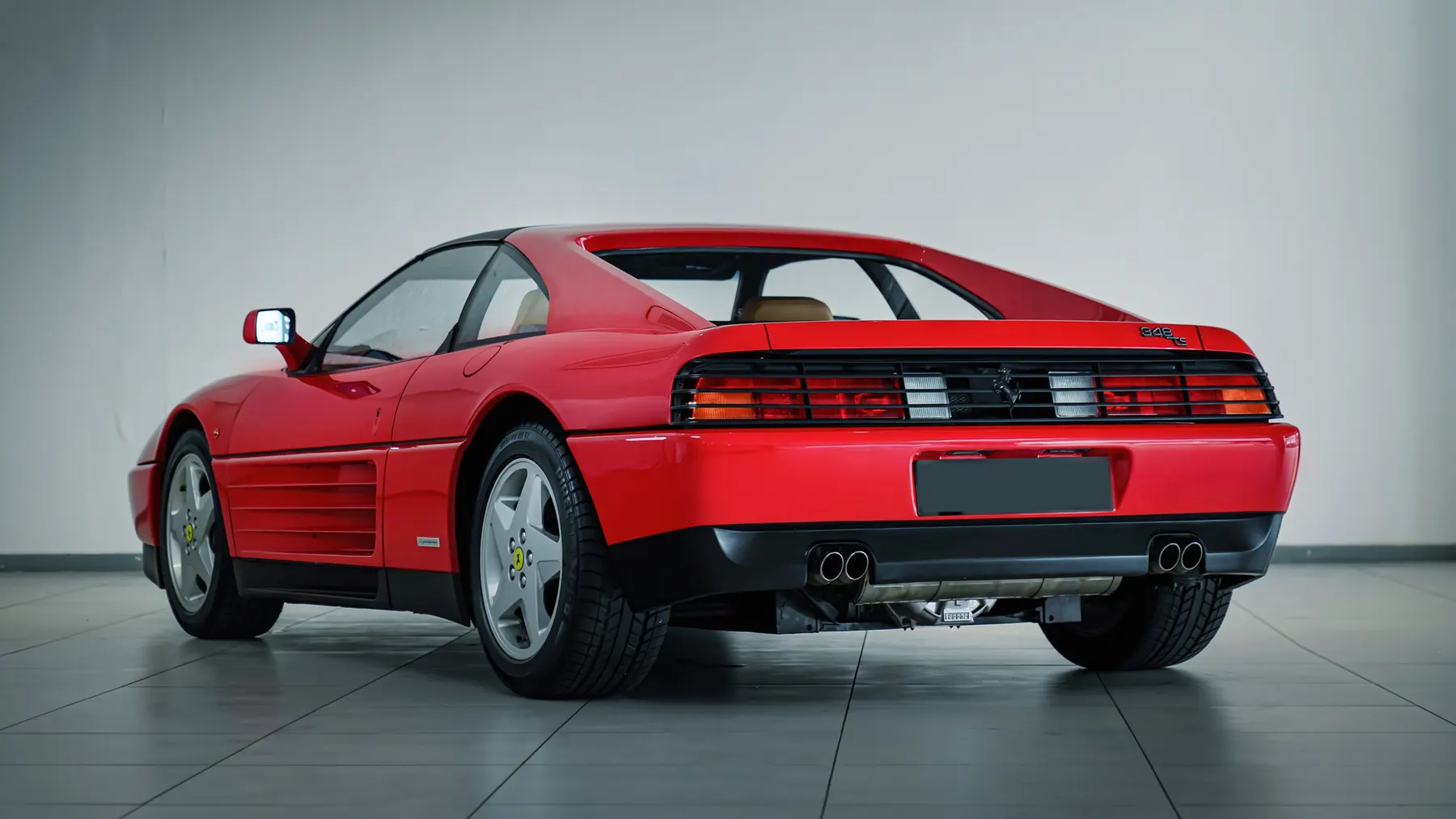
Inside, the TS is a clean, leather-lined place. Connolly hide covers the seats, door panels, centre console and transmission tunnel, the upper dash is black vinyl, and the instruments are orange on black, with a speedometer that reads to 200 mph and a rev counter that reads to 10,000 rpm. Oil temperature and fuel readouts are relegated to the centre console, which is a quirk you either enjoy or resent. Air conditioning and electric windows were part of the package by the time of the 1993 revisions, and Drive’s owner singles out the cabin’s uncluttered look and the car’s extremely low stance, which he reckons matches the F355’s and sits lower than the Ferrari V8s that followed. The cockpit also shows its age in the wrong places, and the sticky switchgear and climate controller that cause trouble later are part of that story.
The Tipo F119 engine is the part of the car on which almost everyone agrees. It is an all-alloy 90-degree V8 of 3,405 cc, with an 85 mm bore, a 75 mm stroke, four valves per cylinder, Nikasil-coated liners, dry-sump lubrication and Bosch Motronic management. In original tb and ts form it made 300 bhp at 7,200 rpm, with torque usually quoted at around 238 lb-ft arriving at 4,200 rpm. Ferrari’s own claims were 171 mph and 5.5 seconds to 62 mph, which RM Sotheby’s summarises as a sub-six-second sprint to 60 mph and a top speed of about 170 mph, a big step beyond the 328. Forza’s testers describe an engine that is tractable low down, increasingly vocal as it approaches the 7,500 rpm redline, and capable of the kind of relentless pull in second and third gears that makes its predecessor feel old-fashioned. Forza reckons the performance gain brought the baby Ferrari closer than ever to the company’s 12-cylinder flagship. The gearbox rewards patience rather than haste: an open gate with a dog-leg first, a cable-operated linkage, and a shift that Forza finds satisfyingly mechanical but short of the click-clack of the 328 or the later F355. The steering has no power assistance, which makes parking a chore and everything above walking pace a pleasure. evo’s Henry Catchpole has ranked it among the best steering he has experienced, a verdict quoted in Drive’s owner review of a 1993 TS.
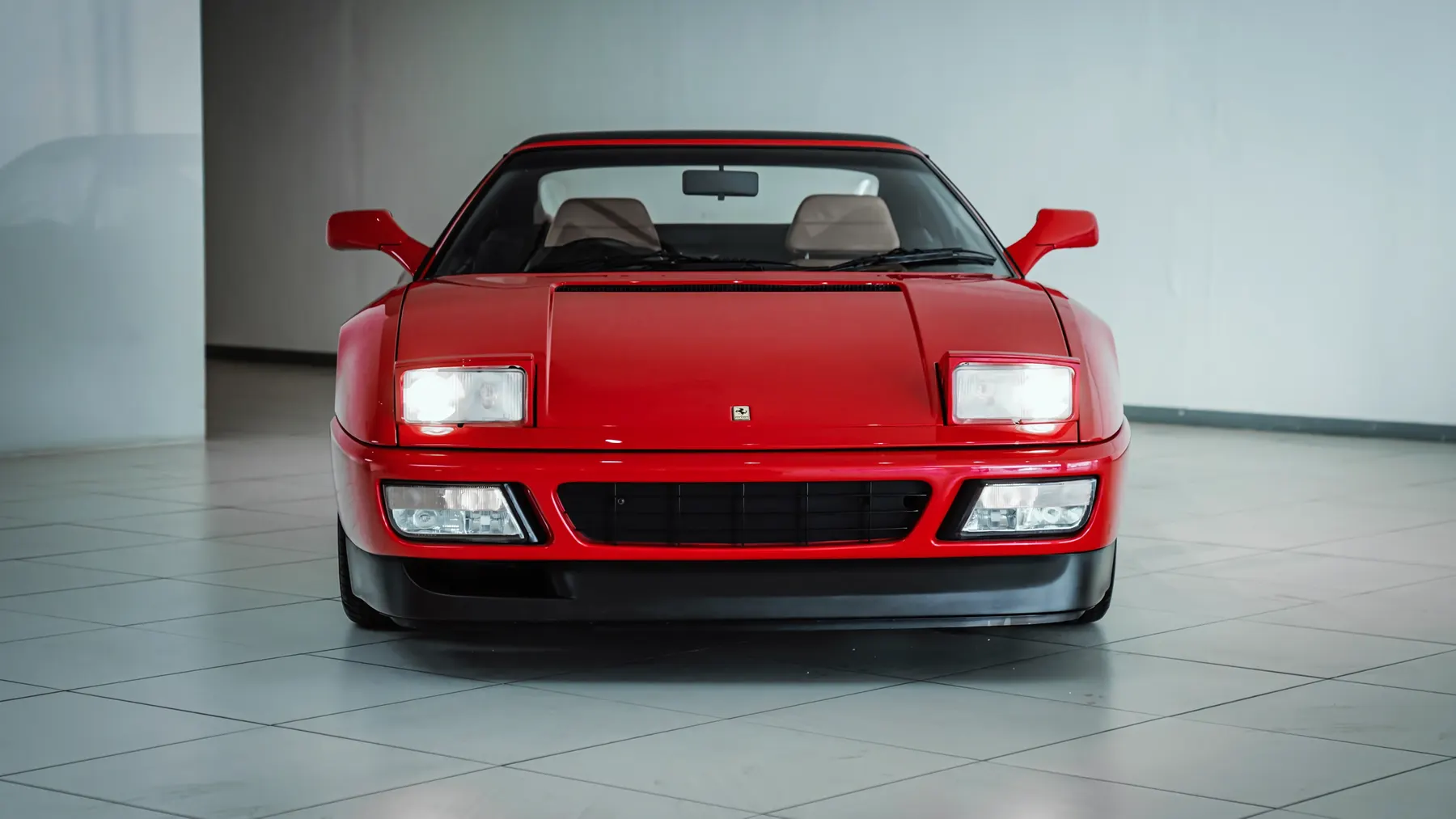
Whether the 348 deserved its handling reputation is an argument that has followed it ever since. At launch, Forza notes, testers accused it of tricky behaviour at the limit, at a time when Acura’s NSX was making exotic-car driving look easy. Hagerty UK reports that the front end of early cars had a habit of going light at speed. When Catchpole drove a 348 for evo, he described how, once the car turned in, the engine felt as though it were mounted high behind him, the weight wanting to swing round and an inside rear wheel feeling as if it were lifting. Defenders counter that the car’s limits lie well beyond most drivers, and Forza’s testers argued that what some read as erratic behaviour was simply razor-sharp responsiveness. An owner writing for Drive recounts spinning after lifting off abruptly mid-corner and concludes that the car rewards smooth inputs. Both camps are describing the same car, and the truth sits between them: a chassis that is exceptionally communicative and unusually unforgiving of clumsy throttle work. Ferrari plainly agreed there was something to fix, because cars from 1992 onward received reworked suspension hardware and settings, and Forza found the 100-car Serie Speciale of 1992 and 1993 free of any tail-wagging tendency.
The reputation for fragility, however, was earned. Forza describes extensive and well-publicised build-quality problems on the early cars, and the list of weak points is long. The transaxle alone received three major updates. Early engines can suffer excessive chain-tensioner wear and a troublesome inner support bearing for the cam-drive jack shaft, which Ferrari first revised and later addressed by changing the engine block itself. Leaking seals, alternators and starter motors were further trouble spots on the earliest cars, and every 348’s cabin electronics become a lottery as the wiring ages, notably the hard-to-repair climate-control controller and the interior plastics that turn sticky. Hagerty UK’s roundup of owner grievances adds a recalcitrant second-gear synchromesh to the list. The TS carries its own penalty: Forza’s road test of an early ts found a bouncy ride on poor surfaces, a tendency to wander at speed, a body that squeaked and a hint of frame flex, none of which troubled a later Spider. Servicing is built around that removable subframe, which has to come out of the car for major work, a job Forza suggests falling roughly every three years, and a failed cam belt ends in expensive valve damage. Even the Serie Speciale’s driving position struck Forza’s testers as suited to someone with shorter legs and longer arms than average. Luca di Montezemolo, who took over at Maranello in 1991, was by Hagerty UK’s account thoroughly disappointed with the car, its looks excepted, and that disappointment made its replacement a priority.
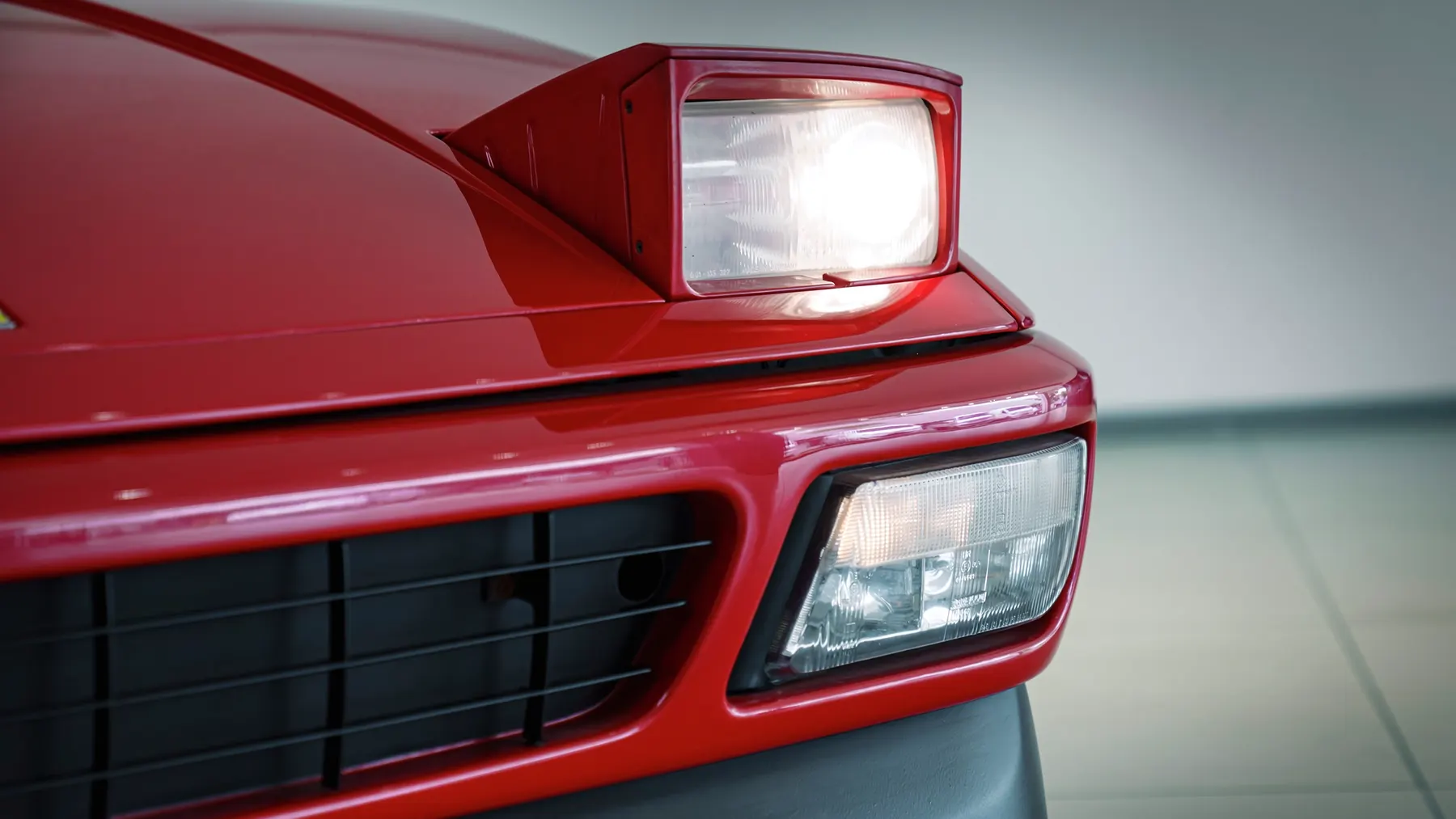
The timing was unkind as well. RM Sotheby’s describes the 328 as a stopgap intended to stretch the 308’s life, so the pressure for a genuinely new car was considerable by 1989, and Supercar Nostalgia recalls buyers queuing for the 348 in a red-hot high-end market that had cooled by late 1990 as speculators left and traditional buyers felt the pinch. Forza judges it a poor fit for the moment, with production falling by almost half by 1993, and notes that the Testarossa-derived styling, so fashionable a few years earlier, was beginning to look dated. Japanese rivals meanwhile offered keenly priced, technologically advanced and, in the NSX’s case, easier ways to go fast.
Ferrari’s answer arrived in 1993 with the 348 Spider, the factory’s first full convertible in more than two decades, and the revised tb and ts became the GTB and GTS. The GTS used the Tipo F119 H engine, with compression raised from 10.4:1 to 10.8:1, a bigger intake plenum, new valve springs and belts and a freer exhaust, for 320 bhp. It also gained a taller fifth gear, body-coloured lower panels, a chrome prancing horse on the tail and a nine-vane front grille. Ferrari quoted 1,370 kg, 174 mph and 5.4 seconds to 62 mph for the revised cars, against 1,398 kg for the original ts. Supercar Nostalgia lists just 218 GTS built, against 1,090 Spiders, which makes the later targa a genuinely scarce car. The competition side of the 348 deserves a brief mention too. The one-make Ferrari Challenge series began in 1993, and Ferrari built a lightweight 348 GT Competizione homologation special, limited to 50 cars, so the model could race in GT championships.
That history shapes what ownership looks like now. Because the 348 costs less than the 328 before it and the F355 after it, Forza observes that many owners skimped on the maintenance it demands, and its advice is to pay extra up front for a car that a specialist has serviced and fully updated to the factory’s recommendations. Later cars are the safer bet, since Forza found the 1992 to 1995 cars markedly better than the earliest ones. For a targa, that leaves a choice between an early ts whose weak points have been properly fixed and the 1993 GTS, which brings more power and the later refinements but is scarce: Supercar Nostalgia counts only 15 right-hand-drive GTS among the 218 built. Ferrari’s own account calls the 348 Spider a popular model, with more than 1,000 built in two years, so anyone who wants the roof off and a wider choice may find the Spider easier to track down.
The F355 took over in 1994, and Hagerty UK suggests that a late GTB is essentially an F355 without the styling tweaks, which says a lot about how much of the 348’s groundwork survived. Forza’s 2023 price guide put good-to-great ts examples at roughly $60,000 to $80,000, less than the 328 before it or the F355 after it, and doubts the model will ever become collectable in a financial sense. Drive’s owner argues the car has been unfairly maligned, and evo noted back in 2015 that the 348 was being seen alongside other cars of its era as an analogue driving machine, a shift in appetite that has softened the old verdict. What the 348 TS leaves behind is less a classic than a rough draft of the modern Ferrari: the first with a monocoque, a low-slung engine and a transverse gearbox that would carry through to its successor. It did the unglamorous work of showing Maranello what a small mid-engined car now demanded, a stiffer structure, tighter quality control and a chassis that forgave amateurs, and its first owners paid for the lesson.
Technical data
Performance Specifications
| Specification | 348 TS (1989 to 1993) | 348 GTS (1993 to 1994) |
|---|---|---|
| Engine | Tipo F119, 90-degree V8, DOHC, 4 valves per cylinder | Tipo F119 H, 90-degree V8, DOHC, 4 valves per cylinder |
| Displacement | 3,405 cc (85 mm x 75 mm) | 3,405 cc (85 mm x 75 mm) |
| Compression ratio | 10.4:1 | 10.8:1 |
| Power | 300 bhp at 7,200 rpm | 320 bhp (peak rpm varies by source) |
| Torque | around 238 lb-ft at 4,200 rpm* | around 238 lb-ft at about 5,000 rpm* |
| Gearbox | 5-speed manual, transverse, twin-plate clutch, limited-slip differential | 5-speed manual, taller fifth gear |
| Redline | 7,500 rpm | 7,500 rpm* |
| Weight (Ferrari-quoted) | 1,398 kg** | 1,370 kg** |
| Top speed | 171 mph | 174 mph |
| 0 to 62 mph | 5.5 seconds (Ferrari claim) | 5.4 seconds (Ferrari claim) |
| Wheelbase | 2,450 mm | 2,450 mm |
| Production | 4,446 (Forza) or 4,228 (dacorsa.com)*** | 218 (Supercar Nostalgia) |
Sources
- Ferrari Magazine: Numbers Game, Ferrari 348
- RM Sotheby’s: 1992 Ferrari 348 TS (general model background)
- Forza: Two Steps Forward, 348 Buyer’s Guide (Issue 205)
- Supercar Nostalgia: Ferrari 348 Spider, 348 GTB and 348 GTS Guide
- Hagerty UK: Prancing Nags, Ferrari’s Finest Flops
- evo: Just looking, Ferrari 348 tb
- Drive: 1993 Ferrari 348 TS review (owner review)
- dacorsa.com: Ferrari 348 ts registry overview
Join the discussion
Comments
Loading comments…
Leave a comment
Share a detail, memory, or perspective. Every comment is reviewed before publication.