Legends Car Racing: The Motorbike-Engined Racer That Built NASCAR
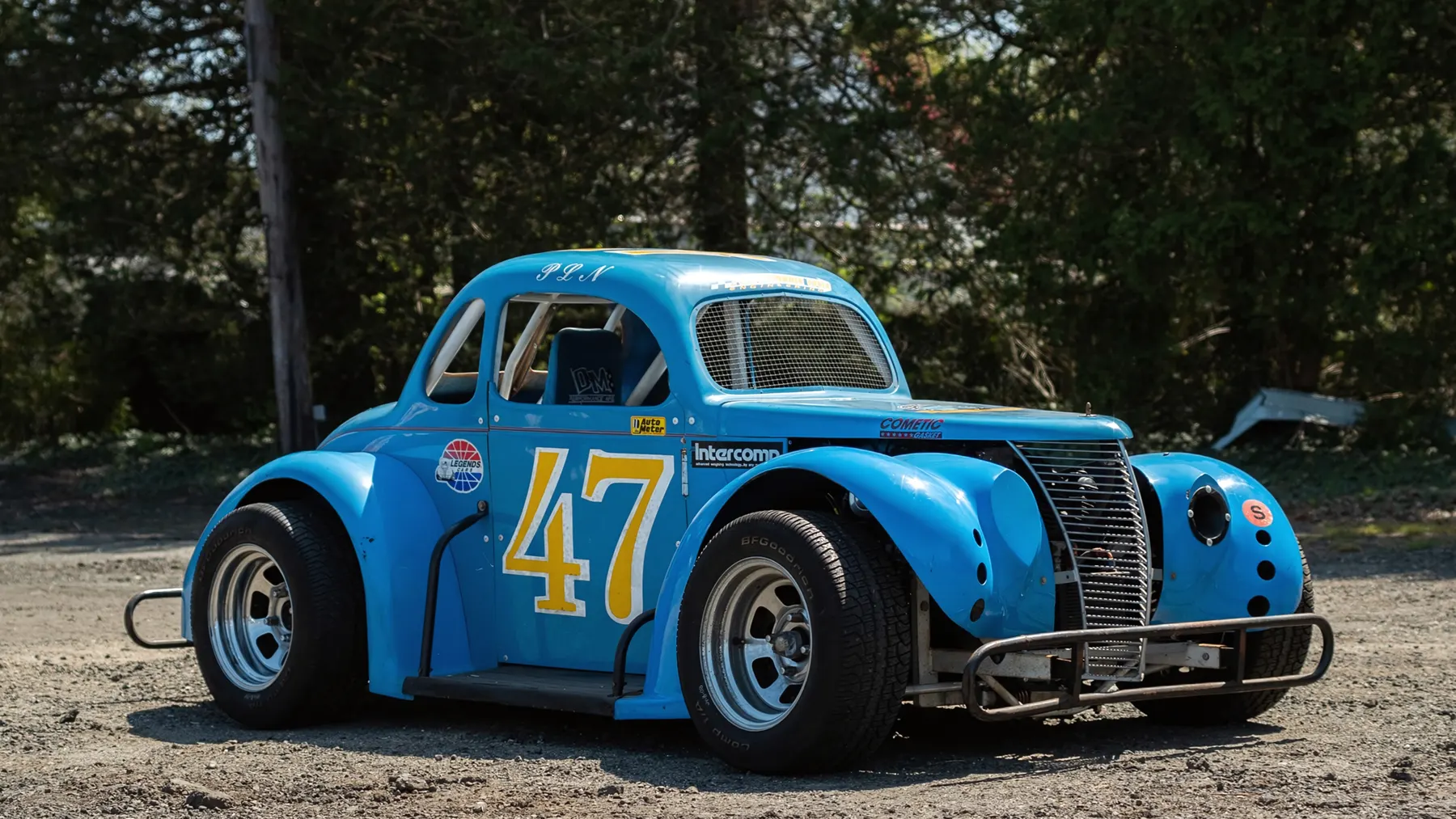
1997 Legends Racing Car




Images: RM Sotheby's
Long before Chase Elliott or Kurt Busch ever strapped into a Cup car, both folded themselves into something that looks like a shrunken 1934 Ford coupe and sounds, at full throttle, like an angry sportbike. That contradiction - a purpose-built oval racer dressed as a pre-war stock car, running a motorcycle engine through a six-speed sequential gearbox - has been the entire point of the Legend car since it debuted at Charlotte Motor Speedway in April 1992. It was never meant to be a serious piece of automotive engineering. It was meant to be cheap, safe, and close enough to the real thing that it could quietly become one of the most effective driver-development tools in American motorsport.
The car exists because Charlotte Motor Speedway’s leadership, principally track president Humpy Wheeler working alongside Speedway Motorsports founder O. Bruton Smith, had grown worried that stock car racing was pricing out the next generation of drivers. Wheeler and road racer Elliott Forbes-Robinson found their answer in an Arizona short-track curiosity called the Dwarf Car - a steel-bodied, fenderless 5/8-scale replica of a 1935 Ford coupe built around a motorcycle engine by the Dwarf Car Company of Phoenix. Steel bodywork was judged too costly to reproduce at volume, so Wheeler and Forbes-Robinson reworked the concept in fibreglass and added fenders, styling the result after the fendered NASCAR Modifieds that Fireball Roberts, Curtis Turner and Buck Baker had raced through the 1930s and 1940s. The company that built them, 600 Racing Inc., operated as a Speedway Motorsports subsidiary and later renamed itself US Legend Cars International, still headquartered in Harrisburg, North Carolina, with INEX established as the sanctioning body governing the rulebook and the racing itself. Wheeler, who went on to become one of NASCAR’s most influential promoters before his death in August 2025, rarely gets as much credit for the Legend car as for his stadium-scale race-day spectacles, but the low-cost oval racer may well be his most durable legacy.
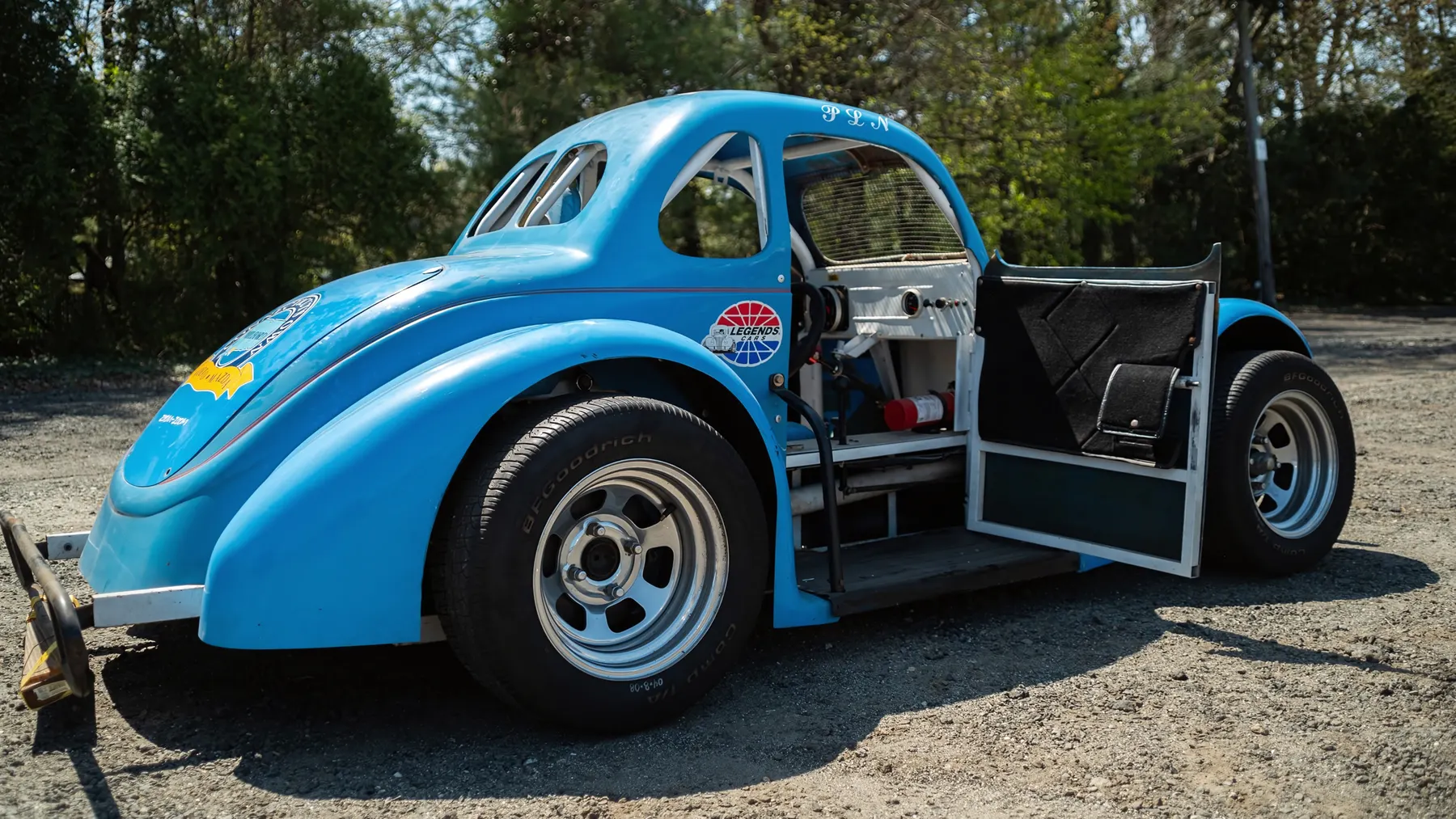
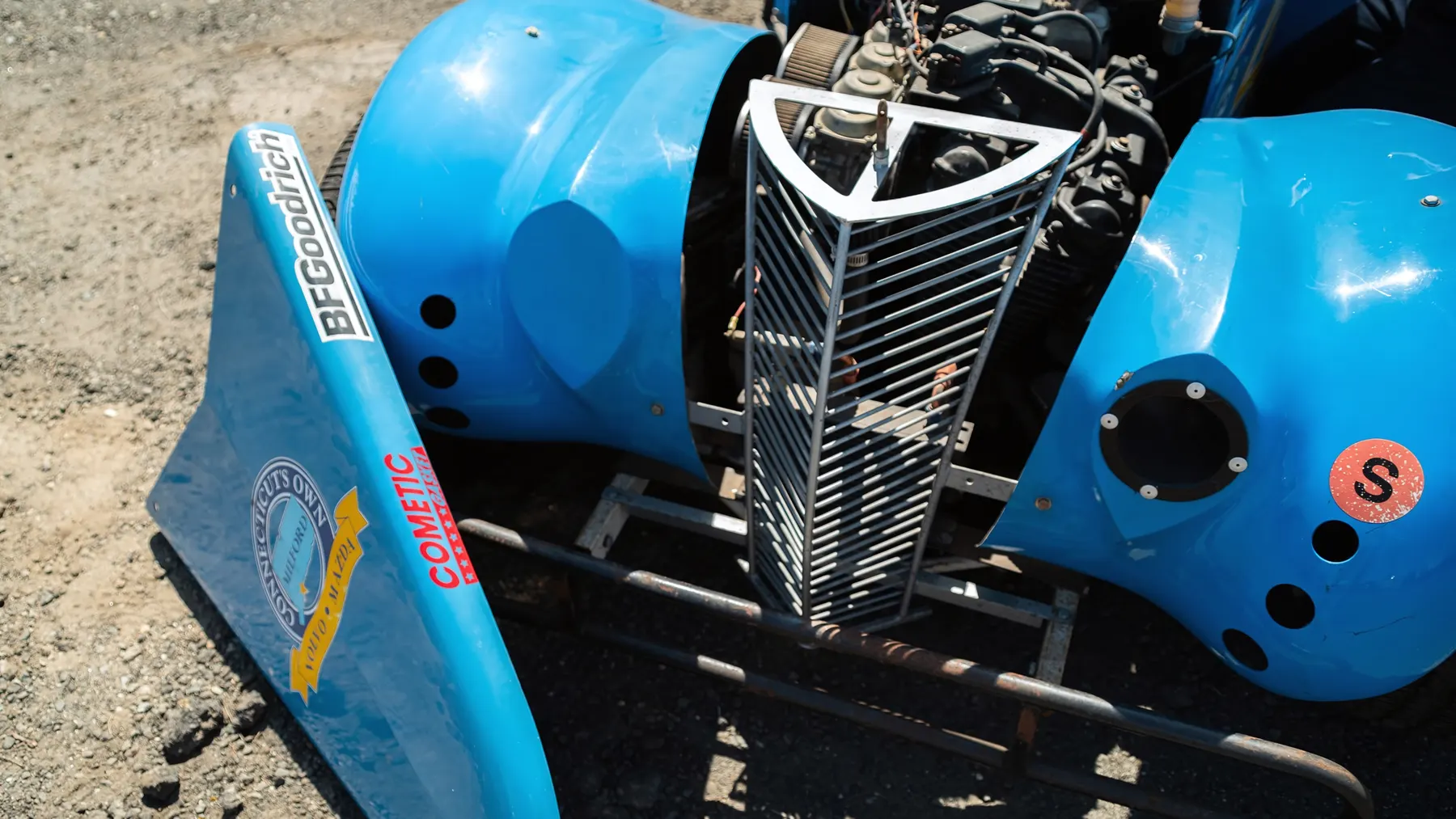
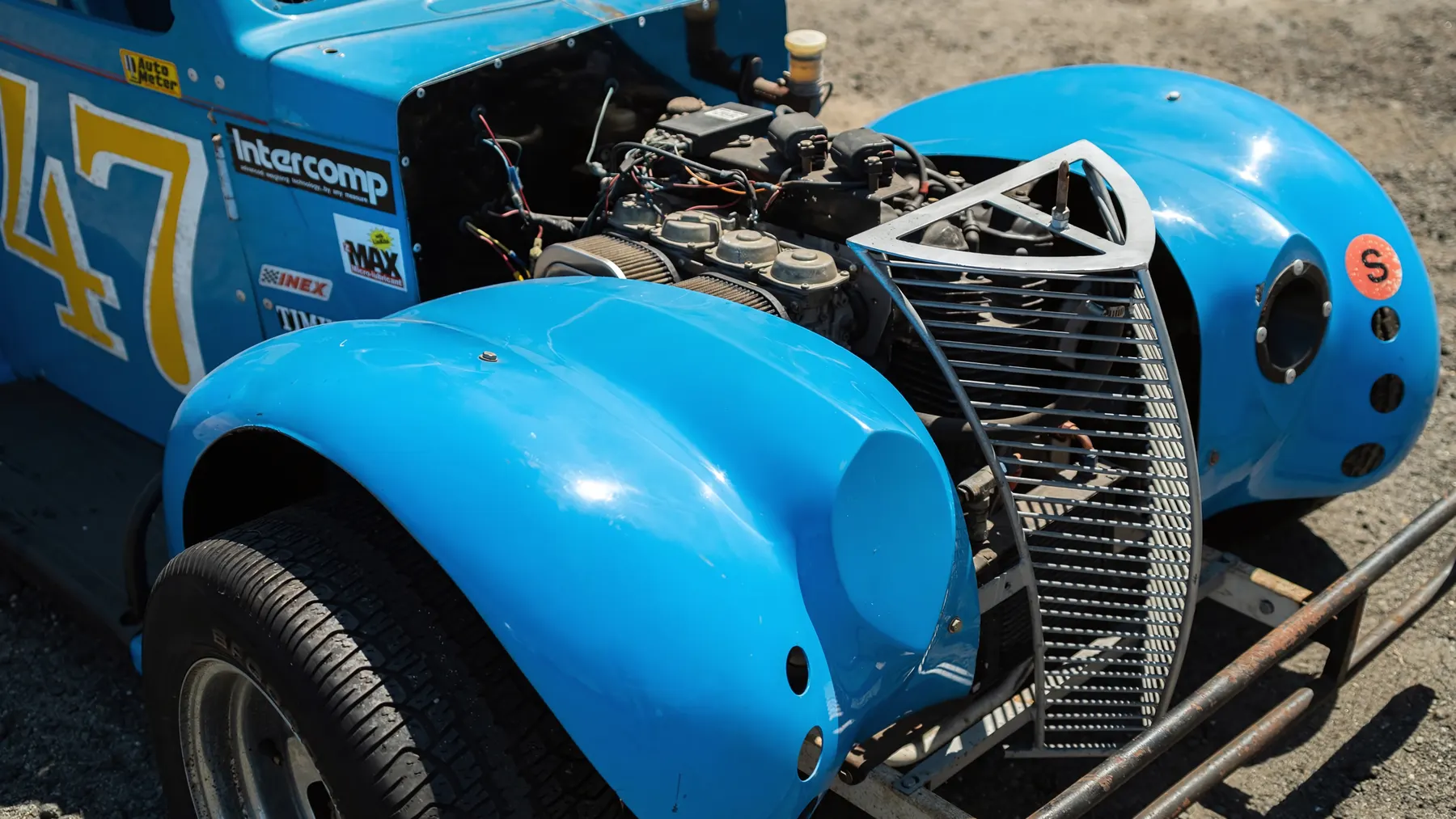
What Wheeler and Forbes-Robinson built was deliberately, almost stubbornly simple. Every Legend car is mechanically identical - a genuine one-design spec series - with variety confined to ten fibreglass body styles spread across three silhouettes: a standard coupe, a '34 coupe and a sedan. Underneath sits a full tube-frame chassis with an integral roll cage, a live rear axle (understood to trace its origin to a 1970s Toyota Corolla unit) fitted with a spool rather than a differential, so both rear wheels are locked together with none of the slip a limited-slip or open differential would allow, and a simple double-wishbone front end riding on Bilstein coilover dampers. Wheels are a compact 330mm in diameter and 178mm wide, wrapped in control tyres whose exact supplier has shifted more than once over the car’s history, with recent references citing both Hoosier and Federal as the current control brand depending on discipline and region. Current specification sheets put the minimum all-up weight, driver included, at around 570kg, though other published figures round it closer to 590kg. Power comes from a sealed, tamper-proof motorcycle engine: originally an air-cooled Yamaha FJ1200 or XJ-series four-cylinder producing roughly 125bhp, replaced from the spring of 2018 by a water-cooled 847cc Yamaha FZ-09-derived triple that makes a similarly quoted 125 to 130bhp at around 10,000rpm and about 60lb-ft of torque, sent through a six-speed sequential motorcycle gearbox. Flat out, on a long enough straight, that combination is good for roughly 120mph, though the short ovals the cars mostly race on rarely let them get anywhere near it.
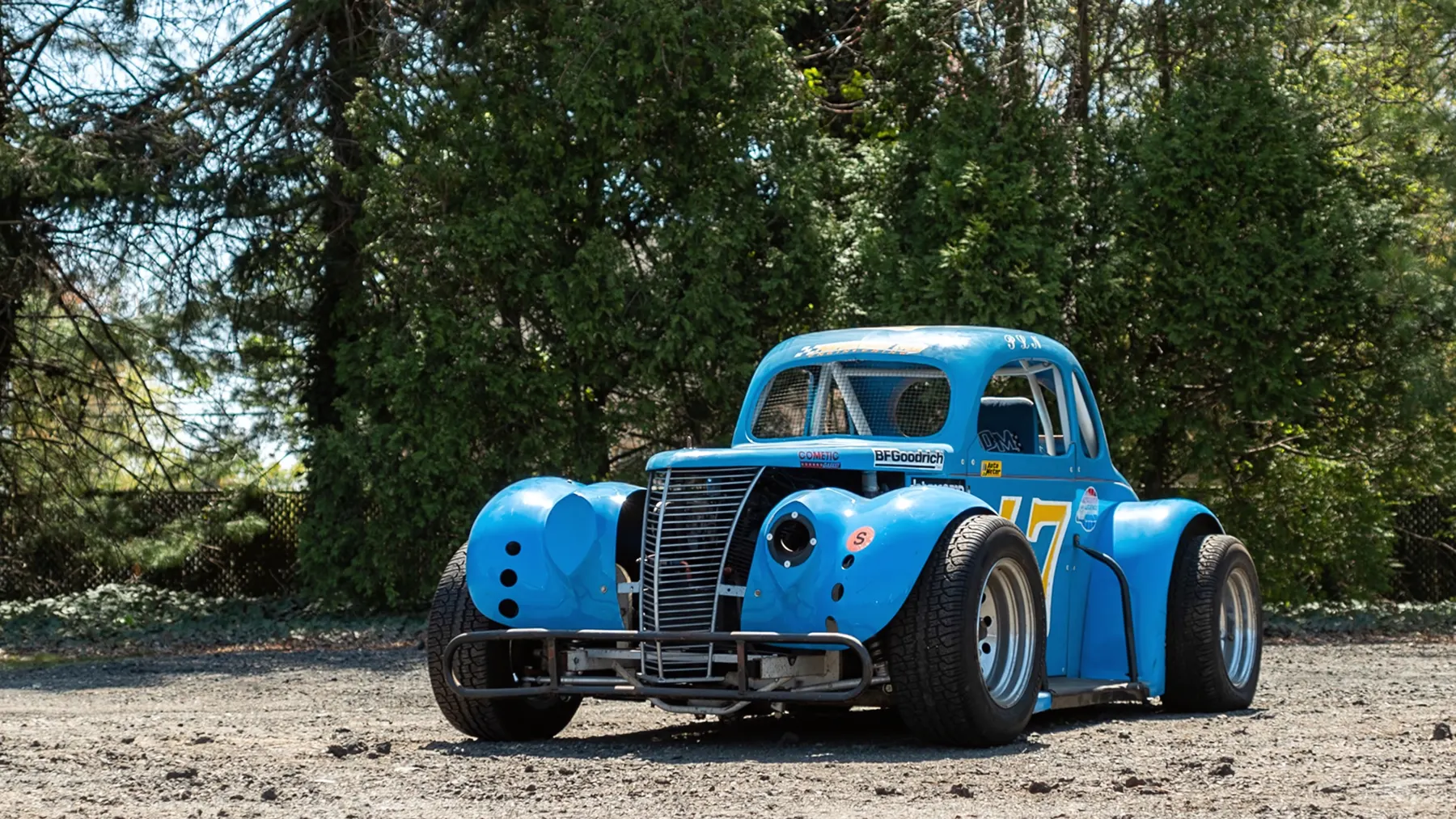
Because the hardware is fixed, INEX’s competition structure is built entirely around the driver rather than the car. Racers are split into four divisions - Young Lions for competitors as young as ten, with additional experience requirements for the very youngest; Semi-Pro for newcomers aged sixteen and up; Masters for drivers forty and older; and Pro for the most experienced field - and within each division, a car built in the 1990s competes on genuinely level terms with one built last season. It is a formula that rewards racecraft over budget, which is precisely what Wheeler and Smith set out to build.
The platform grew a small family of related cars rather than distinct model generations. The Bandolero, introduced in either 1997 or 1998 depending on the source, is the junior trainer: a smaller, sheet-metal-caged miniature stock car that drivers enter through the roof, powered by a 570cc Briggs & Stratton Vanguard single producing about 30bhp - enough for speeds over 70mph but deliberately modest acceleration, aimed at drivers as young as eight. The Thunder Roadster, for drivers sixteen and up, swaps the fendered coupe look for an open-cockpit, sprint-car-style silhouette evoking 1950s and '60s open-wheel racing, on a considerably longer 2,438mm wheelbase, running the same sealed 1,250cc Yamaha engine family in water-cooled form; it later found a second life in grassroots club racing with organisations such as the National Auto Sport Association, where privateers unofficially reworked the chassis around Suzuki Hayabusa engines to create a faster “GTR” preparation level that sits outside INEX’s own spec rules entirely. The Dirt Modified, launched in 2011 with input from championship-winning crew chief Ray Evernham, takes the Legend car’s basic recipe and retunes it with different bodywork and adjusted Bilstein shock rates to mimic the sliding, tail-out handling of a midget car on dirt, debuting at East Lincoln Speedway in Stanley, North Carolina.
Commercially, the scale is striking for something this niche: US Legend Cars International describes itself as the largest race car manufacturer in the world by production volume, with a dealer network spanning more than thirty countries. A UK road-course series followed the original American cars in 1993, and Legend and Bandolero racing has since spread to Canada, Mexico, Australia and continental Europe, with an annual World Finals held in the United States every November and competitors travelling from as far afield as South Africa and Finland. Cars have raced everywhere from Charlotte Motor Speedway and California’s Irwindale Speedway to Brands Hatch and Japan’s Fuji Speedway. The appeal is straightforwardly financial: a new Legend car was priced at around $17,500 turnkey as of the early 2020s, an INEX competition membership costs roughly $175 a year, and many local tracks charge as little as $50 for a weekend’s entry - figures that undercut most other forms of wheel-to-wheel racing by a wide margin, where a season can easily run past $30,000 before travel and entry fees are added. Running costs are modest too: control tyres cost around $500 a set and typically last a full weekend of practice, qualifying and racing, and the sealed engines need little more than routine maintenance for several seasons at a stretch. The whole car is compact and light enough to be towed behind something as ordinary as a mid-size SUV.
That affordability has made Legend and Bandolero racing the de facto first step for a striking share of modern NASCAR talent. Dale Earnhardt Jr. became the first driver with a Legend car background to win a national NASCAR championship, taking the 1998 Busch Series title, and Kurt Busch followed in 2004 as the first Cup Series champion to have come up through the cars. Chase Elliott, Ryan Blaney, Austin Cindric and Ben Rhodes all raced Legend cars or Bandoleros on their way up, and by the organisation’s own count, its alumni have combined for twenty-five NASCAR national championships, including all three national titles in a single season, 2023. The pipeline reaches beyond stock cars, too: Formula 2 race winner Enzo Fittipaldi and sports car champion Sean Rayhall both started out in the same machines. For a series built around a deliberately unsophisticated fibreglass replica of a 1930s coupe, that is an extraordinary rate of return.
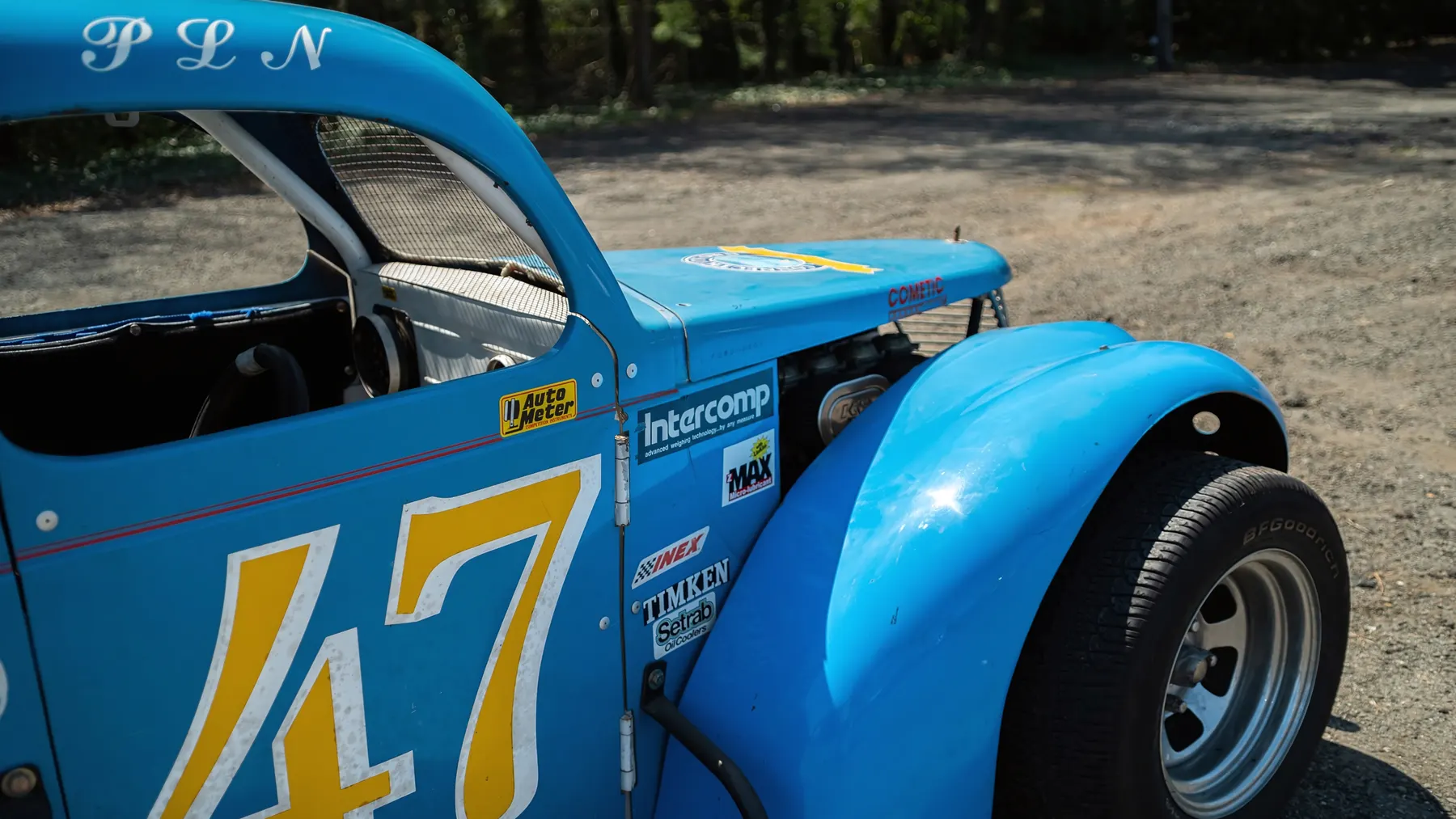
None of that hints at what the car is actually like to drive, and the honest answer, according to journalists who have tried one, is intimidating at first and thoroughly rewarding soon after. Climbing in means folding into a cockpit with essentially no padding, a narrow, letterbox view through a small windscreen, and, once the triple fires, a mechanical racket loud enough to rattle through a helmet and earplugs alike. Underway, though, the chassis is unexpectedly communicative: because the spool locks the rear axle, the car understeers gently on turn-in and rotates progressively as the throttle is applied, settling into a neutral, almost textbook cornering attitude that tells a driver exactly what it is doing at every stage. It will slide if pushed too hard at the exit of a corner, but not kindly - the rear tyres let go all at once rather than progressively, punishing a heavy right foot rather than rewarding one. The overall impression from behind the wheel is of a genuinely purpose-built race car, light, powerful for its weight, and far more engaging than the price suggests it has any right to be.
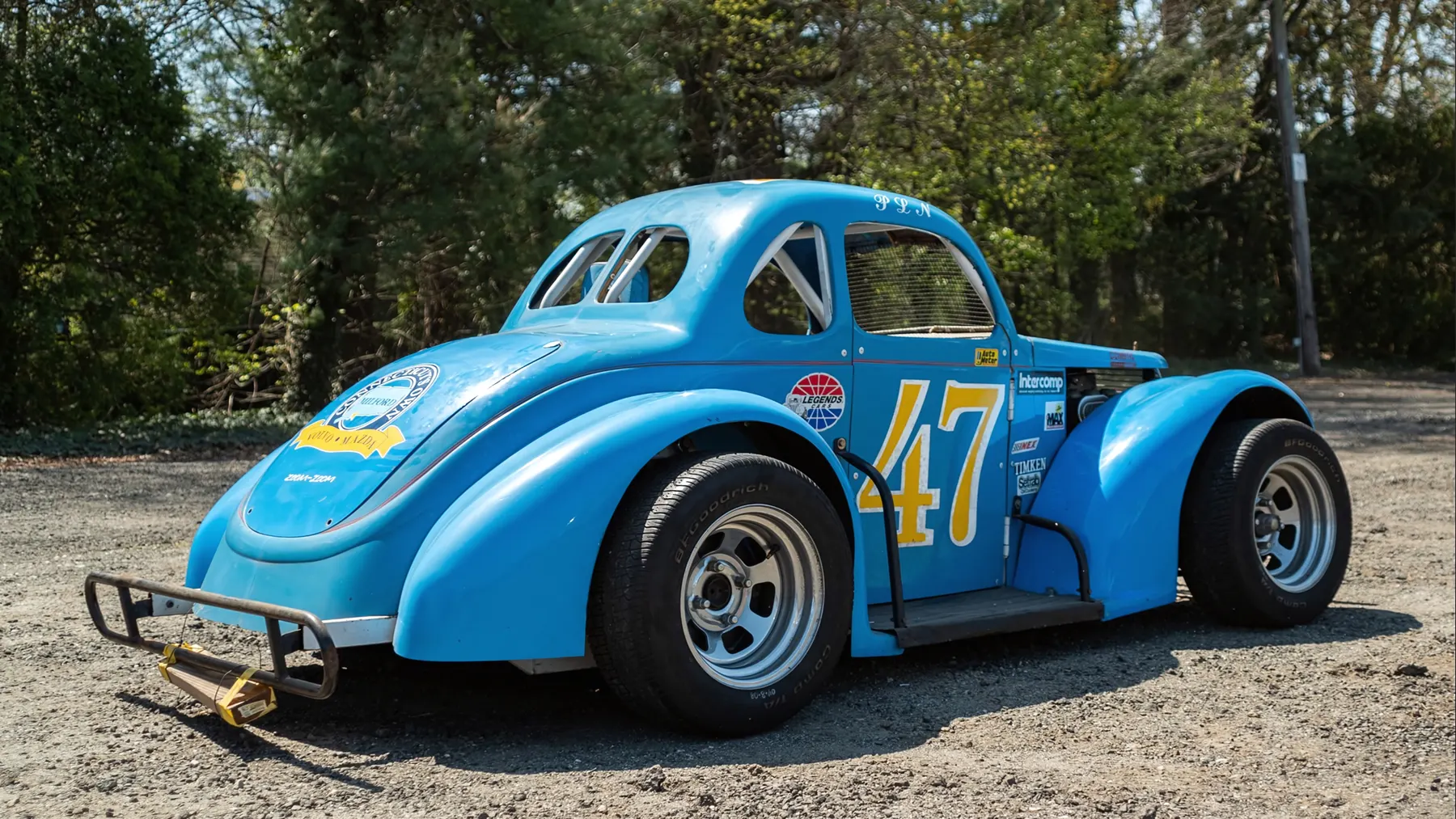
That said, the Legend car earns its low price through some real compromises, and they are worth naming rather than waving away as charm. The noise is not just loud but genuinely concerning: reviewers who have driven the current FZ-09-engined car describe it as loud enough, even through a helmet and earplugs, to leave their ears ringing well after climbing out - a real consideration for a series whose youngest competitors are only ten years old. Visibility is another honest weakness; the cramped, low-set cockpit and small windscreen make it genuinely difficult to see much beyond the car directly ahead, a real handicap in close, wheel-to-wheel short-track racing rather than a minor quirk. The spool rear axle that makes the car so predictable also makes it mechanically crude by the standards of almost any other purpose-built race car; it teaches a driver very little about differential behaviour or chassis balance beyond the basics, which limits how much genuine engineering education the platform offers compared with, say, a Formula Ford or a club racer running an open differential and adjustable geometry. And because INEX’s entire premise depends on keeping every car mechanically identical, the Legend car has barely evolved in more than three decades - the 2018 switch from the air-cooled Yamaha four to the water-cooled FZ-09-based triple stands out precisely because it is close to the only significant technical change the car has ever received. That stasis is a deliberate trade-off in service of competitive fairness and cost control rather than an oversight, but it does mean the Legend car offers none of the generational improvement or rising performance ceiling that defines most model lines, and it leaves owners of the earlier air-cooled cars facing a shrinking supply of parts for a motorcycle engine family Yamaha stopped building years ago.
What the Legend car lacks in sophistication, it makes up for in the sheer number of careers it has quietly launched. It remains, in essence, the same idea Wheeler and Forbes-Robinson sketched out in 1992: a small, loud, unglamorous racer built to strip motorsport down to what actually matters, which is the driver. US Legend Cars has kept refining the details around the edges - a lighter “Superlight” specification arrived in 2022, aimed squarely at giving newcomers an even lower barrier to entry - but the underlying formula has proven durable precisely because it never tried to be anything more than it needed to be. For a car modelled on machines that raced nearly a century ago, it has turned out to be one of the more forward-looking ideas in modern grassroots motorsport.
Technical data
Performance Specifications
| Specification | Legend (Coupe) | Bandolero | Thunder Roadster | Dirt Modified |
|---|---|---|---|---|
| Wheelbase | 1,854mm | 1,778mm | 2,438mm | 1,880mm |
| Width | 1,524mm | 1,194mm | 1,549mm | 1,753mm |
| Length | ~3,230mm | ~3,320mm | ~4,340mm | ~3,170mm |
| Height | 1,168mm | n/a | 1,118mm | n/a |
| Kerb weight (driver included) | ~570kg* | ~249kg | ~680kg | ~454kg |
| Engine | Yamaha FJ1200/XJ-series air-cooled I4 (pre-2018); Yamaha FZ-09-derived 847cc water-cooled I3 (2018-on) | 570cc Briggs & Stratton Vanguard single | 1,250cc Yamaha, sealed, water-cooled | 1,250cc Yamaha, sealed |
| Power | ~125–130bhp* | ~30bhp | ~200bhp† | ~140bhp+† |
| Torque | ~60lb-ft (current triple) | not published | not published | not published |
| Top speed | ~120mph | 70mph+ | not published | not published |
| Transmission | 6-speed sequential | not published | not published | not published |
| Rear axle | Live axle, spool (no differential) | not published | Live axle | not published |
| Front suspension | Double wishbone, Bilstein coilovers | not published | Coil-over, independent | Adjusted Bilstein coilovers |
| Base price, new (turnkey, c.2022) | ~$17,500 | lower | higher | higher |
Sources
- Wikipedia: US Legend Cars
- Wikipedia: Legends car racing
- Wikipedia: Bandolero racing
- US Legend Cars International: Get Started
- US Legend Cars International: Alumni
- US Legend Cars International: Thunder Roadster
- The Drive: Legend Car Review - At $17,500, Affordable Racing Is Alive and Well
- SlashGear: What Is A Legend Race Car, And How Much Do They Cost?
- SPEED SPORT: U.S. Legend Cars Introduces Superlight Training Car
- NASA Speed News: Thunder Roadster Becomes National NASA Class
- NASCAR.com: Humpy Wheeler, Landmark Award Honoree and Innovative Track Promoter, Dies
Join the discussion
Comments
Loading comments…
Leave a comment
Share a detail, memory, or perspective. Every comment is reviewed before publication.