McLaren MP4-21: The First Without Newey in F1's V8 Revolution
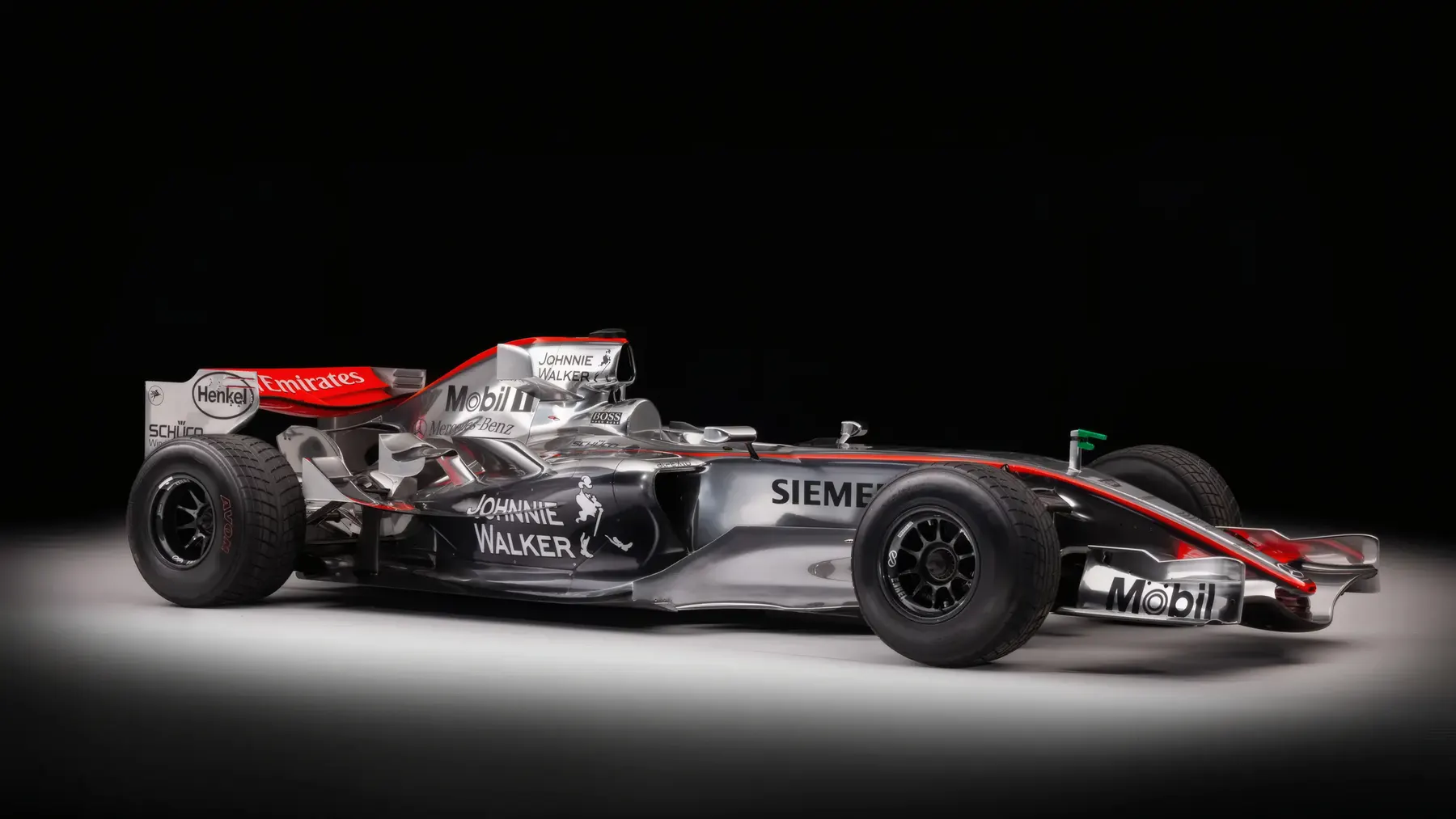
2006 McLaren-Mercedes MP4-21 Formula 1
Images: Neil Fraser / RM Sotheby's
Adrian Newey’s aerodynamic fingerprint had been on every McLaren since the MP4/13 of 1998 - the car that delivered Mika Häkkinen his first championship in a season of near-total competitive authority. Through the subsequent eight seasons, whether McLaren dominated or merely competed, there was a recognisable character to the cars’ technical architecture: a way of integrating bodywork and airflow, of treating the entire chassis as an aerodynamic instrument rather than a collection of parts with a wing bolted to each end. When Newey departed for Red Bull Racing in early 2006, McLaren was confronted with an uncomfortable institutional question: had a decade alongside him genuinely transferred his methods into the organisation, or had the team simply been benefitting from the man himself? The MP4-21 was the answer, built under competitive pressure with no allowance for reflection.
The timing made everything harder. For 2006, the FIA abolished the screaming 3.0-litre V10 engines that had defined Formula 1’s engineering ambition for a decade, replacing them with mandatory 2.4-litre V8s. The stated justifications were cost control and safety - peak power would fall, terminal speeds would reduce, and the ever-escalating V10 development spiral would end. In practice, the switch demanded that every constructor rebuild their car around a completely different powertrain, resetting aerodynamic packaging, weight distribution, and cooling architectures simultaneously. For McLaren, doing this while navigating a change in aerodynamic leadership represented a double burden that the team’s public communications carefully avoided acknowledging.
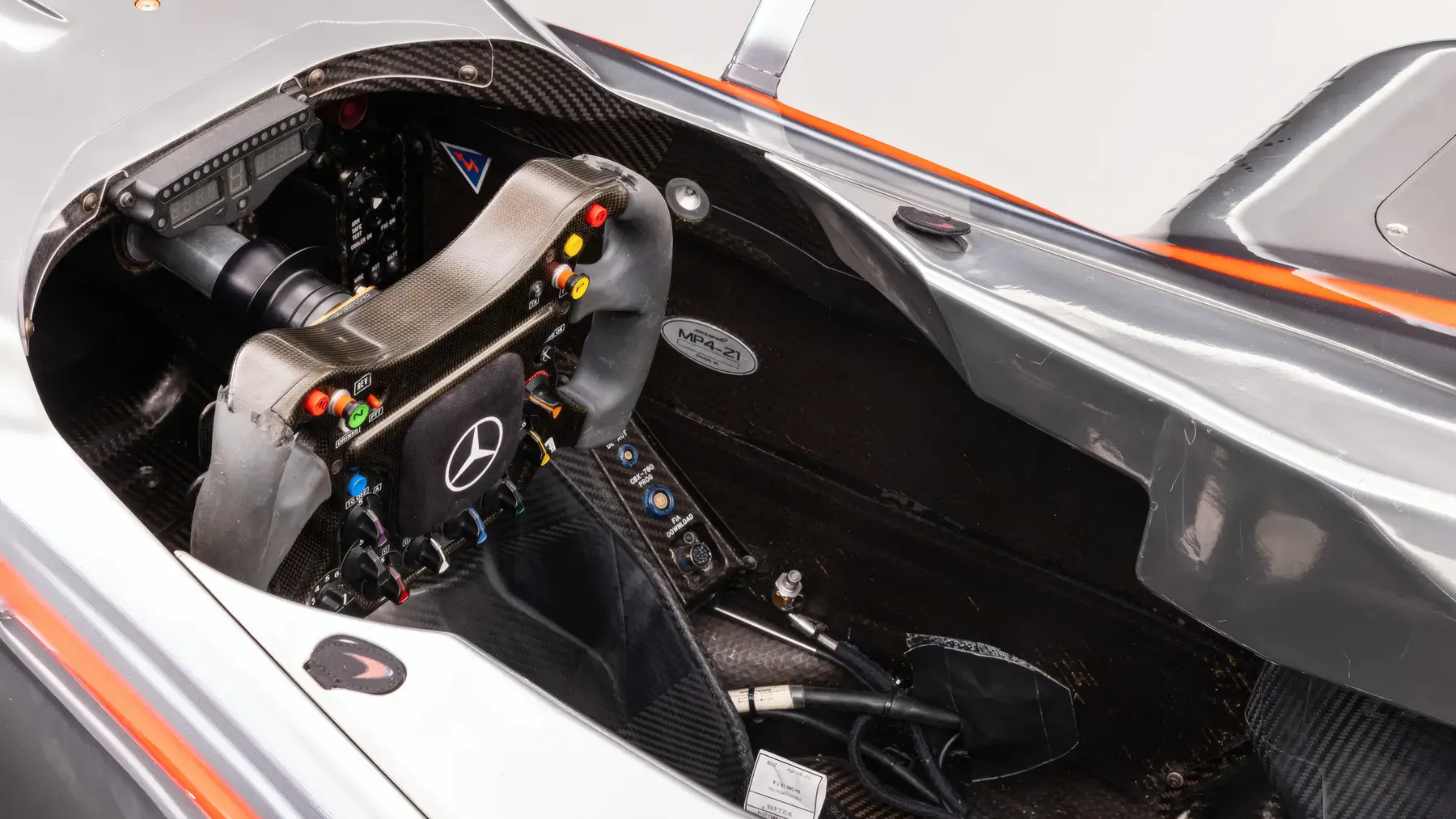
Mercedes-Benz responded to the new formula with the FO 108S, a 90-degree V8 developed in close partnership with McLaren’s powertrain engineers. Precise output figures were never published - Formula 1 teams treat performance data as proprietary regardless of regulation - but period estimates from technical analysts placed the engine somewhere in the region of 720 to 750 bhp in race configuration, with qualifying specifications meaningfully higher. The reduction from the outgoing V10 era’s best efforts, which had exceeded 900 bhp in qualifying trim, was significant, but the FO 108S’s character was different in ways beyond raw output. The torque curve was flatter and more accessible, the power delivery more linear than the peaky, high-crest behaviour of the V10s that had demanded extreme throttle discipline exiting slow corners. The engine was also broadly regarded as reliable by the standards of an all-new design racing at maximum stress - though that assessment would be complicated as the season progressed.
The sound changed too. The V8’s signature was sharper and higher in frequency, stripped of the harmonic complexity that the V10’s five-cylinder banks had produced. To ears attuned to the previous generation, it felt reduced: more mechanical, less orchestral. The engineers were largely indifferent. Their concern was integrating the new unit into a package that could compete at the front of the field from race one.
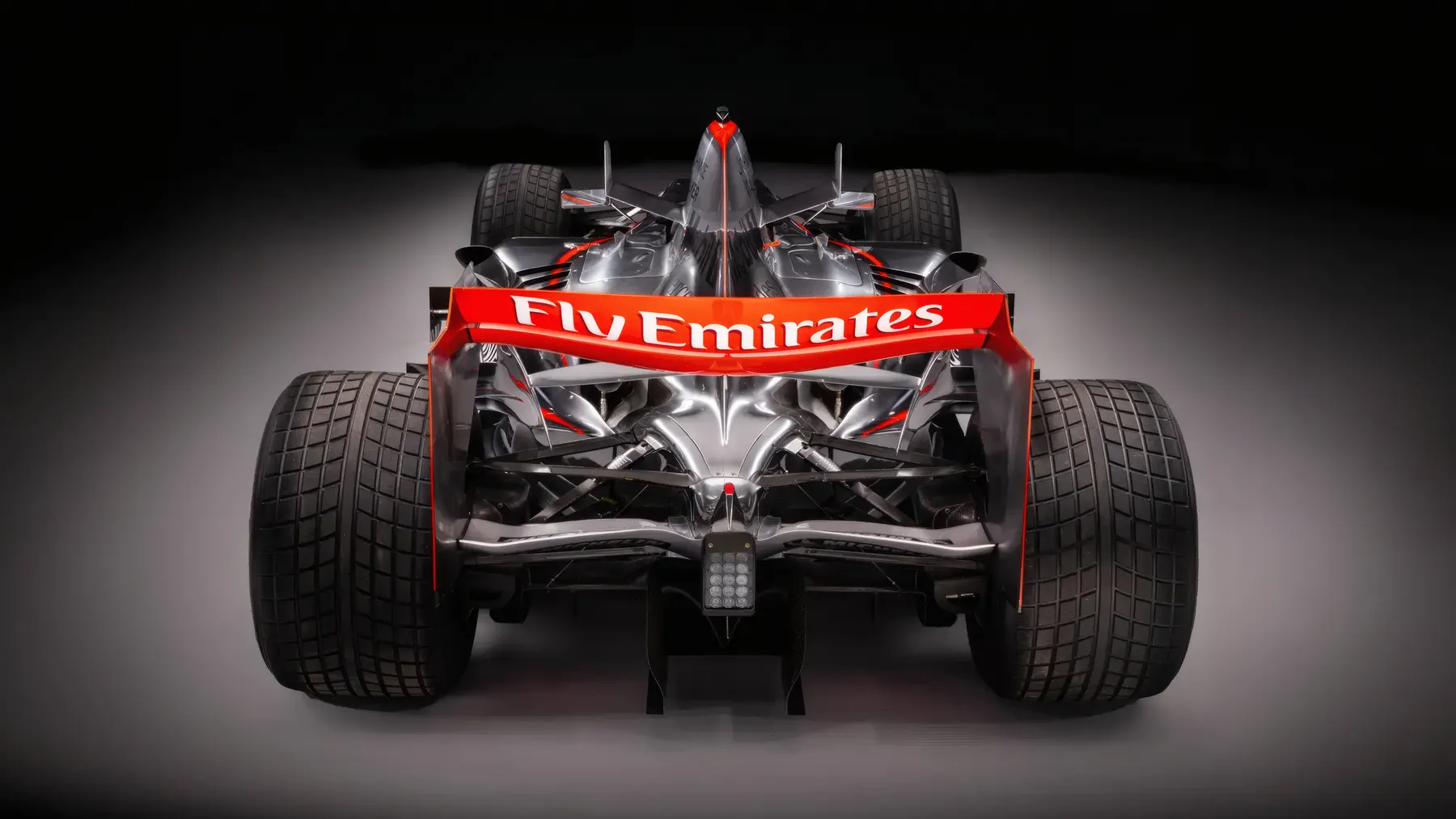
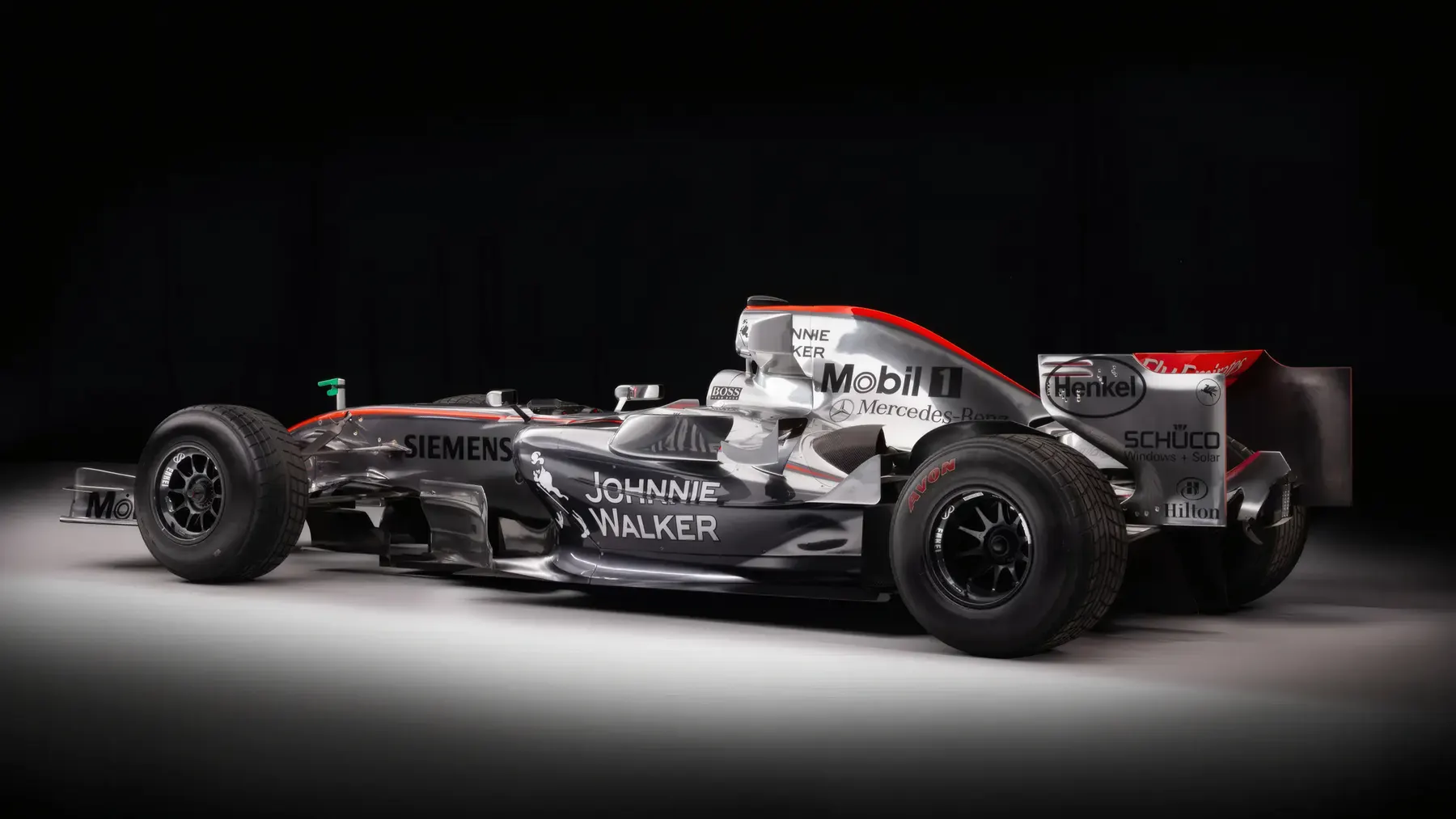
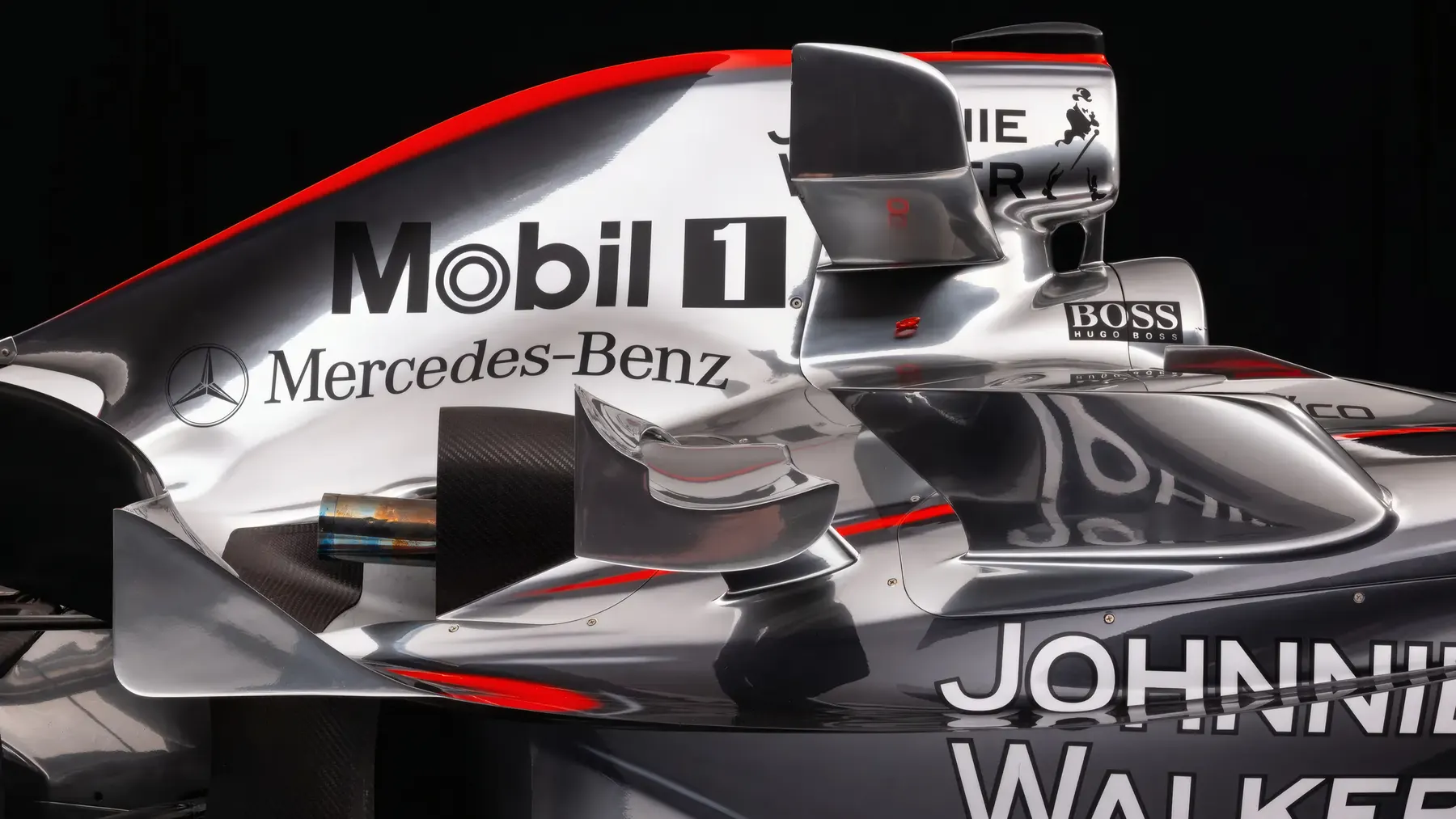
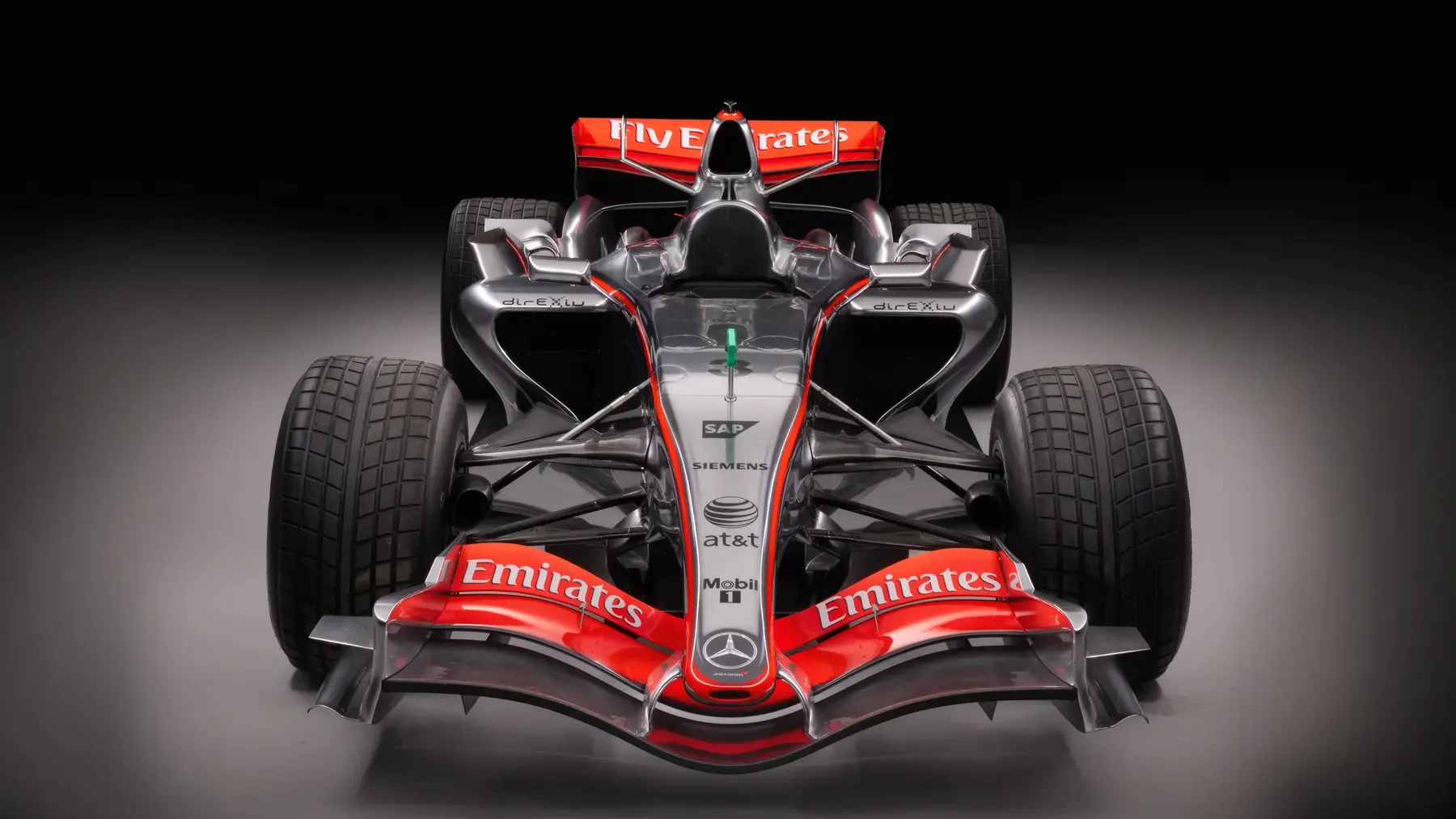
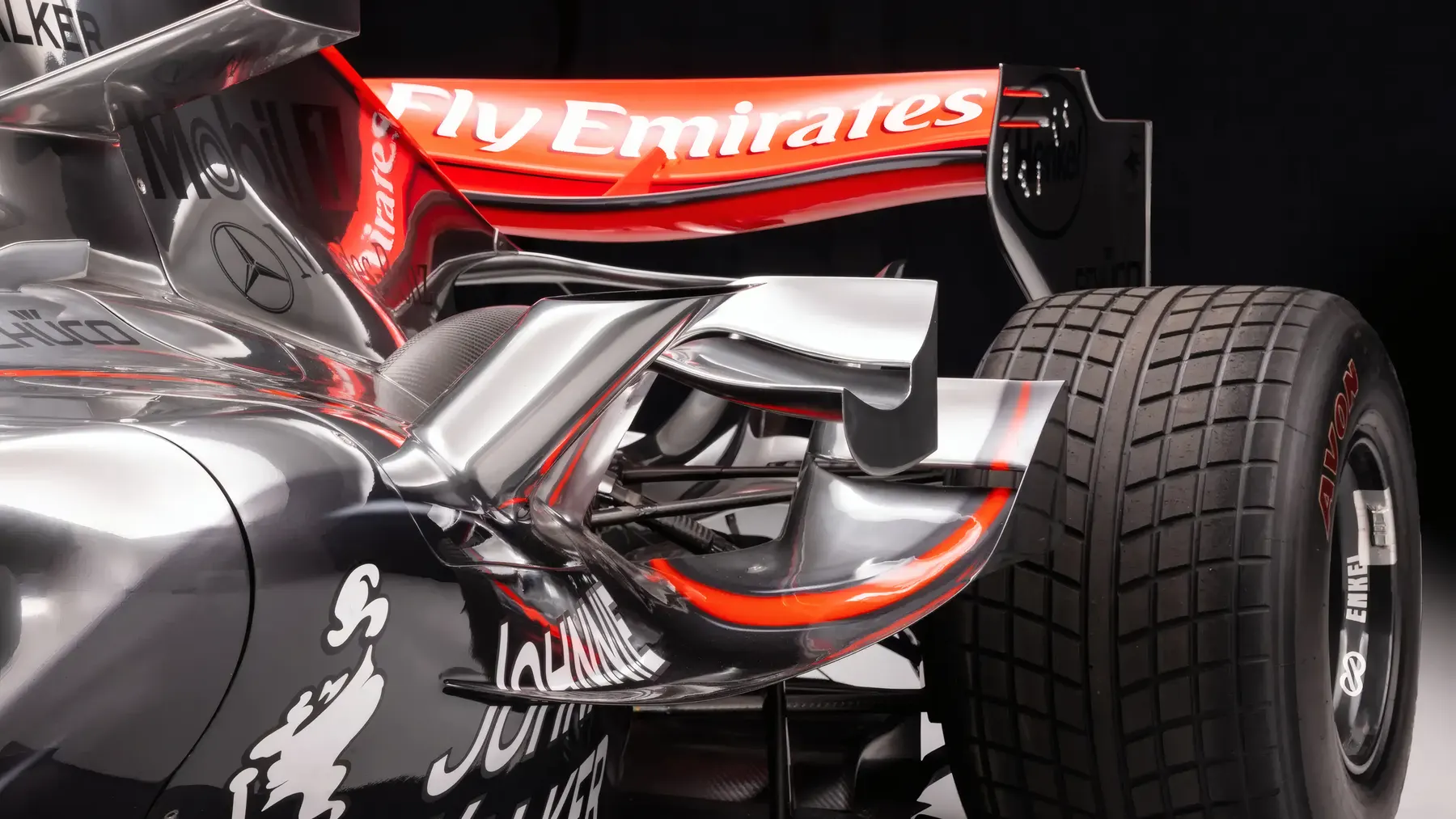
The MP4-21’s design carried forward the visual language established during the Newey years: high nose, precise rear packaging, front wings that sought to manipulate ground-level airflow aggressively toward the floor. What it lacked - or rather, what cannot be confirmed to be present - was the conceptual boldness that had occasionally made Newey’s McLarens look architecturally distinct from their rivals. The post-Newey technical leadership, which included Pat Fry in an expanded role alongside other members of McLaren’s aerodynamic department, produced a car that was mechanically meticulous and aerodynamically credible without being adventurous. There were no dramatic theoretical departures, no obviously novel solutions to the aerodynamic problems posed by the new regulation package. For a team seeking to consolidate rather than revolutionise, this was perhaps appropriate. In a championship where tenths of seconds define outcomes, it also established a ceiling that would prove difficult to lift.
The naming convention shifted with this car. McLaren moved from the traditional slash format - MP4/20, MP4/19 - to the hyphen of MP4-21. It was a small administrative change that nonetheless carried a faint symbolism, a punctuation mark between eras. The car raced in the team’s established silver-chrome livery under West and Mercedes-Benz commercial branding, maintaining the visual identity that would be replaced by Vodafone’s red-and-silver scheme when the team’s commercial landscape transformed for 2007. The 2006 season was, in retrospect, the last year of one McLaren and the pre-season of another.
Into this technically transitional car, McLaren placed a driver pairing whose own transition would prove equally turbulent. Kimi Räikkönen was unambiguously the team’s championship instrument: a driver of exceptional natural pace and a particular gift for mechanical sympathy that enabled him to preserve tyres across long stints in ways that made race strategy simpler to manage. His approach to a quick lap - minimal steering corrections, weight transfers that were smooth to the point of appearing effortless on data, throttle application that avoided the abrupt inputs that cause rear tyre overheating - was ideally matched to a car that rewarded precise, consistent inputs rather than heroic overdriving.
Beside him sat Juan Pablo Montoya, whose talent had been beyond question since his Williams years and whose McLaren career had nonetheless remained oddly unfulfilling. The speed was always present; what had never fully materialised was the consistency and institutional alignment that championship-level performances require across an entire season. By mid-2006 Montoya announced he would leave Formula 1 entirely for a NASCAR career, departing after the United States Grand Prix in circumstances that were reported with varying degrees of acrimony depending on the source. Whatever the precise dynamics within the team, his exit created a mid-season instability that McLaren addressed by elevating Pedro de la Rosa from the test driver role to race duties for the remainder of the year.
De la Rosa was a thoughtful and technically articulate driver, valuable for the quality of engineering feedback he could provide and trusted implicitly by a team that had worked with him for years. He was not going to challenge Alonso or Schumacher at the front of the field. His contribution was in stabilising the second car’s programme, continuing the development thread that would feed directly into the following season’s work, and providing McLaren with coherent data from a second chassis across the year’s remaining rounds. The circumstances of Montoya’s departure, and the team’s failure to extract a competitive full-season performance from their second driver, reflected a structural fragility around the non-Räikkönen seat that had persisted without convincing resolution for several years.
Räikkönen, for his part, delivered what the best of the MP4-21 was capable of: race victories that demonstrated the car had genuine front-running pace on its better days, and pole position performances that showed the chassis could achieve genuine single-lap competitiveness in the right conditions. But the season was punctuated by mechanical retirements that removed points he could not afford to cede in a year when Fernando Alonso was assembling a championship campaign of remarkable consistency for Renault. Hydraulic failures, engine-related retirements, and other mechanical interruptions arrived at particularly damaging moments, and their collective effect on Räikkönen’s points total was severe enough to eliminate any realistic title challenge long before the season’s conclusion. McLaren finished third in the Constructors’ Championship, a result that reflected the car’s genuine mid-season competitive level while also confirming the gap between competing and winning.
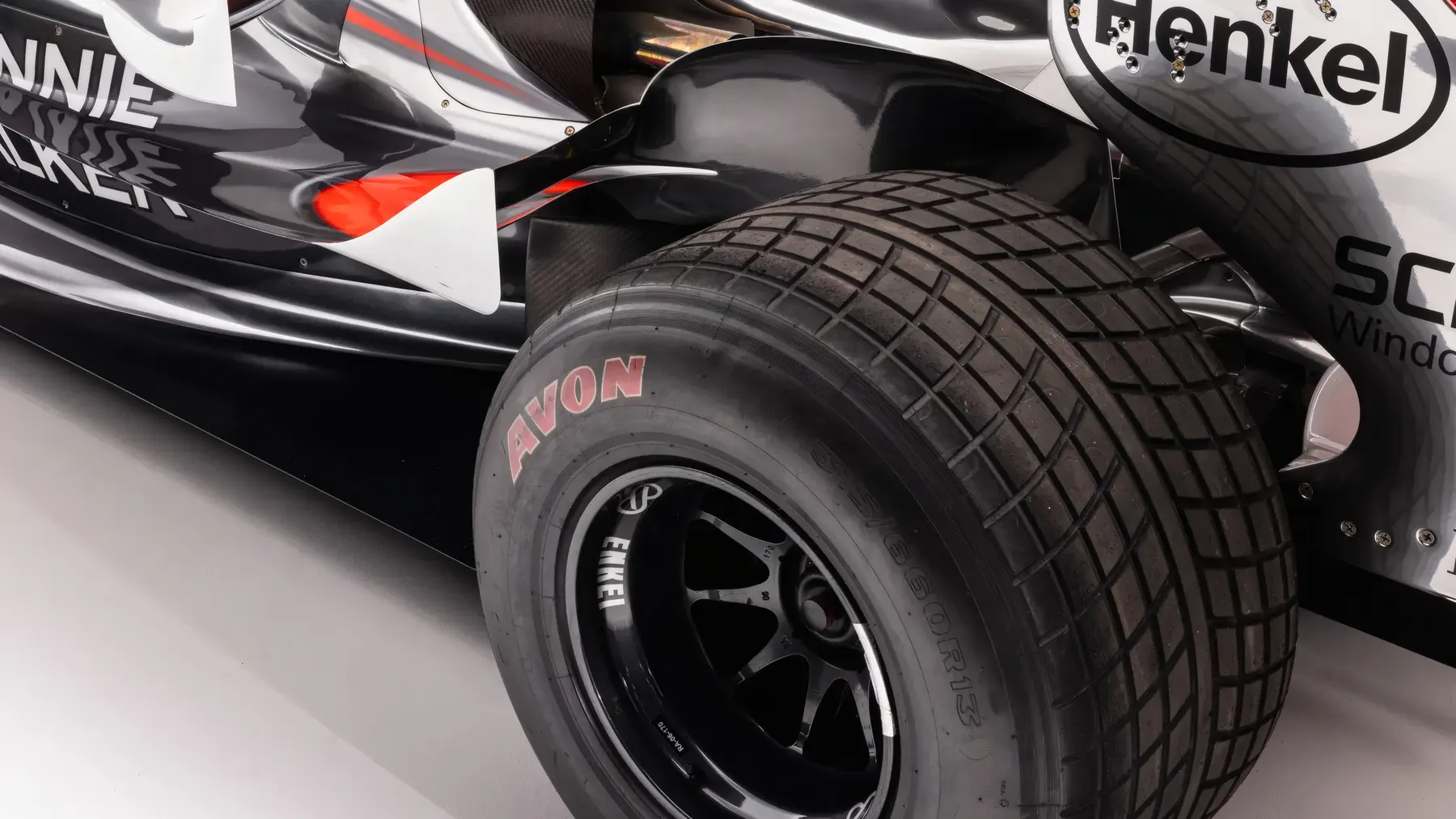
The reliability record is the MP4-21’s most damaging legacy, and it warrants careful consideration rather than easy dismissal as a consequence of the V8 transition. Formula 1 teams operate with engineering tolerances and pre-season development programmes designed specifically to identify and eliminate this kind of attrition. When failures accumulate across different systems over multiple events, the explanation that reaches beyond individual incidents tends to involve either the inherent fragility of first-year hardware under extreme stress or a disruption in the quality control and development structures that prevent failures from reaching the track. Whether the departure of key technical staff alongside Newey had affected McLaren’s institutional processes in ways that took time to surface - whether knowledge about reliability validation had walked out with the people who held it - cannot be determined from outside the organisation. What is clear is that the failure rate was inconsistent with McLaren’s engineering culture and damaging in proportion to the car’s actual pace.
The aerodynamic limitations were more subtle in character, but no less real in consequence. Renault’s R26 remained the competitive benchmark through much of the season, and its design philosophy reflected a different approach to the regulation package: a car that generated downforce with less reliance on conventionally positioned surfaces, with better management of the total aerodynamic load across varying conditions. Alonso’s ability to manage the R26’s tyre temperatures through strategic deployment - running longer stints, adjusting his driving style to suit different degradation windows - gave Renault flexibility in race strategy that the McLaren’s slightly different aerodynamic balance made harder to replicate consistently. Ferrari’s F248 F1 posed a different kind of challenge, particularly in the second half of the season as Schumacher’s title challenge intensified. McLaren occupied the space between these two poles: fast enough to win on the right circuit with the right conditions, unable to sustain the development momentum required to challenge for a title across twenty or more rounds.
The MP4-21 was also asked to perform its competitive function against the background of institutional repositioning that consumed significant organisational bandwidth. The growing Vodafone commercial relationship that would transform McLaren’s financial position and public identity for 2007 required attention and structural preparation alongside the racing programme. The silver car competing through 2006 was in some sense already the past, its successor already being planned and resourced. That reality does not excuse the reliability failures or explain away the aerodynamic shortcomings, but it contextualises a year in which McLaren was managing more uncertainty simultaneously than its public communications suggested.
What the MP4-21 does demonstrate, despite all of this, is something genuinely significant: that McLaren’s engineering culture, manufacturing capability, and driver quality were sufficient to produce a competitive Formula 1 car through an institutional transition of considerable magnitude. The foundations established during this season - in the team’s aerodynamic methodology without Newey, in its evolving understanding of the Mercedes V8 package, in the second-generation technical leadership structures that were defining themselves in practice - fed directly into the MP4-22 of 2007 and, ultimately, the MP4-23 that brought Lewis Hamilton to the brink of the championship in 2007 and delivered it definitively in Brazil in 2008.
Räikkönen himself left for Ferrari after the 2006 season and won the championship McLaren had been unable to provide him in 2007, in circumstances almost as narrow as those that denied him in 2006. The symmetry is pointed. The MP4-21 was the car in which his competitive quality was most visibly under-rewarded - a driver performing at the limits of his considerable ability, let down not by his own precision but by the car’s reluctance to sustain the performances that precision deserved. That mismatch between driver and machinery, as much as any technical specification, defines what the MP4-21 ultimately was: a genuinely capable racing car that asked more than it gave.