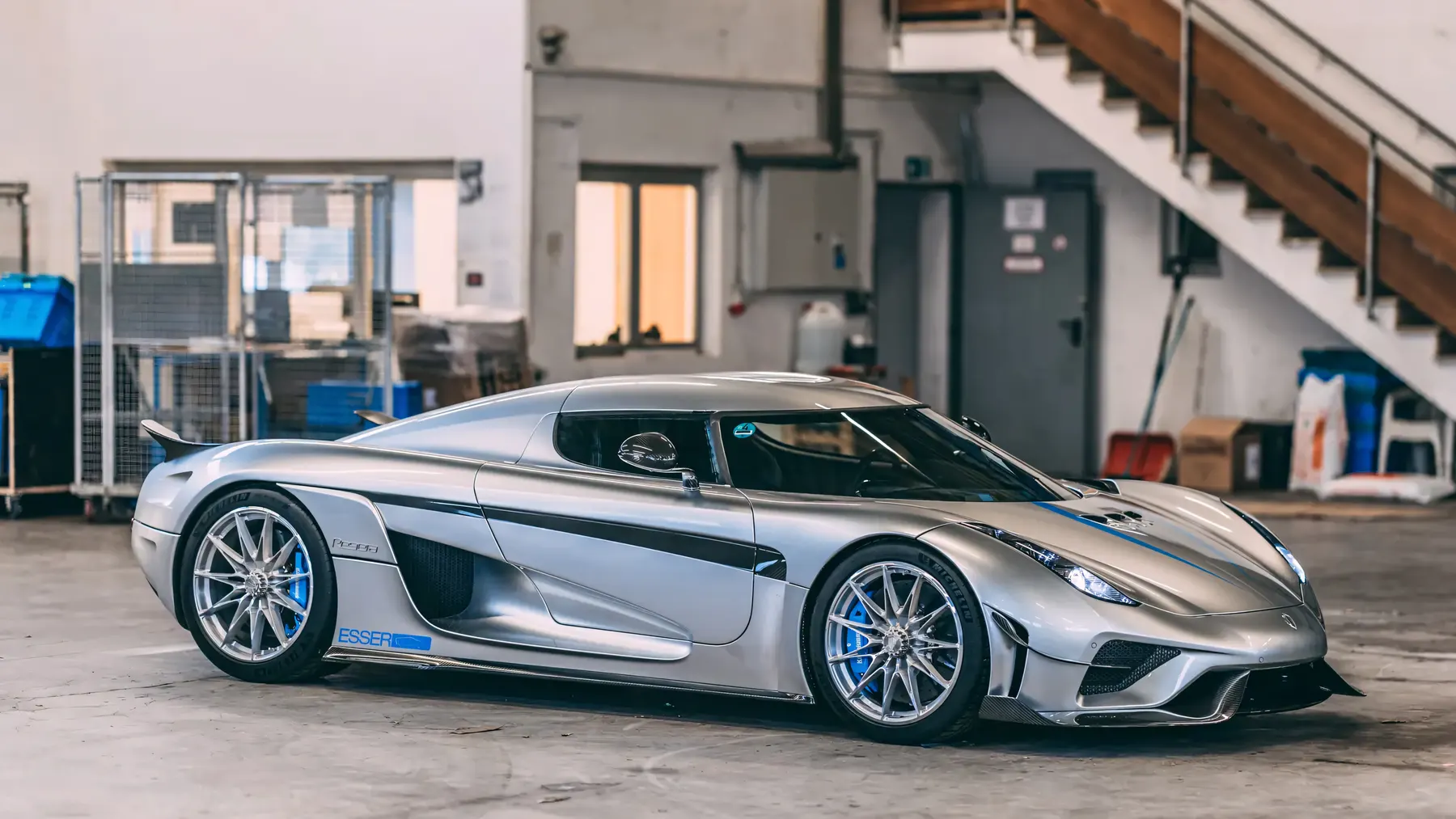
Koenigsegg Regera: The Hypercar That Deleted Its Own Gearbox
2021 Koenigsegg Regera
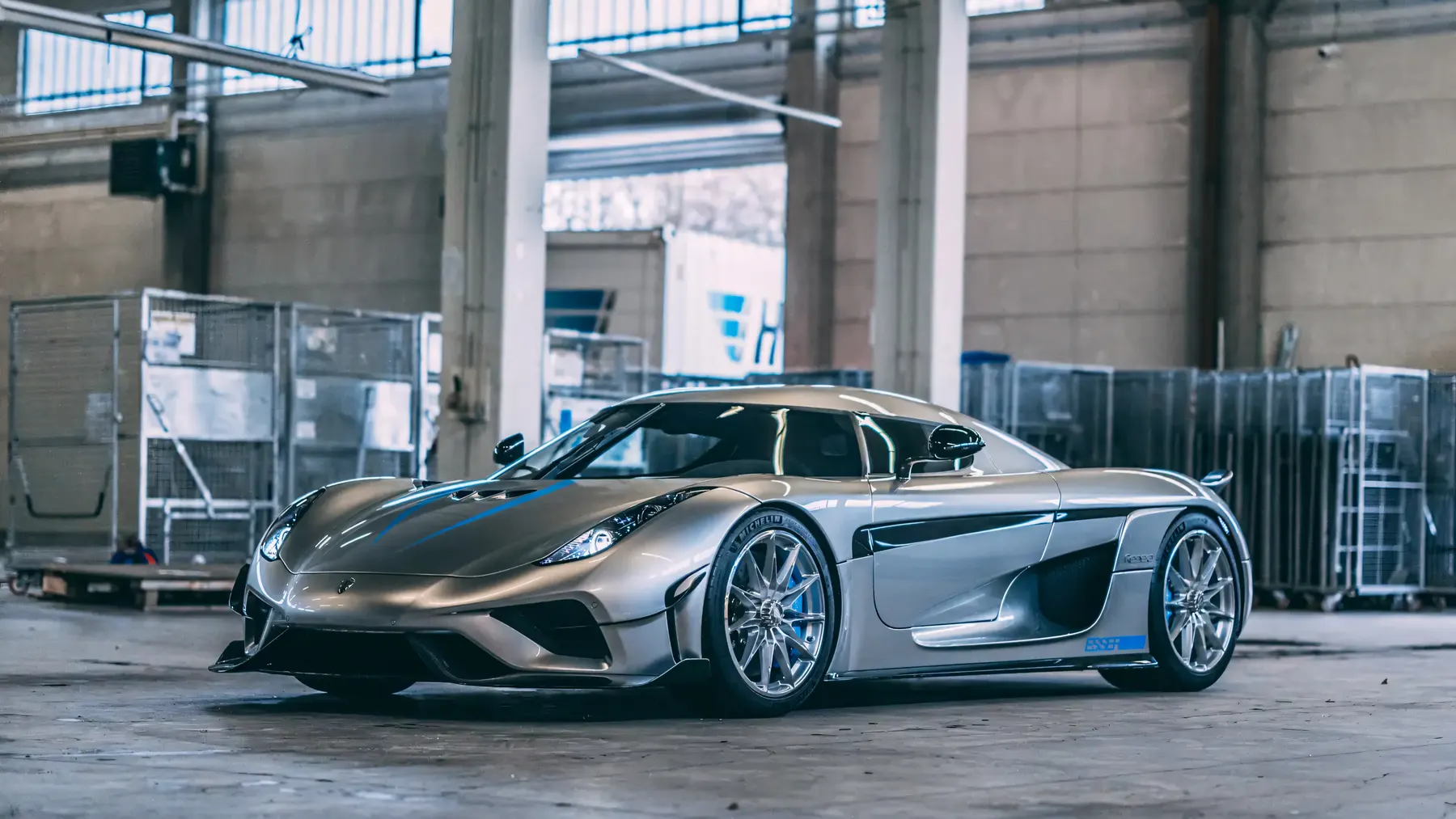
Images: Stephan Bauer / RM Sotheby's
When Christian von Koenigsegg stood on the Geneva Motor Show stage in 2015 and explained that his new car had no gearbox - not a dual-clutch, not a sequential, not even a traditional single-ratio reduction drive, but a hydraulic coupling connecting a 5.0-litre twin-turbocharged V8 directly to the rear axle - the room went quiet in a way that suggested people were either fascinated or genuinely confused. That moment encapsulated everything the Regera was designed to be: audaciously unconventional, engineered from a blank sheet rather than an adapted precedent, and completely indifferent to the way other people made fast cars.
The Regera sits within the Koenigsegg lineage as a philosophical departure from everything that came before it. Where the Agera RS and the CCX were about extracting maximum mechanical drama - manual intervention, high-revving combustion catharsis, a car that demanded active participation - the Regera was conceived as something closer to a hyper grand tourer. Koenigsegg described it as a “relaxed” hypercar, which, for a machine producing a claimed combined system output of around 1,500 bhp, required some creative reframing of what relaxation actually means at 200 mph. The name itself comes from the Swedish verb “regera,” meaning to reign or to govern, and there is something deliberate about that choice. This car was meant to impose its will on physics rather than invite the driver to fight the physics themselves.
The powertrain architecture, which Koenigsegg branded the Koenigsegg Direct Drive system, is genuinely one of the more inventive drivetrains produced in the modern era of electrification. The combustion component is the familiar Koenigsegg-developed 5.0-litre twin-turbocharged V8, tuned in Regera specification to produce somewhere in the region of 1,100 bhp. Three electric motors supplement it: one mounted at the crankshaft for regenerative braking and launch assistance, and two on the rear axle delivering direct electric torque. The combined peak system torque figure is in the region of 2,000 Nm - approximately 1,475 lb-ft - and it arrives in a way that no conventional combustion car can replicate, because the electric motors deliver their contribution instantaneously, from rest, with no stepped gearing to interrupt the flow.
The hydraulic coupling that connects the combustion engine to the driveline replaces both the torque converter and the gearbox in one piece. At low speeds, the coupling allows slip, effectively letting the electric motors carry the car while the combustion engine spins up to useful rpm. As speed builds, the coupling locks up progressively, and above roughly 30 mph the entire combined output hits the rear wheels with no interruption. The result is a power delivery curve that feels less like a car accelerating and more like a rocket at sustained burn. Koenigsegg’s claimed acceleration from rest to 400 km/h - that is, 0 to 249 mph - came in at under 20 seconds in testing, which places the Regera among the fastest-accelerating production cars ever made when measured over that particular distance. Top speed was quoted at 255 mph.
On paper, this sounds magnificent. In practice, what it means is that the Regera asks remarkably little of the driver in conventional terms. There are no upshifts to time, no clutch to manage, no rev-matching to execute. The car simply accelerates, with a progressive deepening intensity that starts civil and becomes genuinely shocking within a few seconds. For drivers who measure involvement in the mechanical act of working through gears, this is a real reduction in tactile engagement. The Regera was deliberately designed to remove that layer, replacing it with something more serene and, arguably, more intimidating - because there is nothing to do except steer and apply the throttle while the car takes care of everything else at extraordinary velocity.
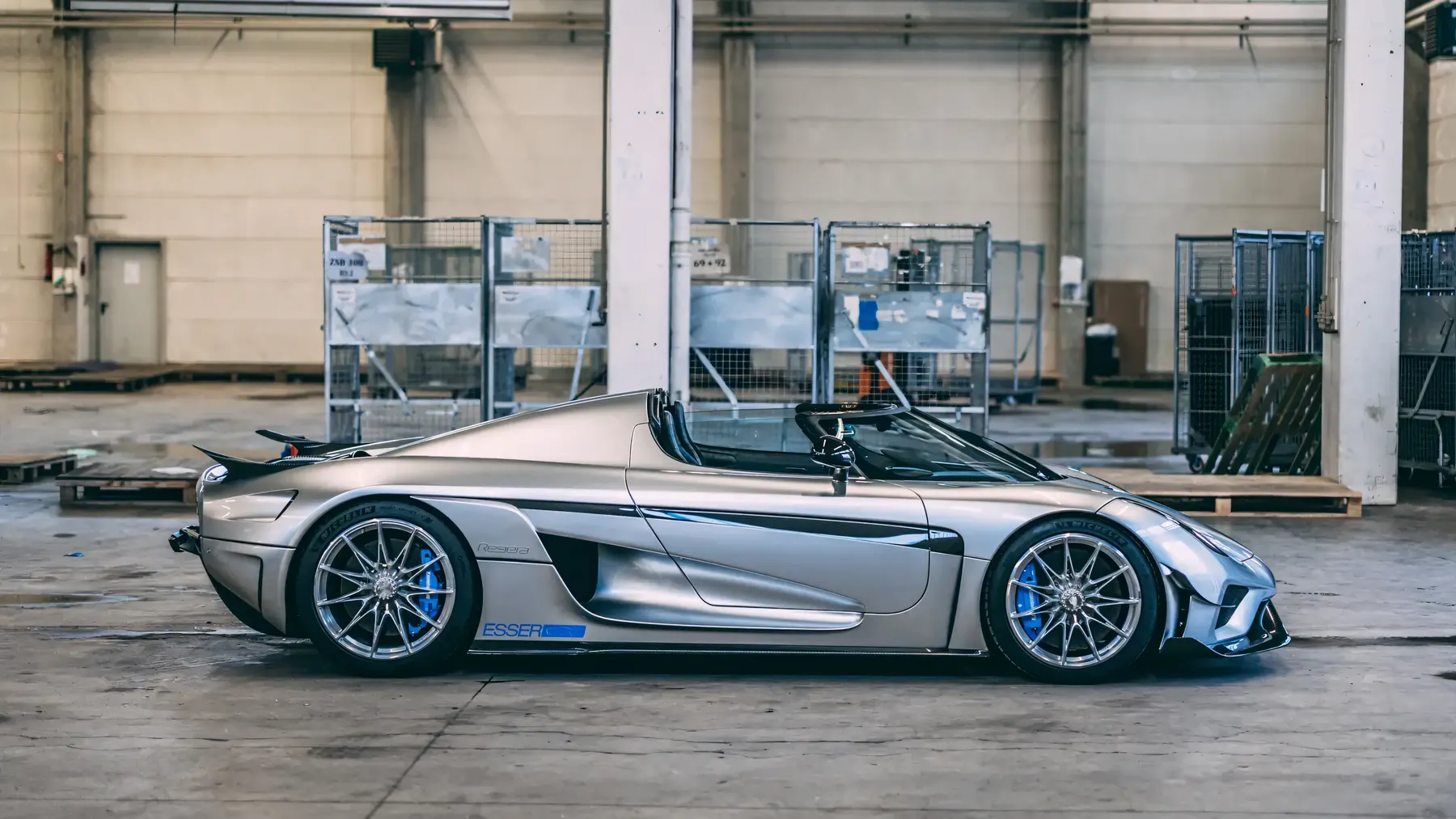
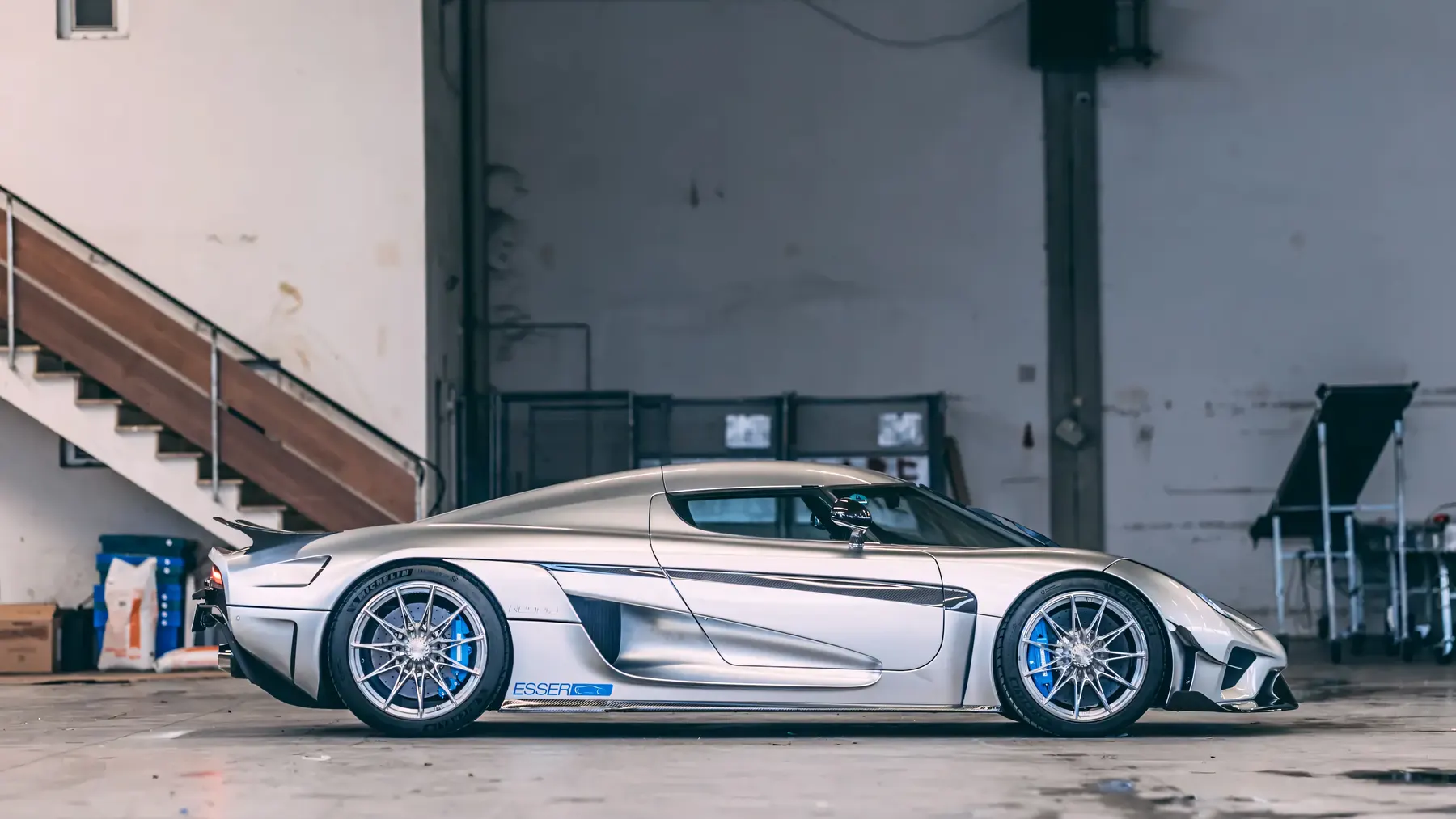
The body itself was also a significant departure. Compared to the Agera’s raw, purposeful surface language, the Regera was rounder and more resolved, with a fastback roofline that gave it something closer to a grand touring silhouette. The active aerodynamics worked across a large rear wing and underbody surfaces to generate downforce without the car carrying the visual aggression of a dedicated track weapon. The interior was more finished than previous Koenigsegg products - the brand worked on improving tactile quality throughout the cabin, with better door panel architecture, more substantial trim, and a centre console that felt like it had received considered ergonomic attention rather than being bolted together around the powertrain. This was a car designed to cover ground in comfort as well as speed, which for a company whose early products could be fairly characterised as driver tools rather than touring machines, represented genuine development.
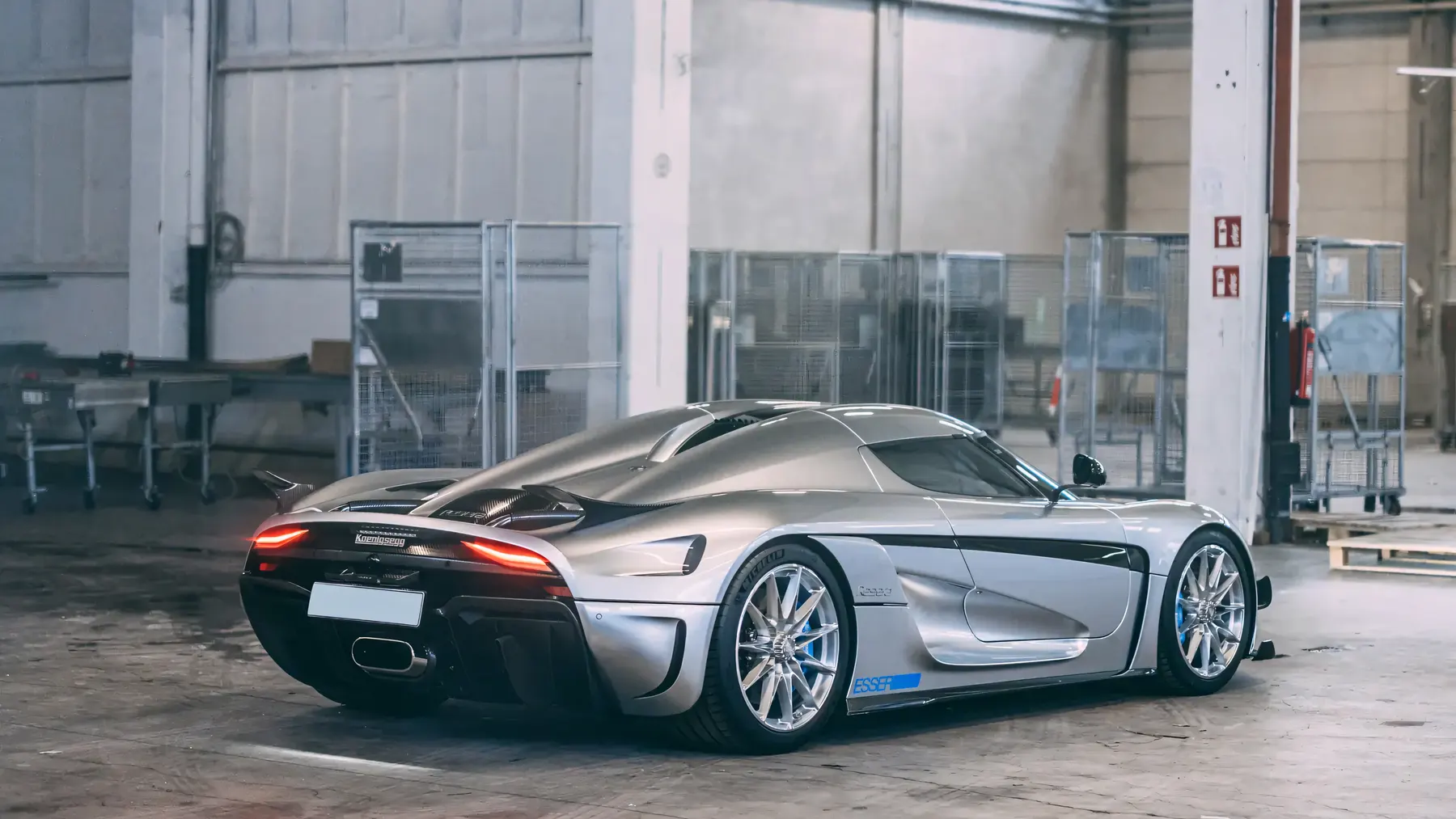
Production was capped at 80 cars, and there are accounts suggesting the entire allocation sold within hours of the car being formally announced. The pricing was, and remains, in the realm where specific figures depend heavily on options, but the base position placed the Regera well above the two million dollar mark. Each car was extensively personalised to owner specification, meaning that no two Regeras left Ängelholm identically configured. The small production volume also meant that the development and engineering investment Koenigsegg put into the drivetrain - which was substantial, with years of research into the hydraulic coupling’s behaviour across temperature ranges, driving conditions, and abuse cycles - was amortised across an extremely limited number of customers.
That exclusivity does not insulate the Regera from legitimate criticism, and there are several areas where honest assessment is warranted. The most structural limitation is the single-ratio drivetrain’s behaviour at lower speeds. While the hydraulic coupling manages the transition cleverly, the car is not particularly pleasant in city driving or slow traffic. The combustion engine sits in an awkward operational window at low road speeds, and the refinement levels that the brand was targeting for a grand touring machine do not quite materialise in urban conditions the way they do at motorway pace. The Regera is, in short, most convincingly a Regera at the kinds of velocities that are not accessible on public roads in most jurisdictions.
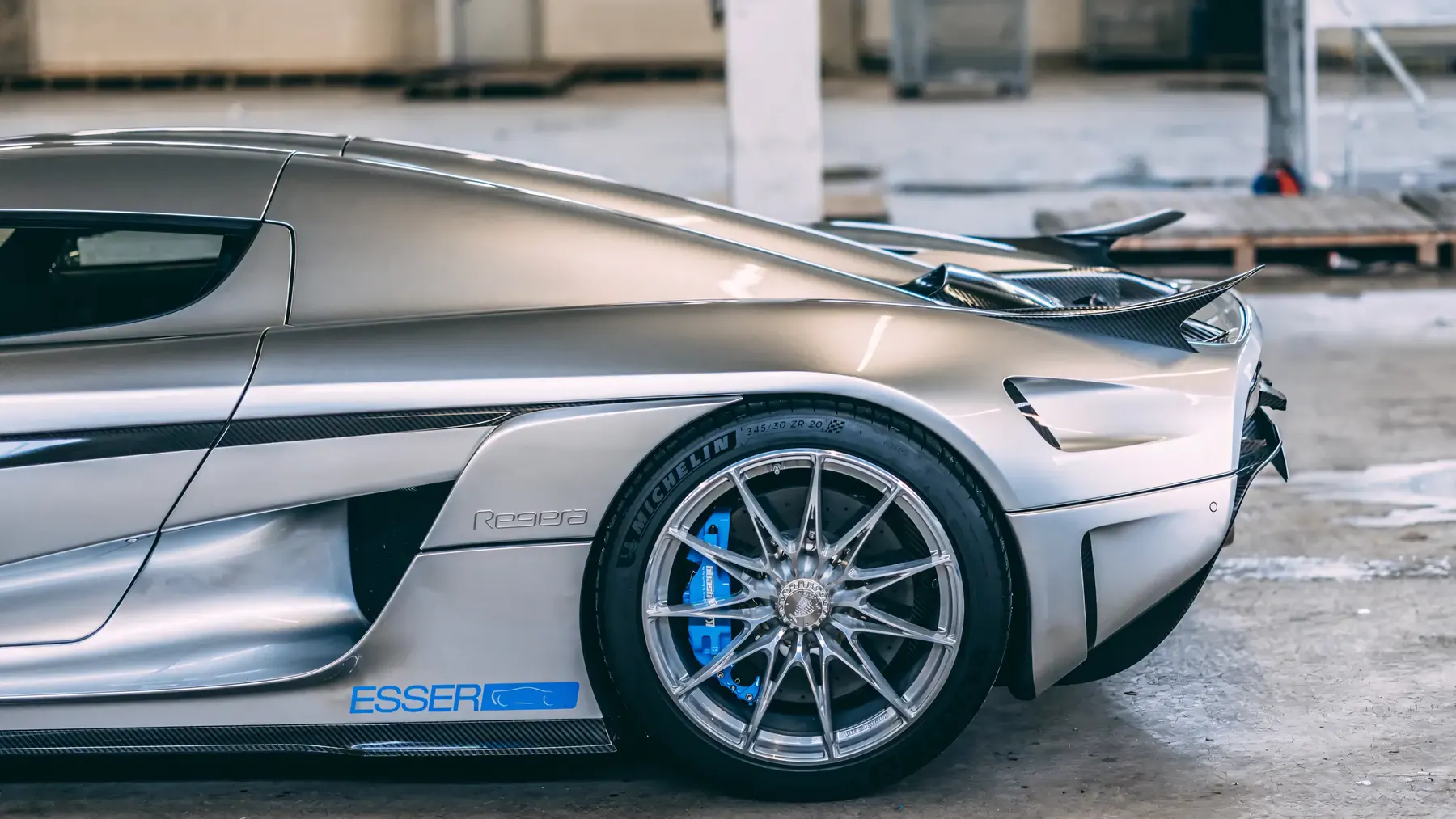
The weight is also worth addressing. At approximately 1,590 kg, the Regera is heavier than any previous Koenigsegg road car, which is an unavoidable consequence of packaging a high-voltage battery alongside a twin-turbocharged V8 and three electric motors in a carbon fibre chassis. Koenigsegg managed the weight with exceptional care, but it is there, and it is felt when the car is driven on roads with significant direction changes rather than long, high-speed straights. The car’s dynamic identity is better described as a blunt-force velocity machine than a handler in the classic sense. It corners competently, but the steering and chassis interaction do not provide the granular feedback that a dedicated sports car of half the power and a few hundred fewer kilograms might offer. The Regera trades outright mechanical intimacy for something closer to controlled, overwhelming force.
The electric-only operating range is also limited. The battery pack, at roughly 9 kWh usable, was never intended to provide meaningful zero-emission range. It can be driven on electricity alone at low speeds for a short distance - perhaps around 50 km under generous conditions - but this is a supplementary capability rather than a feature that defines the car’s character. In the years since the Regera entered production, the conversation around plug-in hybrid hypercars has matured considerably, and the Regera now reads as a first-generation solution: brilliant in its powertrain ambition but not designed to address the kind of operational electrification that later hybrid hypercars began taking more seriously.
What makes the Regera ultimately compelling as an object of engineering study is not that it solved all these problems, but that it asked different questions. Rather than building a more powerful version of what already existed, Koenigsegg’s engineers looked at what the combination of electric motors and a combustion engine could do if freed from the convention of needing a traditional gearbox at all. The KDD system is not without precedent in some respects - the idea of hydraulic couplings is old - but applying it to a 1,500 bhp combined-output road car and making it work consistently across the demands of real customers required a depth of engineering conviction that most manufacturers would not attempt. The fact that the system functions as cleanly as it does, that the transition from electric crawl to combined-force charge is as seamless as owners and journalists have reported, speaks to how thoroughly the concept was developed.
The Regera occupies an unusual position in the contemporary hypercar story. It is neither a track-focused car pretending to be road-legal, nor a grand tourer that happens to have exceptional performance numbers. It is something more specific: a machine built around a single profound engineering statement - that the gearbox, that fundamental organ of driver engagement, could be replaced not by a different type of gearbox but by an entirely different philosophy of how power reaches the road. Whether that philosophy suits every driver is a separate question. But the ambition behind it, and the rigour with which it was executed in a workshop in southern Sweden with a workforce numbering in the hundreds rather than thousands, is the kind of thing that makes the Regera genuinely significant beyond its velocity.