1931 Chrysler CG Imperial Dual-Cowl Phaeton by LeBaron
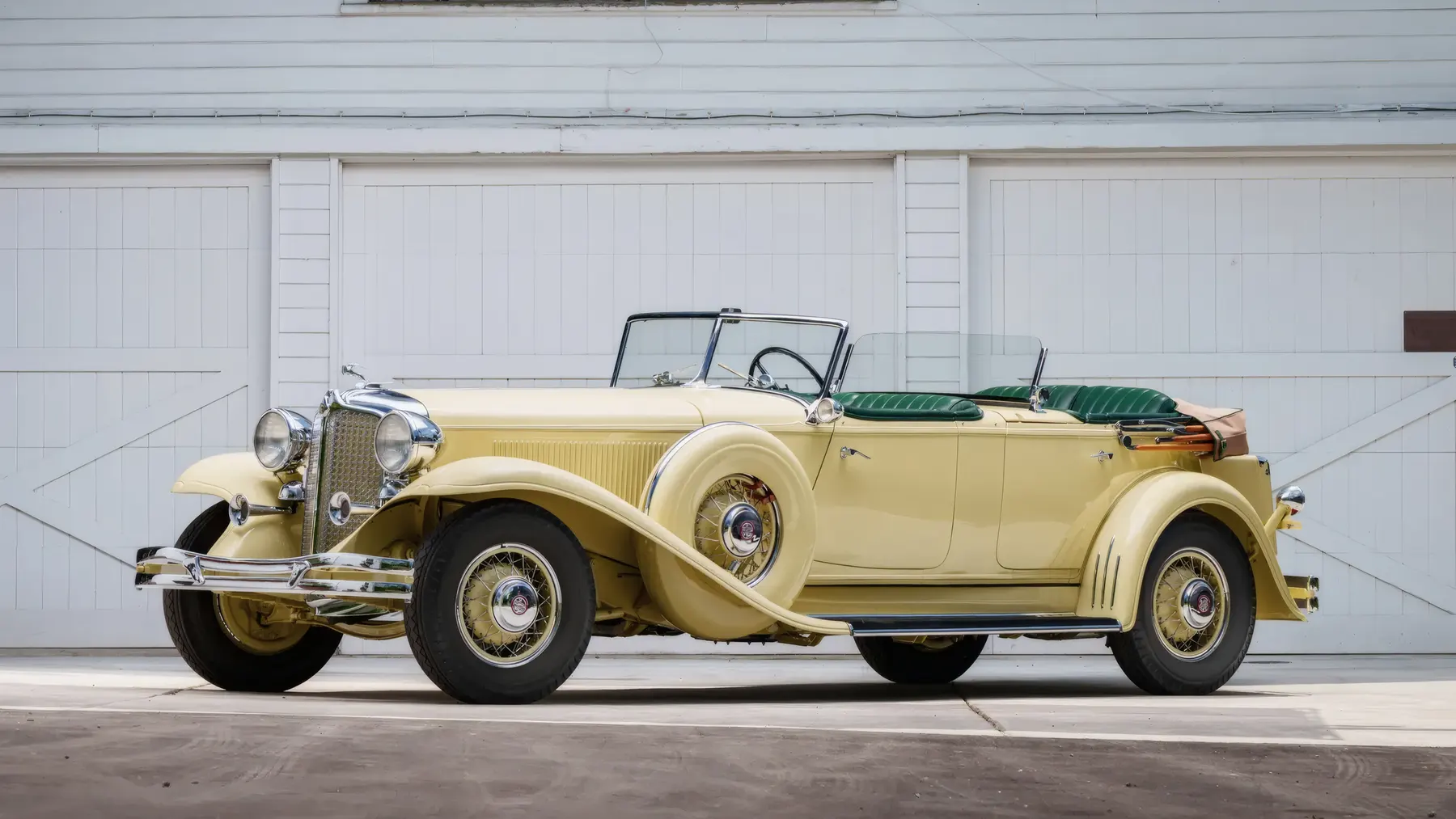
Images: Josh Bryan / RM Sotheby's
Walter Chrysler was not a man who believed in needless extravagance. When Cadillac unveiled its V-16 in 1930 and Lincoln countered with a V-12, the ex-railroad engineer who had conjured an entire automobile empire in less than a decade refused to follow. Twelve cylinders, sixteen cylinders - he thought it theater, engineering spectacle dressed up as progress. What Walter Chrysler wanted instead was something more difficult to achieve: a car that could stand on a stage crowded with multi-cylinder giants and earn its place through beauty, refinement, and honest engineering competence. The 1931 CG Imperial Dual-Cowl Phaeton by LeBaron is the most vivid answer he ever gave to that ambition, and it arrived at perhaps the worst possible commercial moment - right into the mouth of the Great Depression.
The CG designation marked Chrysler’s entry into genuinely ambitious luxury territory. The CG was the range’s first straight-eight-powered Imperial, built on the longest wheelbase Chrysler had ever used - 3,683mm, nine inches longer than the previous 80L-series and five inches longer than a contemporary Cadillac. The chassis was engineered by Chrysler’s in-house triumvirate of Fred Zeder, Carl Breer, and Owen Skelton - the “Three Musketeers” who had underpinned the marque’s rise - and the frame’s strength was apparently demonstrated at Coney Island when a five-ton elephant stood on the car without causing it to collapse, a publicity stunt so absurd it could only have been dreamed up in 1931. Testing was equally serious: the new eight-cylinder cars were put through roughly 320,000km of evaluation across the country, the prototype cars disguised under the alias “Eagle Specials” to prevent premature leaks to the press.
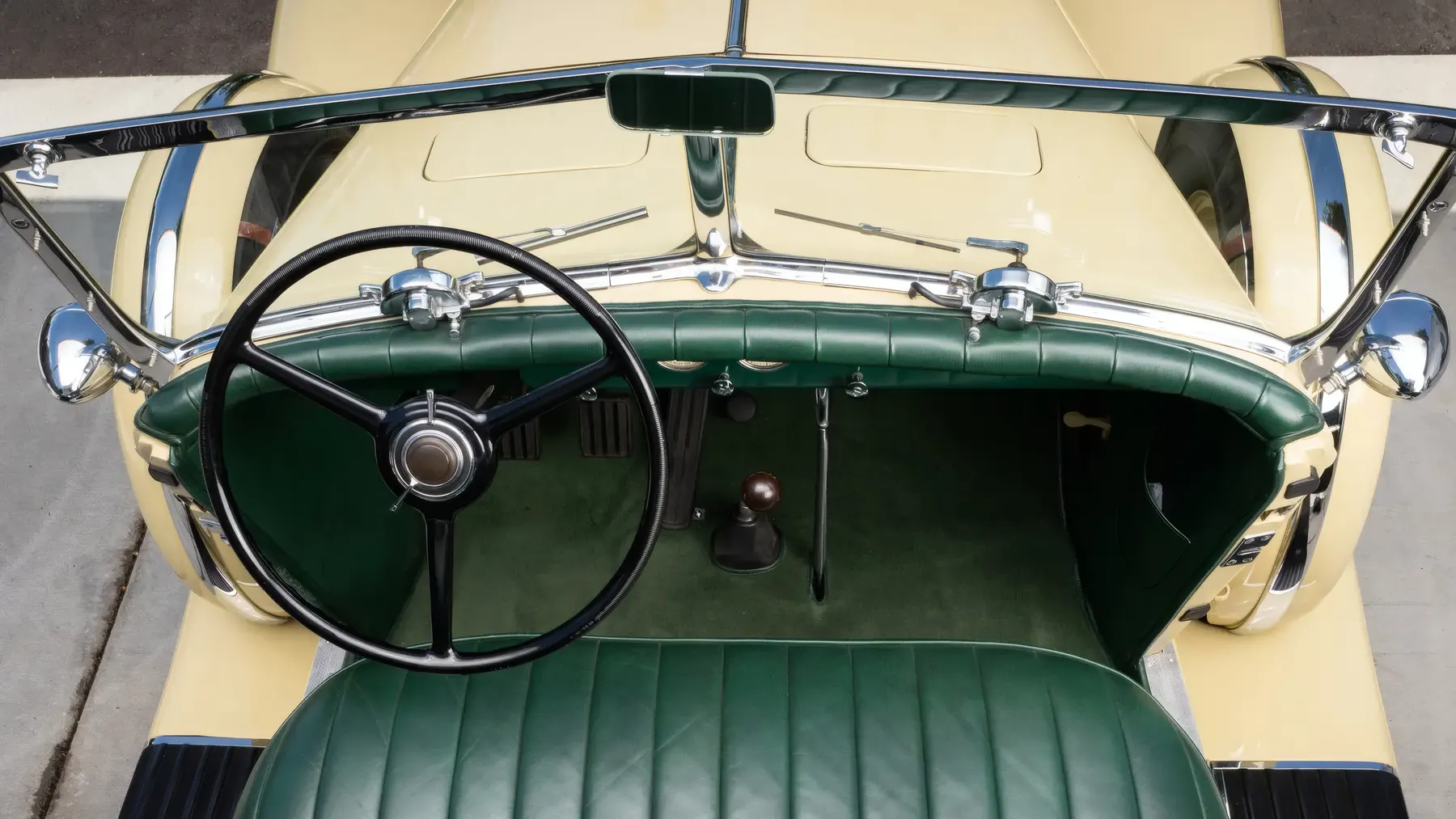
The engine itself was an L-head inline eight displacing 384.84 cubic inches - approximately 6.3 litres - running on nine main bearings, which was a significant engineering commitment to smoothness at a time when five-bearing eights were considered sufficient. Fed through a Stromberg carburettor, it produced 125 bhp at 3,200 rpm. An optional high-compression “Red Head” cylinder head raised that to approximately 135 bhp. These are not headline-grabbing figures against the multi-cylinder competition of the day, but they were sufficient to push a car weighing around 2,500kg to a claimed top speed of around 96 mph - genuinely fast for 1931. The four-speed synchromesh manual transmission was paired with Chrysler’s patented “Floating Power” engine mounting system, which suspended the engine at two points along its rotational axis, dramatically reducing the vibration that was the chronic irritant of large American straight-eights. The car also featured hydraulic brakes and hydraulic shock absorbers, freewheeling (which allowed coasting without the drivetrain engaged, a popular luxury feature of the period), and a new automatic spark advance mechanism - both the last two being firsts for Chrysler. The adjustable front seats and steering column were details that read as small conveniences today but represented genuine ergonomic thoughtfulness in a market where most luxury cars still treated the driver as an afterthought.
The design story, however, is where the CG’s legend was truly made. In the summer of 1929, as Chrysler’s engineers were sketching the new Imperial’s proportions, the freshly unveiled Cord L-29 was the most talked-about automobile in America. Designed by the self-taught draughtsman Alan Leamy for Errett Lobban Cord, the L-29 was startlingly long, phenomenally low, and possessed a visual drama that made every other American luxury car look Victorian. Walter Chrysler and vice president K.T. Keller were honest admirers. Chrysler reportedly considered both front-wheel drive and a rear-engine layout during the CG’s development - not because he believed in either solution, but because he was so committed to achieving the L-29’s swept, earthbound proportions that his engineers were asked to explore whatever packaging solutions would get the car low enough. Neither unconventional layout left the sketch stage, but the anecdote reveals a rare willingness to entertain radical means in service of a visual end.
The solution was more pragmatic and arguably more impressive: Leamy himself was hired. During a hiatus from his role as chief designer at Auburn and Cord, Leamy contributed directly to the CG Imperial’s styling, which is why the two cars share such an obvious family resemblance - the raked V-shaped radiator grille, the windscreen set far back along the cowl, the long hood running uninterrupted toward a deeply sweeping front fender line. LeBaron, working under the direction of Ralph Roberts (who had guided the firm since founders Tom Hibbard and Ray Dietrich pursued other opportunities), did not merely copy the Cord’s idiom but refined it. The hood was lengthened further, the grille made more emphatic, the bodyside treatment given greater elegance. By 1931, LeBaron had been absorbed as a subsidiary of the Briggs Body Company and was operating as Chrysler’s de facto semi-custom coachbuilding arm, responsible for designing and building all but one of the CG Imperial’s “catalog custom” body styles.
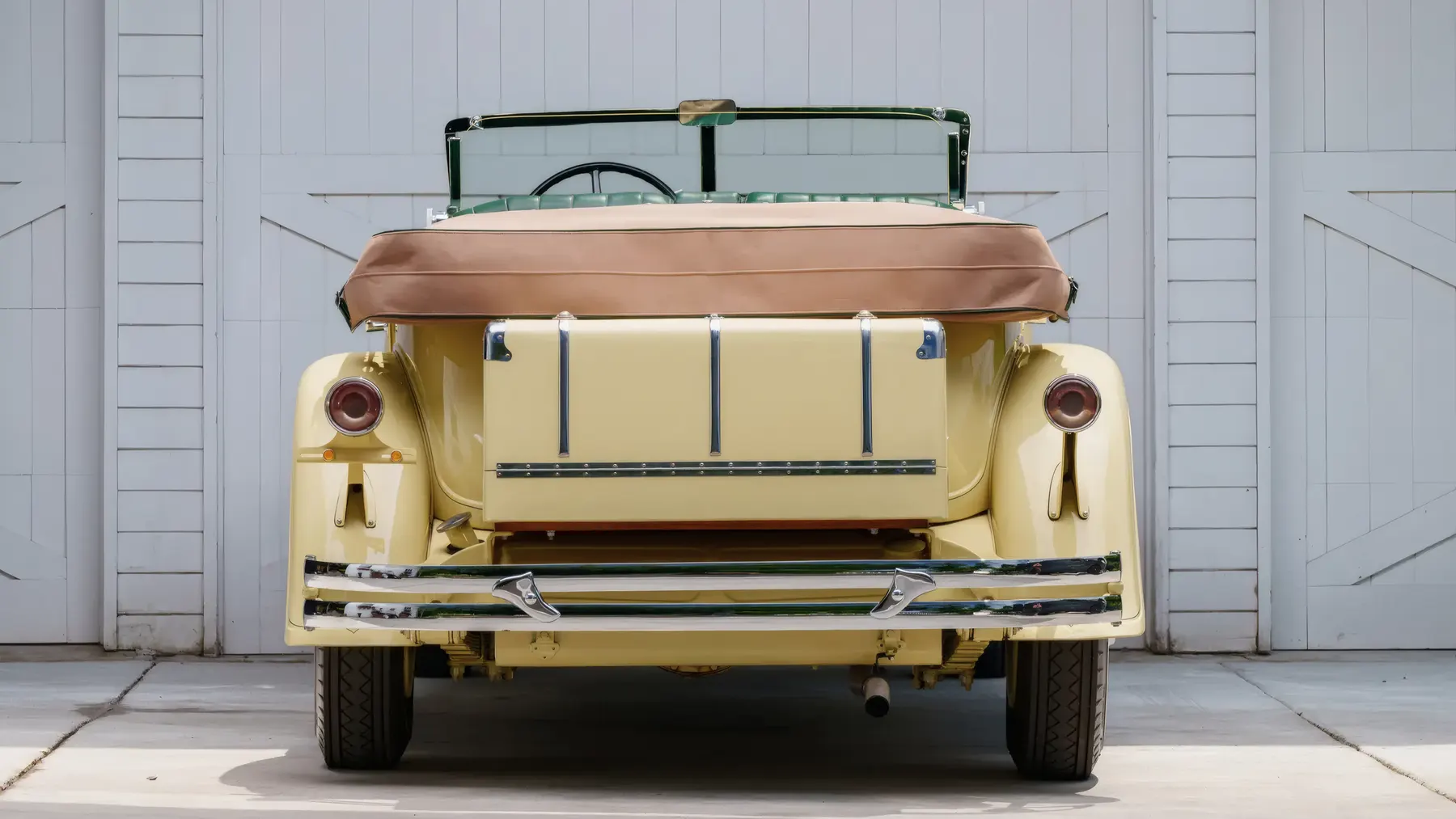
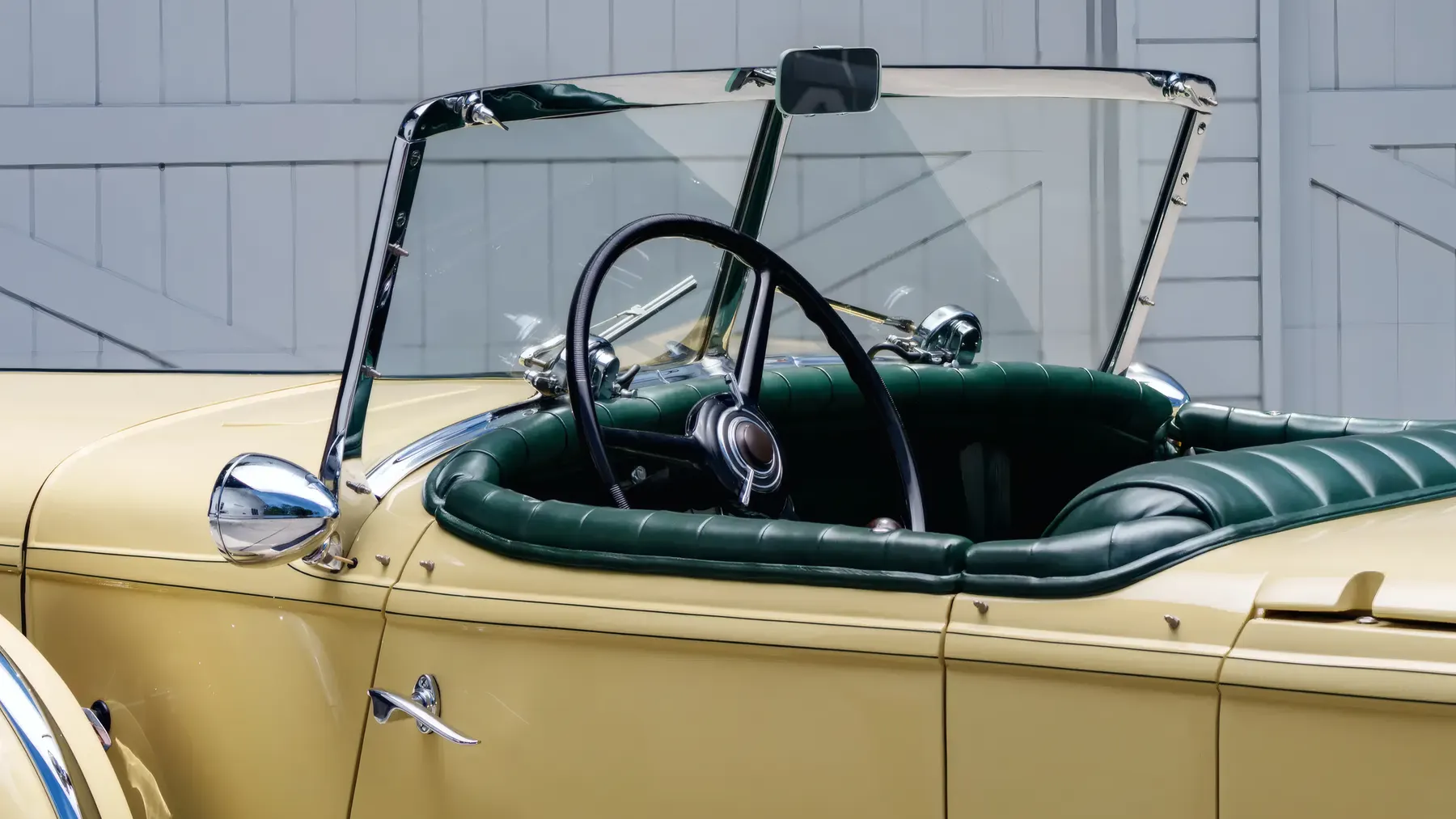
Those custom bodies included a roadster, coupe, convertible coupe, and the Dual-Cowl Phaeton - the most theatrical of all. The body style took its name from the structural element that defines it: a second cowl, positioned between the front and rear passenger compartments, that incorporates its own folding windshield. The result divides the open car into two semi-enclosed cockpits, giving both driver and rear passengers their own weather protection when the secondary screen is raised. Contemporaries described the effect as reminiscent of mahogany-hulled speedboats and open-cockpit aircraft of the period, which was entirely apt - there is something of the era’s romance with speed and openness compressed into one long, cream-painted body. The rear compartment windshield folds flat into the rear cowl panel when not in use, creating an uninterrupted sightline the full length of the car. The leather upholstery wrapped over the door tops and folded into the interior, a detail that contributed to the almost seamless visual continuity between the car’s exterior sculpture and its passenger space.
Of the approximately 3,228 CG Imperials built during the model’s production run, the vast majority wore standard Briggs-built bodies. The Custom Line, featuring LeBaron semi-custom coachwork, accounted for only around 330 to 339 examples total - a figure that already placed these cars in rarefied territory. Of those, approximately 85 were specified as Dual-Cowl Phaetons, each carrying the top price of $3,575. To place that number in context: an average American family income in 1931 was somewhere around $1,500 to $1,600 annually. The Dual-Cowl Phaeton cost more than twice that. The Chrysler Building had opened in May 1930, then the world’s tallest structure, and the CG Imperial arrived as though commissioned to match it - glamorous, ambitious, and arriving at precisely the moment when the world that would have most naturally bought it was dissolving around it. Car sales across the industry fell roughly forty percent by the end of 1930. Walter Chrysler himself later wrote that the company had to “cut salaries, reduce operations, retrench in almost every way.” The CG still managed to outsell its predecessor, but the window for this kind of automobile was closing with extraordinary speed.
To drive a CG Imperial Phaeton today - or even to read the careful observations of those who have - is to encounter a car that rewards the patience its scale demands. The 145-inch wheelbase does not encourage nipping through traffic; this is a car that expects the world to rearrange itself around the driver rather than the other way around. The straight-eight, for all its displacement, is not a violent engine. It is instead a smooth, surging presence that builds its power with unhurried authority, the Floating Power mounts allowing remarkably little of the mechanical activity to intrude into the cabin. The four-speed gearbox, well-synchromeshed for its era, allows leisurely progress without frequent shifting - exactly the character of machine these buyers expected, and exactly what the torquey, long-stroke eight-cylinder naturally provided. The hydraulic brakes were among the most advanced in the American market. The suspension, while not nimble in any modern sense, was carefully tuned to absorb the long, irregular roads of 1930s America with something approaching genuine comfort. The overall impression, by period accounts and the testimony of present-day owners who drive theirs regularly, is of a car that is far more manageable and satisfying than its physical presence suggests - large but not unwieldy, grand without being aloof.
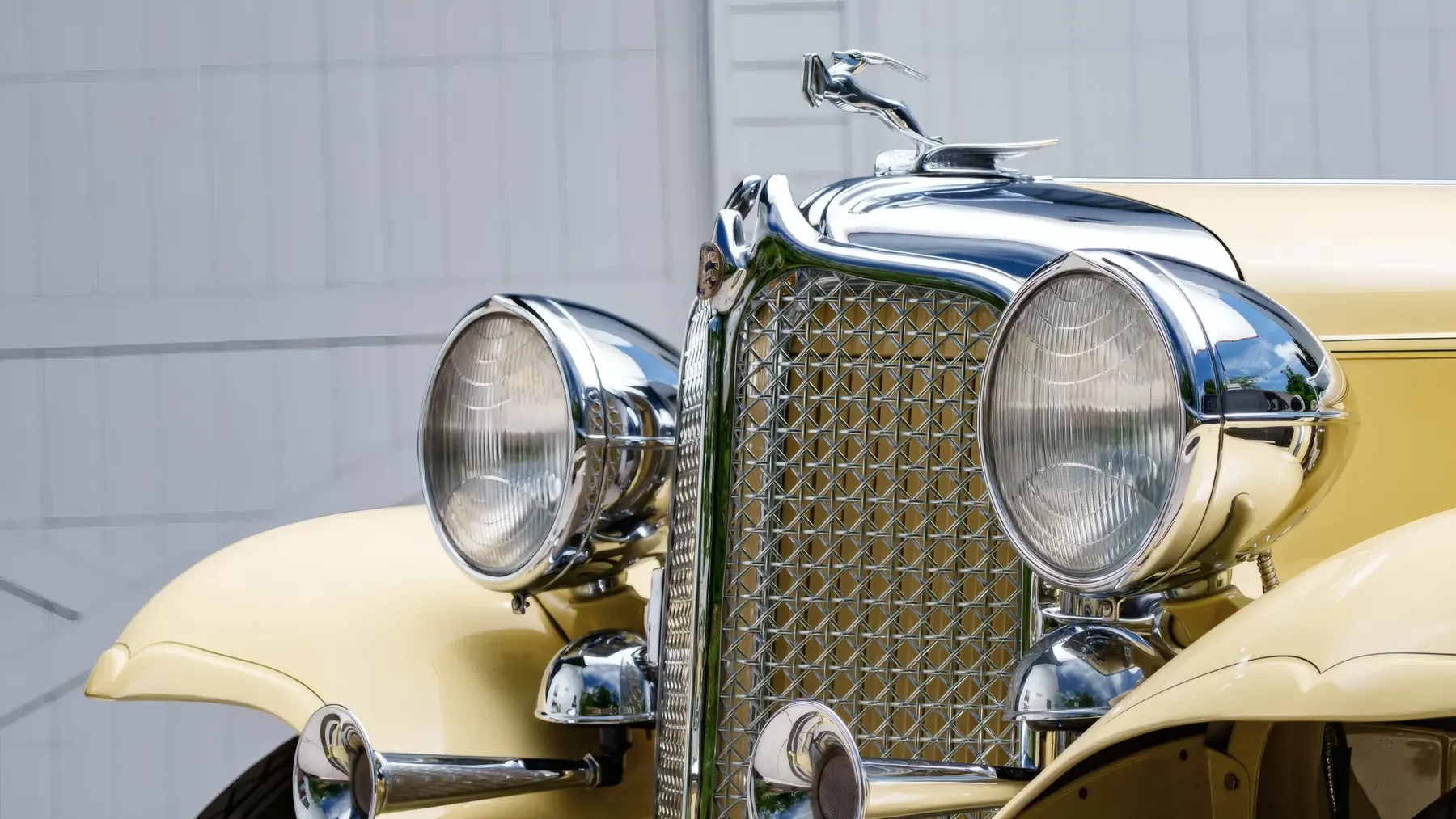
There is also the matter of what was missing, which speaks to the car’s character as much as what was present. Walter Chrysler’s refusal to build a twelve or sixteen-cylinder engine meant that the CG was competing against Cadillac’s 45-degree V-16 and the Packard Twin Six on the strength of its chassis, its coachwork, and its driving refinement alone. It managed to do so with genuine credibility. The engine’s nine-bearing design and the Floating Power mounting system gave the CG an impression of silkiness that many buyers found more than adequate compensation for the smaller cylinder count, and the car’s styling - legitimately one of the most distinguished American designs of the Classic Era - was a stronger competitive weapon than any camshaft count. The CG was also, in a quiet way, a performance car. Nearly stock examples were entered at the 24 Hours of Le Mans in the early 1930s, a detail that tends to surprise those who associate prewar American luxury cars with stateliness rather than speed.
The CG Imperial ran through the 1931 model year before being replaced by the evolved CH series in early 1932 and later the CL. The lineage retained the basic engineering and design language that the CG had established, but the CG itself occupies a particular position in Imperial history: the car that made the clearest argument for what the marque could be, at the exact moment when sustaining that argument became hardest. The Dual-Cowl Phaeton body, the most open and expressive configuration on offer, amplifies that quality of beautiful, almost defiant irrelevance to circumstance. It is a car designed for warm evenings, long roads, and the confidence - or perhaps the refusal - to acknowledge that the world has changed.
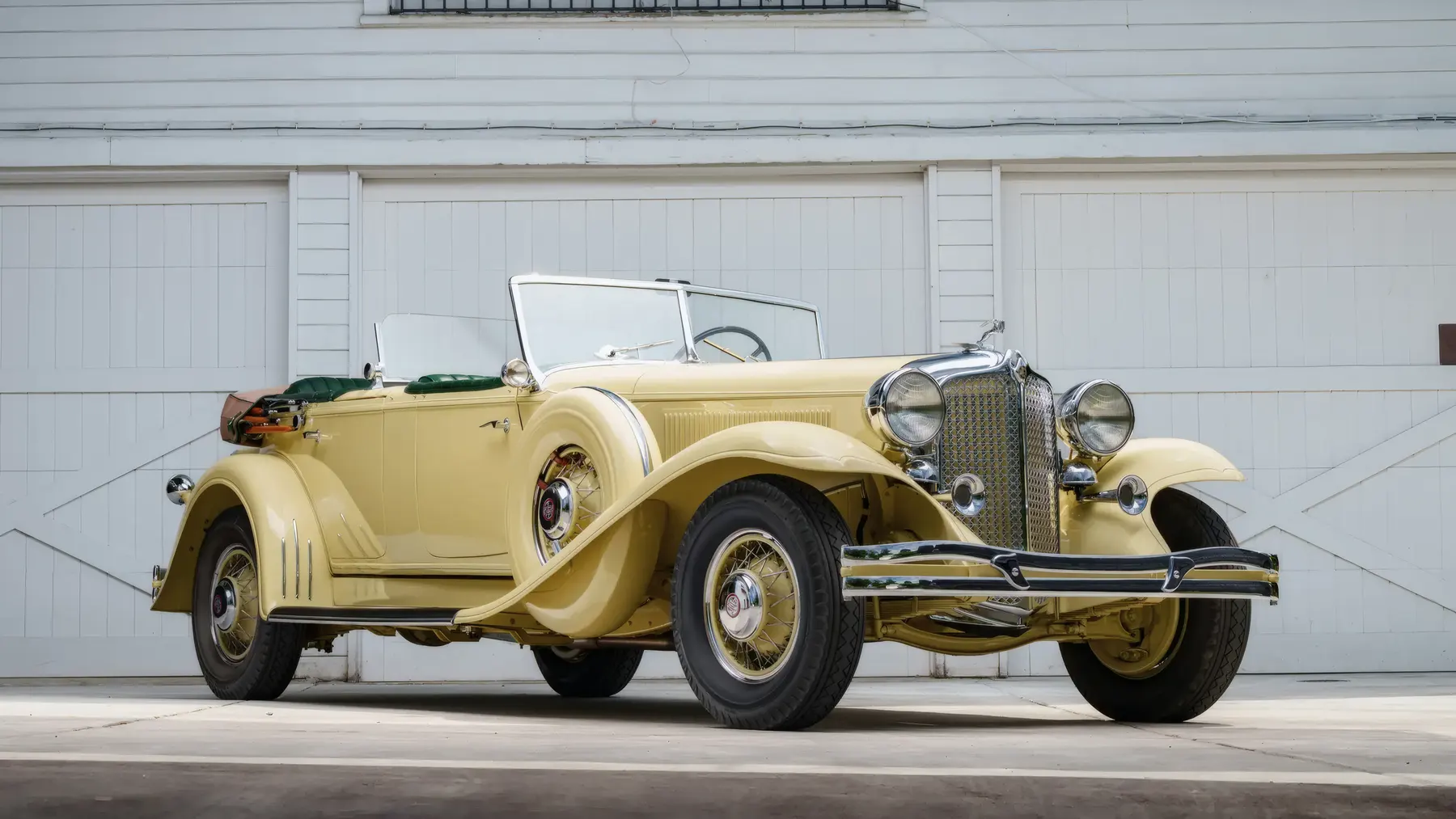
Collectors today regard the CG Imperial Dual-Cowl Phaeton as among the most desirable of all American Classic Era automobiles, a judgment ratified by consistent concours success at Pebble Beach and similar venues. Its rarity - approximately 85 examples were built, with fewer than that surviving in original form - ensures that it occupies the upper tier of any serious collection. The combination of correct LeBaron coachwork, matching numbers drivetrain, and well-documented history commands significant values at auction, though the cars that matter most to the enthusiast community are those that preserve their original character rather than those restored to an artificial perfection. The CG works best, one might argue, as Walter Chrysler apparently intended it: as a demonstration that restraint, beauty, and honest engineering could answer any challenge thrown at them, even the ones nobody saw coming.