Hupmobile I-226 Eight Coupe: Loewy's Cycle-Fender Gamble of 1932
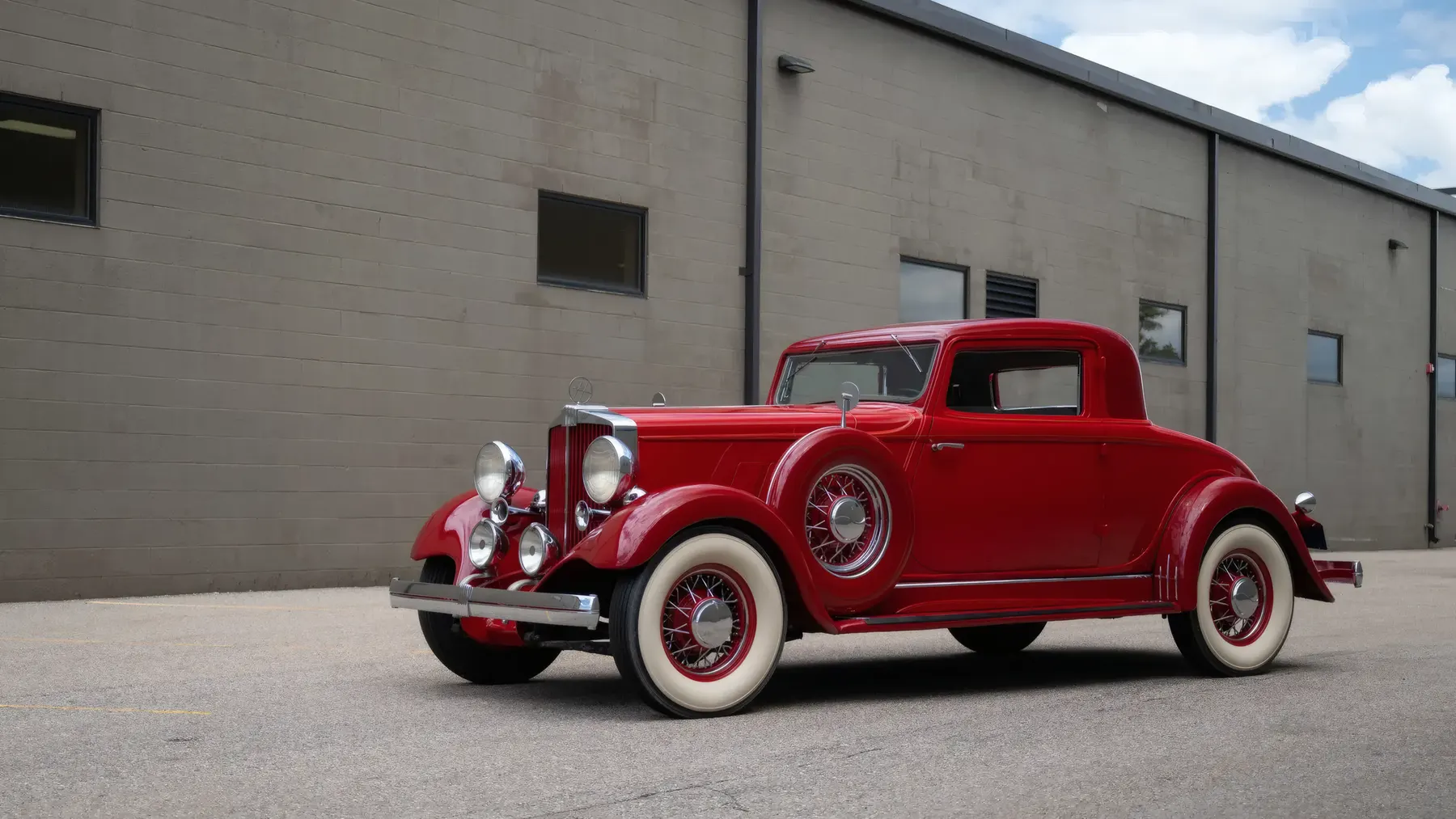
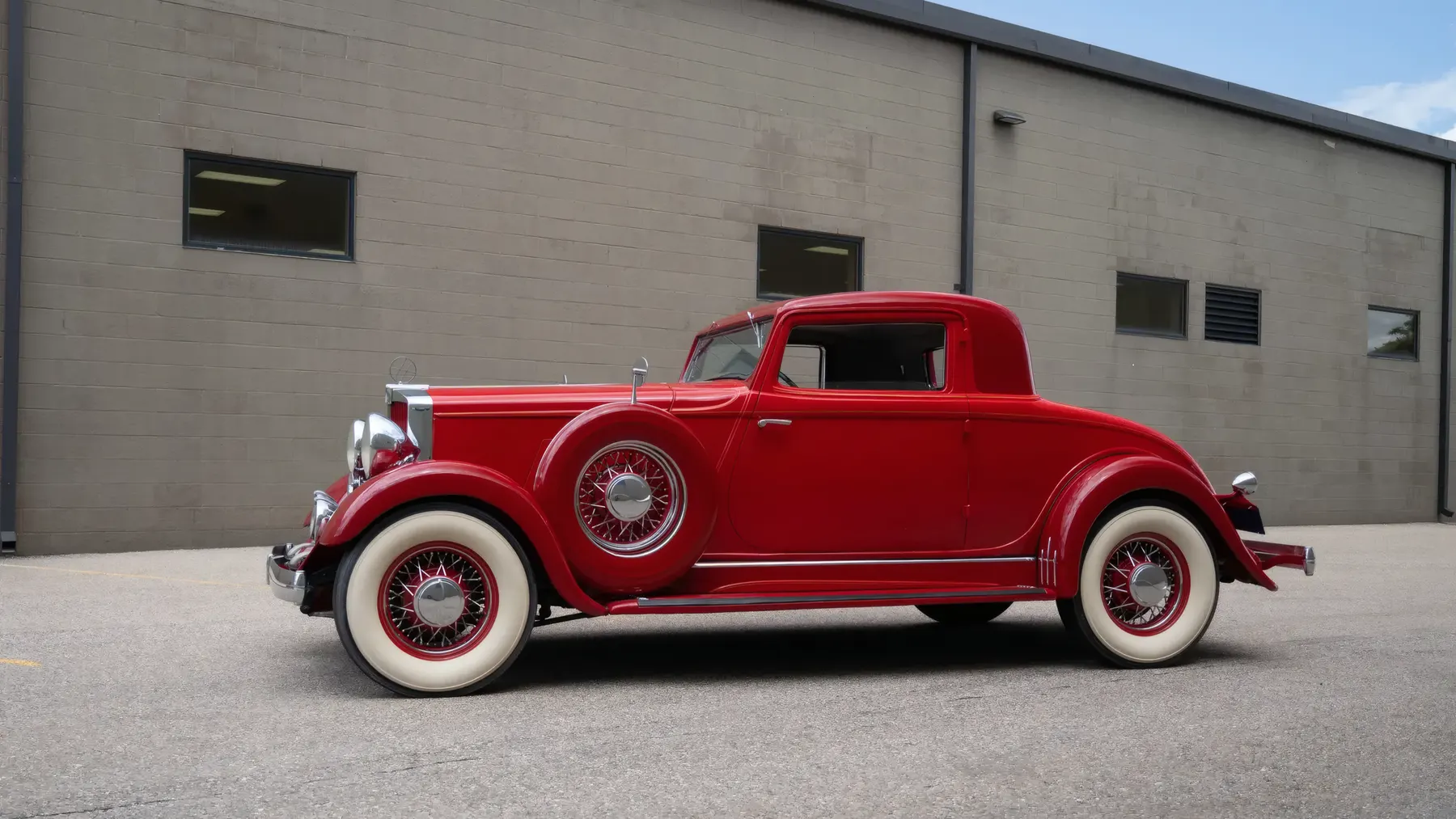
1932 Hupmobile I-266 Eight Coupe




Images: Darin Schnabel / RM Sotheby's
Few cars make the case for styling over engineering as bluntly as the Hupmobile I-226 Eight. Underneath, it was a side-valve straight-eight of thoroughly period specification. On top, it wore the cycle-fendered bodywork that gave Raymond Loewy his first automotive credit and a struggling Detroit independent its best argument for staying in business.
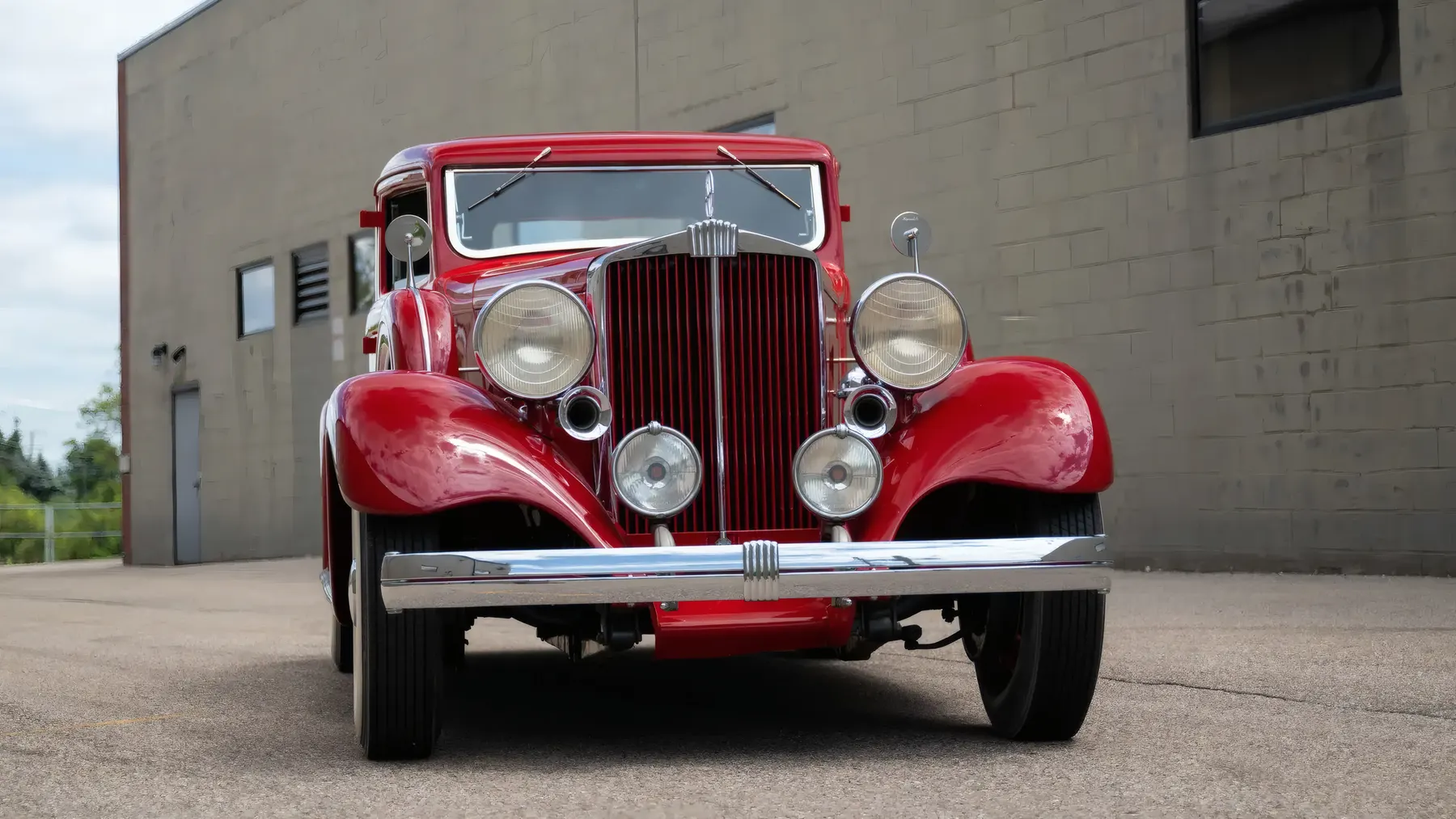
That argument was badly needed. Hupmobile production slid from 50,579 cars in 1929 to 22,183 in 1930, 17,451 in 1931 and just 10,467 in 1932. Part of the trouble was strategic. After replacing its four-cylinder car with an eight in 1925, Hupp drifted upmarket, then tried to catch every possible buyer with a sprawl of models, none built in sufficient numbers to earn economies of scale. Loewy approached the company in 1931 and followed up by commissioning a car that embodied his ideas; management liked what it saw and ordered the design into production for the second-series cars that appeared in January 1932. Hupp called the look “form-fitting”, which describes it neatly: front wings that follow the contour of the wheels, a vee’d radiator grille and a slight rake to the windscreen.
The second-series eights came in two sizes, the F-222 and the larger I-226, and it is the senior I-226 that matters here. A note on labels: some auction listings transpose the digits and print I 266, but the body text beneath those headings, and most of the other sources consulted, use I-226, which is the form to trust. The I-226 rode on a 3,200 mm wheelbase, roughly 100 mm longer than the F-222’s, and one specialist dealer’s account says the extra length went into the nose, giving the senior car longer and more dramatic proportions than its smaller sibling. Body styles included a rumble-seat coupe, a cabriolet, a sedan and a victoria. Hupp’s six-cylinder cars kept their 1930-vintage styling apart from the new grille, so the cycle-fender look was confined at first to the eights. Of the 10,467 Hupmobiles built in 1932, only 710 were Series I cars, according to figures gathered by the Hupmobile Club’s Hupp Herald and quoted in auction catalogue copy: about one in fifteen.
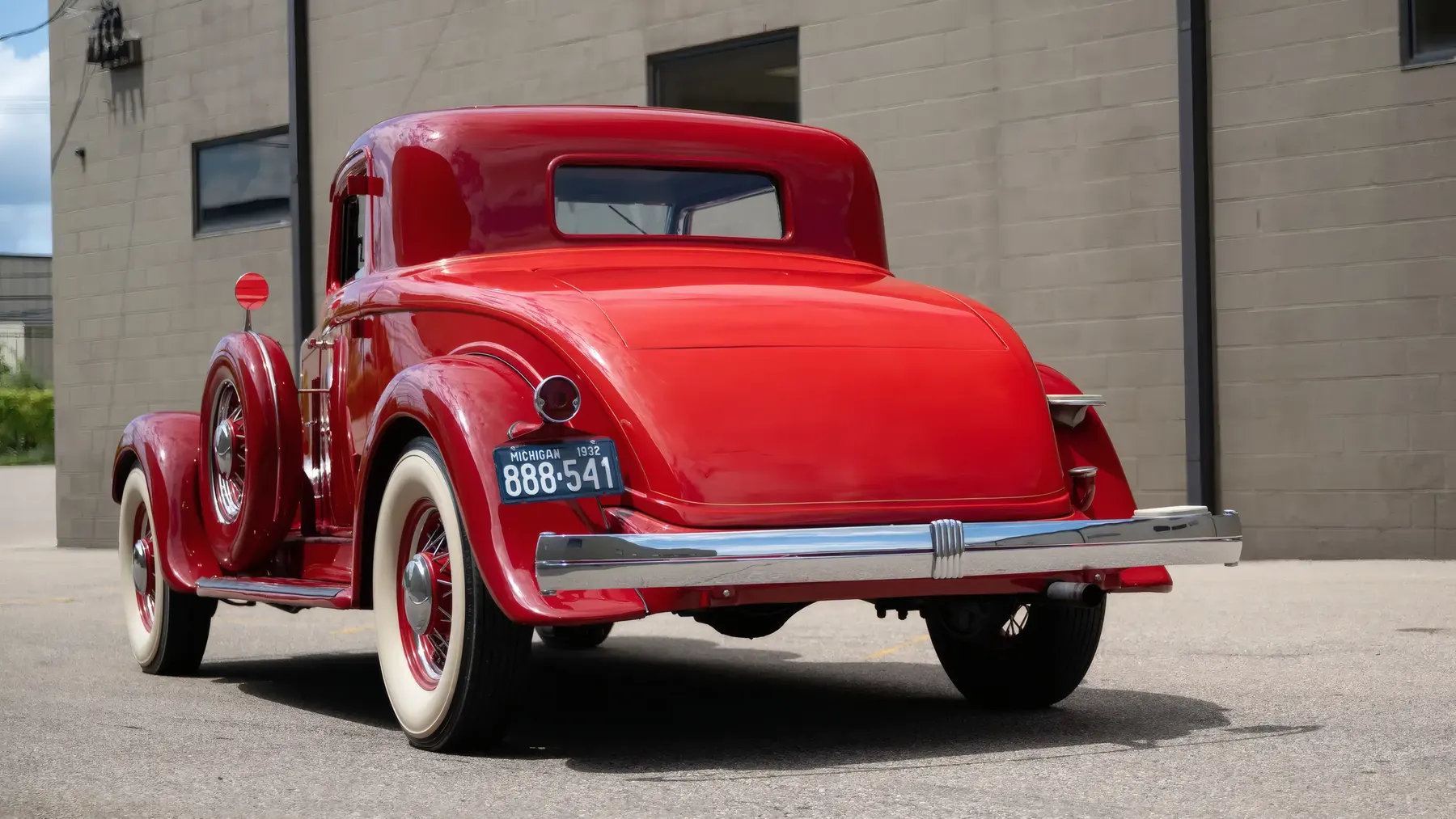
The engine was a 4.6-litre (279.9 cu in) L-head inline-eight rated at 103 bhp, driving through a three-speed manual gearbox with free-wheeling. Suspension was by semi-elliptic leaf springs on a solid front axle and a floating rear axle, and all four brakes were mechanical drums. That is evolution rather than revolution. Classic & Sports Car summarises the preceding Century Six and Eight as conventional if handsome, with mechanical brakes and a free-wheel option from 1931, and the I-226 carried that formula forward rather than rewriting it. The visible novelty was in the bodywork. For 1933 the senior eight became the I-326, with 302.2 cu in (just under 5.0 litres) and 109 bhp on the same wheelbase, while the 1933 cars gained a sloped grille and longer bonnets that covered the cowl.
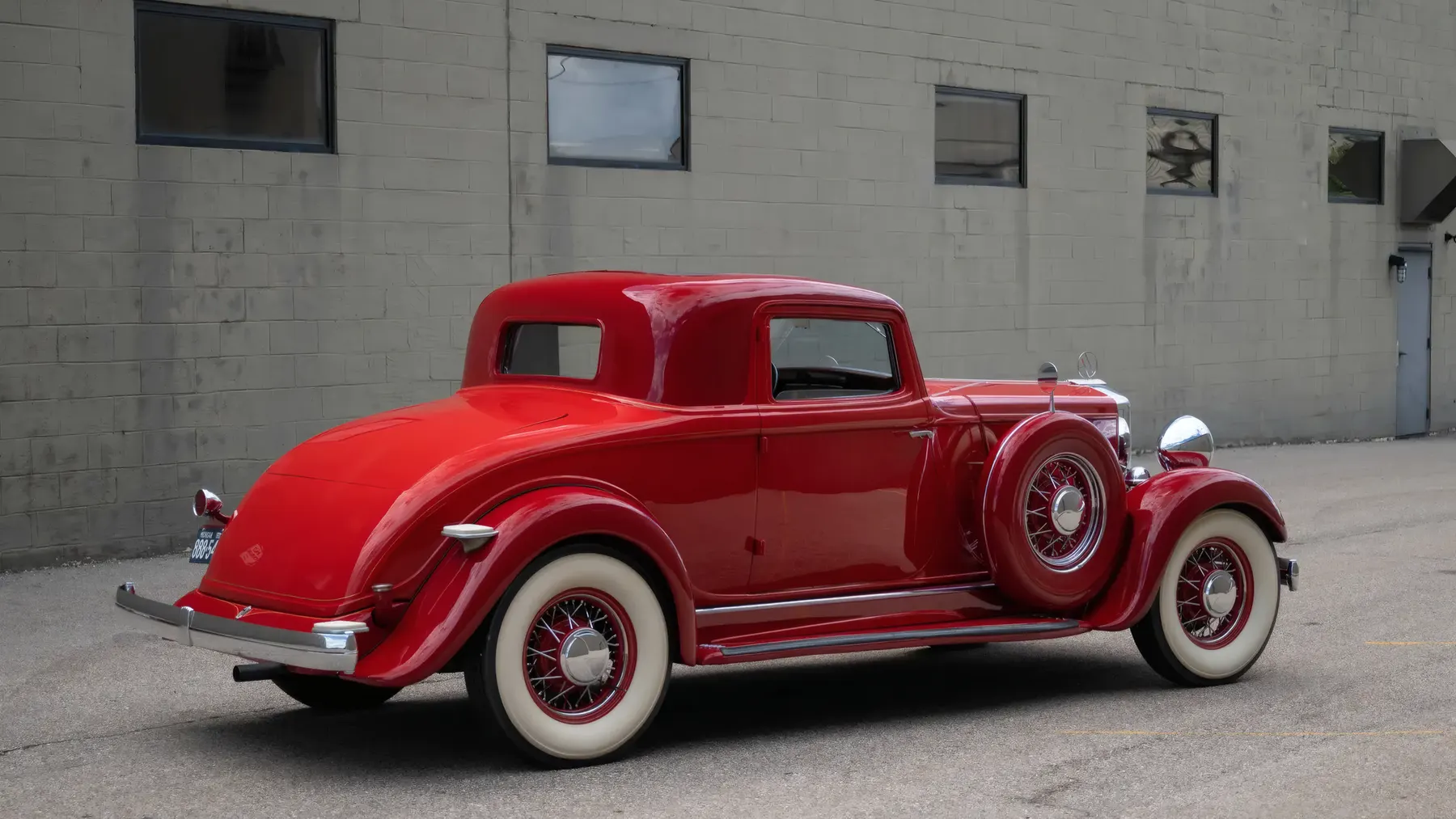
The bodywork is the point. The wings flow from the grille into a wide, vee’d beltline moulding and flare again over the rear wheels, so that the whole car reads as one continuous gesture, and chrome wheel discs and bonnet vent doors on the larger eight reinforced the effect. How much of that was Loewy’s alone is framed differently depending on the source. Collectible Automobile credits the cycle-fender Hupps as the first car design attributed to him; Curbside Classic describes his 1932 work as a tidying-up of existing cars and reserves “clean-sheet” for the 1934 Aerodynamic; and RM Sotheby’s catalogue copy calls the Series I the only all-new offering of the year. The likeliest reading is that Loewy supplied the styling envelope for a car whose engineering was Hupp’s own. One dealer’s account has the cars reaching the public at the Chicago Auto Show in 1932, with a low Sport Victoria on the stand, which fits the January 1932 introduction.
Verified period road-test material is thin, so the driving character has to be read from the specification. A 103 bhp output from 4.6 litres is roughly 22 bhp per litre, a low-stress rating that points to unhurried, long-legged progress rather than urgency, and leaf-sprung solid axles with mechanical drum brakes suggest a car that rewarded smooth, anticipatory driving. The free-wheeling transmission would have shaped the experience more than any of that. A one-way overrunning clutch let the car coast without the engine dragging it back and made gearchanges easier, and an SAE paper of 1931 describes the aims in precisely those terms. The costs were recognised at the time too: the discussion recorded with that paper raised the need for a higher idle speed to avoid stalling, the loss of the engine as an emergency brake and extra brake wear on downgrades. Free-wheeling was enormously popular for a short time in the early 1930s, and Hupp was among the first American makers to fit it.
The honest accounting is less flattering. The I-226 was not the most powerful eight Hupp sold in 1932: auction catalogue copy credits the carry-over Series H and V eights with 133 bhp against the Series I’s 103 bhp, so if those figures are right, the all-new and best-looking car was the weaker performer on paper. Free-wheeling was a genuine safety compromise, because removing engine braking left four mechanical drums to control a long-wheelbase eight on descents, and brake overheating on long downgrades is the failure usually cited against the device. Model proliferation was a third problem. Hupp’s range of the period was a roll-call of lettered series, with F, H, I, S and B all in play, and a company building roughly 10,000 cars a year could not spread itself that thin and survive. Most damaging of all, the styling did not reverse the slide. Production fell again in 1933 to 7,316, and the cheaper cycle-fendered six-cylinder K-321, priced from $995 to $1,095, proved the most popular Hupmobile of that year at about 4,600 cars, which suggests that buyers who liked Loewy’s look preferred to pay less for it than to step up to the senior eight.
After 1932 the Hupmobile Club lists the Model I as running from 1932 to 1934, while Loewy moved on to the 1934 Aerodynamic, his first clean-sheet car for the company. Hupp’s finances did not recover. Manufacturing was suspended in 1937, a conventional 1938 range and the Cord-derived Skylark followed, and the marque was finished as the decade closed. Survivors of the I-226 are vanishingly rare, and the counts do not agree. Catalogue copy written over a span of years variously describes a single known surviving coupe, the sole survivor of its body style and one of two known examples, while a dealer’s account mentions three three-window coupes and one victoria. Any number should be treated as provisional. RM Sotheby’s catalogue copy ranks the cycle-fender cars among the most beautiful upper-mid-priced cars of their time and as great Art Deco designs, and British enthusiasts never had the chance to judge for themselves in period: Classic & Sports Car notes that imports to Britain ceased during 1930, so the cycle-fendered cars of 1932 and 1933 never reached UK showrooms.
What the I-226 left behind is a design legacy rather than a driving one. It showed that an independent could borrow the vocabulary of the streamlined future, wings that echo the wheels, a vee’d grille and a raked screen, without touching the engineering beneath, and it gave Loewy a car-shaped calling card that led to the Aerodynamic two years later and, after the war, to his long association with Studebaker. It also showed where that approach runs out. Hupp could dress an eight beautifully; it could not sell enough of them, or fix the range around them, to matter.
Technical data
Performance Specifications
| Specification | 1932 Hupmobile I-226 Eight | 1933 Hupmobile I-326 Eight |
|---|---|---|
| Engine | L-head inline eight-cylinder | L-head inline eight-cylinder |
| Displacement | 279.9 cu in (approx. 4.6 litres) | 302.2 cu in (approx. 5.0 litres) |
| Power | 103 bhp | 109 bhp |
| Torque | Not documented in sources located | Not documented in sources located |
| Transmission | Three-speed manual, free-wheeling | Three-speed manual, free-wheeling |
| Suspension | Solid front axle, floating rear axle, semi-elliptic leaf springs front and rear | Solid front axle, live rear axle, semi-elliptic leaf springs front and rear |
| Brakes | Four-wheel mechanical drums | Four-wheel mechanical drums |
| Wheelbase | 3,200 mm | 3,200 mm |
| Body styles | Rumble-seat coupe, cabriolet, sedan, victoria | Not itemised in sources located |
| Series I production (1932) | 710 of 10,467 Hupmobiles (per Hupp Herald figures quoted by RM Sotheby’s) | Not documented in sources located |
| Weight, top speed, 0-60 mph, fuel economy | Not documented in sources located | Not documented in sources located |
Sources
- RM Sotheby’s – 1932 Hupmobile I 266 Eight Coupe (Hershey 2024) catalogue
- RM Sotheby’s – 1932 Hupmobile Series-I 226 Rumbleseat Coupe (Hershey 2011) catalogue
- RM Sotheby’s – 1932 Hupmobile I 226 Eight Coupe (Arizona 2015) catalogue
- RM Sotheby’s – 1933 Hupmobile Model I-326 (California 2013) catalogue
- Consumer Guide – Photo Feature: 1933 Hupmobile K-321 Convertible Coupe (excerpt from Collectible Automobile, April 2004)
- Wikipedia – Hupmobile
- Wikipedia – Freewheel
- Curbside Classic – 1935 Hupmobile J-521 Six “Aerodynamic”: Raymond Loewy Helps Usher in the Aerodynamic Era
- The Hupmobile Club – Model Info
- SAE Mobilus – “Free-Wheeling” (SAE Technical Paper 310013, 1931)
- Classic & Sports Car – Hupmobile Century Six S / Century Eight C
- Dragone Classic Motorcars – Loewy’s Best: The 1932 Chicago Auto Show Hupmobile I-226 Eight Sport Victoria (dealer blog)
Join the discussion
Comments
Loading comments…
Leave a comment
Share a detail, memory, or perspective. Every comment is reviewed before publication.