Rolls-Royce Wraith Drophead Coupé: The Small Rolls That Went Modern
1938 Rolls-Royce Wraith Drophead Coupé




Images: Simon Clay / RM Sotheby's
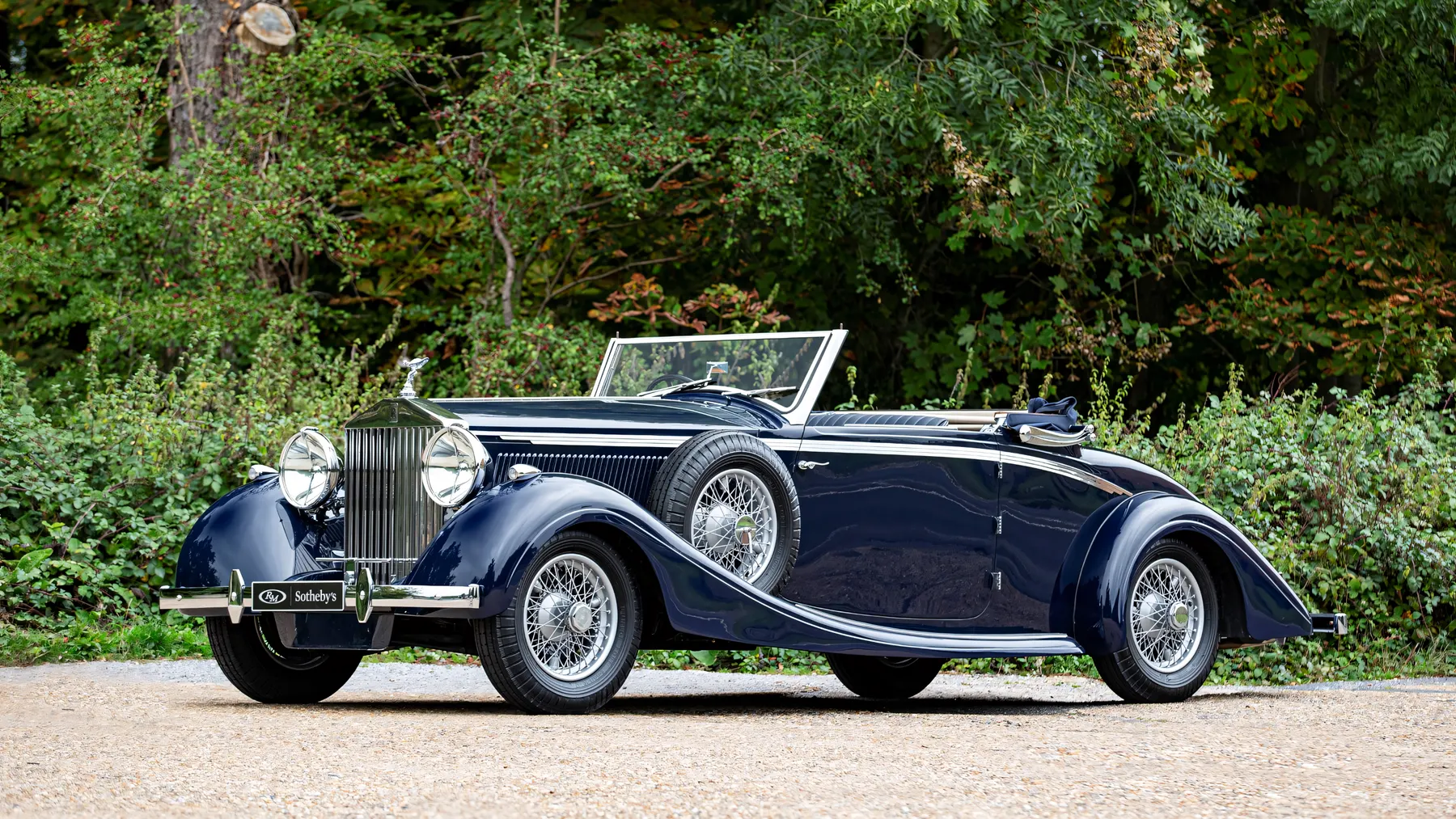
Rolls-Royce never built a Wraith drophead coupé. What left Derby from 1938 was a rolling chassis, and the folding-hood two-door bodies that some customers ordered for it were the work of independent coachbuilders, specified one buyer at a time. That is not a technicality. It explains why no two Wraith dropheads can be assumed to look or weigh the same, why the figures quoted for “the Wraith” are really figures for a chassis wearing some body or other, and why the more interesting question is what the car underneath offered a coachbuilder who wanted to build an open one.
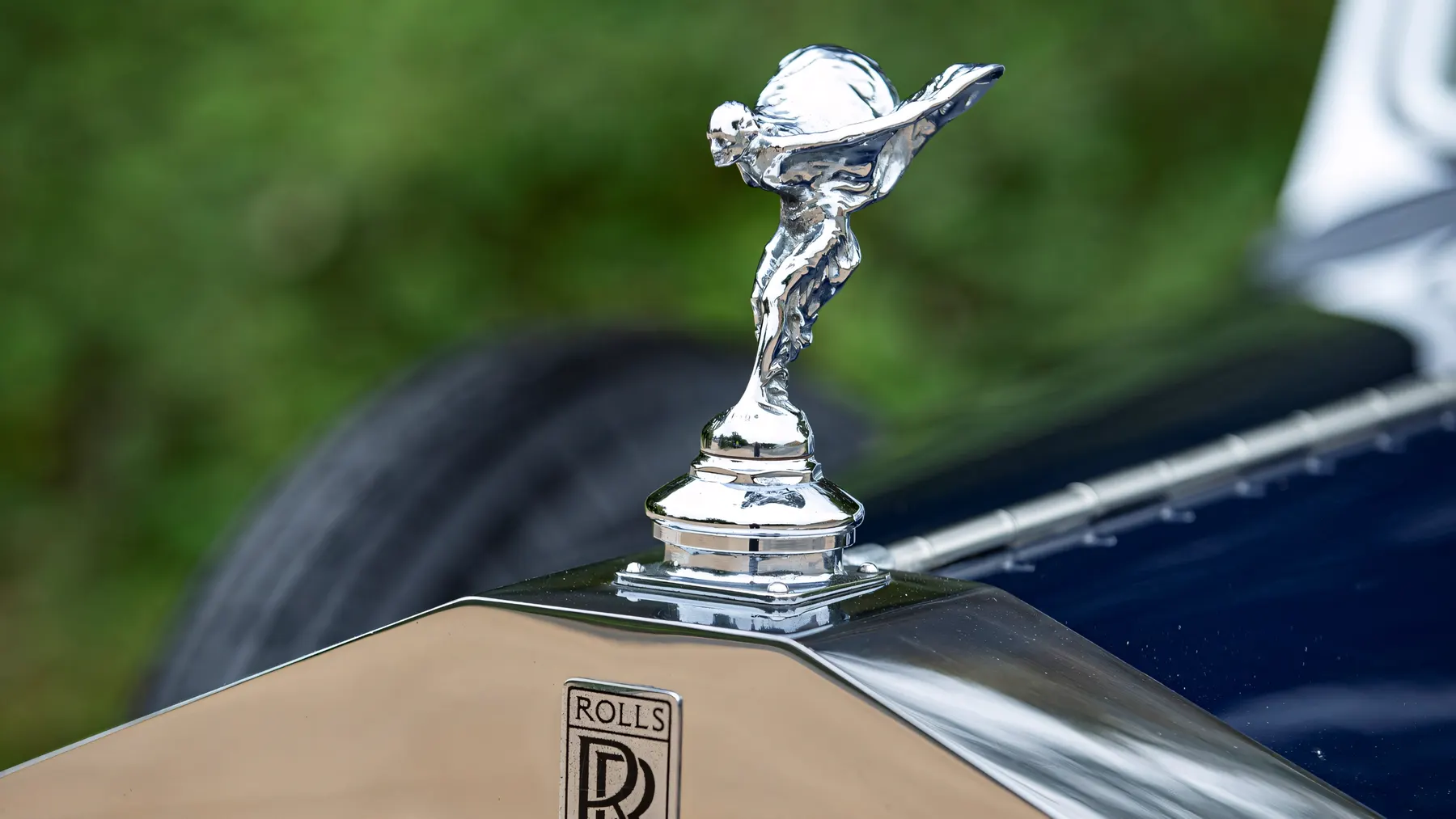
What it offered was the most modern small Rolls-Royce yet, under a name with some history: Wikipedia traces it to a Silver Ghost whose first owner called it “The Wraith”. The Wraith replaced the 25/30, itself a 20/25 with a bigger bore, introduced in 1936 because over-large bodies had been blunting the earlier car’s performance. Bentley had met the same problem and moved from 3½ to 4¼ litres in the same year to offset heavier coachwork. By 1938 Derby had little left to gain from capacity, so the Wraith kept the 25/30’s 4,257 cc, from a bore and stroke of 88.9 mm by 114.3 mm, and reworked much of what surrounded it. Bonhams’ catalogue notes describe almost every other aspect of the overhead-valve six as new, with a cross-flow cylinder head the headline change. Christie’s adds that ignition timing became wholly automatic, and BMW’s heritage team observes that this made the Wraith the first Rolls-Royce without an ignition lever on the steering wheel. How much aluminium the engine contained depends on whom you read: BMW refers to an aluminium block, while a Dutch marque web page lists a cast-iron block, an aluminium crankcase and a cast-iron head. Rolls-Royce gave no output figure that I could trace, and the one auction-house estimate I found is roughly 90 bhp.
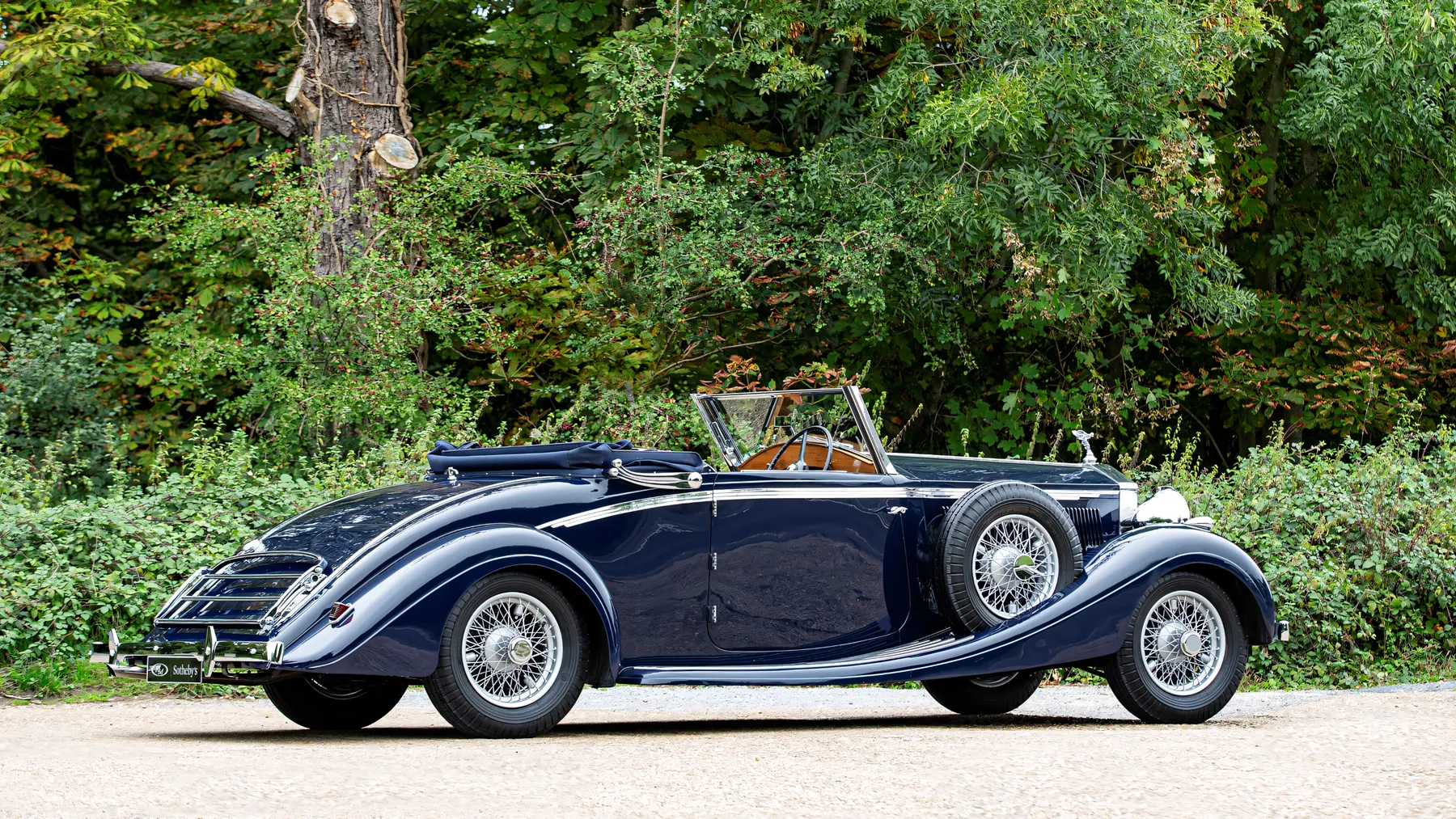
The chassis is where the Phantom III’s influence landed. The front suspension became independent, by coil springs, in a scaled-down version of the big car’s layout. Bonhams traces the design to General Motors, although other accounts name the Packard 120, so the lineage is murkier than the usual telling suggests. The frame gained cruciform bracing, the dampers became adjustable, and a built-in hydraulic jacking system was worked from beneath the front passenger seat. The radiator moved forward as part of these changes, which Christie’s notes gave coachbuilders more room to work with, and the wheelbase settled at 3,454 mm, about 100 mm longer than the 25/30’s. The four-speed gearbox, now mounted directly to the engine, had synchromesh on the top three ratios and kept Rolls-Royce’s right-hand change. The brakes were drums assisted by an engine-driven mechanical servo, built under Hispano-Suiza licence. Whether the frame was welded, as Wikipedia and several other accounts say, or partly riveted, as BMW states, is one of several points on which the literature disagrees.
It was a sensible foundation for a drophead because the small Rolls-Royce was the one an owner might drive himself, and Gooding & Company’s catalogue frames the Wraith as an “owner-driver” car. In 1938 the chassis cost £1,100 and a typical finished touring car about £1,700, so the coachwork was roughly a third of the bill, and the choice of builder mattered. Wraith bodies came from Park Ward, which Rolls-Royce brought in-house in 1939, as well as H.J. Mulliner, Hooper, James Young, Thrupp & Maberly, Windovers and Gurney Nutting, plus de Villars and Vanvooren. A Hooper-bodied drophead coupé is among the examples pictured in Wikipedia’s entry on the model. Yet the documented survivors skew heavily towards closed cars. Windovers alone received 26 chassis, half of them seven-seat limousines, and I could find no dependable count of how many Wraiths were finished as dropheads. The terminology was loose, too. Writing about a post-war Silver Wraith body, Bonhams notes that the same style had been called a drop-head coupé, a three-position drop-head, a sedanca de ville and, by Rolls-Royce itself, a “Drophead Foursome Coupé”.
Production was short and ragged. The Wraith was introduced at the London Motor Show in October 1938, although Bonhams records the car in experimental form as early as January 1937. Chassis production ended in 1939 at 491 by most counts, with a few sources saying 492, but bodies were still being completed in the 1940s. Sixteen pre-war chassis were bodied in early 1946 and delivered to the government, and the last Wraith reached its owner in 1947. A drophead with a 1940s registration is therefore not an anomaly.
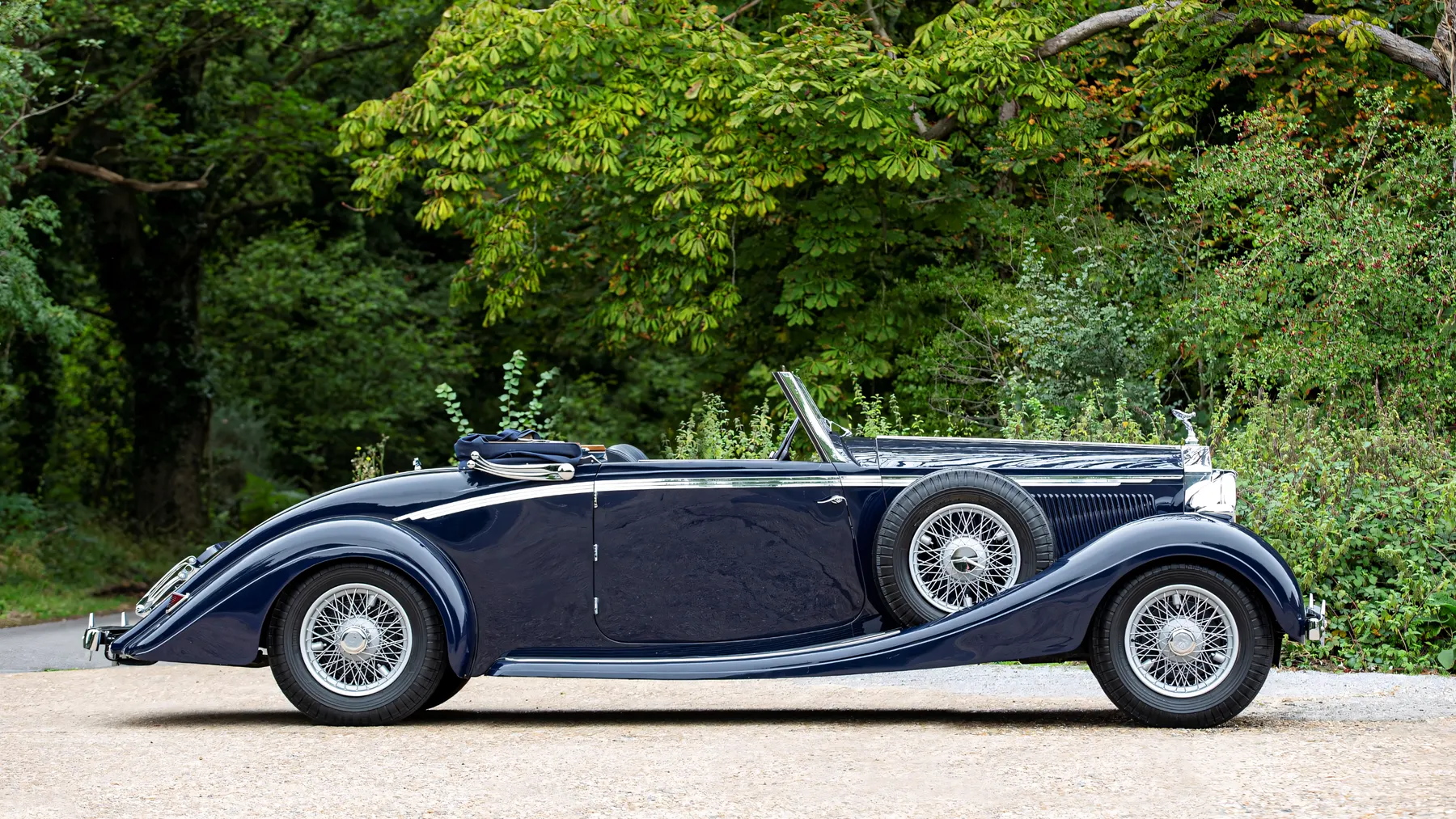
What buyers were paying for was refinement rather than pace. Christie’s catalogue copy says the Wraith may well be the quietest Rolls-Royce ever built, and The Autocar, as quoted by one reference site, treated the maximum speed as almost beside the point because running at 75 mph felt so effortless, with speedometer readings of 80 to 84 mph reached a few times. The Motor recorded 0–50 mph in 16.4 seconds in October 1938, a figure now repeated mainly through secondary sources, and about 85 mph is the ceiling usually given, dependent on the weight and style of body. Those are the numbers of a car built to cover ground unhurriedly, and a drophead, with its hood mechanism and extra drag, gives no reason to expect it to improve on them. I found no period test of an open Wraith.
The weaknesses follow from the same decisions. A 4,257 cc engine making perhaps 90 bhp was asked to move closed cars of roughly 1,900 kg, and 16.4 seconds to 50 mph is leisurely; for comparison, the post-war Silver Wraith, still of 4,257 cc but with a redesigned engine, was quoted by Christie’s at 125 bhp at 4,000 rpm, a gap that says as much about the redesign as about the limits of the pre-war engine. An open body also gets no help from a roof, and Wikipedia’s account of the Silver Wraith describes that car’s new chassis as much nearer rigid than the Wraith’s, wording that suggests the pre-war frame was less stiff than its suspension deserved. Elsewhere the hardware lagged the suspension: first gear lacked synchromesh, and the drum brakes leaned on a mechanical servo, a system that Christie’s records as still only partly hydraulic on the post-war car. The bodies were a gamble as well. An RM Sotheby’s catalogue essay argues that coachbuilders often seemed unsure what to do with the smaller Rolls-Royce chassis, producing cars that looked somewhat out of sorts beside their Phantom-based cousins. And commercially the Wraith never had time to matter; one reference page notes that it could not become a valuable contributor to the company’s balance sheet before war ended production.
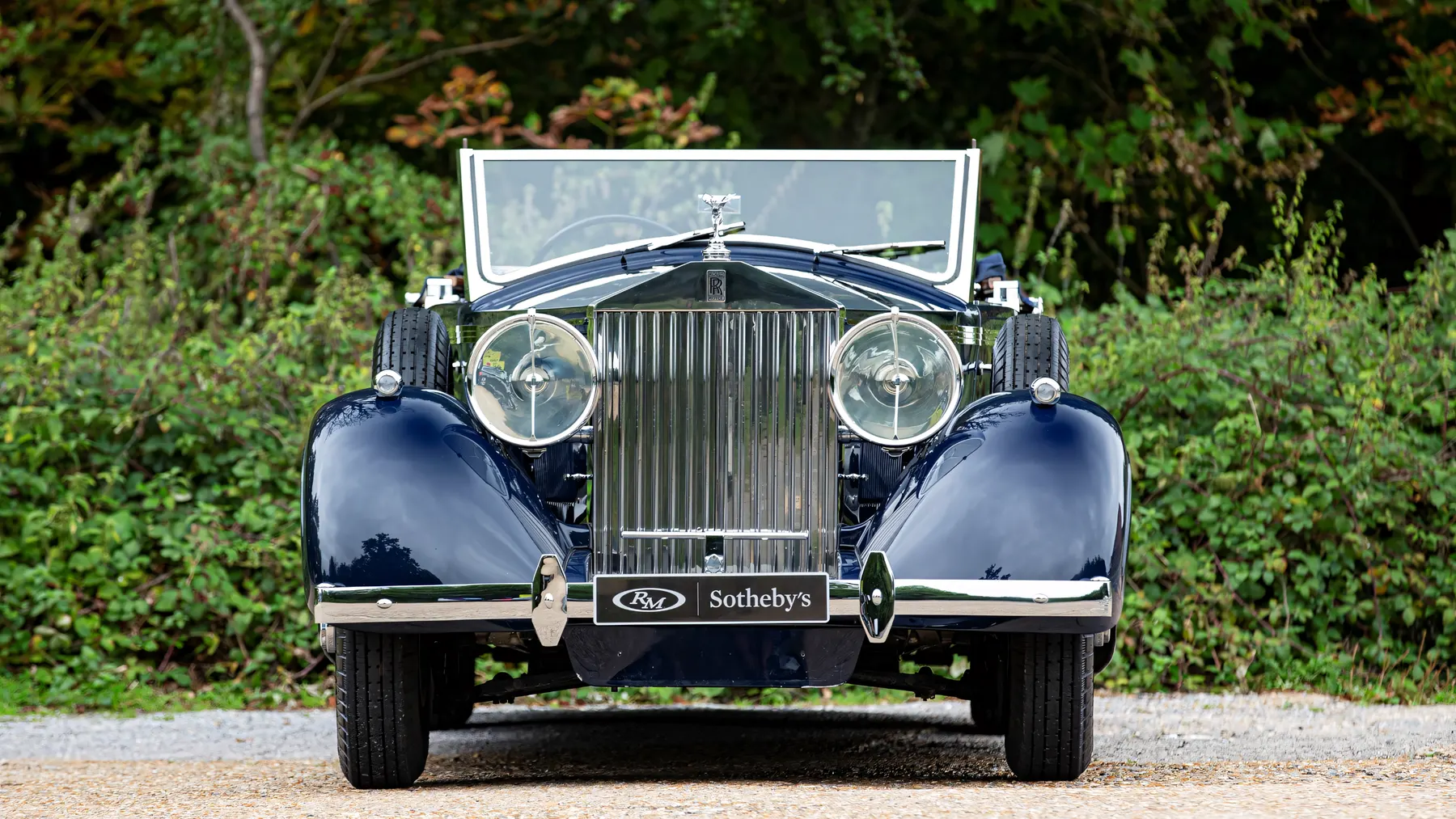
War also decided the Wraith’s legacy. Christie’s describes the pre-war Wraith as a much-modernised 25/30 with Phantom III front suspension, and the Silver Wraith that followed in 1946 as its direct descendant. That successor reached 1,883 chassis, a volume the pre-war car never approached. The pressed-steel Silver Dawn then made factory bodies the norm, and the long tradition of buying a chassis and commissioning a body began its decline. The name returned in 2013 for a coupé built on Ghost underpinnings, which shares nothing mechanical with the original except the word. Set against that, a pre-war Wraith drophead is one of the last chances anyone had to specify an open Rolls-Royce of moderate size that combined the newest chassis thinking Derby possessed with a body shaped to one person’s taste, even if the engine was the least ambitious part of the package.
Technical data
Performance Specifications
| Specification | Wraith chassis, 1938–1939 (all body styles) |
|---|---|
| Production | 1938–1939 chassis; deliveries continued into the 1940s, last reaching its owner in 1947 |
| Units | 491 chassis by most counts (some sources: 492) |
| Engine | 4,257 cc inline-six, overhead valve, cross-flow cylinder head |
| Bore × stroke | 88.9 mm × 114.3 mm |
| Power | Approx. 90 bhp* |
| Torque | Not established (omitted) |
| Transmission | Four-speed manual, synchromesh on 2nd, 3rd and 4th, right-hand change |
| Front suspension | Independent, coil springs, adjustable dampers |
| Rear suspension | Live axle, semi-elliptic leaf springs |
| Brakes | Four-wheel drums, engine-driven mechanical servo |
| Wheelbase | 3,454 mm |
| Kerb weight | Approx. 1,900 kg* (closed bodies; drophead weight not documented) |
| Top speed | Approx. 85 mph* (body-dependent) |
| 0–50 mph | 16.4 seconds* (The Motor, October 1938, via secondary sources) |
| Chassis price (1938) | £1,100 |
| Typical complete touring car (1938) | Approx. £1,700 |
Sources
- BMW Group Classic: Body and Soul. The Rolls-Royce Wraith, 1938
- Wikipedia: Rolls-Royce Wraith (1938)
- Wikipedia: Rolls-Royce 25/30
- Wikipedia: Rolls-Royce Silver Wraith
- Wikipedia: Bentley 3½ Litre and 4¼ Litre
- Wikipedia: Rolls-Royce Wraith (2013)
- Christie’s: 1938 Rolls-Royce Wraith model notes
- Christie’s: Rolls-Royce Silver Wraith model notes
- Christie’s: Rolls-Royce Silver Wraith Drop-Head Coupe model notes
- Bonhams: 1939 Rolls-Royce 25/30hp Wraith model footnotes
- Bonhams: 1939 Rolls-Royce 4¼ litre Wraith model footnotes
- Bonhams: 1948 Rolls-Royce Silver Wraith Drophead Coupé body-style notes
- Gooding & Company: 1939 Rolls-Royce Wraith model highlights
- Classic Driver (RM Sotheby’s catalogue text): 1938 Rolls-Royce Wraith background
- Classic Driver (RM Sotheby’s catalogue text): 1938 Rolls-Royce Wraith coachwork commentary
- RM Sotheby’s: Post-War Rolls feature (Park Ward acquisition)
- Kucarfa: Rolls-Royce Wraith technical data
- Conceptcarz: 1938 Rolls-Royce Wraith (quoting The Autocar)
- Hagerty: Rolls-Royce Silver Wraith model description
- University of Chicago Press: Rolls-Royce Silver Wraith (Martin Bennett)
Join the discussion
Comments
Loading comments…
Leave a comment
Share a detail, memory, or perspective. Every comment is reviewed before publication.