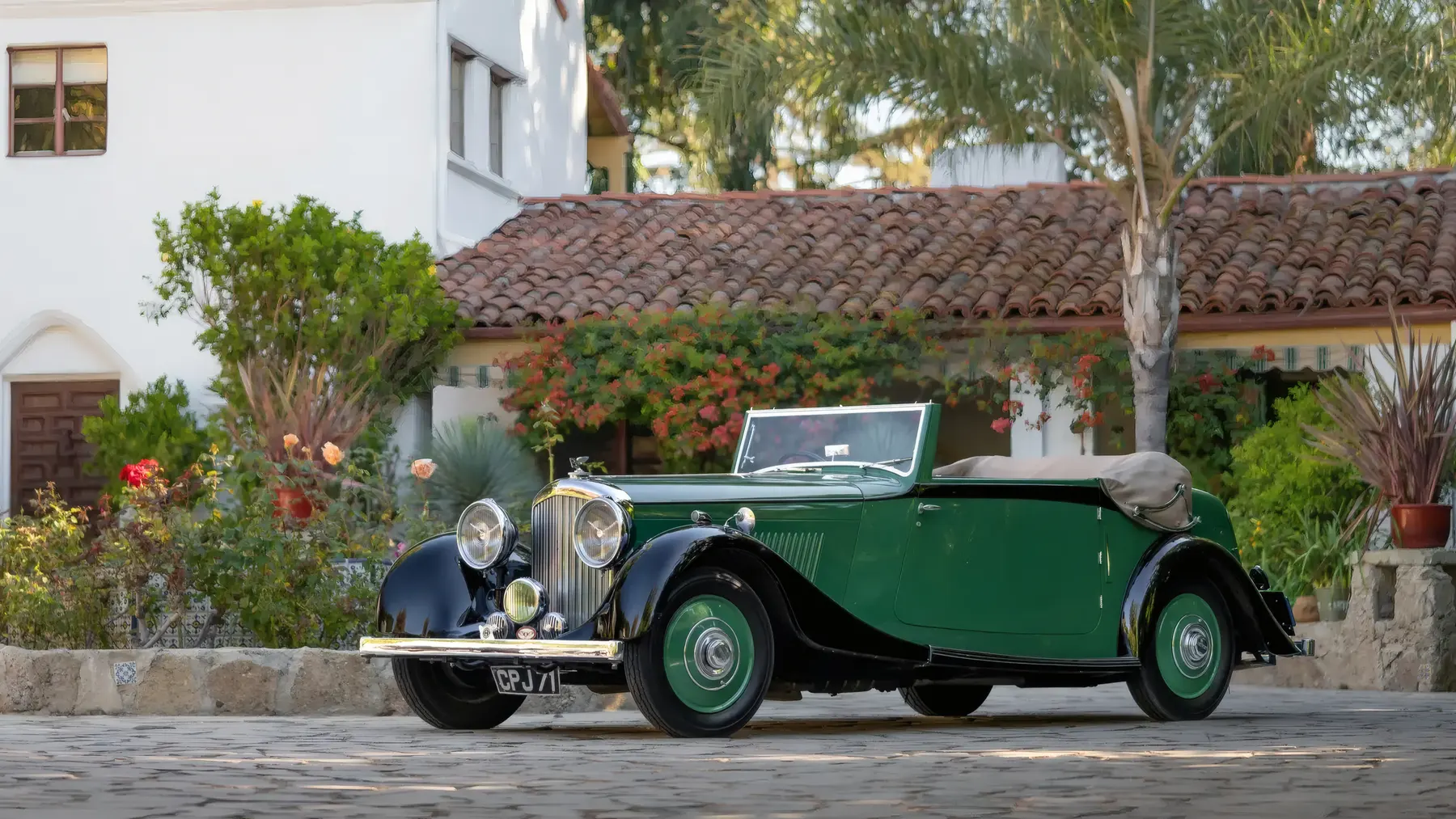
1935 Bentley 3½-Litre Drophead Coupe by Park Ward
When Rolls-Royce absorbed what remained of Bentley in 1931, the acquisition was widely read as a quiet burial - the Cricklewood factory shuttered, W.O. Bentley himself eased out of the company whose name he had made famous, and the rough, vital, Le Mans-winning machinery he had championed replaced by something altogether more considered. What followed was not a funeral. It was, in many ways, the most coherent expression of what Bentley could become once someone with Rolls-Royce’s engineering discipline took hold of its ambitions.
The Bentley 3½-Litre that appeared at the Olympia Motor Show in October 1933, just weeks after W.O.'s own departure had been finalised, was a statement of intent from the Derby factory. Built on a new chassis of nickel steel with six cross members, the car was notably lighter than what Bentley’s own engineers had been producing in their final years, and it was underpinned by a 3,669 cc overhead-valve inline-six derived from the Rolls-Royce 20/25 unit - though considerably breathed-upon for the purpose. Two SU carburettors, a higher compression ratio, and careful development work brought output to around 110 bhp at 4,500 rpm. That figure gave the car a genuine top speed of around 90 mph in saloon form, and in lighter open coachwork, the horizons stretched a little further. The factory called it the Silent Sports Car, and the phrase was not marketing fantasy.
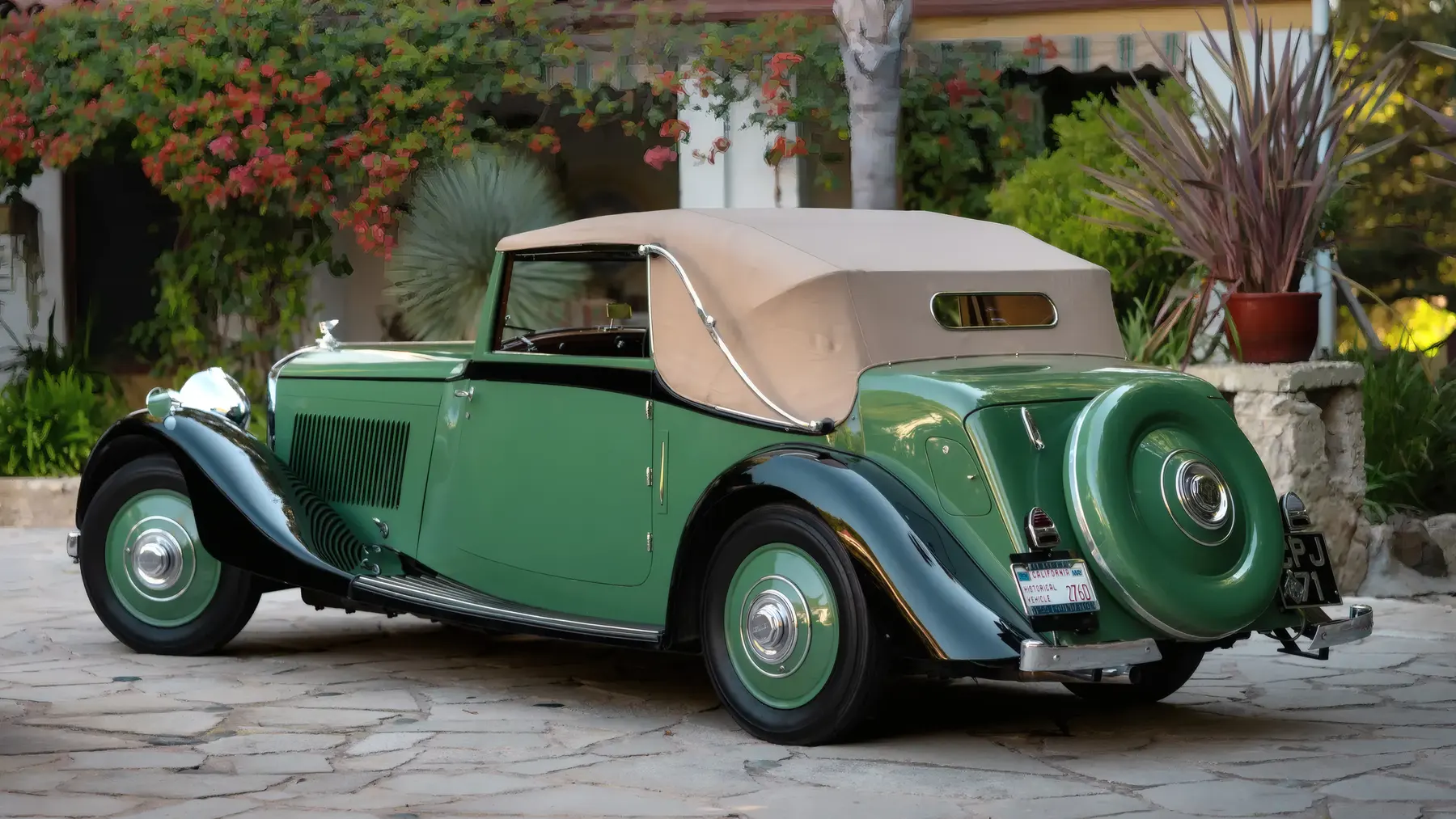
The chassis invited coachbuilders to do their finest work, and no firm accepted that invitation more comprehensively than Park Ward of Willesden, in North London. Approximately half of all 3½-Litre chassis left the factory and went directly to Park Ward for bodywork, making the coachbuilder as central to the model’s identity as the factory itself. Among the configurations Park Ward produced - saloons, sedans, four-light tourers, and occasional closed coupés - the Drophead Coupé was the most romantically resolved. It took the long, low proportions of the 3½-Litre chassis, with its 3,200 mm wheelbase, and clothed them in a two- or occasional four-seater open body built to coachbuilding standards that involved aluminium panelling over an ash frame, producing a finished car whose kerb weight sat at around 1,140 kg. That combination of relative lightness and a free-breathing six-cylinder was what made the name Silent Sports Car feel earned rather than aspirational.
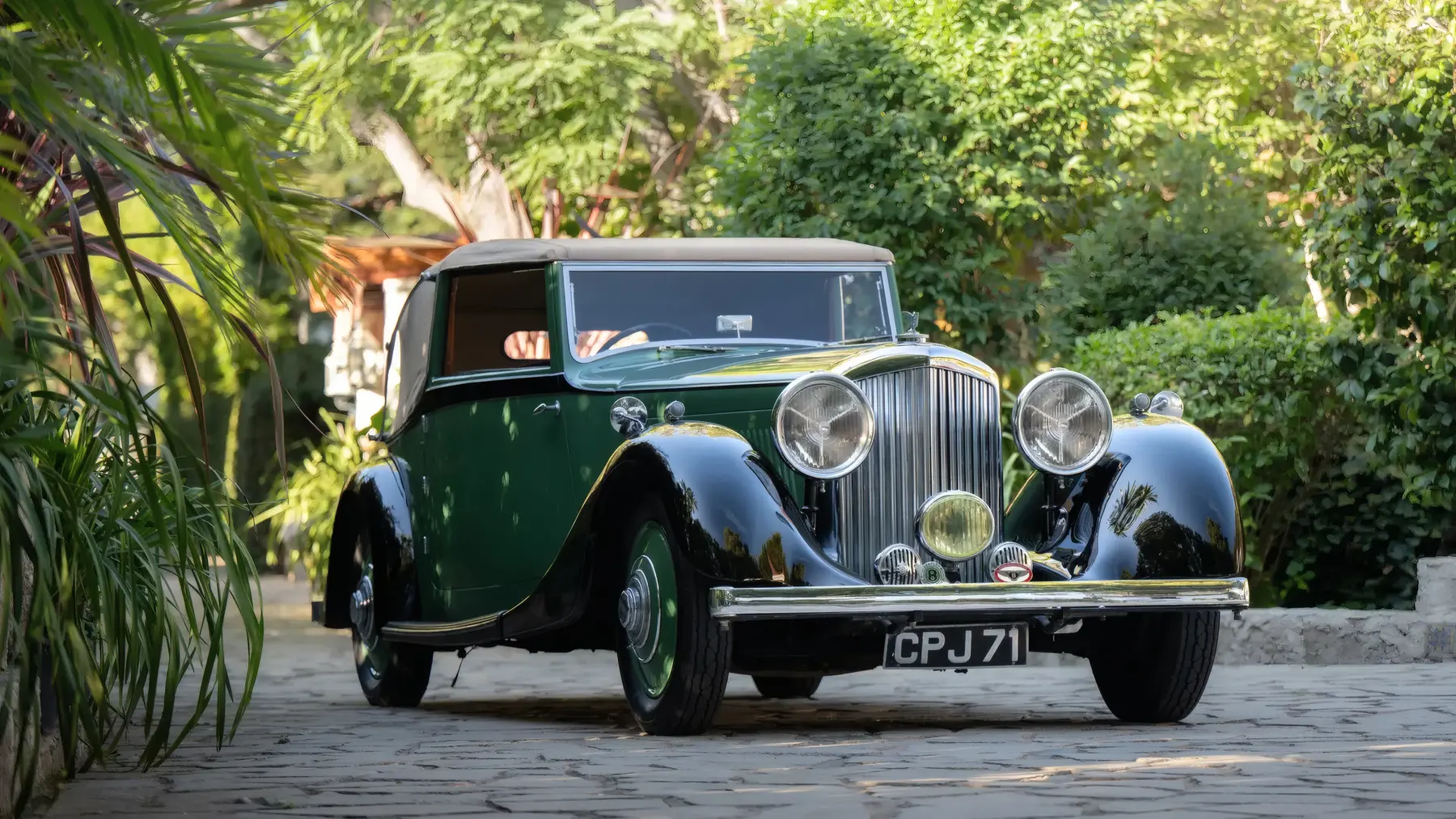
Park Ward’s Drophead Coupé construction in this period reflected a particular philosophy of convertible bodywork: the hood, when raised, folded into a neat stack at the rear of the cockpit with none of the awkward bagging and billowing that afflicted lesser open cars, and when lowered it lay flat and smooth enough to be genuinely handsome. The body itself was long-bonneted and low, the front wings sweeping in graceful pontoon forms, the headlamps standing proud on stalks above the front axle in the fashion of the era, and the radiator - unmistakably Bentley, tall and upright - anchoring everything to a visual tradition that W.O.'s original cars had established in the early 1920s. The cabin, trimmed in leather to each buyer’s specification, was intimate without being cramped, and the dashboard carried the Bakelite and chrome instrumentation that gave pre-war British cars their distinctive atmosphere of purposeful luxury.
The drivetrain that lay beneath this coachwork was a genuine mechanical achievement for its era. The 3,669 cc six - bore 82.5 mm, stroke 114.3 mm - was a long-stroke engine in the classical tradition, tuned for torque rather than high-revving vivacity. Peak output of 110 bhp arrived at 4,500 rpm, a figure that the four-speed manual gearbox, with synchromesh on third and fourth, translated into road performance that was notably brisk by the standards of the day. The front and rear suspension used semi-elliptic leaf springs with hydraulic dampers, and the brakes - mechanical drums acting on all four wheels, with servo assistance - were adequate for the performance available while requiring more anticipation than a modern driver might instinctively apply. Hydraulic brakes would come later in the model’s life; for much of the 3½-Litre’s production span, the servo-assisted mechanical system asked that its driver plan ahead.
On the road, the Drophead Coupé rewarded exactly that kind of thoughtful engagement. The long-stroke six pulled smoothly from low revs, the car settling into a high-speed loping gait that covered ground without drama. At a period when most open cars above a certain price were either tourers with the aerodynamic profile of a wardrobe or sports machines that vibrated their occupants into mild concussion, the Park Ward Drophead occupied a genuinely distinctive position: quick, refined, and visually distinguished in equal measure. The indirect steering, by contemporary enthusiast standards, lacked the immediacy of a Bugatti or a BMW 328, but it delivered the reassurance and composure that the car’s clientele actually wanted. This was a machine for covering kilometres across Europe with a companion, roof lowered in decent weather, in a state of self-contained comfort that no rival in the British market quite matched at the price.
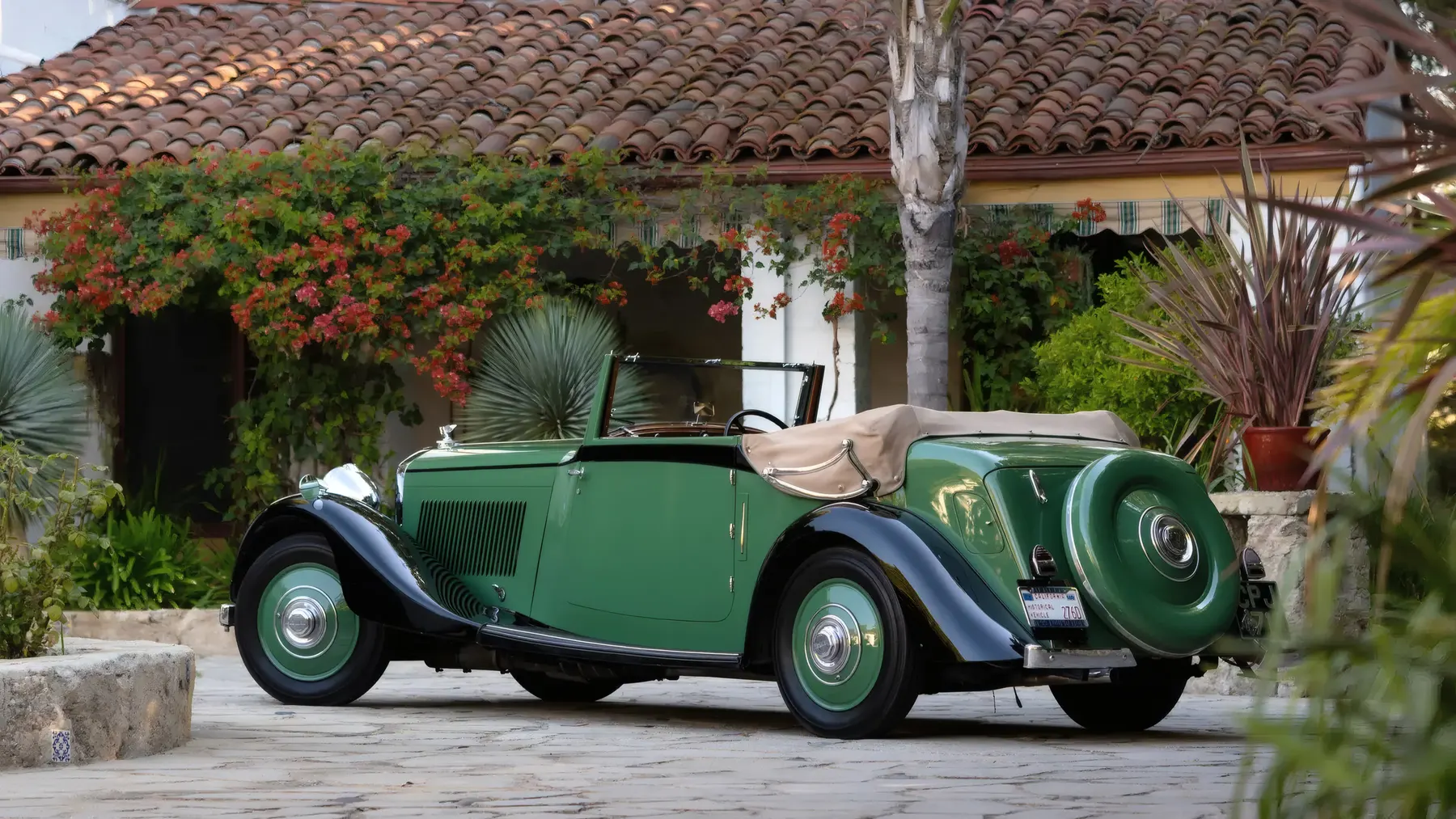
What the 3½-Litre Drophead Coupé achieved with particular distinction was the synthesis of its competing demands. Rolls-Royce’s engineering discipline brought reliability and refinement that the Cricklewood Bentleys, magnificent as they were in their elemental way, had never prioritised. Park Ward’s coachbuilding tradition brought aesthetic coherence and structural integrity to the open body. The Derby factory’s performance tuning of the 20/25 engine brought sufficient speed to justify the sporting nomenclature. None of these elements was individually revolutionary. Together, in the Drophead Coupé configuration, they produced a car that was more than the sum of its parts in the way that the best automotive collaborations occasionally manage.
The drawbacks were real, and they are worth naming plainly. The mechanical brakes, even servo-assisted, demanded considerable pedal effort and planning distances that would surprise anyone accustomed to hydraulic systems. The gearchange, for all the synchromesh on the upper ratios, required unhurried deliberation - hurrying it produced a crunch that a careful driver would want to avoid. The weather equipment, for all Park Ward’s skill with hoods, offered less than total protection in a British winter: a raised hood kept the rain off the occupants, but the side screens that buttoned into place were not quite draught-proof, and motorway-speed cold air found ways in. The later 4¼-Litre, which replaced the 3½ from 1936, addressed the performance question with a bored-out 4,257 cc engine, implicitly acknowledging that the smaller unit, while entirely adequate, left a margin for improvement that buyers were beginning to notice.
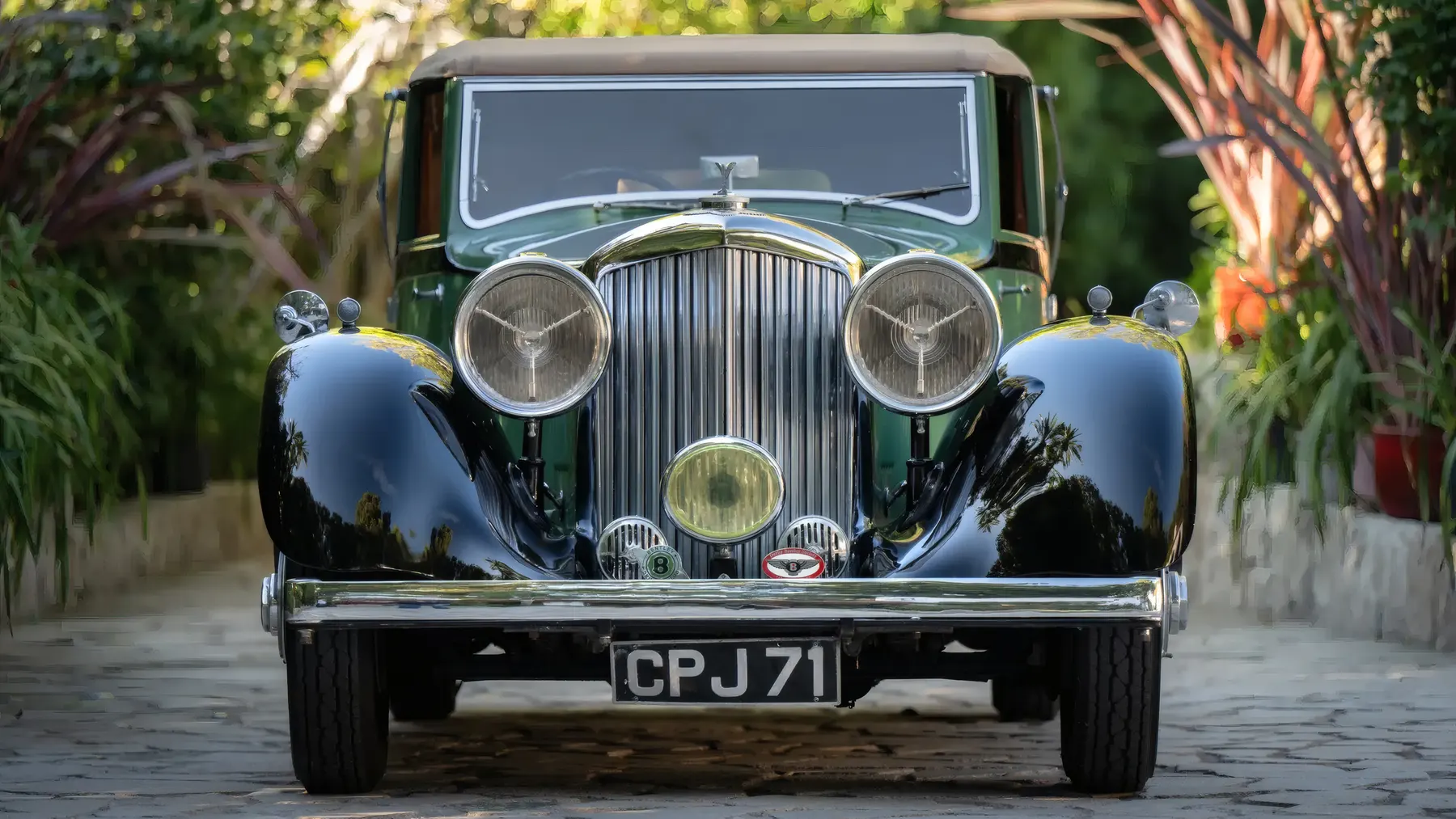
Between 1933 and the model’s evolution into the 4¼-Litre in 1936, roughly 1,191 3½-Litre chassis were produced. Of those, the Park Ward Drophead Coupés represent the model’s most desirable manifestation in the considered opinion of subsequent generations of collectors and enthusiasts - a judgement reflected in the consistent prices these cars have achieved at auction throughout the decades since the war. When RM Sotheby’s or Bonhams present a well-documented example, the bidding reflects an understanding that these cars occupy an irreplaceable position: they are the moment when Bentley’s sporting character and Rolls-Royce’s engineering competence were most elegantly reconciled, and Park Ward’s open coachwork was the aesthetic form in which that reconciliation was most perfectly expressed.
Contemporary reception was genuinely enthusiastic. The motoring press, which had watched Rolls-Royce’s absorption of Bentley with a mixture of anxiety and scepticism, found itself disarmed. The phrase that recurred - “absolute thoroughbred” - captured what reviewers recognised in the car’s presence even before they had driven it. The low build, the controlled proportions, the sense of suppressed capability: these were qualities that the Cricklewood cars had communicated through aggression, and that the Derby cars communicated through refinement. Both approaches produced thoroughbreds. They were simply different animals.
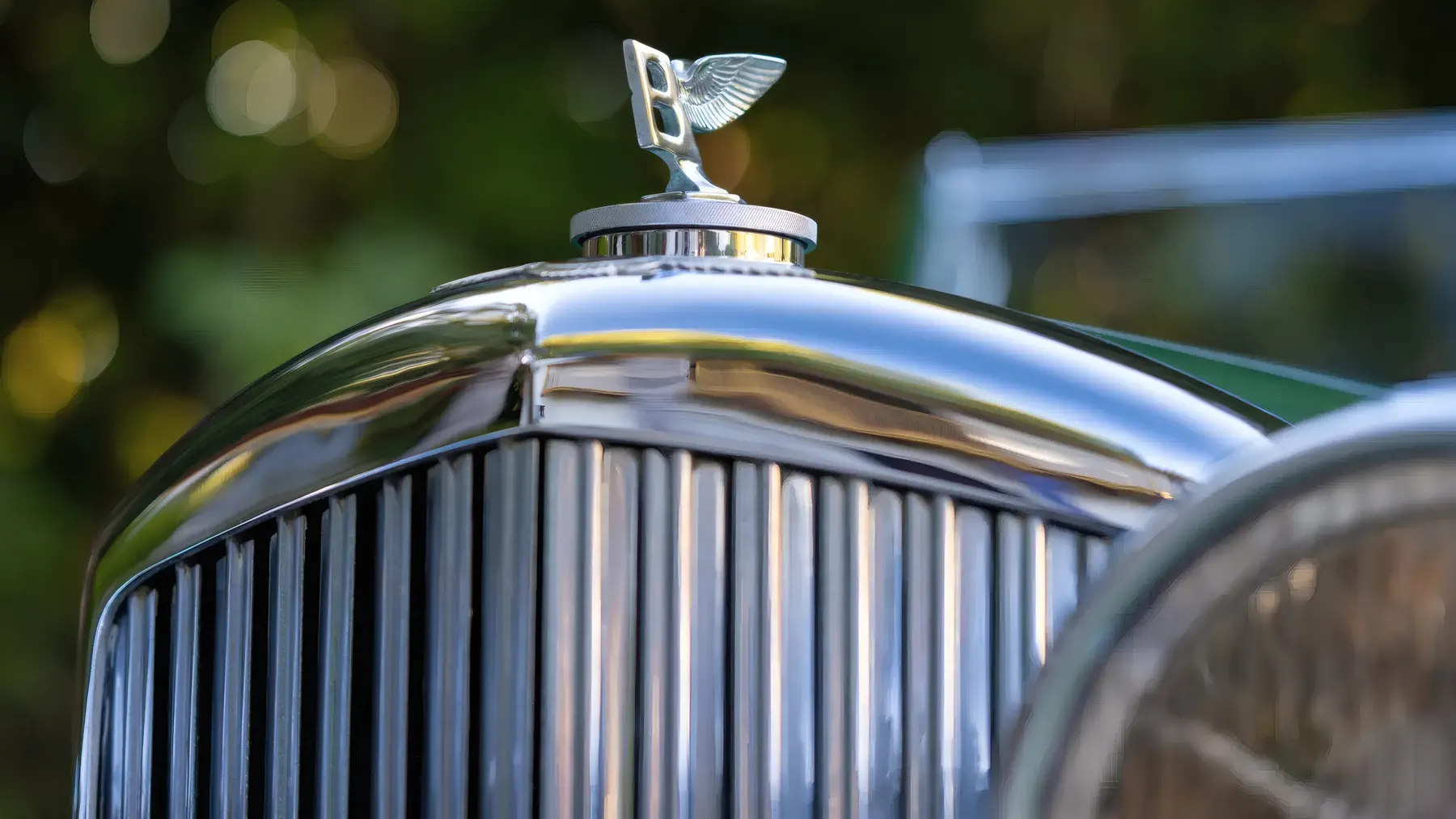
The 3½-Litre Drophead Coupé by Park Ward endures as evidence of what the Derby era Bentley actually was, rather than what its critics have sometimes claimed: not a neutered W.O. car, not a badge-engineered Rolls-Royce, but a genuinely distinguished grand touring machine with a character of its own - quieter and more composed than the old Bentleys, yes, but no less resolved in its purpose, and considerably more approachable to the buyer who wanted speed, beauty, and the reasonable expectation of reliability, all present simultaneously in the same open car.