1953 Aston Martin DB2-4 Drophead Coupe by Bertone
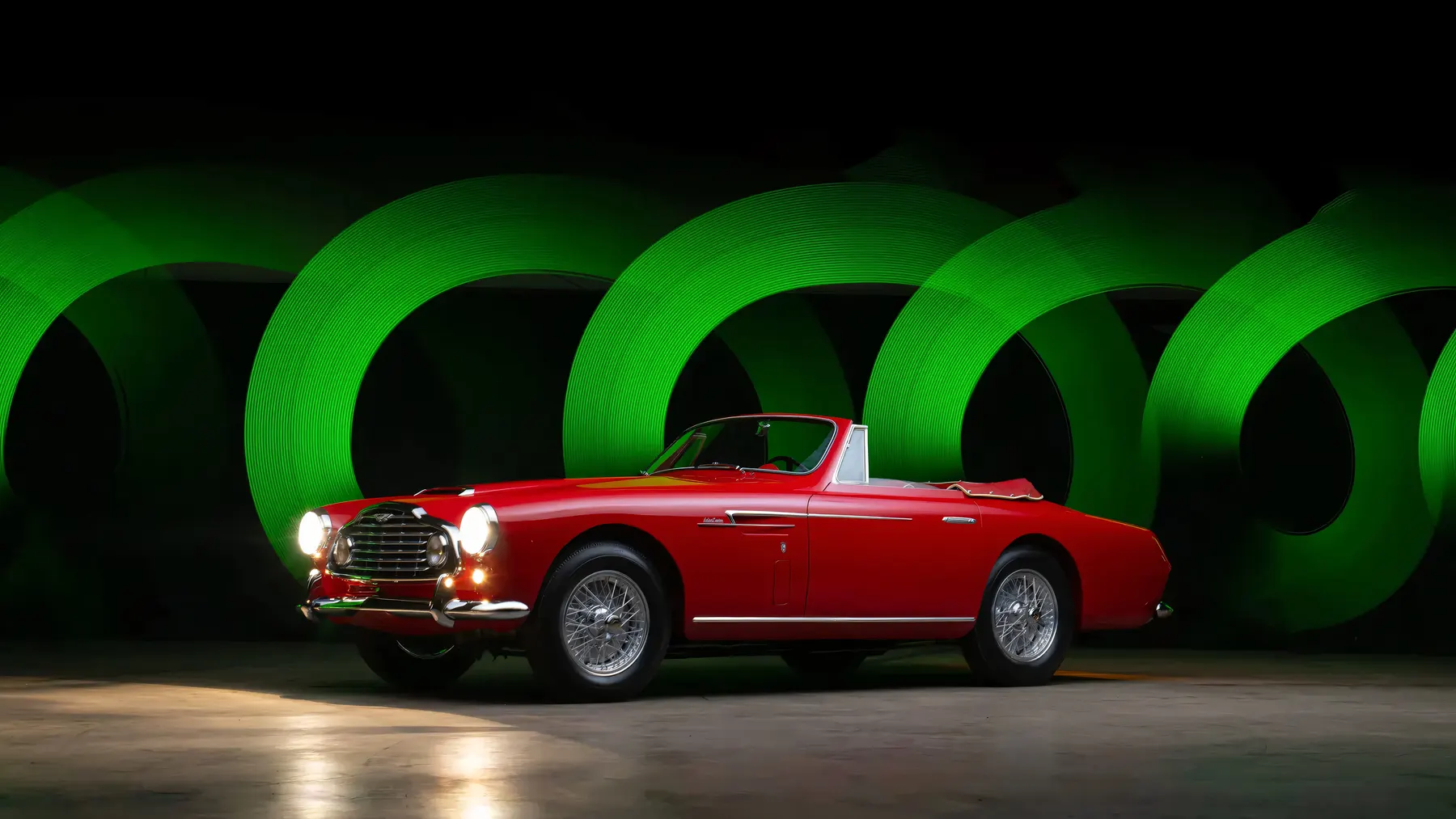
When sixty sales managers of a Minneapolis greeting card company each pool $200 to buy their boss a Christmas present, and that present turns out to be a one-of-two coachbuilt Aston Martin designed by Giovanni Michelotti and bodied by Bertone, you begin to understand the peculiar cultural electricity that surrounded this car in 1953. The gift - chassis LML/504, completed with metallic blue coachwork, red leather piped in cream, a gold-plated horn push, fitted luggage, and a bar tucked beneath the seat - cost $12,700 in total and arrived at Charles A. Ward’s door as possibly the most extravagant office collection in corporate history. That it also happened to be one of the most beautiful Aston Martins ever built was, presumably, something of a bonus.
The DB2/4 Drophead Coupé by Bertone sits at one of those rare intersections in automotive history where British engineering, Italian design sensibility, and American commercial instinct converged without any of them losing their identity in the process. Its origins lie in the partnership between Aston Martin and Stanley Harold “Wacky” Arnolt II, an American industrialist and car importer based in Chicago who had already demonstrated a talent for spotting potential collaborations between chassis and coachbuilder. Having been impressed by Bertone’s work reskinning an MG TD, Arnolt arranged for a number of the just-launched DB2/4 rolling chassis to be shipped to Turin, where the house of Bertone - then under the creative direction of Nino Bertone himself, with Michelotti and Franco Scaglione contributing designs - would transform them into something altogether more Italian in character.
The DB2/4 itself was an important model in the Aston Martin lineage. Launched at the London Motor Show in October 1953 as a replacement for the DB2, it addressed one of the predecessor’s most consistent criticisms - interior space - by stretching the wheelbase and reconfiguring the body into a genuine 2+2 with a rear hatch for luggage access. The Bentley Drivers’ Club rather memorably called it “the fastest shooting brake in the world,” which tells you something about both its ambition and the affectionate bewilderment it inspired. Mechanically, the car used a twin-cam 2.9-litre inline-six producing 140 bhp in the VB6J variant introduced in September 1953, mated to a four-speed David Brown gearbox. That engine, developed in part by W.O. Bentley’s former chief designer William Watson and continuously refined through the DB lineage, sat in a steel ladder-frame chassis with independent front suspension via coil springs and trailing arms, a live rear axle located by parallel radius arms and a Panhard rod, and hydraulic Girling drum brakes all round. Top speed for the standard car was quoted at around 120 mph, which in the early 1950s placed it among the most capable road cars in production.
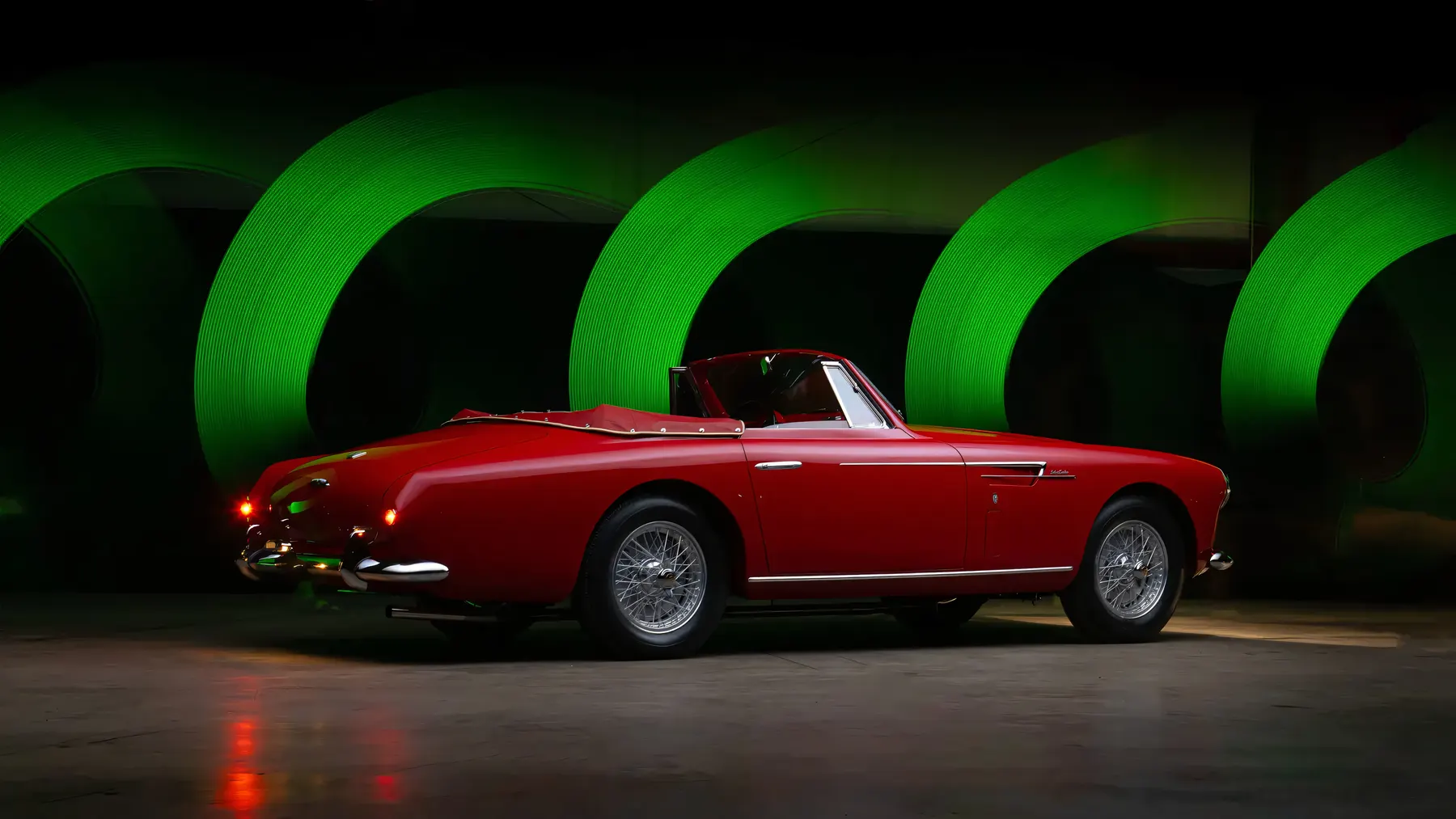
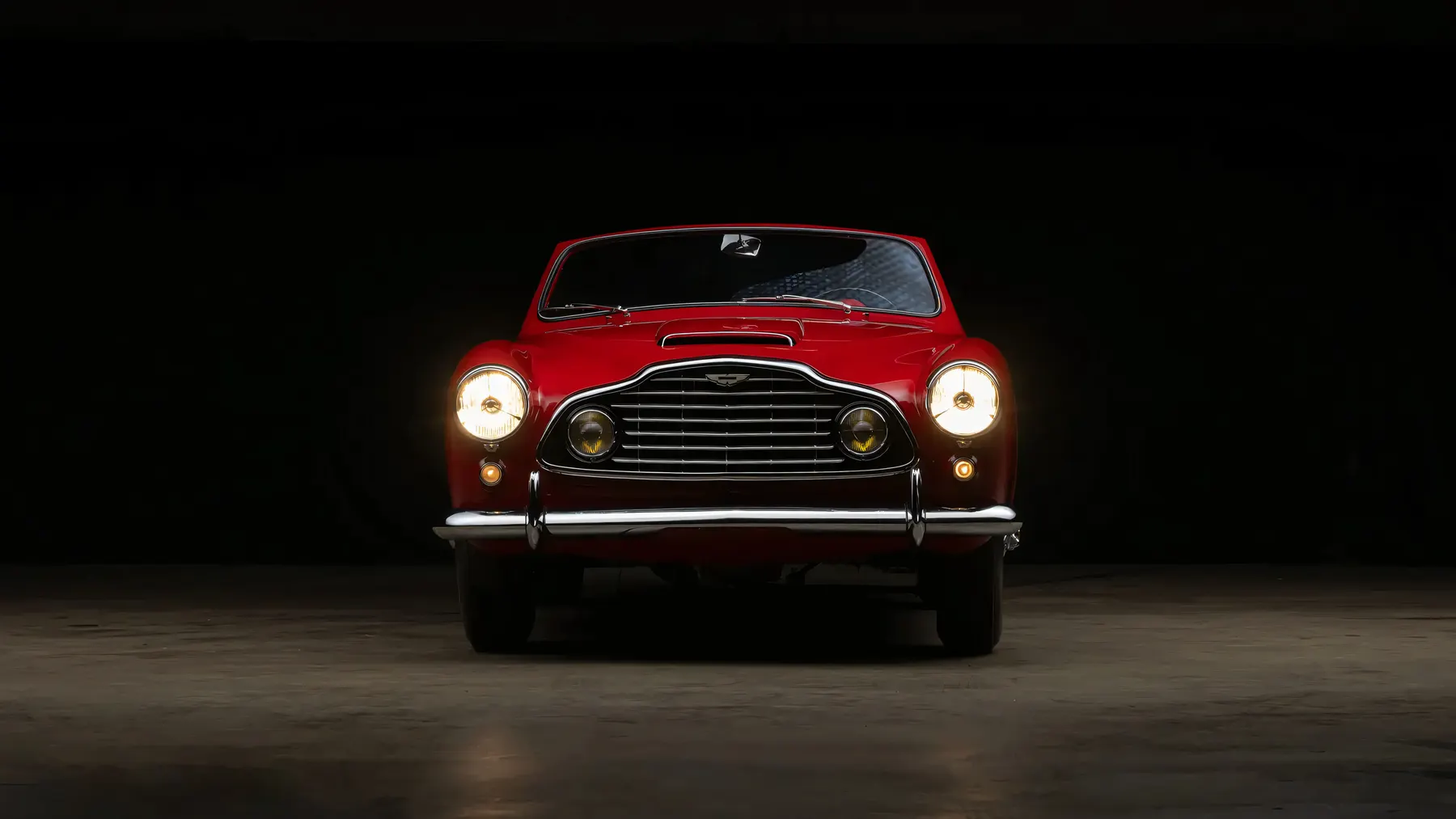
What Bertone and Michelotti did with the DB2/4 chassis was not simply recloth it - they reinterpreted it. Of the chassis Arnolt sent to Turin, two (LML/504 and LML/506) received Michelotti-designed drophead coupé bodies, while three others were fitted with Scaglione-penned competition-style Spiders, and one unique coupé was retained for Arnolt himself. The drophead bodies share some DNA with the standard Aston Martin factory drophead - that recognisable radiator grille and curved windshield are present and accounted for - but Michelotti refined their edges, softened their transitions, and added the sort of delicate Italianate details that no British coachbuilder of the period would have considered: thin, shapely bumpers, a subtle hood scoop, bodywork with a fluidity that spoke of Turin rather than Newport Pagnell. The result was a car that read, unmistakably, as an Aston Martin from across a room, yet grew more Italian the closer you approached it.
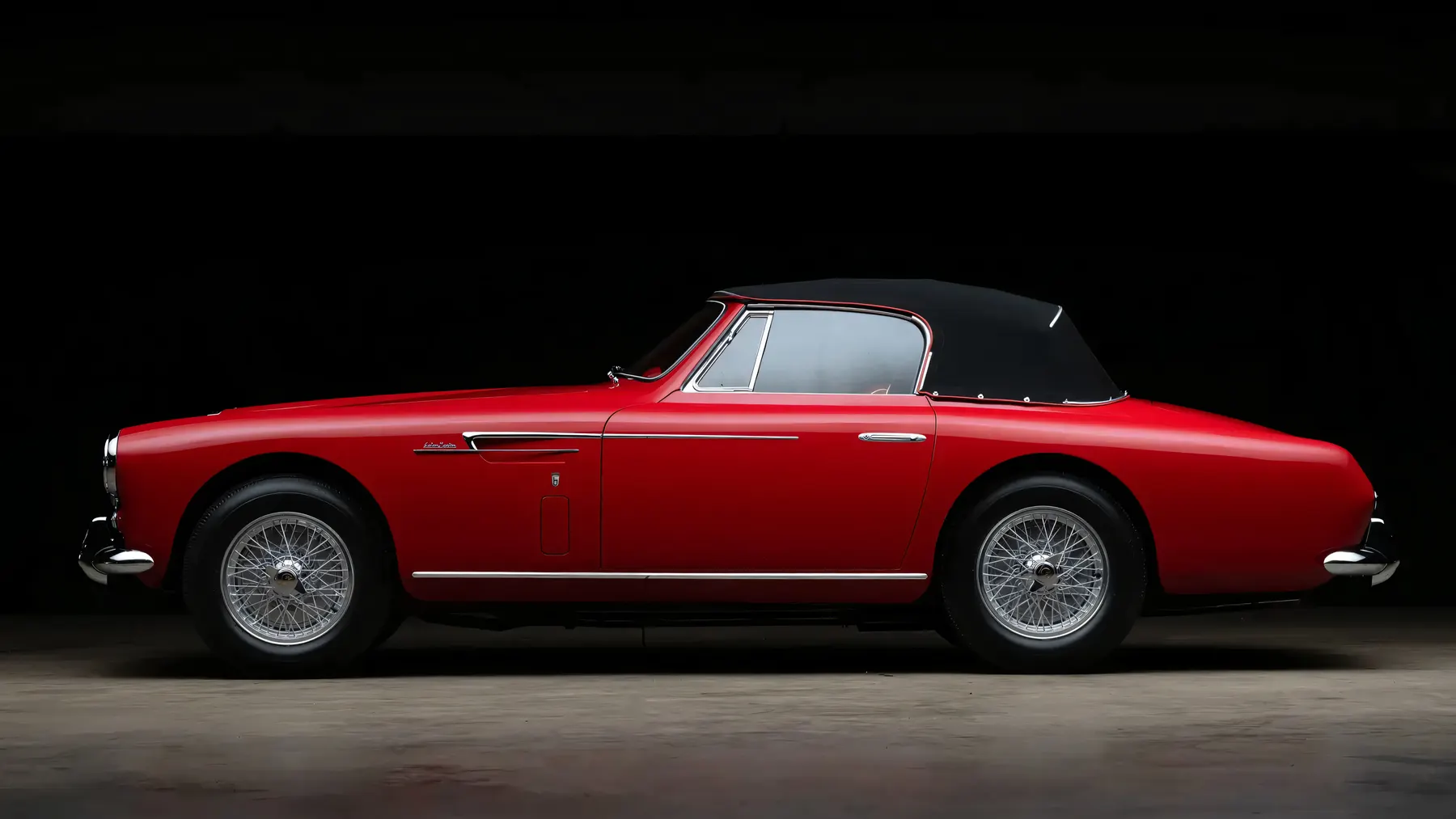
The standard DB2/4’s dimensions give a sense of what Michelotti had to work with: a 2,515mm wheelbase, overall length of 4,305mm, and a width of 1,651mm. These are not the proportions of an Italian sports car; they are the proportions of a British grand tourer, relatively long in the body and deliberately planted in stance. Michelotti worked with those proportions rather than against them, giving the drophead a roofline that folded away with near-total invisibility when lowered - a detail that distinguishes genuinely sophisticated open-car design from the merely functional - and a tail treatment that maintained the forward motion in the car’s silhouette even at rest. The interior of LML/504, as commissioned, was almost deranged in its specificity: bespoke red leather, gold-plated monograms on the wheel spinner, a custom picnic hamper in red leather, and that extraordinary bar beneath the seat, the whole ensemble assembled to celebrate one man’s service to a calendar company.
Driving the DB2/4 in any form was an experience shaped primarily by the six-cylinder engine’s character rather than its outright statistics. The 2.9-litre unit - producing 175 lb-ft of torque at 3,000 rpm - was a twin-cam of genuine refinement, smooth through the rev range, with the specific quality of a well-designed long-stroke engine that pulls cleanly from low speeds without demanding to be worked hard. The four-speed David Brown gearbox was precise rather than light, the kind of transmission that rewards deliberate inputs and forgives rushed ones less readily. The Girling drums, substantial at 12 inches, were adequate for the performance available but demanded progressive use; the car’s weight of approximately 1,193 kg meant that high-speed stops required advance planning rather than emergency reflexes. The live rear axle, well-located by its radius arms and Panhard rod, gave the DB2/4 a predictability at the limit that its more exotic specification might not have suggested - this was a car that telegraphed its intentions, which was exactly what its target driver wanted.
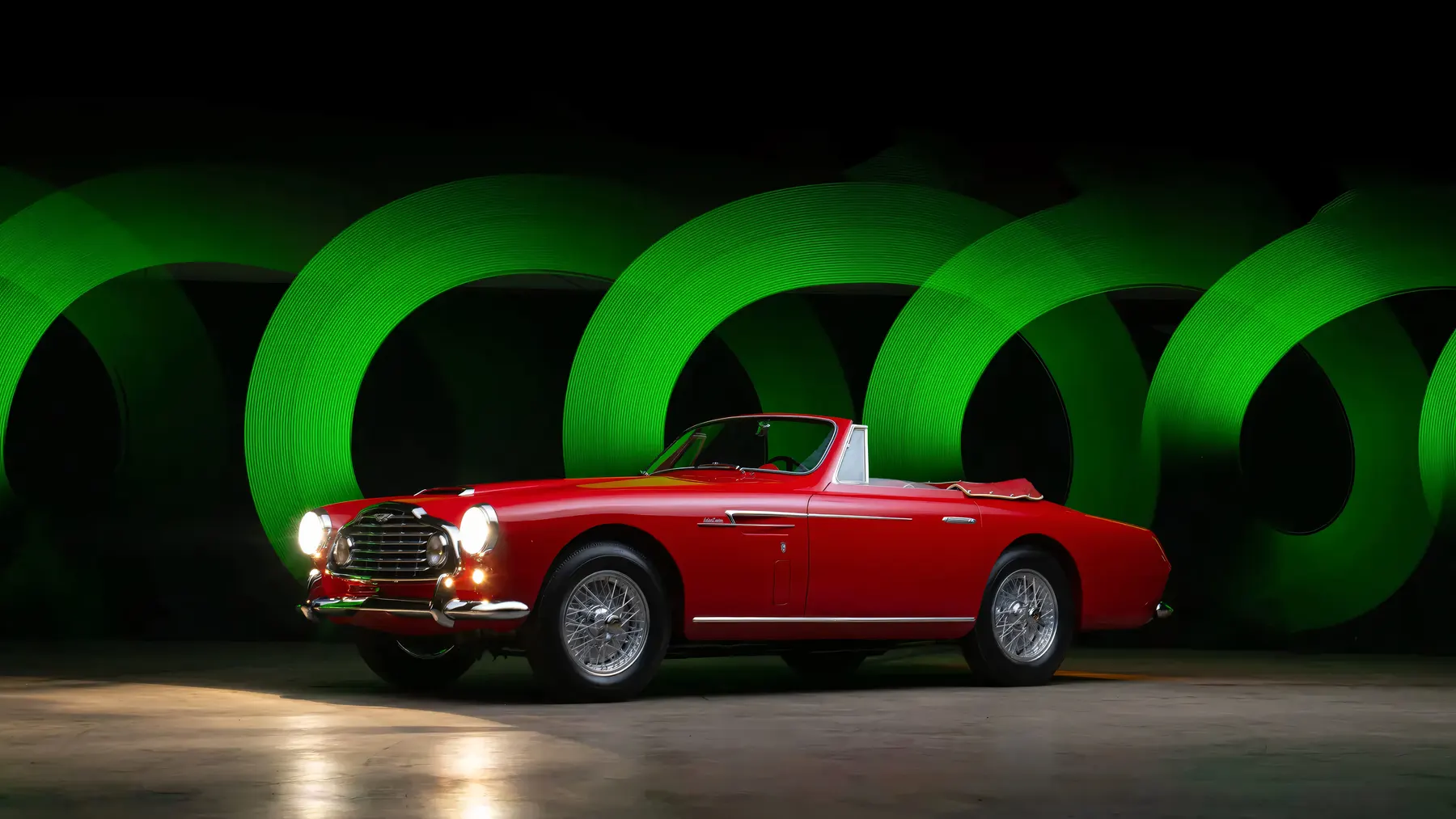
The significance of the Bertone Drophead Coupé within the wider Aston Martin story is perhaps most apparent in hindsight. Only two were made to this design - a rarity so absolute that calling them exclusive would be an understatement. They represent the first serious experiment by Aston Martin with Italian coachbuilders, a relationship that would deepen dramatically in the years that followed. The DB4’s adoption of Touring’s Superleggera construction method, and the DB4 GT’s celebrated collaboration with Zagato that continues to the present day, can both be traced along the same thread that runs from Arnolt’s impulsive order and those five chassis shipped to Turin. The Bertone Drophead Coupés were, in this sense, the proof of concept - evidence that the Aston Martin chassis could accept Italian design without losing its fundamental character, and that the resulting synthesis was more interesting than either source alone.
The critical reaction to the cars, insofar as one can reconstruct it, was one of thoughtful appreciation rather than astonishment. The Bertone dropheads were shown publicly and generated the kind of attention that one-off coachbuilt Aston Martins could reliably command in the 1950s, but they were never intended as volume propositions. When Arnolt and Bertone contemplated a small production series based on the coupé variant, a rift with Aston Martin brought the plan to nothing, leaving the dropheads as isolated exercises in what might have been had the commercial relationship continued. LML/504, the Charles Ward car, was shown at Pebble Beach in 2007 and subsequently sold at RM Sotheby’s Monterey in 2024 for $967,500 - a figure that reflects both its extraordinary provenance and the collector market’s growing appreciation for coachbuilt Aston Martins of the period.
What the Bertone Drophead Coupé distils, more than anything, is the creative restlessness of the early David Brown era at Aston Martin - a period when the brand was simultaneously anchoring itself in British sporting tradition and looking toward the Continent for design inspiration, unsure which direction to commit to and, perhaps because of that uncertainty, briefly doing both at once with results that neither tradition could have produced alone. The car that sixty Minneapolis salesmen bought for their boss in 1953 was, without anyone quite realising it at the time, a small but pivotal document in the story of how Aston Martin became the brand it is.