1955 Mercedes-Benz 300 (W188) Sb Coupe
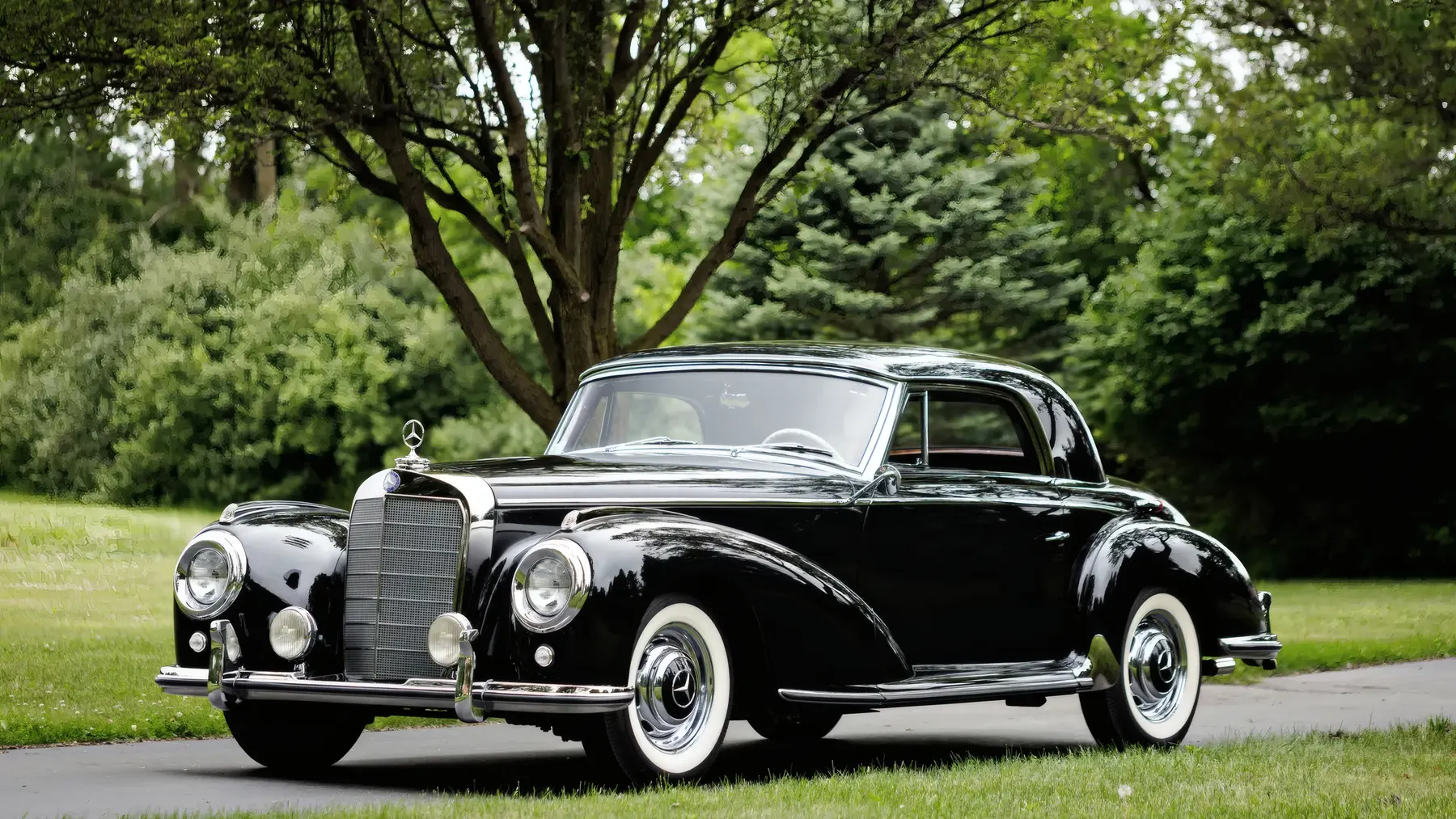
When the curtain rose at the 1951 Paris Salon and Mercedes-Benz unveiled what would become the W188, the company was engaged in something more consequential than a product launch. West Germany was six years removed from rubble, and Stuttgart was asking the world’s most discerning automotive public to believe that its engineering hadn’t merely recovered but had arrived at a new standard. The 300 S was the answer to that question, and the Sb Coupé - the quietly refined mid-generation variant produced from 1954 until the series transitioned to direct injection in 1955 - represents the model at the peak of its original carburetted character, before the technology that would make it famous was borrowed from a car that would overshadow it entirely.
To understand the W188, you first need to understand what it was not. It was not the 300 SL. That distinction matters enormously, because the Gullwing arrived in 1954 and immediately became one of the most written-about cars of the twentieth century, while the 300 S - which predated it by three years and shared its fundamental mechanical DNA - has never quite escaped the SL’s gravitational pull. The reality is that the two cars shared an engine family but existed in entirely different worlds. The SL was a racing programme dressed up for the road. The W188 was Stuttgart’s most uncompromising statement about what a luxury grand tourer should be: hand-built, faultlessly finished, and priced to ensure that its owners included Aristotle Onassis, King Farouk, and Aga Khan III rather than the kind of gentleman who simply wanted something fast.
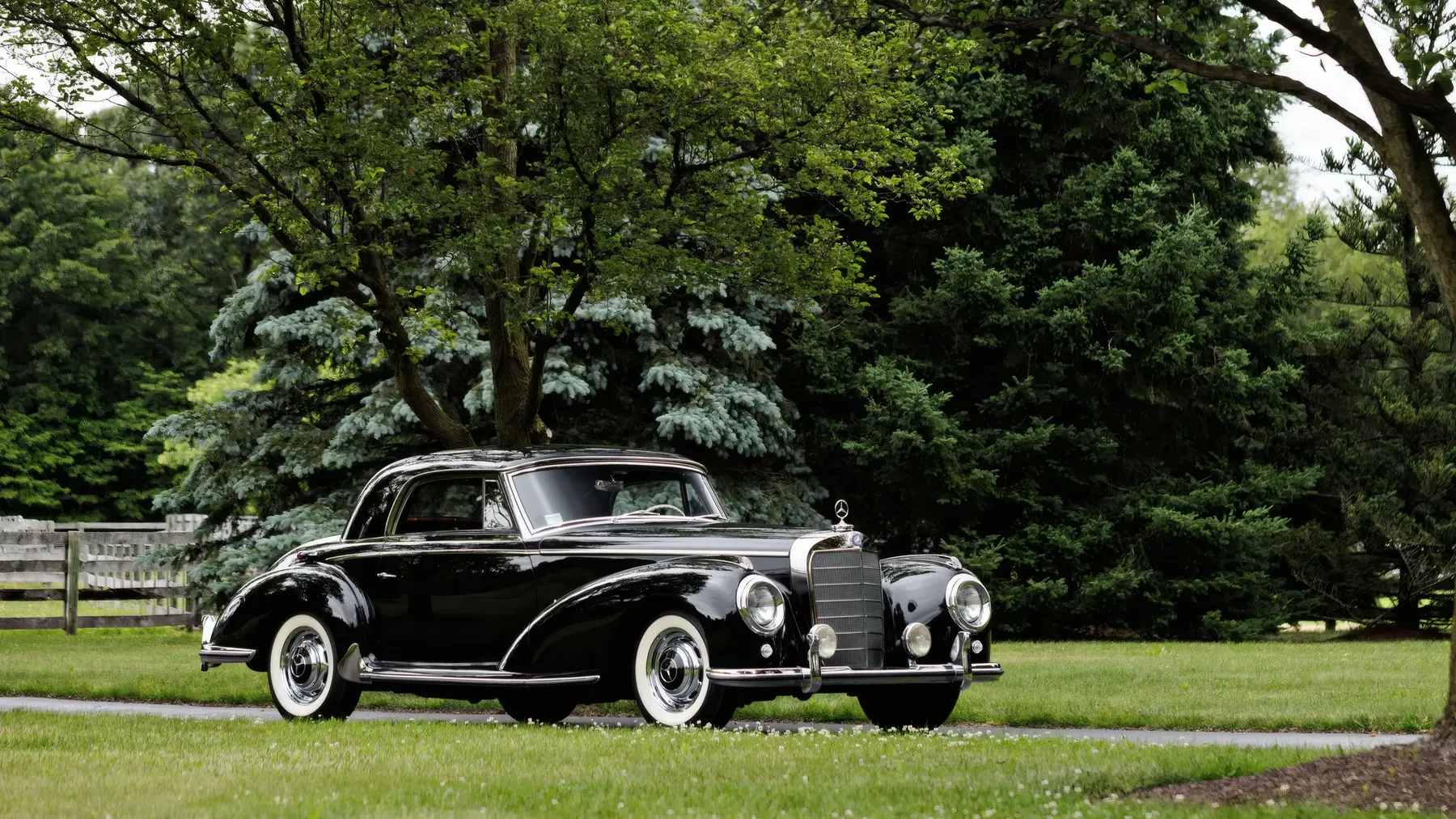
The W188 rode on a tubular steel chassis with a wheelbase shortened by 150mm relative to the W186 300 “Adenauer” saloon from which it drew its mechanical architecture - 2,900mm against the Adenauer’s longer platform - and that abbreviation transformed the handling character entirely. Independent suspension at all four corners, with coil springs and a swing axle at the rear, gave the car a composure over rough surfaces that beam-axle British rivals of the era genuinely could not match. Servo-assisted drum brakes all round provided stopping power proportionate to the car’s considerable mass, which in coupé form settled at approximately 1,620kg - not light by any standard, but never offensive for a handbuilt two-door of this scale.
The M188 engine sitting under that long, gently sculpted bonnet was the Sb’s defining mechanical achievement and its most interesting technical argument. Displacing 2,996cc from an overhead-camshaft inline-six with an aluminium cylinder head, the unit had been developed with a fastidiousness that bordered on aircraft practice: deep water jackets, a diagonal head-to-block joint specifically engineered to accommodate oversized intake and exhaust valves, thermostatically controlled oil cooling, and copper-lead bearings on a hardened crankshaft. Three Solex carburettors - each a twin-choke unit - fed combustion chambers set at a 7.8:1 compression ratio, and the result was 150bhp at 5,000rpm with 178lb-ft of torque available slightly lower in the range. Those figures sound modest against a 2025 baseline, but in 1954 they placed the Sb Coupé firmly among the most capable grand tourers on sale anywhere, capable of a top speed of 109mph and acceleration that journalists of the era described with genuine surprise.
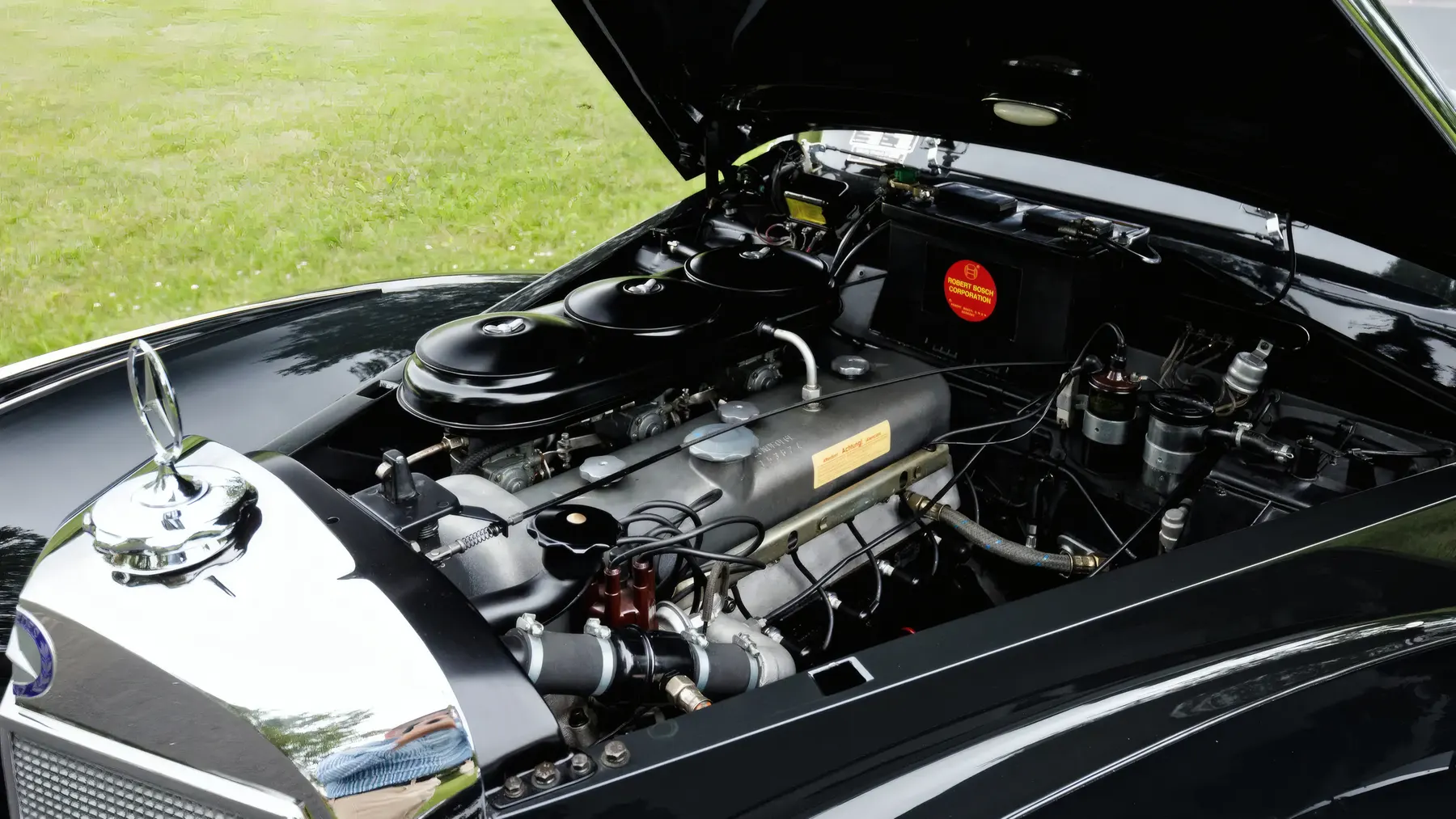
The “Sb” designation itself signals a set of quiet improvements over the original 300 S: revised carburation, a higher compression ratio lifting output from the 300 S’s initial 148bhp to its rated figure, and refinements to the four-speed manual gearbox that made the change quality more consistent across the rev range. Mercedes offered the transmission without fanfare, but engineers understood that a car bought for extended cross-continent travel needed gearchange precision that held up on the tenth hour of driving as reliably as on the first. The Sb was not a radical departure from the original - it was the original, corrected.
The Coupé body, designed in-house at Sindelfingen and hand-assembled there by craftsmen who worked at a pace that precluded the economics of volume production, resolved a particularly difficult aesthetic problem. It needed to read as modern without abandoning the elegance of the prewar grand touring tradition, and it needed to carry four adults while projecting the visual weight appropriate to its price - DM 34,000 at launch in 1952, later rising further, a figure that placed the W188 fifty percent above the already expensive Adenauer saloon and on approximate parity with a Rolls-Royce Silver Cloud. The answer was a body of notable restraint: long bonnet, fastback roofline, flush-mounted door handles, and minimal ornamentation beyond the three-pointed star and the chrome window surrounds. The rear haunches carried just enough curvature to suggest latent athleticism without tipping into sportiness. It is a car that rewards sustained looking rather than an instant impression, which is entirely consistent with the buyer Stuttgart was targeting.
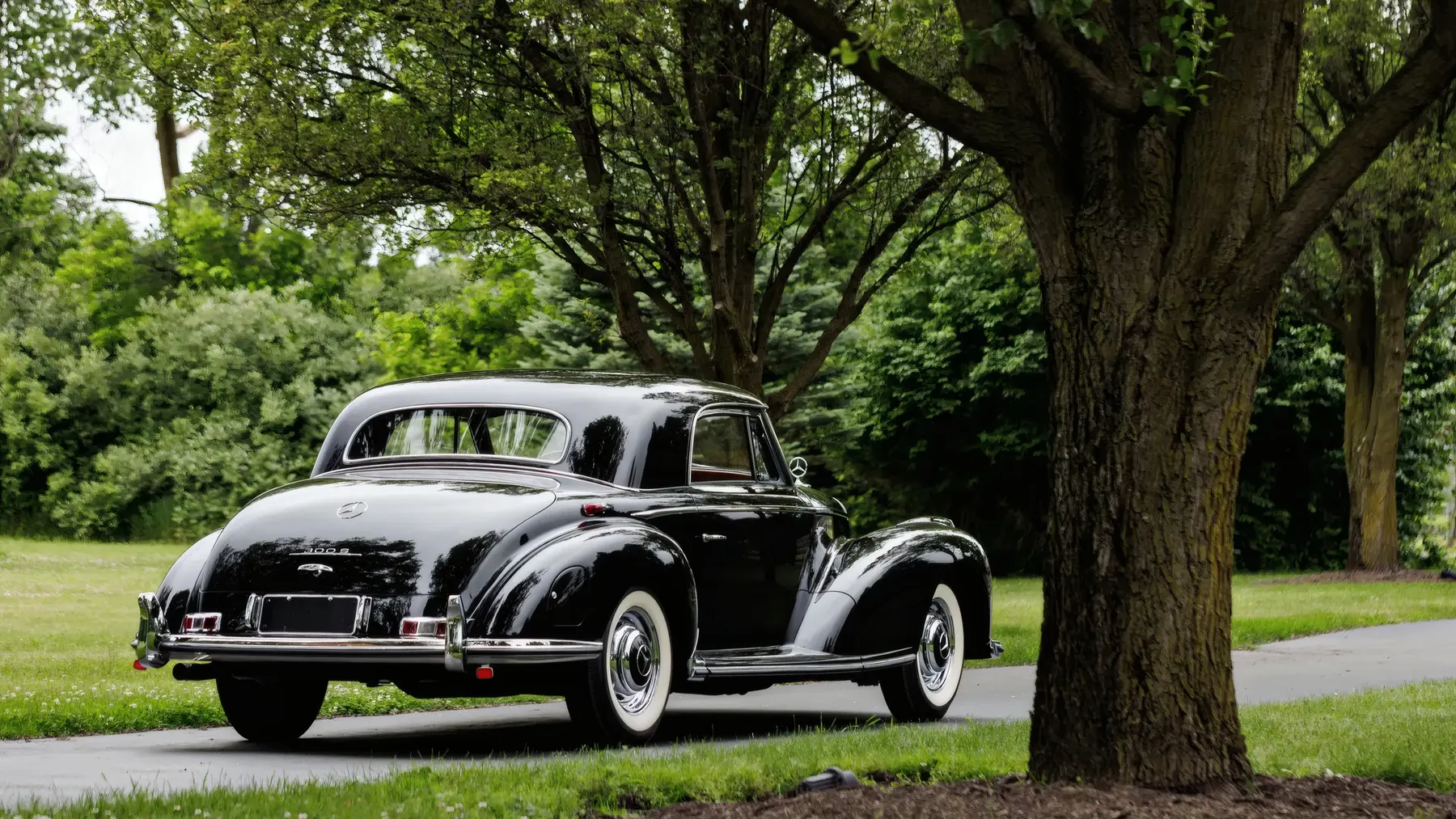
Inside, the Sb Coupé offered leather upholstery of a quality that had no contemporary equivalent in volume production, a walnut dashboard carrying Jaeger instruments with the kind of legibility that suggested their designer had actually thought about reading them at speed, and a driving position that was perhaps more upright than later practice would favour but was correct for the standards of its era. The cabin was snug for four rather than genuinely spacious - the roofline compression that gave the coupé its elegant profile exacted a cost in headroom - and rear passengers were better served in the Cabriolet A, which shared the same chassis but prioritised interior volume differently. This was understood at the time and is reflected in the production figures: of the 560 total 300 S automobiles built before the Sc revision, 216 were coupés, 203 were Cabriolet As, and 141 were roadsters. The Coupé was neither the most accommodating nor the most dramatic body style, but it was considered the most formally correct, the one that best represented the model’s claim to be taken seriously as a cultural object rather than merely a performance machine.
On the road, the Sb Coupé operated with a particular kind of authority that still communicates itself through contemporary road test accounts. The M188 engine did not rev with the eager, high-frequency energy of an Italian sports car - it pulled with a deep, sustained force that accumulated rather than peaked, and the three carburettors delivered their charge smoothly enough that throttle response felt metered rather than immediate. High-speed motorway cruising, then a relatively new European experience thanks to the expanding Autobahn network, was this car’s native environment: at 85mph the engine was operating well within its comfortable range, the body’s aerodynamic drag was modest enough not to demand excessive power, and the suspension’s inherent composure meant that expansion joints and surface variations registered as vibration rather than impact. The swing axle rear suspension did introduce a tendency toward oversteer under provocation that required respect - the car’s mass and the rear geometry could combine unpredictably if a driver exceeded the limit of grip with any enthusiasm - but driven within the parameters that its weight and character suggested, the Sb Coupé rewarded competence rather than punishing it.
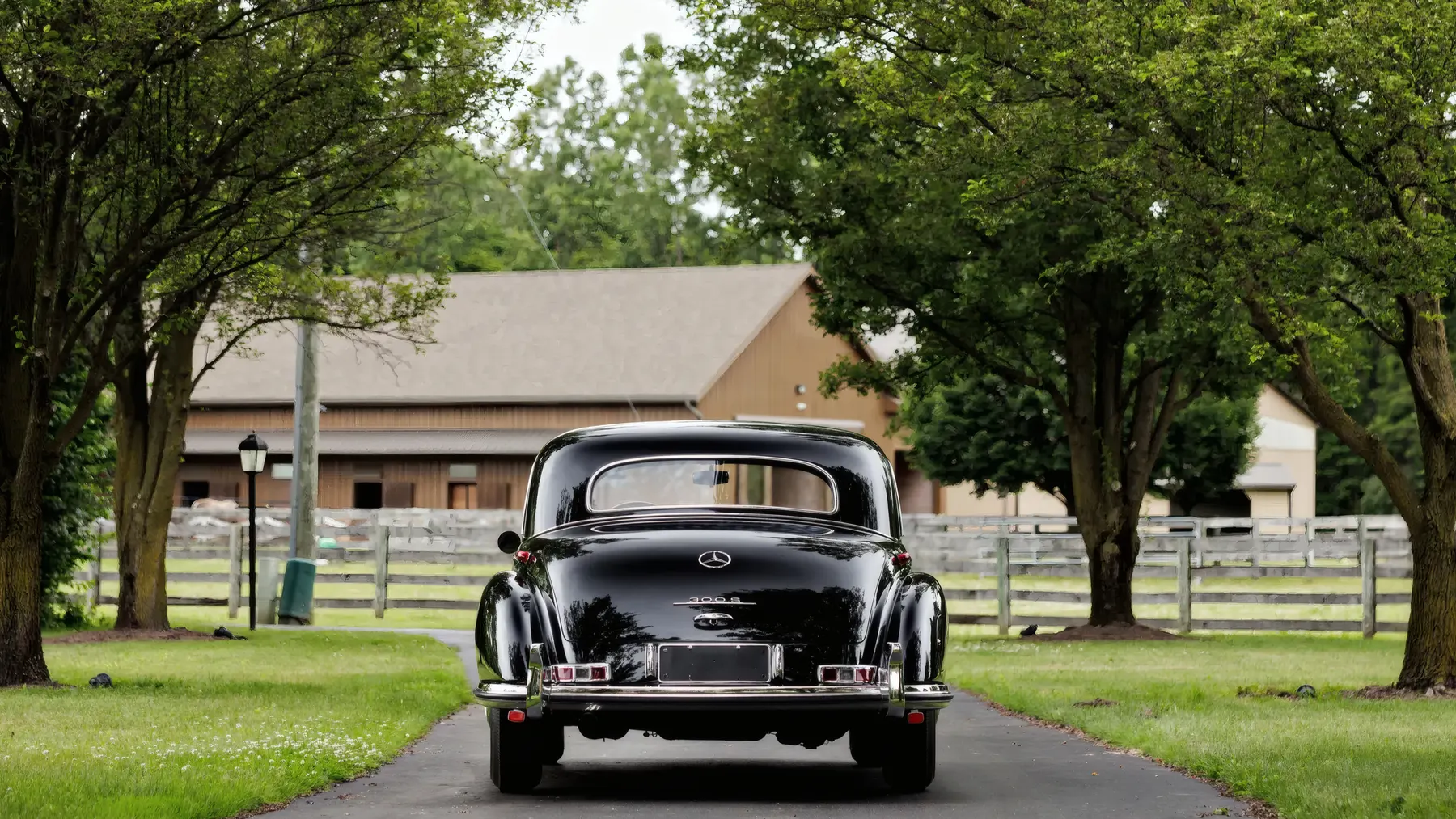
What genuinely distinguished the Sb from its contemporaries, and what still distinguishes it from most of what followed, was the quality of its construction at a functional level rather than a cosmetic one. The fit of panels, the action of every switch and lever, the absence of wind noise at speed - these were not achieved through production engineering tricks but through the direct attention of craftsmen who understood that they were building a car that would represent the capabilities of their company in the most unambiguous possible way. Mercedes-Benz was aware, acutely, that the W188 was the first postwar German automobile that could sit beside the best British and Italian luxury machinery without apology. Every example needed to prove that awareness justified.
The honest accounting of the Sb’s limitations is straightforward. The swing axle rear suspension, acceptable at the car’s introduction and still manageable in the Sb, was already being superseded by more sophisticated geometry elsewhere; the 300 Sc that arrived in September 1955 replaced it with a single-joint cross-shaft low-pivot axle derived from the W186 300c, an improvement that was perceptible in dynamic behaviour at the limit. The brakes, while servo-assisted, were drums of the conventional finned variety, and the four-wheel stopping distances from 100mph required planning. The manual gearbox, while improved in the Sb, demanded a rhythm of engagement that later synchromesh developments would make feel effortful by comparison. And the price - always the price - ensured that the market was approximately 760 people across the entire model run, a constraint that made the W188 commercially marginal almost by design.
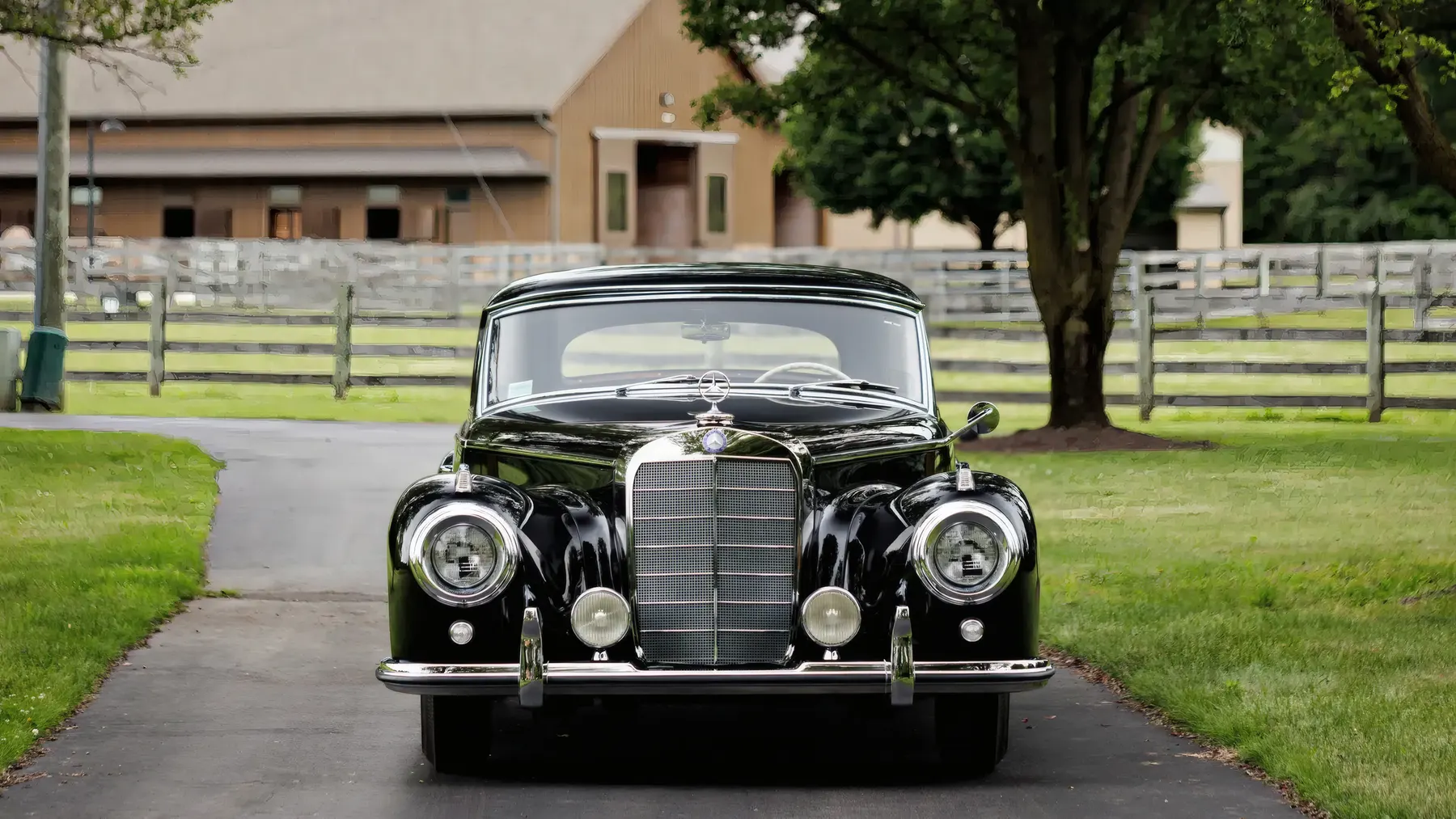
The arrival of the 300 Sc in 1955 fundamentally changed what the W188 meant. The Sc received a detuned version of the 300 SL’s M198 mechanical direct fuel-injection system, producing 175bhp at 5,400rpm and 188lb-ft of torque - an advance that the carburettors of the Sb simply could not match - along with the revised rear suspension. Only 98 Sc Coupés were built before production ended in April 1958, against 216 of the original S and Sb, which makes the numbers clear enough: the carburetted generation was the one that actually defined the nameplate’s character in the market. The Sc was technologically superior and sold to fewer buyers, arriving at the tail of a production run that was already being overshadowed by the road-going 300 SL.
The cultural position of the W188 is curious and instructive. Because the 300 SL arrived just as the 300 S was reaching its Sc iteration, the sports car absorbed almost all of the historical attention, and the W188 has existed in a scholarly limbo - too expensive and rare to be a volume-market classic, too closely associated with the Adenauer saloon to be perceived as a performance car, and too modest in its specification relative to the SL to attract the same collector premium. The correction to that assessment has been ongoing: recent auction results demonstrate a growing recognition that the W188 Coupé represents something the SL never was - a complete, habitable, four-season grand tourer that asked nothing of its owner beyond the ability to pay for it. The RM Sotheby’s Monterey 2024 sale included a 1955 300 Sb Coupé presented to the market as exactly that: a historically significant, coachbuilt expression of Stuttgart’s most ambitious postwar intent.
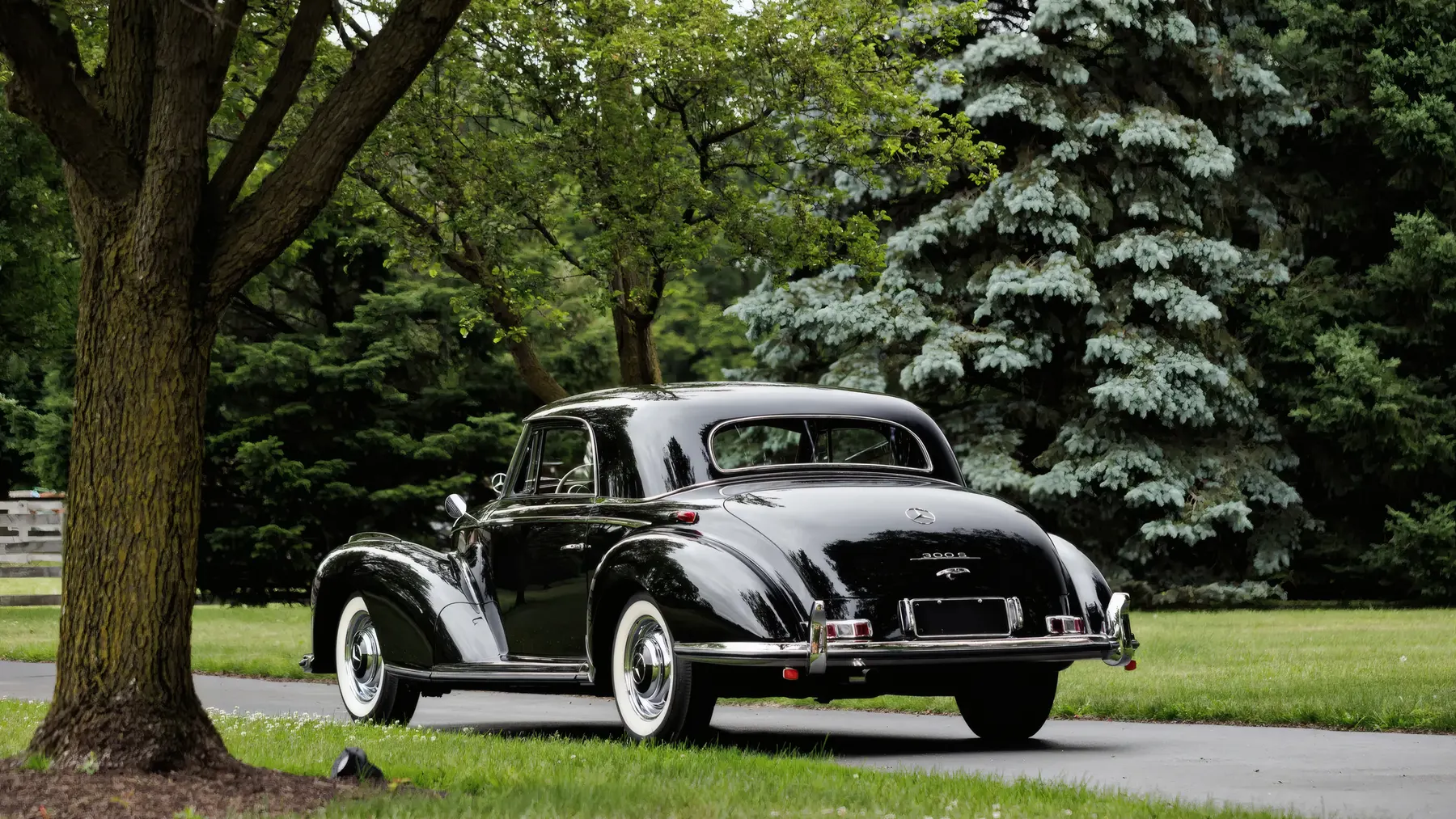
The 300 Sb Coupé endures not because it competed with the best of its era on every technical axis - it didn’t, and it wasn’t trying to - but because it understood precisely what it was. Stuttgart built 216 coupés to a standard that the decade’s production methods should not have allowed, priced them at a level that ensured the buyer’s seriousness, and created in the process an object whose claims to excellence were never inflated and never needed to be.