1952 Mercedes-Benz (W186) 300 Cabriolet D 'Adenauer'
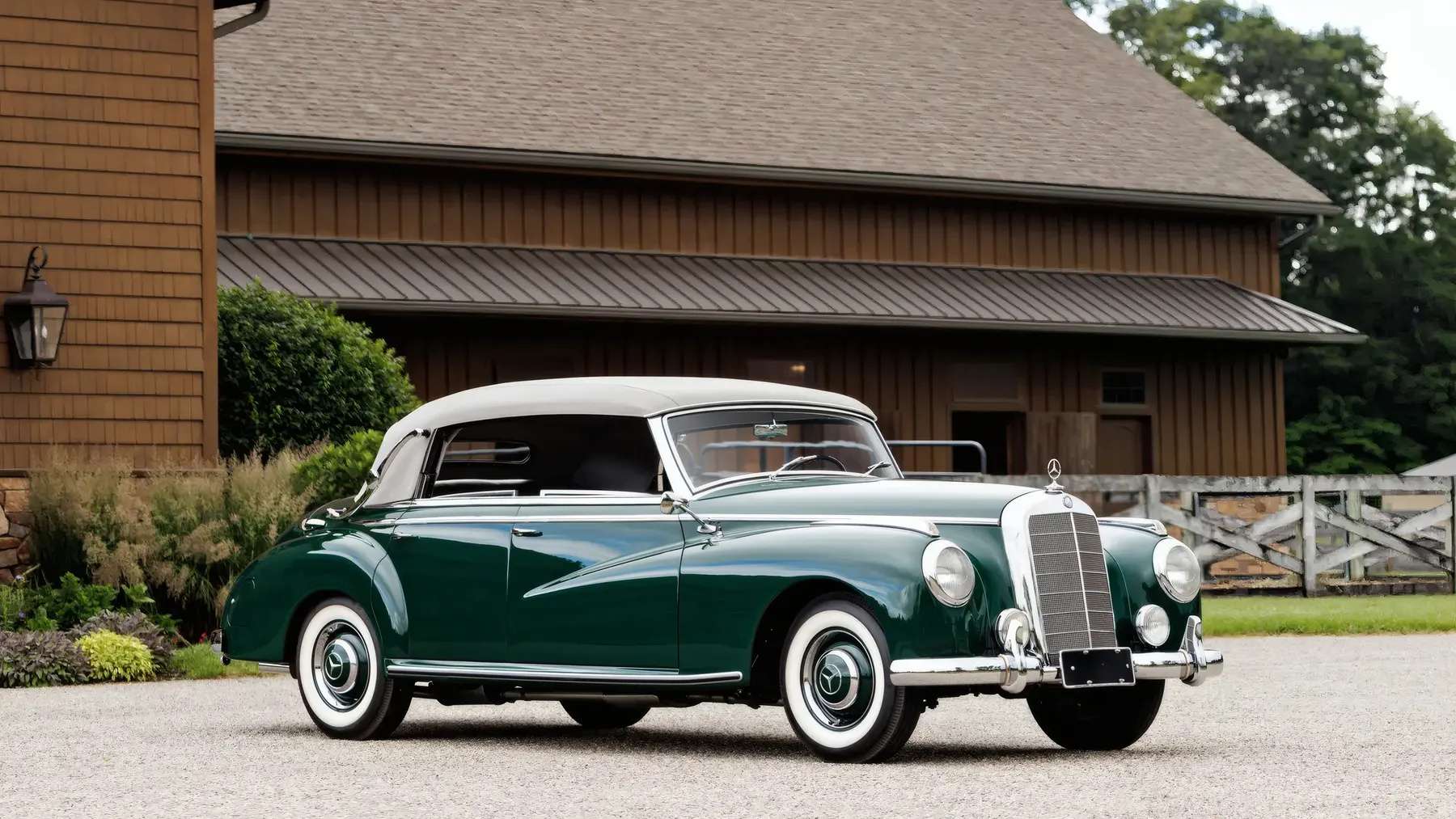
When Konrad Adenauer climbed into the back of a long, dark Mercedes and was driven through Bonn with the top down, he was not merely being transported - he was making an argument. West Germany, barely half a decade removed from total collapse, could once again build cars that heads of state actually wanted to be seen in. The W186 300 Cabriolet D was Stuttgart’s most concentrated piece of evidence for that claim.
Mercedes-Benz launched the 300 series at the Frankfurt Motor Show in April 1951, with series production beginning that November. The timing was deliberate and the ambition was unambiguous: this was the car with which Stuttgart intended to announce that German engineering had not merely survived the war but was already capable of competing with - and in several measurable respects surpassing - the Rolls-Royce Silver Cloud and Bentley S1. The Cabriolet D body style was the flagship expression of that intent, a four-door open car in the grand pre-war European tradition, built at Sindelfingen with the kind of hand-finished care that mass production lines could not replicate.
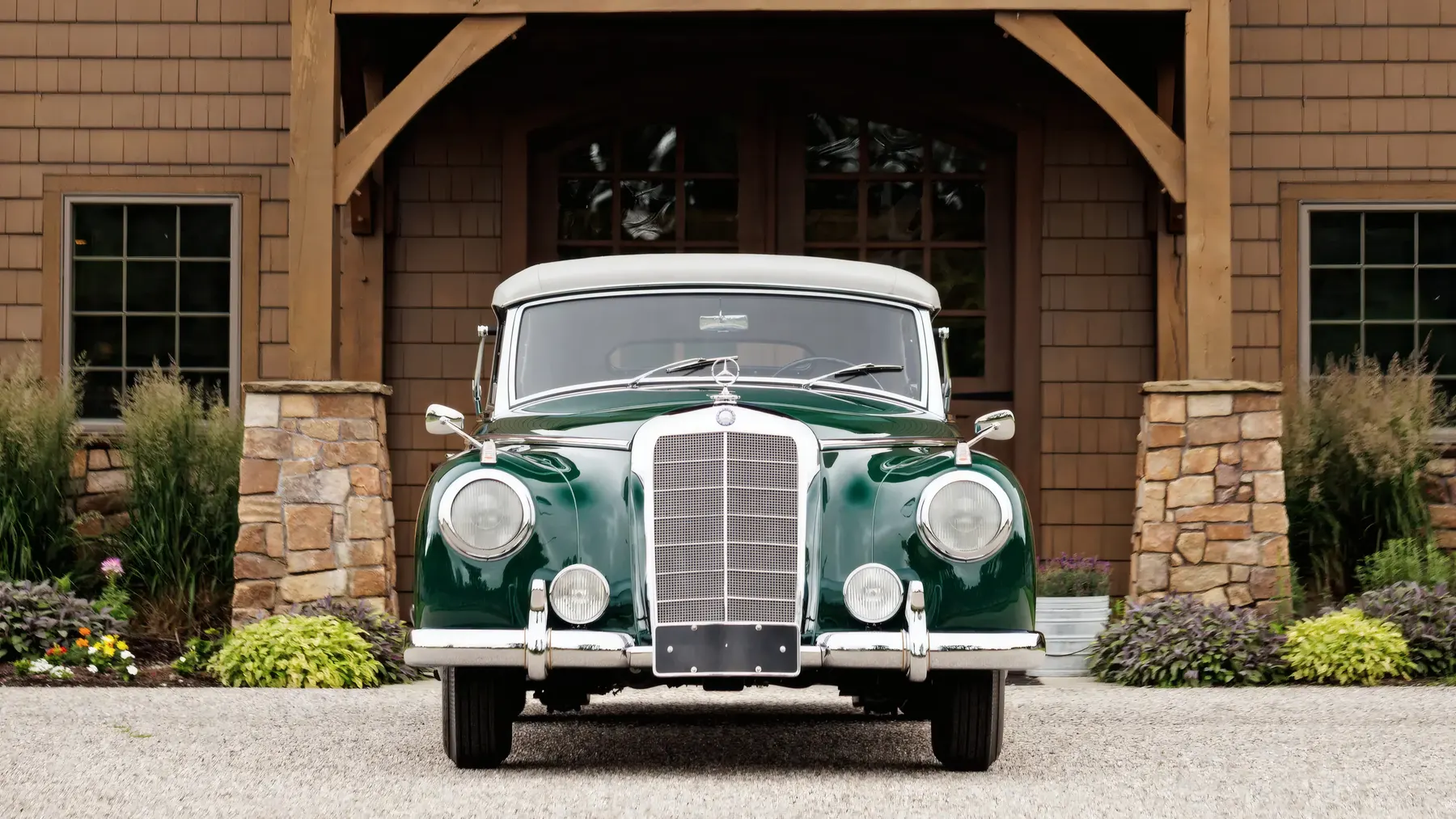
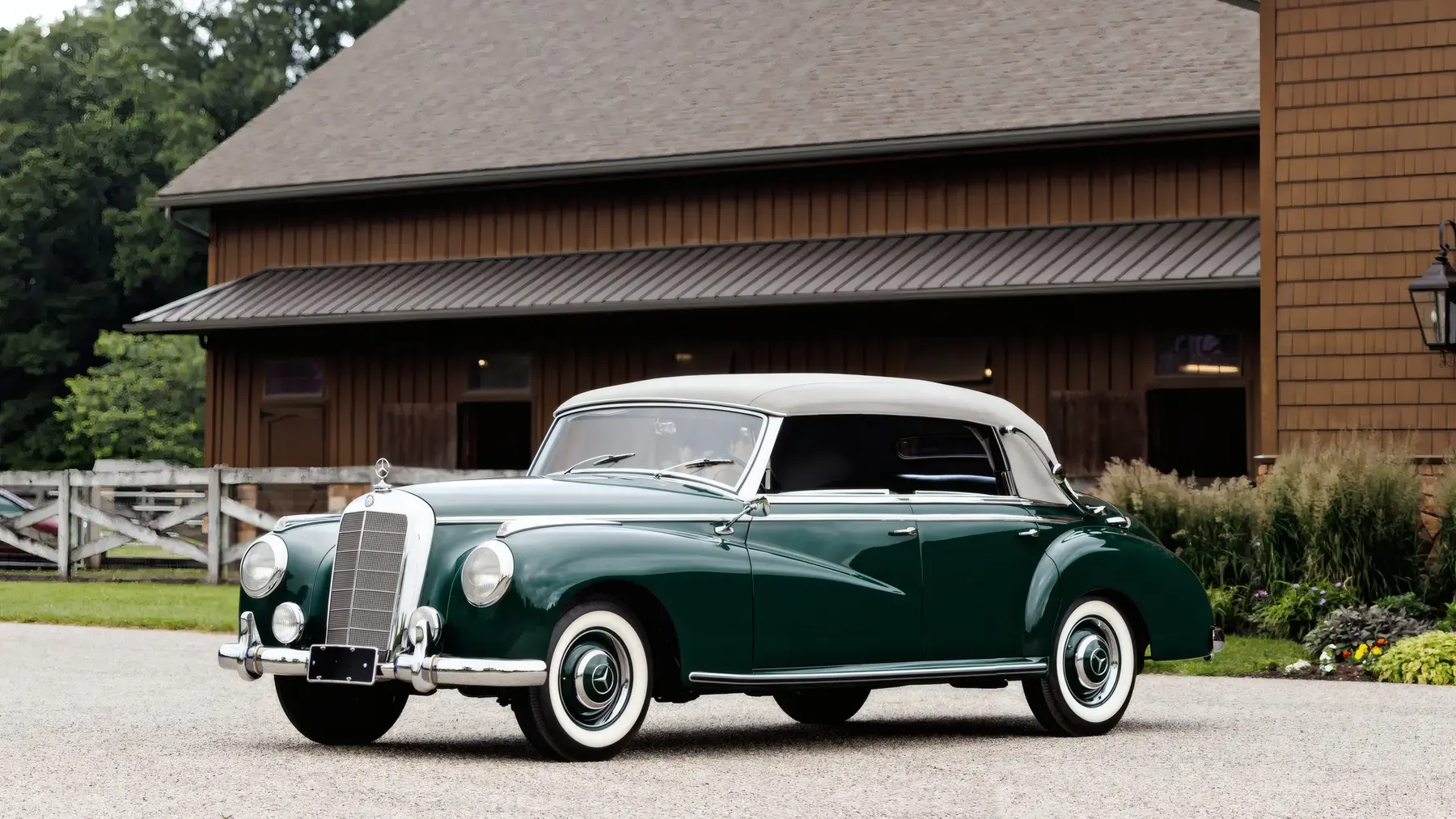
Three successive generations wore the W186 platform through the model’s lifespan: the original 300 (retroactively called the 300a), the 300b from March 1954, and the 300c from September 1955. Each added refinements rather than reinventing the car. The 300a produced 115 bhp from its 2,996 cc overhead-cam straight-six, fed by twin Solex carburettors. The 300b raised output to 123 bhp through revised carburettors and a compression ratio lifted to 7.5:1, while simultaneously adding vacuum-assisted power brakes and front quarter vent windows. The 300c brought a larger rear window and - most significantly - the option of a Borg-Warner three-speed automatic transmission, the first time such a choice was available on the model. None of these were radical changes. Mercedes was refining a known quantity rather than chasing novelty, and that measured confidence runs through everything the W186 did.
The engine at the core of all three generations is worth dwelling on, because it explains why the car felt as capable as it did. The M186 straight-six was not an old-fashioned luxury unit breathing slowly at low revs. It was directly related to the motor that went into the 300 SL, sharing its aluminium head, diagonal head-to-block joint - an unusual engineering decision that allowed larger inlet and exhaust valves than a conventional arrangement would permit - and a general disposition toward sustained high performance rather than low-speed ceremony. Mercedes’ own engineers noted that the engine had no natural cruising speed: it could sustain maximum velocity all day, road conditions permitting, which in a large open cabriolet translates into something practically intoxicating. The 300c’s top speed of roughly 100 mph was not just a number but a genuine capability, available on demand from an engine that had been designed to cope with it without drama.
Underneath, the X-frame chassis and four-wheel independent suspension - double wishbones and coil springs at the front, the double coil spring swing-axle arrangement at the rear - gave the W186 handling that surprised journalists who expected limousine sluggishness. A dashboard-controlled rear load-levelling system used a torsion bar to stiffen the rear suspension by approximately one-third when loaded, and a pedal-operated central lubrication system kept every friction point properly attended to without requiring driver vigilance. It is the sort of thoughtful engineering that does not appear on specification sheets but reveals itself on a long journey, when everything continues to feel settled and precise rather than gradually acquiring the looseness of a car not quite equal to the demands placed on it.
Aesthetically, the Cabriolet D occupies a very particular position. The body, designed and built at Sindelfingen, has none of the baroque heaviness of some contemporary American formal cars, nor the willowy delicacy of the French coachbuilt machines. It is upright, broad, carefully proportioned, with a long bonnet, high waist, and a cabin that reads as authoritative rather than decorative. The four-door open configuration - the “D” in Cabriolet D denoting the four-door layout - gives it a ceremonial gravity that a two-door convertible simply cannot achieve. When all four windows are lowered and the hood is folded away, the impression is of a car designed specifically for the kind of public occasion where being seen arriving matters as much as the meeting that follows.
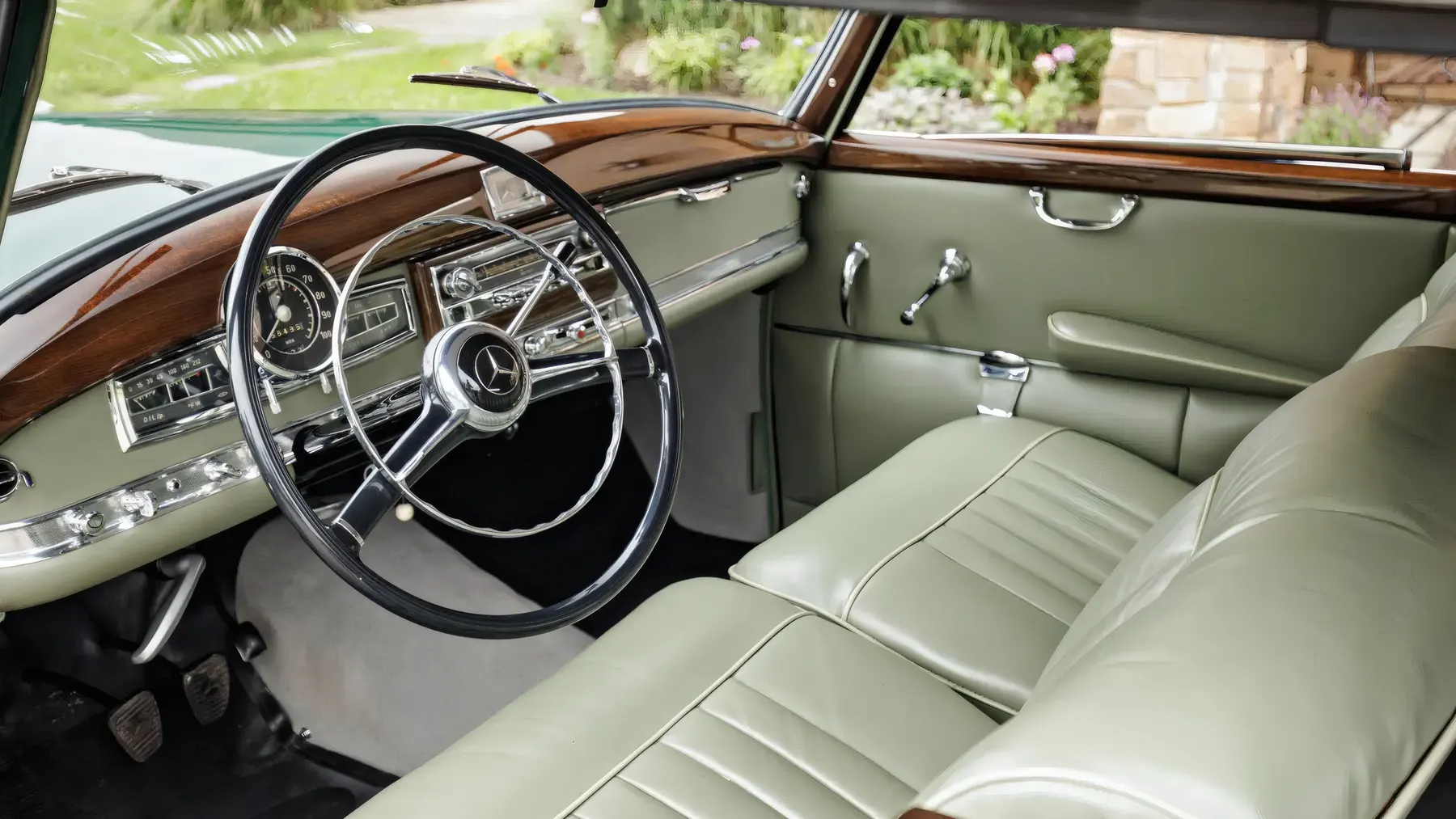
Inside, buyers could specify a glass partition, a VHF mobile telephone, and a dictation machine - not as novelty items but as working tools for the industrialists and officials who were the car’s intended clientele. The combination of these options with Sindelfingen’s interior craftsmanship - leather upholstery, polished wood, quality of fit that was demonstrably hand-achieved - placed the W186 Cabriolet D at a price point above almost every rival on the German market. The 300c Cabriolet D was listed at DM 24,700 in Germany and $14,231 in the United States, roughly a third more than the already expensive saloon, a premium that reflected both the rarity of the body style and the additional labour involved in its construction.
In driving terms, the W186 Cabriolet D was never a car to be hustled. The drum brakes - vacuum-assisted from the 300b onward - were adequate rather than outstanding for the performance on offer, and the swing-axle rear suspension, while well-tuned, imposed its own characteristic behaviour at the limit that rewarded smooth inputs over aggression. The four-speed manual gearbox fitted to the 300a and 300b had a satisfying mechanical precision, and the optional Borg-Warner automatic on the 300c suited the car’s long-distance, high-comfort mission rather better than it suited a driver who wanted to feel involved. The overall experience was one of unhurried capability: a car that covered ground quickly and quietly, inspired confidence without demanding it, and made its occupants feel secure rather than stimulated.
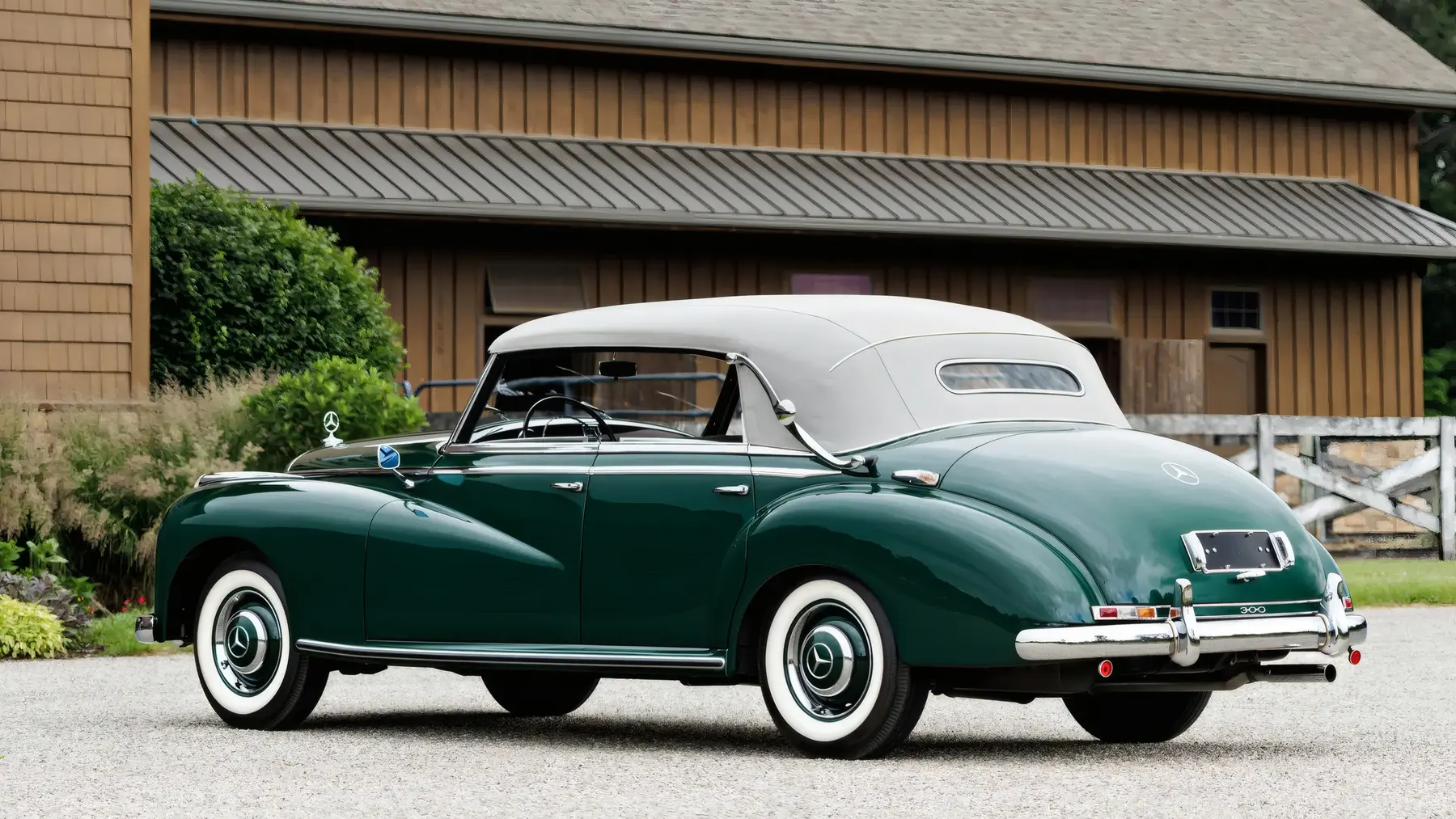
Where the W186 Cabriolet D genuinely excelled was in the coherence of its ambition. Mercedes had set out to build a car whose engineering justified its price and whose presence justified its political associations, and they succeeded on both counts. The relationship with Adenauer gave the car a cultural meaning beyond its mechanical content - six custom cabriolet, hardtop saloon and landaulet versions were built specifically for his use across the W186 and subsequent W189 - and that association was never accidental. Both the car and the man were making the same point, that West Germany had rebuilt itself with rigour and without ostentation, and that the results could stand comparison with anything the world offered.
The numbers confirm how special the Cabriolet D body was within the overall 300 programme. Across the entire W186 lifespan, 6,214 saloons were produced in the 300a run, but only 591 Cabriolet Ds across the 300a and 300b generations combined, and a mere 51 further examples in 300c specification before the body style was quietly retired in June 1956. The W189 300d that followed moved onto a different, longer platform with fuel injection and a pillarless phaeton body - a fine car in its own right, but a different object entirely. The W186 Cabriolet D was the last of a specific idea: a formally bodied, four-door open Mercedes built in the direct lineage of the pre-war state cars, finished by hand at Sindelfingen, and priced as though its makers understood that some things cannot be rushed or rationalised.
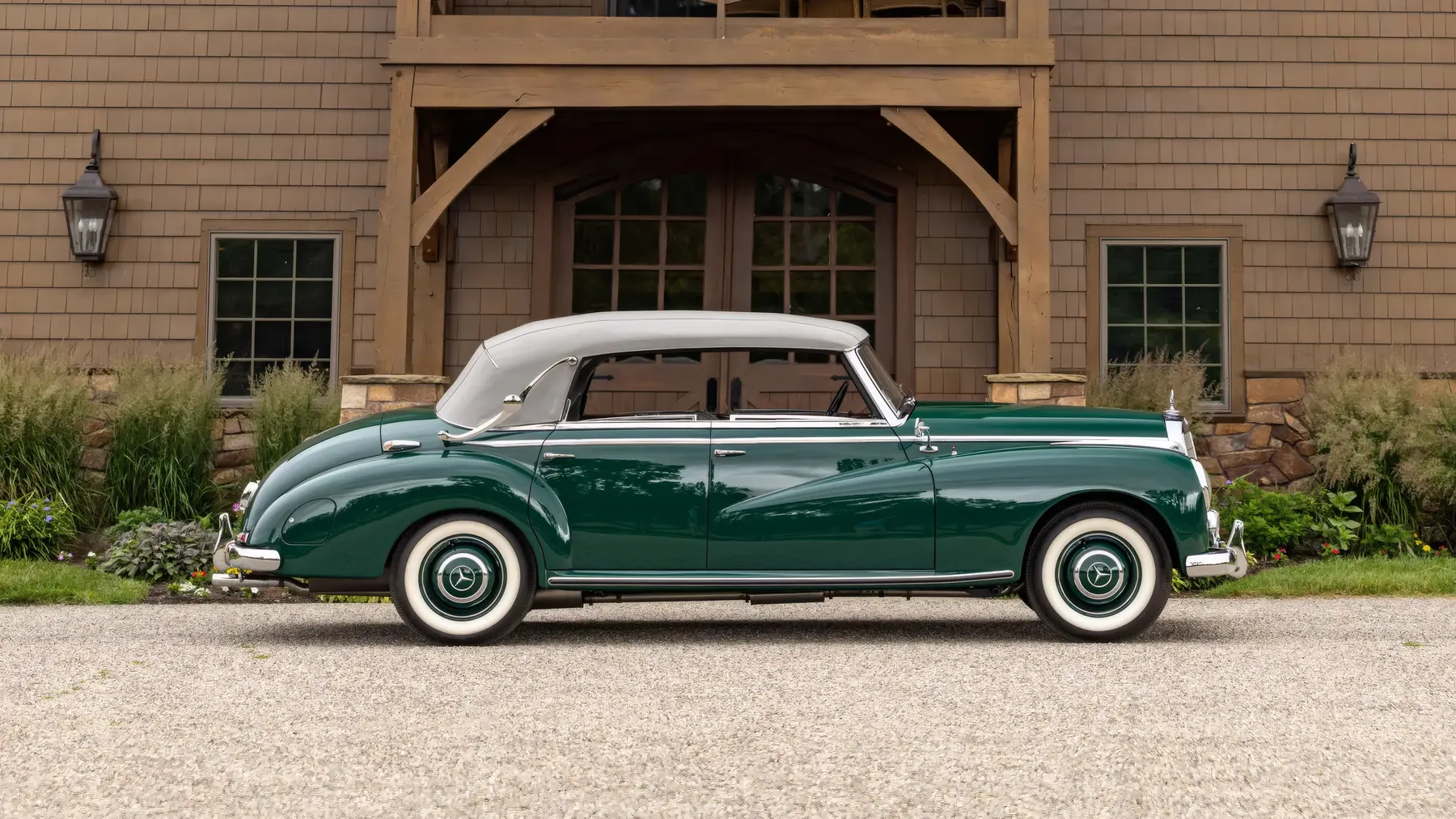
Reception during its production years was consistent: admiration from those who could afford it, respect from those who couldn’t, and the particular kind of credibility that comes from a car whose engineering substance matches its social weight. Decades on, the W186 Cabriolet D is recognised not merely as a rare and beautiful old Mercedes, but as a document of a very specific historical moment - the year-by-year reconstruction of a nation’s confidence, expressed in steel, aluminium, and a 3.0-litre straight-six that could run flat-out all day without complaint.