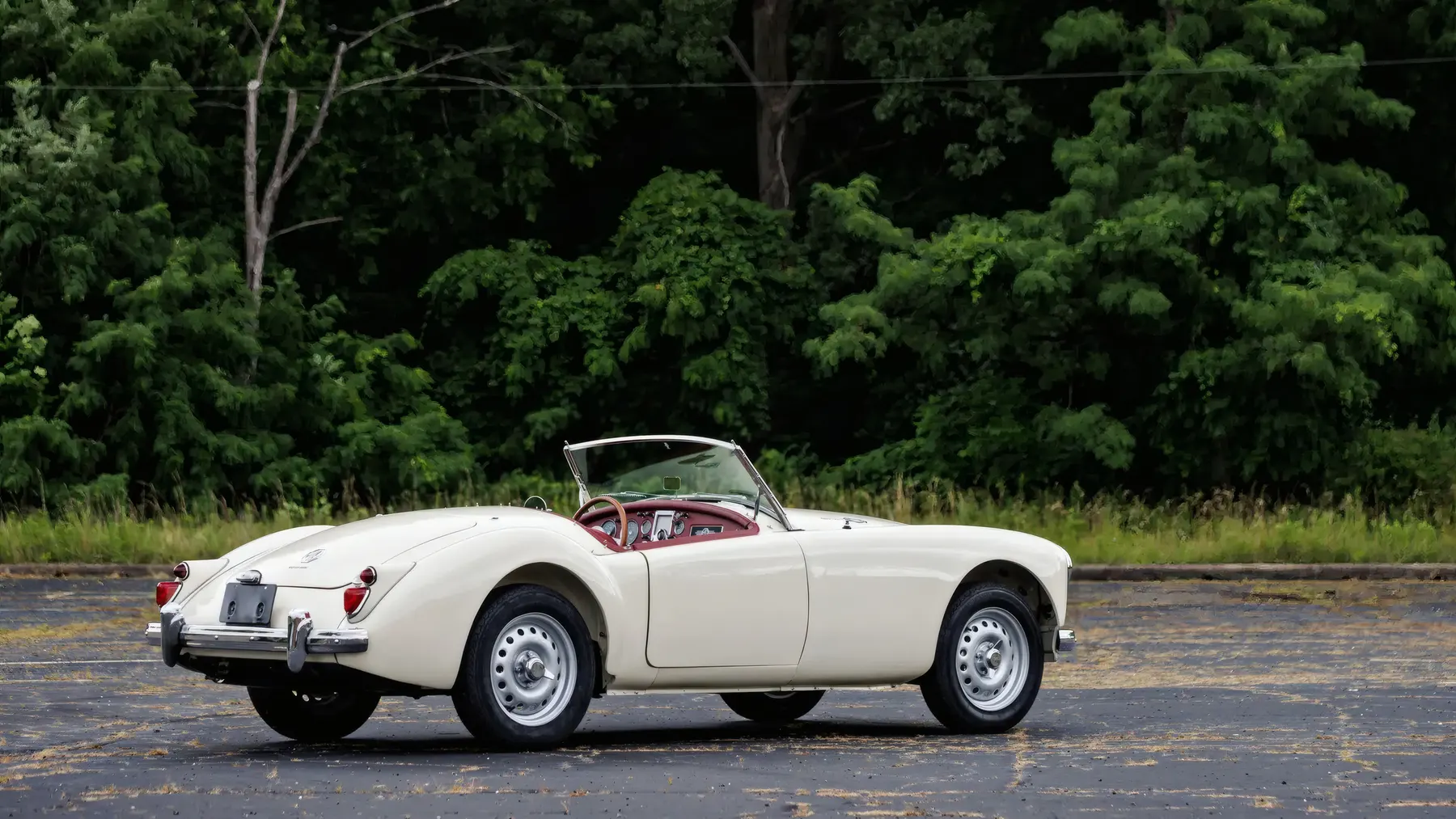
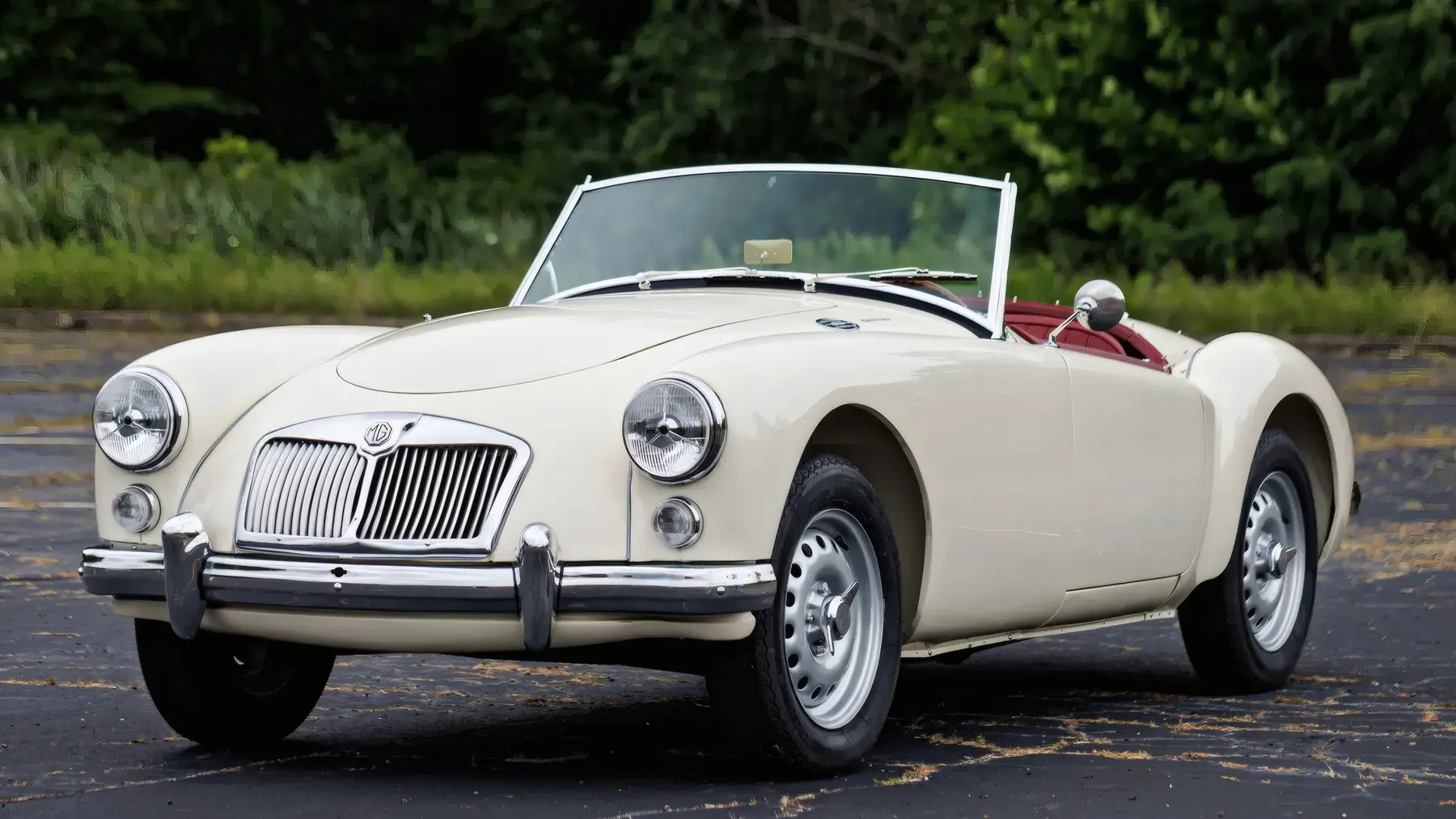
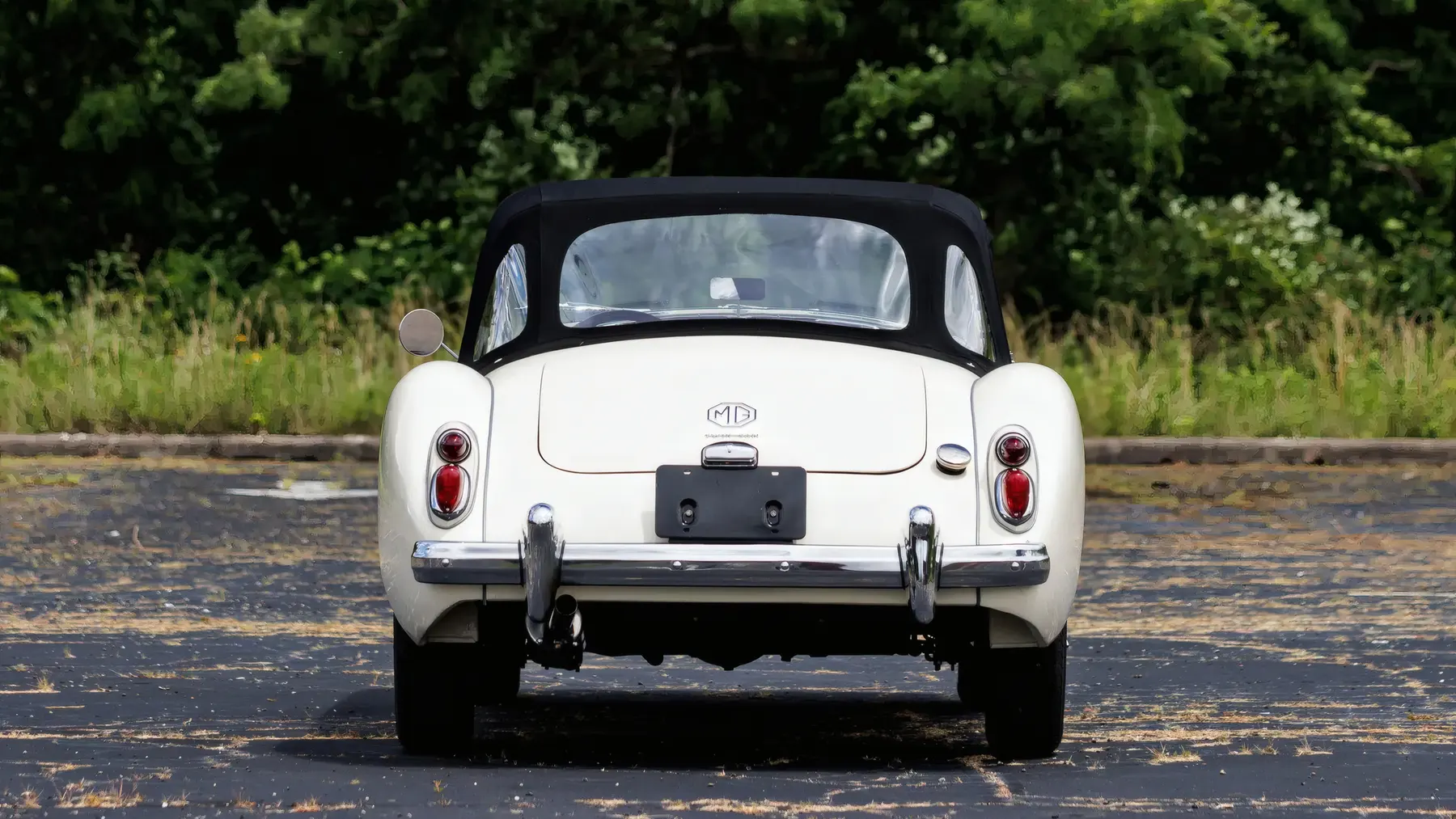
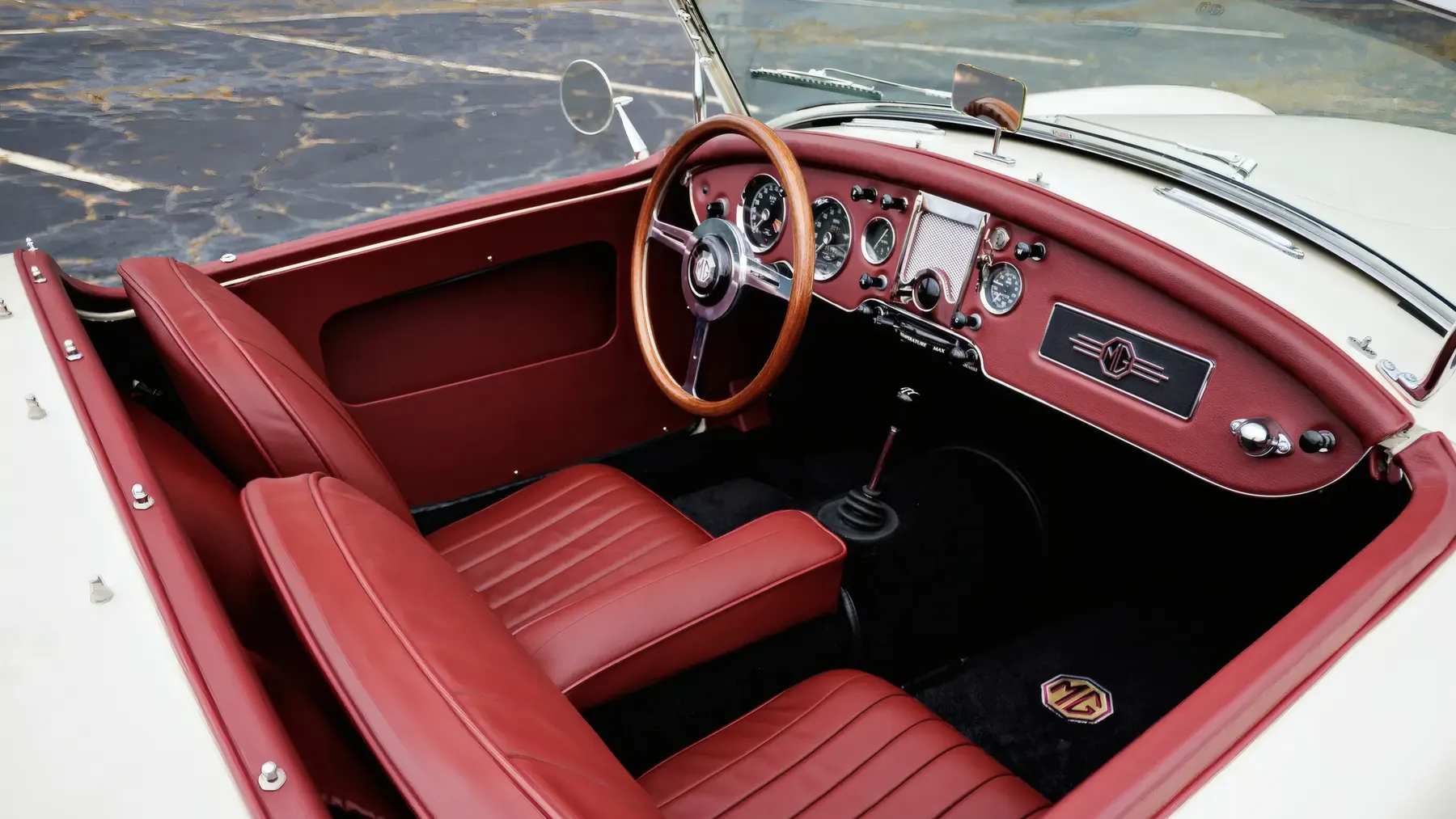
1960 MG MGA Twin Cam Roadster
The engineers at Abingdon had given themselves a nearly impossible brief: take the overhead-valve B-Series engine that powered half the vehicles in the British Motor Corporation’s catalogue, graft twin overhead camshafts onto it, run a 9.9:1 compression ratio through a motor that had never been designed to tolerate such demands, and produce a road car capable of cracking 113 mph in an era when the average British sports car struggled to reach 100. That the MGA Twin Cam came so desperately close to pulling it off is remarkable. That it nearly destroyed MG’s reputation in the attempt is the more honest part of the story.
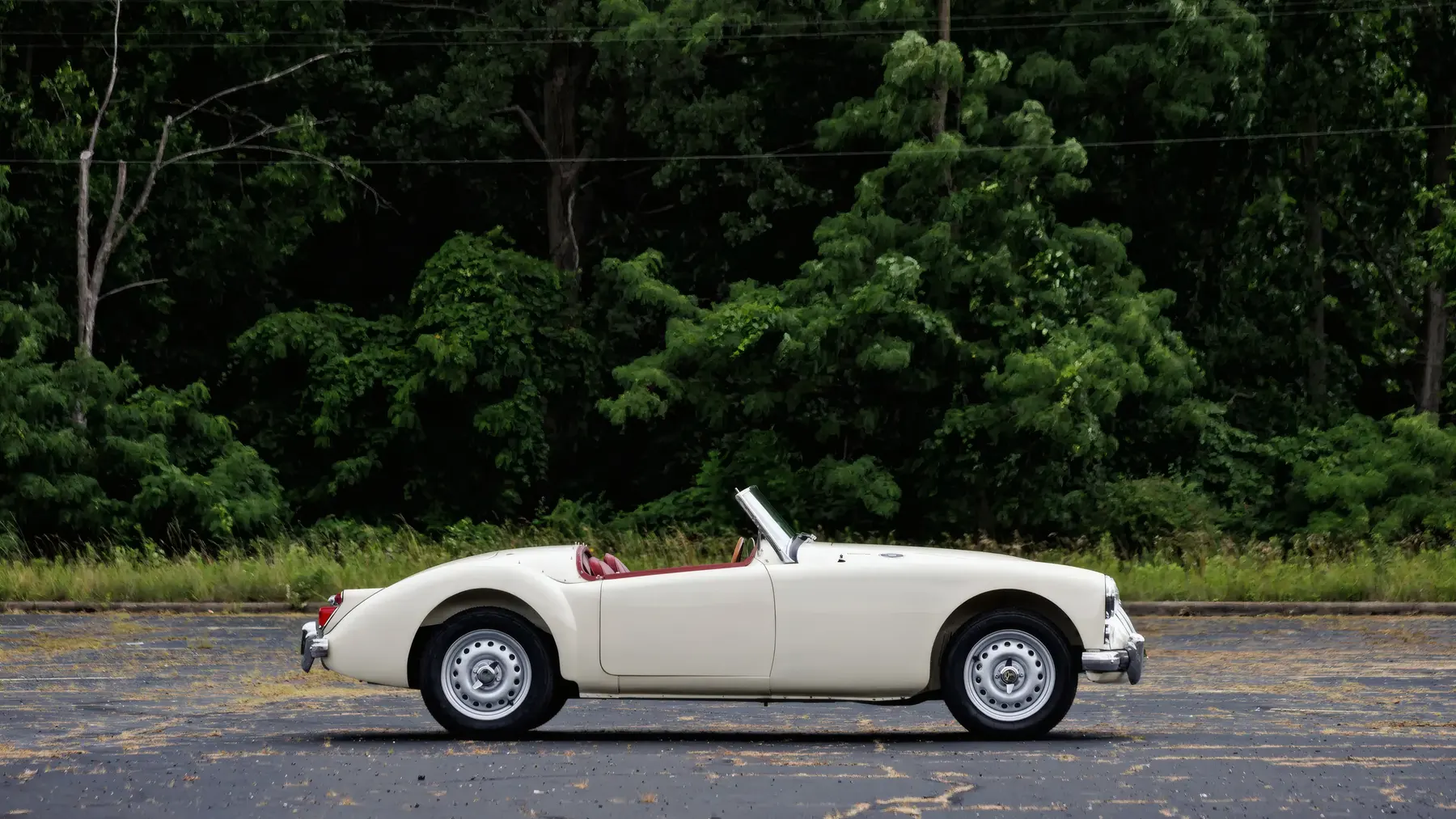
The MGA itself, when it arrived in 1955, was already a significant moment for Abingdon. The slab-sided, upright T-series cars it replaced had become a beloved anachronism - charming, twitchy, and increasingly difficult to justify against what the Italians and even the Germans were producing. The MGA was modern in a way MG had not been for years: flush-sided bodywork with a long bonnet and a low silhouette, a proper windscreen, Dunlop disc wheels that suggested continental sophistication. It was designed around a 1,489cc B-Series unit making around 68 bhp - enough for a creditable 98 mph but not what the more performance-minded customer, especially in America where the vast majority of MGAs were sold, was beginning to demand.
The Twin Cam programme had actually been gestating since the early 1950s, initially as a racing exercise under the EX designation series. Engineer Gerald Palmer sketched out a twin-cam head that could be mounted on the existing B-Series block - a pragmatic approach that would avoid the enormous expense of an entirely new engine. By the time the project was formalised as EX187 in mid-1955, the plan was clear: bore the engine out to 1,588cc, fit the new alloy twin-cam head, and produce something that could compete seriously in international sports car racing while also being sold, in modified form, to the public.
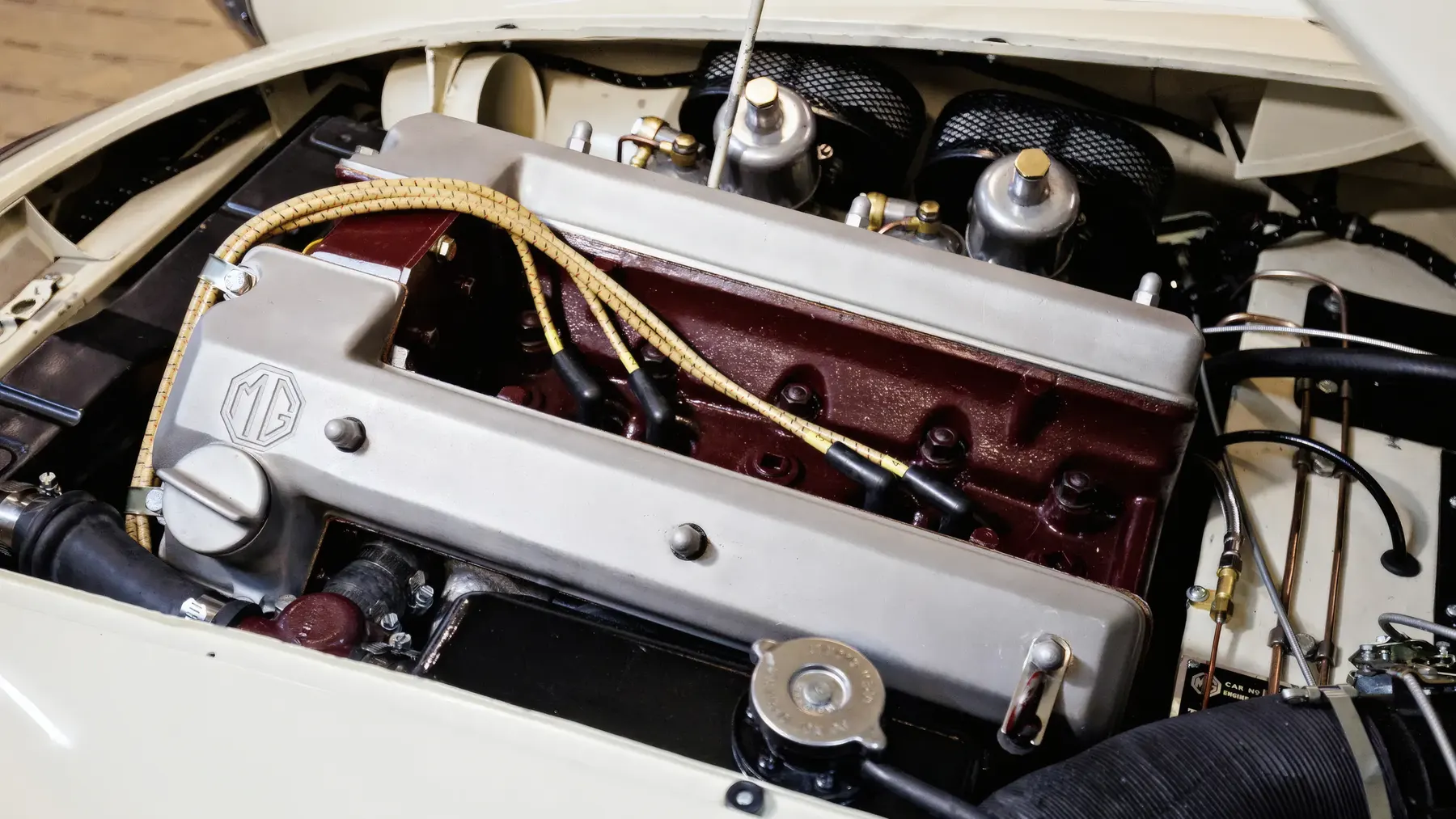
The production version, announced in mid-1958, used a cast iron block topped with an alloy head carrying twin camshafts, chain-driven and operating bucket tappets shim-adjusted in the manner of the best European practice of the day. Bore and stroke measured 75.39mm by 88.9mm, with compression initially a deeply optimistic 9.9:1. Twin semi-downdraught 1¾-inch SUs fed the mixture. The result, on paper, was 108 bhp at 6,700 rpm and 104 lb-ft of torque at 4,500 rpm - a roughly 60% power increase over the standard 1500 roadster and a figure that made the Twin Cam one of the most potent small-displacement sports cars available in Britain.
The chassis was, in most respects, shared with the pushrod MGA - a box-section ladder frame with coil spring and wishbone front suspension and a live rear axle on semi-elliptic springs. Wheelbase measured 2,388mm, the body 3,962mm long and just 1,270mm tall, giving the car its characteristic ground-hugging stance. What distinguished the Twin Cam visually from its pushrod sibling was subtle: the Dunlop centre-lock peg-drive steel wheels - designed originally for racing Jaguars - and the knowledge, if you looked closely enough, that the under-bonnet architecture was something altogether more serious. All four wheels received Dunlop disc brakes, a significant provision for 1958 and particularly appreciated given what the engine was capable of.
That engine produced something else too, at least in early examples: prodigious oil consumption. The problem was fundamental - the 9.9:1 compression ratio was simply too high for the fuel available in most markets, and the piston rings, changed on several occasions during the production run, were inadequate for the thermal loads being generated. Engines burned oil at alarming rates, fouled spark plugs with corresponding frequency, and under conditions of sustained high loading - exactly what an enthusiast buyer would impose - were prone to pre-ignition damage that could be catastrophic. The early Twin Cam earned a reputation for unreliability that spread through the motoring press and through the club racing scene with the particular swiftness that bad news always travels.
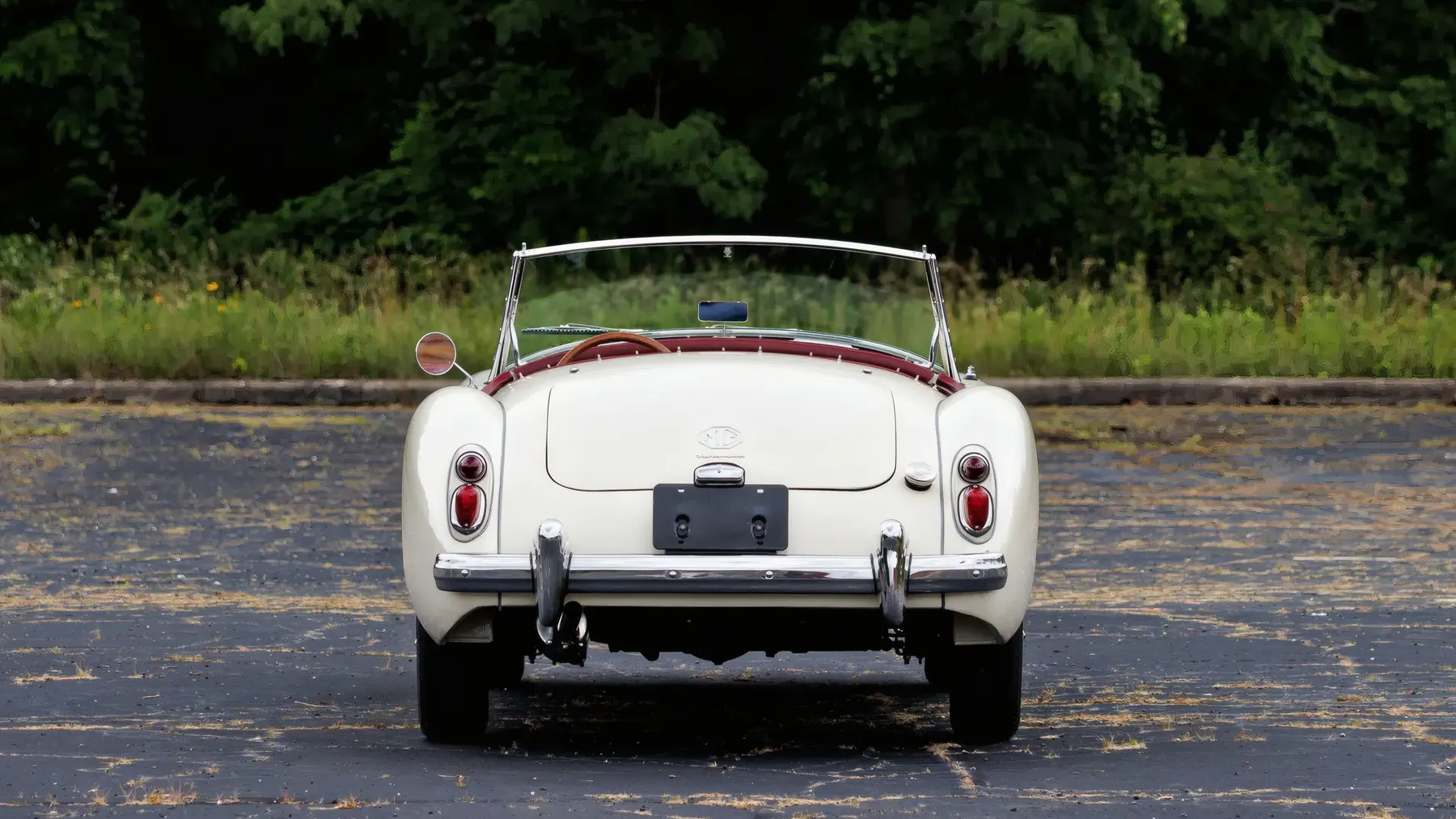
The coupé variant deserves mention. While the roadster captures the imagination - open to the sky, those Dunlop wheels glinting, the twin-cam snout low to the road - the fixed-head version offered a slightly more refined environment for long-distance work, its steel roof adding stiffness that the open car, for all its charm, noticeably lacked. Both variants were priced considerably above the standard MGA, reflecting both the engineering investment and the Dunlop disc brake installation.
Driving a Twin Cam in the condition that proper development eventually permitted is to understand what all the fuss was about. The engine is genuinely different in character from the B-Series units that preceded and followed it: where the pushrod cars deliver their power in a broad, accessible swell that rewards lazy driving, the Twin Cam demands engagement. It breathes properly from around 4,000 rpm, the twin SUs generating a distinctive induction sound that sharpens progressively as revs climb. By 5,500 rpm the note has taken on a rawer, more urgent quality, and it pulls cleanly toward the 7,000 rpm mark on the tachometer - a figure that would have seemed remarkable for any road car engine of 1958 that wasn’t Italian. The claimed top speed of 113 mph was achievable, the 0-60 mph time competitive for a car displacing 1,588cc.
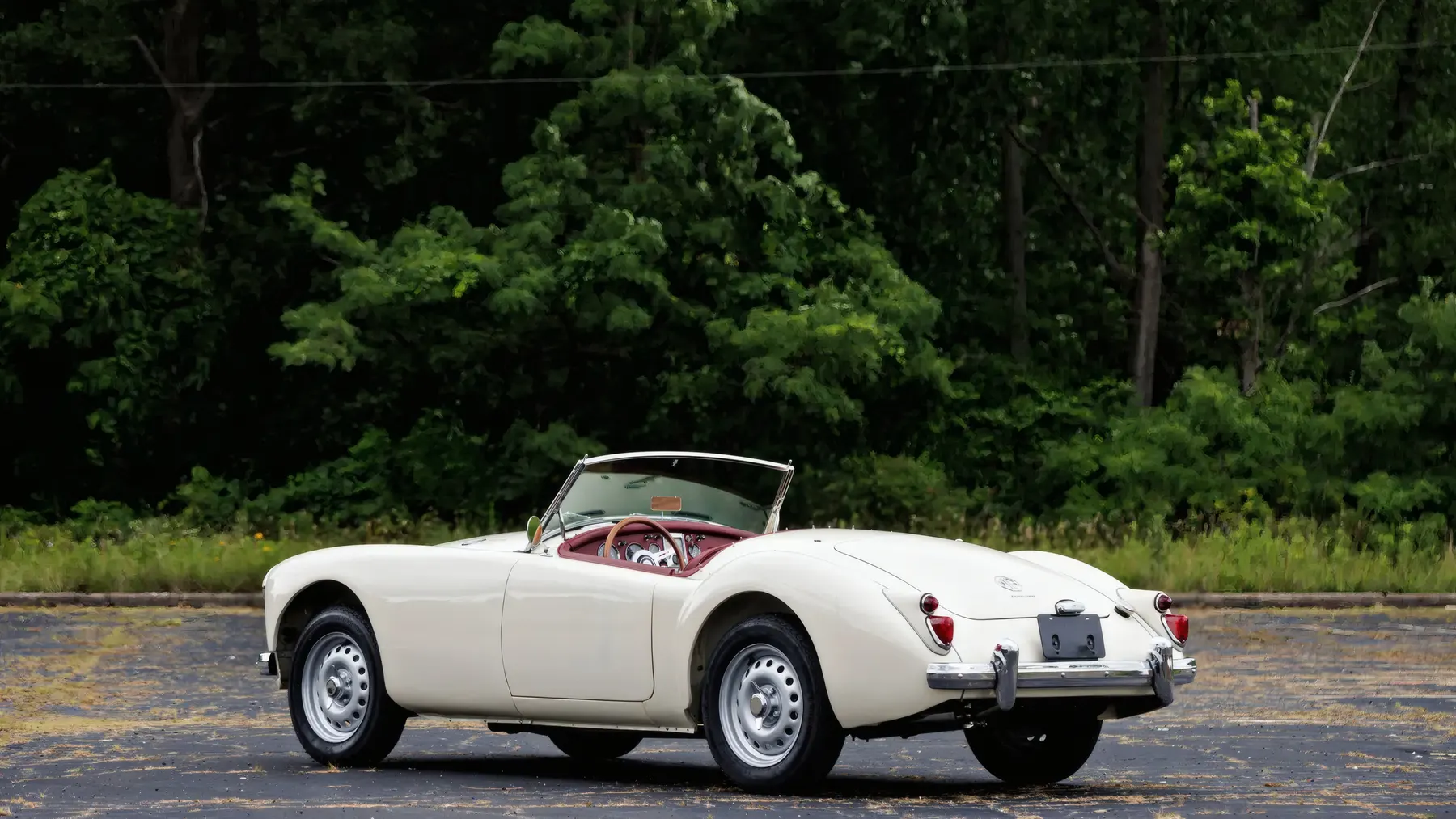
The chassis limitations were the same as any MGA’s: the live rear axle could be provoked into hop on rough surfaces at the limit, and the steering - rack and pinion, light and direct - communicated surface texture faithfully but without the precision weighting of a car designed specifically around performance. These were not flaws so much as period characteristics; every British sports car of this era operated within similar constraints. What the Twin Cam added was a meaningful step in outright capability - enough that in the right hands, on a smooth circuit, the car was a genuine threat in its class.
MG understood this clearly, which is why the works racing programme was so significant to the Twin Cam’s identity. Factory-prepared examples were bored out to 1,762cc for use in the 2-litre class at international events. At the 12 Hours of Sebring in 1960, a works Twin Cam driven by Jack Flaherty and Jim Parkinson finished fourth in class - a result that demonstrated what the platform could do when the engine’s issues had been properly addressed and the tune optimised for endurance. Twin Cams also appeared at Le Mans and in SCCA events in the United States, building the competitive record that Abingdon had always intended as the model’s foundation.
The De Luxe variant, which emerged during the final phase of production, is an interesting footnote. Built on the Twin Cam chassis and running gear - retaining the Dunlop disc brakes and centre-lock wheels - the De Luxe used the standard pushrod 1,588cc engine. It was, in essence, an admission that the rolling platform was excellent while the engine remained a question mark. Some might call this pragmatism; others might call it a tacit acknowledgement of exactly where the programme had gone wrong.
The critical reception the Twin Cam received during its brief production life was complicated by the engine’s early fragility. Road testers who drove well-prepared examples were genuinely impressed - the performance was real, the disc brakes provided stopping ability well ahead of the drum-equipped opposition, and the basic MGA structure remained as pleasant to drive as it had always been. But the reliability reports from early owners circulated quickly through MG’s overwhelmingly American customer base, creating a shadow that a car produced in such small numbers could never fully escape. By the time the compression reduction and revised ring specifications had made the engine essentially trustworthy, the commercial damage was done.
What remained, and what ensures the Twin Cam’s enduring place in the MGA story, is the sense of ambition it represents. Abingdon in 1958 was a small factory producing sports cars in a volume that seemed almost artisanal by the standards of what Detroit was doing simultaneously. The decision to develop a twin-cam engine from an existing mass-market block, equip the car with four-wheel disc brakes, and sell it as a genuine performance machine rather than a refined touring car was precisely the kind of calculated risk that MG had always taken. The fact that the engine initially let the project down should not obscure the quality of the thinking behind it, nor the competence of the chassis that surrounded it.
The Twin Cam is now, among MGA enthusiasts, the most sought-after production roadster in the range - its rarity a direct consequence of the very short run that the reliability problems forced upon it, its desirability a consequence of what it actually is when it works correctly. The 1,801 roadsters represent a significant investment in development that bore considerable racing fruit and produced a car that, properly prepared, genuinely delivered on its performance promises. The reputation it suffered was partly earned and partly undeserved - the product of an engine that needed more development time than commercial pressures permitted, set loose into a market that, in 1958, had no patience for a British sports car that burned oil like a chip fryer. History, at least, has been kinder than the warranty claims.