Fiat-Abarth 850 Scorpione Coupé: Allemano's Ferrari Polish on a Fiat 600
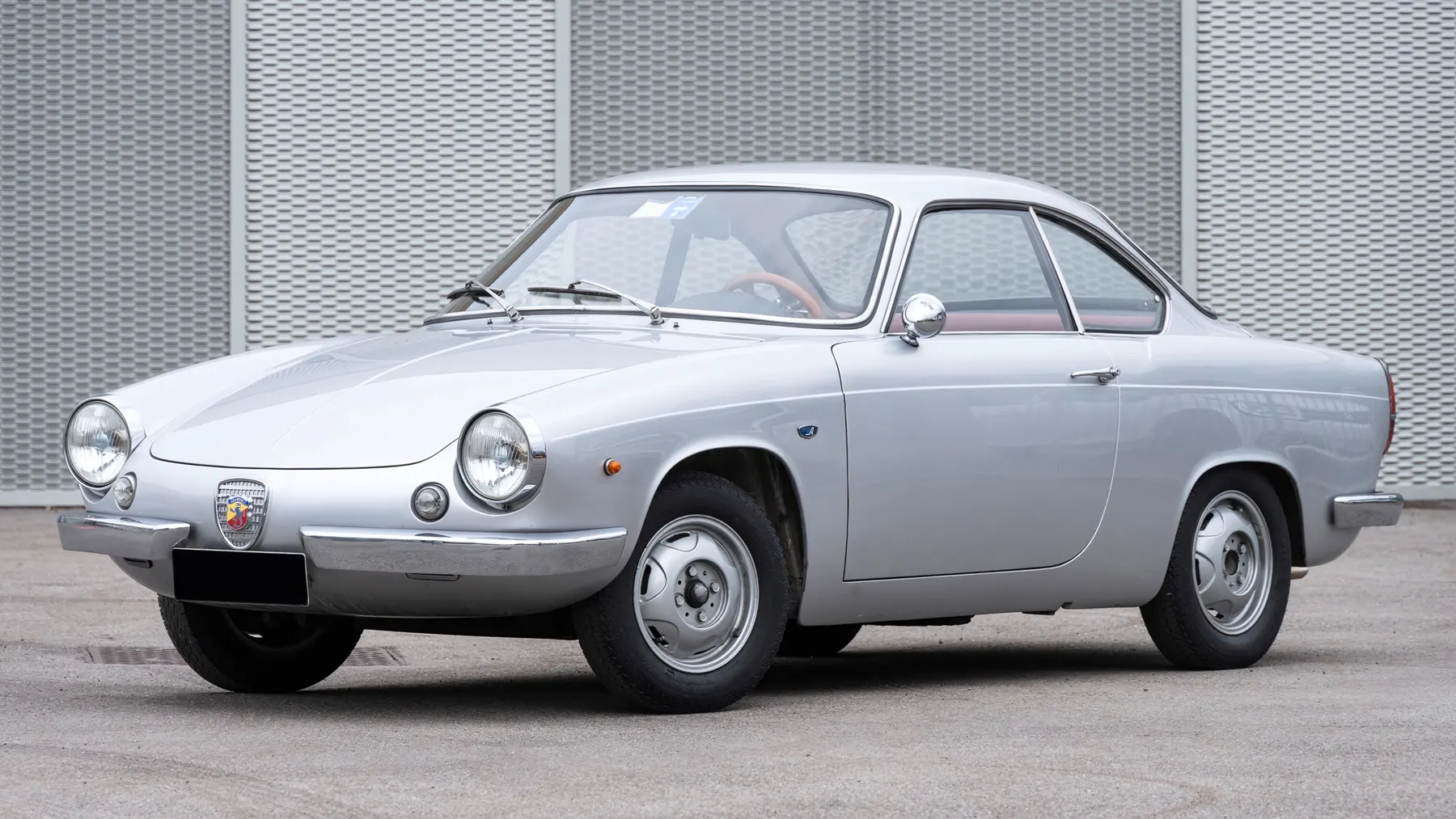
1961 Fiat-Abarth 850 Scorpione Coupé by Allemano




Images: Paolo Carlini / RM Sotheby's
When Carlo Abarth wanted a more civilised companion for his race-bred Zagato coupé, he did not send the brief to Fiat’s own studios, and he did not send it back to Zagato either. He sent it across Turin to Carrozzeria Allemano, a coachbuilder whose day job was dressing early Ferraris and Maseratis in formal, wealthy-client elegance, and asked it to perform the same trick on the floorpan of a Fiat 600. The result, styled by Giovanni Michelotti and built up by Allemano, was the Fiat-Abarth 850 Scorpione Coupé: a small, handsome, oddly grown-up little car that looked like it belonged in the same showroom as Abarth’s grand touring clientele, while underneath it remained unmistakably, humbly Fiat.
Allemano was not a fashionable name even in period, and it is close to invisible today. Founded in Turin in 1928 by Serafino Allemano, the firm bodied some of the earliest Ferraris and did further work for Cisitalia, Siata, Maserati and ATS, along with one-off commissions on chassis as varied as the Jaguar XK140, the Aston Martin DB2/4 and the Renault Dauphine, before closing its doors in 1965. That pedigree matters to the Scorpione, because it explains why the car reads as a proper, full-formed GT rather than a boutique styling exercise bolted onto an economy car. Allemano’s stock in trade was drawing coachwork for aristocratic and competition clients; applying that same formal vocabulary - long doors, a low frontal area, a disciplined, grown-up silhouette - to a car with a rear-mounted 600cc-class four-cylinder engine is what makes the Scorpione interesting today, decades after most of Allemano’s grander commissions have been forgotten by all but marque historians.
Carlo Abarth’s motive was straightforwardly commercial. His 750 GT, bodied by Zagato with its distinctive double-bubble roof, was a purposeful, competition-focused machine that traded heavily on Abarth’s growing reputation in small-capacity racing. The Scorpione was conceived as its softer counterpart: a car for buyers who wanted the cachet of an Abarth-badged, Italian-coachbuilt sports coupé without living with a car set up primarily for the track. It was introduced across the European motor show circuit in 1959, shown first at Frankfurt that September and then given a fuller unveiling at the Turin Salone in the city’s own Valentino Park halls - a suitably local homecoming for a car built by a Turin coachbuilder on a Turin-built chassis. A related open Spyder, sometimes referred to as the Riviera, followed from the same Allemano design language, though the closed Scorpione Coupé is the model most associated with the name today.
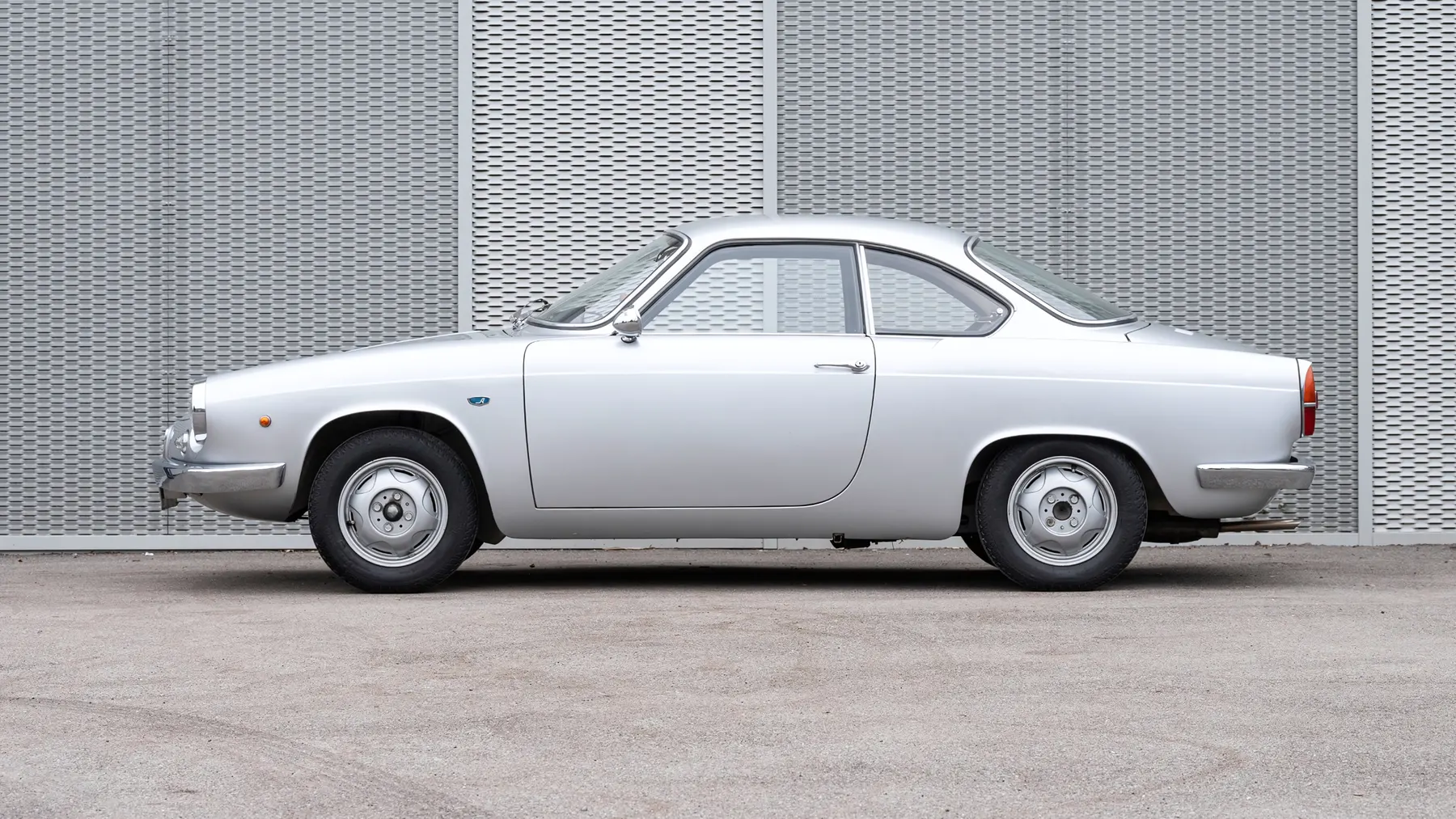
Underneath the coachwork there was no attempt to disguise the car’s origins. The Scorpione rode on the Fiat 600’s floorpan and running gear: a rear-mounted, water-cooled, overhead-valve four-cylinder engine driving the rear wheels through a four-speed manual gearbox, with independent suspension at both ends in the pattern typical of small rear-engined Fiats of the era. Abarth’s contribution was the usual mix of breathing and tuning work rather than a ground-up redesign - a Weber carburettor, a reworked exhaust manifold, and internal changes that lifted the standard 600’s output well beyond what Fiat offered from the showroom, but nowhere near what Abarth’s specialist racing engines were producing elsewhere in the range. The initial engine displaced 833cc and produced power variously reported in the low-to-mid fifties of brake horsepower at 6,000rpm; a later, larger 847cc unit, offered in the highest state of tune as the 850/S, pushed output to around 57bhp at 6,500rpm and gave the car the “850” designation by which it is now generally known. None of this made the Scorpione fast in any absolute sense, but relative to the Fiat 600 on which it was based, it was a meaningful step up in character, if not outright pace.
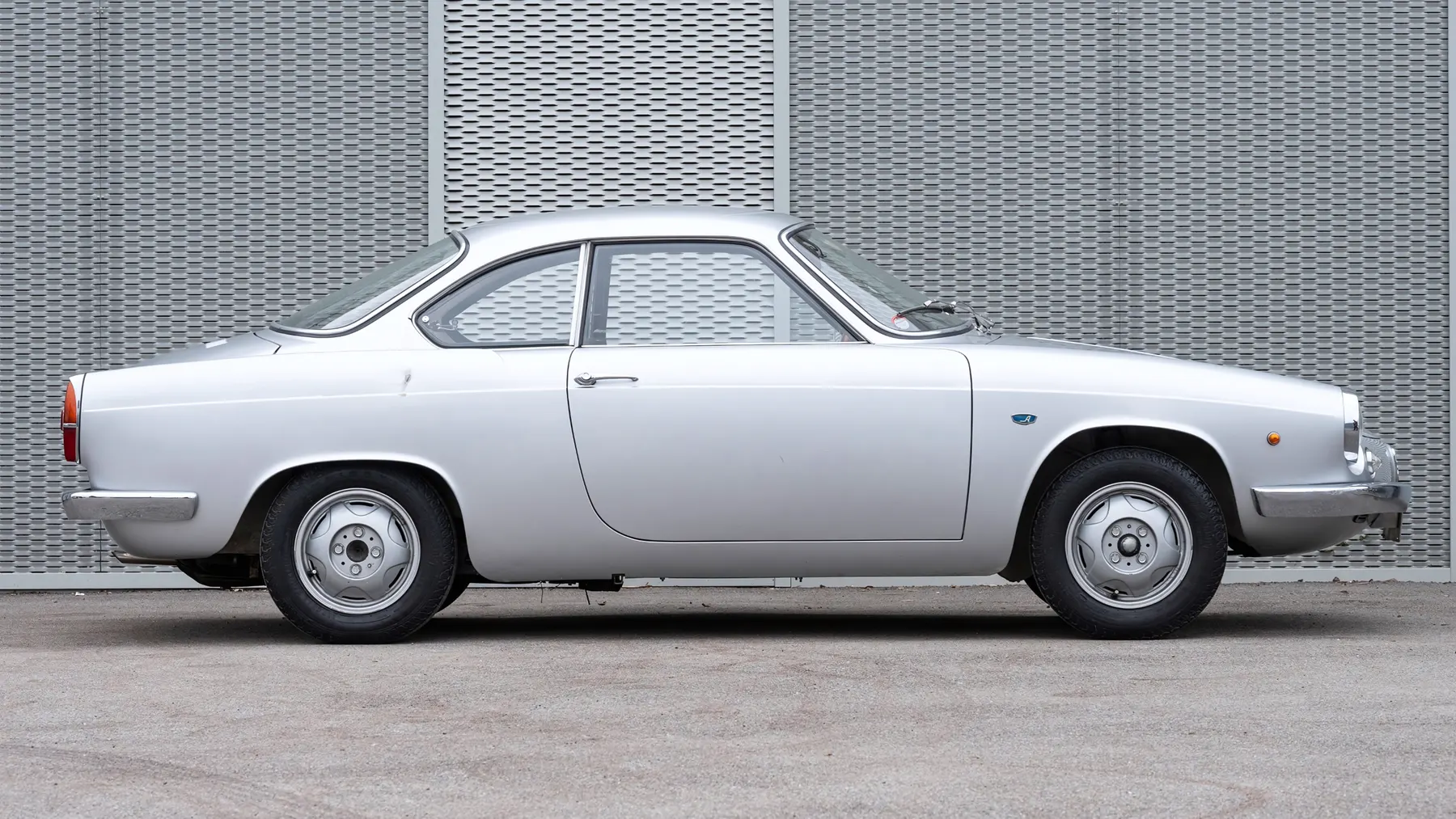
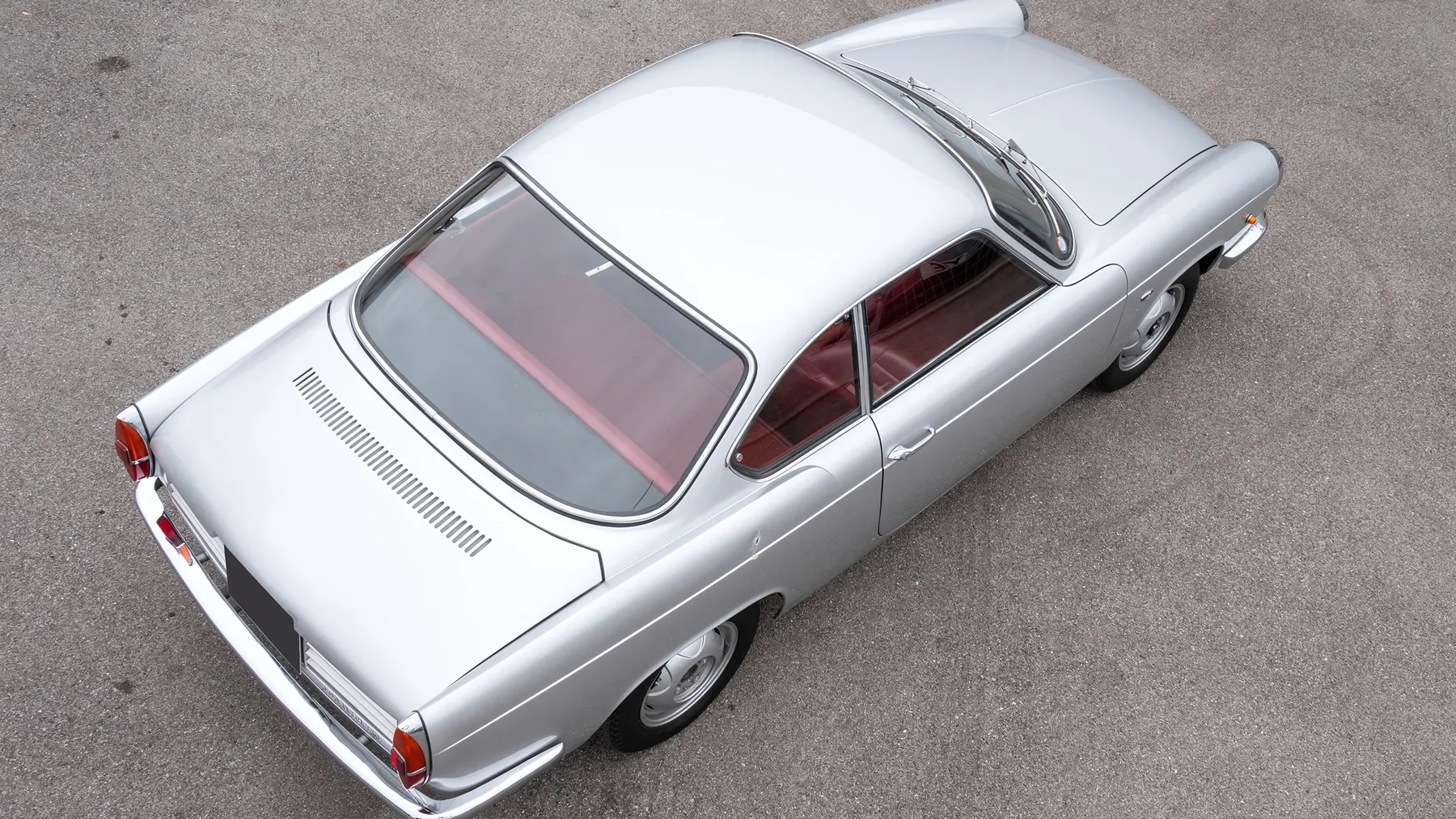
The bodywork itself mixed steel with aluminium: a steel structure carrying aluminium front and rear deck panels and aluminium outer door skins, a common compromise for low-volume coachbuilt cars that wanted some weight saving without the cost of an all-aluminium shell. Michelotti’s design solved a problem that dogged many small Italian specials of the period - the prominent “dog-leg” kink where the windscreen pillar meets the door aperture - by extending the doors forward beneath the windscreen itself, giving the car a cleaner, more expensive-looking flank than its mechanical origins would suggest. Round the back, aside from a louvred engine cover that gave away the rear-mounted layout, the Scorpione’s tail treatment echoed contemporary full-size Italian GT coupés rather than anything specifically born of the Fiat 600. Visibility from the driver’s seat was reportedly excellent in every direction, a genuine practical virtue that many low, swoopy coachbuilt cars of the period sacrificed for style.
Inside, the two-seat cabin paired upholstered bucket seats with a driving position that stretched the legs out and reclined the arms toward a light, if slow-geared, steering wheel - a more relaxed, boulevard posture than the crouched stance favoured by out-and-out competition cars. The gear lever, mounted centrally, was described in period as positive in its action, and this is where the car’s inherited economy-car bones show through most clearly: the pedals, carried straight over from the Fiat 600 layout, sat close together with a stamped metal accelerator, and the car’s handsome three-spoke wheel had a habit of partly blocking the driver’s view of the temperature and pressure gauges, even though the centrally mounted tachometer stayed clear. These were not dealbreakers, but they were the kind of small, telling compromises that separated a genuine bespoke grand tourer from a well-dressed economy car wearing one - and the Scorpione, for all its Allemano coachwork, never entirely escaped being the latter underneath.
That tension between image and substance is really the story of the Scorpione’s shortcomings. Buyers paying a meaningful premium over a standard Fiat 600 for hand-formed Allemano coachwork were, in period American pricing for the range-topping 850/S, looking at something in the region of $3,385 - a figure that put the car in nominal company with machines like the Porsche Speedster and the Alfa Romeo Giulietta Spider. But a 600kg car with 52 to 57bhp on tap, capable of roughly 96 to 99mph flat out and taking something in the order of fourteen seconds to reach 60mph, could not remotely match the driving experience those rivals offered, whatever the coachbuilder’s name on the boot lid. Within Abarth’s own catalogue the comparison was almost as unflattering: contemporary accounts describe the Allemano coupé as more elegant and more comfortable than the Zagato-bodied 750 GT, but also heavier and distinctly less sporting - a fair trade for a buyer who wanted comfort over competition credibility, but a real handicap for a car wearing a scorpion badge that, elsewhere in Abarth’s range, stood for genuine racing pedigree. The Scorpione, in other words, sat awkwardly between two audiences: too soft and too slow for Abarth’s competition-minded following, and too expensive and too cramped, in its Fiat 600-derived detailing, to seriously trouble established GT manufacturers.
That awkward positioning likely explains why the Scorpione never built the sales volume or the motorsport reputation of its Abarth stablemates, and why documentation of it remains so thin more than six decades on. Even dedicated specialists cannot agree on how many were built: some registries and auction-house research point to a production run of fewer than two hundred cars, other published estimates put the true figure closer to forty, and at least one marque database, citing an Italian car registry, suggests as few as thirty genuine Allemano-bodied coupés were completed. That spread is itself a kind of evidence - a car built in such small, loosely recorded numbers, without a competition record to anchor its history the way lap times and race results anchor the story of the Zagato-bodied cars, was always going to slip through the cracks of automotive history. What survives today is scattered across specialist collections and historic-event entries, cherished by Fiat-Abarth enthusiasts precisely because it is so seldom seen, rather than because it was ever a commercial or competition success in its own right.
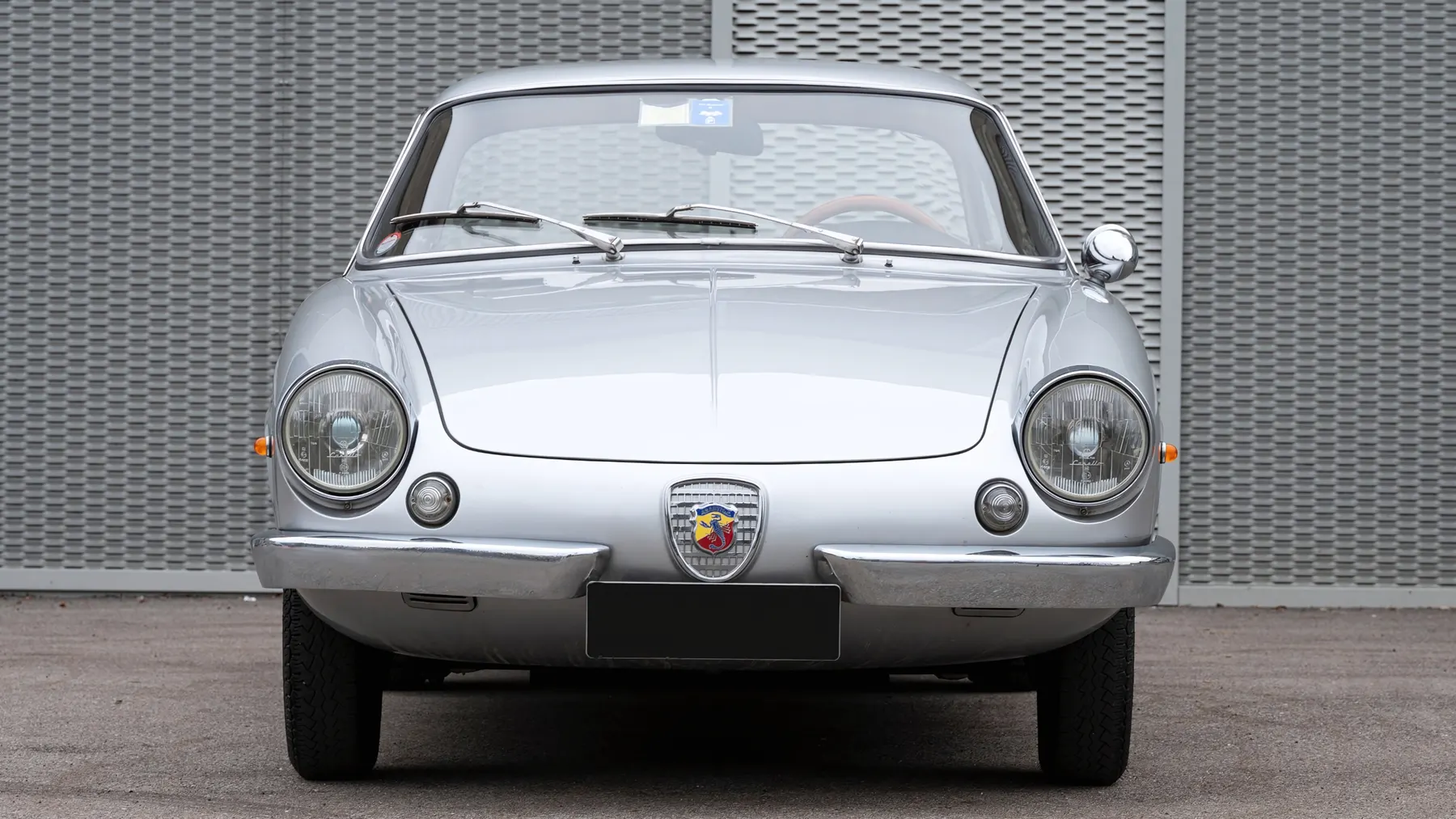
Seen against that backdrop, the Scorpione’s real achievement has little to do with speed. It is a demonstration of how far Turin’s coachbuilding culture reached down the market in the years around 1960, when a firm accustomed to clothing Ferrari and Maserati chassis could take Italy’s cheapest, most utilitarian mechanical package and give it genuine grand touring presence, doors that closed like something far grander, and a cabin laid out - imperfections and all - like a car with real aspirations. It never quite delivered the driving experience its looks promised, and it never carried the competition weight that made other Abarth-badged cars famous, but as a piece of applied design ambition stretched over the most modest of foundations, the 850 Scorpione remains a genuinely distinctive footnote in both Abarth’s and Allemano’s stories.
Technical data
Performance Specifications
| 833cc (initial specification) | 847cc / 850-S (revised specification) | |
|---|---|---|
| Engine | 833cc inline-four, overhead-valve, rear-mounted | 847cc inline-four, overhead-valve, rear-mounted |
| Fuelling | Single Weber carburettor | Single Weber carburettor |
| Power | approx. 52–54bhp at 6,000rpm* | approx. 57bhp at 6,500rpm |
| Transmission | 4-speed manual, rear-wheel drive | 4-speed manual, rear-wheel drive |
| Kerb weight | approx. 600kg* | approx. 600kg* |
| Wheelbase | approx. 2,000mm* | approx. 2,000mm* |
| Length | approx. 3,600mm* | approx. 3,600mm* |
| Top speed | approx. 96–99mph* | approx. 96–99mph* |
| 0–60mph | approx. 14.3 seconds* | not separately corroborated |
| Body construction | Steel structure, aluminium deck panels and door skins | Steel structure, aluminium deck panels and door skins |
Sources
- Bonhams: 1959 Fiat Abarth 850 Scorpione Allemano Coupe
- RM Sotheby’s: 1961 Fiat-Abarth 850 Scorpione Coupé by Allemano, Villa Erba 2023
- Classic Driver Market: 1961 Abarth 850 Scorpione Coupé
- Carrozzieri-Italiani.com: The Abarth 850 Scorpione by Carrozzeria Allemano
- FAB WHEELS DIGEST: Fiat Abarth 850 Coupé Scorpione Allemano (1959-62)
- Wikipedia: Fiat-Abarth 750 (750/850/850TC family, incl. Allemano Spyder specifications)
Join the discussion
Comments
Loading comments…
Leave a comment
Share a detail, memory, or perspective. Every comment is reviewed before publication.