Maserati Sebring 3500 GTi Series II by Vignale: The 3.5-Litre Holdouts
1965 Maserati Sebring 3500 GTi Series II by Vignale




Images: Josh Sweeney / RM Sotheby's
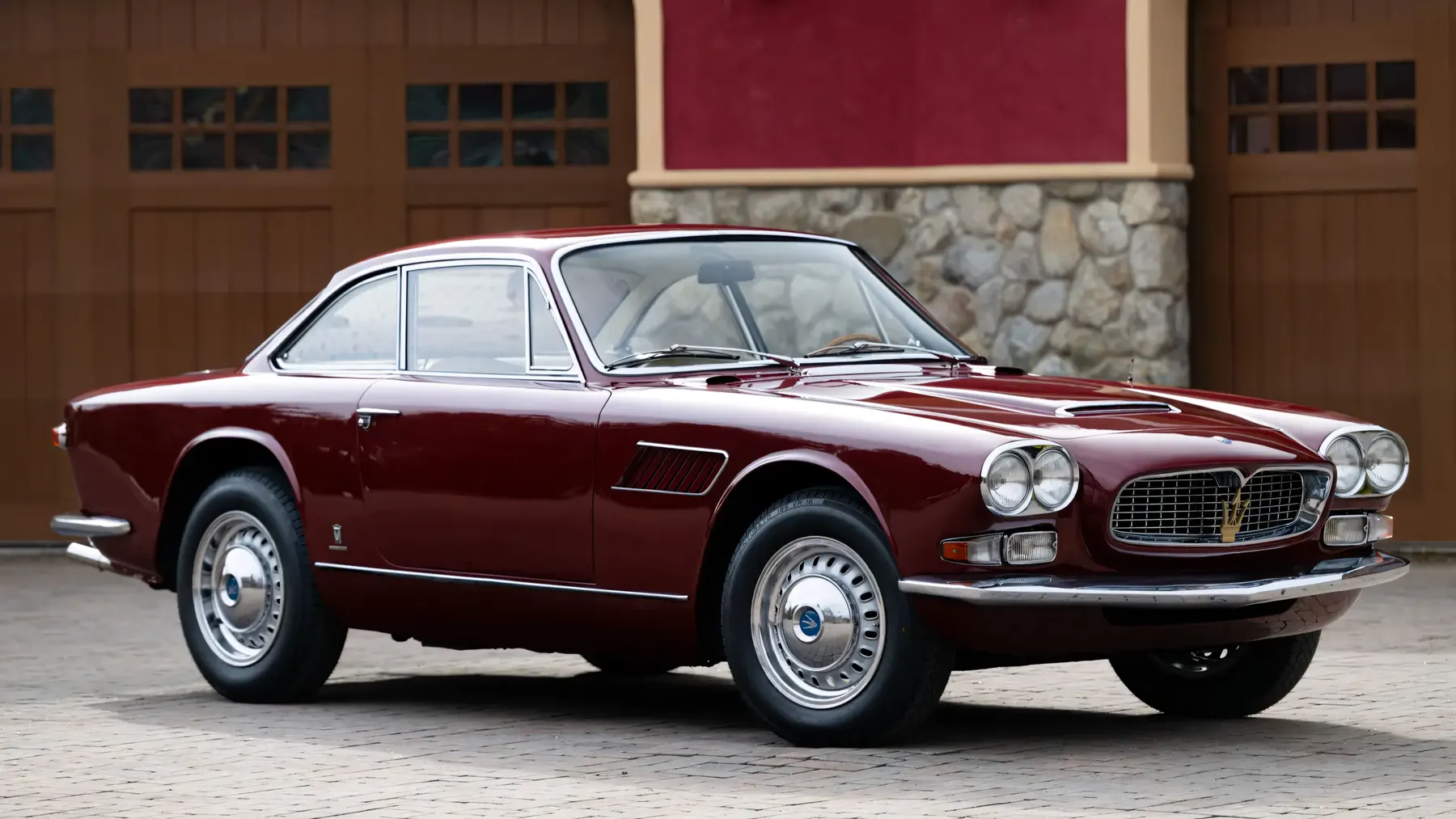
The Sebring 3500 GTi Series II is a Maserati caught mid-sentence. Its body is the 1965 facelift, with a reworked nose and new tail lamps that Maserati itself likens to those of the Quattroporte. Its engine, in the 94 cars that kept it, is the 3.5-litre twin-cam six whose bloodline runs back to a mid-1950s sports-racer, even though the Series II range also offered the larger sixes from the Mistral coupé. The badge adds to the muddle. Maserati’s own heritage pages file the later cars simply as the Sebring (Second Series), so the “3500 GTi” tag that specialists and auction houses attach to the smaller-engined examples is best read as a nod to the injected 3500 GTi lineage rather than a separate factory model. The cars it describes are real enough, though, and they sit at an awkward, interesting hinge in Maserati’s story.
The awkwardness exists because the Sebring was never a clean-sheet design. Maserati stepped back from factory racing in the late 1950s and needed road cars to pay its way, and the 3500 GT, shown at Geneva in 1957, was the car that made that pivot work. Its straight-six was adapted by chief engineer Giulio Alfieri from the 350S sports-racing engine and was the first Maserati engine designed solely for road use; a little over 2,200 coupés and convertibles were built before production ended in 1964. The Sebring appeared at Geneva in March 1962, before 3500 GT sales had begun to slow, wearing the 3500 GTi Coupé S name, the S honouring the Florida circuit where Maserati’s 450S won in 1957 with Fangio and Behra. It used the shortened chassis of the 3500 GT Spyder, a 2,500 mm wheelbase roughly 100 mm shorter than the coupé’s, and it was aimed squarely at the American market, with Aston Martin’s DB4 an obvious rival.
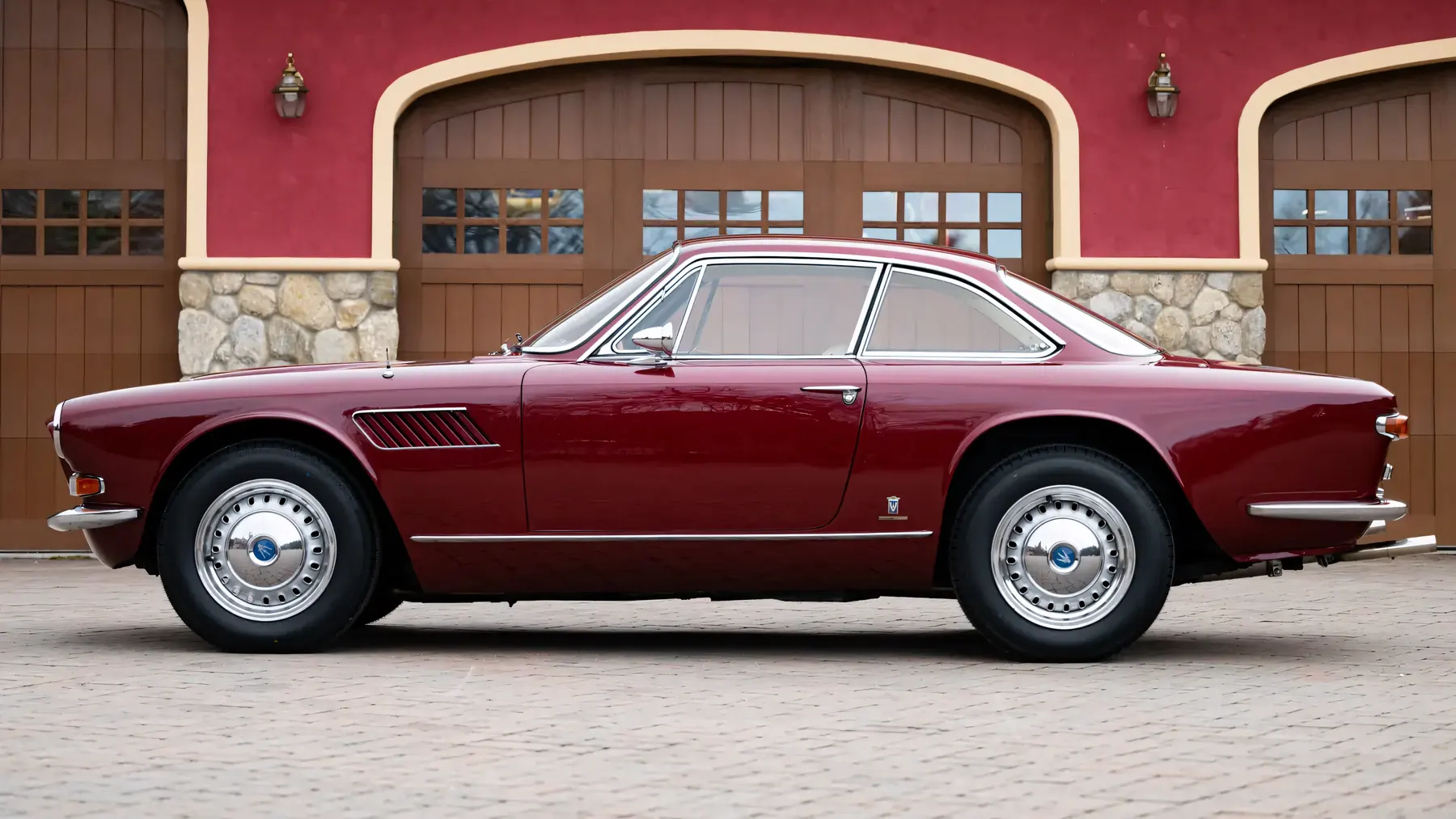
Beneath the new suit the engineering was conservative, which in 1962 was no great sin. A tubular steel frame carried a steel body, reportedly with an aluminium bonnet and bootlid. The front suspension used double wishbones, coil springs and an anti-roll bar; the rear was a live axle on semi-elliptical leaf springs with radius arms, and all four wheels carried servo-assisted hydraulic discs. A ZF five-speed manual was standard, alongside an optional automatic gearbox, air conditioning and Borrani wire wheels, a package that Maserati’s own heritage copy presents as the finest luxury GT then on offer. The engine is the real draw. The 3,485 cc unit used an 86 by 100 mm bore and stroke, a distinctly long-stroke layout, with twin overhead camshafts and twin-plug ignition, and in the Sebring it breathed through Lucas mechanical fuel injection, the system that had made the 3500 GTi the first Italian production car with petrol injection. Quoted output for the injected 3.5 varies by source, from roughly 230 to 235 bhp. Maserati gives the 3.5-litre Series II a top speed of about 146 mph and a dry weight of 1,520 kg.
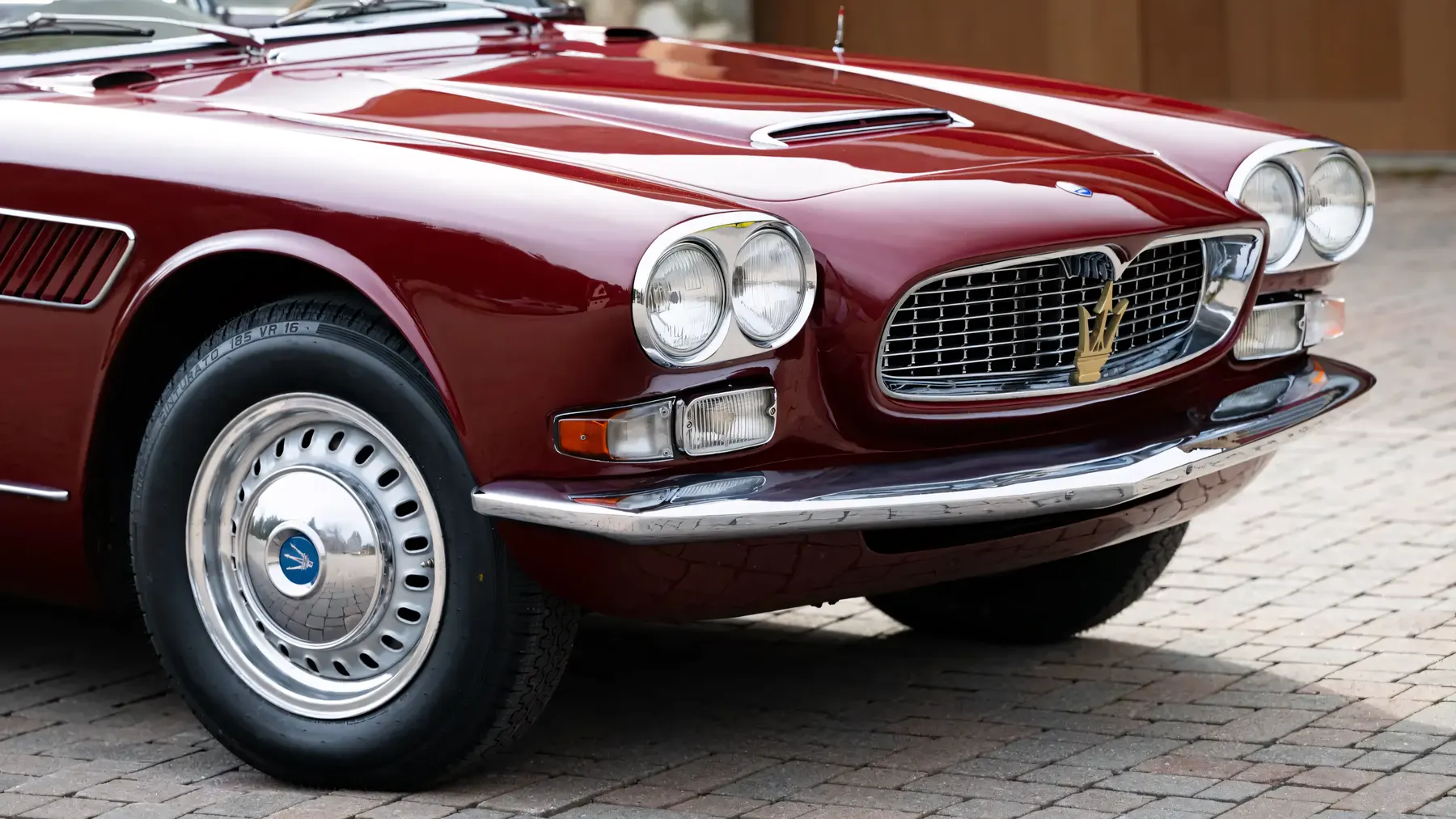
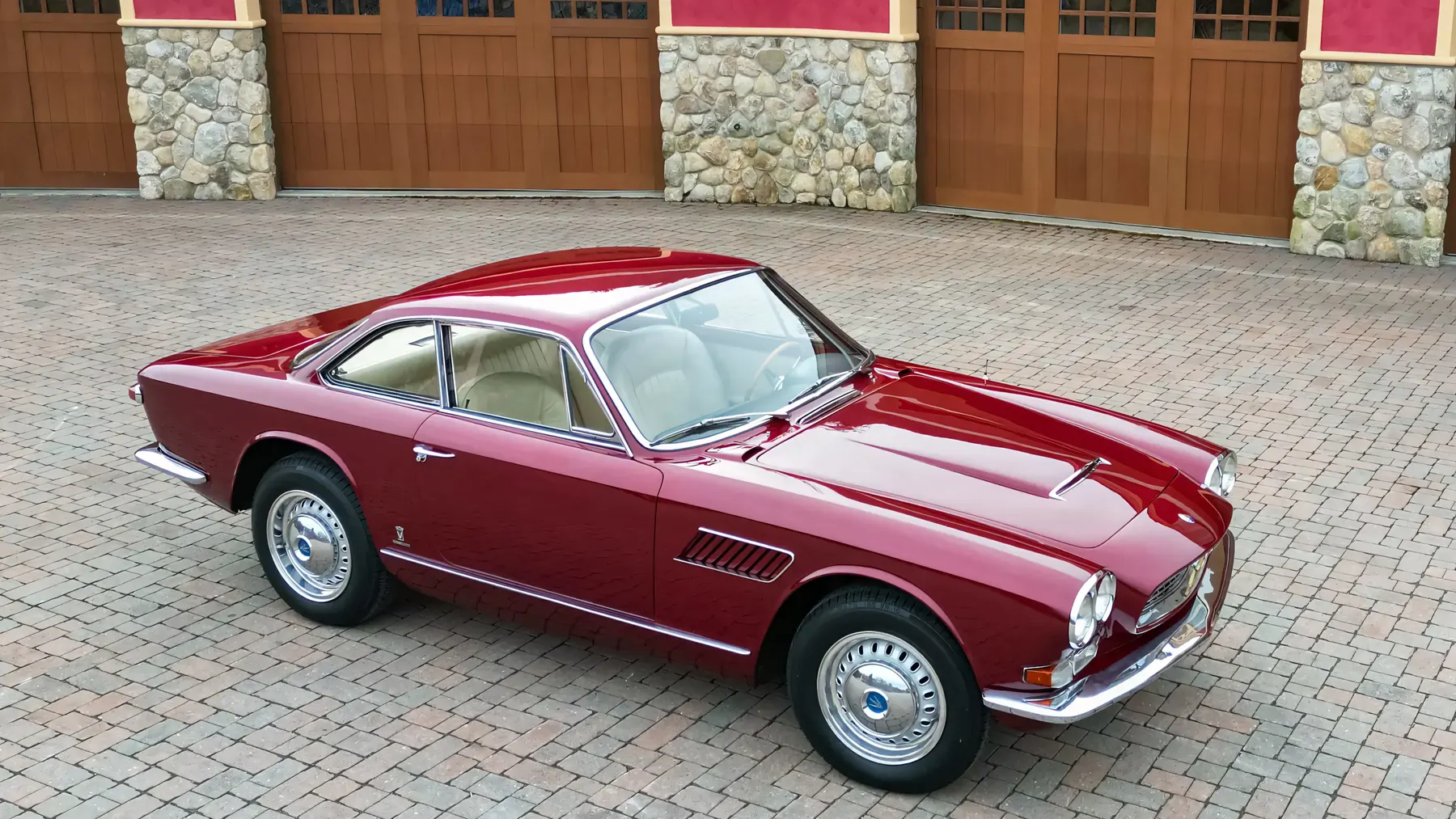
Maserati credits the shape to Giovanni Michelotti, working at Vignale, although at least one modern write-up notes that other sources give the credit to Alfredo Vignale himself, so the attribution is not entirely settled. What is clear is the change of mood from the Touring-bodied 3500 GT. The Vignale coupé is taller and crisper, and the shorter wheelbase gives it a more compact, upright stance. The Series II facelift tidied rather than transformed it: chrome surrounds for the twin round headlamps, a new bonnet intake, side vents set higher on the front wings, those new tail lamps and, according to one account, a redesigned dashboard. The result is handsome rather than dramatic, a car that earns its reputation on repeated viewing rather than at first glance, which may partly explain why the Sebring has so often lived in the shadow of more flamboyant Italian coupés.
The numbers are where the “3500 GTi Series II” label earns its meaning. Maserati counts 94 Series II cars with the 3,485 cc engine, a figure RM Sotheby’s repeats within a Series II total of 247. The rest took the 3.7-litre six from the Mistral, usually quoted at around 245 bhp, though one auction catalogue gives a higher number, or the 4.0-litre unit at roughly 255 bhp. Totals for the second series vary by source from 243 to 247, against 348 for the first, and Maserati puts the two series together at 598 cars, an arithmetic that does not quite reconcile with the others. Maserati says sales began to taper after 1967 with the arrival of the Ghibli, and that the last Sebring was built in 1969. Among the buyers it names are the then-rising opera star Luciano Pavarotti and the Austrian crystal magnate Adrian Swarovski, an indication of the well-heeled, style-conscious clientele the car found.
Inside, the Sebring is a grand tourer of the better 1960s kind: a wood-rimmed wheel, a bank of round dials, a row of toggle switches on the centre console and leather seating, with electric windows and air conditioning available for warmer climates. It was sold as a 2+2, but period and modern accounts agree that the rear seats are only really good for children or luggage. How it drives is best understood from the one modern road test I could find, a 2010 German drive of a 4.0-litre Series II, so it speaks for the chassis rather than the 3.5’s exact performance. The writer found a car with no power assistance, where the first corner at around 15 mph is real manual labour, and an engine that wanted to be kept above roughly 3,500 rpm. Once warm and revving, the six was described as hungry for throttle, doing with six cylinders what other manufacturers of the era needed eight or twelve to achieve.
That same test is a useful reminder of what the Sebring does not do well. The Lucas injection is the best-known problem: a Gooding catalogue describes it as regularly troublesome, and a Gulf News history of the 3500 says persistent faults pushed many owners to swap it for Weber carburettors, which is why a car that still wears its original system is something specialists and buyers actively look for. The chassis is the second issue. The 2010 driver called the suspension wooden on its tall-sidewall tyres, judged the brakes a little thin despite their discs, and found the steering unwilling, while another modern write-up describes the rigid rear axle as not particularly suited to the car. Weight is the third. On Maserati’s own figures the Sebring carries 1,520 kg dry against 1,300 kg for the 3500 GT, and an RM Sotheby’s catalogue is frank that it is a steel-bodied grand routier rather than a lightweight sports car. For the 3.5-litre Series II specifically, there is a further limitation: with the Mistral’s larger engines available in the same bodyshell, and Maserati saying they significantly improved performance, the 3.5 was the least powerful way to buy a facelifted Sebring. Even a sympathetic modern review rates it as less focused than a Ferrari 250, and the second series found fewer buyers than the first.
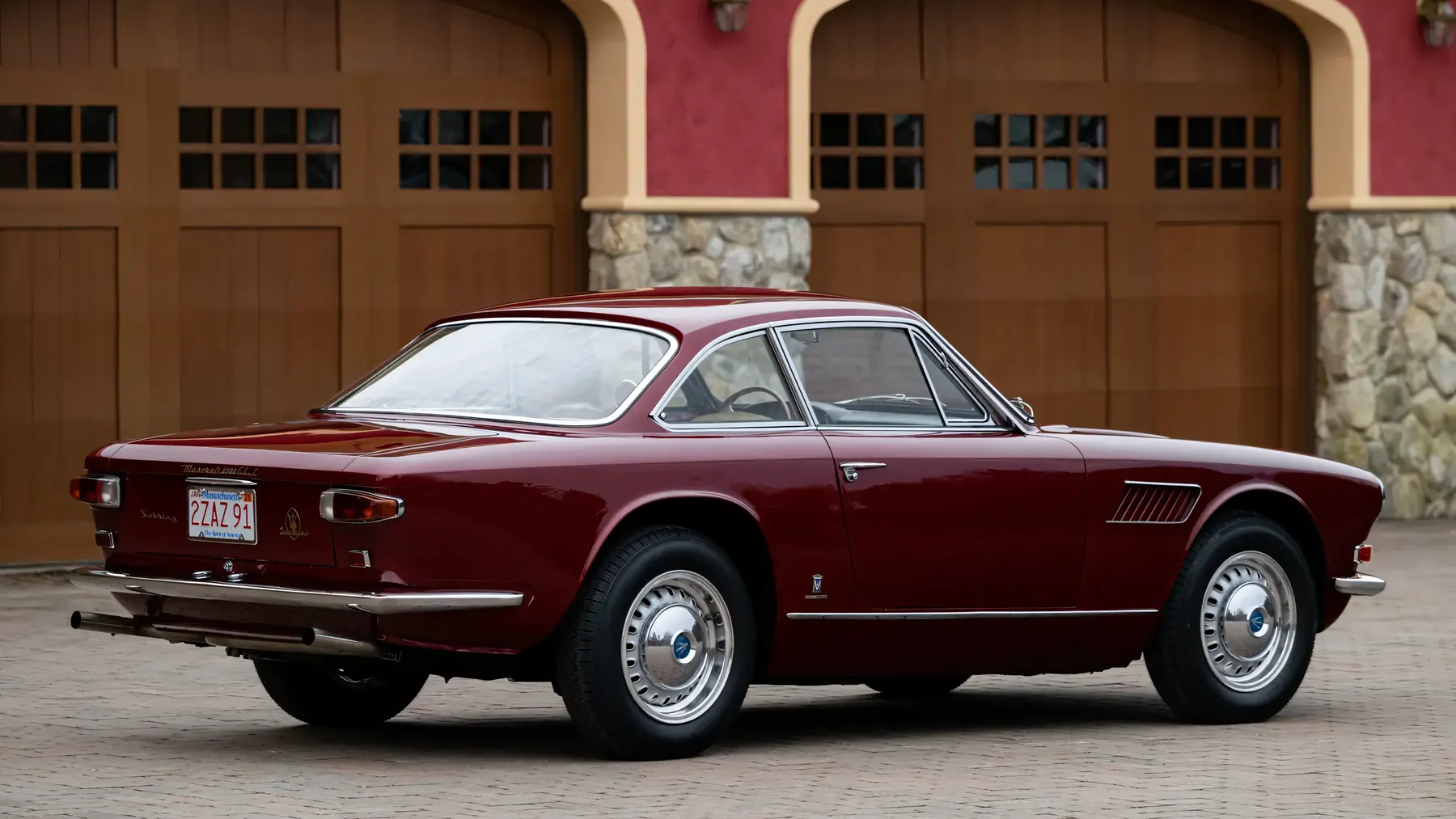
None of that has stopped enthusiasts from taking the Sebring seriously. Hagerty noted in 2018 that a Sebring reaching the market reliably draws attention from enthusiasts, including those who cannot afford one, and Honest John’s classic review awards it four stars out of five, praising its performance, styling and equipment. What the 3.5-litre Series II preserves is a late, fully developed form of a particular Maserati recipe: a racing-derived straight-six, a ZF five-speed, fuel injection that arrived early and never quite behaved, and a body that put style ahead of lightness. It is not the quickest Sebring, nor the sweetest-riding, and it was overshadowed even in period by the cars Maserati built next. But the 94 examples that held on to the original engine capture the point at which that recipe was being overtaken by the Mistral’s bigger sixes and, soon after, the Ghibli, and they do it in one of the more handsome shapes the company produced in the 1960s.
Technical data
Performance Specifications
| Specification | Sebring 3500 GTi Series II (3.5-litre) | Later Series II (3.7 / 4.0-litre) |
|---|---|---|
| Production years | 1964–1967 (Maserati’s listing for the 3.5-litre cars); Series II overall dated variously 1965 to 1968/1969 | Series II overall as left; Maserati gives 1969 for the last Sebring of either series |
| Units built | 94 (Maserati; RM Sotheby’s) | Remainder of a Series II total of 243–247; split between 3.7 and 4.0 varies by source |
| Engine | 3,485 cc DOHC inline-six, twin-plug ignition, Lucas mechanical fuel injection; bore and stroke 86 × 100 mm | 3,694 cc or 4,014 cc inline-six from the Mistral coupé, Lucas mechanical fuel injection |
| Power | c. 230–235 bhp* | 3.7: c. 245 bhp*; 4.0: c. 255 bhp* |
| Torque | Not corroborated; omitted | Not corroborated; omitted |
| Transmission | ZF five-speed manual; automatic optional | ZF five-speed manual; automatic optional |
| Front suspension | Double wishbones, coil springs, anti-roll bar | As 3.5-litre |
| Rear suspension | Live axle, semi-elliptical leaf springs, radius arms | As 3.5-litre |
| Brakes | Servo-assisted hydraulic discs, all round | As 3.5-litre |
| Wheelbase | 2,500 mm | 2,500 mm |
| Dry weight | 1,520 kg (Maserati) | Not corroborated for these variants |
| Top speed | c. 146 mph (Maserati) | Not corroborated |
| 0–60 mph | Not corroborated; omitted | Not corroborated; omitted |
| Fuel economy | Not corroborated; omitted | Not corroborated; omitted |
Sources
- Maserati Classic Cars – Sebring (Second Series)
- Maserati Classic Cars – Sebring (First Series)
- Maserati Classic Cars – 3500GT / 3500GTI
- RM Sotheby’s – 1965 Maserati Sebring 3500 GTi Series II by Vignale (model background only)
- RM Sotheby’s – 1967 Maserati Sebring 3700 GTi Series II by Vignale (model background only)
- Gooding & Company – 1966 Maserati Sebring Series II (model background only)
- Autoplenum – Maserati 3500 Coupé GTi Sebring II: Gestern und heute (2010)
- Hagerty – What a Maserati Sebring is, and why you should want one
- Hagerty Valuation Tools – 1961 Maserati 3500GT
- Gulf News – Maserati 3500
- Honest John Classics – Maserati Sebring (1963–1969) Review
- Radical-Mag – Maserati 3500 GTI S / Sebring
- Supercars.net – 1961–1964 Maserati 3500 GTi
- Wikipedia – Maserati 3500 GT (corroboration of bore and stroke only)
Join the discussion
Comments
Loading comments…
Leave a comment
Share a detail, memory, or perspective. Every comment is reviewed before publication.