Porsche 911 E 'Soft-Window' Targa: The B-Series Zip-Out Rarity
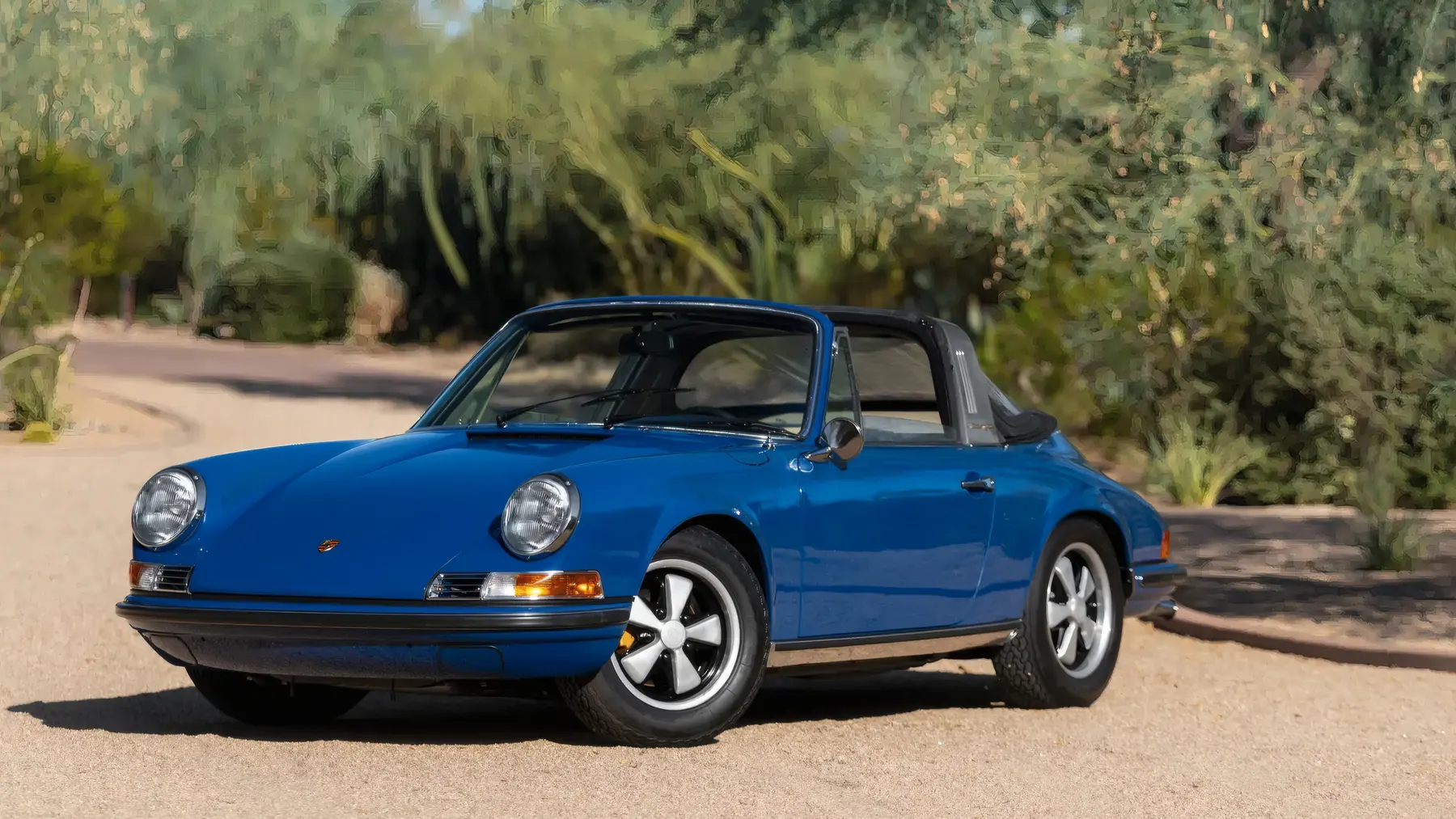
1969 Porsche 911 E 'Soft-Window' Targa




Images: Patrick Ernzen / RM Sotheby's
Porsche created the Targa as an act of regulatory self-defence, a way to keep an open-topped 911 alive if American lawmakers turned against the convertible, and yet the version enthusiasts now chase hardest is the one that asks you to unzip a sheet of plastic. The soft-window 911 E of the B-series sits at a surprisingly narrow crossroads: the original Targa idea in its most fragile form, the fuel-injected middle child of the 1969 range, and the first long-wheelbase 911 chassis. Each ingredient is well documented on its own. Their overlap is a small, slightly awkward corner of the 911 story, and not all of it is as romantic as the collector market would like.
The Targa debuted at the Frankfurt motor show in September 1965, and Porsche’s own history calls it the world’s first safety cabriolet with a fixed roll bar. The motivation was American. Voices in the United States were calling for open cars to be banned outright, and a stainless hoop behind the occupants answered the rollover argument while a removable roof panel and a fold-down plastic rear window delivered the fresh air. A patent application followed that August. Naming it took some effort. Targa Florio, the Sicilian road race where Porsche had been winning since the mid-1950s, was the obvious reference, and for a while the car was nearly called the 911 Flori, until Harald Wagner, Porsche’s head of domestic sales, asked, “Why don’t we just call it Targa?” The Italian word also means number plate, which, according to the company’s own account, the copywriters only noticed while working on the brochure. Production began in autumn 1966 alongside the 911, 911 S and 912, and the roof gave owners four ways of driving: fully closed, fully open, with only the centre section removed, or with only the rear window folded down.
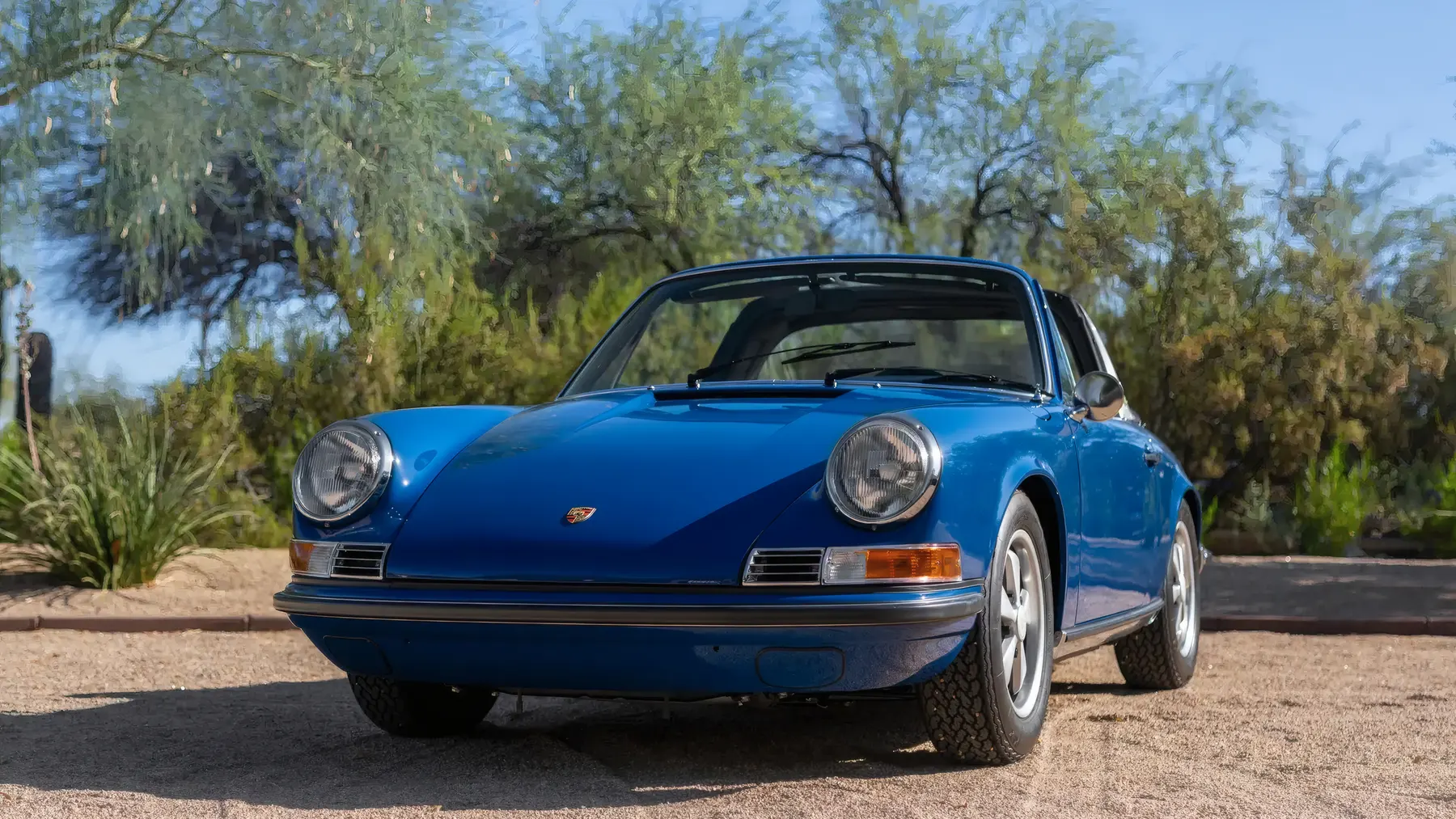
The plastic window did not stay the default for long. From late summer 1967 buyers could specify a fixed, heated safety-glass rear window instead, and a year later glass became standard. The zip-out arrangement lingered on the order books for the few customers who still wanted it, though sources disagree about for how long: RM Sotheby’s and Sports Car Market say special-order availability ran to 1971, while one dealer’s history stops at model year 1970. What is not in dispute is that by the time the long-wheelbase cars arrived, the soft window was a leftover rather than a selling point. Of the 858 911 E Targas built for 1969, RM Sotheby’s describes only a small handful as soft-window cars, and an enthusiast registry of documented long-wheelbase soft-window 911s across the whole range holds fewer than 30 entries. Other commentators put the E figure at around a dozen. For scale, the same auction house records 614 911 S Targas for 1969 and notes about 37 soft-window examples listed by the S registry. Treat all of these as informed estimates rather than factory arithmetic.
The B-series itself was a substantial revision rather than a facelift. Built from late summer 1968, these cars stretched the wheelbase by 57 mm, to roughly 2,270 mm, by moving the rear wheels back and lengthening the trailing arms by a matching amount, leaving overall length unchanged and giving the wheel arches a slight flare to cover wider rubber. Underneath, the engine’s inner crankcase casting switched to magnesium and the single battery became a pair, one in each front corner of the luggage compartment, both changes helping to move weight forward. The result, in RM Sotheby’s words, was greatly improved stability and balance. The range was tidied too. The T kept carburettors and 110 bhp, the S took fuel injection and 170 bhp, and between them the new E replaced the L; the E stood for Einspritzung, German for injection.
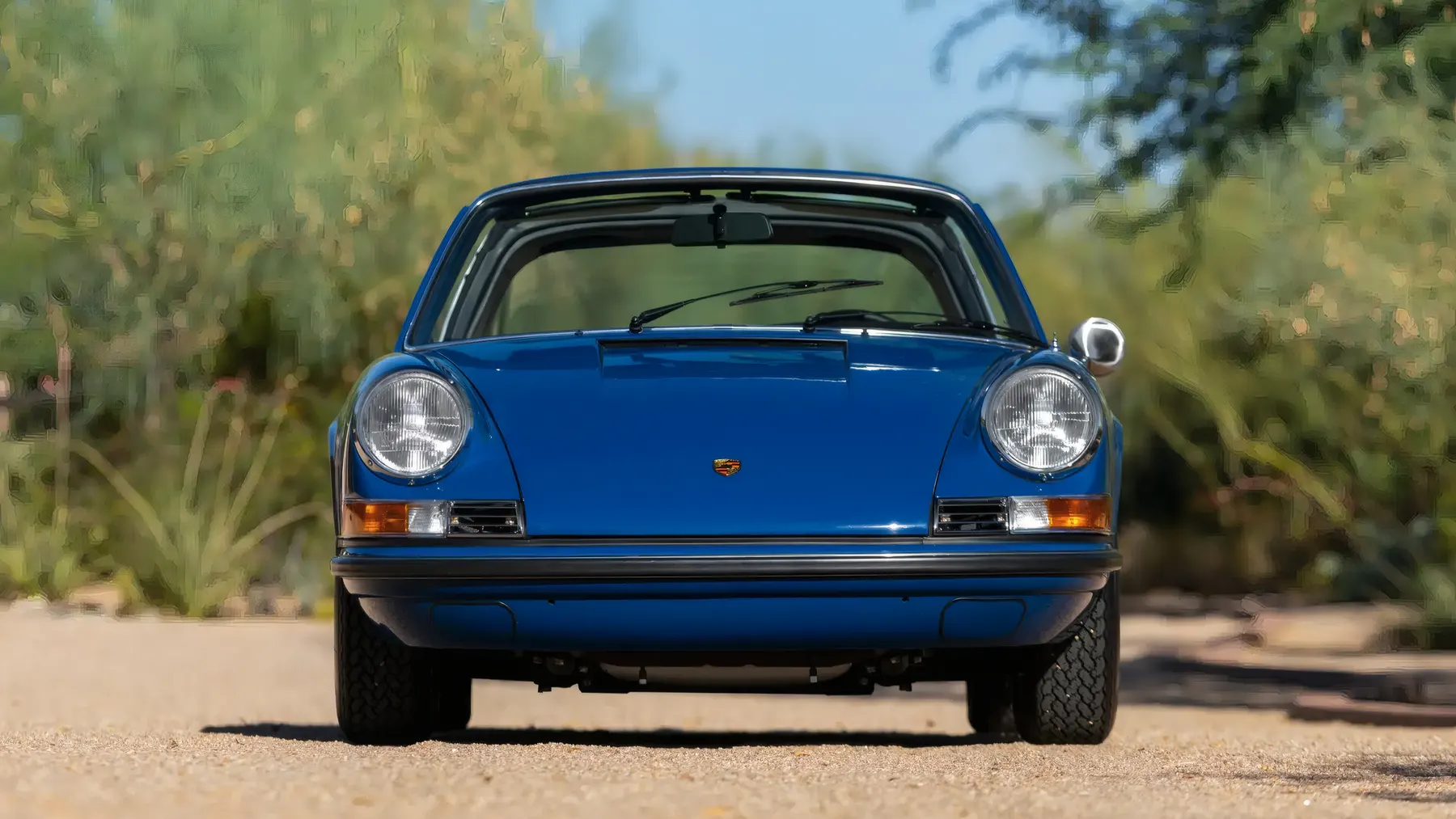
The E was meant to give most of the S’s equipment with a less highly strung engine. The two-litre flat-six, Type 901/09 in manual form, displaced 1,991 cc from an 80 by 66 mm bore and stroke, ran 9.1:1 compression and made 140 bhp at 6,500 rpm and 129 lb-ft at 4,500 rpm, with a green fan shroud said to mark it out from its siblings. The fuel system deserves attention. A Bosch pump with six plunger units, one per cylinder, was metered by a three-dimensional cam that the accelerator pedal turned, while a centrifugal governor slid the cam along its axis as engine speed rose, so the fuel map was machined into metal rather than programmed. Combined with capacitor-discharge ignition, injection let the E and S go on sale in the United States without compliance modifications, which mattered a great deal to a car whose roof had been born from American safety anxiety. Brakes gained ventilated discs, and the E wore Fuchs alloys of smaller diameter than the S’s, a leather-rimmed steering wheel and most of the S’s trim.
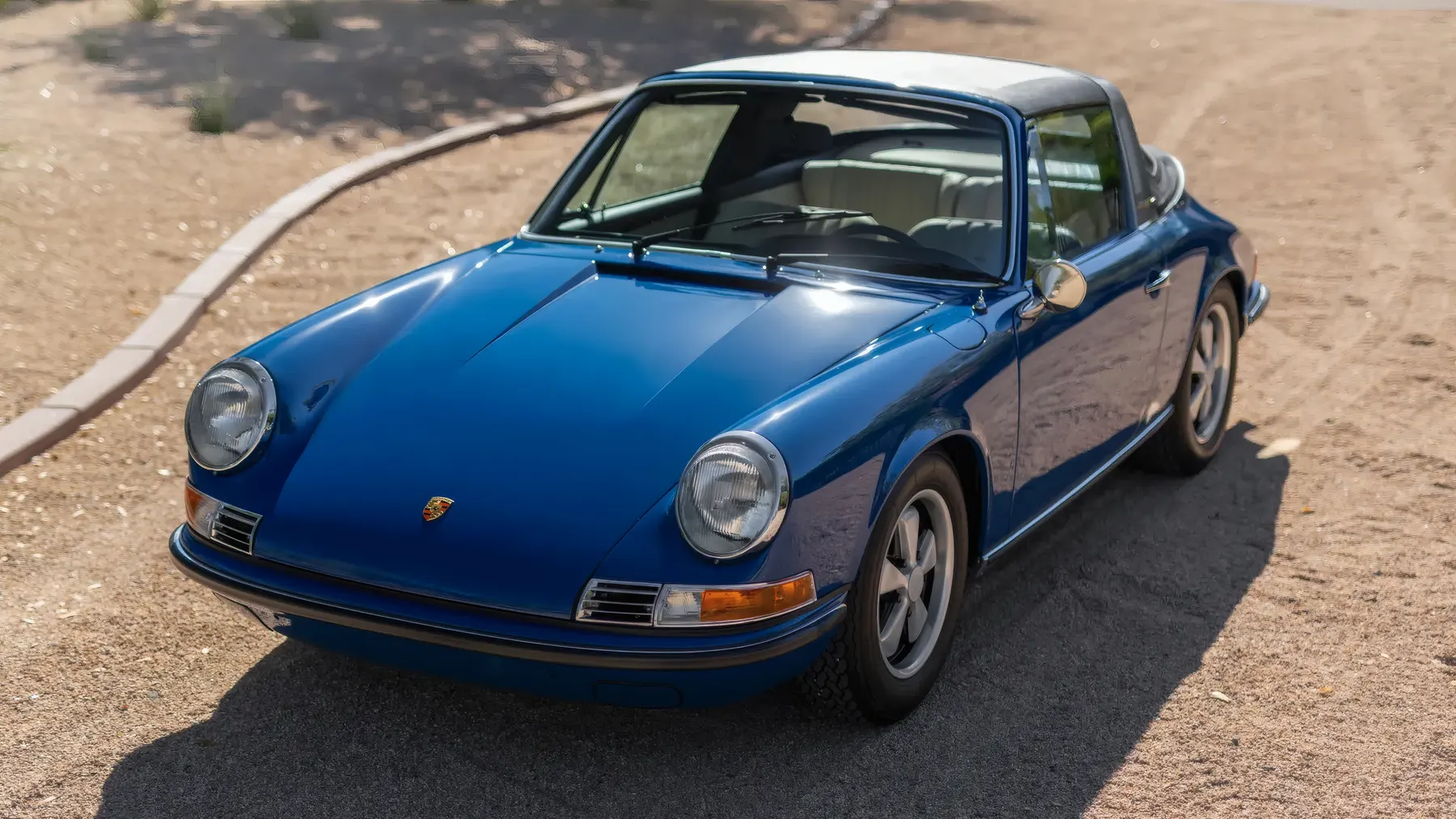
On paper the E is the S’s slower sibling, giving away 30 bhp, yet the gap is narrower than that suggests. By one technical source the S makes only a few lb-ft more torque, about 133, and does so at 5,200 rpm against the E’s 4,500, which helps explain why one dealer calls the E a real driver’s car, with more low-down pull. Quoted figures for the E cluster around eight seconds to 60 mph and a top speed between 130 and 134 mph depending on the source: brisk by 1969 standards, unremarkable by today’s. Speed was never the Targa’s job. With the roof panel out and the rear window folded away, the flat-six sits directly behind you and the hoop frames the sky, a sensation Porsche’s own description of the roof’s four configurations captures better than any acceleration time could. The soft window gives the purest version of that idea, because there is simply less rigid structure between you and the air.
The case against it is real, and it starts with the feature that defines the car. A zip-out plastic window is a compromise Porsche itself retired: heated safety glass was an option from late summer 1967 and standard a year later, and during the 1969 run the factory moved to a large curved backlight with electric demisting, which the plastic could never match. Dealer commentary on soft-window cars is candid that sealing against wind and water was a recurring weakness and that the material rustled and drummed at speed, and one enthusiast seller calls the arrangement fussier to live with than either a hard-window Targa or a cabriolet. The plastic is also a consumable, so replacement windows are routinely mentioned in sale write-ups, and one that has creased, yellowed or been fitted poorly undermines the whole point of the car. The second weakness is mechanical. The E’s Boge hydropneumatic front struts combined spring, damper and anti-roll duties in a single unit and adjusted front ride height to suit luggage load, which is ingenious and also the problem. RM Sotheby’s calls the arrangement troublesome, one dealer’s history suggests it was a little too clever, and replacing it with Koni dampers and conventional torsion bars is described as very common practice in the E community. That leaves originality-minded buyers choosing between a faithful car that may ride unevenly and a sorted one with non-factory suspension. Third, the E is not an S: it surrenders 30 bhp to the top model, and its softer suspension and smaller-diameter wheels make it a more relaxed machine than a sharp one. Finally, a soft-window claim is only as good as its documentation, which is why buyers lean on the factory Kardex and Certificate of Authenticity to prove that the option left Zuffenhausen on the car.
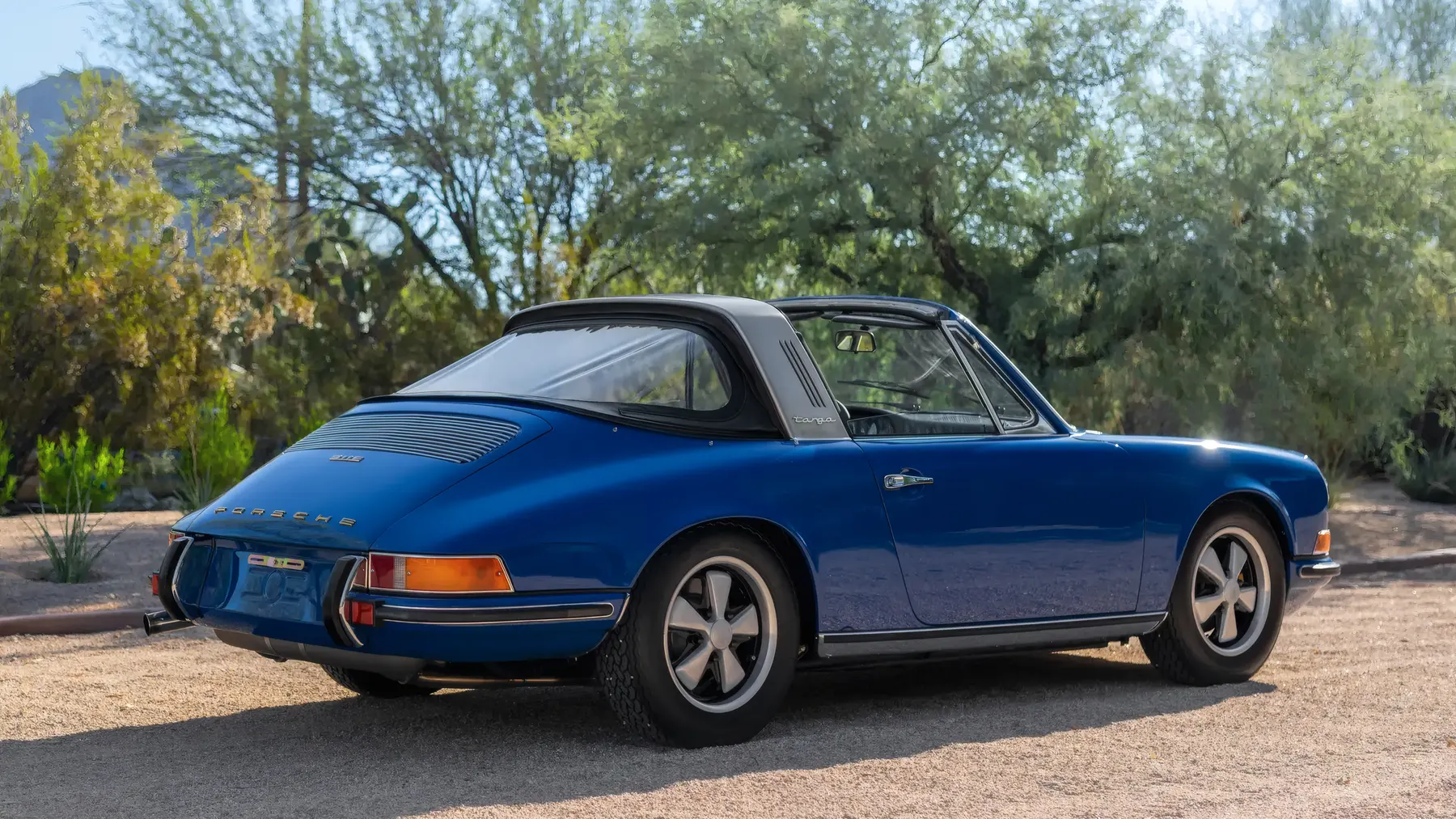
Collectors have noticed all the same. Sports Car Market identified soft-window Targas as a favourite of early-911 enthusiasts some years ago, and the long-wheelbase versions add something the earlier ones lack: a chassis with the rear-axle correction already made. A buyer is therefore weighing the purity of the A-series soft-window against the better balance of the B-series, and the E sits in the position its admirers cite, between the T’s modest output and the S’s higher-strung temperament. That rarity is also what makes ownership demanding, because window, roof panel, hoop and suspension all belong to a system that was already being phased out when the car was built.
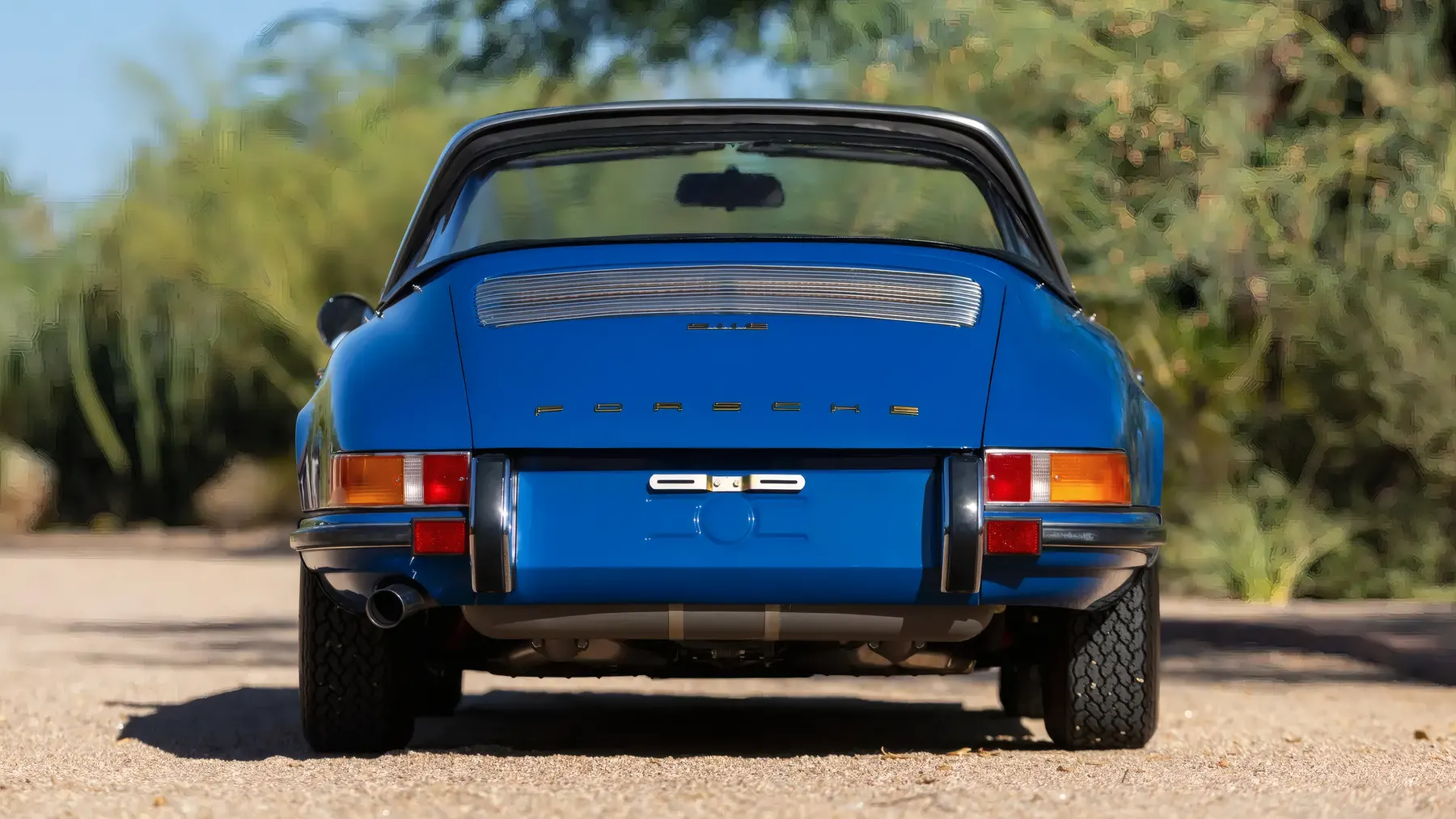
The soft window itself was a dead end, but the hoop it hung from was not. Porsche counts 87,663 Targas across the first three 911 generations; the classic bar and removable centre section survived through the Carrera 2 and Carrera 4 Targas to 1993, the 993 replaced them with a glass roof, and the 991 brought the bar back in 2014. The concept also reached beyond the 911, appearing on the 914 and the Carrera GT. Against that long lineage the soft-window E is a footnote, but a revealing one: it shows a company still working out what a Targa should be, using a window it would quietly retire, on a chassis it had just corrected, behind an engine it had just taught to breathe through injectors. Anyone chasing one should treat the plastic as the charm and the paperwork as the substance.
Technical data
Performance Specifications
| Specification | 911 E Targa (B-series, 1969) | Range context (1969) |
|---|---|---|
| Engine | Air-cooled flat-six, 1,991 cc, 80 × 66 mm bore and stroke | Same displacement across T, E and S |
| Engine type | 901/09 (manual); 901/11 (Sportomatic) | — |
| Compression ratio | 9.1:1 | — |
| Fuel system | Bosch mechanical fuel injection (six-plunger pump) | T: Weber carburettors; S: Bosch mechanical fuel injection |
| Power | 140 bhp @ 6,500 rpm | T: 110 bhp; S: 170 bhp |
| Torque | 129 lb-ft @ 4,500 rpm | S: approx. 133 lb-ft @ 5,200 rpm* |
| Transmission | Five-speed manual; four-speed Sportomatic optional | — |
| Wheelbase | Approx. 2,270 mm (57 mm longer than A-series) | Same across B-series range |
| Front suspension | Boge self-levelling hydropneumatic struts** | T: hydropneumatic struts optional |
| Brakes | Ventilated discs | — |
| 0–60 mph | Approx. 8.2 s*** | — |
| Top speed | Approx. 130–134 mph*** | — |
| 1969 Targa production | 858 | S Targa: 614 |
| Soft-window cars | “Small handful”; estimates from around 12 (E) to fewer than 30 documented across the range**** | S: approx. 37 listed in registry |
Sources
- Porsche Newsroom – History of the Porsche Targa
- Porsche Classic – 911 (F-series) model overview, Porsche USA
- RM Sotheby’s – 1969 Porsche 911 E ‘Soft-Window’ Targa (model background only)
- RM Sotheby’s – 1969 Porsche 911 S ‘Soft Window’ Targa (model background only)
- RM Sotheby’s – 1968 Porsche 911 ‘Soft-Window’ Targa (model background only)
- RM Sotheby’s – 1968 Porsche 911 T ‘Soft-Window’ Targa (model background only)
- Stuttcars – Porsche 911 E 2.0 (1969)
- kfz-tech.de – Porsche 911 (1969) technical overview
- Sports Car Market – 1969 Porsche 911E Targa profile
- German Cars For Sale Blog – 1969 Porsche 911E Soft-window Targa
- German Cars For Sale Blog – 1968 Porsche 912 Soft-window Targa
- Schmitt Classic – History of the 911E
- Elferspot – dealer history note, Porsche 911 E (1969)
- Elferspot – dealer history note, 1969 Porsche 911 T Targa
- Moniteur Automobile – dealer note on Targa Soft Window availability
Join the discussion
Comments
Loading comments…
Leave a comment
Share a detail, memory, or perspective. Every comment is reviewed before publication.