Ferrari 312 PB: The Flat-12 That Swept 1972 and Skipped Le Mans
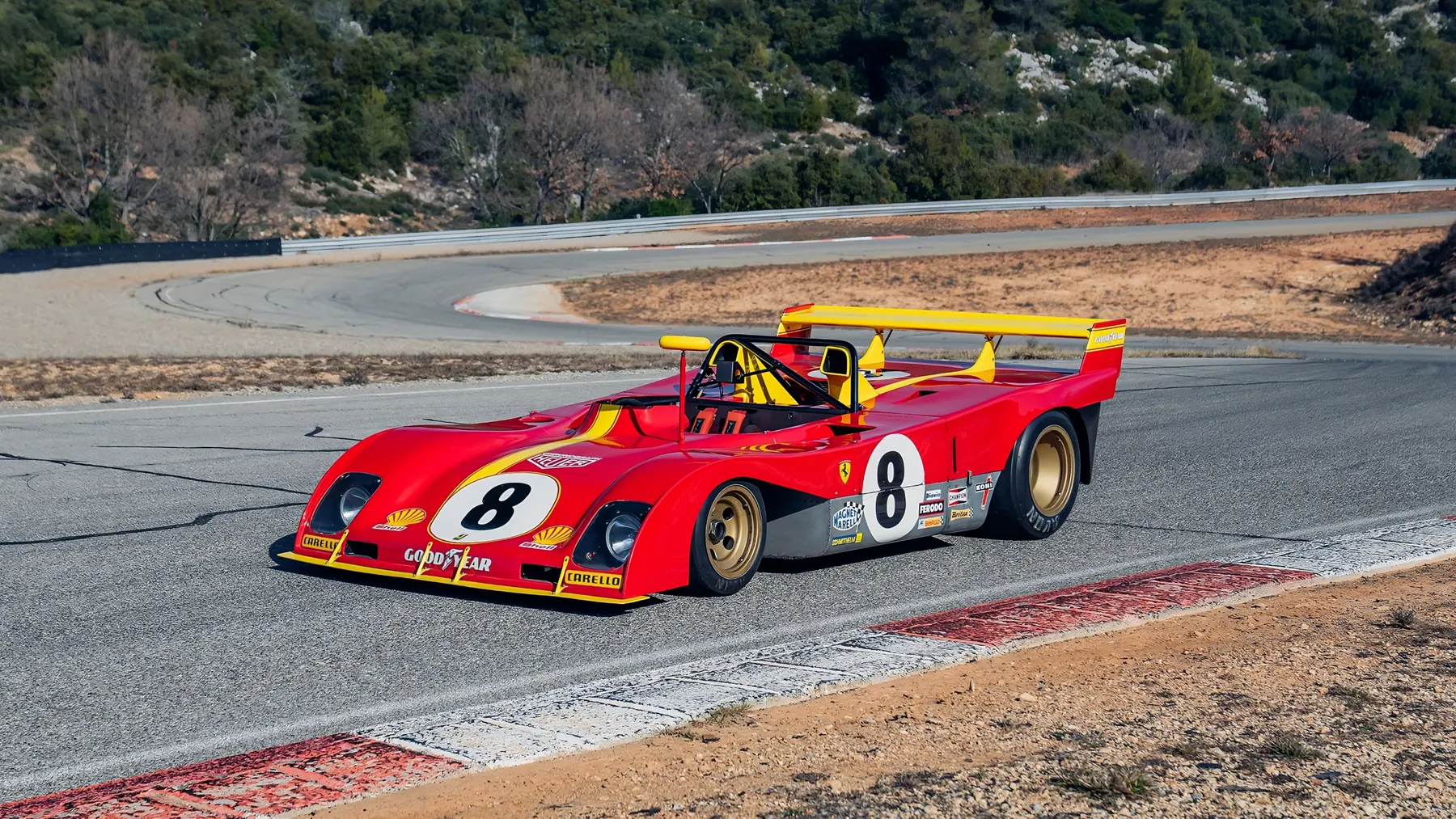
1972 Ferrari 312 PB




Images: RM Sotheby's
Ferrari’s most successful sports racing car, by the reckoning of many, was never officially called what everyone calls it. Ferrari’s own website is blunt about this: the 1971 sports prototype with the flat-12 engine was simply the 312 P, and the letter B that publications added to flag the boxer layout was never sanctioned by Maranello. The shorthand stuck anyway, partly because the 312 P name had already been used for the 1969 V12 car and partly because the 1971 machine was so different that it seemed to deserve its own label. Historians still argue about it. One school reads the B as boxer. Peter Collins, whose view the writer Ed McDonough relays, argues that PB properly belongs only to the revised 1972 cars, that the B refers to a Series B in Ferrari’s lettering, and that journalists coined the term to tell the car apart from its V12 predecessor. This article uses 312 PB the way the enthusiast world does, for the three-litre flat-12 prototype that Scuderia Ferrari raced from 1971 to 1973.
The rulebook explains why it exists at all. Sports-car regulations had left a loophole: build 25 examples and a car counted as a sports car with up to five litres, otherwise it was a prototype limited to three. Porsche promptly built 25 917 coupés and Ferrari followed with 25 512 S coupés, which left anyone foolish enough to build a three-litre prototype, Matra and Alfa Romeo among them, outgunned. Denis Jenkinson, writing in Motor Sport in 1972, was careful to say that neither company was cheating, merely playing right up to the limit of the rules. The governing body’s answer, announced in 1970, was an overall three-litre limit from 1 January 1972, and the prototype class that raced as Group 6 in 1971 became Group 5. Porsche made clear it would step back from free-for-all sports-car racing at the end of 1971. Ferrari dropped development of its five-litre V12, left the 512s to private teams, and treated 1971 as an experimental season for something new.
That something new borrowed heavily from the 312 B Formula 1 car. The engine was a 180-degree flat-12, two banks of six cylinders opposed on a single plane rather than in a vee, with two overhead camshafts per bank, four valves per cylinder, Lucas fuel injection and dry-sump lubrication. Bore and stroke were 78.5 by 51.5 mm, giving 2,991 cc (Jenkinson quoted 2,993 cc), and the sports version was run at around 10,800 rpm against roughly 12,600 rpm for the grand prix unit, which led Jenkinson to call it a detuned Grand Prix engine. Quoted output runs from about 440 to 450 bhp depending on the source. McDonough, who drove a 1971-specification car in modern times, notes that it made a little less power than the F1 car while carrying about 150 kg more weight, which tells you it was never going to be a pure grand prix car with mudguards. Mauro Forghieri’s concept, as he later described it, was a very low centre of gravity and a car that behaved more like a Formula 1 machine than an enclosed-body sports racer, and a flat engine is a good way to get one.
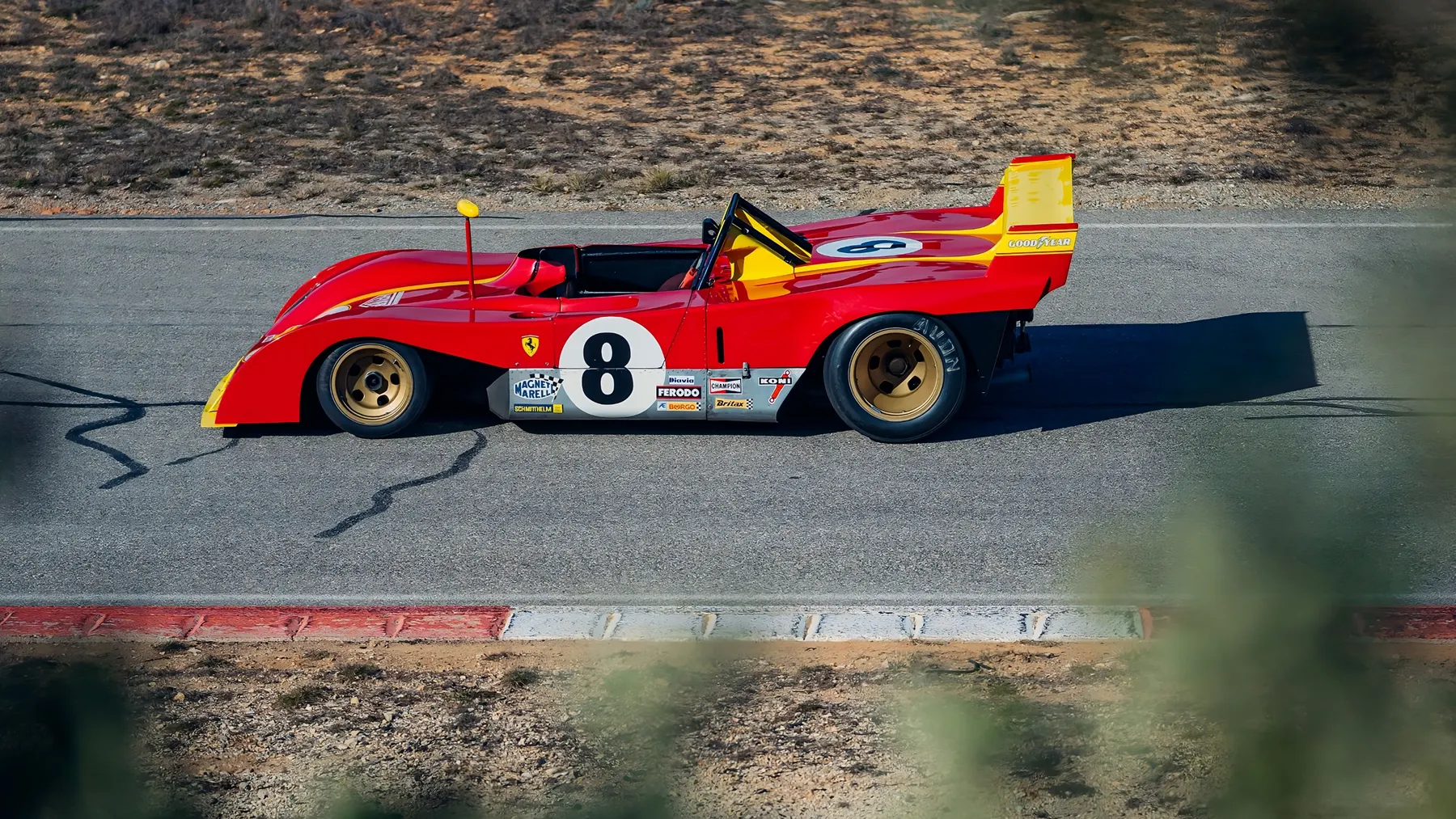
The chassis was a half-step towards modernity rather than a leap. Small-diameter steel tubes formed a spaceframe, with sheet aluminium riveted to it to create a semi-monocoque, which Ferrari itself describes as a further step towards the monocoque. Behind the cockpit the tubes bridged over the engine, which was attached to the main frame at its front end and worked as a central backbone, while the five-speed gearbox hung out of the back as it did on the grand prix cars. The engine, transmission, steering, suspension and brakes all came from the 312 B. The cockpit layout is the sort of thing that makes you wince and smile at once. The two seats sat very close together in the middle of the car, but only the right-hand one was for a human. The left-hand one held the regulation 120-litre fuel tank, placed there to counter the weight of the driver, and the filler sat on the right because most circuits have their pits on that side. Fuel went in through a gravity-fed bayonet hose, and the transfer pipe ran across the cockpit floor beneath the driver’s knees, with the steering rack passing above them. Take the fibreglass nose off a 312 PB and the driver’s legs look uncomfortably exposed.
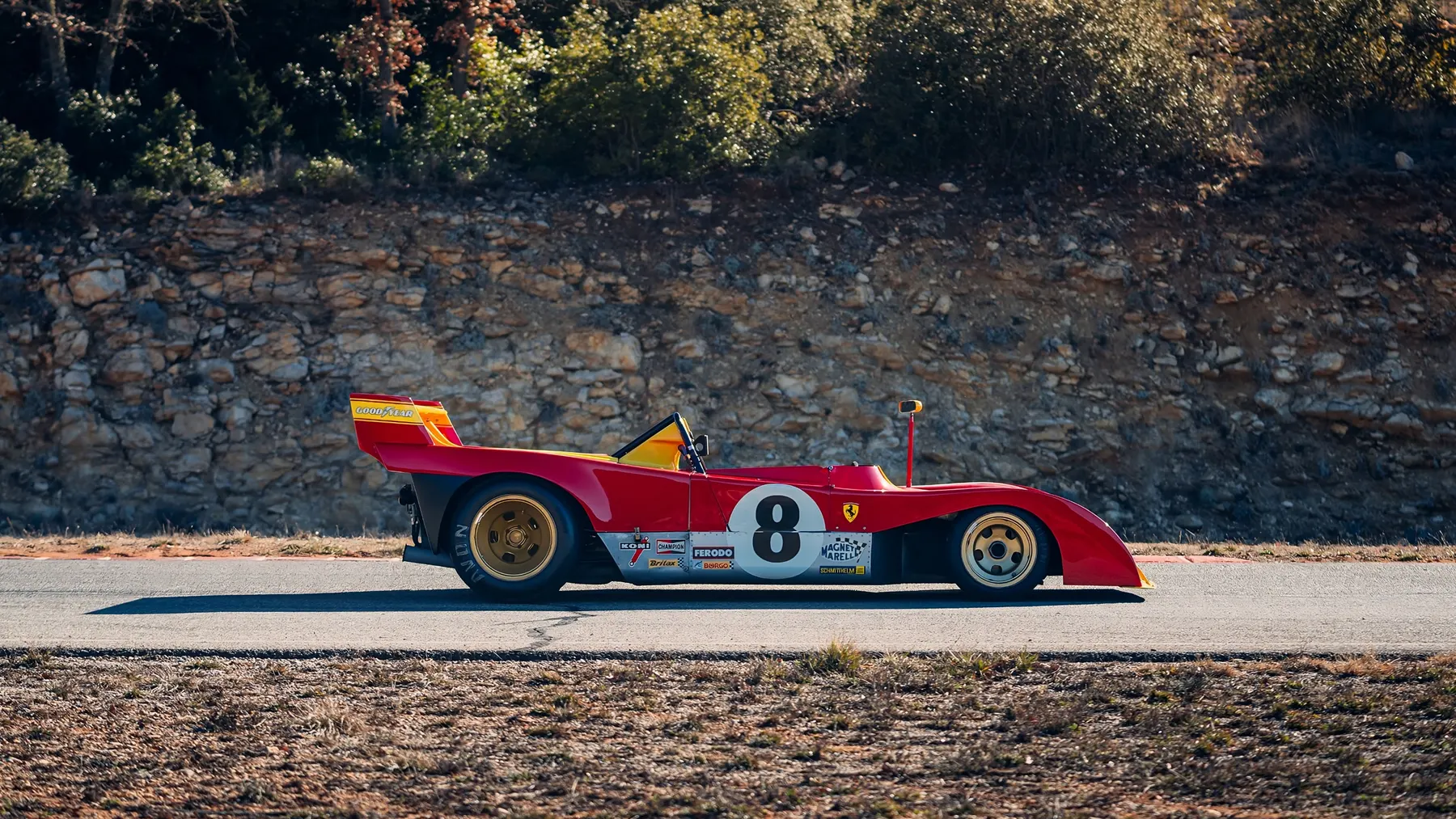
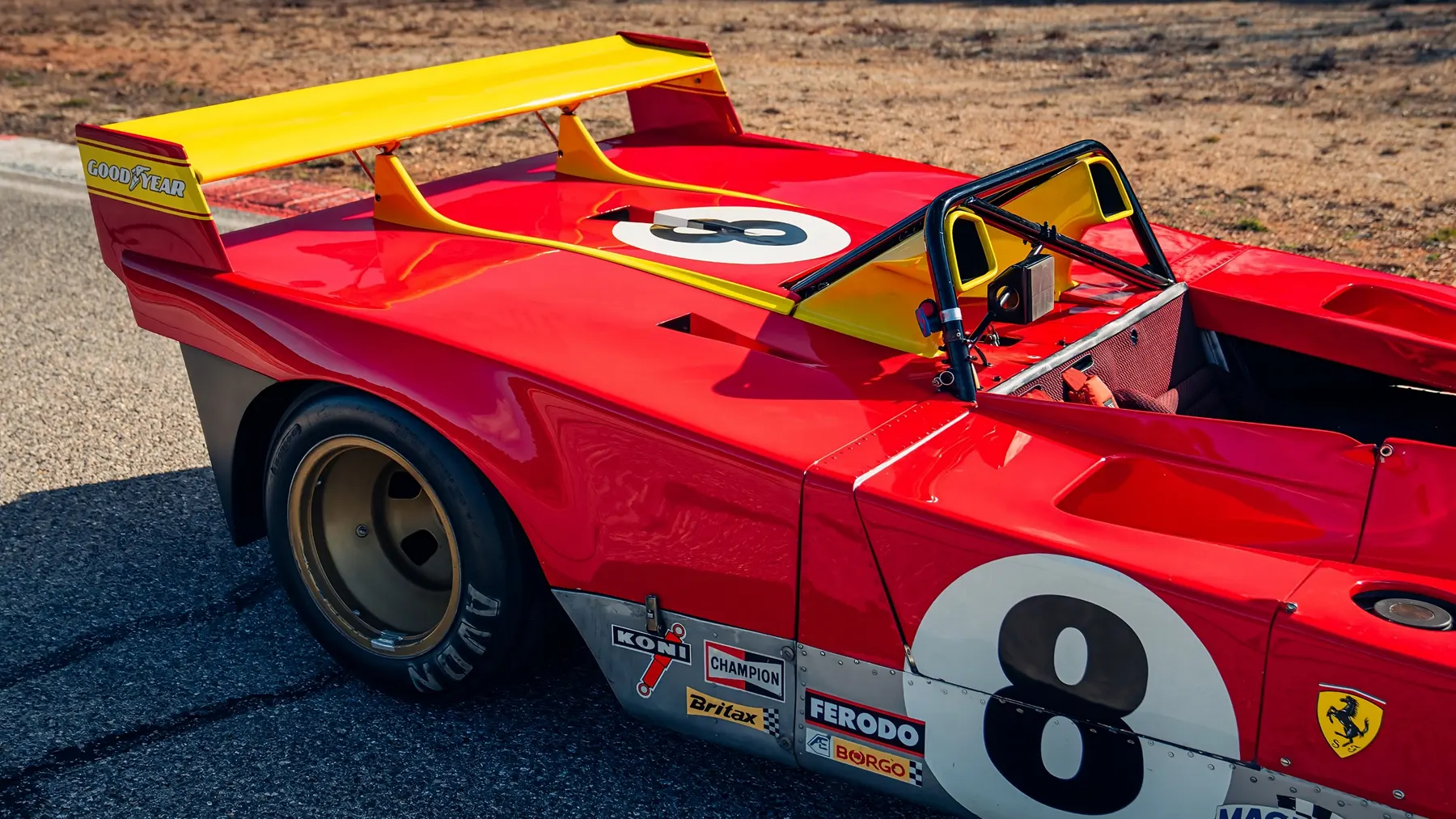
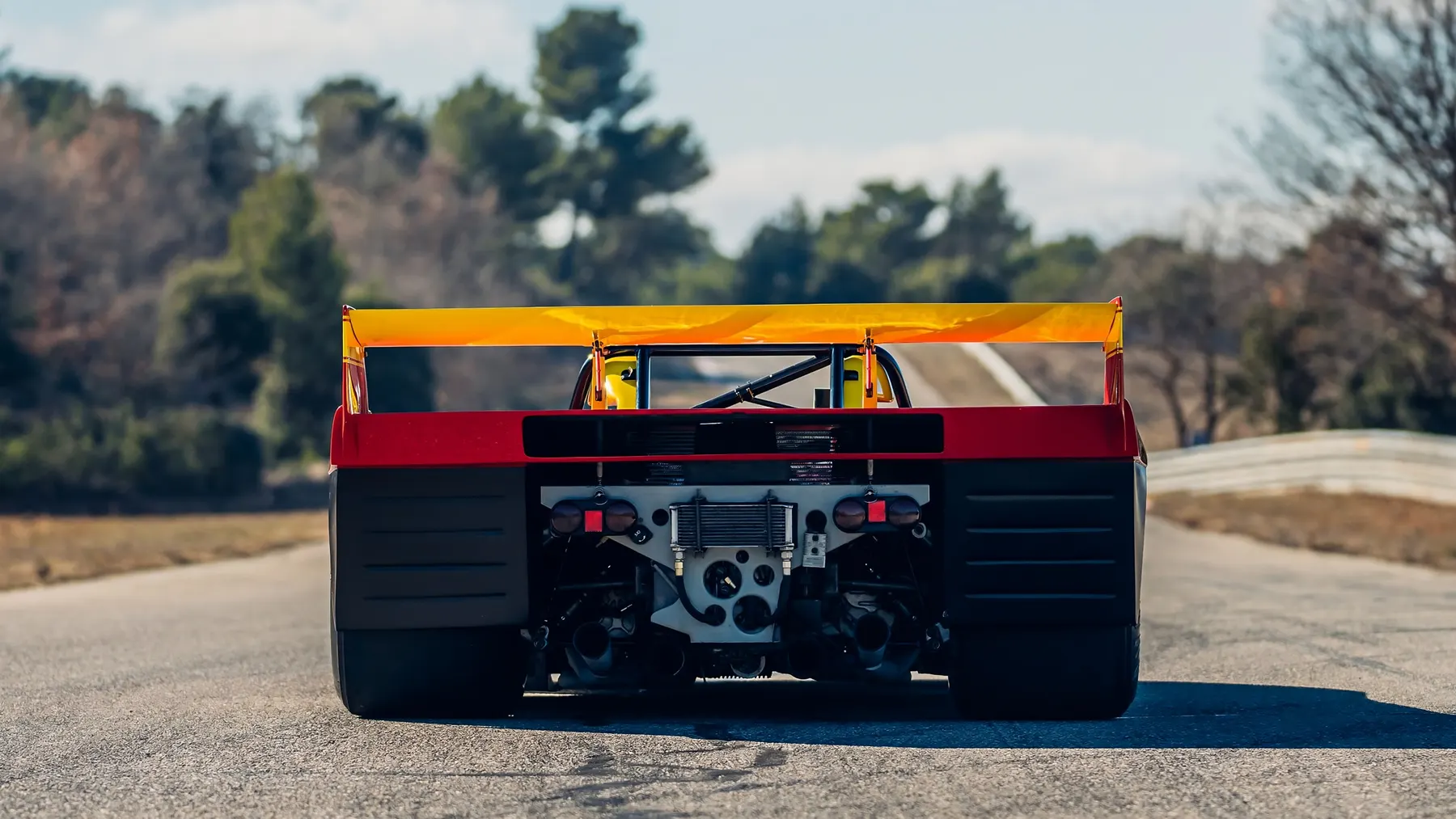
The bodywork was in two fibreglass pieces, with a slot through the full-width nose to create some front-end downforce. Three tail sections were developed, from a stumpy one for slow circuits to a long one used only in testing at Le Mans, and the intermediate tail used for most races weighed 7 kg more than the short one in exchange for a gain of roughly 4 to 5 mph. Nose and tail were red, while the head fairing, rear spoiler and fins were painted white, yellow, blue or green so that the team’s cars could be told apart at a glance. Complete spare nose and tail sections, already numbered, travelled in crates built from tubing that resembled miniature spaceframes. Rear rims about 400 mm wide wore Firestone tyres, and the low profiles introduced for 1972 produced a wider track and a visible bulge at the rear. That, along with the wedge shape, set a template for prototypes through the decade. All-up weight in 1972 ran from about 655 to 670 kg.
It did not begin well. The car appeared at the 1971 Buenos Aires 1000 km and qualified second among the five-litre machines, then the race ended in tragedy when Ignazio Giunti, leading in a 312 P, struck Jean-Pierre Beltoise’s Matra as the Frenchman pushed it back to the pits. Giunti was killed, and that car was never rebuilt. What followed was a season of hard lessons. The development car led what Jenkinson called a hectic life, crashing repeatedly and seldom lasting long in a race. A gearbox failure ended its Sebring run, it took pole at Brands Hatch but finished second to an Alfa Romeo Tipo 33/3, and its engine overheated at the Nürburgring and its chassis broke in Austria, both times with a win apparently on the cards. It did not win a championship race that year. Yet by the end of 1971 Jenkinson judged it almost a match for the 917 once fuel consumption and tyre wear were taken into account, and in November the rebuilt car won the non-championship Kyalami nine-hour race with Redman and Regazzoni, ahead of the first of the new 1972-specification cars.
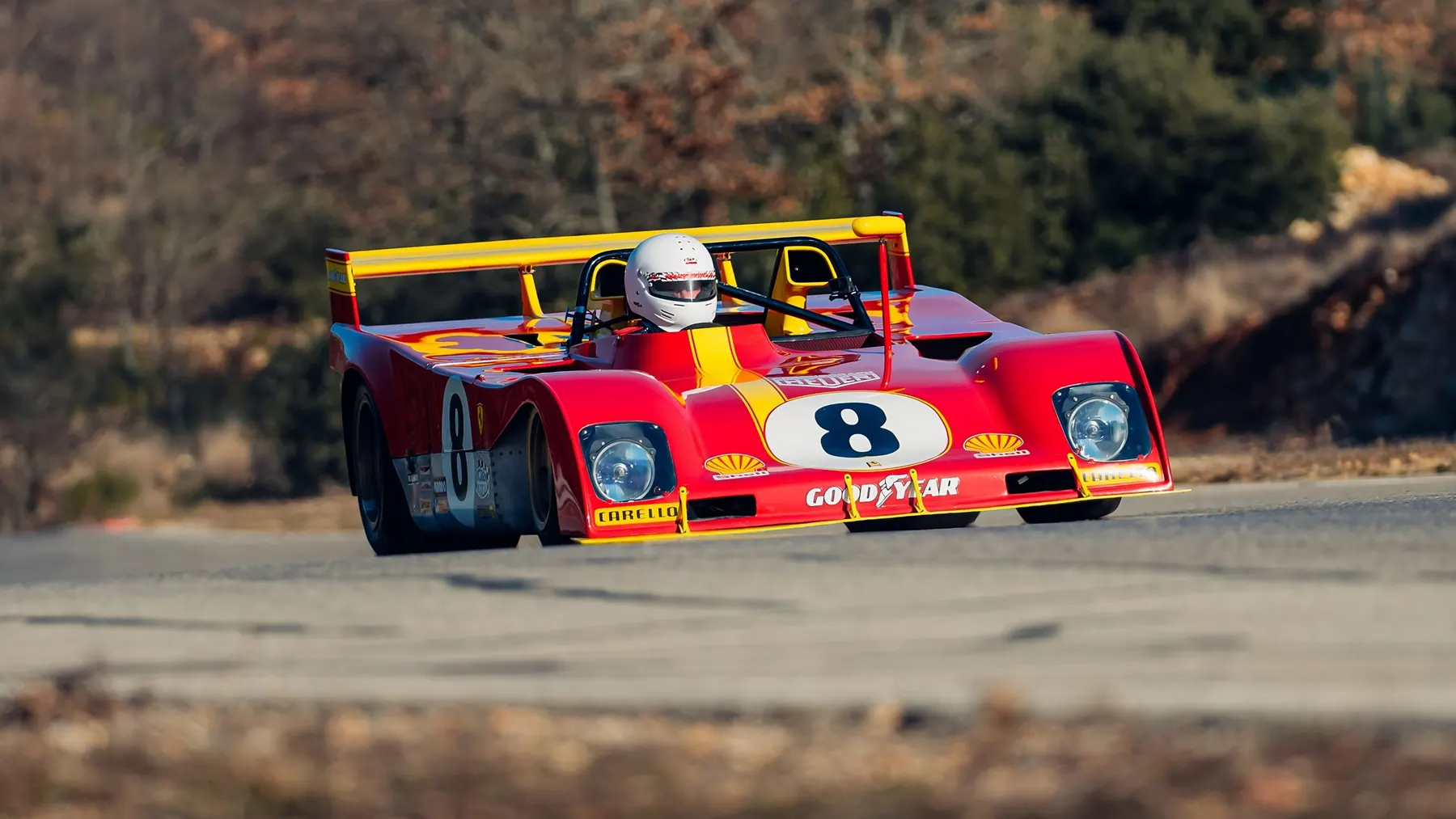
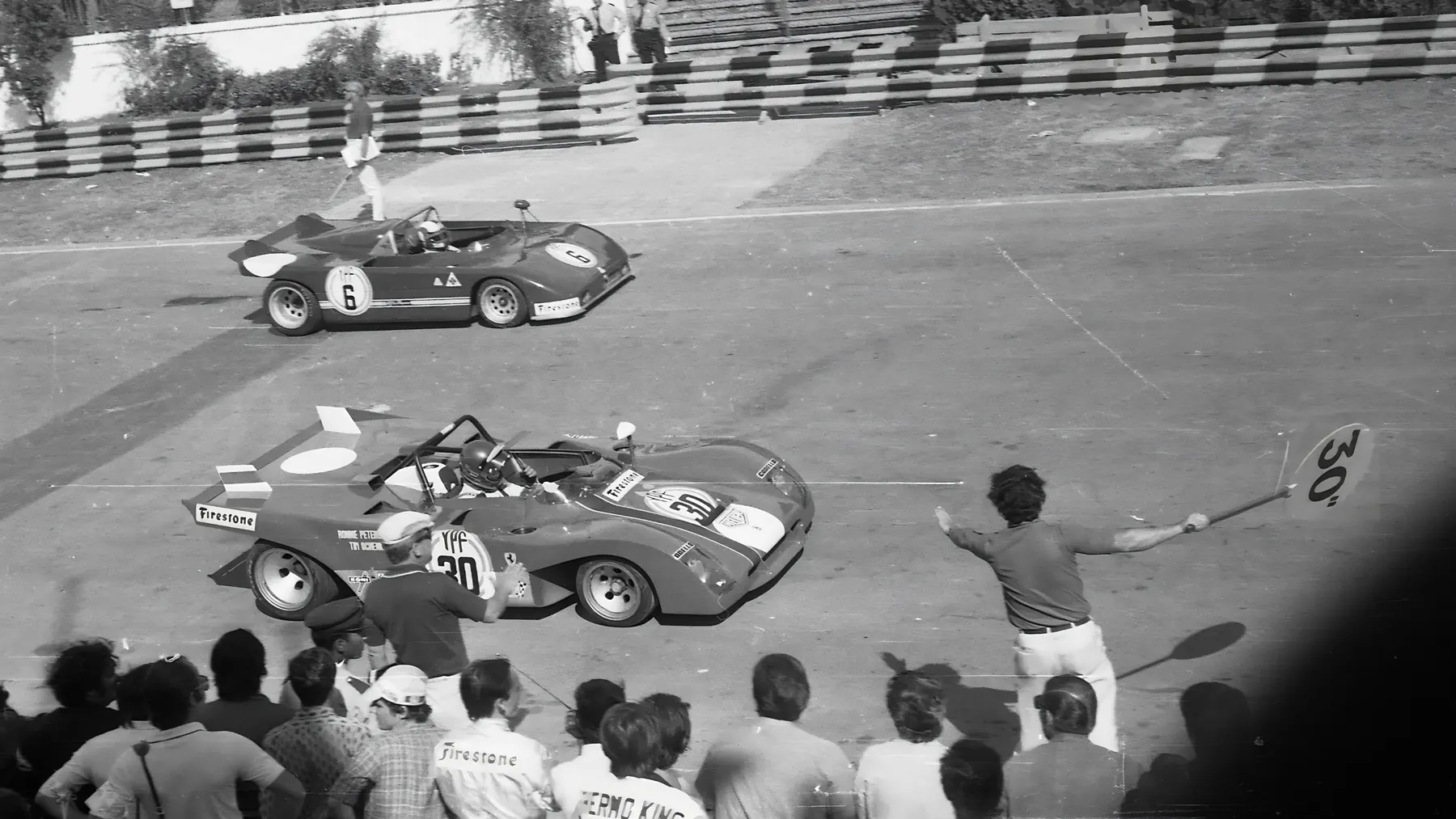
Then came 1972, and the arithmetic became almost comic. Ferrari built a fresh batch of cars (six or seven, depending on the source), lowered them, widened the track and strengthened the chassis for the revised weight limit, and planned to run three at each round while rotating them so that no car did consecutive races. The driver roster was extraordinary: the grand prix trio of Jacky Ickx, Clay Regazzoni and Mario Andretti, joined by Ronnie Peterson, Tim Schenken and Brian Redman, with Arturo Merzario in reserve and Sandro Munari arriving later. Team manager Peter Schetty ran the programme while Forghieri stayed at Maranello working on other projects. The cars won every round they entered: Buenos Aires, Daytona, Sebring, Brands Hatch, Monza, Spa, the Targa Florio, the Nürburgring, the Österreichring and Watkins Glen. The only championship round they skipped was Le Mans. Jenkinson noted that crashes were frequent but no car was written off, and that the cars were so alike that drivers could not be sure whether they had driven the same chassis twice. It was Ferrari’s first manufacturers’ title since 1967.
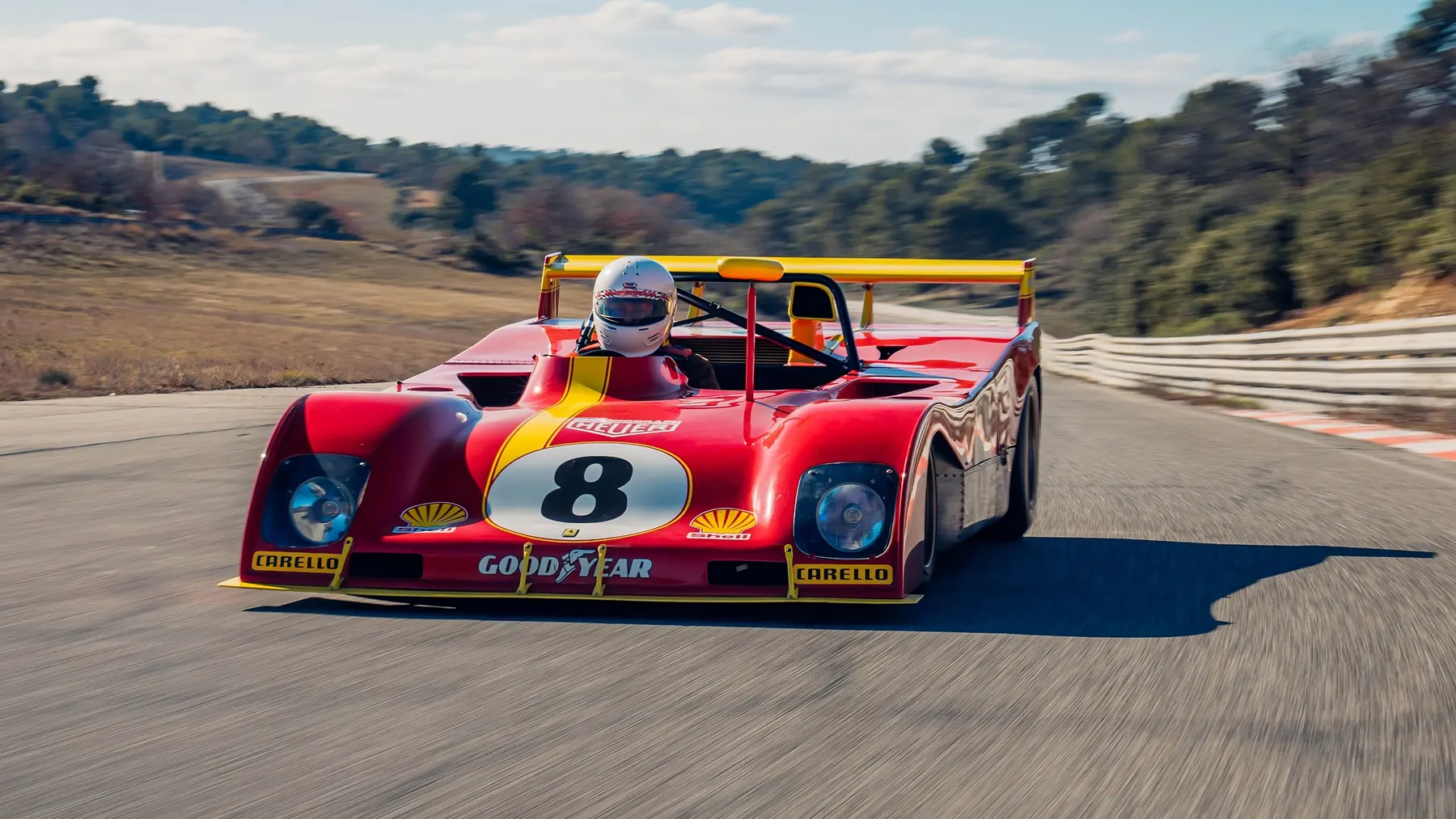
Drivers who raced the 312 PB tended to describe it in grand prix terms. Redman called it a grand prix car with bodywork, lovely to drive, with the best gearbox around, and Andretti said you could throw it about like an F1 car because it was small and nimble. McDonough, driving with a rev limit imposed, praised the torquey engine, the precision of the steering and an almost undramatic quality, adding that you always knew where the rear end was. He liked the gearbox too, whose lever moved in a gate with sliding bars underneath to stop the driver dropping more than one gear at a time and over-revving the engine. His verdict on the car in competition was that it is not hard to drive but is demanding to race hard, because it is F1 technology and needs an experienced hand.
It was not a flawless machine, and the people who drove it said so. Schenken, who raced it in both seasons, remembered it as twitchy in the fast corners and, even after the 1973 improvements, nervous under braking. He blamed chassis flex, and he contrasted Ferrari’s riveted spaceframe with the proper aerospace-style monocoque Matra was building. Redman agreed that Matra’s cars were a little better aerodynamically, more stable under braking and better on traction, particularly at tighter circuits. Merzario, a great admirer of the car, still admitted that its dampers, because of where they were positioned, tended to heat up and soften the suspension. The car’s driver protection was also a product of its time: the fuel line under the knees and the steering rack above them left a very exposed cockpit, and a split fuel tank at Le Mans in 1973 flooded one cockpit with petrol. These were not the faults of a poor car, but they explain why a design built around a spaceframe and an F1-derived engine was never as sophisticated as its reputation suggests.
Its record also needs some context, and its reliability and cost deserve the same scrutiny. Jenkinson himself observed that the opposition in 1972 was feeble and that the victories came at the cost of a good deal of damaged machinery. Porsche had stepped back, Matra stayed away to concentrate on Le Mans, Alfa Romeo hardly figured, and the Cosworth V8 used by the Lola and Mirage entries proved better suited to short races than to endurance events. Ferrari skipped Le Mans, the one race that mattered most to the public, and the usual explanation, repeated in summaries rather than documented in period sources, is that the engine could not be trusted for 24 hours. Matra duly won it. Ownership was never going to be easy either. As the story goes, Enzo Ferrari said no private team could run one because the cars were too complicated and too expensive. McDonough thought he was both right and wrong, since privateers have managed it, but warned that it is a hard car to run well and that anyone who finds one will need a machine shop to make the parts.
In 1973 the competition caught up. Matra committed to the championship with its MS670B, and at Vallelunga François Cevert put one on pole by almost 1.5 seconds. Ferrari responded with a revised car developed by Giacomo Caliri’s team, which according to auto motor und sport had a longer wheelbase and improved bodywork, and for Monza added low-drag bodies and F1-style exhausts. Ickx and Redman won at Monza after Matra broke two front hubs, then won again at the Nürburgring. Those were the only two wins of the year, against five for Matra. At Le Mans Ferrari turned up with three cars, one of them treated as an expendable hare to force the Matras to push. Merzario put his car on pole and led commandingly until a fuel tank split and petrol flooded the cockpit. After repairs the car rejoined about 15 laps down and fought back to second, six laps behind the winning Matra, which Enzo Ferrari dismissed as first of the losers. The final round in Buenos Aires was cancelled because of the oil crisis, and Matra took the title, with Ferrari nine points short once the best-seven-results rule was applied.
Ferrari did not announce its departure from sports-car racing, but that was the end of it. Luca di Montezemolo is credited with persuading Enzo to concentrate on Formula 1, and Schenken’s own view was that the arrival of Niki Lauda played a part. The 312 PB was the last Ferrari sports prototype run by the works until the 499P arrived. The flat-12 family it shared with the 312 B went on to power Ferrari’s grand prix cars to titles for Lauda in 1975 and 1977 and for Jody Scheckter in 1979, with four constructors’ crowns among them.
That, perhaps, is the cleanest way to read the 312 PB. It was a grand prix car given sports-prototype bodywork and a fuel tank in the passenger seat, brilliant in the hands of a drivers’ team that most rivals could not match, and a little overstretched when the opposition finally arrived. It is admired because it shows what happens when Ferrari applies its single-seater thinking to endurance racing, and it is remembered with some wariness because the same thinking made the cars fast, fragile and expensive to keep alive.
Technical data
Performance Specifications
| Specification | 1972 works car (unless noted) |
|---|---|
| Years raced | 1971-1973 |
| Category | Group 6 (1971); Group 5 (1972-73) |
| Engine | 180° flat-12, DOHC per bank, four valves per cylinder, Lucas fuel injection, dry sump |
| Capacity | 2,991 cc (Jenkinson: 2,993 cc) |
| Bore x stroke | 78.5 x 51.5 mm |
| Power | Approx. 440-450 bhp at around 10,800 rpm (sources vary)* |
| Torque | Omitted: no corroborated figure |
| Gearbox | 5-speed manual, rear-mounted |
| Chassis | Tubular spaceframe with riveted aluminium panels (semi-monocoque) |
| Bodywork | Fibreglass, two-piece |
| Front suspension | Double wishbones, coil spring/damper units |
| Rear suspension | Lower wishbone, single transverse upper link, two radius rods |
| Brakes | Outboard disc brakes, front and rear |
| Wheelbase | 2,220 mm |
| Track (front/rear) | 1,425 mm / 1,400 mm (as quoted by McDonough) |
| Weight | 655-670 kg all-up (Jenkinson, 1972); McDonough lists 650 kg* |
| Fuel tank | 120 litres |
| Top speed | Omitted: no corroborated figure |
Sources
- Ferrari.com: 312 P (1971)
- Motor Sport Magazine: The Ferrari 312P Sports/Prototype (Denis Jenkinson, September 1972)
- Supercars.net: 1971 Ferrari 312P - The Boxing Champion (Ed McDonough)
- Wikipedia: Ferrari 312 PB
- Goodwood Road & Racing: Ferrari v Matra, 1973 (Paul Fearnley)
- auto motor und sport: Ferrari 312 PB von 1972
- Ferrari Magazine: Back to Greatness: Arturo Merzario
- 24h-lemans.com: Ferrari 1966-1974, Three prototypes, three podiums (3): 1973
Join the discussion
Comments
Loading comments…
Leave a comment
Share a detail, memory, or perspective. Every comment is reviewed before publication.