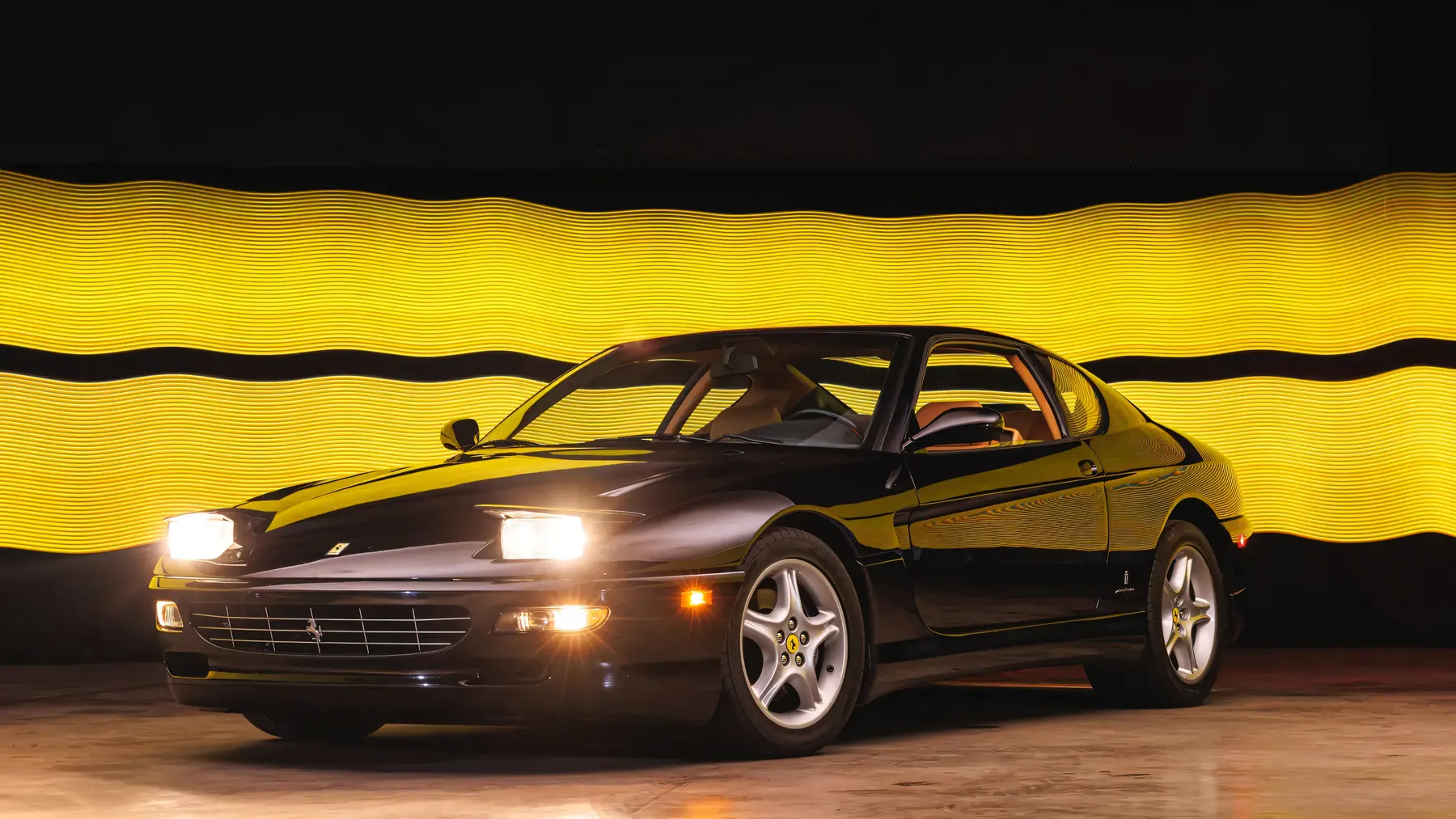
1995 Ferrari 456 GT
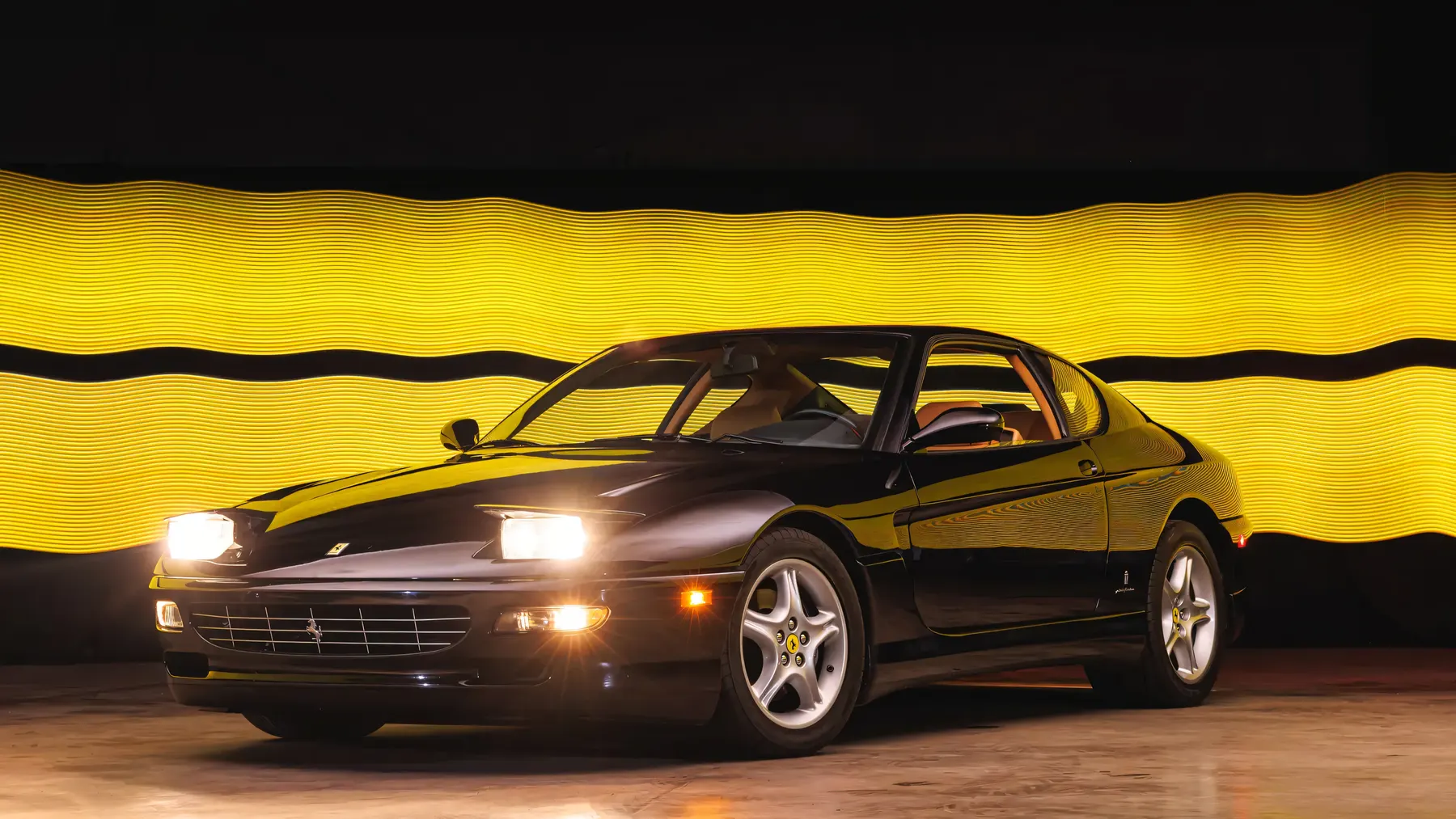
Cast against the backdrop of a Ferrari range that had spent much of the late 1980s chasing mid-engine sensation, the 456 GT arrived in September 1992 with a quietly radical proposition: that the most accomplished Ferrari you could buy might also be the one that could comfortably carry your family across a continent without drama, and that such a notion was not a compromise but an ambition. It was an argument the company had not made with conviction since the 365 GTB/4 Daytona, and it would take a car of rare sophistication to make it credible again.
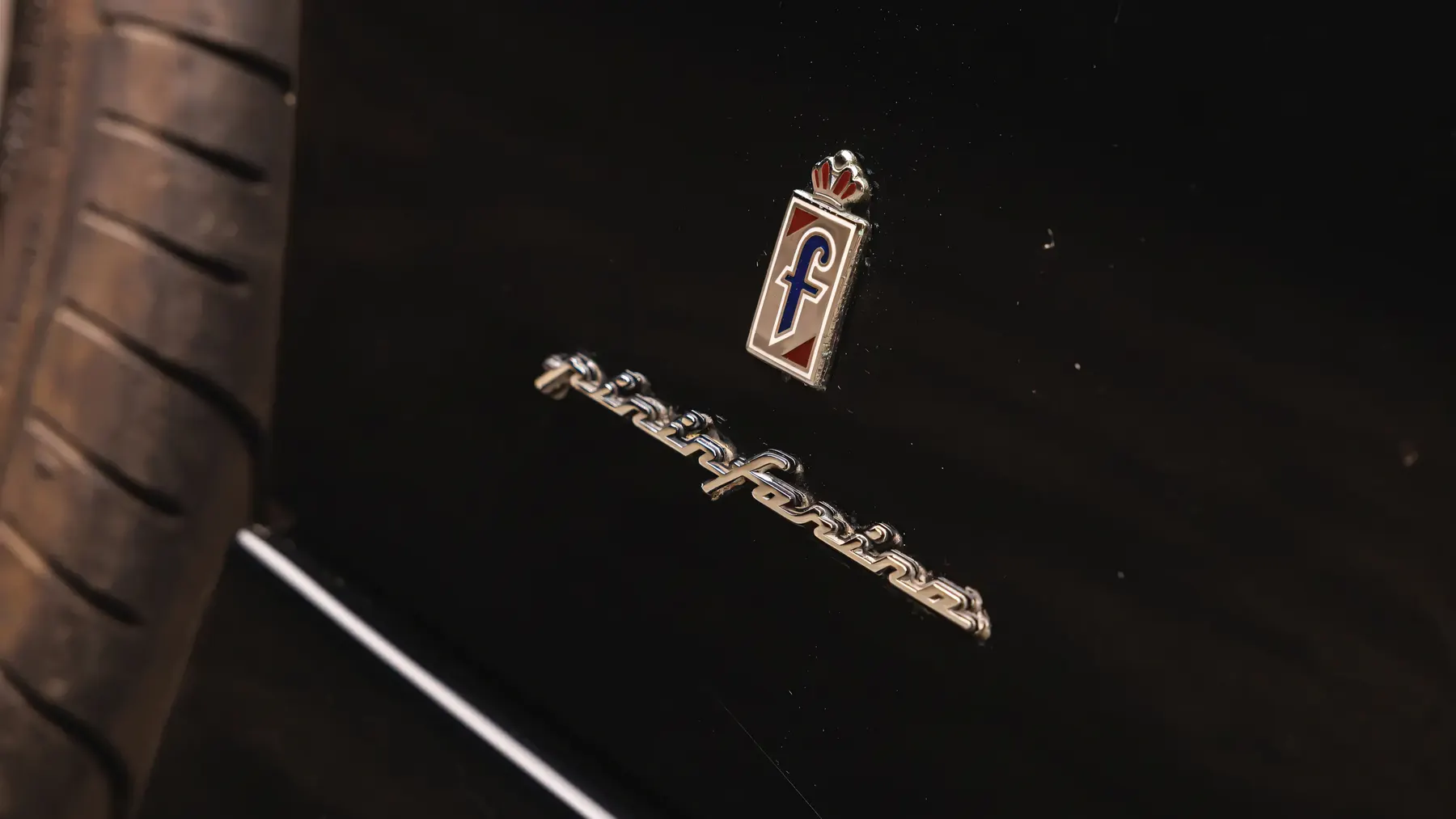
The 456 succeeded the 412, which had ended production in 1989 and left a three-year vacuum in Ferrari’s front-engined V12 lineage. Where the 412 had been a graceful but ageing evolution of the 365 GT4 2+2 formula first sketched in 1972, the 456 GT broke from that gentle drift and instead anchored itself to something more charged. Pietro Camardella at Pininfarina drew directly from the Daytona lineage for inspiration - the long bonnet, the taut flanks, the purposeful haunches - while incorporating modern aerodynamic logic and shedding the formal, slightly portly silhouette that had softened the 412’s character. The result was a car that managed to feel simultaneously historical and urgent, which is a harder trick to execute in aluminium than it sounds.
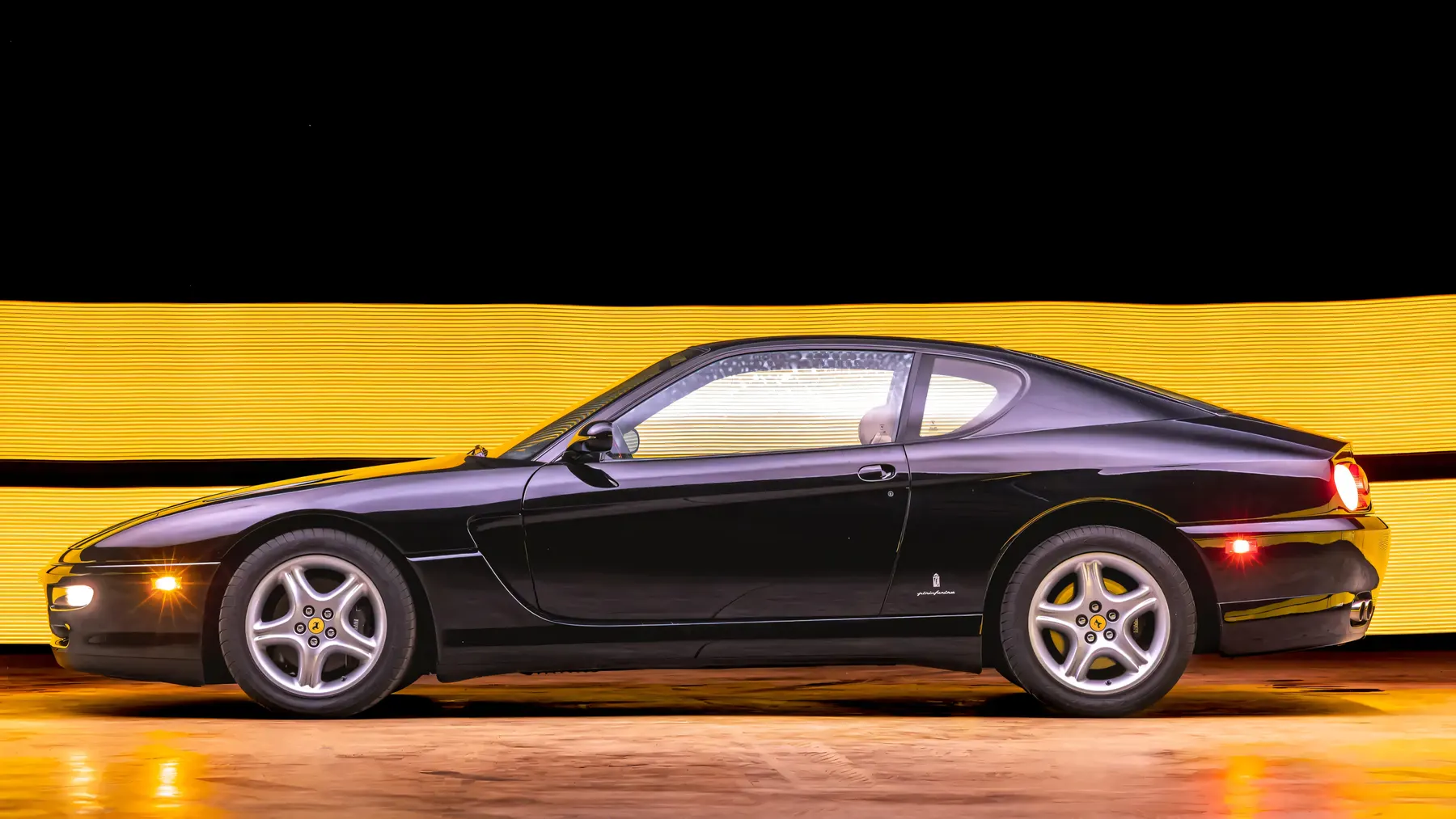
The engineering heart of the 456 GT was the F116 engine, a new 65-degree V12 of 5,474cc displacing - fittingly - exactly 456cc per cylinder, which is how Ferrari named it and, at the time, the last model to follow that convention until the 488 GTB appeared decades later. The all-alloy unit featured twin overhead camshafts per bank, four valves per cylinder, and Bosch Motronic fuel injection; in original GT specification it produced 436 bhp at 6,250 rpm and 406 lb-ft of torque, figures that made the 456 GT the most powerful regular production Ferrari of its era, surpassed only by the F40 in the company’s broader catalogue. The transmission was mounted at the rear as a transaxle, giving the car a near-perfect 47/53 front-to-rear weight distribution on a 2,600mm wheelbase - 100mm shorter than the 412’s - which did a considerable amount of work in shaping the car’s character before a single dynamic decision was made.
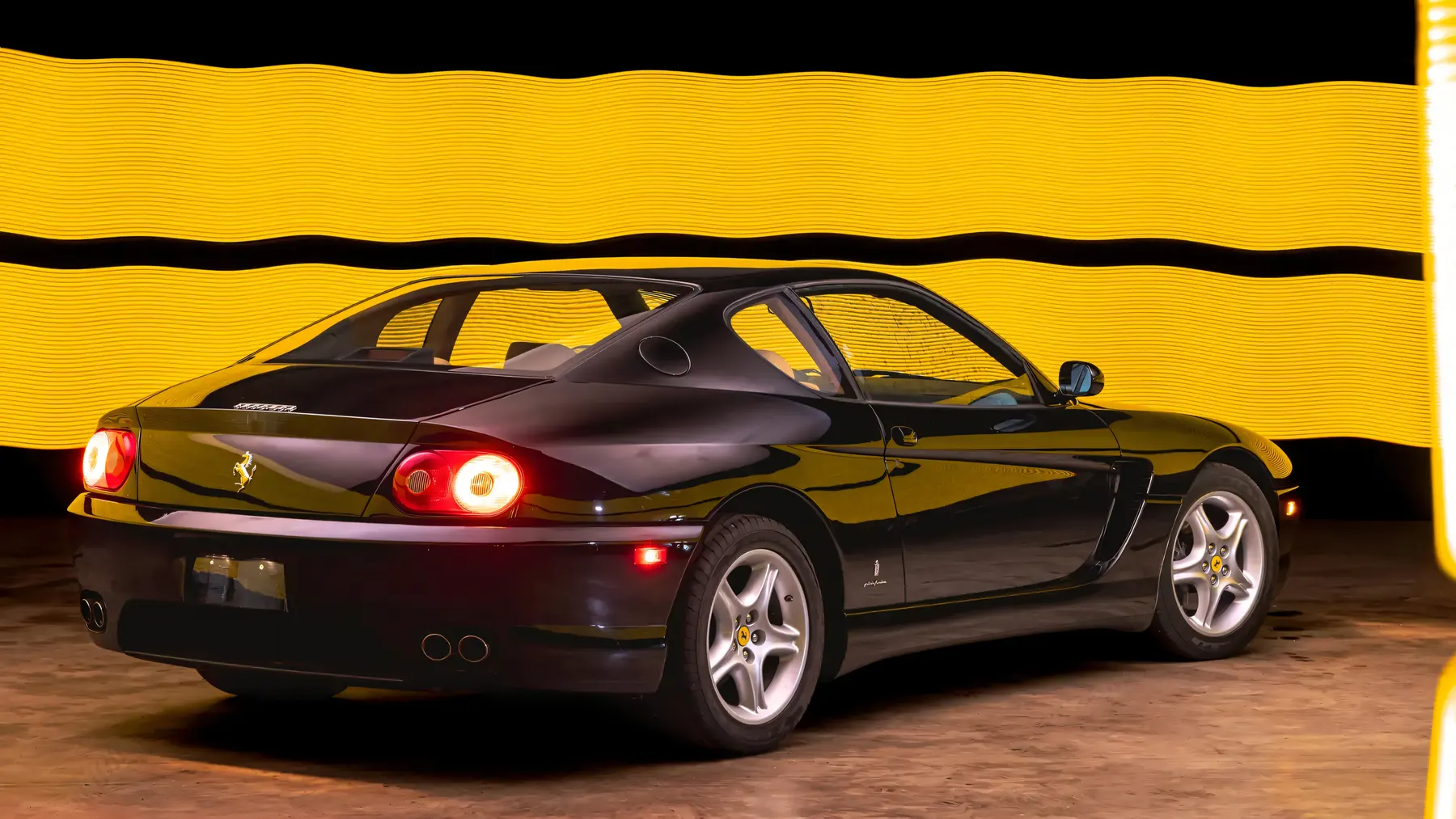
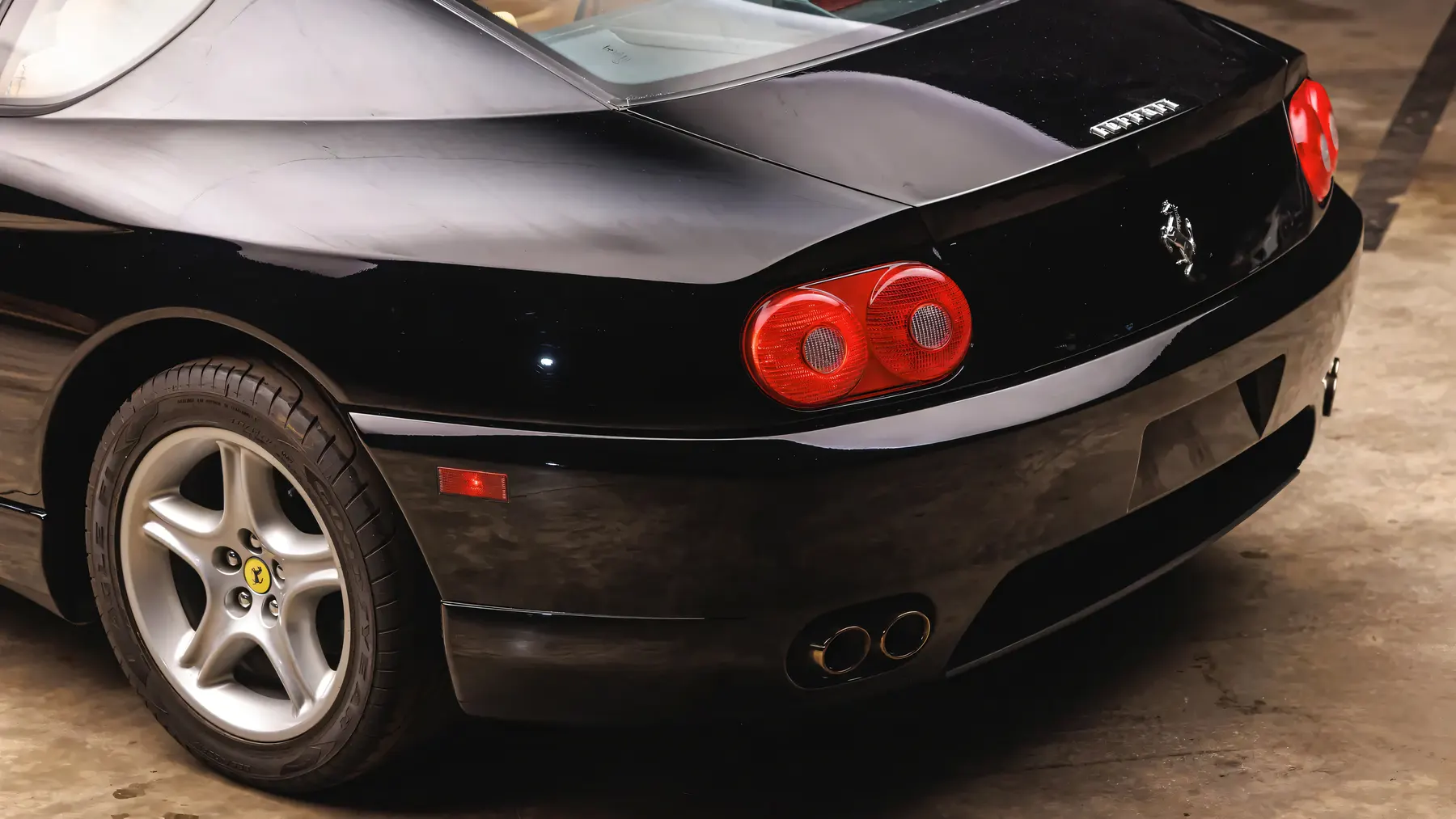
Camardella’s design operated in the territory between beauty and menace that the very best Ferraris have always occupied. The aluminium bodywork was aerodynamically resolved with a Cd of 0.30, low by any standard but especially creditable for a 2+2 coupé of this silhouette, and the pop-up headlamps - retained through the 456 and 456M generations - lent the nose a clean, purposeful restraint that the later world of projector units never quite replicated. The rear three-quarter view was perhaps the composition’s strongest passage: the haunches swelled with controlled aggression while the tail was cut clean and tight, a resolution that owed its confidence to the Daytona lineage without merely quoting it.
Inside, Ferrari made a genuine and largely successful attempt to deliver a cabin worthy of the GT designation rather than simply appending two small seats behind a sports car’s interior and declaring the problem solved. The ergonomics were praised at launch; the rear accommodation - while still compromised in the manner unavoidable on any 2+2 - was generous enough to be genuinely usable for adults on shorter journeys, and the front seats offered long-distance comfort backed by leather upholstery of quality that reflected the car’s price positioning against Bentley and Aston Martin as much as against other Ferraris. The gated six-speed manual, mounted in the classic Ferrari open-gate configuration, was the mechanical centrepiece of the GT trim; from 1993 a four-speed automatic - the GTA - was offered in partnership with FF Developments of Michigan, later acquired by Ricardo Engineering, for buyers who preferred a more relaxed relationship with the gearbox.
On the road, the 456 GT delivered a character that was genuinely unusual in Ferrari’s portfolio at the time. The V12’s torque curve was wide and accessible, pulling cleanly from below 3,000 rpm before gathering into a full-voiced crescendo that crested at the 6,750 rpm redline, and the transaxle layout gave the car a balance under cornering loads that felt entirely different from the behaviour of contemporary mid-engined Ferraris - more composed, more stable, with a progressive onset of limit behaviour that rewarded patience and penalised only the genuinely overconfident. Top speed was a genuine 186 mph, and 0–60 mph came in around 5.0 seconds, figures that - for a four-seat car with adequate luggage space and functioning air conditioning - were extraordinary in the early 1990s. What those numbers could not communicate was the quality of the experience: the 456 GT was notably more refined than its Ferrari contemporaries, less raw in its immediate sensory demands, and considerably better suited to a 500km day than the 348 or Testarossa of the same vintage.
The principal limitation was the gearbox in its original dog-leg configuration, which placed first gear to the lower left in a pattern that required an unnaturally large wrist movement for brisk city driving; Ferrari corrected this to a conventional H-gate during the production run. The absence of traction control in the earliest cars - unusual for a 436 bhp GT in the early 1990s - placed the full weight of the rear-wheel-drive dynamics with the driver, which enthusiasts celebrated and which the broader market would come to question as electronic aids became standard fitment across the class.
The 456M arrived in 1998, bringing revised aerodynamics, updated cabin materials, a modified front fascia with more contemporary detailing, and the V12 developed to 442 bhp. The M designation - Modificata - also marked the introduction of a revised Bosch Motronic M2.7 management system that sharpened throttle response and improved part-throttle fuel economy relative to the original car. Kerb weight settled at 1,690 kg. The 456M GT remained distinguishable as the manually-transmitted variant; the 456M GTA continued the automatic tradition. Production of the 456M GT was notably modest - approximately 688 units across the production run - while the manual 456M GT in right-hand drive is considered among the rarest configurations of the entire 456 family, with only around 30 examples thought to exist in the United Kingdom. Total production across all 456 and 456M variants reached 3,289 units over eleven years.
The F116 engine’s reputation for reliability was, by Ferrari standards, remarkably strong. It did not carry the major servicing anxieties of some contemporary Ferrari units, and the transaxle layout - while complex - proved durable in service. This reliability record has informed the 456’s subsequent collector trajectory, where the primary valuation premium attaches to specification - manual transmission, right-hand drive, desirable colour combinations - rather than to the nervous preservation logic that governs ownership of more mechanically fragile Italian exotics. The 456M GT remains the most sought configuration, appreciated precisely because the manual transmission and revised chassis tuning brought the car’s dynamics into a sharper focus.
The 456 GT’s place in Ferrari’s lineage is instructive. The F116 V12 was developed forward into the 550 Maranello, which used a higher-state-of-tune version of the same engine in a two-seat grand tourer announced in 1996; the 456 continued alongside it in the four-seat role, its mission distinct and its execution rather different in character. In 2004 the 456M was replaced by the 612 Scaglietti, which applied Pininfarina’s post-millennium design language and a new V12 to the same fundamental brief. The 456, by that point, had spent eleven years demonstrating something that Ferrari’s critics had occasionally doubted: that the company’s instincts for front-engined, naturally aspirated V12 grand touring were as sharp as they had ever been, and that a Ferrari with proper rear seats was not a car in conflict with itself but a car pursuing a different - and equally valid - kind of excellence.
Critical reception at launch was warmly enthusiastic. The press found the combination of dynamics, refinement, and V12 character close to ideal for the genre. Modern assessments have only deepened that appreciation, particularly as the 456’s analogue character - no traction control on early cars, a real gated shifter, engine management that rewarded driver understanding rather than substituting for it - has come to feel like a document of a specific moment in supercar development that subsequent technology rendered unrepeatable. The car is increasingly recognised as one of the cleanest expressions of the grand touring ideal in Ferrari’s history: powerful enough to feel genuinely fast, refined enough to be genuinely comfortable, and designed with sufficient restraint that it has aged without embarrassment - which, in a decade defined by some spectacularly dated automotive styling, represents its own kind of achievement.