2001 Bentley Continental R Le Mans
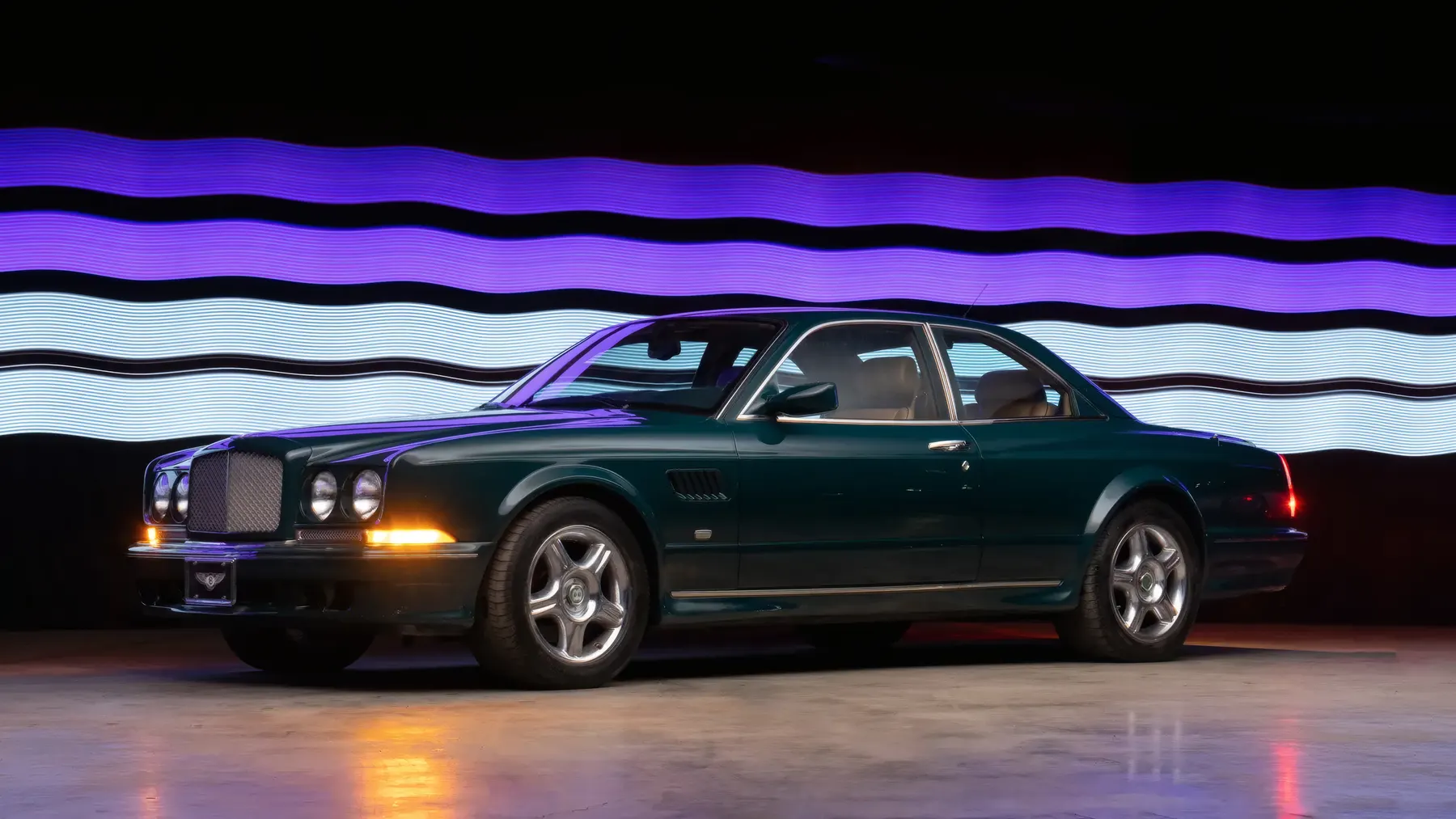
When Bentley’s Speed 8 prototypes rolled into the scrutineering bay at Circuit de la Sarthe ahead of the 2003 race, it marked the closing of a parenthesis that had been open since 1930 - the year a Bentley last competed at the 24 Hours of Le Mans. The Continental R Le Mans Series was conceived precisely around that returning ambition: a road car that wore the racing programme’s significance on its flanks, stitched into its leather and cast into its instruments, even before the Speed 8s had turned a competitive lap.
It’s worth understanding what the Le Mans Series actually was before reaching for superlatives. Built on the Continental R Mulliner - itself the answer to customers who wanted Continental T power in the longer, more accommodating R body - only 46 examples were produced in total. Of those, just 12 were right-hand drive, with 34 built to left-hand drive specification for export markets, predominantly the United States. These were not press fleet cars or concept studies. They were personal commissions, quietly assembled at Crewe, wearing motorsport as a state of mind rather than a marketing exercise.
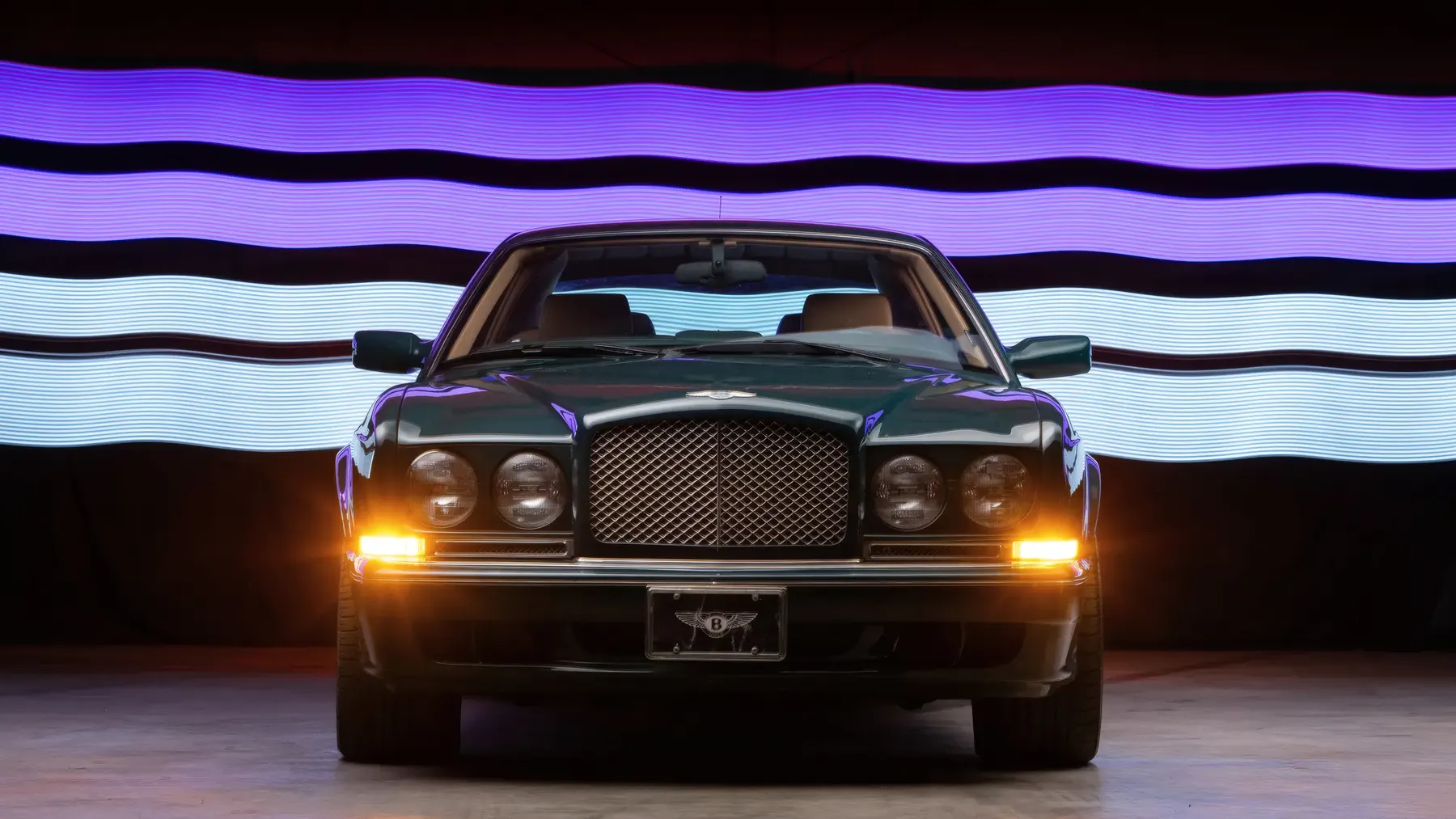
The technical foundation was the 6,750cc turbocharged V8, the same engine that powered the Continental T, transplanted into the longer-wheelbase R body. In this state of tune, it produced 420 bhp at 4,000rpm, but the more telling figure was the torque: 645 lb-ft available from just 2,200rpm. Drive went through the GM 4L80-E four-speed automatic transmission - an American industrial unit that Rolls-Royce had spent considerable engineering effort refining over 1,609,344 km of testing to deliver the smoothness Crewe customers expected. The whole package weighed 2,450 kg, give or take, which puts the torque-to-mass relationship into sharp relief - this is an engine that moves mountains by persuasion rather than revolution.
Top speed was rated at 170 mph, with 0–60 mph dispatched in 5.6 seconds. Those are not numbers that need apology even today, let alone in the early 2000s when large British grand tourers were expected to be stately rather than fast. The hydraulic self-levelling suspension, adaptive ride control, and ventilated front discs with twin calipers gave the chassis more composure than the car’s bulk suggested possible, and the Sport button - simultaneously remapping the gearbox and stiffening the dampers - transformed its character without requiring commitment to a track-day mindset.
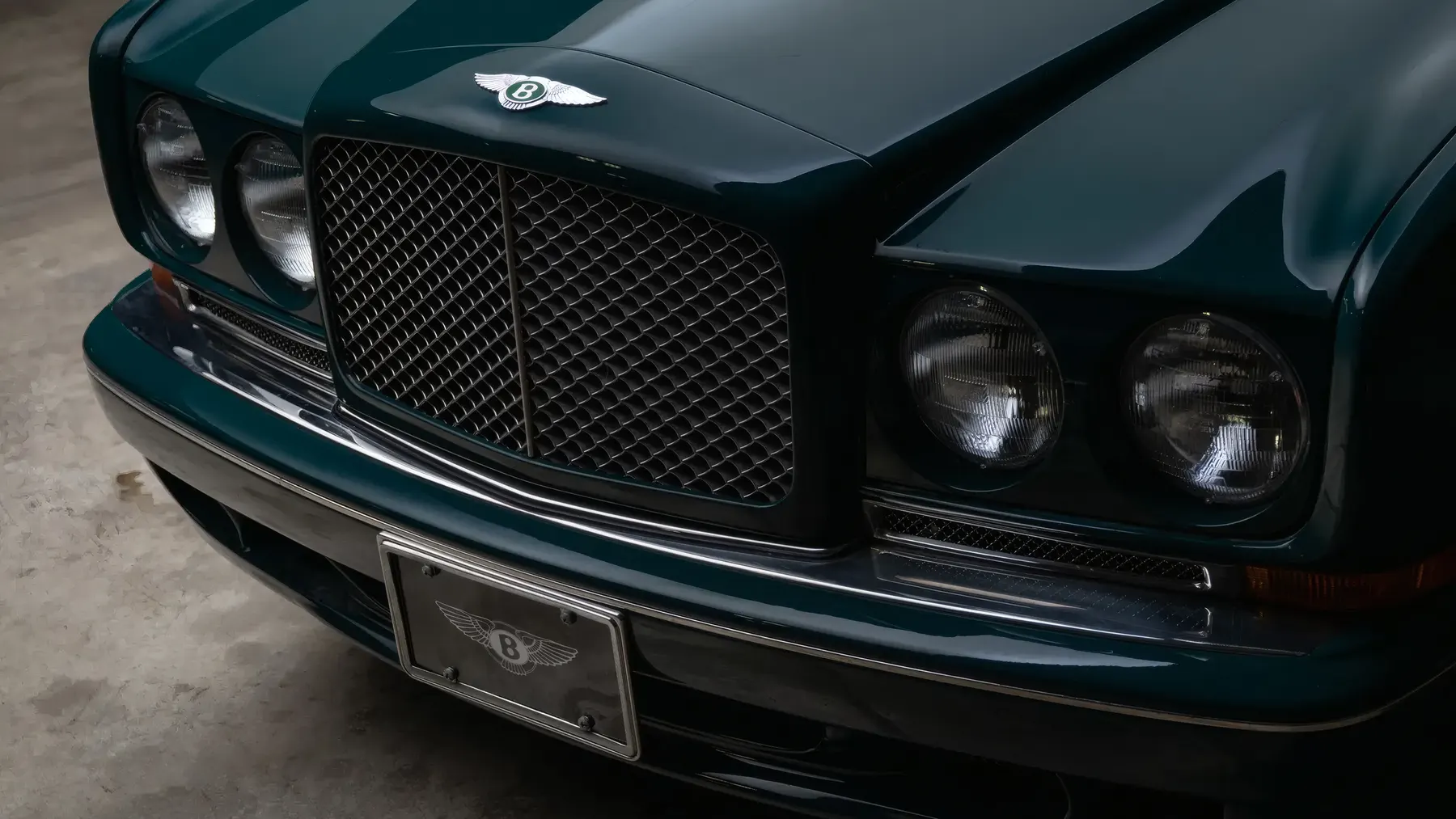
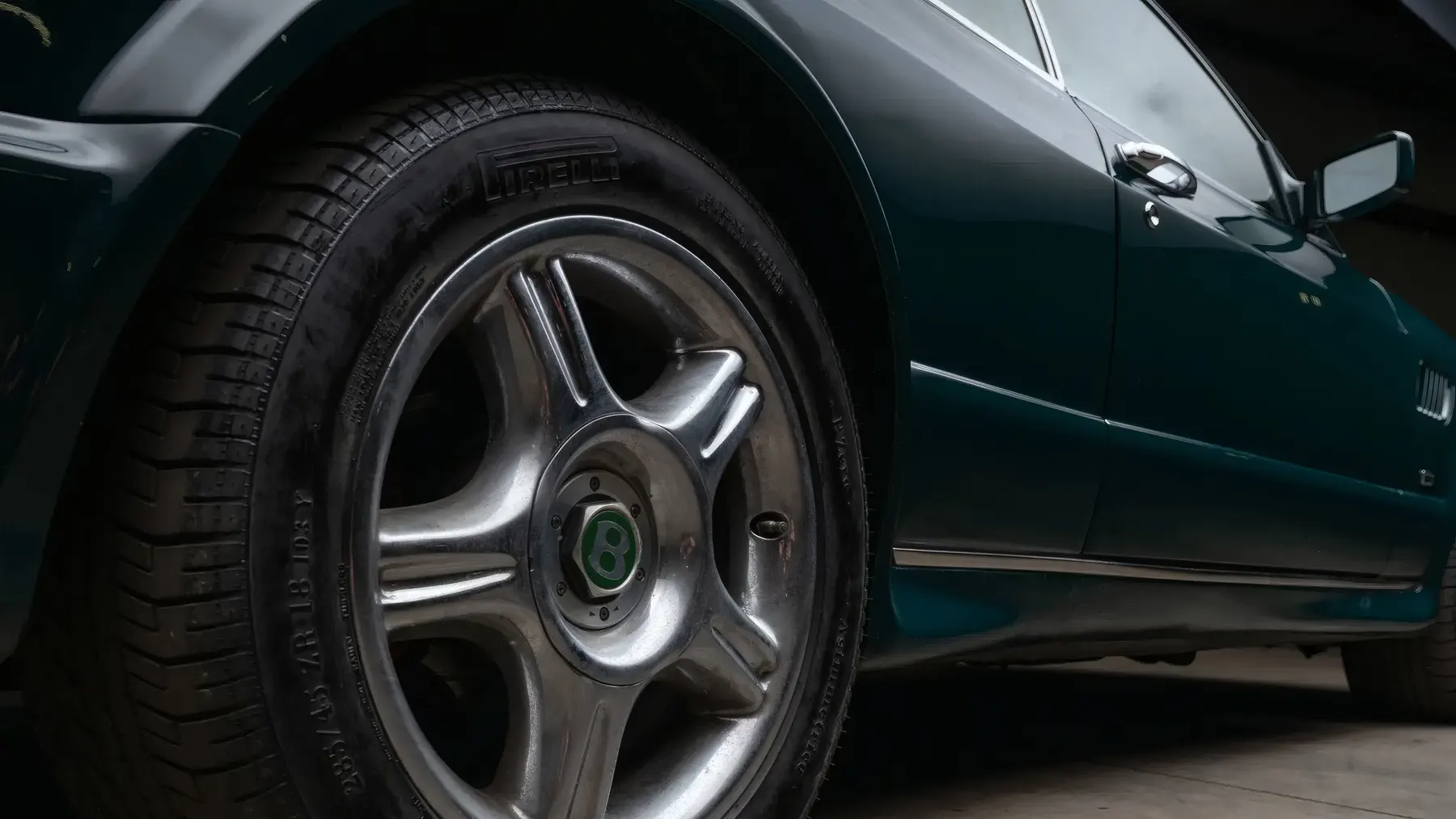
Externally, the Le Mans Series distinguished itself from a standard Mulliner through a set of changes that communicated performance without shouting. Flared wheel arches, borrowed from the Continental T’s wider-body philosophy, were fitted over 460mm alloy wheels. Red brake calipers were visible through those wheels, a detail that was still relatively unusual on road cars at the time. Quad exhaust outlets replaced the standard twin arrangement, and a sports bumper package rounded out the visual package. The overall silhouette remained the wind-tunnel-refined shape penned by John Heffernan and Ken Greenley - a body with a drag coefficient of Cd 0.37 and roof-cut door frames that allowed access into a car with a genuinely lower roofline than its four-door platform siblings.
Inside, the Le Mans Series was arguably where the car earned its premium over the standard Mulliner. Instruments had racing-green dial faces with Le Mans Series lettering on the speedometer and tachometer. The waist rails of the doors carried the Bentley winged-B inlaid in dark straight-grain walnut. Headrests bore embroidered winged-B motifs. Drilled aluminium pedals, a push-to-start ignition button, sports seats, a stacked eight-gauge instrument panel, and a chromed leather gear knob with an integrated Sport switch completed the cabin. Le Mans Racing Green lambswool carpets - available as one of three exterior colour choices alongside Silver Storm and Black Oriole - tied the motorsport reference together without being heavy-handed about it.
On the road, the Continental R Le Mans delivered what the standard Mulliner could already do very well, and then amplified it. The 6,750cc engine’s character was fundamentally one of effortless accumulation: power that appeared not in a surge but as a sustained, tide-like increase in velocity. British magazine Autocar, testing the earlier 385 bhp Continental R in 1995, had half-jokingly speculated whether the transmission could survive the torque - and that was before the engine was turned up further still. At motorway speeds, the Le Mans Series sat with the unhurried authority of a very large aircraft at cruise: everything happening with ease, but the mass behind it unmistakably present. The flared arches and T-derived suspension tuning gave it noticeably sharper body control than a standard R on a flowing B-road, though anyone seeking genuine sports car reflexes was always going to be chasing the wrong vehicle.
The car’s limitations were largely inherited from its platform. The SZ architecture dated back, in its essential bones, to the Rolls-Royce Silver Spirit of 1980, and while Cosworth-revised cylinder heads and successive engine management upgrades - culminating in the Zytek EMS3 system introduced for 1996 - kept the powertrain technically relevant, the overall engineering envelope was finite. Fuel consumption was, by any measure, aggressive. The 2,450 kg kerb weight meant the tyres, brakes, and gearbox all absorbed punishment in proportion. And the cabin, for all its craftsmanship, was built around a platform architecture that pre-dated the ergonomic revolutions of the mid-1990s - the driving position demanded a degree of accommodation that modern cars simply do not require.
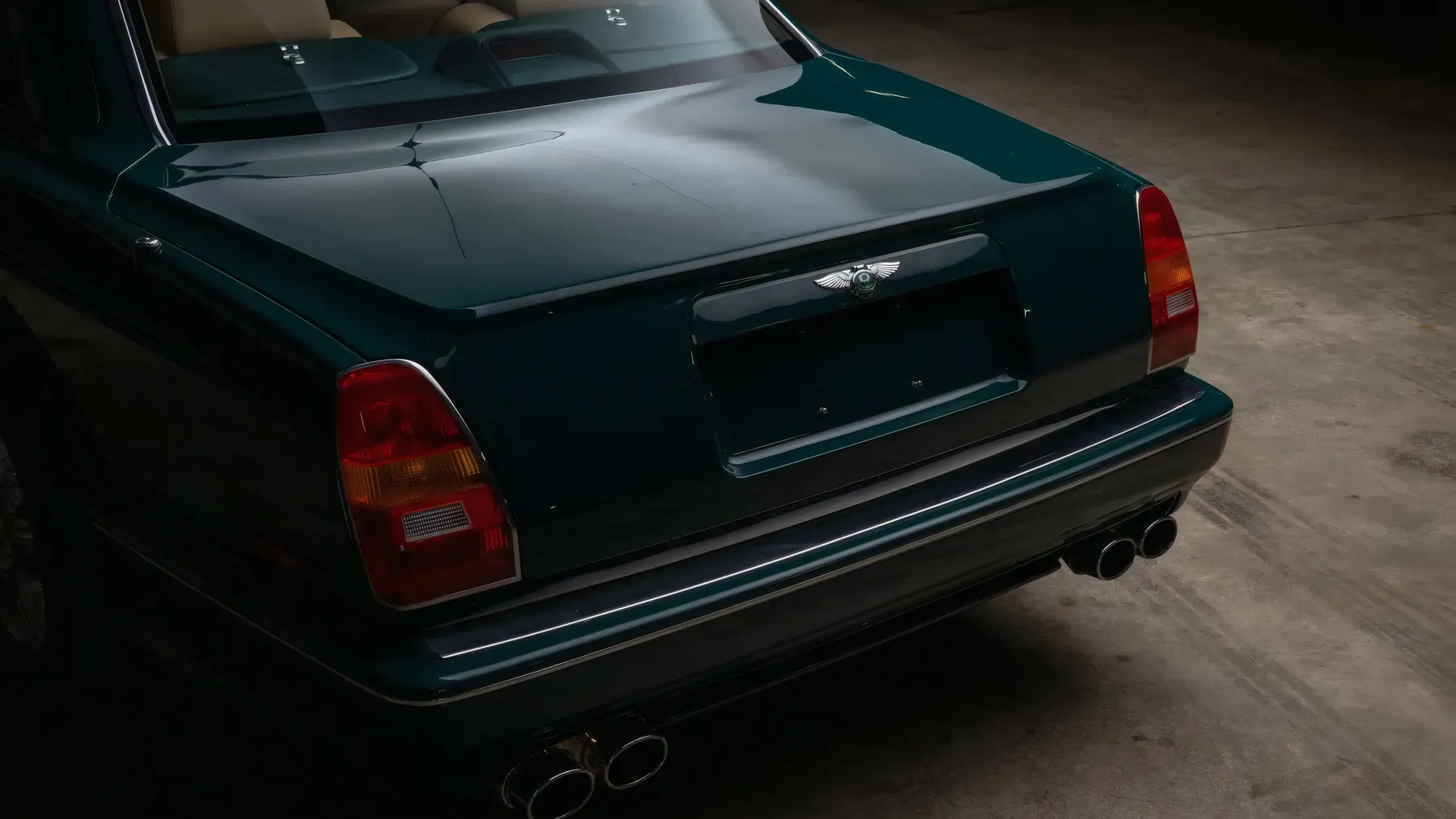
Historically, the Continental R Le Mans sits at a precise junction in Bentley’s corporate narrative. The Continental R programme - launched at the 1991 Geneva Motor Show to genuinely upstage the debut of the Mercedes-Benz W140 S-Class - is widely credited with rescuing the Bentley brand from irrelevance. Bentley’s share of total Crewe production had become embarrassingly small before the Continental R restored the marque’s identity. By the time the Le Mans Series appeared in 2001, Volkswagen had acquired Bentley, the Speed 8 racing programme was underway, and the new Continental GT was in development. The Le Mans Series was, knowingly or otherwise, a farewell gesture from the old Crewe - an SZ-platform car dressed for a motorsport homecoming it would celebrate but not survive to see regularised. The Speed 8s finished first and second in 2003. Production of the Continental R ended the same year.
Critical reception at the time reflected the car’s contradictions honestly. The standard Continental R had always attracted admiration for dynamics that transcended its weight, and press testers consistently noted that the handling at high speed was disproportionately capable for something of this size. The Le Mans Series inherited that reputation and added collector scarcity. Values today for well-preserved examples reflect that: the Continental R Mulliner platform on which the Le Mans was built has been cited at anywhere from £80,000 to £120,000 for the best survivors, with Le Mans-specific examples commanding premiums above that floor.
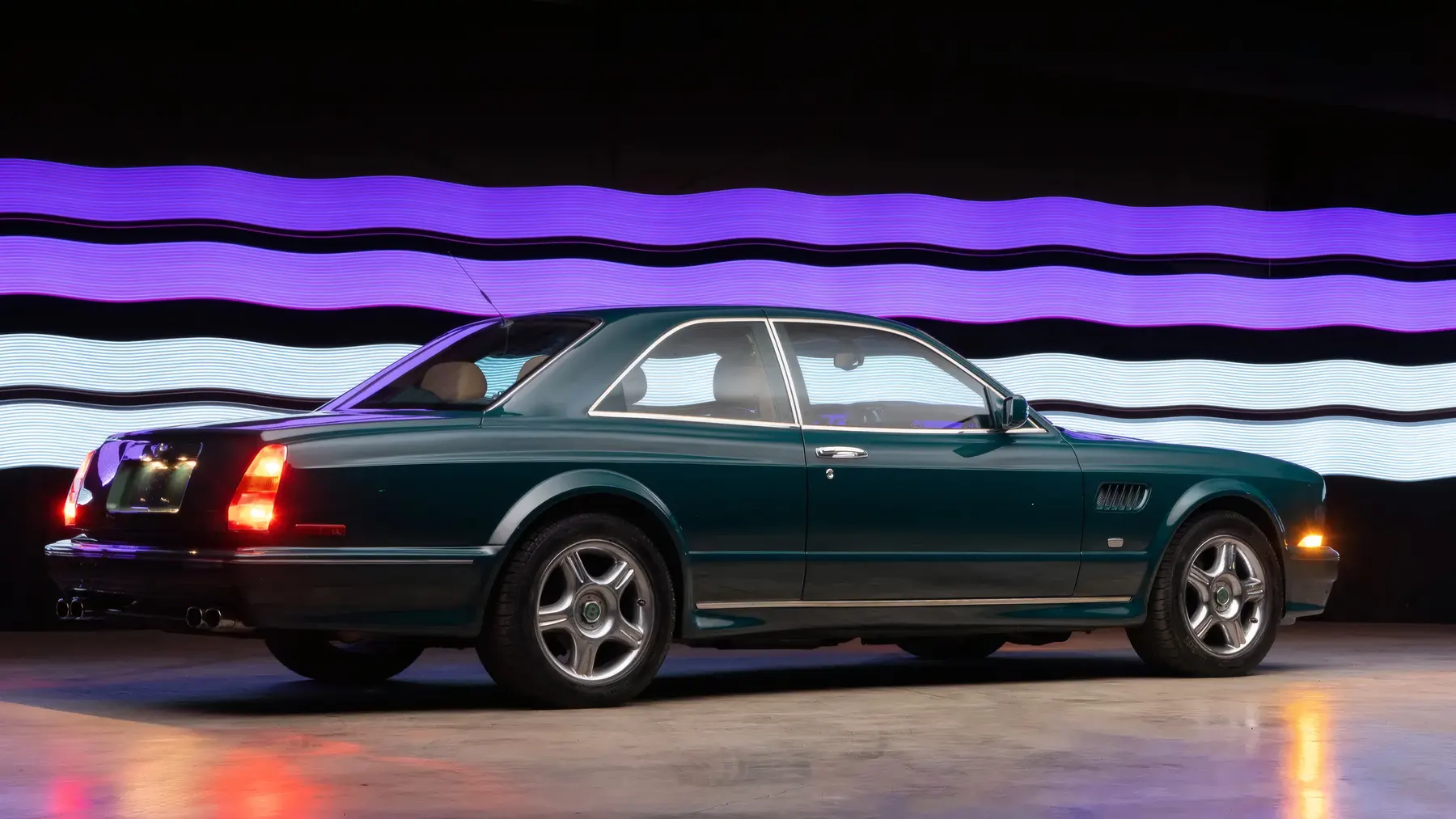
What makes the Continental R Le Mans genuinely interesting - beyond the rarity arithmetic - is the particular moment it occupies. Bentley had not raced at Le Mans since the era of the original Blower, and the road car commissioned to celebrate the return carried that weight of history without resorting to pastiche. The engineering was serious, the production run was genuinely small, and the details - green dial faces, drilled pedals, quad exhausts - were chosen by people who understood what the race meant to the marque. It was the last real expression of a platform that had already shaped Bentley’s revival once, assembled at a moment when the company was about to reinvent itself again. That combination of elegance, muscle, and timing is not easy to manufacture twice.