BMW M3 GTS (E92): The Racing Special BMW Didn't Need to Build
2010 BMW M3 GTS




Images: Keno Zache / RM Sotheby's
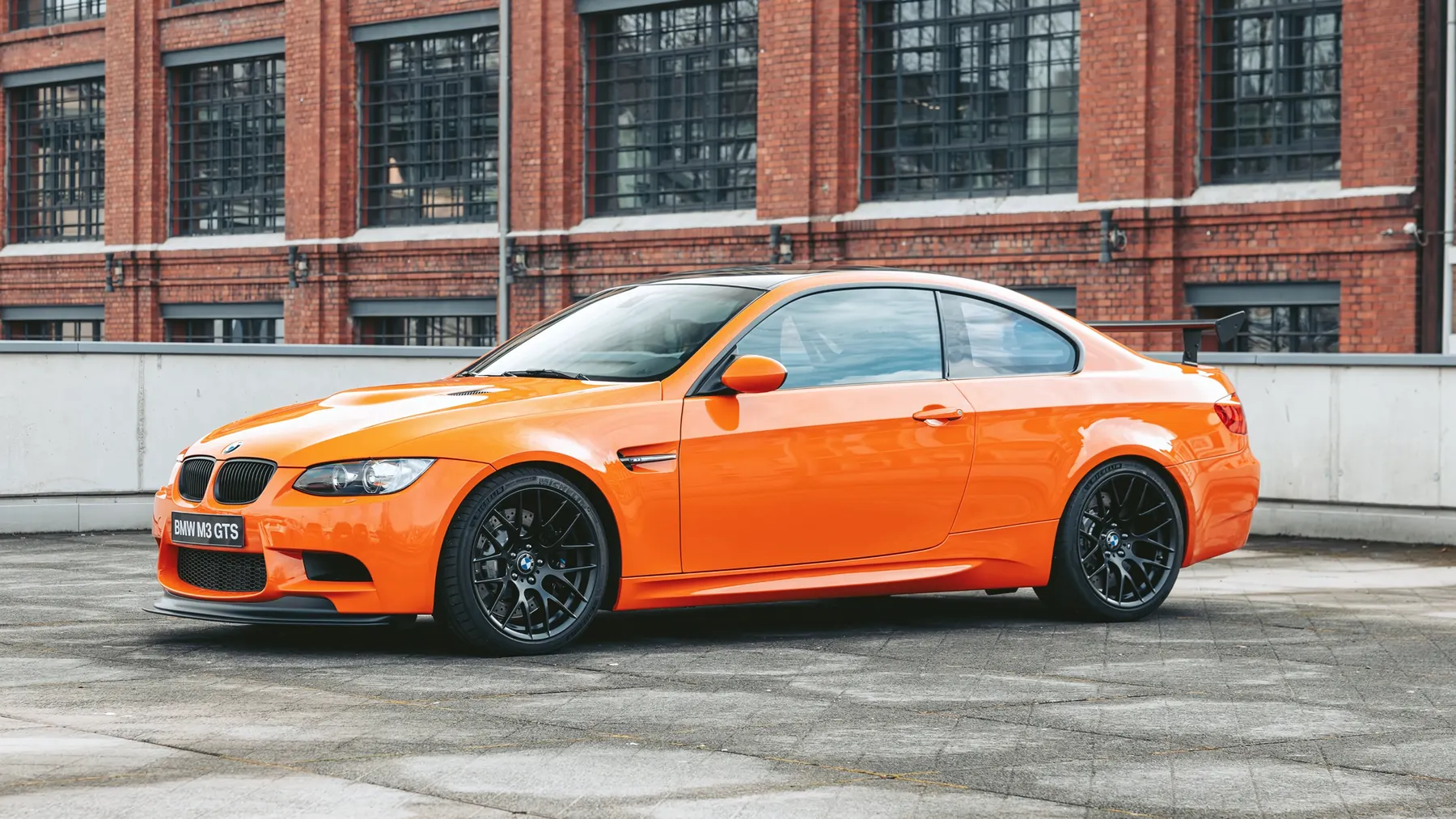
BMW didn’t need to build the M3 GTS. Unlike the various Evolution versions of the E30 M3, homologated in small batches to keep pace with Group A touring car rivals, the 2010 GTS answered to no rulebook and satisfied no governing body’s minimum production quota. It existed because BMW M wanted to mark a moment: the E92-generation M3 was winning races on both sides of the Atlantic, and the division decided to build a small, feral, occasionally uncomfortable celebration of that fact, then sell it to whoever was quick enough and wealthy enough to secure one. That distinction matters, because it explains almost everything about the car that followed: an M3 stripped, sharpened and specialised not to meet a technical requirement, but simply because BMW M could.
The announcement came in November 2009, roughly six months before a Schnitzer-run BMW M3 GT2 took outright victory at the Nürburgring 24 Hours, BMW’s nineteenth win in that race, and around the same period that the factory-backed M3 GT2 was winning the American Le Mans Series GT teams’ title with Rahal Letterman Racing. The GTS arrived as a road-going footnote to that competition programme rather than a tool for it, built at BMW M’s own production facility in low volume, with right-hand-drive UK cars following the initial left-hand-drive run from January 2011. BMW originally floated a ceiling of no more than 150 examples; in the end, only 138 were built, a shortfall that has only sharpened the car’s reputation for scarcity in the years since.
At the heart of the GTS sits a reworked version of the S65 V8 that powered every E90, E92 and E93 M3. The standard car’s 3,999cc unit, itself derived from the S85 V10 in the E60 M5, used a 92mm bore and 75.2mm stroke to produce 414bhp at 8,300rpm and 295lb ft at 3,900rpm. For the GTS, BMW M lengthened the stroke to 82mm while leaving the bore untouched, taking capacity out to 4,361cc and lifting peak outputs to 444bhp at 8,300rpm and 325lb ft at 3,750rpm. It is not a dramatic increase in absolute terms, but the character of the delivery is what makes it special: individual throttle butterflies, double VANOS and a lightweight titanium exhaust combine to give an engine that answers the throttle instantly and builds with real urgency as the needle swings past 6,000rpm, culminating in a hard-edged bellow at the 8,300rpm peak that few naturally aspirated road-car engines have matched since. This long-stroke V8, badged internally as the S65B44, didn’t disappear with the GTS either; BMW M fitted the same unit, again with a natural-aspiration and titanium exhaust, to the 2011 M3 CRT saloon, a carbon-fibre-intensive stablemate built in roughly 67 examples that pushed the GTS’s engineering ethos even further.
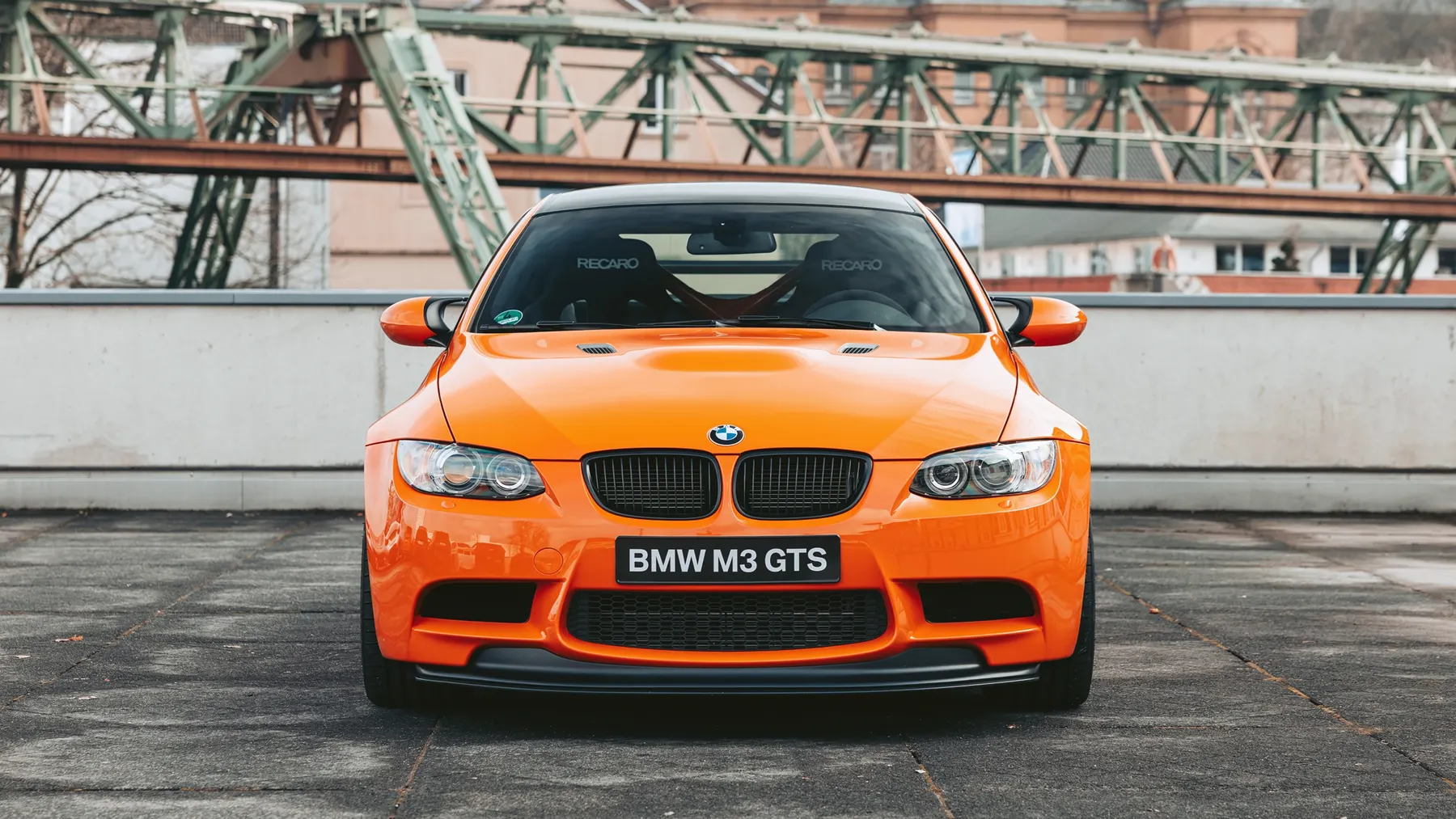
Drive goes through a seven-speed M Dual Clutch Transmission exclusively; there was no manual gearbox option, a point of contention among M3 traditionalists at the time given that buyers of the standard E92 M3 could still specify a conventional six-speed. In period, road testers found plenty to like about the DCT regardless: the shift calibration is sharper than the standard car’s, adjustable via a button on the transmission tunnel, and the close-ratio seven-speed spread suits the engine’s eagerness to rev. Combined with the extra power and roughly 70kg of weight saved over a DCT-equipped standard M3 coupe, the GTS’s 0-62mph time dropped from the standard car’s 4.9 seconds to a claimed 4.4 seconds, with top speed rising from around 155mph to an electronically assisted 190mph.
Weight saving, rather than raw output, was always the GTS’s guiding principle, in the manner of Porsche’s contemporary RS models. BMW’s own catalogued unladen figure, measured to the DIN standard, came in under 1,500kg; independent road tests have more commonly quoted a kerb weight around 1,530kg once fluids and a driver are accounted for, still roughly 70kg lighter than an equivalent DCT-equipped M3 coupe. The savings came from deleting the rear seats entirely in favour of a bolted-in half roll cage (finished, like much of the car, in Fire Orange), fitting a lighter centre console and door cards, switching to polycarbonate rear and side windows unless the optional audio system was specified, in which case they reverted to glass, and pulling out the standard car’s air conditioning and stereo as standard-fit deletions that buyers could pay to reinstate. Six-point Schroth harnesses were supplied with every car, though not always fitted from the factory, while a fire extinguisher and mounting points for an optional full roll-cage extension came as standard. Every GTS left the factory in the same Fire Orange paint, a colour lifted from BMW’s Individual palette specifically for this car and offered with no factory alternative, loud enough to guarantee the car was never mistaken for a standard M3 from more than a few metres away.
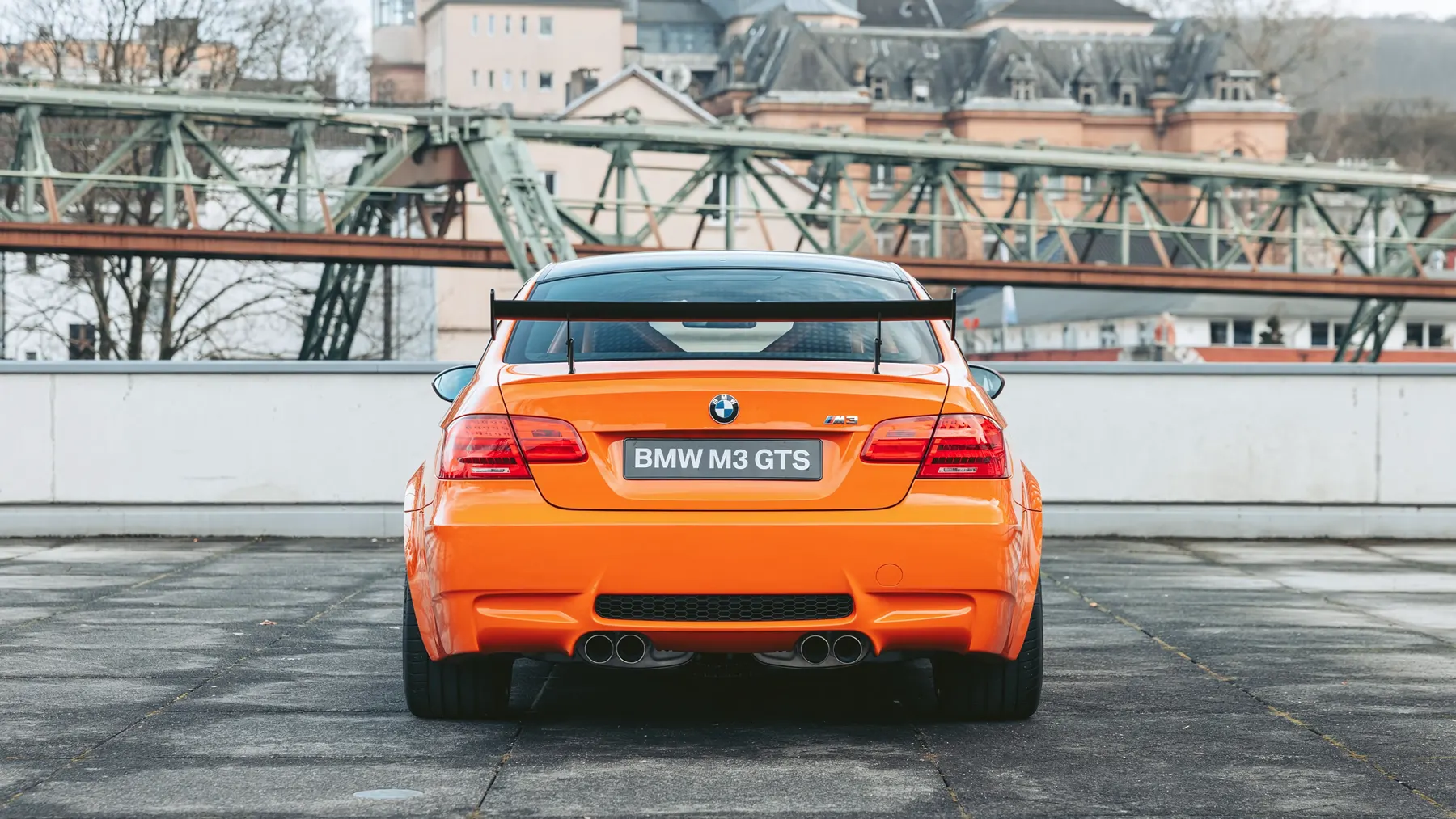
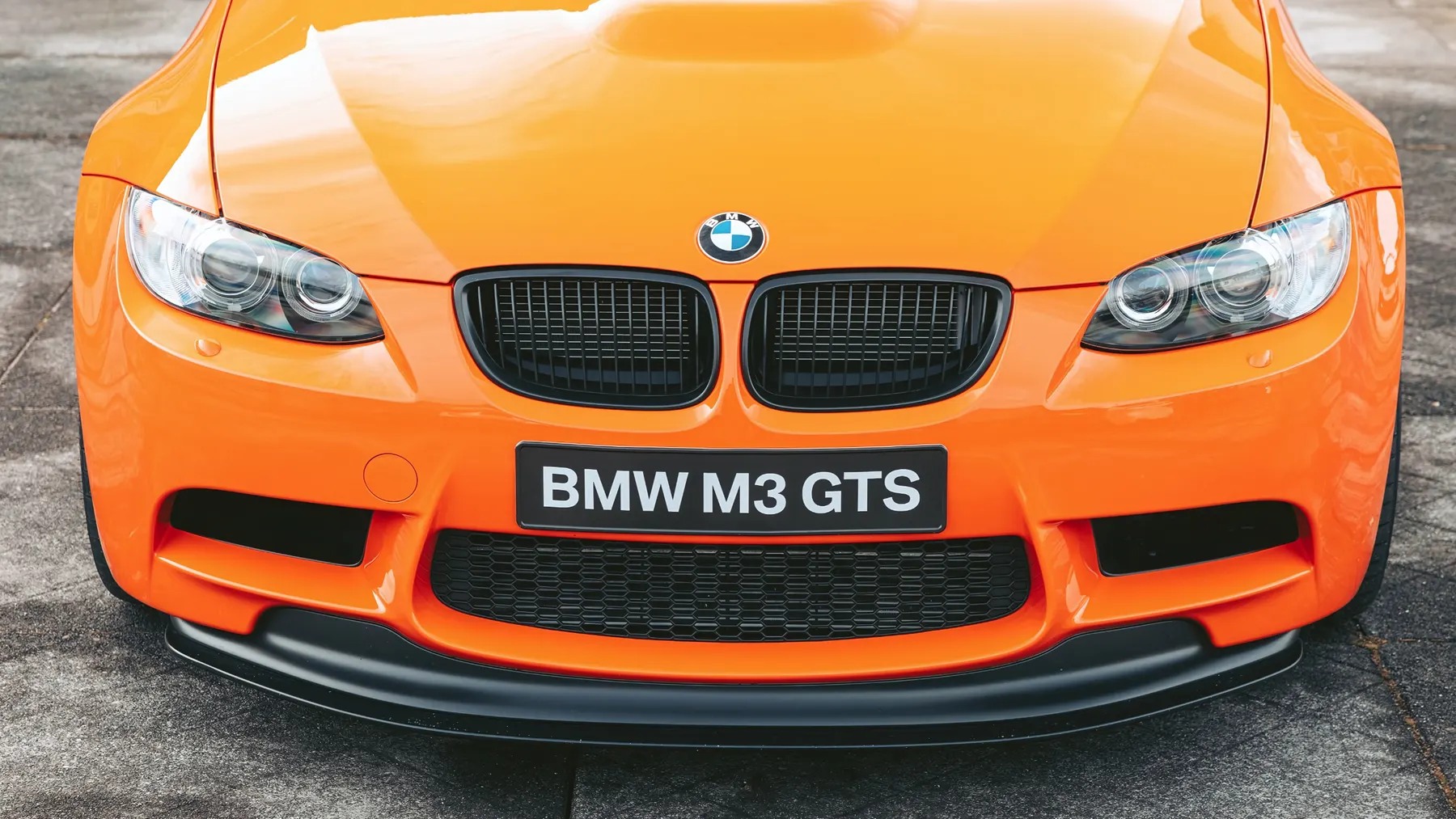
Underneath, BMW fitted two-way adjustable KW Clubsport coilovers with adjustable camber and ride height, set 16mm lower at the front and 12mm at the rear than a standard M3 straight from the factory, along with a toolkit stowed in the boot so owners could make trackside adjustments to suspension and aerodynamics without specialist equipment. The brakes grew accordingly: cast-iron discs of 378mm at the front and 380mm at the rear, 18mm and 30mm larger respectively than the standard car’s, gripped by six-piston Brembo calipers up front and four-piston items at the rear. Aerodynamically, the changes were deliberately restrained rather than showy: an adjustable front splitter and a multi-element rear wing borrowed conceptually from BMW’s 320si World Touring Car Championship racer allowed drivers to dial in downforce for a given circuit, while dark eloxy-plated chrome replaced the standard car’s brightwork around the kidney grille and side gills. Inside, manually adjustable Recaro Profi SPG bucket seats trimmed in fireproof black fabric, carbon-fibre trim and an Alcantara-wrapped M steering wheel completed a cabin that, because the GTS rode on the pre-facelift E92 bodyshell, retained the single-hump dashboard layout with no iDrive screen at all, a stark, analogue environment even by 2010 standards.
The GTS’s most obvious rival was always the Porsche 911 GT3 RS, but period road tests regularly pitched it against a wider field of low-volume performance specials chasing similar money, including Nissan’s GT-R Spec V and Jaguar’s XKR 75. Against that company the GTS stood out for its purity of approach: less reliant on digital assistance than the all-wheel-drive GT-R, less overtly luxurious than the supercharged Jaguar, and closer in spirit to Porsche’s own RS models than to anything else a German manufacturer was building at the time. It also marked the first use of the “GTS” name on an M3; BMW M would revive the badge six years later for the water-injected F82 M4 GTS, a car that explicitly borrowed the original’s playbook of stripped-out weight saving over headline specification, giving the 2010 car a naming legacy that outlasted its own production run.
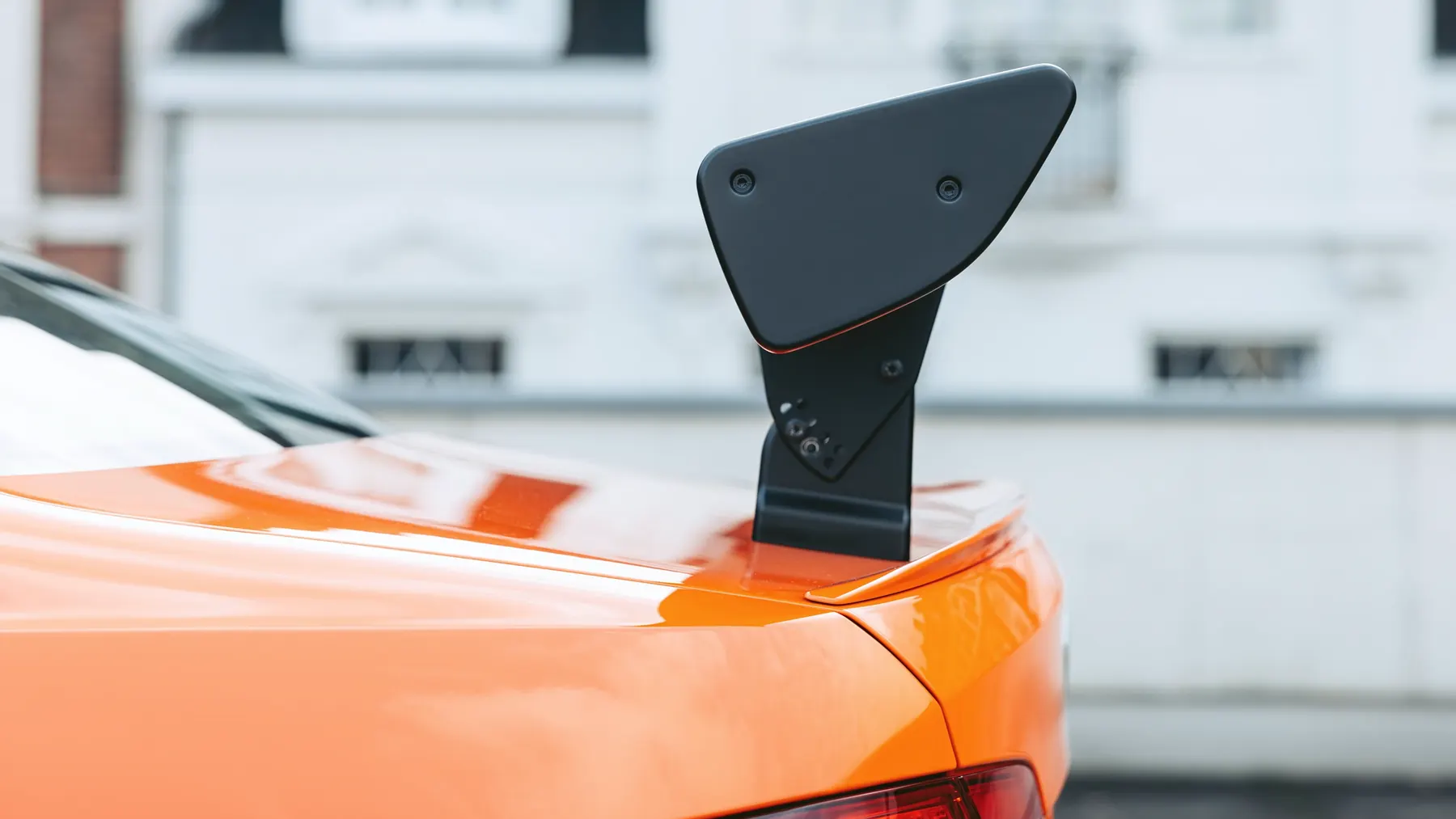
None of this reads as radical on paper next to a Porsche 911 GT3 RS of the same era, and that was very much the point of contention when the GTS launched. Journalists testing the car in 2010 questioned whether roughly £118,000, more than double the price of a standard M3 Coupe, was justified given how closely the GTS resembled its cheaper sibling from any distance greater than a few metres; the styling changes were genuinely modest, limited mostly to the splitter, wing and colour, and some felt the car looked closer to a touring-car privateer entry than a purpose-built flagship. The DCT-only transmission compounded that unease for buyers who associated the M3 nameplate with a proper manual gearbox and felt the GTS’s automated alternative, however well calibrated, represented a step away from that tradition rather than towards greater focus. Real-world usability took a hit too: the fixed-back Recaro seats, reduced sound insulation, firm KW damping and the absence of a standard stereo made for a genuinely more tiring car over a long journey than the regular M3, a trade-off buyers accepted knowingly rather than one hidden from them, but a trade-off nonetheless. BMW’s decision to build only 138 cars, fewer than the 150 originally suggested, combined with pricing pitched well above the standard M3, meant a large proportion of GTS coupes were bought as investments and have rarely, if ever, been driven in anger since, an outcome somewhat at odds with a car engineered specifically to be thrashed. The GTS was also never sold new in the United States, shutting out a significant pool of enthusiasts who could buy comparable Porsche GT3 variants freely and further concentrating the car’s limited production within Europe. And under the skin, the long-stroke S65B44 shares its family’s well-documented weakness for premature rod bearing wear, a consequence of tight factory bearing clearances that BMW later addressed with revised oil-change guidance; any GTS or CRT bought today, particularly one that has seen track use, warrants careful inspection or preventative bearing work regardless of how well it has otherwise been maintained.
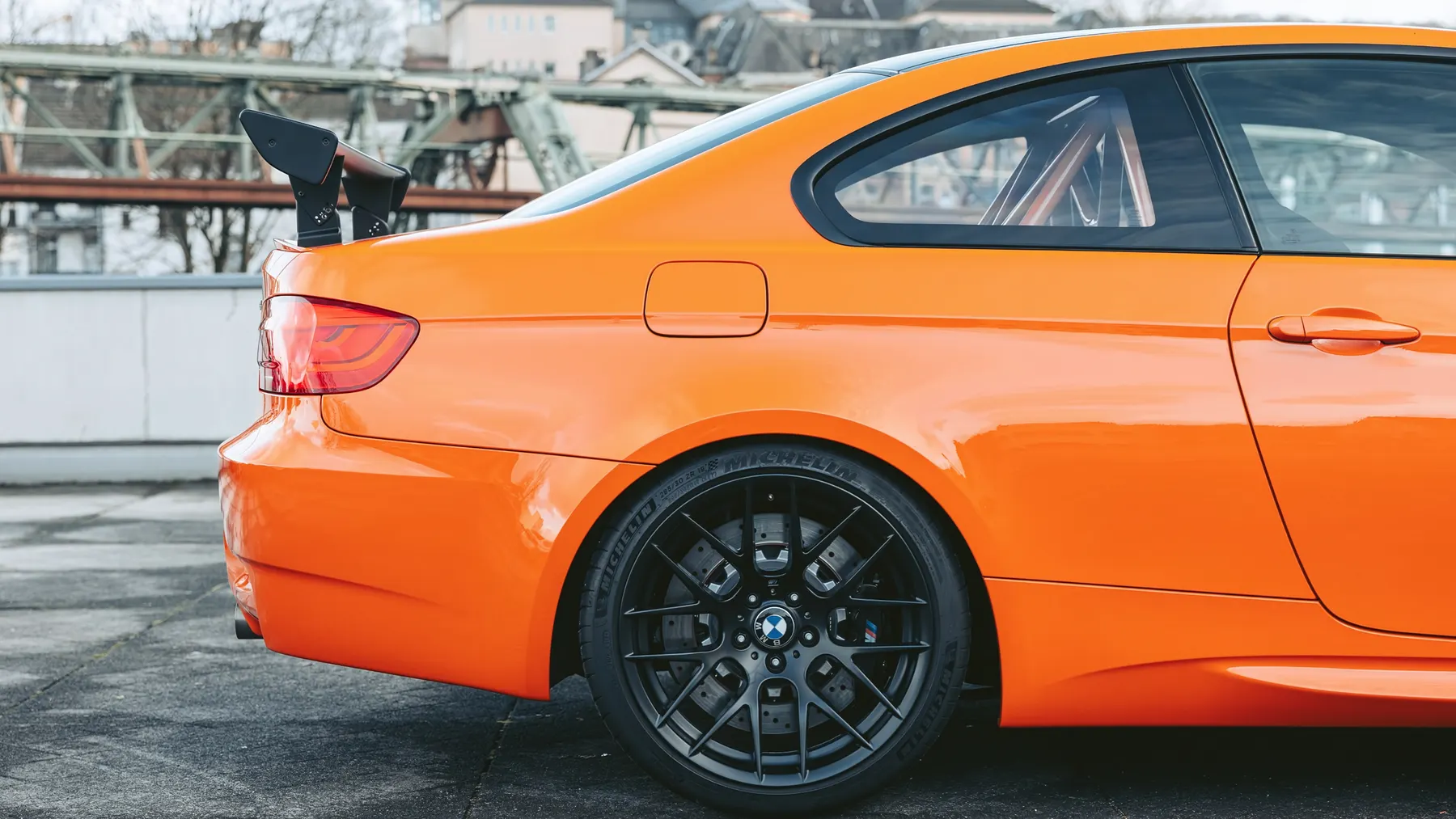
None of that undermines what the GTS achieves from behind the wheel, which is precisely why it has aged into such a respected M car rather than a curious footnote. The steering, still hydraulically assisted on this pre-facelift E92, has become something of a reference point in retrospect, praised for a purity of weighting, response and feedback that later electrically assisted M3s never quite recaptured. The chassis balance is neutral to a fault, with confident front-end bite and traction that lets a driver lean on the car hard without feeling intimidated, while the naturally aspirated V8’s insistence on being revved out rewards a driving style that turbocharged M cars have since made unfashionable. Despite the firm KW set-up, testers who have revisited the car in recent years have found it copes with real roads rather than merely surviving a circuit, retaining enough compliance to work with a surface rather than simply battering over it. It is a car that rewards commitment without punishing hesitancy, a balance that plenty of harder-edged specials since have struggled to strike.
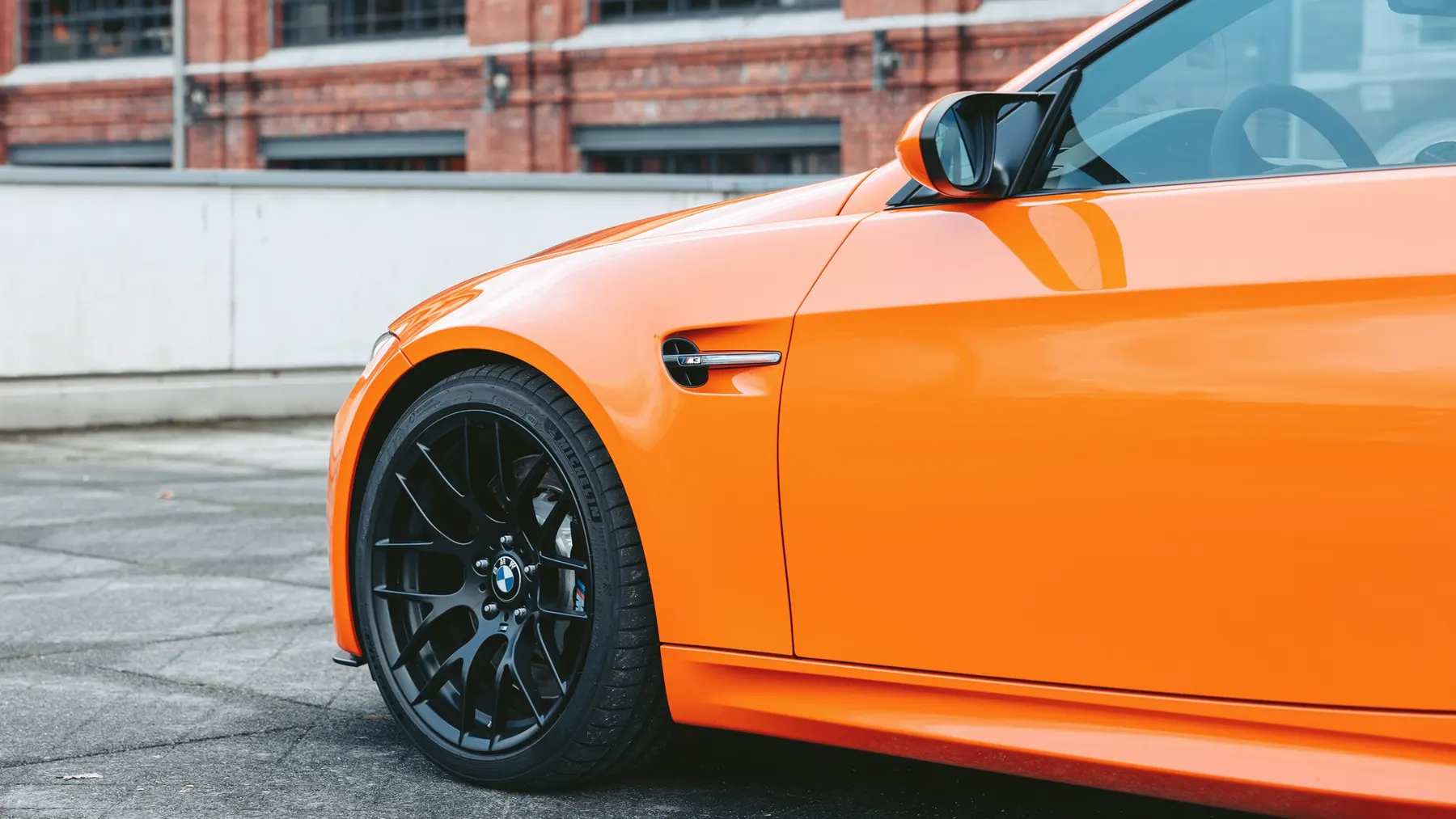
More than a decade on, the M3 GTS occupies an unusual place in BMW M’s back catalogue: a genuinely track-focused special that arrived without a homologation obligation attached, sandwiched between the Gen2 Porsche 911 GT3 RS that preceded it and the celebrated RS 4.0 that followed roughly a year later, timing that did the GTS few favours commercially but has only burnished its status with hindsight. Values have risen well beyond the original list price as the surviving cars, most locked into private collections, have become harder to find for sale than their limited production numbers alone would suggest. Its engineering legacy lived on briefly in the M3 CRT saloon before the S65 V8 was retired altogether in favour of forced induction with the F80-generation M3, closing the book on naturally aspirated, high-revving V8 power in the M3 lineage. Whatever the arguments over its launch pricing or its conservative styling, the GTS is still the version of the E92 M3 that BMW M built purely because it wanted to - and from behind the wheel, that intent has never been hard to feel.
Technical data
Performance Specifications
| Specification | BMW M3 GTS (E92) |
|---|---|
| Engine | 4.4-litre naturally aspirated V8 (S65B44) |
| Power | 444bhp @ 8,300rpm |
| Torque | 325lb ft @ 3,750rpm |
| Transmission | 7-speed M Dual Clutch Transmission (DCT only) |
| Kerb weight | approx. 1,530kg (BMW DIN unladen figure: under 1,500kg) |
| 0-62mph | 4.4 seconds |
| Top speed | 190mph |
| Brakes (front/rear) | 378mm / 380mm cast-iron discs, 6-piston/4-piston Brembo calipers |
| Production | 138 built (of an originally announced ceiling of 150) |
| UK price new (2010) | £117,630 |
Sources
- BMW M3 GTS (E92, 2010-2011): review, history and specs of an icon - evo
- The new BMW M3 GTS - BMW Group PressClub
- All clear given for market launch of the BMW M3 GTS - BMW Group PressClub
- BMW E92 M3 GTS Guide - Supercar Nostalgia
- BMW M3 GTS: free radical - BMW M
- 2010 BMW M3 GTS - TopSpeed
- BMW M3 GTS v Porsche 911 GT3 RS v Nissan GT-R Spec V v Jaguar XKR 75 - evo
- BMW M3 Engines Guide: Every Generation From S14 to S58 - Fast Car
- BMW S65 - Wikipedia
- Why the BMW M3 CRT is Every Collector’s Dream - BMWBLOG
- Which BMW M3 Years Had The S65 Engine & How Much Horsepower Does It Produce? - SlashGear
- BMW S65 Engine Explained: Reliability, Tuning, and Efficiency - BMWBLOG
- The 5 Most Common BMW S65 Engine Problems - BMW Tuning
Join the discussion
Comments
Loading comments…
Leave a comment
Share a detail, memory, or perspective. Every comment is reviewed before publication.