2014 Ferrari 458 Speciale
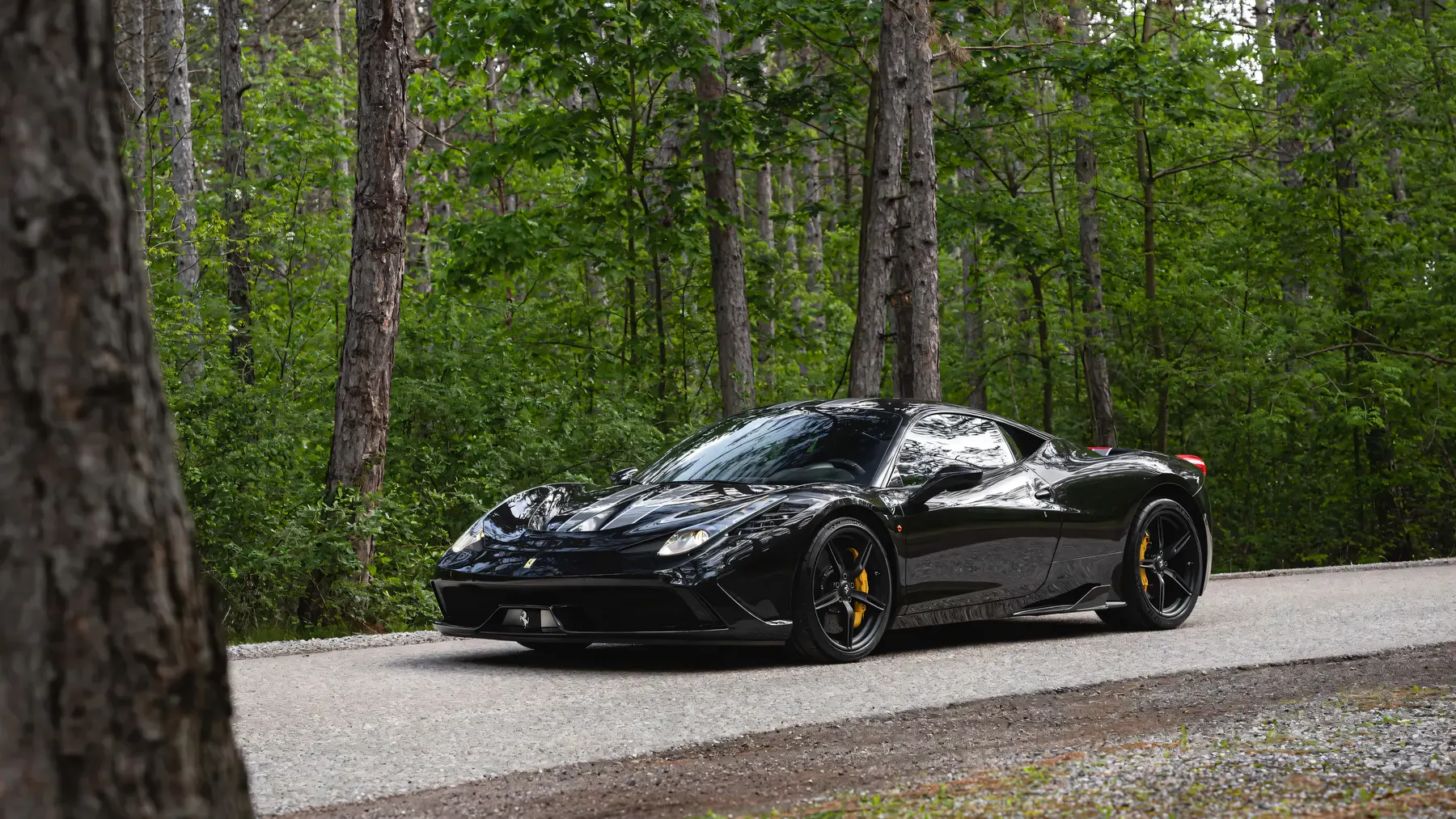
Ferrari’s engineers already knew the answer when they started work on the 458 Speciale. The turbocharged 488 GTB was being sketched in the studios across the road; the era of free-breathing V8s in Maranello’s mid-engine road cars was drawing to a close. And yet rather than let the 4.5-litre naturally aspirated unit bow out with quiet dignity, the decision was made to push it to its absolute limit - to extract every last revving, screaming, intoxicating possibility from a formula that had defined Ferrari for a generation. The Speciale was not just a hardcore variant of the 458 Italia. It was a statement: this is what we can do when the only brief is perfection.
Unveiled at Frankfurt in September 2013 and built through 2015, the Speciale occupied a position Ferrari had visited before - with the 360 Challenge Stradale and 430 Scuderia - as the high-wire, driver-focused special edition distilled from an already-excellent production car. Approximately 3,000 examples were produced in coupé form, making it neither a traditional rarity nor a mainstream catalogue item. An additional 499 Speciale Aperta convertibles were offered, each one carrying the same mechanical package with the roof removed. The Aperta commanded its own premium and delivered its own drama, but structurally - and dynamically - the closed coupé always made the stronger argument. Ferrari completed the 458 family cycle in two distinct registers: the attainable and the obsessive.
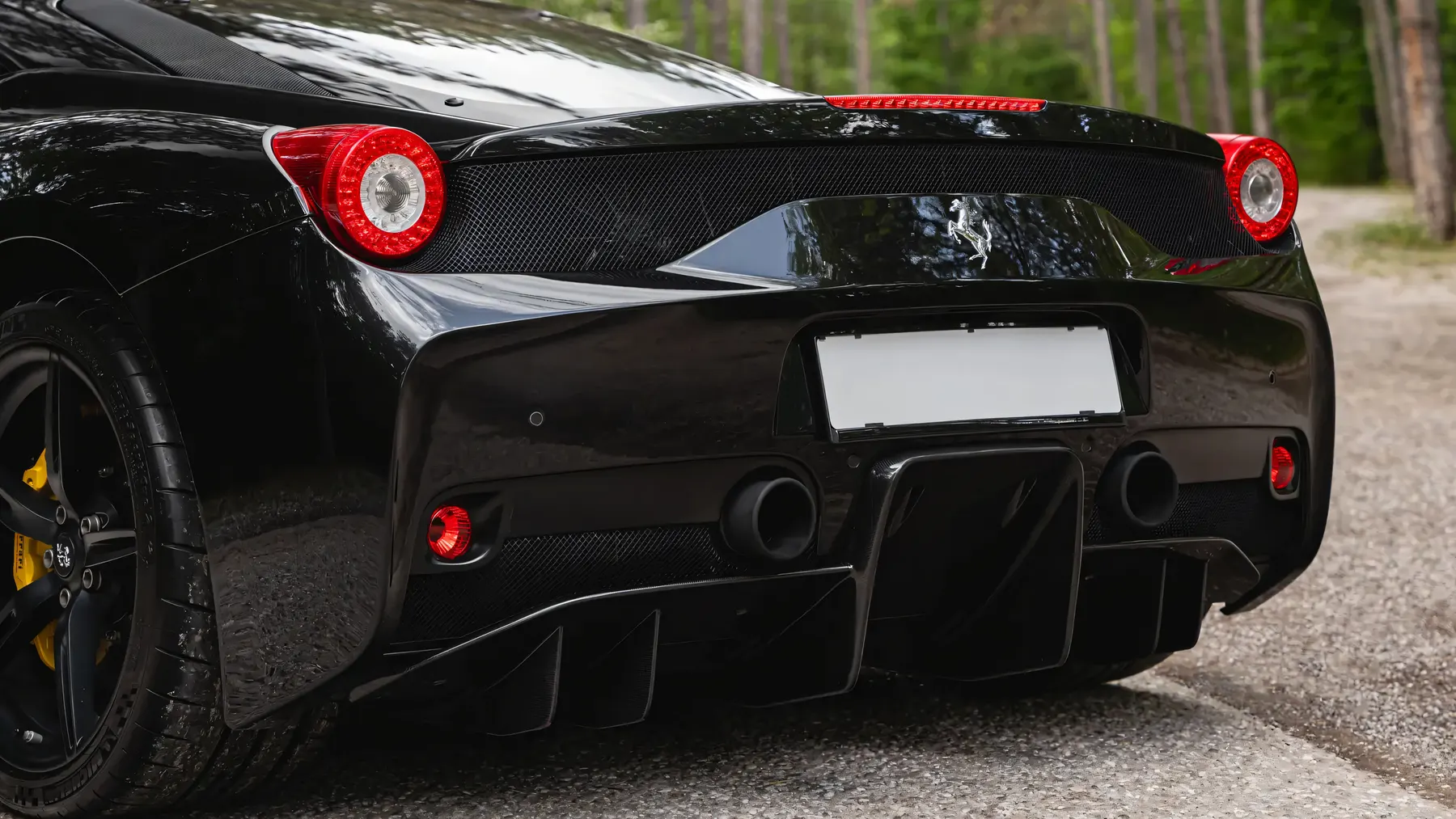
What the Speciale brought to that obsessive register was formidable. The 4,497cc flat-plane-crank V8 was reworked with revised intake geometry, new exhaust routing, and titanium connecting rods to produce 597 bhp. That figure worked out to approximately 133 bhp per litre - the highest specific output of any naturally aspirated road car engine at the time. Torque, at 398 lb-ft, was identical to the Italia’s; the gains were made not in grunt but in the engine’s ability to sustain and deliver power with frightening efficiency across a rev range that stretched all the way to 9,000 rpm. The 7-speed dual-clutch gearbox was recalibrated for 44% faster downshifts and 20% quicker upshifts than the already-rapid Italia’s unit, while the carbon-ceramic brake package was drawn directly from the LaFerrari programme. Ferrari also stripped 90 kg from the Italia’s kerb weight through extensive use of lightweight materials and surgical de-contenting, sharpening the dynamic case with every gram removed.
The headline technical achievement, however, was something less easily quantifiable: the introduction of Slide Slip Control, or SSC - making its world debut on the Speciale. Where conventional stability programmes intervene to suppress oversteer, SSC instead monitors the car’s actual slip angle in real time and compares it to an ideal value. When the driver is counter-steering into a controlled slide and applying progressive throttle, SSC allows it to happen, working in tandem with the electronic differential to manage rear wheel speed rather than simply killing the power. When the system senses the car is stable and well within its limits, it frees the e-diff for maximum agility; as the limit approaches, it tightens its oversight - but never removes the driver’s agency unless things are truly unravelling. In the words of Evo’s Jethro Bovingdon, it was “witchcraft” - almost supernatural in its ability to let drivers push hard while remaining, for the most part, invisible.
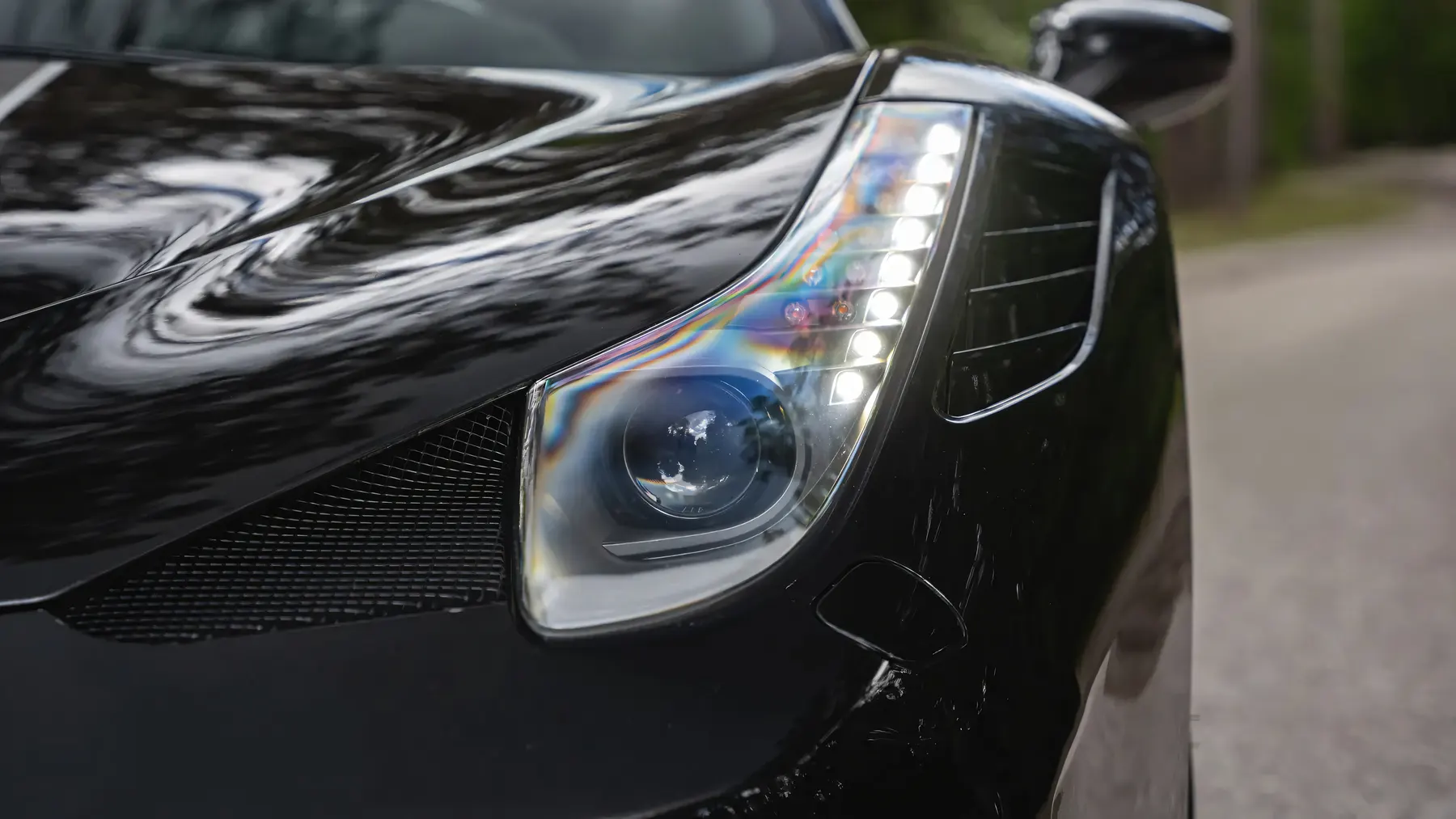
Visually, the Speciale was never subtle. The aerodynamic package - developed with genuine input from Ferrari’s GT racing programme - featured a revised front splitter, side air intake vanes, and a dynamic rear diffuser that adjusted with speed to maximise downforce. The standard Italia’s relatively composed flanks gave way to more pronounced sculpting around the enlarged air intakes, and the exhaust system was completely redesigned with the tailpipes moved outboard to free space within the diffuser. Bespoke 20-inch forged wheels were fitted as standard, shod with Michelin Pilot Sport Cup 2 tyres developed specifically for this application. It was an aggressive face, and it wore it honestly.
On track - which is ultimately where the Speciale’s claims needed to be tested - the numbers were extraordinary. At Ferrari’s Fiorano circuit, the Speciale lapped in 1 minute 23.5 seconds. For context, that eclipsed the Ferrari Enzo’s Fiorano benchmark by more than a second - a metric that reframed the Speciale’s position in Ferrari’s own hierarchy more clearly than any press release could. The hydraulically assisted steering, retained when most contemporaries had already migrated to electric systems, remained deeply communicative; the combination of reworked springs, stiffer damper calibration, and those Cup 2 tyres generated sustained lateral grip in excess of 1.0 g. With the manettino in Race mode and traction control switched off, a confident driver could carry slides through corners with a fluency that felt genuinely earned rather than electronically granted.
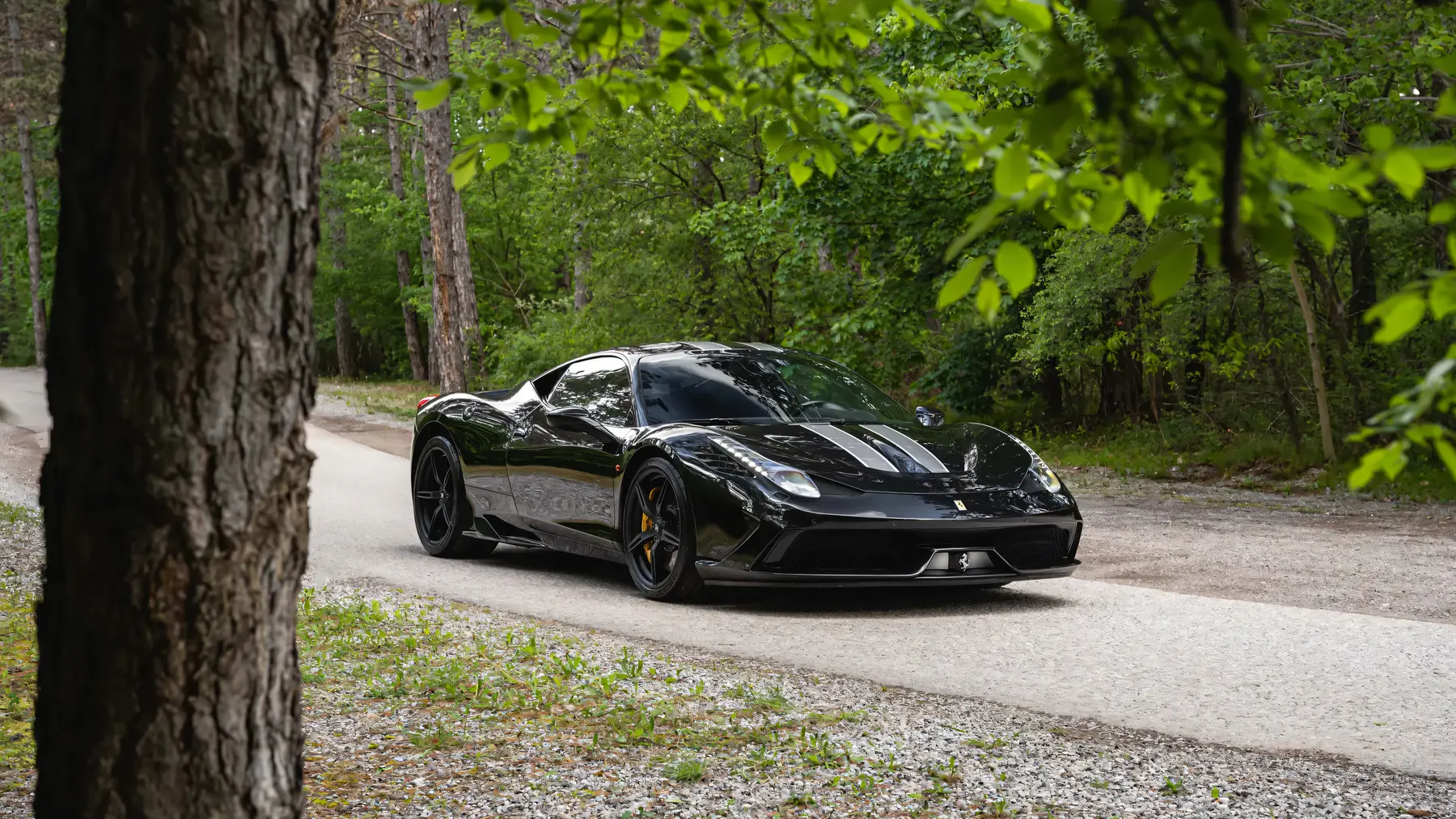
The engine, naturally, was the emotional centrepiece. Below 4,000 rpm the Speciale was tractable enough for ordinary use - firm, alert, slightly impatient, but manageable. Above 6,000 rpm it became something different entirely: a raw, building roar accelerating toward the 9,000 rpm limiter that had no equivalent in the turbocharged world that would follow. The car’s top speed of 202 mph was almost beside the point; the Speciale was never built around the straight line. It was built around the sensation of wringing out every rev in a mid-corner arc, balancing throttle and steering angle while SSC quietly held the mathematics together.
The limitations were real, and required honest assessment. The ride, firm even by Ferrari’s standards, made extended motorway runs a physical commitment. The reduced sound deadening - a direct consequence of the weight programme - meant tyre roar and road noise were pronounced at speed; the cabin felt purposefully stripped rather than luxuriously appointed. Those Michelin Cup 2 tyres, essential to the dynamic promise, demanded genuine respect in cold or wet conditions - their grip envelope was extraordinary but narrow, and reaching its edge without prior warning was a real possibility for the unprepared. The steering wheel-mounted secondary controls - indicators, lights, wipers all clustered on the rim - remained one of Ferrari’s more puzzling ergonomic choices of the era, genuinely awkward when manoeuvring or navigating roundabouts. These were the compromises of a car that had chosen to be brilliant in a specific way, and in doing so had accepted specific costs.
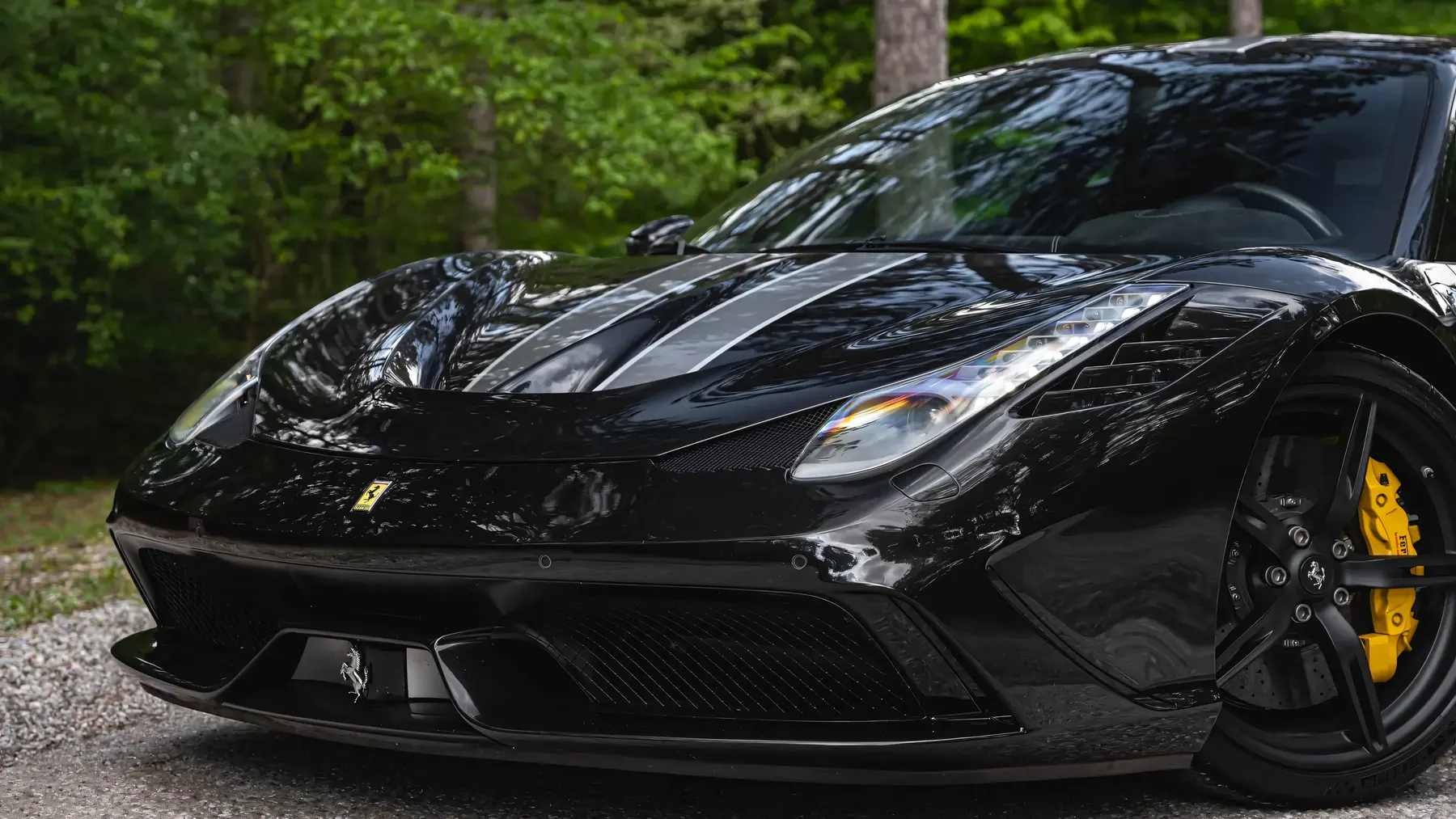
The cultural weight the Speciale carries is disproportionate even to its considerable talents. It was, as events confirmed, the last naturally aspirated mid-engined V8 in Ferrari’s mainstream road car lineage. The 488 GTB that replaced it was faster in most measurable ways and more liveable daily - and turbocharged. The change was inevitable, driven by emissions legislation and commercial realities that no amount of romantic attachment could alter. But SSC did not disappear with the naturally aspirated engine; it transferred directly into the 488 GTB, the F12tdf, and the 488 Pista, appearing in progressively more sophisticated iterations that incorporated rear damper control and eventually brake-based Ferrari Dynamic Enhancer. The Speciale’s chassis electronics were, in effect, a prototype for the way every subsequent performance Ferrari would be managed.
Critical reception was, for once, almost unanimous. Evo awarded the Speciale its Car of the Year. Road & Track, Autocar, and Top Gear all placed it at or near the summit of their contemporary supercar assessments. The only consistent dissent came from those who felt its everyday firmness and tyre sensitivity made it a track-day specialist wearing a number plate - a criticism with some legitimacy, but one that rather missed the point. Within the parameters it set for itself, the case against the Speciale was genuinely difficult to construct.
What remains striking, viewed from a decade’s distance, is how completely Ferrari realised what it set out to do. The engineers in Maranello were not hedging when they pushed the 4.5-litre unit to 597 bhp and paired it with what was then the most sophisticated stability control system in any production road car. They were building the definitive version of a thing they knew could not be repeated. That focus - urgent, uncompromising, aware of its own finality - is precisely what elevates the Speciale beyond being merely a very fast, very good Ferrari. It is a car built with the knowledge that the clock was running out, and that understanding shaped every decision made about it. You can feel that in every rev.