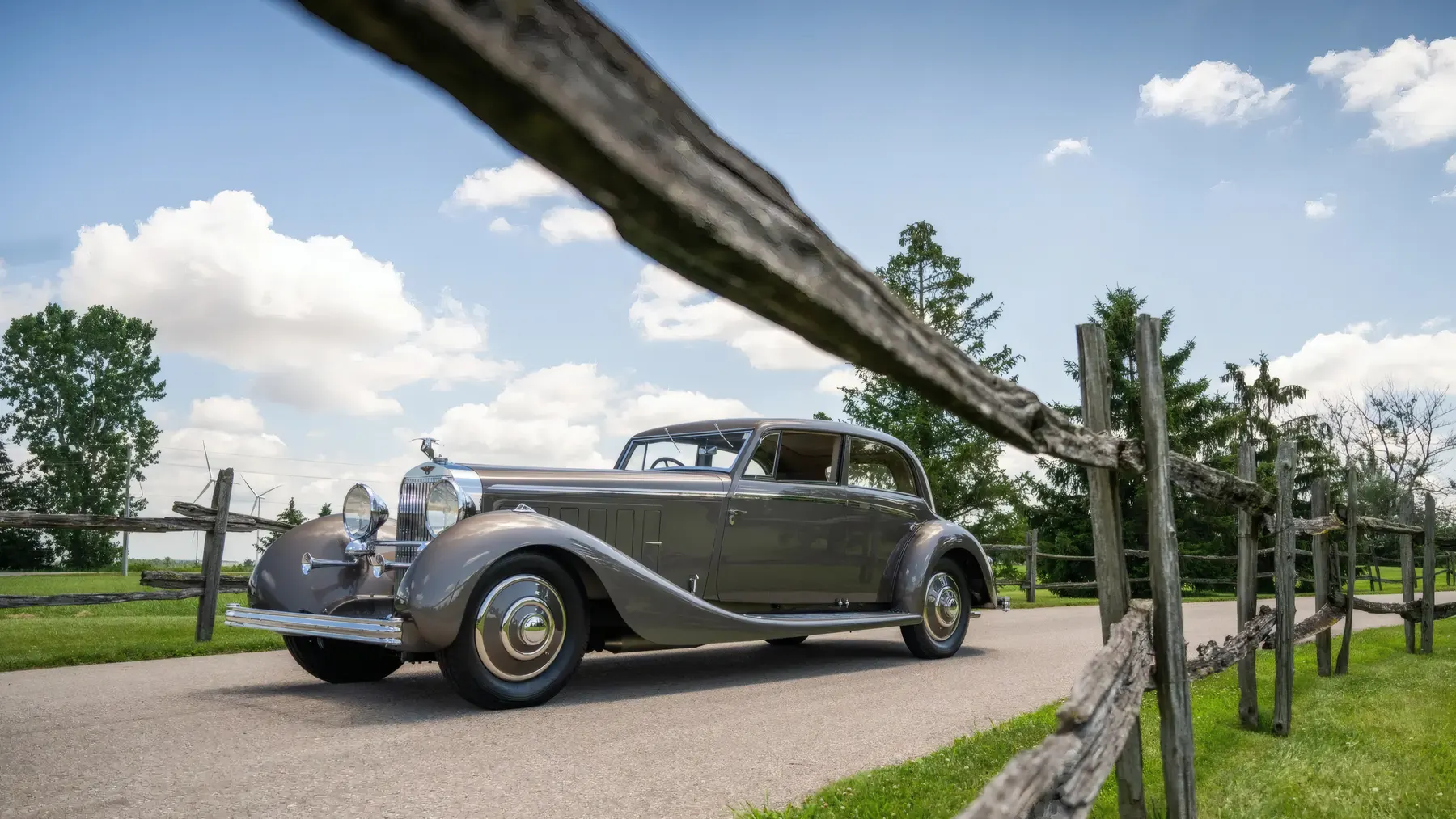
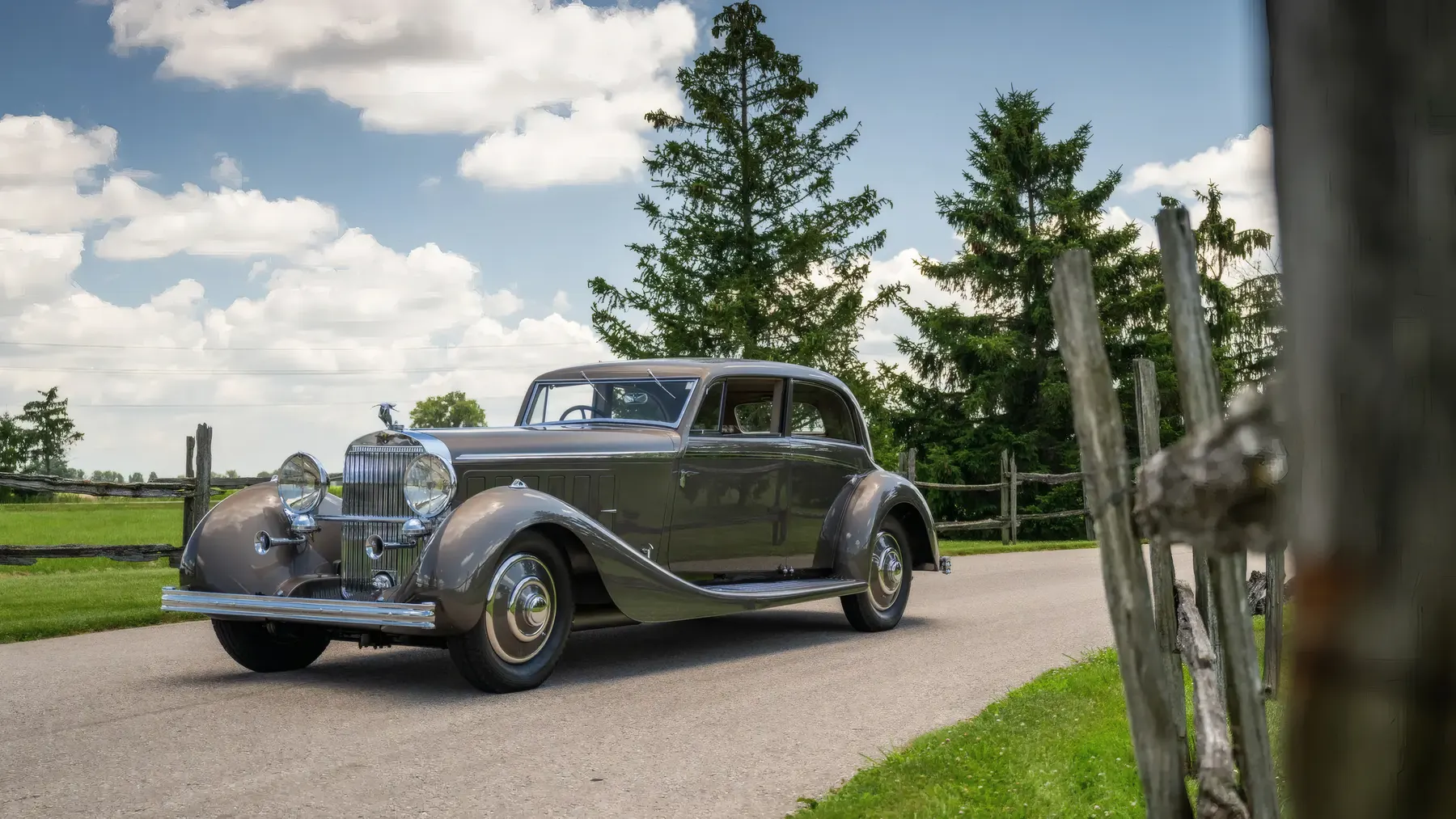
1936 Hispano-Suiza J12 Berline by Fernandez et Darrin
Images: Darin Schnabel / RM Sotheby's
Imagine asking a Paris coachbuilder to make a sedan from a machine whose mechanical soul came out of aero-engine thinking, then asking that sedan not to look ceremonial, stiff, or apologetic. That is the essential charm of the Hispano-Suiza J12 Berline by Fernandez et Darrin: it is a closed grand car with the poise of a private express train and the tailoring of high Parisian coachbuilding. Beneath it sat the J12, also known as the Type 68, Hispano-Suiza’s grandest automotive statement and the successor to the H6. The company itself had always been cosmopolitan - founded in Barcelona by Damià Mateu and Marc Birkigt, with French production at Bois-Colombes - and by the time the J12 arrived, Birkigt’s reputation had been sharpened by aviation work as much as by road cars. Hispano-Suiza’s official history notes that Birkigt was already building aviation engines in 1915, with later orders from Spain and Allied countries reaching nearly 50,000 units, and that background matters because the J12 feels less like a luxury car with a big engine than an aircraft-minded engineer’s answer to the question of supreme road travel.
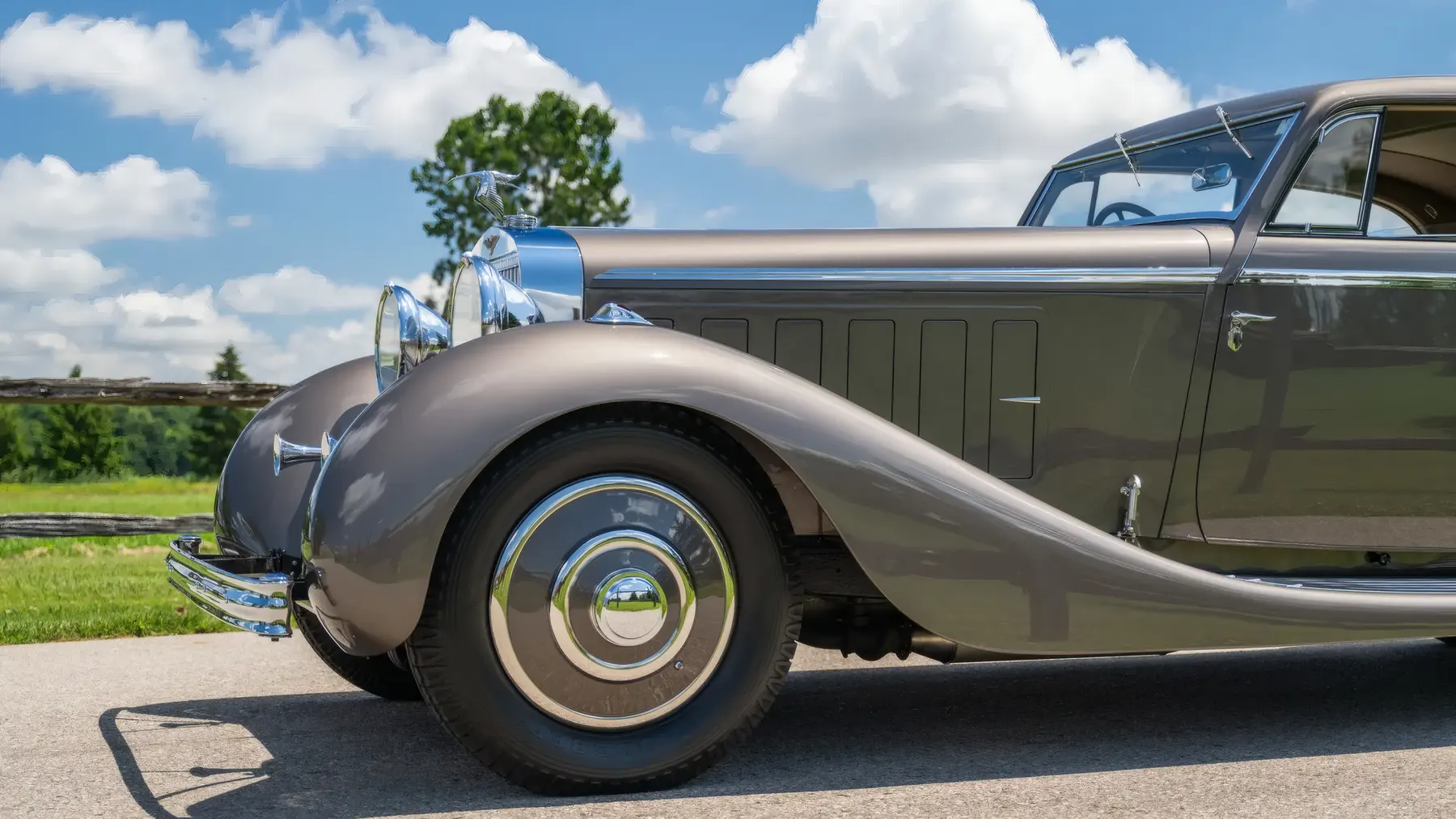
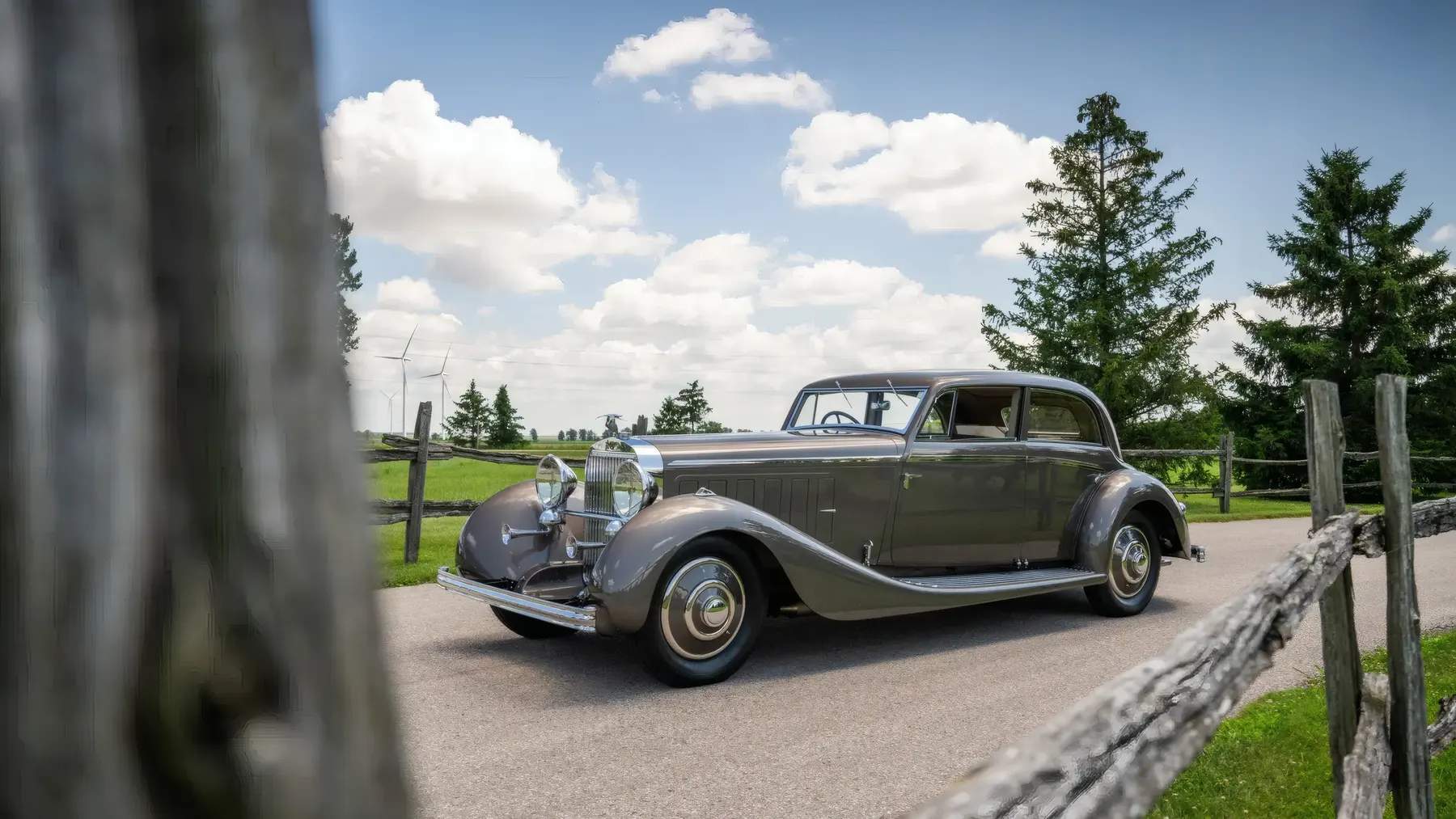
The Fernandez et Darrin Berline was not a factory trim level in the modern sense. The J12 was supplied as a chassis, and buyers then turned to the great coachbuilders for bodies; that was part of its market position and part of its mystique. Fernandez et Darrin, the Paris firm associated with Howard “Dutch” Darrin and his partner Fernandez, was known for custom bodies on chassis from marques including Hispano-Suiza, Delage and Isotta-Fraschini. On the J12, that meant the Berline could sit somewhere between formal transport and fast closed touring car, less upright than many limousines and far more sensuous than a purely official carriage. RM Sotheby’s description of the Fernandez et Darrin body emphasizes its deeply crowned fenders, low rounded roofline, raked glass, absence of side-mounted spares, and polished beltline sweep - details that make it feel uncannily like a four-door coupé decades before that phrase became showroom vocabulary.
Mechanically, the J12 was magnificent in the old literal sense: large, carefully made, and expensive to a degree that narrowed its audience from the merely wealthy to the almost institutionally wealthy. The standard engine was a 9.4-litre 60-degree V12 with 100 mm by 100 mm bore and stroke, pushrod-operated overhead valves, a seven-bearing crankshaft, twin Solex carburettors, and output generally quoted around 220 bhp. Period and later sources also list torque at about 390 lb-ft, which explains why Hispano-Suiza could pair the engine with only a three-speed manual gearbox without making the car feel starved for ratio. A rare long-stroke 11.3-litre Type 68bis version pushed output to about 250 bhp, though that belongs to the outer edge of the J12 story rather than the normal Berline experience. Wheelbases varied by chassis, roughly 3430, 3710, 3810 and 4010 mm, giving coachbuilders room to create everything from close-coupled bodies to truly imposing limousines.
What makes the J12 so compelling is that its engineering was not simply a matter of displacement. The V12 used a single camshaft between the cylinder banks with short pushrods and rocker gear, a layout chosen for quietness and refinement rather than mechanical theatre. The engine’s construction was exotic by road-car standards: one account describes the J12 engine beginning as a roughly 318 kg billet before machining, while the finished design used alloy cylinder blocks on a common crankcase. Rubber engine mounts helped keep vibration out of the cabin, and servo-assisted mechanical drum brakes gave the enormous car stopping confidence that many contemporaries lacked. Yet the chassis itself remained conservative, with solid front axle, live rear axle and semi-elliptic leaf springs. That contrast is pure pre-war grand luxury: deeply advanced execution wrapped around a familiar architecture.
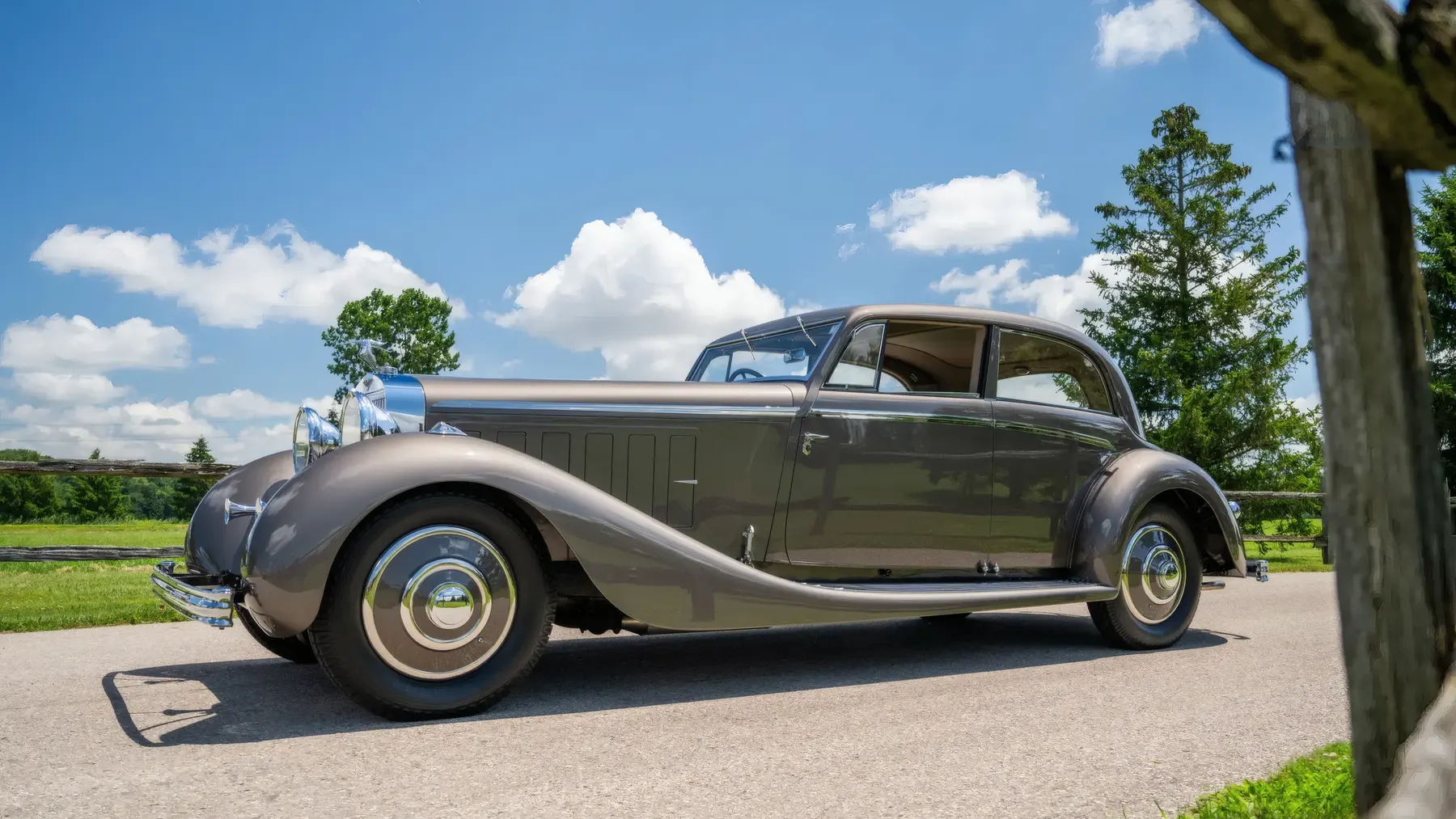
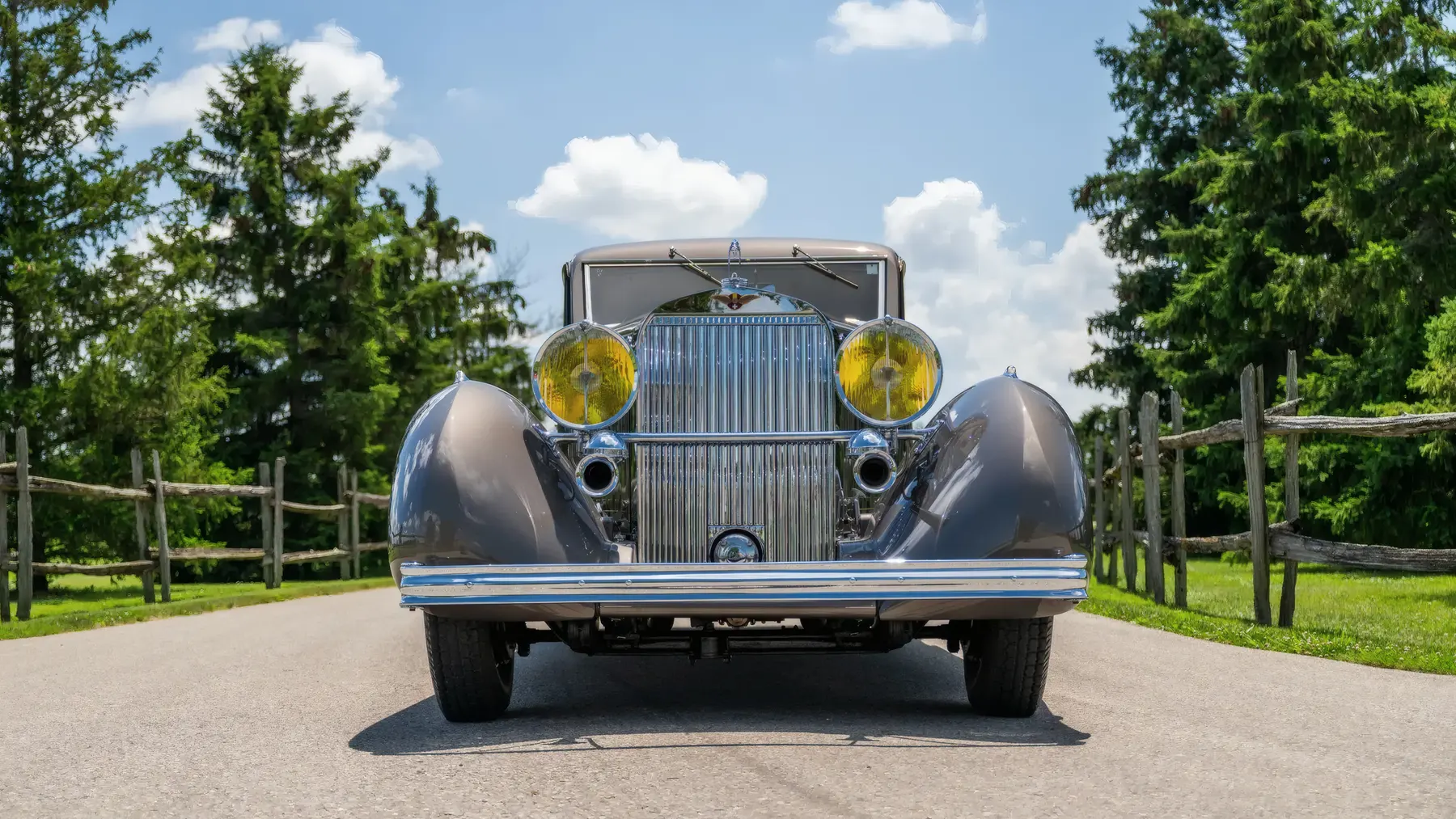
Aesthetically, Fernandez et Darrin understood that the J12 did not need disguise. The long bonnet, upright Hispano-Suiza radiator and stork mascot carried their own authority, so the cleverness was in giving the closed body motion without making it frivolous. The low roofline and raked side glass pulled the eye rearward, while the lack of side-mounted spares cleaned up the flanks and allowed the fenders to read as sculpture rather than storage. The Berline body’s charm is that it does not fight the chassis’s scale; it edits it. The drawback is built into the same idea. A low, elegant closed body on a huge luxury chassis inevitably trades some limousine formality and perhaps some airy cabin grandeur for style. It looks lighter than it is, which is both the designer’s triumph and the driver’s reminder that coachbuilt elegance cannot repeal physics.
On the road, the J12 was less a sports car than a high-speed instrument for effortless distance. Sports Car Market cites the big 9.4-litre car as capable of reaching 60 mph in under 12 seconds and cruising at 100 mph, and it quotes Autocar’s period verdict: “A Car Magnificent; Astonishing Acceleration and Ease of Performance.” That phrase lands because the J12’s performance was not frantic. It gathered speed with a deep, almost insolent calm. The three-speed gearbox, though seemingly sparse, made sense when the engine could pull hard from low revs; the less romantic side is that the bottom gear has been described as painfully high, so traffic work and hill starts in heavy coachwork were not the J12 at its happiest. The best way to understand the Berline is as a car that wanted open roads, smooth surfaces, and a driver who treated its mass with respect rather than bravado.
Its strengths were real and unusually coherent. The J12 did not merely chase cylinder count for prestige; it delivered refinement, durability, silence and speed in a single engineering philosophy. A famous reliability demonstration had Charles Faroux, the journalist associated with Le Mans, drive a J12 from Paris to the French Riviera and back, after which the car was reportedly placed over a white sheet without leaving a drop of oil. Whether read as theatre or proof, the story captures what Hispano-Suiza wanted the J12 to mean: mechanical cleanliness, not just glamour. This was a machine for people who valued the hidden quality of machining and balance as much as visible chrome and leather.
The compromises were equally genuine. The J12 was vast, complex, and ruinously expensive to build; Conceptcarz describes it as among the most expensive French cars of its era and the largest and most expensive car Hispano-Suiza ever made. Heavy formal coachwork could push it into the 2,000 kg class, and even with servo brakes and that magnificent V12, it was still a leaf-sprung, live-axle automobile on period tyres. It could be fast, but it was not nimble in the modern sense, and the Berline body’s beauty could not make tight streets or dense urban traffic feel natural. Its exclusivity also limited its influence: a car available only as a costly chassis for bespoke coachwork could inspire admiration, but not imitation at scale.
Historically, that is part of the poignancy. The J12 arrived as the great coachbuilt luxury-car world was under economic and political pressure, and by 1938 Hispano-Suiza automobile production was effectively giving way to aircraft and armaments work. Depending on how one counts chassis and variants, roughly 114 to 120 J12s were built, which makes it rare, but the number is less important than the role it played: it was a last summit, not the start of a long mass-produced dynasty. Critical reception has remained reverent because the J12 represents a kind of engineering confidence that did not need ornament to justify itself, even when clothed by one of Paris’s most stylish carrozzerie.
The Hispano-Suiza J12 Berline by Fernandez et Darrin endures because it brings two forms of intelligence together. Birkigt gave it the disciplined heart: huge displacement, quiet valvegear, deep torque, and overbuilt mechanical calm. Fernandez et Darrin gave it the social grace: a closed body that looked swift without becoming vulgar, formal without becoming stiff. It was flawed in the way many great pre-war luxury cars were flawed - too large, too costly, too dependent on roads and circumstances that suited it - but those flaws are inseparable from its character. The Berline is not simply a beautiful body on a famous chassis. It is the moment when Hispano-Suiza’s engineering aristocracy and Parisian coachbuilt style briefly agreed on the same answer: travel should feel effortless, but never ordinary.