1949 Go-On II-Alfa Romeo Special Ice Racer
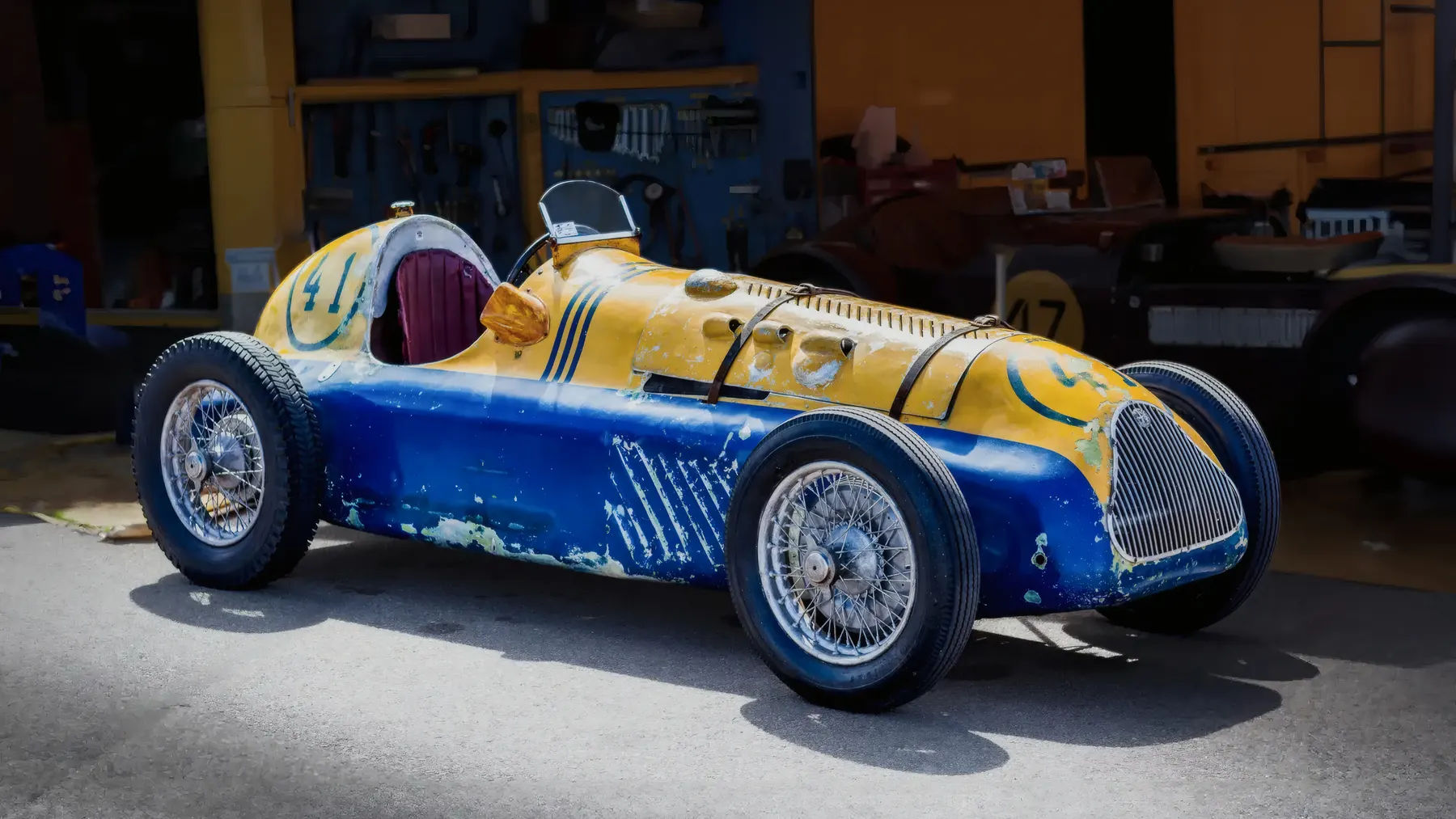
What makes the Go-On II-Alfa Romeo Special Ice Racer so compelling is that it sits in a corner of motoring history where necessity, ingenuity, and local obsession mattered more than factory budgets. It was not a production model in any meaningful sense, but a one-off Swedish competition special built by Gunnar Olsson for the brutal, deeply specific world of post-war Scandinavian racing, and that singularity is exactly why the car has such character.
In the years after the war, Sweden’s racing culture split itself between summer road events and winter contests run on ice, sometimes on frozen lakes, sometimes on purpose-made surfaces of ice and sand, all of it demanding a very different sort of machine from the polished Grand Prix cars of Italy or Britain. Gunnar Olsson was not merely a competitor within that culture but one of its architects, helping to found Sweden’s first permanent motor racing circuit at Gelleråsen and playing a role in the FIA-affiliated Nordic Special series that began in 1950 under Formula 1-style regulations, albeit in non-championship form.
That broader context matters, because the Go-On II was not built as an eccentric toy. It was built as a weapon for a regional racing scene that valued resilience, improvisation, and mechanical punch over orthodoxy, and Olsson had already sharpened his ideas on an earlier special simply called Go-On before creating this second, more focused car.
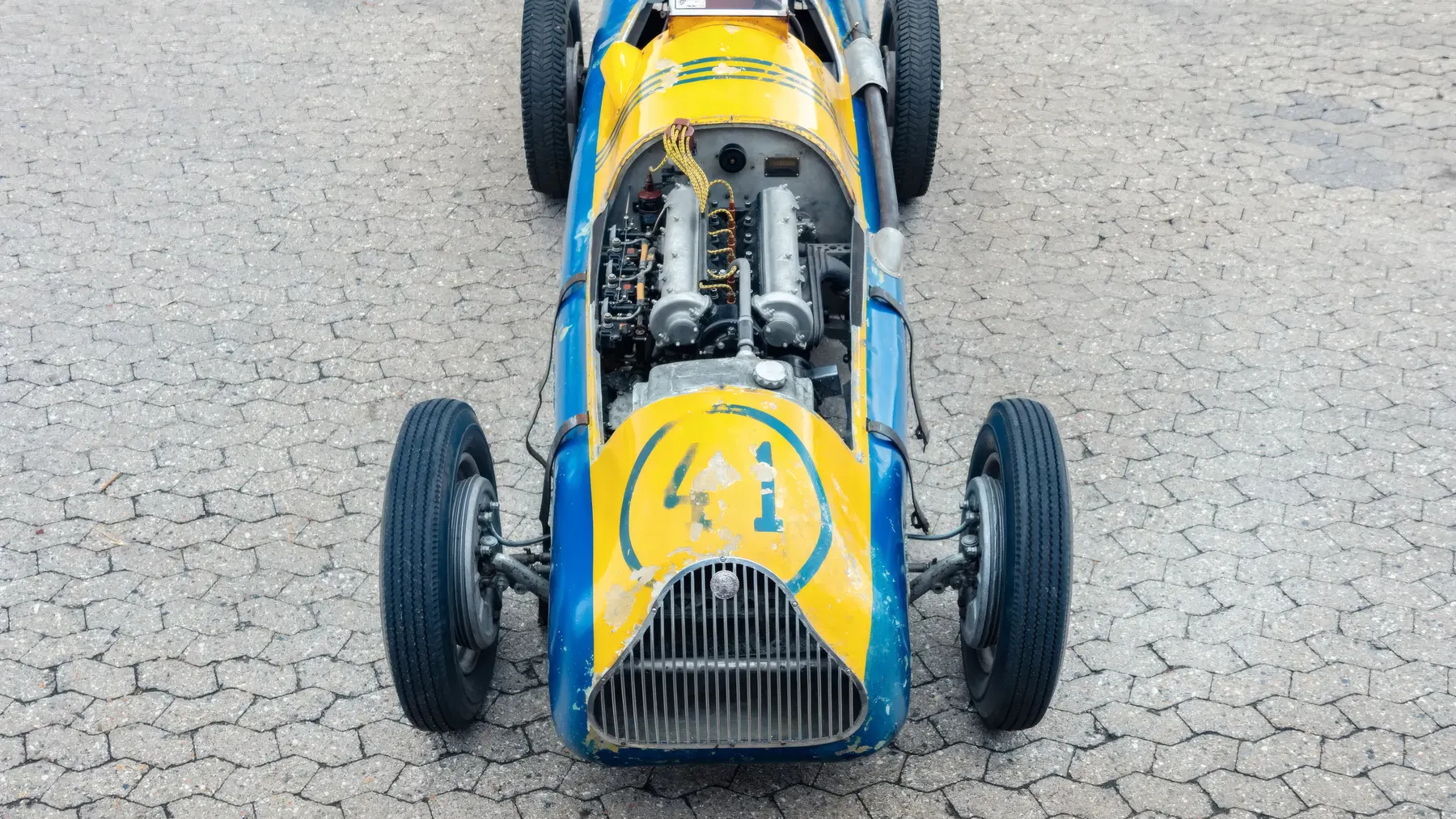
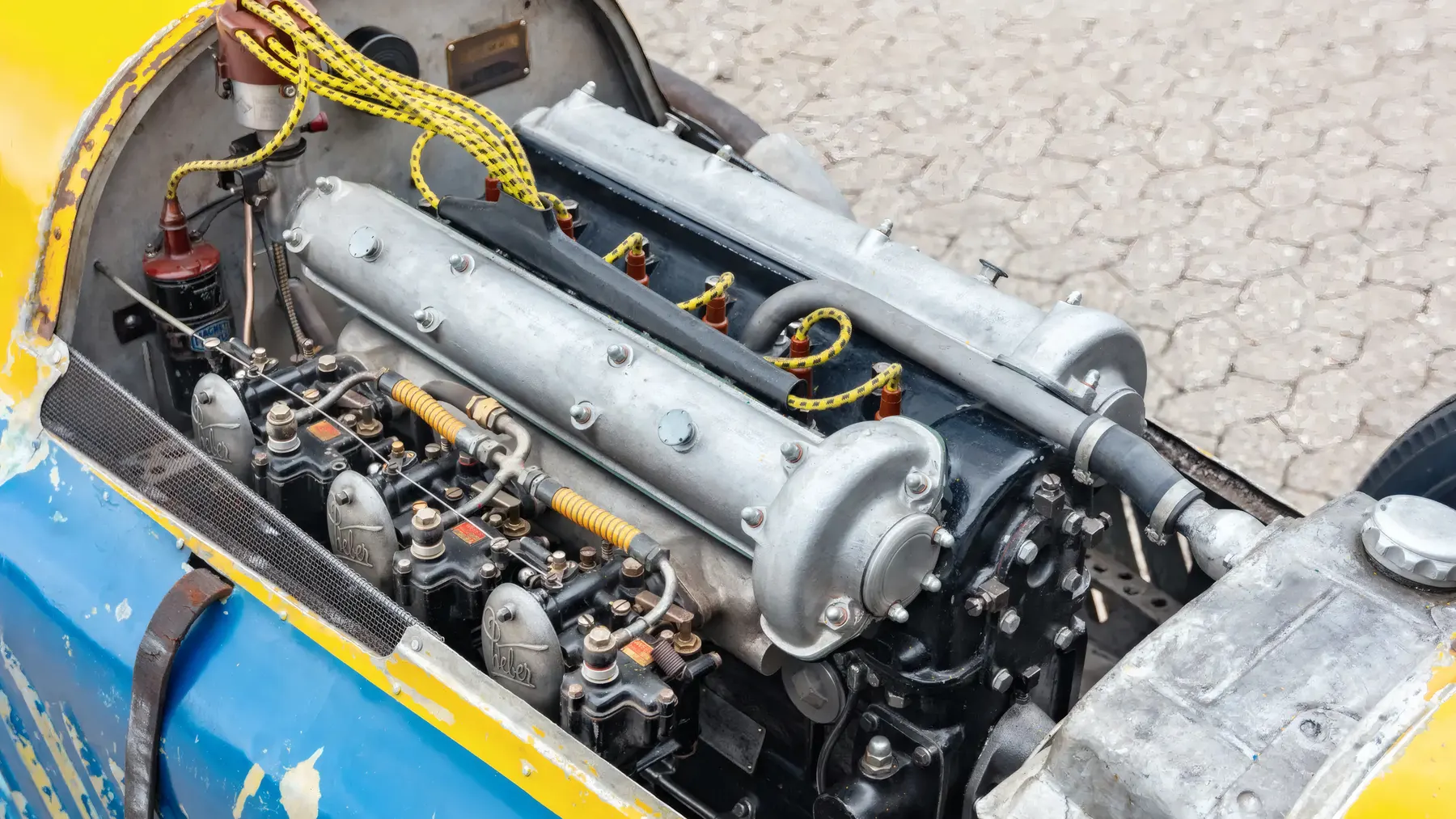
Mechanically, the Go-On II is a glorious hybrid in the old specials tradition. It used a home-built frame, with a Jaguar SS supplying the differential, radiator, and wheels, while Alfa Romeo 6C hardware contributed the gearbox and front brakes; early on it ran a Lancia Astura V8, but Olsson soon abandoned that engine and replaced it with a triple-carburetted Alfa Romeo 6C 2500 straight-six, a change that gave the car its final identity and separated it from the American V-8 crowd that dominated much of the local competition.
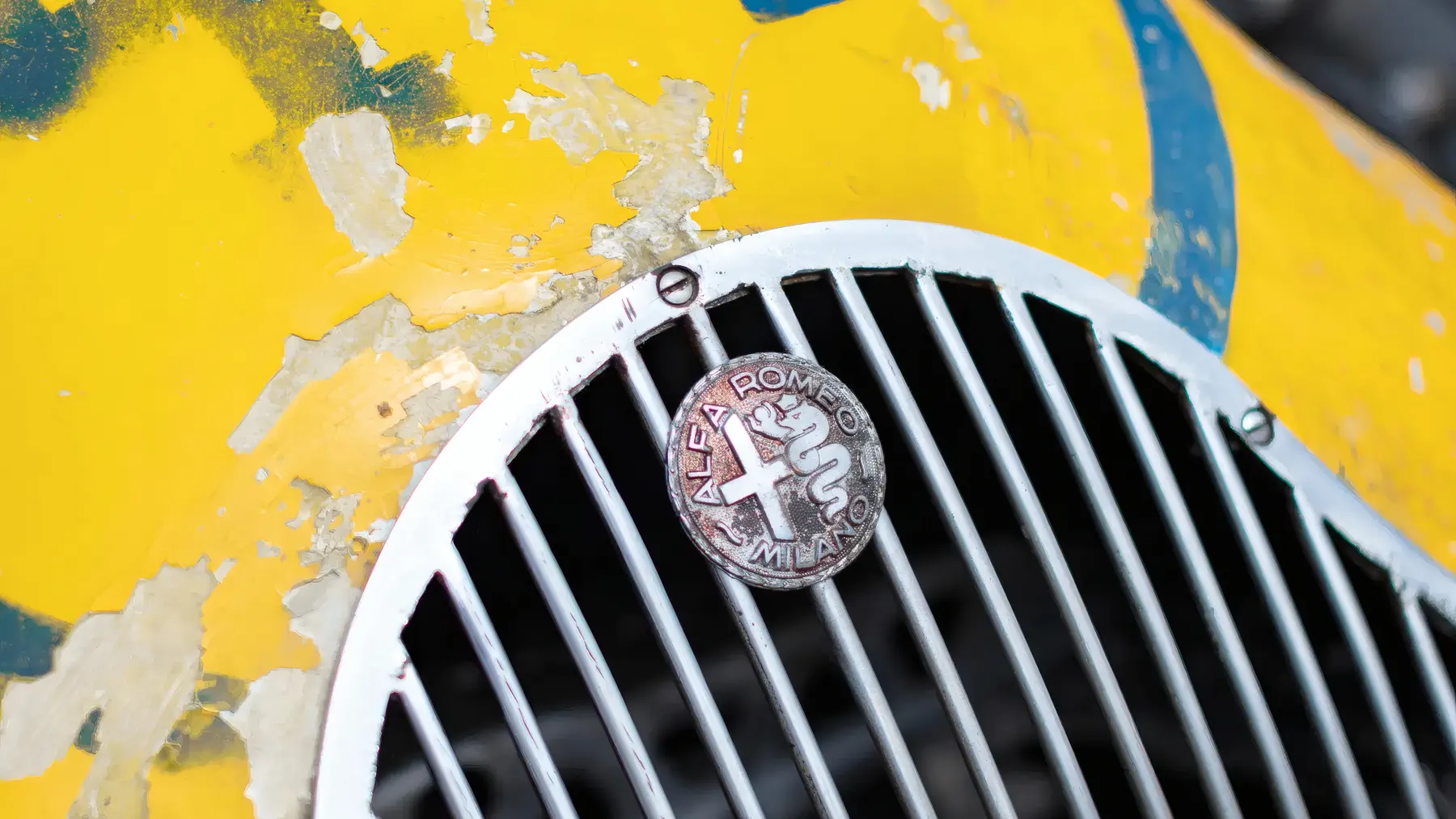
That engine choice tells you almost everything about the Go-On II’s personality. Where many post-war specials chased brute force through big-capacity American power, the Alfa six suggested a more intricate, revvier, more European answer to speed; it may not have offered the lazy sledgehammer delivery of a Detroit V-8, but it gave the car a technical flavour and a romantic mechanical pedigree that feels entirely right for something visually patterned after the Alfa Romeo Alfetta 158.
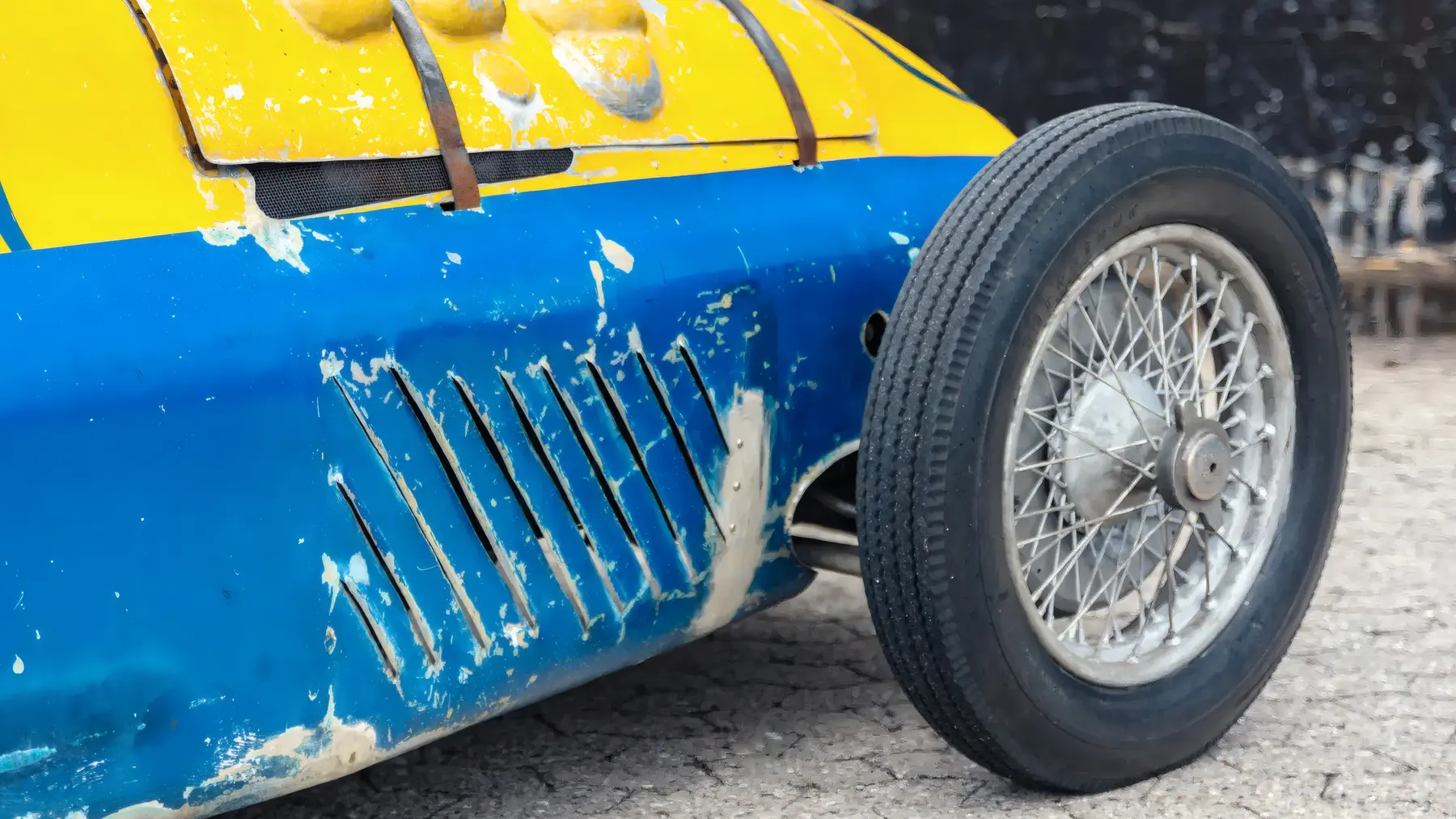
And visually, yes, that imitation matters. The body was made by Svedbergs, a respected regional coachbuilder, and was very clearly intended to echo the look of Alfa Romeo’s famous 158 voiturette, which gave this Swedish special a dose of proper Grand Prix theatre even if its bones were assembled from a practical mix of available parts.
That blend of aspiration and adaptation is the whole appeal. The Go-On II was never a factory Alfa Romeo, never a true 158 rival, and never a conventional formula car built to a single design doctrine. It was instead a Scandinavian response to top-level racing style: part homage, part improvisation, and fully honest about the realities of what a determined privateer could build in post-war Sweden.
On the ice, the car’s identity sharpened further. Olsson raced it actively for four years, and for winter events it wore special tyres fitted with 30 mm studs, transforming it from a gravel-and-road special into something fit for the near-mythic violence of Nordic ice racing. RM Sotheby’s notes that two authentic period tyres of that type accompanied the car, which is a lovely detail because it underlines that “Ice Racer” is not a retrospective flourish but a genuine part of the model’s period life.
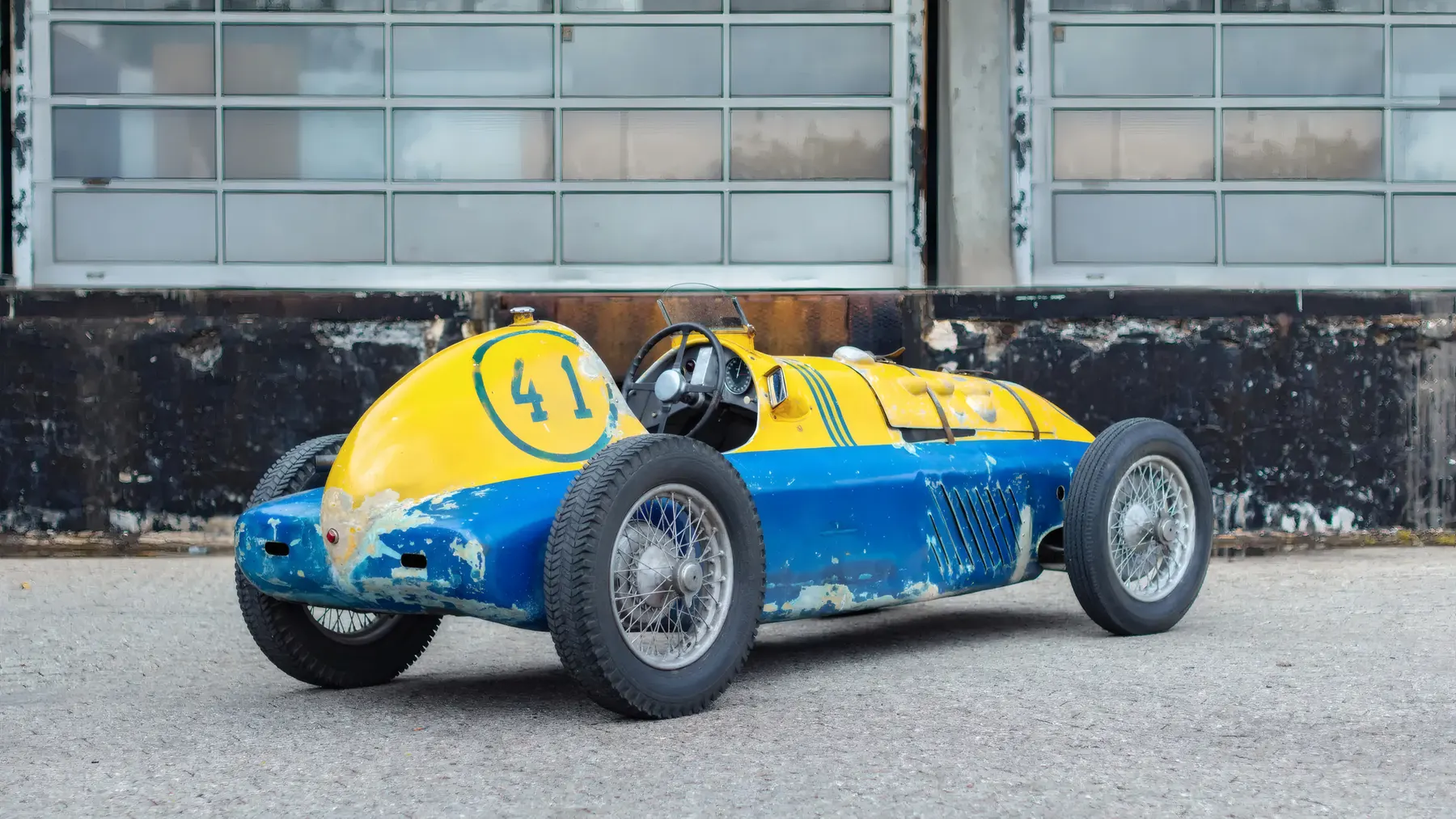
You can imagine the experience without too much effort: open wheels, open cockpit, freezing air, spiked tyres clawing at ice, and that Alfa six trying to convert elegance into traction on a surface that offered almost none. This was motorsport stripped of comfort and glamour, and in that environment the Go-On II must have felt both heroic and faintly absurd, which is often the mark of the most memorable racing machinery.
Its strengths are easy to admire. The car embodied the best tradition of the hand-built special: lightness of concept, creative use of available components, and a clear racing purpose. It also carried genuine historical significance because of Olsson’s role in Swedish motorsport, linking the machine not just to events he entered but to the very infrastructure and institutions that helped shape post-war racing in the country.
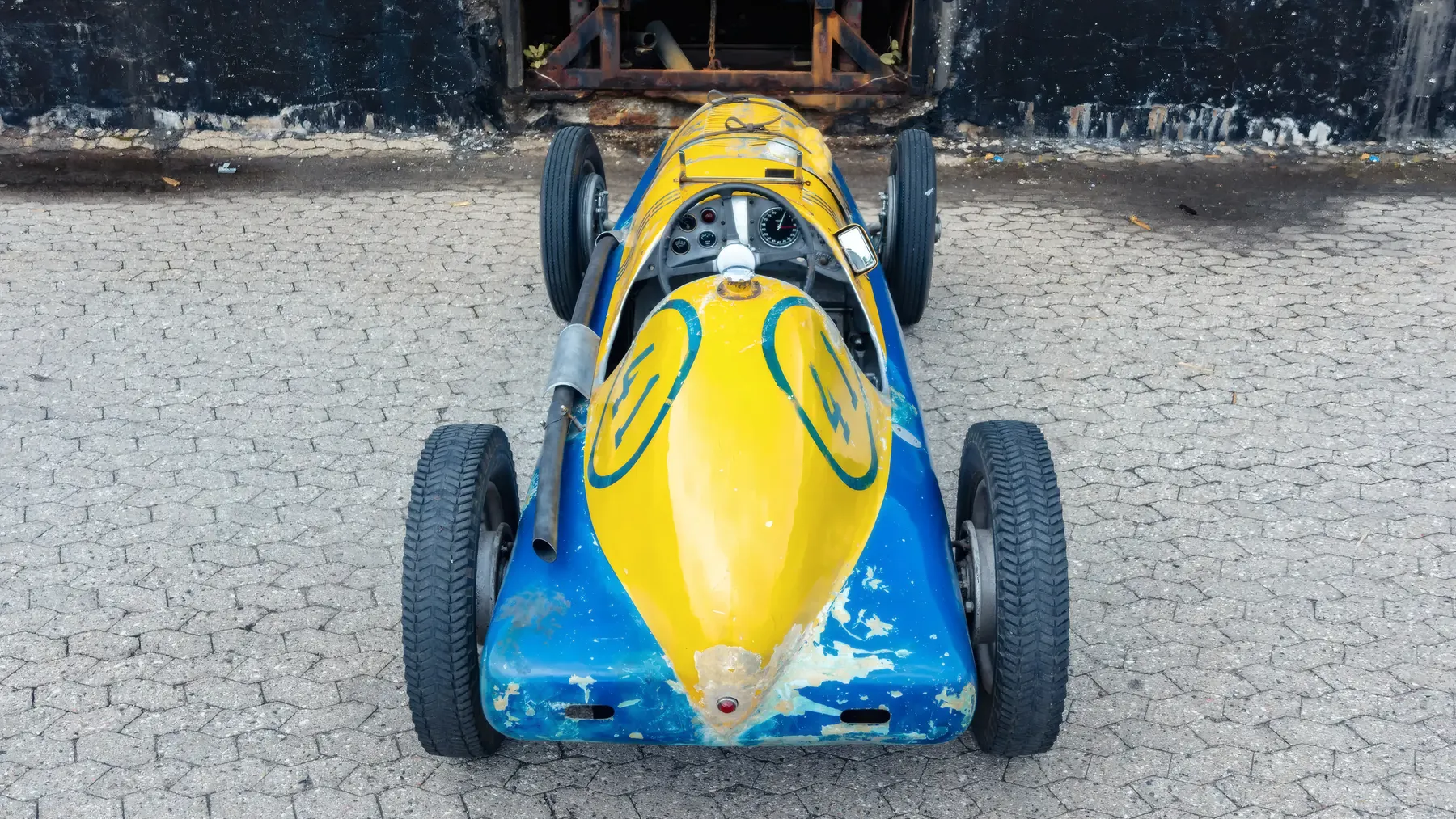
But honesty requires admitting its compromises too. A car assembled from a home-built frame and components drawn from Jaguar, Alfa Romeo, and initially Lancia was never going to have the integrated polish of a works-built single-seater. That patchwork engineering is part of the charm now, but in period it would almost certainly have meant constant development, inconsistency, and a dependence on ingenuity rather than refinement.
The same is true dynamically. Specials of this sort can be deeply charismatic, yet they rarely behave with the cohesion of machines conceived as complete systems from day one. The Go-On II’s appeal lies less in clinical excellence than in its vivid, handmade intensity; it is the sort of car enthusiasts love because its flaws are inseparable from its purpose.
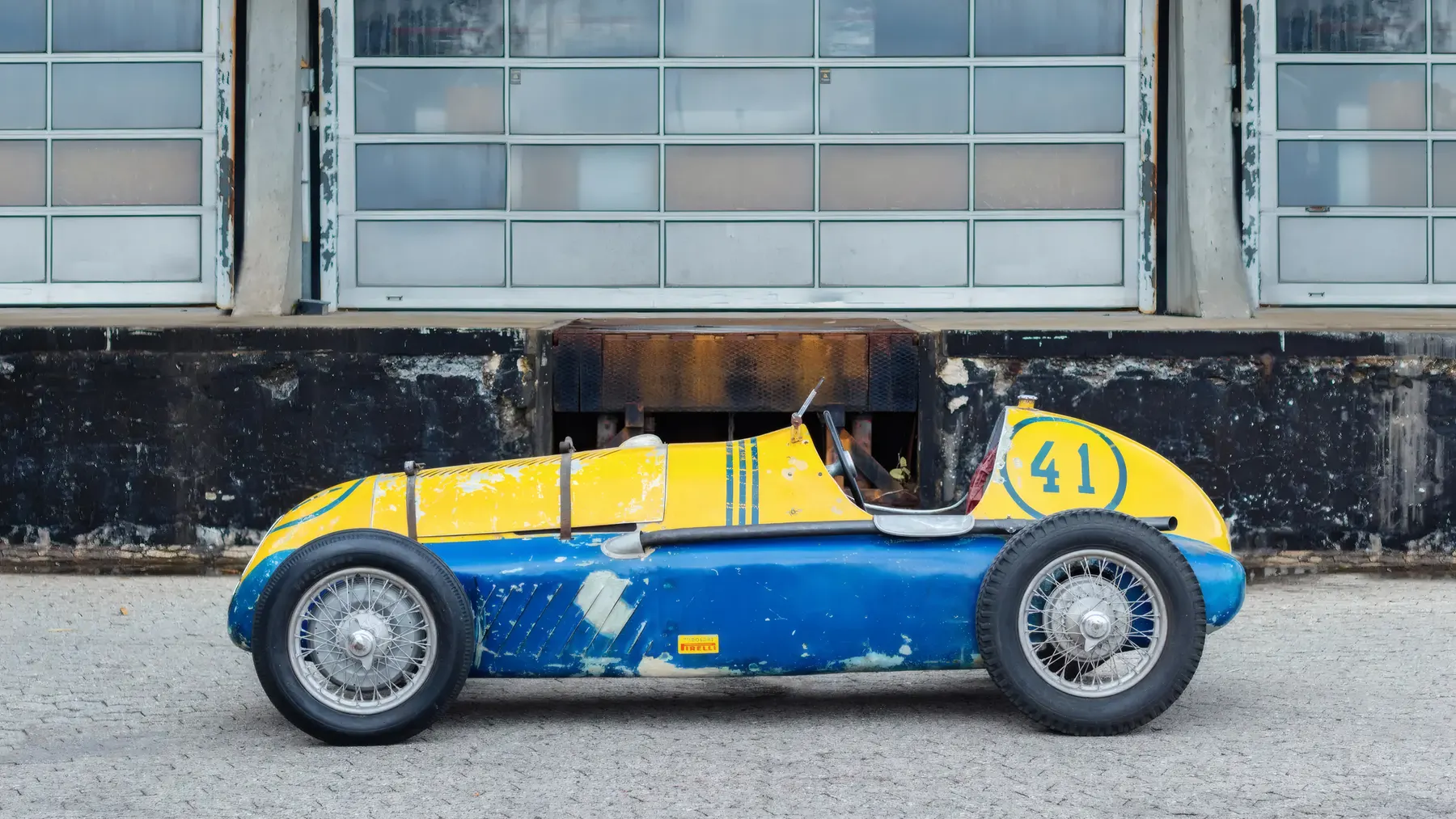
Its legacy, then, is not about production volume or silverware on the scale of a major marque. It is about representing a distinct racing culture and a specific kind of post-war ambition: local, inventive, ambitious enough to mimic an Alfetta, practical enough to use what was at hand, and tough enough to race on Scandinavian ice. By the late 1950s it had already been recognised as important enough to enter a Swedish automotive museum collection, where it remained for more than 55 years before re-emerging onto the collector market.
That museum life also says something useful about public and critical reception. The Go-On II was not remembered merely as an oddball curiosity but as a meaningful artefact of Swedish competition history, and when it resurfaced through RM Sotheby’s Monterey sale in 2024 it was presented not as a replica-like novelty but as a highly original, battle-tested survivor from the Nordic Special era. It sold for $128,800, which feels less like a speculative hypercar number and more like the market acknowledging a genuinely unusual piece of regional racing heritage.
In the end, the Go-On II-Alfa Romeo Special Ice Racer is fascinating because it compresses so much of post-war motorsport into one machine: ambition without factory backing, elegance without purity, and competition in conditions far harsher than most glamorous racing histories care to remember. It is rough-edged, deeply specific, mechanically eclectic, and all the better for it - a car that could only have come from a man like Gunnar Olsson and a place like Sweden at exactly that moment.