Ferrari 500 Mondial: The Four-Cylinder Racer Pinin Farina Dressed to Win
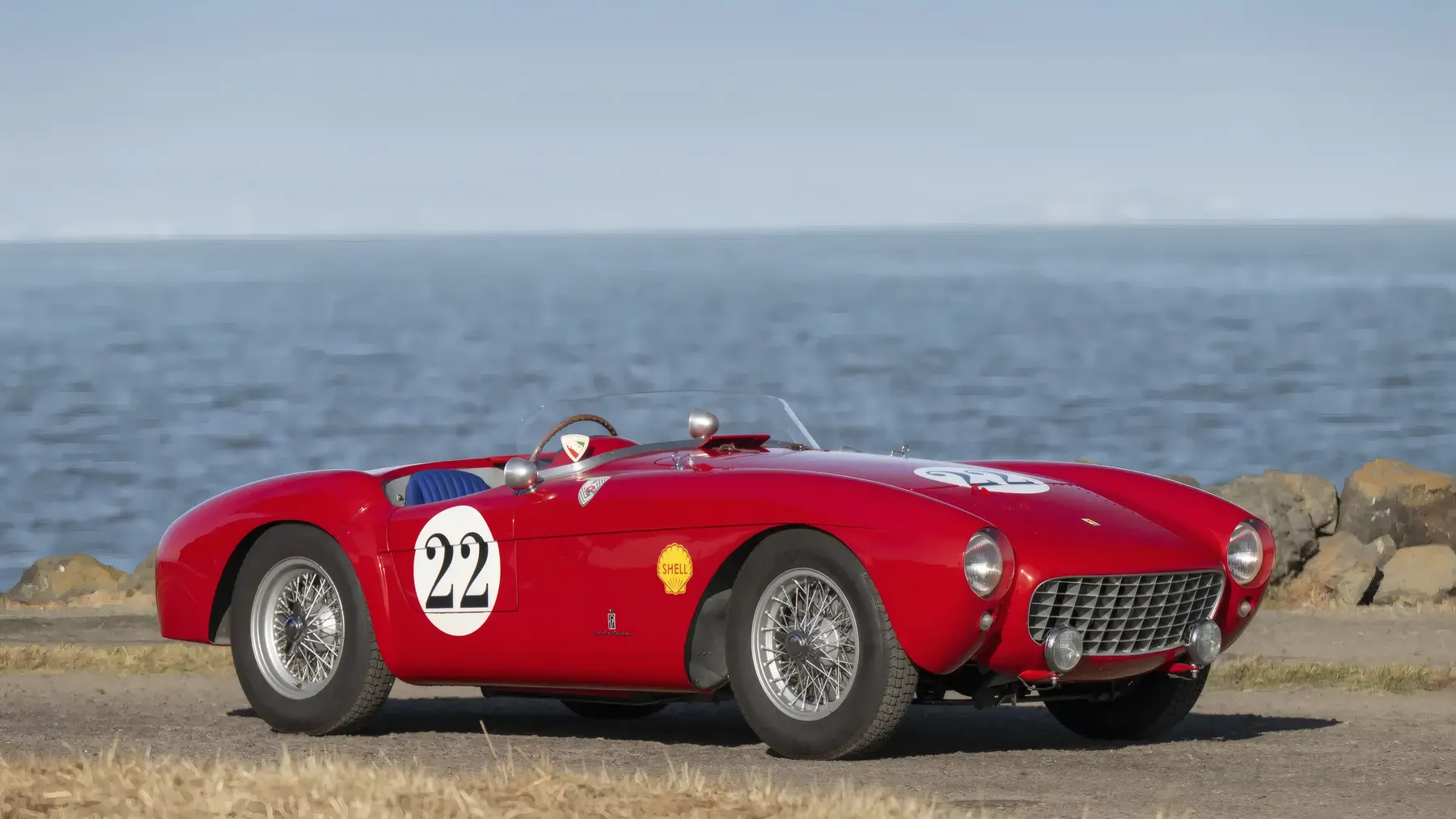
1954 Ferrari 500 Mondial Spider by Pinin Farina




Images: Robin Adams / RM Sotheby's
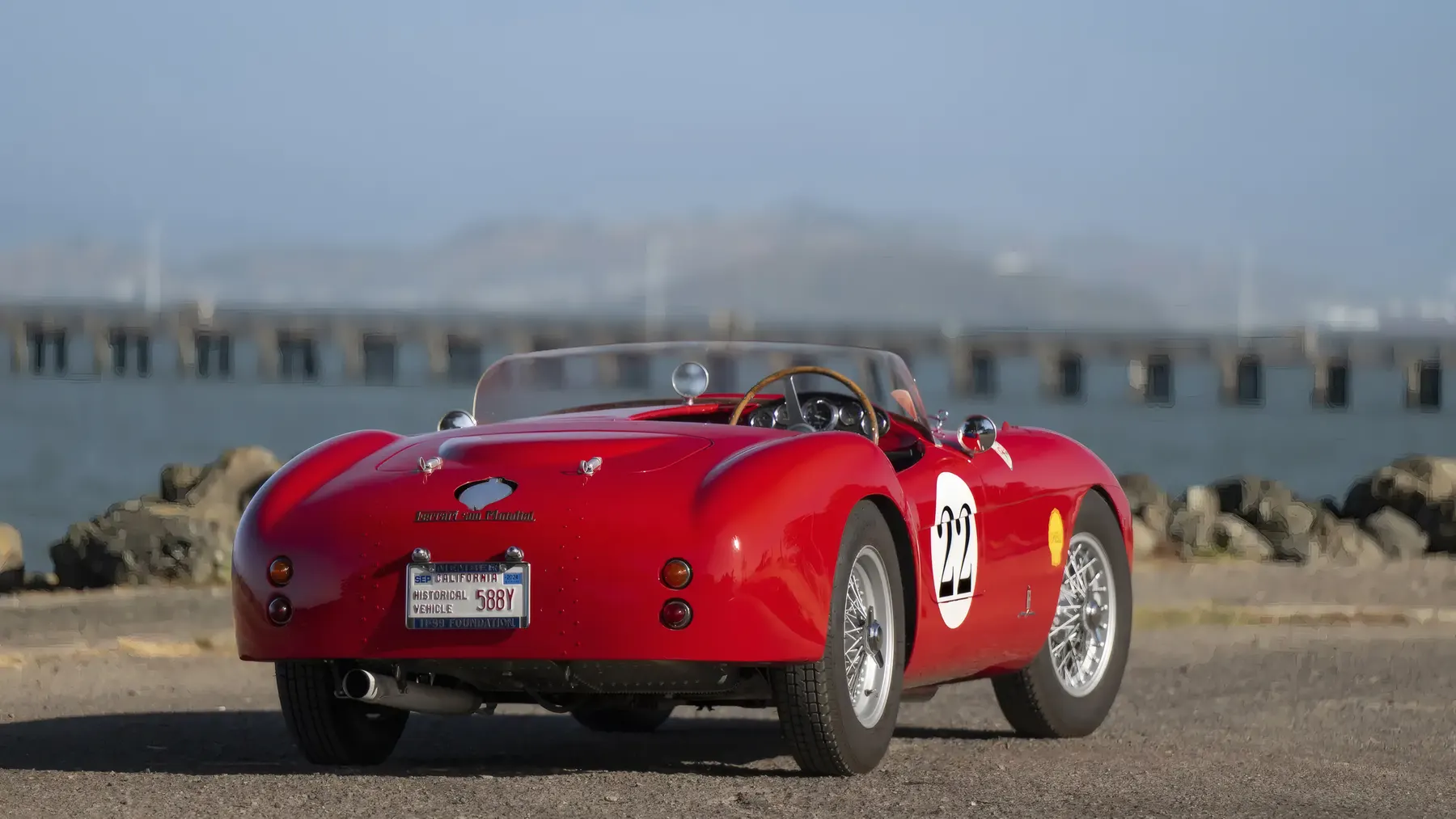
Enzo Ferrari’s reputation rested on twelve cylinders, yet the engine that actually delivered his young company its first sustained run of world championships had only four. That contradiction sits at the heart of the Ferrari 500 Mondial, the small two-seat sports-racer Maranello built to carry a winning Formula 1 formula onto the road-racing circuits and public-road classics of 1950s Europe. Dressed, in its best-known form, in Pinin Farina’s spare and purposeful spider bodywork, it became one of the cleanest expressions of what a mid-century Italian competition car was supposed to look and feel like.
The name explains itself once you know Ferrari’s habits. “500” referred not to total displacement but to the swept volume of a single cylinder: each of the engine’s four pots displaced close to 500cc, adding up to 1,985cc in total. “Mondial”, Italian shorthand for “world”, commemorated Alberto Ascari’s back-to-back Formula 1 World Championships for Scuderia Ferrari in 1952 and 1953, both won not with one of the marque’s celebrated V12s but with a twin-cam four-cylinder engine designed by chief engineer Aurelio Lampredi. That single-seater success, together with the arrival of a new World Sportscar Championship in 1953 and a growing customer appetite for smaller, more attainable competition Ferraris than the six-figure V12 sports-racers, persuaded Maranello to adapt the Lampredi four for two-seater duty. The result, offered to customers from late 1953, was the 500 Mondial.
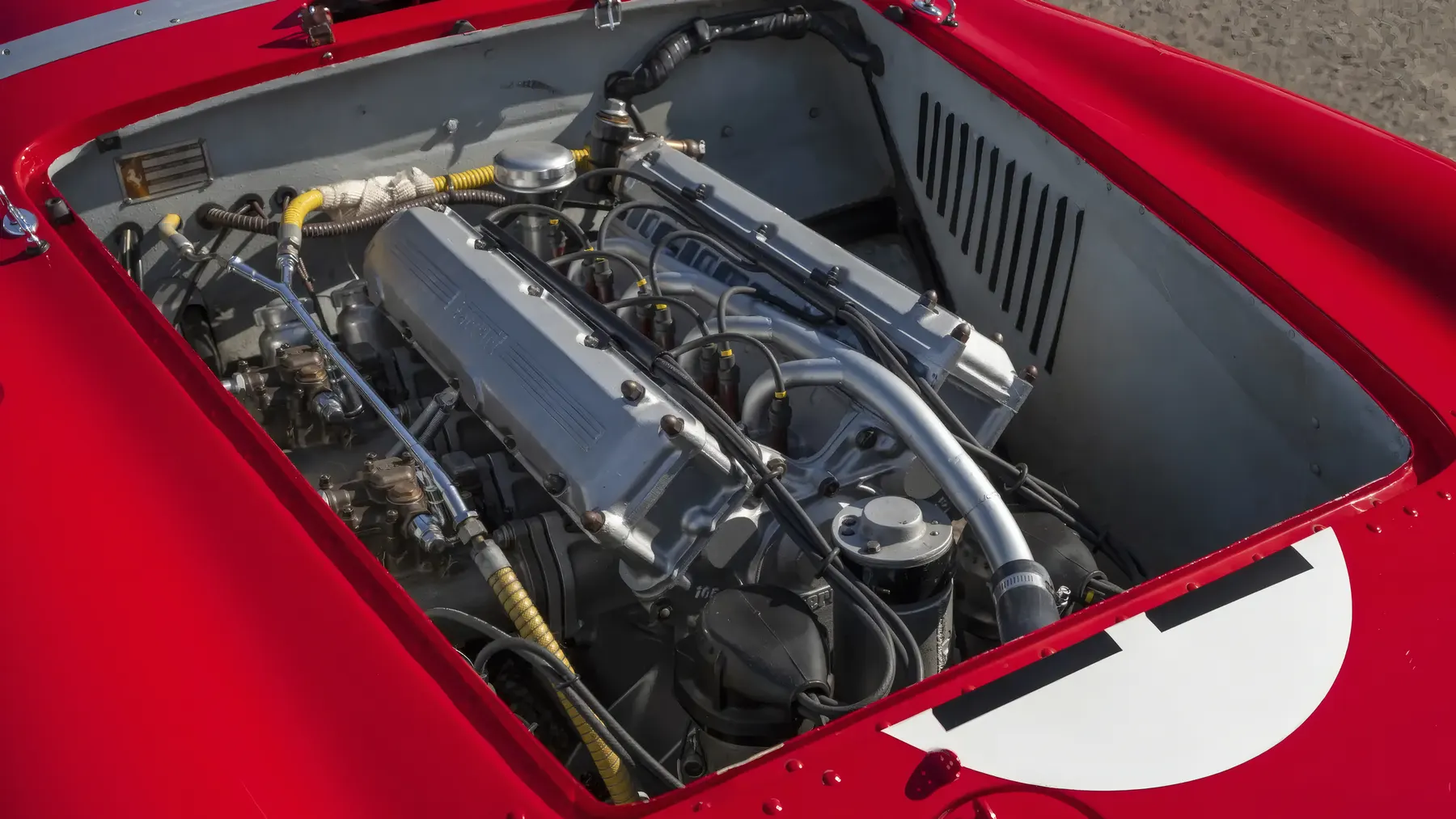
Under the skin, the engine - catalogued internally as the Tipo 110 - was a close relative of the 500 F2 unit that had carried Ascari to those titles. It was a twin-overhead-camshaft inline-four with gear-driven camshafts, hemispherical combustion chambers, screw-in cylinder liners and dry-sump lubrication, running a bore and stroke of 90mm by 78mm for its 1,985cc capacity. Each cylinder carried two spark plugs, fed by twin magnetos, and breathed through a pair of twin-choke Weber carburettors mounted on the side of the block rather than in a central “valley” as on Ferrari’s V12s - which is also why, unlike the contemporary 340MM or 375MM, the Mondial’s bonnet needed no bulging scoop to clear its induction system. With an 8.5:1 compression ratio, the Tipo 110 is generally credited with somewhere in the region of 155 to 165bhp at around 7,000rpm, figures specialist sources quote with only minor variation. When Scaglietti took over coachwork duties for a revised Series II run in 1954, Ferrari fitted an updated Tipo 111 unit with a wider included valve angle and simplified twin-coil ignition; period and present-day sources credit it with a useful jump to somewhere around 170 to 175bhp, though, as with much competition-car data from this era, exact contemporaneous factory figures are difficult to pin down with total certainty.
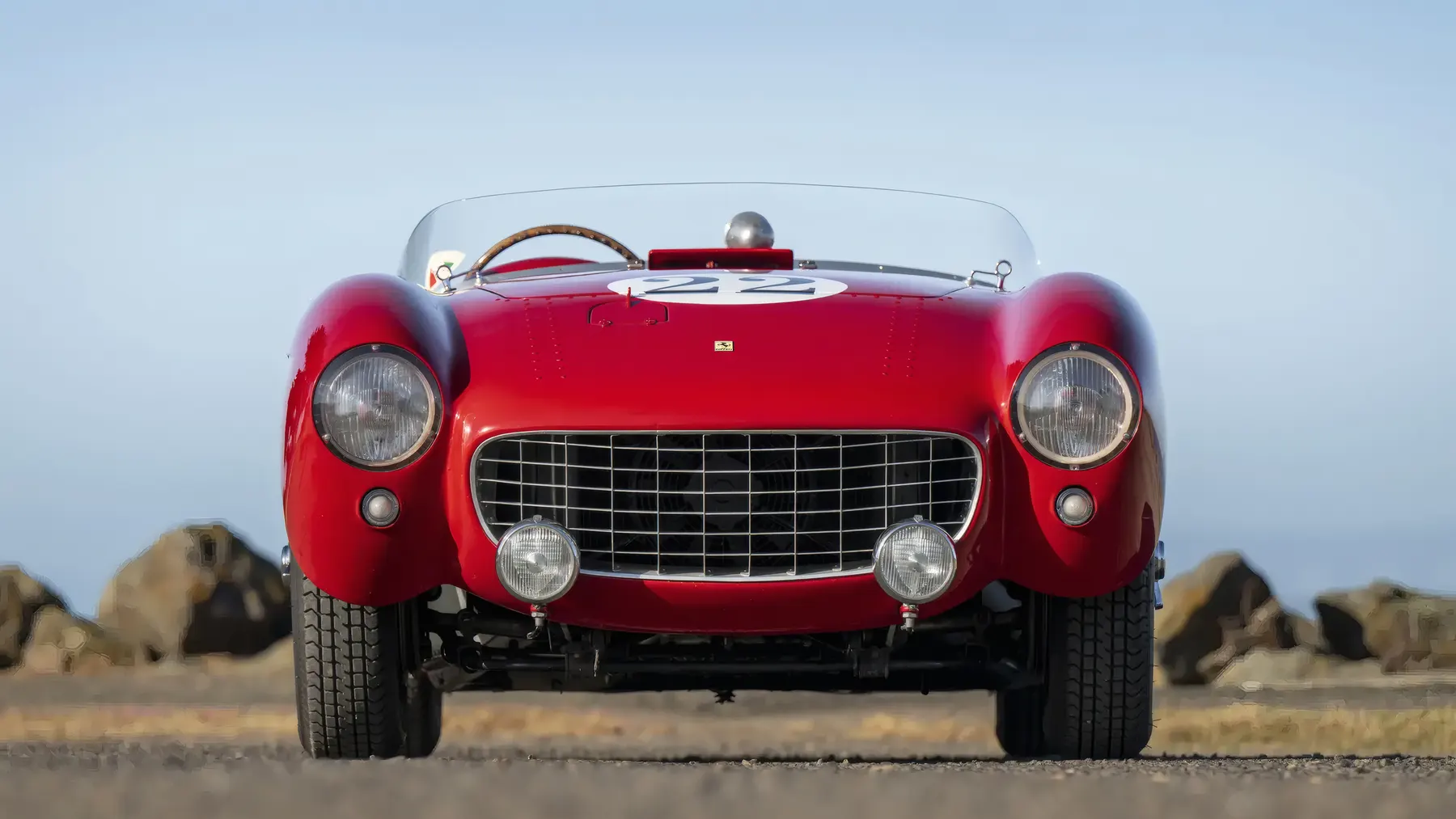
What made the four-cylinder formula work on track was less the peak power than what surrounded it. The Mondial used a tubular-steel chassis, independent front suspension with unequal-length wishbones and a transverse leaf spring damped by Houdaille hydraulic units, and - more unusually for the period - a de Dion rear axle, also sprung by a transverse leaf and controlled by Houdaille dampers, which kept the driven wheels better located over rough surfaces than a simple live axle would have allowed. Drive went through a five-speed manual gearbox without synchromesh, meaning every up- and down-shift demanded a properly executed double-declutch technique rather than a casual stir of the lever. All of this sat within a structure that weighed somewhere around 720kg dry, extremely light even by the standards of 1950s sports-racers, on a wheelbase of roughly 2,250mm. Braking, at all four corners, was by drum.
On paper, none of the Mondial’s individual figures look especially remarkable next to a V12 sports-racer producing similar or greater power from nearly double the swept volume. What the specification sheet doesn’t capture is how those numbers worked together. A torque-flexible four revving cleanly to seven thousand rpm, a kerb weight barely over seven hundred kilograms, and a chassis with genuinely modern rear-suspension geometry for 1953 combined to produce a car that felt alert and responsive rather than simply fast in a straight line. Enthusiasts and historic racers who have driven the type consistently point to the same characteristic: the Mondial rewards a driver willing to keep the revs up and work the gearbox actively, and it punishes a lazy right foot with understeer or, provoked, a snap from its light tail - but it pays back a committed approach with a nimbleness the heavier, torque-laden V12 cars in Ferrari’s own showroom simply couldn’t offer on a tight, twisting road circuit.
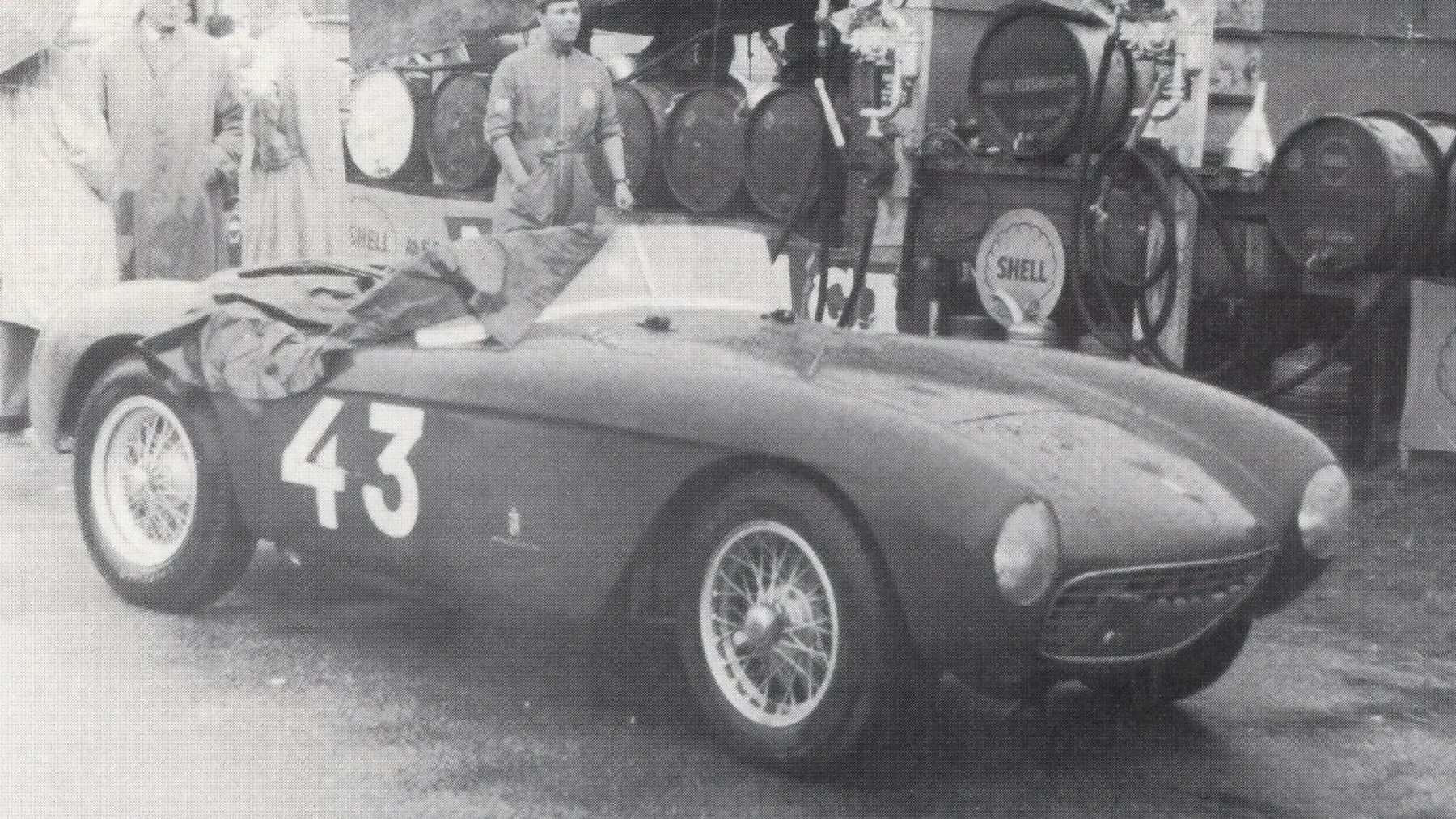
The very first Mondial chassis was bodied not by Pinin Farina but by a young Modena craftsman named Sergio Scaglietti, working from a design Enzo Ferrari’s son Dino had sketched to freshen up his own 166MM roadster. From there, production responsibility passed to Pinin Farina for what collectors now refer to as the Series I run: by most accounts thirteen open spiders - the earliest five distinguished by covered headlamps, later cars switching to exposed lights - plus two closed berlinettas built specifically for the 1954 Tour de France Automobile, neither of which finished the event. Pinin Farina’s spider is the body most people picture when they hear the model’s name: a low, taut shape almost entirely without ornament, its single crease line running back from the top of the front wheel arch, its flanks unbroken by the vents and scoops that decorated Ferrari’s V12 cars, because the Mondial’s side-draft Webers simply didn’t need them. Partway through 1954, coachwork responsibility shifted again, this time to Scaglietti’s own workshop, which built a further run of roughly fourteen barchettas to a lower, more slippery shape derived from that same Dino Ferrari design - the start of a working relationship between Scaglietti and Ferrari that would go on to define the look of Maranello’s competition cars for the rest of the decade. Total 500 Mondial production across both series is generally put at around 29 cars, though specialist sources differ on the precise count, with some tallies running as low as 27 and others as high as 31 depending on how prototype and later-reconstructed cars are treated.
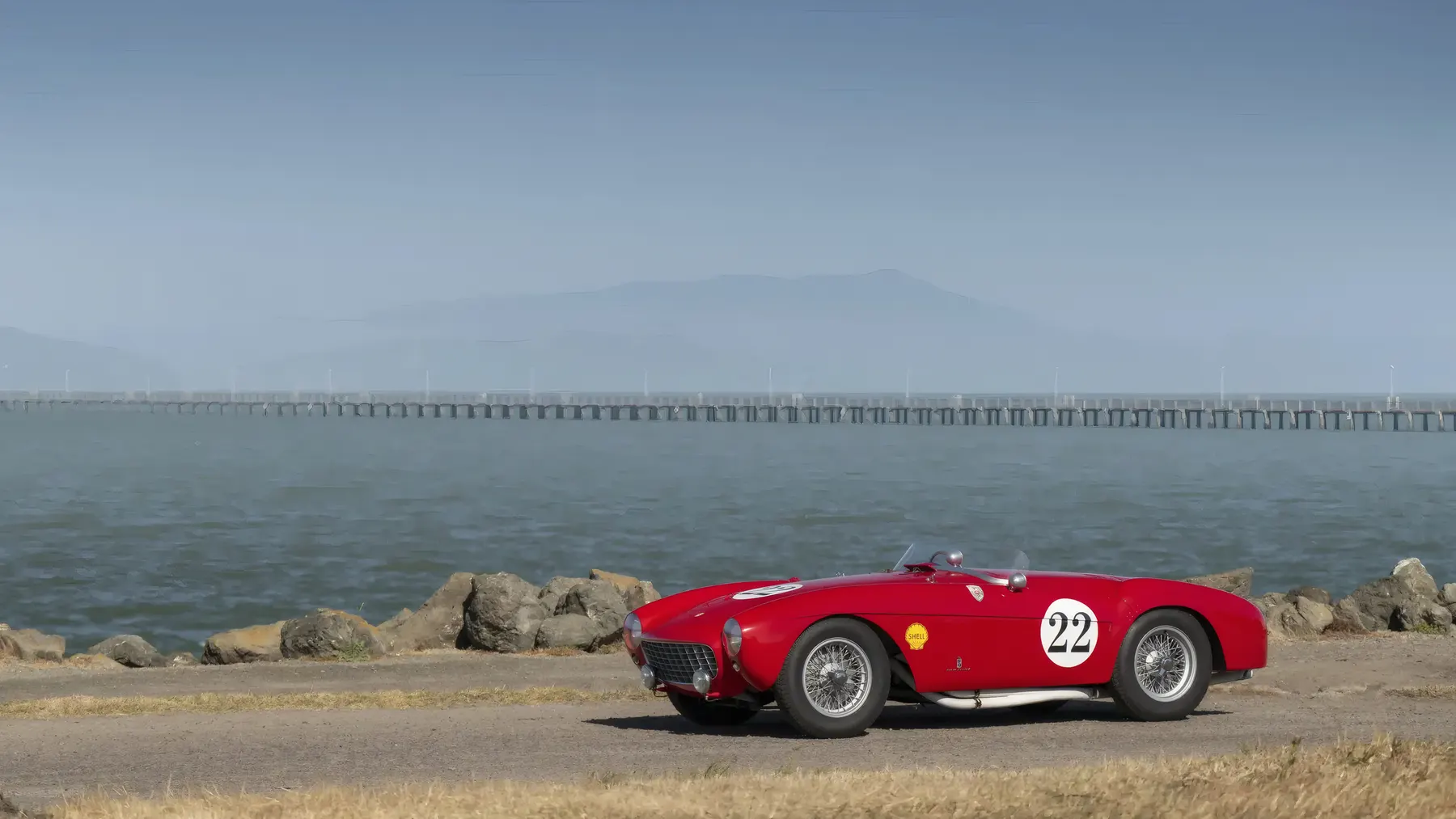
The two coachbuilders approached the job differently, and it shows in the finished cars. Pinin Farina’s Series I spider has a controlled, almost architectural discipline about it - flat surfaces, a single defining crease line, none of the flamboyance that later show cars would carry - consistent with an established operation building precisely finished bodies to a fixed specification for a manufacturer that, by the mid-1950s, was already one of its most important clients. Scaglietti, described in period sources simply as a young Modena coachbuilder, worked on a smaller and more informal scale, hand-shaping aluminium panels to iterate quickly on the lower, more curvaceous barchetta form used for the Series II cars - the start of an improvisational, race-shop approach to bodywork that Ferrari would come to rely on repeatedly as its competition cars evolved from event to event through the rest of the decade.
Commercially, the Mondial was aimed at a different customer than Ferrari’s flagship V12 sports-racers. Where a 340MM or 375MM went mostly to factory-favoured teams and the wealthiest private entrants chasing outright wins, the four-cylinder Mondial was pitched at serious club and national-level competitors who wanted genuine works-derived technology without the running costs, complexity and purchase price of a twelve-cylinder car. That formula suited a growing tier of gentleman racers across Europe, and in smaller numbers further afield, who used the model in national sports car championships and class-based events rather than outright endurance victories - precisely the constituency the Mondial’s Casablanca, Agadir and Mille Miglia results were aimed at reassuring.
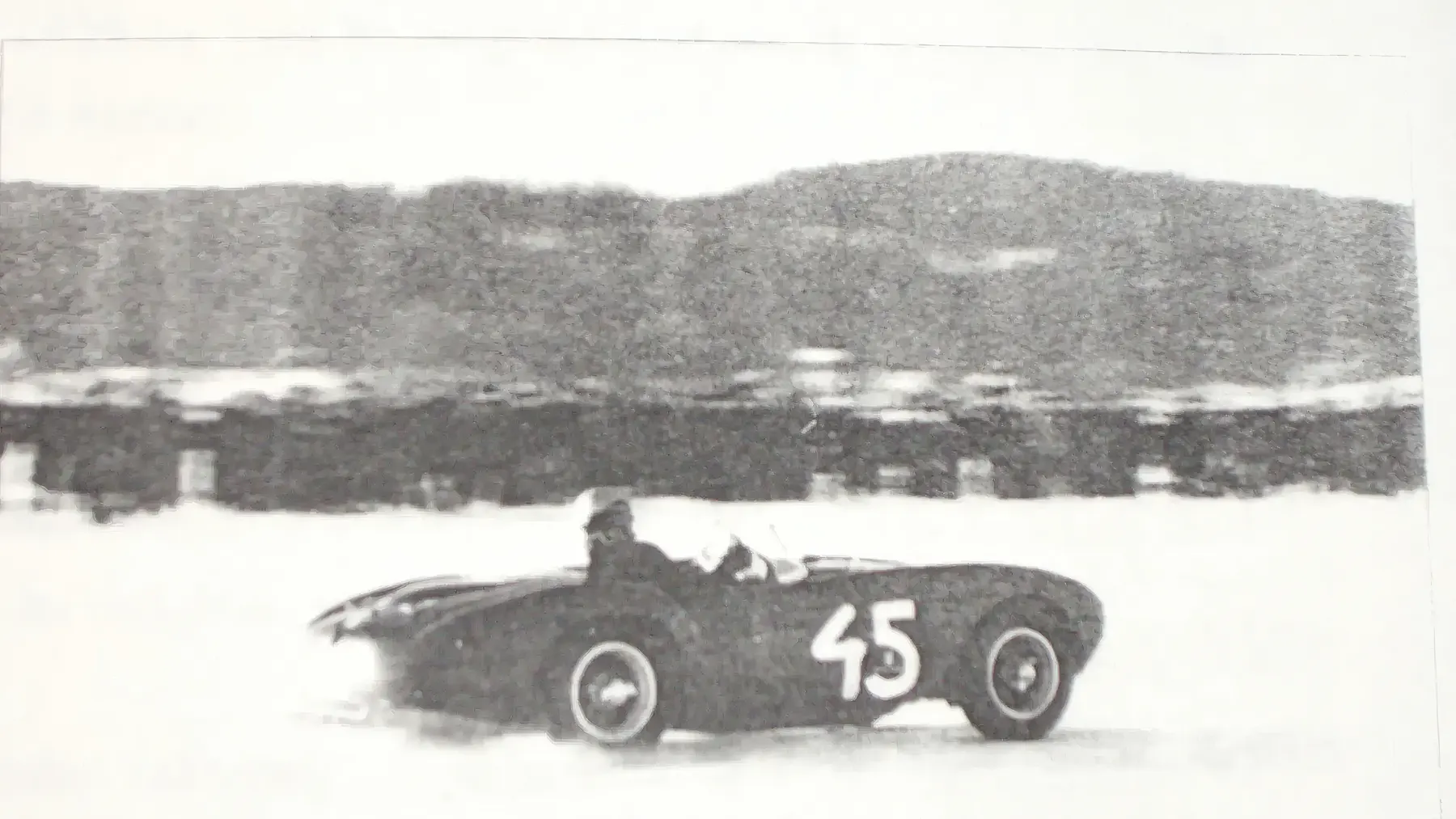
On track, the Mondial made its competition debut in December 1953 at the Casablanca 12 Hours, finishing second overall behind a much larger 4.5-litre 375 - a result that immediately demonstrated how much ground a light, well-balanced small car could make up against raw displacement. Early in 1954 the model was campaigned through a North African tour, taking a class win at Agadir, second place at Dakar and outright victory at Marrakesh, before returning to Italy for one of its most celebrated period results: second overall at the Mille Miglia, driven by Vittorio Marzotto. Mondials also appeared at the Targa Florio and the Imola Grand Prix, and the wider family of Ferrari four-cylinder sports-racers, including the larger 750 Monza that followed, are generally credited with a supporting role in the marque’s World Sportscar Championship campaigns of 1953 and 1954, even as the bigger V12s took most of the headline outright wins. Period entrants ranged from works-affiliated professionals such as Franco Cortese - famous for having driven the very first Ferrari to a competition win back in 1947 - to talented amateurs, and on the later Scaglietti-bodied cars a driver roster that reportedly included Gino Munaron, Harry Schell, Eugenio Castellotti and, memorably, the diplomat, polo player and celebrated amateur racer Porfirio Rubirosa.
None of which makes the 500 Mondial a car to romanticise without qualification. Ferrari built it, fundamentally, because a four-cylinder engine was cheaper and quicker to develop than another V12, and in period that showed: the Mondial and its four-cylinder siblings were pitched a rung below the glamorous V12 sports-racers in Ferrari’s own catalogue, bought mainly by privateers and gentleman drivers rather than the wealthiest factory-favoured customers, and they rarely delivered the outright wins that made headlines the way a 340MM or 375MM did. The engineering had real limitations, too. Drum brakes on all four corners were unremarkable by 1953 standards but were already being exposed by rising cornering speeds and longer endurance events; as the decade progressed and rivals began experimenting with disc brakes, the Mondial’s drums were prone to fade under sustained hard use in a way that genuinely mattered on a gruelling public-road event like the Mille Miglia. The five-speed gearbox’s lack of synchromesh, meanwhile, was standard practice for a dedicated competition car but made the Mondial genuinely unforgiving for anyone without a well-drilled double-declutch technique - hardly a car a wealthy amateur could simply climb into and drive well from the off. And as a purpose-built sports-racer with no weather equipment, minimal instrumentation and a cockpit sized for function rather than comfort, it offered nothing resembling the usability of Ferrari’s contemporary road-going Gran Turismo models; buyers who wanted anything approaching comfort had to look elsewhere in the range entirely. The model’s production life was also brief, lasting barely two years before Ferrari replaced it with the 500 TR and shifted larger-engined four-cylinder duties to the 750 Monza, which today makes surviving cars and correct period parts genuinely scarce and complicates the story for anyone encountering the name for the first time, given that Ferrari later reused “Mondial” in the 1980s for a front-engined V8 road car with a completely different character and a considerably more mixed reputation.
Even so, the 500 Mondial’s influence outran its short production run. Its tubular chassis formed the basis for the later V12-engined 250 Monza, whose wheelbase was simply stretched to accommodate the bigger engine, and the working relationship it forged between Ferrari and Scaglietti’s small Modena carrozzeria would go on to define the visual identity of Maranello’s competition cars, and eventually its road cars, for years afterward. It also proved something Enzo Ferrari was reluctant to admit outright: that a light, carefully engineered four-cylinder chassis could embarrass bigger, more expensive machinery on a demanding circuit, a lesson the factory kept relearning with the 500 TR and 750 Monza that followed it.
Today the 500 Mondial occupies a curious space in Ferrari history: less famous than the V12 sports-racers it shared a paddock with, yet arguably more representative of how the young company actually built its early reputation, through lightness, careful chassis engineering, and a willingness to set aside its favourite engine layout whenever the results demanded it. Pinin Farina’s spider body remains the version most collectors and historians reach for first, not because it was the fastest or the rarest of the Mondials, but because its unadorned shape captures exactly what the model was built to do: strip away everything that didn’t help it go around a corner faster.
Technical data
Performance Specifications
| Specification | Series I, 1953–54 (Tipo 110) | Series II, 1954–55 (Tipo 111) |
|---|---|---|
| Engine | Lampredi DOHC inline-four, dry sump | Lampredi DOHC inline-four, dry sump, revised head |
| Displacement | 1,985cc (90mm x 78mm bore/stroke) | 1,985cc (90mm x 78mm bore/stroke) |
| Compression ratio | 8.5:1 | 8.5:1 |
| Carburettors | Twin double-choke Weber | Twin double-choke Weber |
| Power* | approx. 155–165bhp @ 7,000rpm | approx. 170–175bhp @ 7,000rpm |
| Gearbox | 5-speed manual, non-synchromesh | 5-speed manual, non-synchromesh |
| Brakes | Drum, all four corners | Drum, all four corners |
| Front suspension | Independent wishbones, transverse leaf spring, Houdaille dampers | Independent wishbones, transverse leaf spring, Houdaille dampers |
| Rear suspension | De Dion axle, transverse leaf spring, Houdaille dampers | De Dion axle, transverse leaf spring, Houdaille dampers |
| Weight* | approx. 720kg | approx. 720kg |
| Wheelbase* | approx. 2,250mm | approx. 2,250mm |
| Coachbuilder | Pinin Farina (spider and berlinetta) | Scaglietti (barchetta) |
| Production* | approx. 15 cars (13 spiders, 2 berlinettas) | approx. 14 cars |
Sources
- Ferrari.com - 500 Mondial (1953)
- Ferrari.com Magazine - 1954 Ferrari 500 Mondial Spider by Pinin Farina
- RM Sotheby’s - 1954 Ferrari 500 Mondial Spider Series I by Pinin Farina, Monterey 2023
- Broad Arrow Auctions - 1954 Ferrari 500 Mondial Pinin Farina Spider
- Supercars.net - Ferrari 500 Mondial Series: Ultimate Guide
- Silodrome - Display Piece: A Ferrari 500 Mondial Front End
- Coachbuild.com - Ferrari 500 Mondial Series II, 1955
- Wikipedia - Ferrari Monza
- Wikipedia - Ferrari 250 Monza
- Conceptcarz - 1955 Ferrari 500 Mondial
Join the discussion
Comments
Loading comments…
Leave a comment
Share a detail, memory, or perspective. Every comment is reviewed before publication.