Edsel Citation (76B) Convertible: Ford's Push-Button Flagship
1958 Edsel Citation Convertible




Images: Darin Schnabel / RM Sotheby's
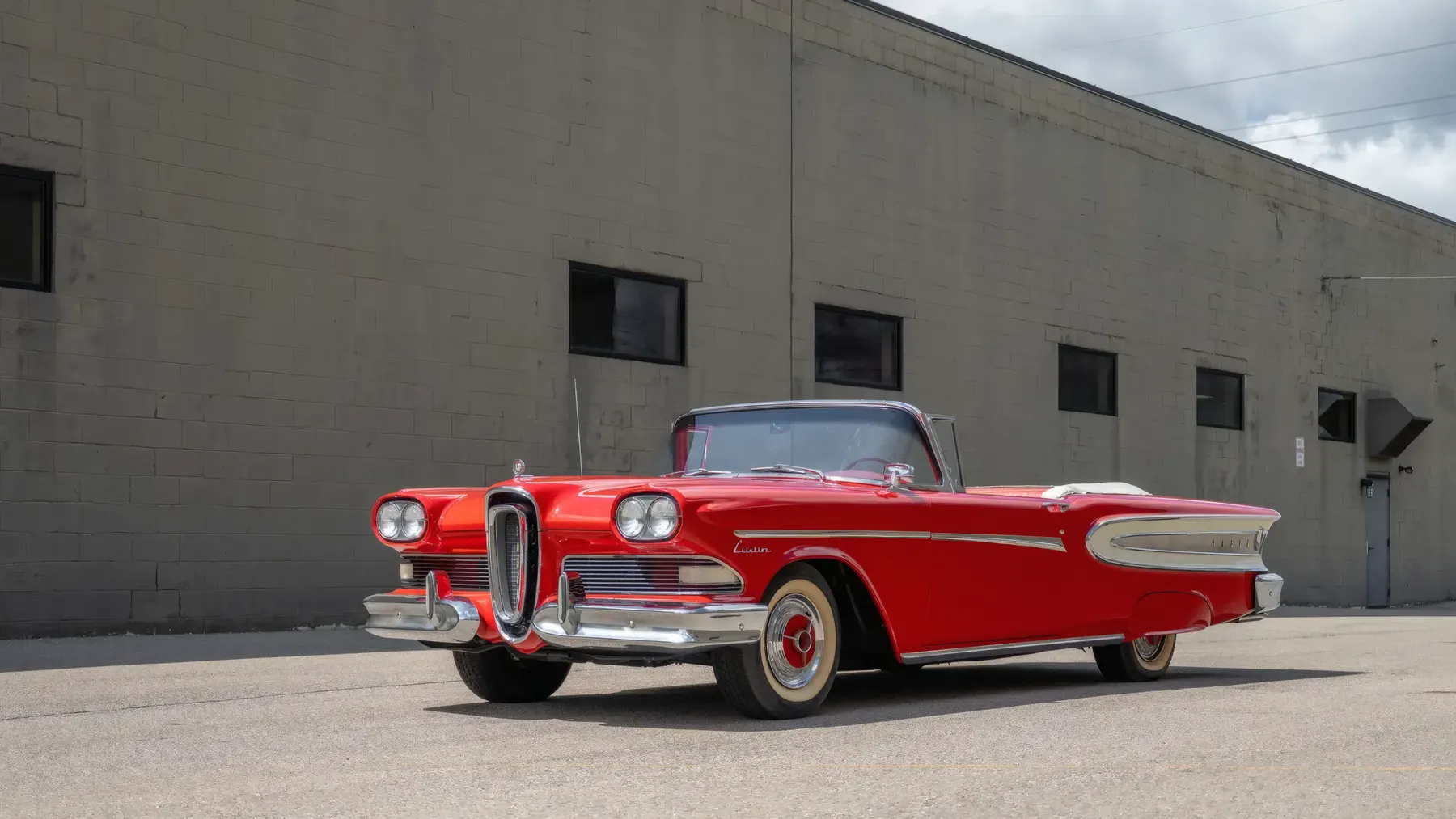
Every contradiction in the Edsel story fits inside the Citation convertible. It was the flagship of a marque sold as a clean break from Detroit convention, yet it sat on a Mercury platform. It wore the most argued-over grille in America, yet the Citation range cost within a few dollars of the Mercury Montclair it shared its underpinnings with. And it was the glamour model of a division that Ford hoped would sell 200,000 cars in its first year, a role it filled in just 930 examples.
Ford announced the Edsel on 4 September 1957, “E-Day”, after spending roughly $250 million to get it to market, and Sports Illustrated noted at the time that it was the first complete new range from any of the Big Three since Mercury arrived in 1938. There were 18 models in four series, descending in price from Citation through Corsair and Pacer to Ranger. The Citation sat at the top as a two-door hardtop, a four-door hardtop and a two-door convertible, with no pillared sedan at this level. Underneath, Edsel had no platform of its own. The junior Ranger and Pacer used Ford’s 2,997 mm wheelbase, while the Corsair and Citation shared Mercury’s, extended to 3,150 mm, which made the Citation the only Mercury-based Edsel offered as a convertible. It was not the only car to carry the 76B body code, though. Edsel reused body codes across its junior and senior series, so the Ford-based Pacer convertible wears the same one, and it is the Citation’s trim and engine that tell the two apart.
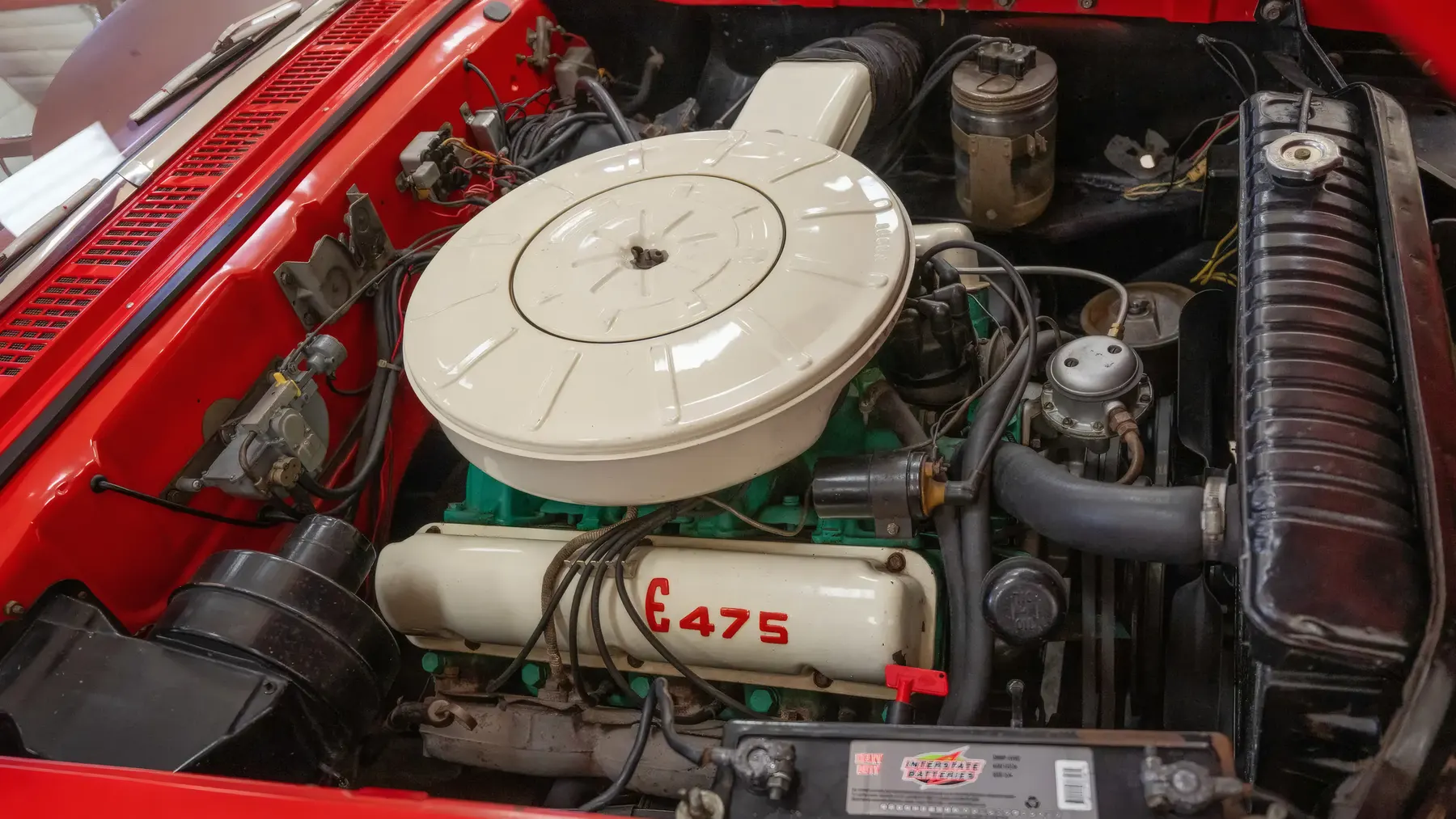
The engine deserved more credit than the car’s reputation allowed. The E-475 was the 410 cu in (6.7-litre) member of Ford’s new MEL family, named, like the 361 cu in E-400 fitted to the cheaper Edsels, after its torque rating in lb-ft. A four-barrel V8 with a 10.5:1 compression ratio, it was rated at 345 bhp and 475 lb-ft, gross figures in the convention of the day, and within the Edsel range it was reserved for the Corsair and Citation, while the Ranger and Pacer made do with 303 bhp. Power reached the rear wheels through a three-speed automatic. Frame and suspension followed Ford practice: a box-section frame, independent front suspension with ball joints and coil springs, and leaf springs at the rear. Sports Illustrated’s launch report found nothing radical beneath the skin, which in 1957 was hardly a criticism. The quietly clever part was a self-adjusting brake system, standard across the range, which kept drum-to-lining clearance within tolerance and, in the magazine’s description, could be topped up by an occasional application of the brakes in reverse.
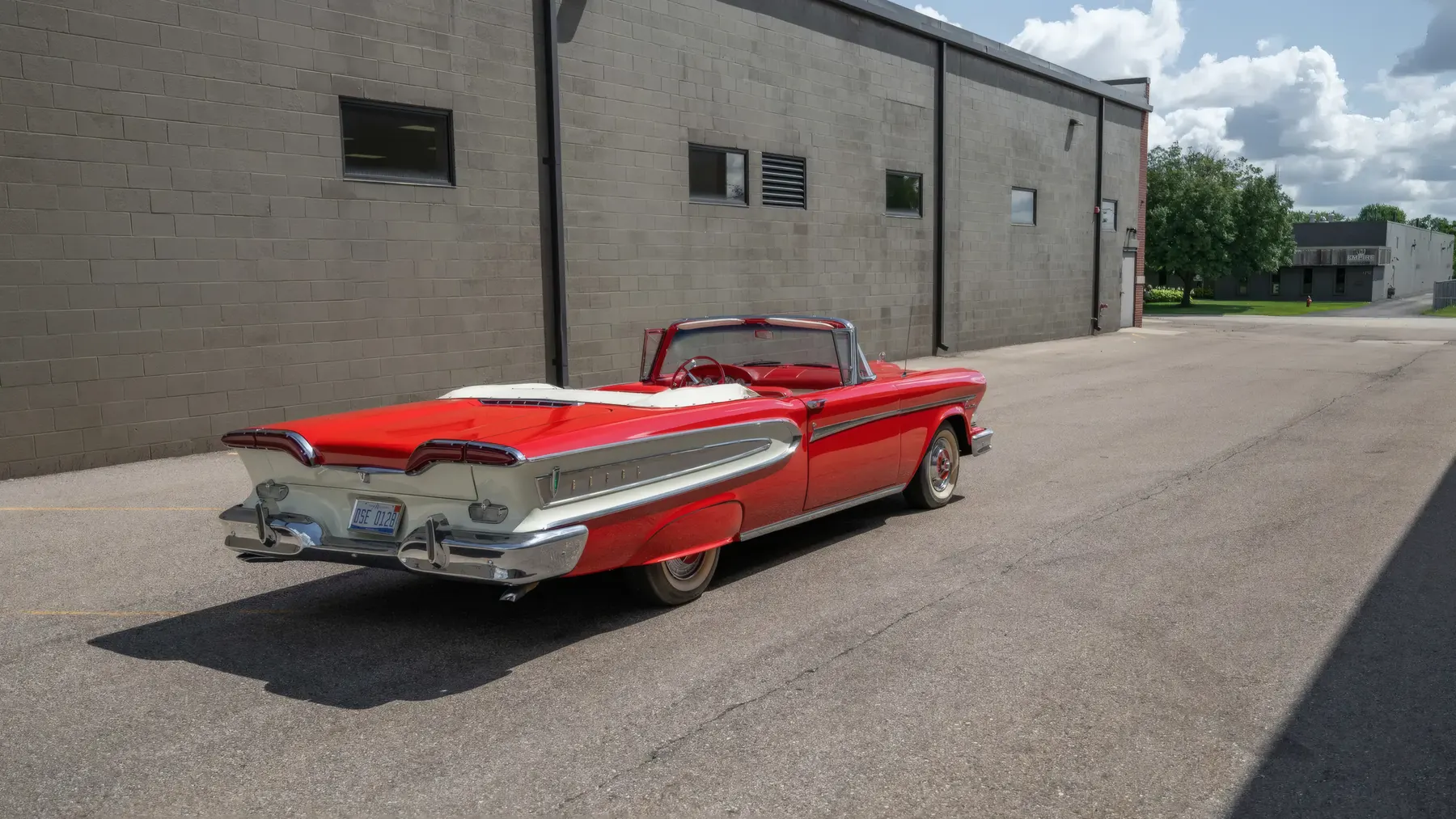
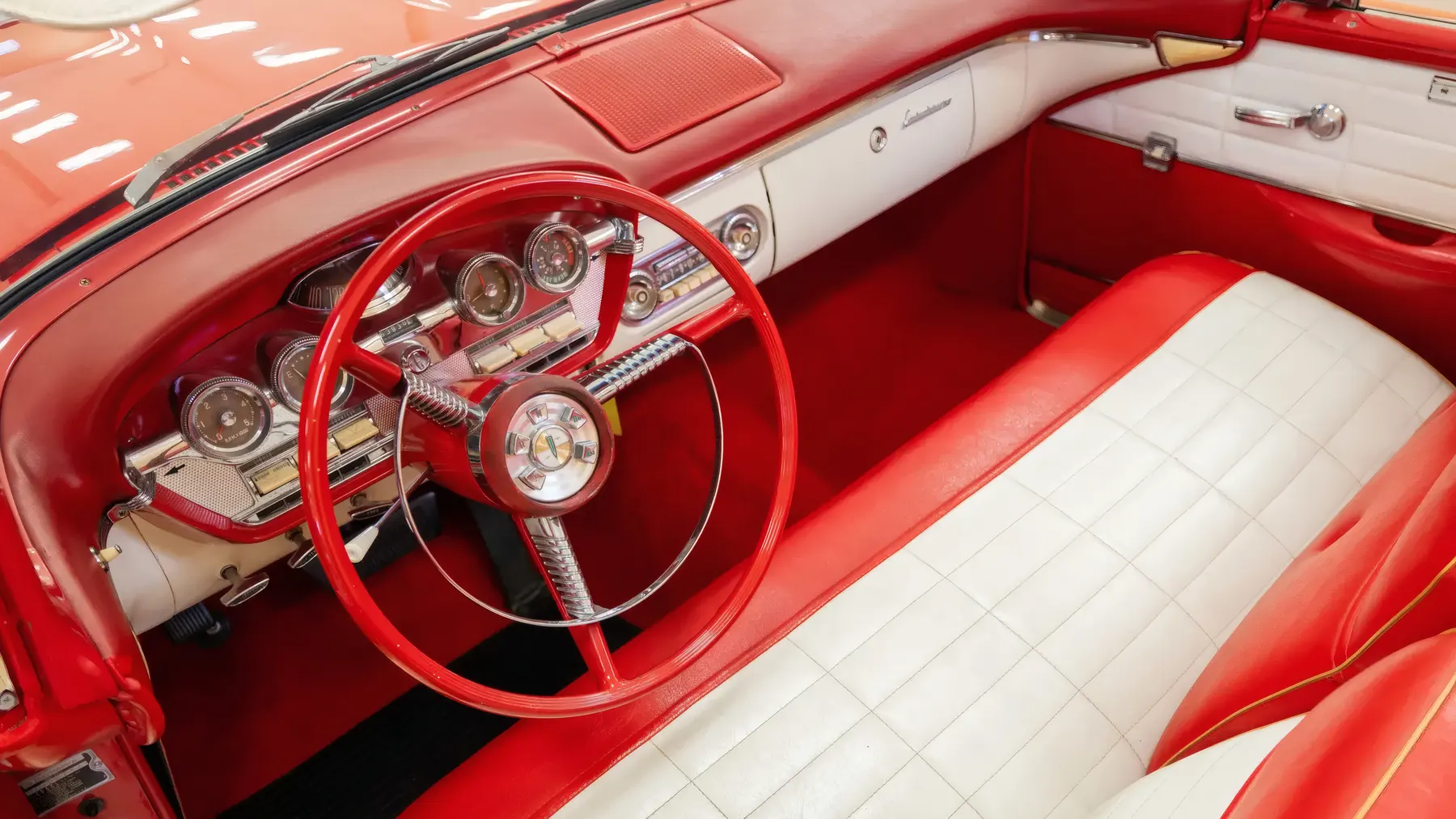
Styling was where Edsel spent its courage. According to RM Sotheby’s catalogue account, designer Roy Brown produced a pastiche of old and new themes, pairing a classically upright grille with wings shorn of the tailfins then in fashion. The vertical “horse-collar” centrepiece and boomerang-shaped tail lamps made the car unmistakable, and Sports Illustrated singled out the massive protrusion of the lamps and bumper and the channelled “flight deck” boot lid. The Citation added signatures of its own: large anodised inserts in each rear wing cove, which Mac’s Motor City Garage says let you pick out a Citation from a block away, special mouldings and medallions, and two- or three-tone paint, according to The Henry Ford. Hagerty adds that it carried more stainless exterior trim than any other Edsel. Inside came upgraded upholstery, a padded dash, an electric clock and an illuminated glovebox. The party tricks were the “rolling dome” speedometer and Teletouch, push-button transmission controls in the hub of a deep-dish steering wheel, which Sports Illustrated’s writer judged a commendably convenient arrangement. Option lists stretched to power windows, seats and brakes, and to a warning device that lit the speedometer red once a driver-selected speed was exceeded.
Pinning down what the convertible felt like requires care, because independently documented road tests of this body style are thin on the ground and most of what exists dates from the launch. Sports Illustrated’s writer drove three Edsel models at Ford’s Dearborn proving ground and found them swift, smooth and stable, and he repeated Ford’s claim of 0–60 mph in 8.8 seconds for the big-engine cars, a figure he said would flatter some well-developed sports cars. That is a manufacturer’s claim and is best read as one. The car it describes is large, at roughly 5,560 mm long, and kerb weight for the Citation line is quoted at around 1,950 to 2,040 kg, with figures varying by source and equipment. A torque-led V8, an automatic and a long wheelbase add up to a car built for unhurried cruising with the top down rather than for hustling through corners, and nothing in the engineering suggests Ford ever intended otherwise.
The Citation’s weaknesses were nonetheless real, and several were baked in. The most infamous was Teletouch. Because Corsair and Citation took it as standard, while the cheaper Edsels could be ordered with a conventional selector, the flagship buyer received the least conventional hardware with no way to opt out. The shift servo lived in a hot, wet and dirty position between the bell housing and the exhaust, and the relays, switches, wiring and connectors around it proved troublesome. Using it meant lifting a hand from the wheel rim, and it occupied the wheel centre where drivers had long expected a horn button, although an inhibitor switch was fitted to prevent a damaging shift at speed. Many owners reportedly gave up and fitted a floor shift, and Teletouch was gone for 1959. Hagerty also names the rolling speedometer as a trouble spot. Beyond the gadgets, this was a heavy car stopped by drum brakes and fed on premium fuel because of that 10.5:1 compression, a poor match for a year in which recession was steering buyers towards economy cars. Britannica lists poor workmanship among the reasons the public turned away. And then there was the price: the Citation range, topped by the $3,766 convertible, cost within a few dollars of a Montclair, slightly more than a Buick Super and hundreds of dollars more than an Oldsmobile Super 88, rivals that matched it for size, weight and features and came with names buyers already knew.
Launch-era reaction was more mixed than the legend suggests. Sports Illustrated’s impressions were warm, even as its writer conceded that the very expensive question was how the public would respond, and one retrospective summary of the period press reports that the New York Times saw continental flair in the grille while the Los Angeles Times praised the road manners. Hagerty’s view of the grille is blunter: unlike anything any other manufacturer used, and out of place as cars were growing lower and wider. The showroom settled the argument. Ford hoped to sell 200,000 Edsels in 1958; sources put the actual total between roughly 63,000 and 68,000, and Citation output at about 8,600 to 9,300 across the three body styles, making the convertible, at 930, among the scarcest Edsels of the year. As sales sagged, Edsel-only dealers closed or added other franchises, including Lincoln-Mercury. For 1959 the Citation disappeared, the Corsair became the senior Edsel on a 3,048 mm wheelbase with a smaller 361 cu in engine, and Teletouch was dropped. Ford announced the end of the brand on 19 November 1959. Britannica puts the cost at upwards of $350 million, and credits the decision to Robert McNamara, while other accounts give lower figures: one estimate of the final loss is around $200 million, because part of the investment went into plants and facilities Ford kept.
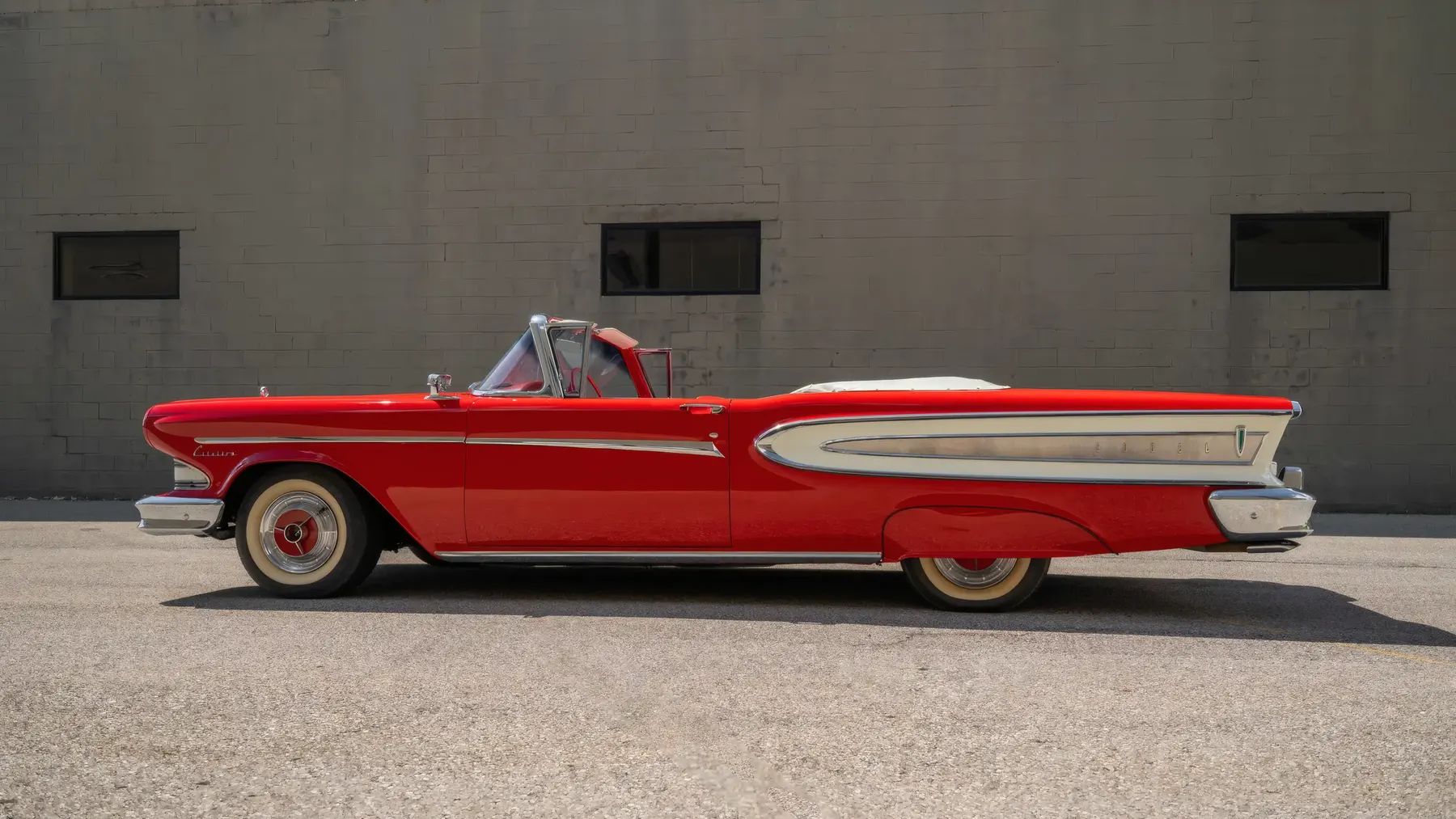
Time has been kinder to the car than the showroom was. Edsel remains shorthand for commercial failure, but the collector view of the Citation convertible is warm. RM Sotheby’s calls it the most prestigious of the original 1958 Edsels, argues that beneath the infamy it was a well-engineered and solidly built automobile, and points to an active worldwide club. Hagerty says Citations are coveted for the novel features and horse-collar grilles that once sank them, and it singles out the 1958 Pacer and Citation convertibles as the expensive ones to buy. The irony is neat. Nearly everything that counted against the car in 1958, from the Mercury underpinnings that blurred its identity to the gadgets that broke and the recession that crushed demand, is part of why surviving examples are so rare and so interesting now. Hagerty notes that Ford’s compact Falcon and Comet would soon be huge successes, which tells you how quickly the company moved on. The Citation convertible belongs to the earlier, more extravagant idea of what a Ford-family flagship should be: very large, very heavily optioned, and entirely certain that buyers would want to be seen in it.
Technical data
Performance Specifications
| Specification | 1958 Edsel Citation Convertible (76B) |
|---|---|
| Production years | 1958 only |
| Production (convertible) | 930 |
| Engine | 410 cu in (6.7-litre) E-475 MEL V8, four-barrel carburettor, 10.5:1 compression |
| Power | 345 bhp (gross) |
| Torque | 475 lb-ft |
| Transmission | Three-speed automatic, Teletouch push-button control (standard) |
| Frame / suspension | Box-section frame; independent front with ball joints and coil springs; rear leaf springs |
| Brakes | Self-adjusting drums |
| Wheelbase | 3,150 mm |
| Length | Approx. 5,560 mm |
| Kerb weight | Approx. 1,950–2,040 kg* |
| 0–60 mph | 8.8 seconds (manufacturer’s 1957 claim, big-engine models)* |
| Base price (convertible) | $3,766 |
| Related Pacer convertible (for context) | 361 cu in E-400 V8, 303 bhp; wheelbase 2,997 mm |
Sources
- Sports Illustrated Vault – “Edsel Arrives” (2 September 1957)
- RM Sotheby’s – 1958 Edsel Citation Convertible (model background)
- Mac’s Motor City Garage – The Cadillac of Edsels: The 1958 Citation
- Mac’s Motor City Garage – The Most Beautiful Thing That Ever Happened to Horsepower: 1958 Edsel
- The Henry Ford – 1958 Edsel Citation Convertible (collections)
- Hagerty – 1958 Edsel Pacer
- Hagerty – Edsel Ranger roundup
- Hagerty Marketplace – 1958 Edsel Citation Convertible (model background)
- Encyclopaedia Britannica – Edsel
- Wikipedia – Edsel Citation
- Wikipedia – Teletouch
- Wikipedia – Edsel Pacer
- Wikipedia – Edsel Corsair
- Wikipedia – Ford MEL engine
- Wikipedia – Edsel
- Curbside Classic – QOTD: 1959 Edsel
- Curbside Classic – Cohort Pick of the Day: 1958 Edsel with Teletouch
- Lancaster Insurance – The Edsel Revisited
- Indie Auto – Disaster in Dearborn: The Story of the Edsel (review)
- 76B
- ClassicCars.com – 1958 Edsel Pacer convertible (body-code convention only)
Join the discussion
Comments
Loading comments…
Leave a comment
Share a detail, memory, or perspective. Every comment is reviewed before publication.