Ferrari 250 GT SWB California Spider: A Race Car in Drop-Top Disguise
1960 Ferrari 250 GT SWB California Spider by Scaglietti




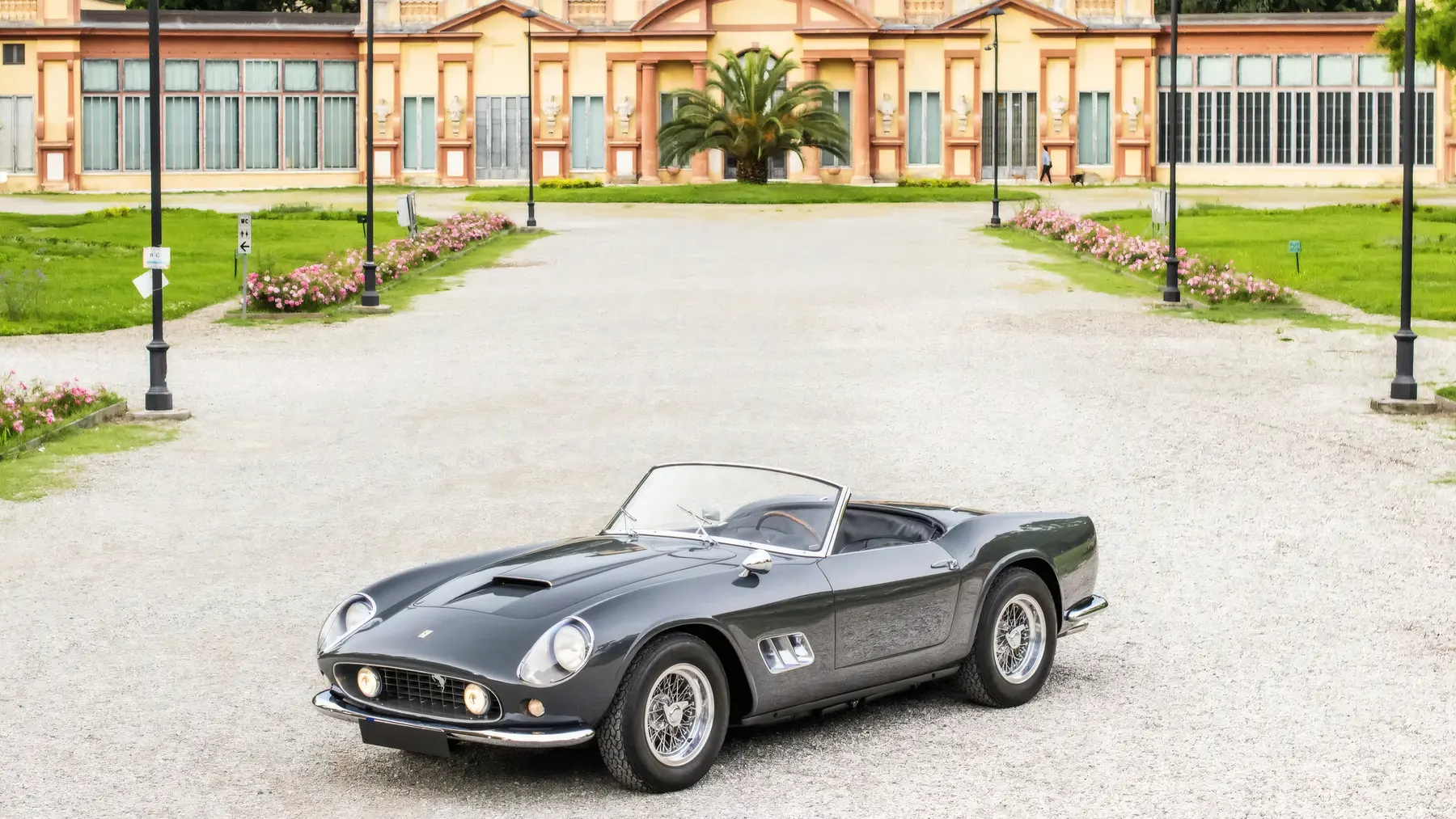
Images: Remi Dargegen / RM Sotheby's
When Luigi Chinetti and John von Neumann pressed Maranello for an open-topped 250 GT in the late 1950s, they were not asking for a soft convertible to idle along the boulevards of Los Angeles. Ferrari’s two most important American concessionaires wanted something closer to a competition berlinetta with its roof removed: a car a well-heeled enthusiast could drive to a race meeting, compete seriously, and then drive home again with the top folded down. That brief, more than any styling exercise, is what shaped the Ferrari 250 GT California Spider, and nowhere is the tension between glamour and competition intent more finely resolved than in its final and most coveted form, the short-wheelbase California Spider bodied by Scaglietti between 1960 and 1963.
The idea did not arrive fully formed. The original long-wheelbase California Spider, built from late 1957 through 1959 on a 2,600mm tubular chassis derived from the 250 GT Tour de France berlinetta, proved the concept could work: an early example took a class win at the 1959 Sebring 12 Hours and finished fifth overall at Le Mans that same year. But the LWB cars also exposed the concept’s rough edges. George Arents, an early NART backer who ran the prototype on the American East Coast racing circuit, was openly critical of the car’s handling, and the factory responded with a string of running changes: a strengthened crankshaft and connecting rods, revised chassis bracing, and eventually the switch from drum to Dunlop disc brakes partway through the model’s life. It was a car still finding its footing.
Ferrari resolved most of those complaints when it unveiled the revised California Spider at the 1960 Geneva Salon, built on the new 2,400mm short-wheelbase platform that the contemporary 250 GT SWB berlinetta had just introduced. The shorter, stiffer Tipo 539 chassis (later 539/61) cut 200mm from the wheelbase specifically to sharpen turn-in and reduce the flex that had dogged the LWB cars, while a wider front and rear track, new Koni telescopic dampers in place of the old lever-arm units, and standard four-wheel Dunlop disc brakes brought the chassis up to the standard of Ferrari’s serious competition machinery. Under the bonnet sat an evolution of the familiar Colombo V12: 2,953cc, a single overhead camshaft per bank, two valves per cylinder, and triple twin-choke Weber 40 DCL6 carburettors, now built to the Tipo 168 specification with revised cylinder heads. In everyday road tune it produced a widely quoted 240bhp at 7,000rpm and around 190lb-ft of torque at 5,000rpm, driving through a four-speed all-synchromesh manual gearbox. Fifty-six examples were built before the model gave way to the 275 GTS, a run so small that no two cars were ever quite specified the same way.
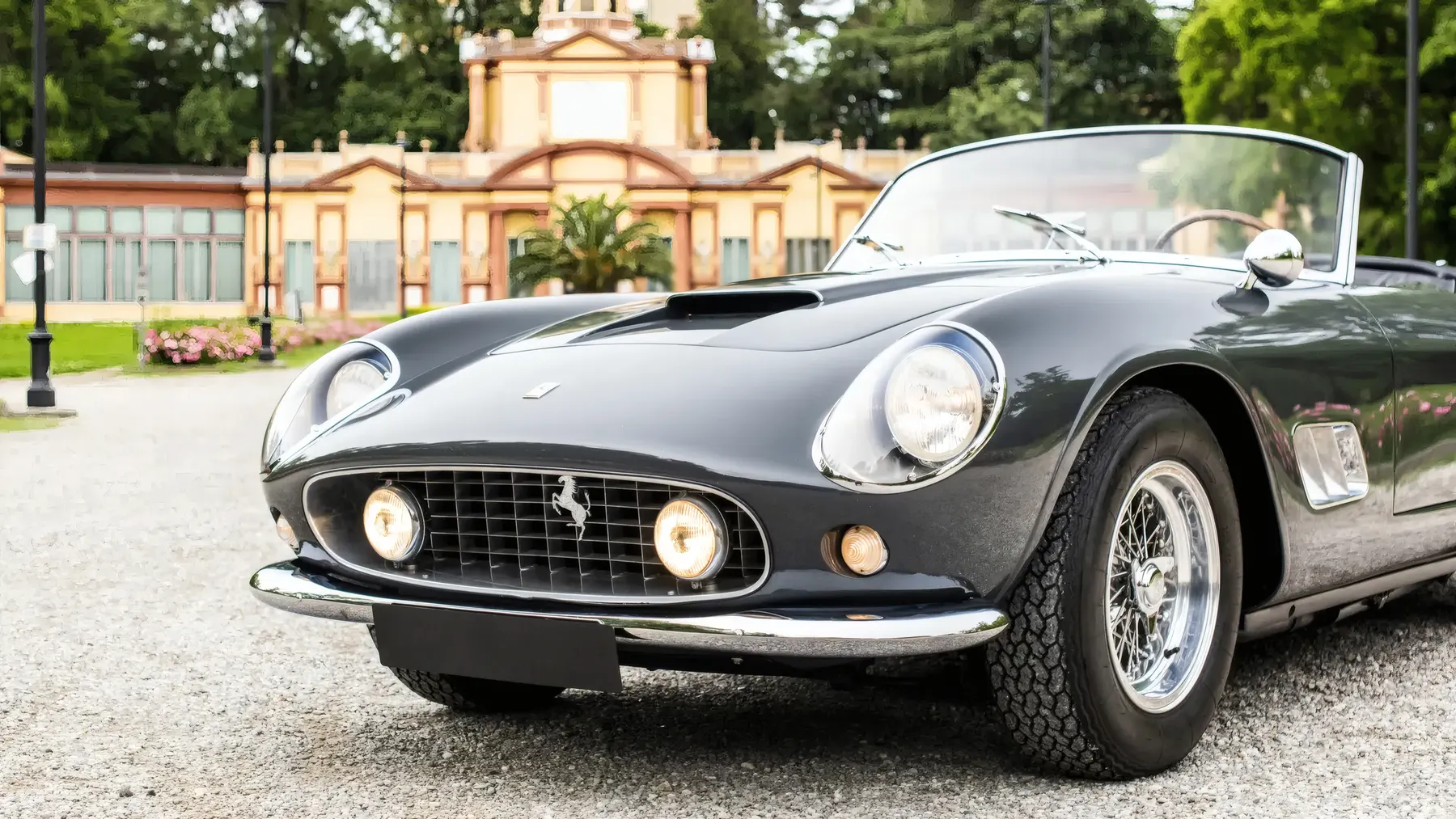
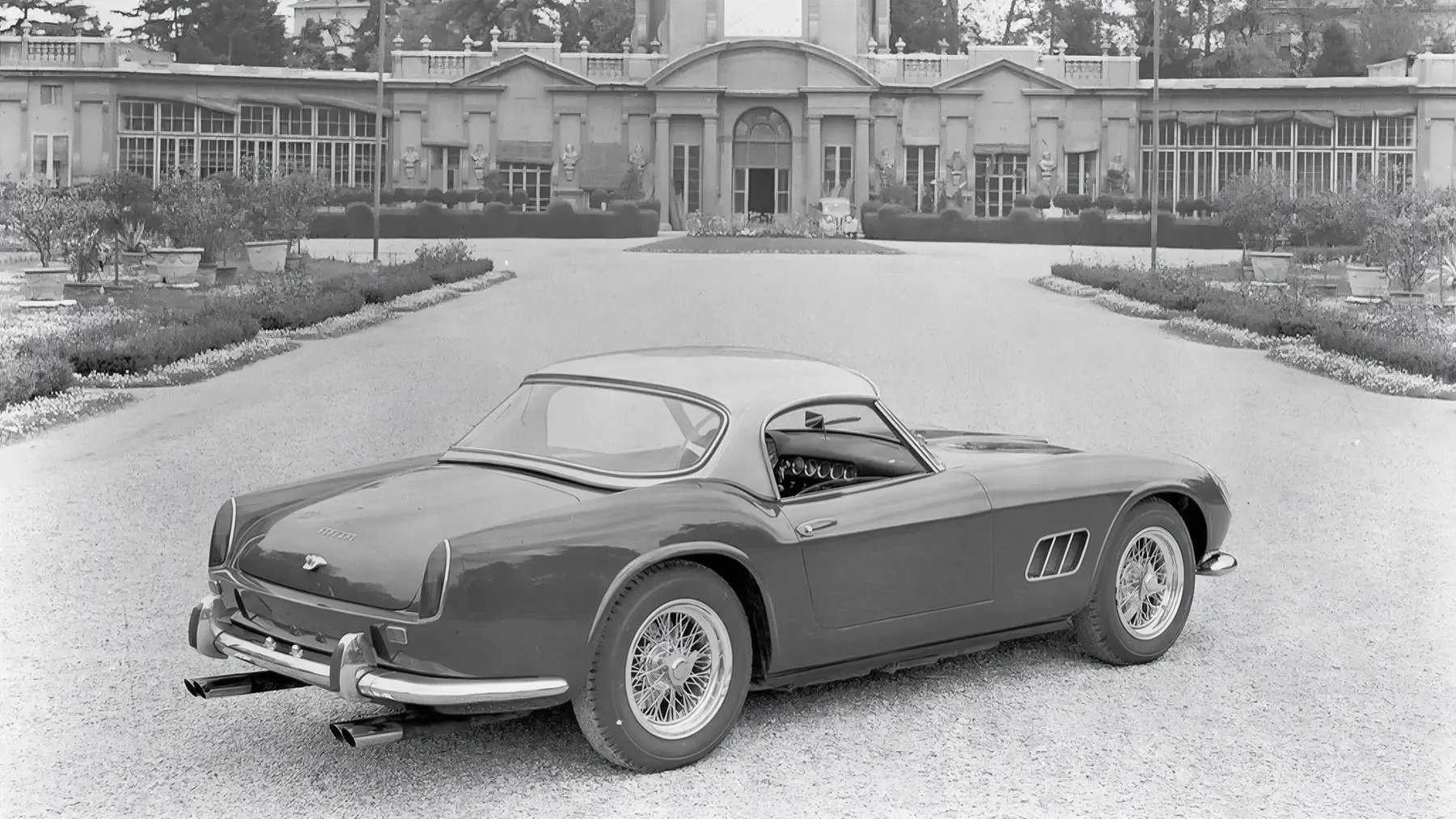
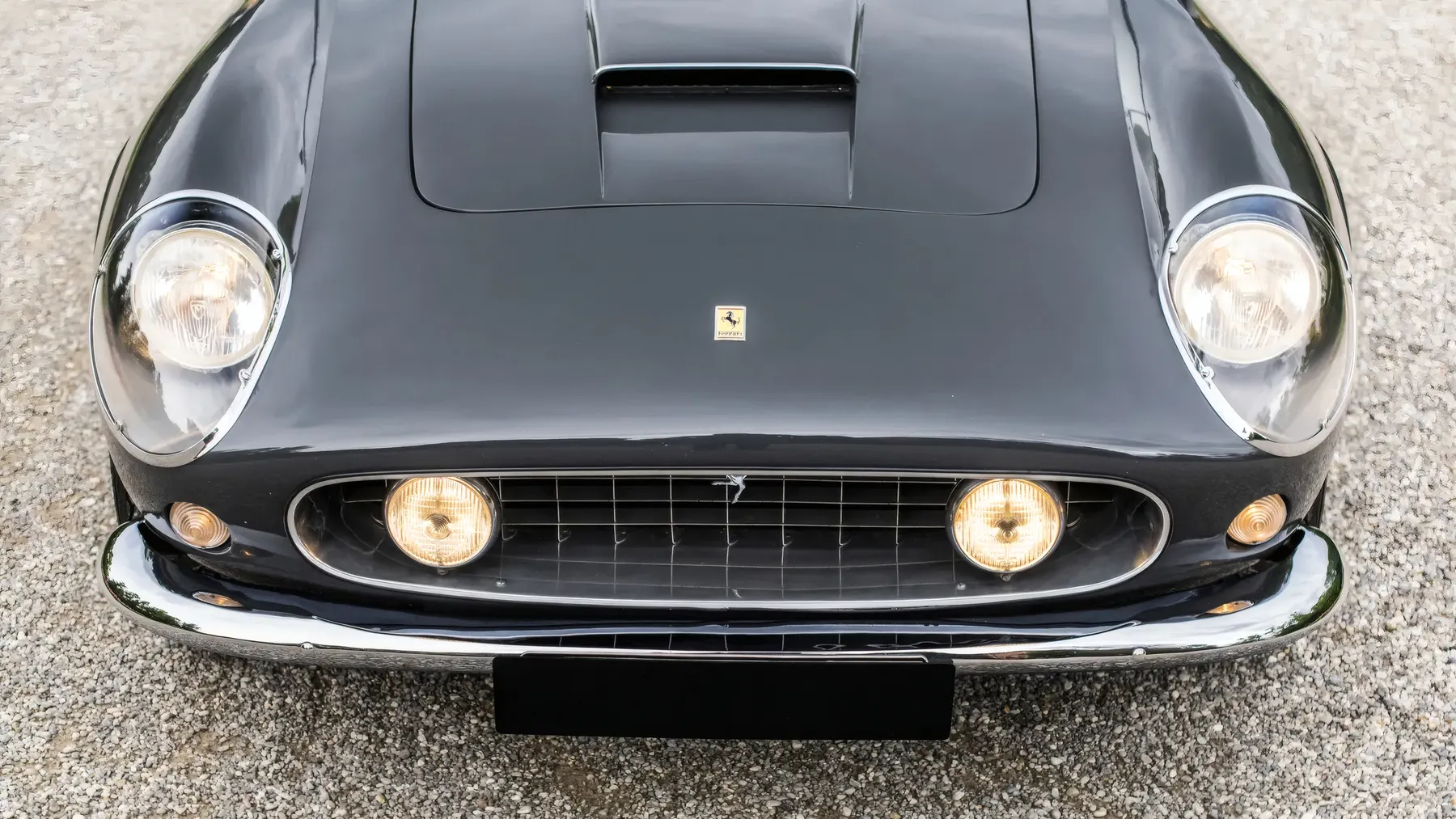
Design and execution were, characteristically for Ferrari at this stage of its history, a shared credit. The California Spider’s flowing lines were developed in Pininfarina’s studio, adapted from the closed 250 GT Cabriolet, but because Pininfarina’s own works was overstretched with mainstream production work, the job of actually building the open bodies fell entirely to Sergio Scaglietti’s small coachworks in Modena. The SWB body carried over most of the LWB’s silhouette but sat 30mm lower, wore new door handles and a trio of louvred vents on each front wing, and lost the LWB’s slightly heavier-haunched rear wings for a tauter, more purposeful stance. Construction was steel for the main panels with aluminium used for the doors, bonnet and bootlid to save weight; it was hand-formed, artisan work rather than production-line manufacturing, and later restorers going through these cars have reported distinctly crude fabrication in places, particularly around the door frames, a reminder that Scaglietti’s operation was built for speed and flair rather than panel-fit precision. Buyers could specify covered, faired-in headlamps or exposed open units; Italian regulations of the period effectively required open lamps for domestic-market cars, so the covered-headlamp treatment, now the most sought-after configuration among collectors, tended to go on export cars. Sources differ slightly on the exact split, most commonly citing around 37 of the 56 SWB cars as covered-headlamp examples, with more recent factory-history research suggesting a figure closer to 39.
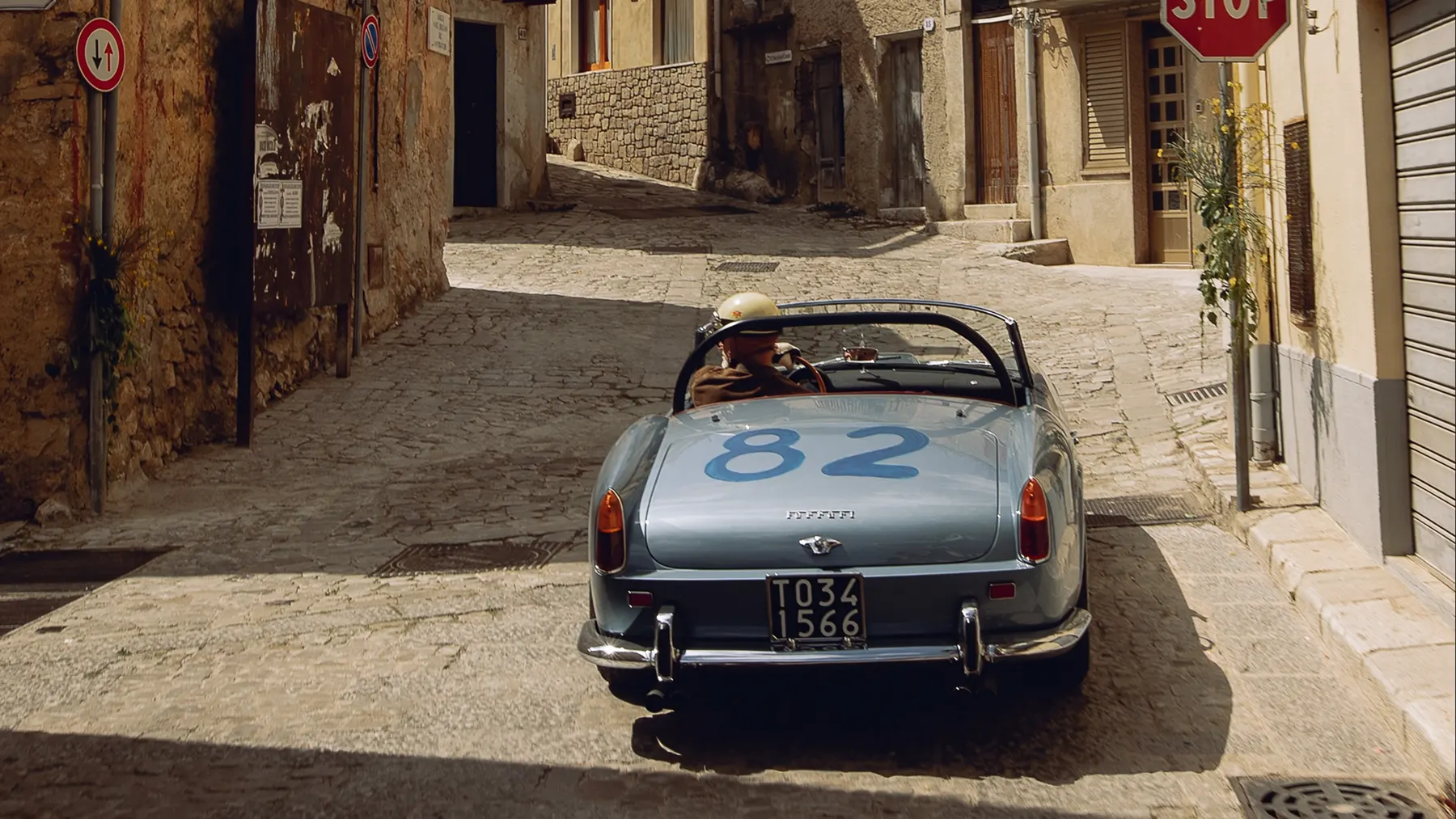
A handful of SWB California Spiders were built with full competition intent. Three of the 56 received lightweight alloy coachwork rather than steel, and of those, two were finished to full Competizione specification, with the hotter Tipo 168 competition engine, larger fuel tanks, auxiliary lighting and stripped trim for endurance racing; period estimates for these engines run as high as 276 to 280bhp, a meaningful step beyond the standard car’s output, though the figure was never a catalogued factory rating in the way a modern homologation figure would be. These cars, and a scattering of steel-bodied examples pressed into service by owners who simply wanted to race what they had bought, kept the California Spider’s competition pedigree alive through the early 1960s: entries appeared at the Targa Florio, in European hillclimbs, and in the 1960 Le Mans and 1961 Sebring 12 Hours, where one SWB Spider driven by Jan de Vroom finished twelfth overall and third in class against purpose-built sports-racers, a genuinely creditable result for a car with carpets and a folding hood. By the time the works effort shifted decisively to the closed SWB berlinetta and then, from 1962, to the purpose-built 250 GTO, though, the California Spider’s competition role had become more of a privateer’s pursuit than a factory priority; its class finishes were respectable rather than dominant, and it was never going to be the car Ferrari staked its GT championship ambitions on.
From behind the wheel, the appeal is immediate and largely undimmed by six decades. The Colombo V12 fires with a hard, metallic bark that settles into a smooth idle before opening into the addictive multi-layered wail that made this engine family famous, sharpened here by the triple Webers’ induction roar. Period road tests of an early production car recorded the ZF worm-and-sector steering as beautifully fluid and precise, light at low speeds and progressively meatier as speed builds, while the tall, long-throw gearlever snicks through its gate with a mechanical precision that rewards a deliberate hand rather than a hurried one. That same test recorded 0-60mph in around 7.2 seconds and a top speed of 135mph; contemporary accounts of the hotter SWB competition cars put outright pace closer to 140mph. Those figures still feel genuinely quick from a fifties GT car, and the accompanying soundtrack makes the experience feel faster still. But push past a gentle cruise and the car’s era shows through: trail the throttle into a fast corner and there is a moment of mild understeer as the nose pushes wide, followed, if you get back on the power, by a building transition into oversteer that several owners over the years have found came on more suddenly than they expected, sometimes spinning cars that were driven harder than the chassis, for all its 1960 improvements, was really designed to tolerate. The live rear axle on semi-elliptic leaf springs still hops over mid-corner bumps under load, betraying the fundamentally 1950s design beneath the sophisticated details.
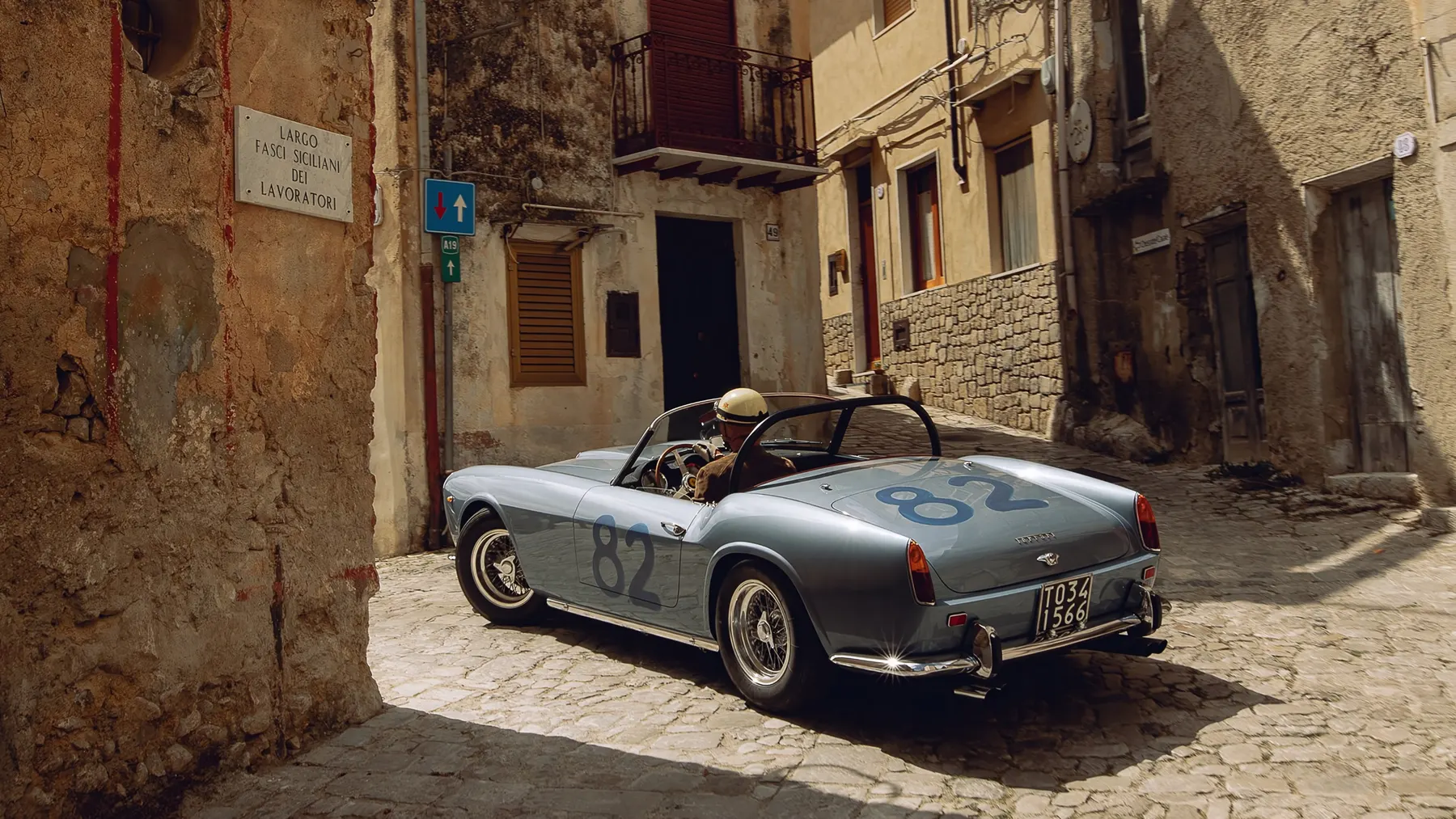
That combination of genuine ability and genuine limitation is worth dwelling on, because the California Spider is too often discussed purely in terms of beauty and auction results. The cockpit, shared in essence with the closed berlinettas, is snug even for smaller drivers, with pedals set close together and upright, a layout that was clearly sized around period Italian proportions rather than American ones despite the car’s American market origins. Weather equipment was minimal by design: the folding hood on early cars was unlined, fitting was fiddly enough that many owners simply left it down whenever possible, and Scaglietti’s optional glassfibre hardtop, while elegant, was ordered by relatively few original buyers, leaving most cars genuinely vulnerable to the elements. Build quality, for all the glamour of the finished shape, was inconsistent in the way hand-built, low-volume coachwork from this era usually is, and the panel fit and door-frame construction that later restorers encountered reflect a company still prioritising speed of production and dramatic form over long-term durability. And the dual-purpose brief that Chinetti and von Neumann had pushed for was never entirely resolved to universal satisfaction: it was the same Arents, writing years later for a book devoted to the model, who judged the California type, taken as a whole, among the least accomplished cars ever to wear the Ferrari badge, save for a couple of specific out-and-out racing models — a harsh verdict, rooted mainly in his experience of the earlier long-wheelbase cars, but a useful corrective to the idea that this model was universally adored from the outset. In period, a car built to be both a credible racer and a comfortable open tourer inevitably satisfied committed racers less than a stripped competition berlinetta and comfort-focused owners less than the plusher 250 GT Cabriolet sold alongside it.
None of that has dented the California Spider’s modern standing; if anything, the tension between its everyday usability and its competition credentials is precisely what today’s collectors prize. Values for the SWB have climbed into rarefied territory, with clean road cars regularly changing hands in the sixteen-to-nineteen-million-dollar range and the rare alloy-bodied Competizione cars going further still; a Competizione example set a new benchmark for the model at just over twenty-five million dollars at a Monterey auction in August 2025. The long-wheelbase cars that started it all trade for a fraction of that, typically in the six-to-ten-million-dollar band, a gap that says as much about the SWB’s tauter, more resolved design as it does about rarity. Along the way the model has picked up a cultural footprint well beyond the collector world: a California Spider, or rather a glassfibre replica of one, became a supporting character in the 1986 film “Ferris Bueller’s Day Off,” and the sight of that car going through a plate-glass window has probably introduced more people to this shape than any concours lawn ever could, even though the genuine article was always too valuable to risk on a film set. A barn-discovered example from the Baillon Collection, left untouched for decades before its 2015 sale in France, briefly became one of the most talked-about classic car stories of the decade and underlined just how much cultural and financial weight this model now carries.
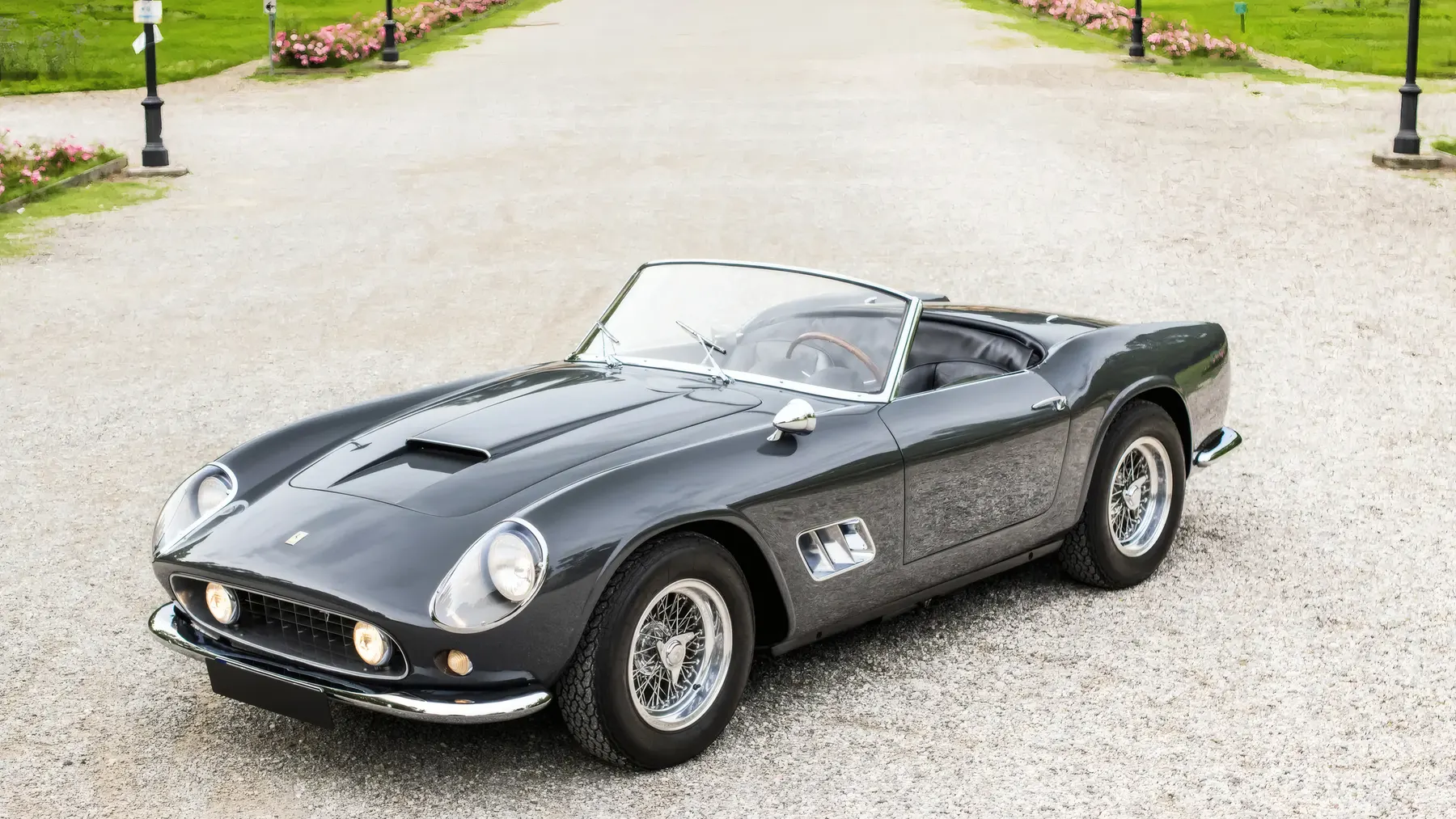
What makes the SWB California Spider endure, more than the individual numbers, is how completely it resolved the argument its own predecessor had started. Chinetti and von Neumann wanted a Ferrari you could race on Saturday and drive to dinner on Sunday, and the long-wheelbase car proved that idea was sound without quite proving it was comfortable to live with. The short-wheelbase car, arriving with a stiffer chassis, disc brakes all round and a tauter body atop mechanicals shared with Ferrari’s serious competition machinery, came close enough to squaring that circle that it has spent the sixty-odd years since setting the template for what an open, usable, genuinely fast Ferrari is supposed to feel like. It was never flawless, and the flaws that mattered in period — a cabin sized for smaller frames, weather protection that asked a lot of its owners, a chassis that could still catch out someone pushing too hard, and build quality that varied from car to car — have not disappeared with age, even if most surviving examples now spend far more time in climate-controlled storage than on the road they were built for.
Technical data
Performance Specifications
| Specification | Detail |
|---|---|
| Production | 56 examples, 1960–1963 (SWB series only; 106 total across LWB and SWB, 1957–1963) |
| Body/chassis | Steel body with aluminium doors, bonnet and bootlid; Tipo 539/539-61 tubular steel chassis |
| Coachwork | Styled in Pininfarina’s studio, built by Carrozzeria Scaglietti, Modena |
| Engine | 2,953cc Colombo SOHC 60° V12, two valves per cylinder, three Weber 40 DCL6 carburettors (Tipo 168, later 168/61) |
| Power | 240 bhp @ 7,000 rpm (road-spec cars, widely cited); up to approximately 276–280 bhp claimed for alloy-bodied Competizione examples |
| Torque | approximately 190 lb-ft @ 5,000 rpm (road-spec cars; figure varies slightly by source) |
| Transmission | 4-speed manual, all-synchromesh, rear-wheel drive |
| Suspension | Front: independent double wishbones, coil springs, Koni telescopic dampers. Rear: live axle, semi-elliptic leaf springs, telescopic dampers |
| Brakes | Four-wheel Dunlop discs (standard from the SWB’s 1960 introduction) |
| Steering | ZF worm-and-sector |
| Wheelbase | 2,400 mm |
| Kerb weight | approximately 1,000–1,100 kg dry (figures vary by source and specification) |
| 0–60 mph | approximately 7.2 seconds (period test of an early production example) |
| Top speed | approximately 135 mph (road-spec, as tested); up to approximately 140 mph cited for competition-spec cars |
| Headlamp treatment | Covered (faired-in) or open, by customer/market specification; approximately 37–39 of 56 cars built with covered headlamps |
Sources
- Classic & Sports Car: “Cut to the chase: Ferrari 250GT California Spider visits the West End”
- Ferrari.com Heritage: Ferrari 250 California (1957)
- RM Sotheby’s: 1962 250 GT SWB California Spider by Scaglietti, Monterey 2012
- RM Sotheby’s: 1961 Ferrari 250 GT SWB California Spider by Scaglietti, Villa Erba 2015
- RM Sotheby’s: 1962 Ferrari 250 GT SWB California Spider by Scaglietti, Monterey 2019
- RM Sotheby’s: 1960 Ferrari 250 GT SWB California Spider by Scaglietti, Paris 2026
- Gooding Christie’s: 1961 Ferrari 250 GT SWB California Spider Competizione
- Gooding Christie’s: 1962 Ferrari 250 GT SWB California Spider
- Sports Car Market: 1961 Ferrari 250 GT SWB California Spider Competizione
- Sports Car Market: 1961 Ferrari 250 GT SWB California Spyder
- Top Gear: “Will this Ferrari 250 GT California Spider fetch $18m?”
- Drive: 1961 Ferrari 250 GT California Spyder driven
- Hagerty Media: “$25.3M Ferrari 250 GT SWB California Spider Ticks Every Expensive Box in Monterey”
- duPont Registry News: “Market Spotlight: The Ferrari 250 GT SWB California Spider Finds a New Ceiling”
Join the discussion
Comments
Loading comments…
Leave a comment
Share a detail, memory, or perspective. Every comment is reviewed before publication.