Ferrari 250 GT LWB California Spider by Scaglietti: A Racer That Lost Its Roof
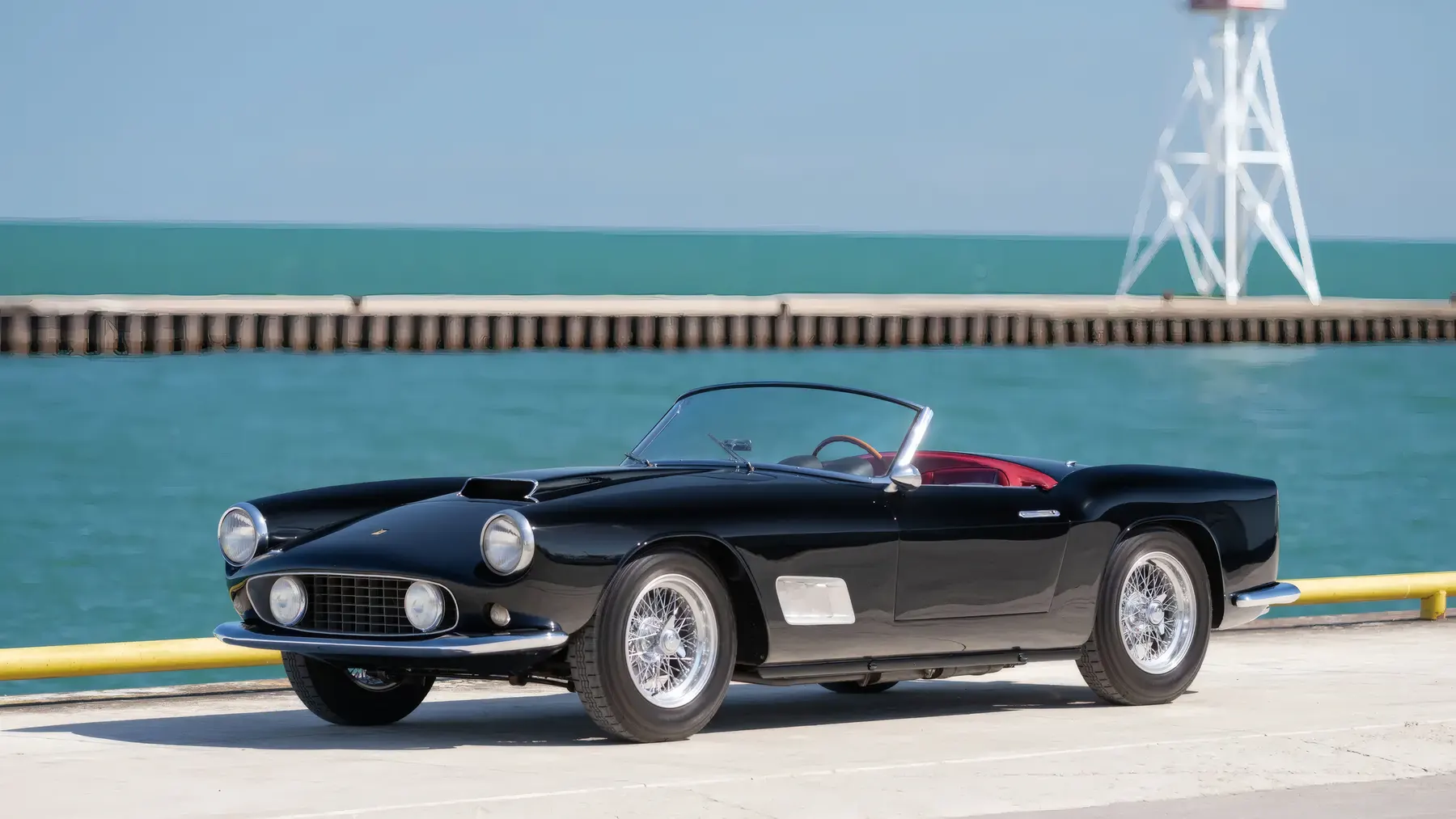
1959 Ferrari 250 GT LWB California Spider by Scaglietti




Images: Darin Schnabel / RM Sotheby's
Strictly speaking, the car the world calls the California Spider is not a spider at all. Ferrari’s own heritage material admits as much: with a full folding hood it is really a cabriolet, and the word was borrowed to keep it apart from the 250 GT Cabriolet being built alongside it on the softer, coupé-derived side of the range. That small piece of naming awkwardness explains the whole car. The long-wheelbase California Spider, built by Scaglietti in Modena between 1958 and 1960, was never meant to be a luxury open Ferrari that happened to be fast. It was a racing berlinetta with the roof taken away, and nearly everything that makes it fascinating, and nearly everything that makes it frustrating, follows from that.
The berlinetta in question was the 250 GT that earned the nickname Tour de France, or TdF, from its results in the French event. By the late 1950s Ferrari’s American importers wanted an open version of it. Ferrari’s own account credits John von Neumann, the west coast representative, with spotting the potential for a sun-friendly open two-seater and Luigi Chinetti with persuading Enzo Ferrari, while auction catalogues tend to describe the two men as working in tandem. Gooding & Company’s catalogue text sums up the brief as a car you could commute in during the week and race at the weekend, and that is the real distinction from the Pinin Farina cabriolet, whose roots lay in the road-going coupé rather than the competition car. A prototype was built in late 1957, series production began in 1958, and the model was announced formally at Ferrari’s annual press conference in Modena on 9 December 1958, by which time several examples had already been built. Across the whole California Spider story Ferrari made 106 cars: 50 long-wheelbase examples, 14 of them in 1958 and the remaining 36 in 1959 and 1960, followed by 56 short-wheelbase cars.
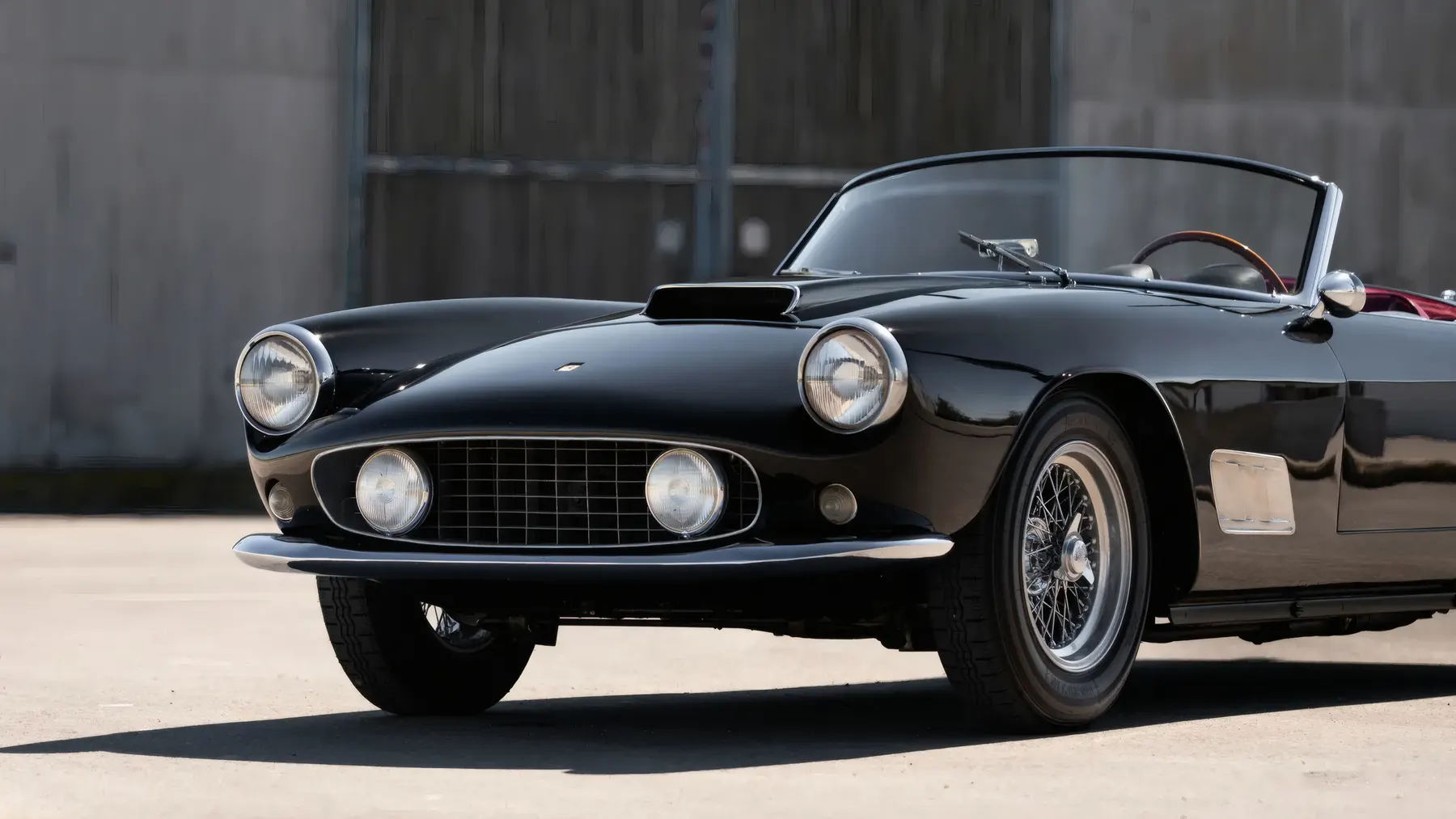
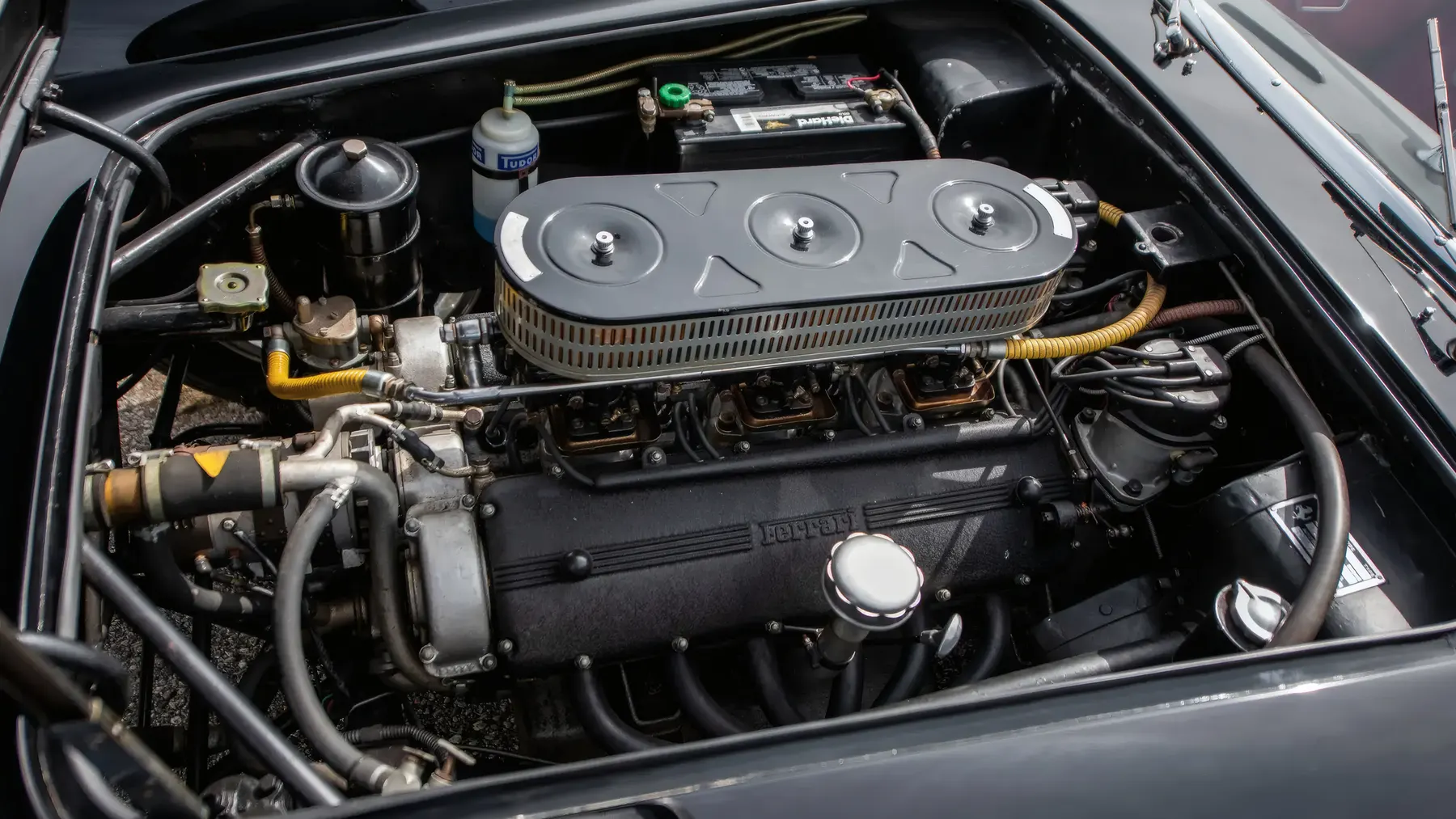
Underneath, the LWB car was a TdF berlinetta in everything but its upper body. The chassis, coded 508C and then 508D, carried a 2,600 mm wheelbase, and the suspension, brakes and steering followed the contemporary berlinettas: independent front suspension with wishbones and coil springs, and a live rear axle on semi-elliptic leaf springs, damped, according to most accounts, by lever-arm Houdaille units rather than telescopic dampers. Scaglietti’s bodies were mostly steel with aluminium opening panels, with a small number of aluminium-bodied cars built for competition. The engine was the Colombo V12 in 2,953 cc form, with a 73 mm bore, 58.8 mm stroke, a single overhead camshaft per bank and three Weber carburettors. Most long-wheelbase cars used engines coded 128C and then 128D, and the 128D, which arrived by mid-1958, gained reinforced connecting rods and a stronger crankshaft. Catalogue descriptions of an early 128D car mention six-port cylinder heads and 9:1 compression. Early cars used a single coil and distributor, with a twin-coil arrangement following.
What that engine actually made depends on whom you ask, and this is one of the more honest places to admit that the sources disagree. The most commonly cited figure is 240 bhp at 7,000 rpm with around 195 lb-ft of torque at 5,000 rpm. One auction house lists just over 220 bhp for an early car, while Ferrari’s heritage page mentions a claimed 260 bhp for the twin-coil engines. Treat any single number as representative rather than settled. The latest long-wheelbase cars and the earliest short-wheelbase ones switched to outside-plug 128 DF and 128 F engines with larger carburettors, and power went to the rear wheels through a four-speed manual gearbox, which in its later form had Porsche-type synchromesh. Every long-wheelbase car was left-hand drive.
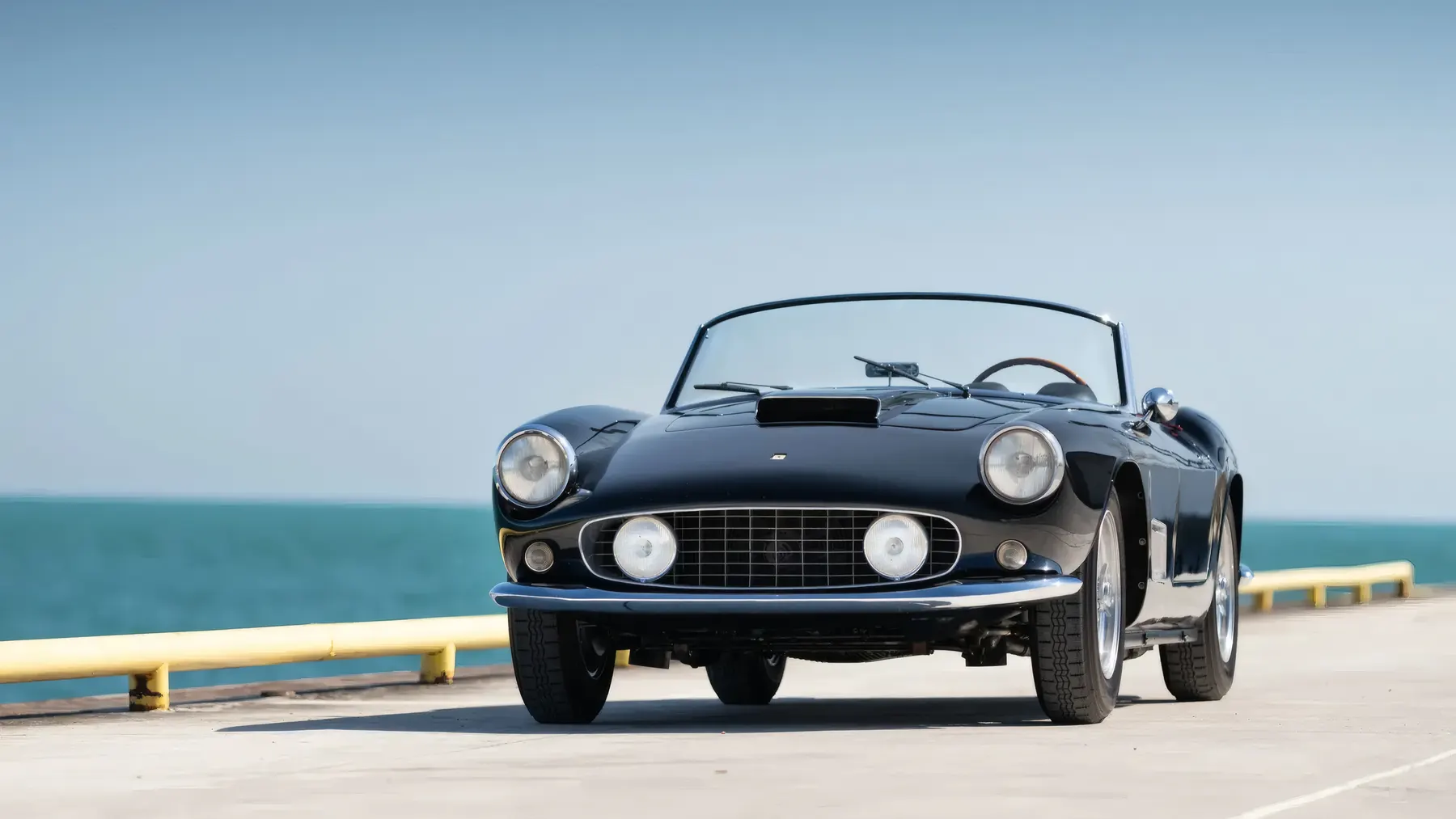
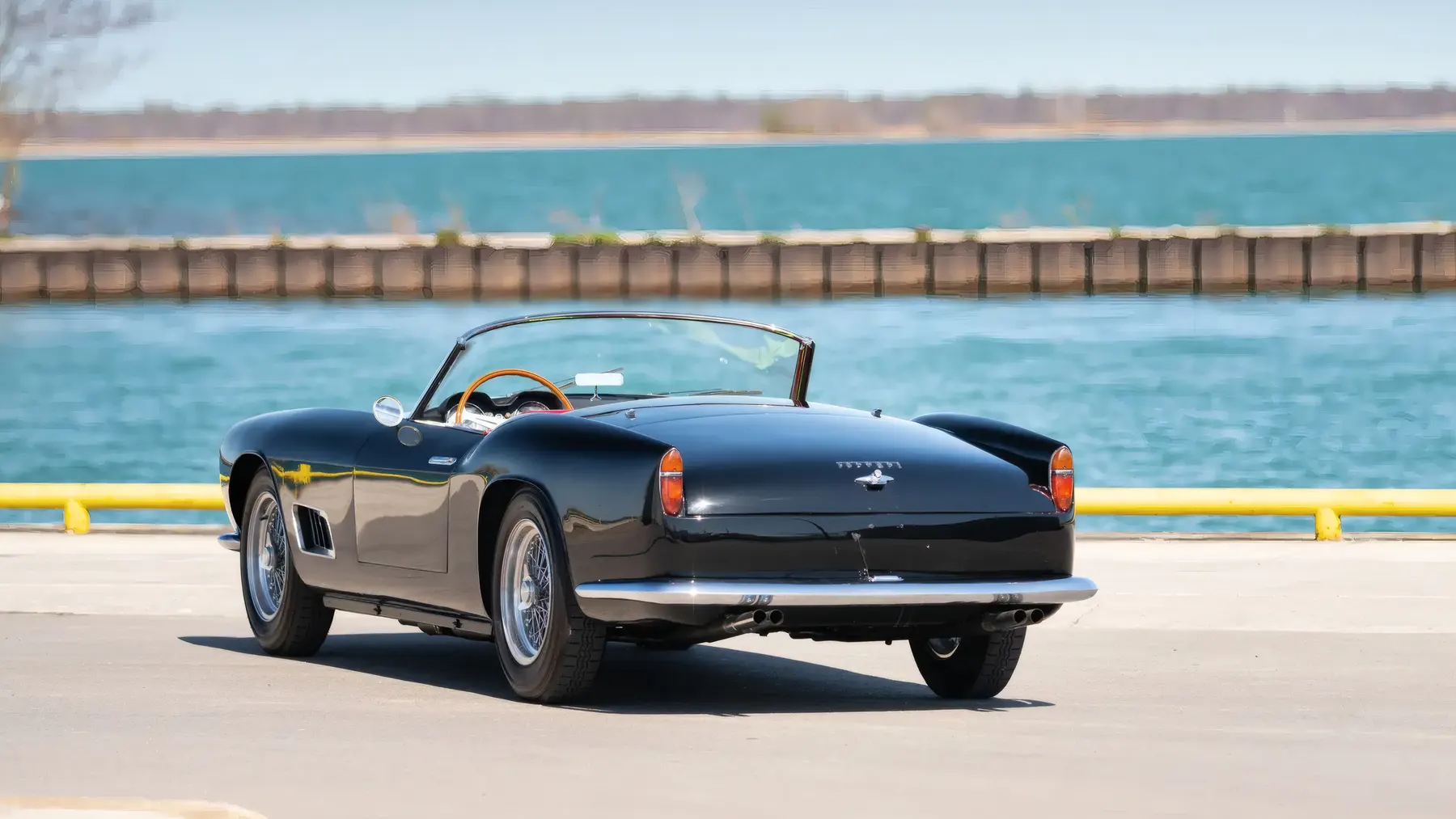
Visually, the earliest cars were berlinettas from the waist down. In Ferrari’s own description, only the windscreen, the folding canvas roof, the boot line and the door handles differed, and the earliest cars are recognisable by their flush door handles and berlinetta-style rear lights. Hagerty’s description of the shape is a long, gently arcing beltline running from the headlamps to just behind the doors, ending in strong, muscular rear haunches, and that is exactly how the car reads: nothing is fussy, and the drama comes from proportion. As the run progressed the front-wing air outlets, the rear wing line, lights, boot and tail were all revised, and late cars gained a step in the panel where the tail projects beyond the base of the boot lid. Buyers could choose covered or open headlamps, except in Italy, where cars sold in 1959 had to have open ones under the regulations of the day. A removable hardtop was available. Telling a late long-wheelbase car from a short-wheelbase one is easiest at the bonnet: the long-wheelbase scoop stands proud of the bonnet line, while the later scoop rises from a depression, and the front-wing outlets carry three raised strips instead of two.
Not everyone thinks the long-wheelbase car is the prettiest of the family. Hagerty UK describes it as having a slightly awkward look that the shorter car corrects, and since the later car is 200 mm shorter in the wheelbase, that is at least a defensible argument about proportions. It is also a minority view, and a matter of taste more than fact. The elongated wheelbase gives the early car a stretched, unhurried elegance that the tauter short-wheelbase car trades away.
Nobody who knew the model’s competition record would have mistaken it for a boulevard cruiser. A long-wheelbase California won the GT class at the 1959 12 Hours of Sebring, finishing ninth overall, and a North American Racing Team car came fifth overall at Le Mans that year, beaten only by two Aston Martin sports-racers and two Ferrari competition coupés and covering about 3,964 km at an average of just under 103 mph. Ferrari also built a small group of Competizione cars, ten long-wheelbase examples in all, eight of them aluminium-bodied. These used the outside-plug Tipo 128 F engine with Testa Rossa-type high-lift camshafts, triple Weber 40 DCL6 carburettors and 9.6:1 compression, for more than 260 bhp at 7,300 rpm according to Hagerty, and they added an external oil cooler, stiffer suspension and a long-range fuel tank filled through the boot lid. A Broad Arrow specialist who drove one in 2025 described the experience as dominated by the engine and dramatically different from a standard California in noise, smell, handling and even braking. That comparison is telling from the other direction, because it implies the ordinary road car was a far more civilised proposition.
Gooding’s catalogue copy says the road car really comes alive in high-speed touring, on long sweeping bends and mountain passes. It is sales copy, and worth treating that way, but it matches what the mechanical layout suggests. A long wheelbase, a high-revving V12 with its torque peak at 5,000 rpm and power peak at 7,000 rpm, and a four-speed gearbox add up to a car that rewards momentum and a driver willing to use the rev counter, rather than one that flatters a lazy right foot or a tight hairpin.
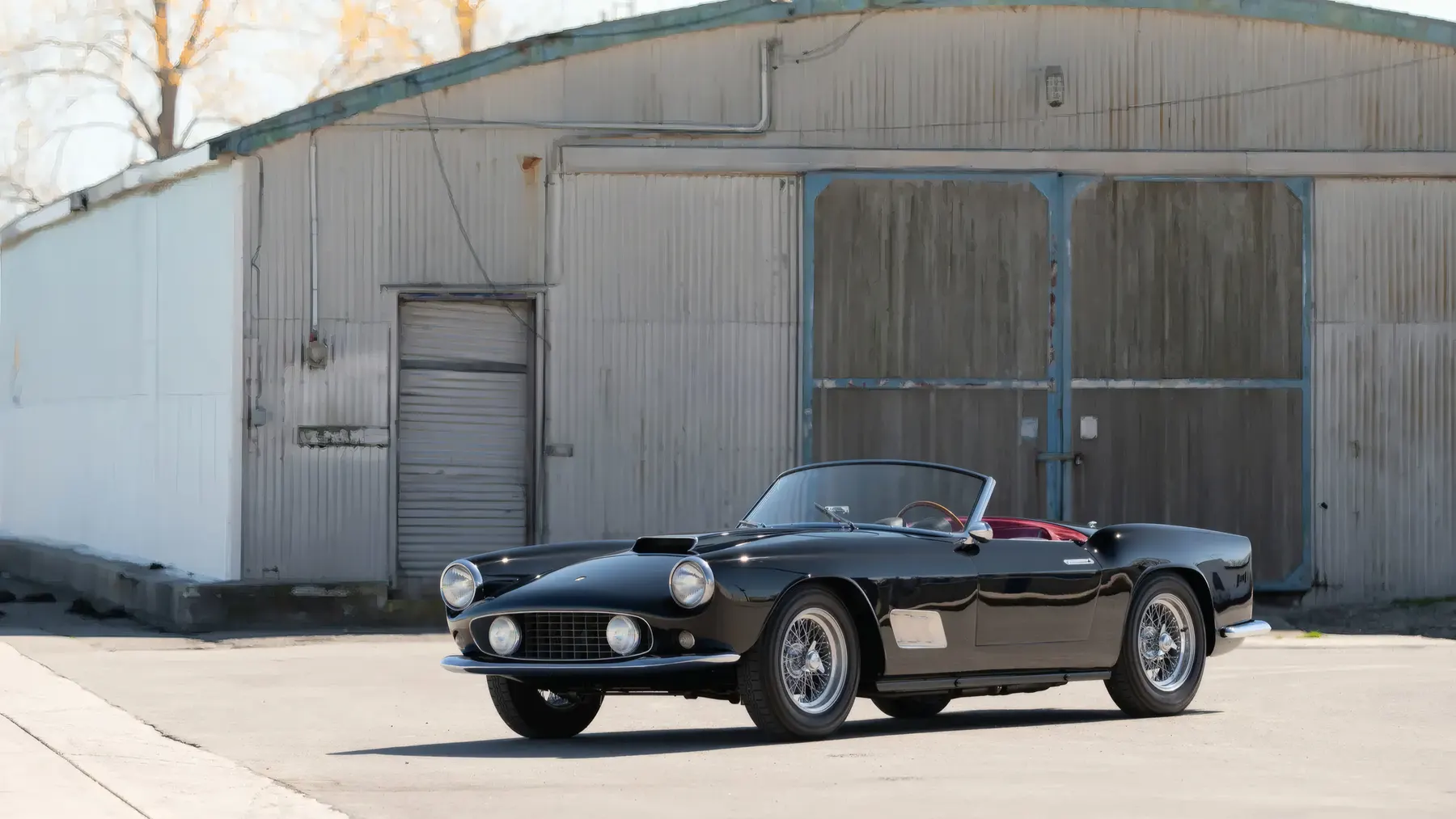
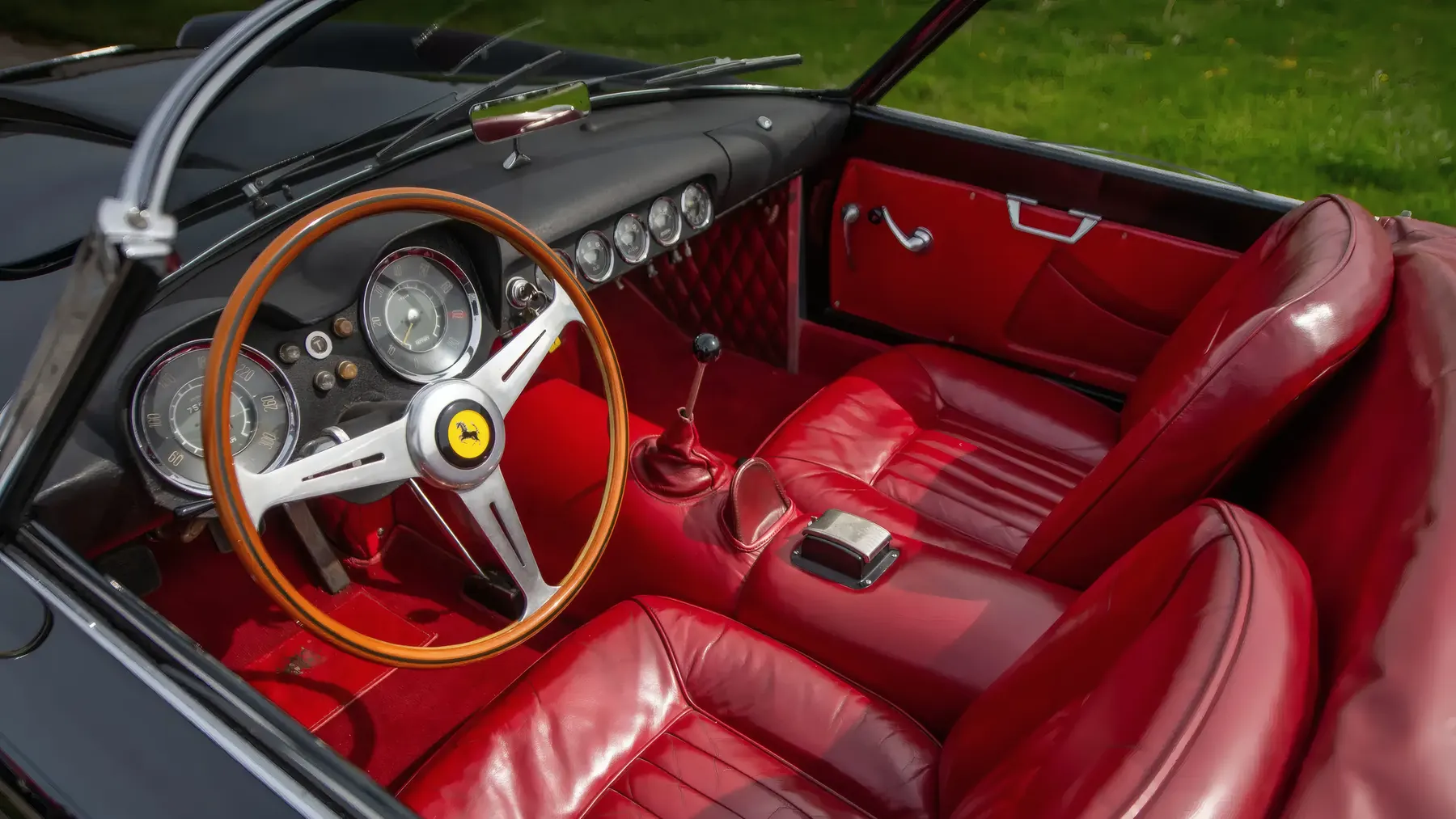
The compromises were real, though. Most long-wheelbase cars had drum brakes, with four-wheel discs arriving only on the very last cars, built in late 1959 and early 1960, so for most of its run a roadster with race-bred ambitions relied on finned aluminium drums. The live rear axle, leaf springs and lever-arm dampers were period-correct rather than advanced, and Ferrari’s own response is instructive: the short-wheelbase car that followed at Geneva in 1960 cut the wheelbase by 200 mm, in an effort, according to Classic & Sports Car, to improve handling and cornering speed, and it also widened the track, sat 30 mm lower and gained Koni telescopic dampers and four-wheel Dunlop discs. Read the other way, that is an admission that the long-wheelbase car left room for improvement. The cabin, by the descriptions that exist, was minimal, with bucket seats and a lightweight folding top, which suits a Californian afternoon far better than a wet northern European winter. Because every car was left-hand drive, the model was never really built for right-hand-drive markets. Early engines carried their spark plugs inside the vee of the block, and Ferrari’s own move to outside-plug engines within the long-wheelbase run suggests this was not a detail worth leaving alone, a change at least one account ties to easier maintenance. And because Hagerty notes that no two California Spiders are exactly alike, with open or closed headlamps and steel or aluminium bodies, the model is hard to pin down: spec sheets that look authoritative can be misleading, and seven- or eight-figure values mean that few owners now use these cars the way they were designed to be used.
The short-wheelbase car, launched at Geneva in March 1960, is the obvious comparison. Quoted power for it runs from roughly 240 bhp to 280 bhp depending on the source and specification, which is a reminder of how loosely these numbers were treated at the time. Collectors are not united on which generation is better. Hagerty’s valuation specialist John Wiley said in 2020 that among California Spiders the long-wheelbase cars appear to be where it is at, while Hagerty’s coverage of a 2025 Monterey sale calls the short-wheelbase configuration more desirable than the long-wheelbase and says closed headlamps make a car prettier and pricier than open ones. The disagreement is healthy. The earlier car is closer to the TdF, simpler and more elemental, while the later one benefits from the corrections Ferrari itself made and is easier to justify as the better car to drive hard.
The model’s biggest pop-culture moment came courtesy of a fake. For the 1986 film Ferris Bueller’s Day Off, John Hughes decided that a genuine California Spider was too expensive to buy or even rent, and commissioned three replicas from Modena Design & Development after seeing one of the company’s fibreglass cars. There was no Colombo V12 involved: the replica used a Ford V8, and the film presented it as a 1961 250 GT California. Ferrari sued replica builders after the film’s release, the dispute with Modena was settled out of court with some changes to the cars, and replica production carried on for a few more years, according to The Henry Ford. That is a strange legacy for a Ferrari that was aimed at serious drivers, though it also says something about the shape: a silhouette that survived a parts-bin translation in fibreglass and Ford components is a strong one.
Ferrari revived the California name in 2008 on a very different grand tourer, one that took design cues from the 250 GT California. The long-wheelbase original has a quieter but more interesting place in the company’s history. It sat at the point where dealer instinct, racing hardware and Scaglietti’s craft met on one chassis, before the short-wheelbase car fixed the chassis’s limitations. Auction copy says only the California Spider and the later 275 GTB/4 NART Spiders have the elemental high-speed, open-air attitude that sets them apart from Ferrari’s ordinary cabriolets, and that is the fairest way to think about the long-wheelbase car: not as the finished article, but as a racing berlinetta’s honesty with the roof off, and all the compromises that implied.
Sources
- Ferrari.com – Ferrari 250 California (1957)
- RM Sotheby’s – 1958 Ferrari 250 GT LWB California Spider by Scaglietti (model background only)
- Racecar – Gooding & Company catalogue text, 1958 Ferrari 250 GT LWB California Spider (model background only)
- Hagerty Media – This 1958 250 GT LWB California Spider, bound for auction
- Hagerty Media – Is Bob Grossman’s Ferrari 250 GT California Spider the Most Desirable of Them All?
- Hagerty Media – $25.3M Ferrari 250 GT SWB California Spider, Sale of the Week Monterey 2025
- Hagerty UK – Ferrari 250 GT SWB California Spyder: A Design Statement of the Swinging Sixties
- Classic & Sports Car – Ferrari 250GT SWB California Spider: La Dolce Vita
- Petrolicious – Behind the Scenes on Our 1961 Ferrari 250 California SWB Film Shoot
- Broad Arrow Auctions (GlobeNewswire) – Ferrari 250 GT LWB California Spider Competizione drive video
- Hagerty Media – The “Ferris Bueller Ferrari” joins The Henry Ford’s National Historic Vehicles display
- The Henry Ford – Ferris Bueller’s Faux Ferrari: A Replica with Real History
- Wikipedia – Ferrari 250 GT California Spyder (2008 California name and outside-plug maintenance note only)
Join the discussion
Comments
Loading comments…
Leave a comment
Share a detail, memory, or perspective. Every comment is reviewed before publication.