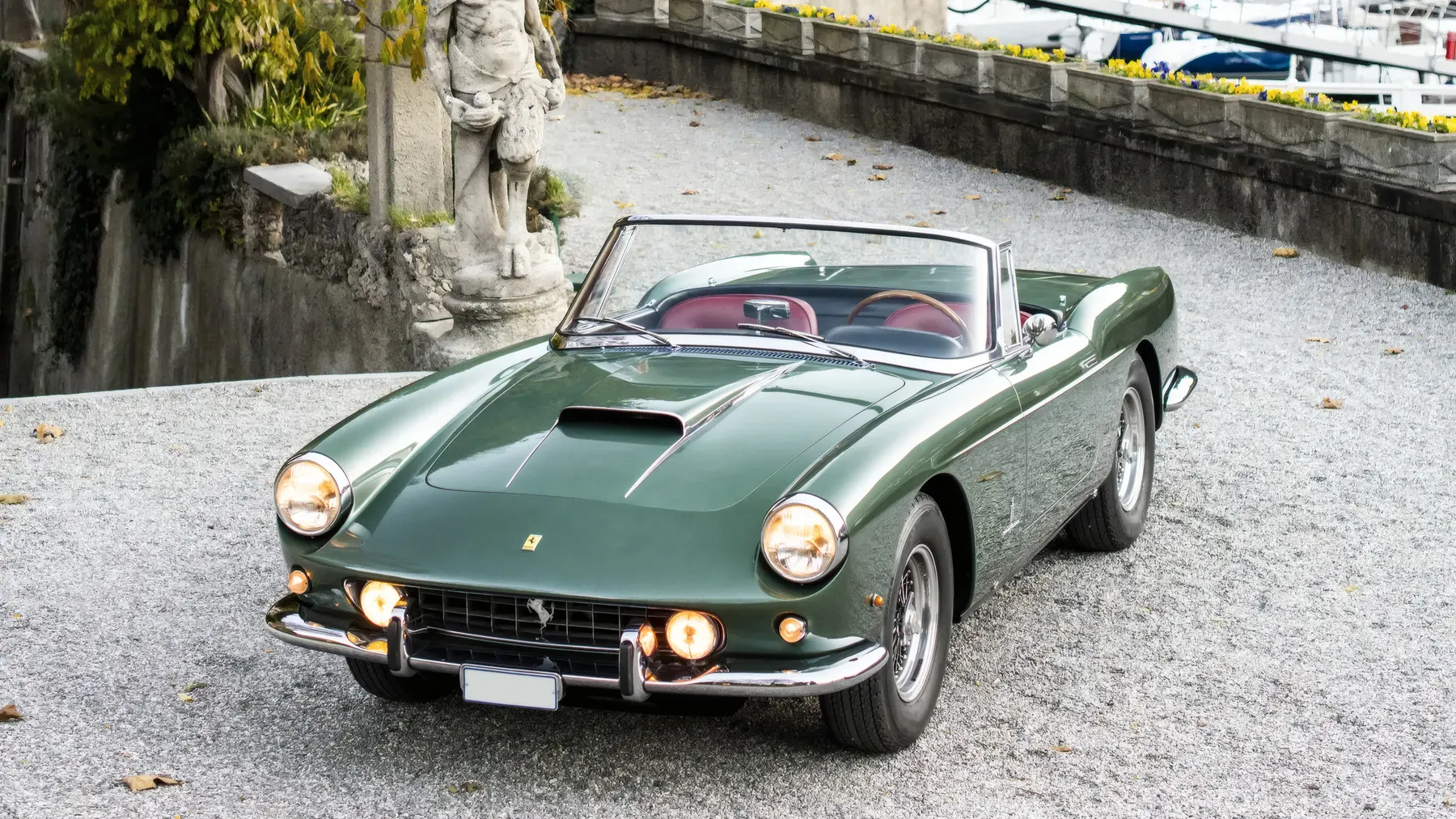
Ferrari 400 Superamerica SWB Cabriolet: Pinin Farina's Most Ambitious Open GT
1960 Ferrari 400 Superamerica SWB Cabriolet by Pinin Farina
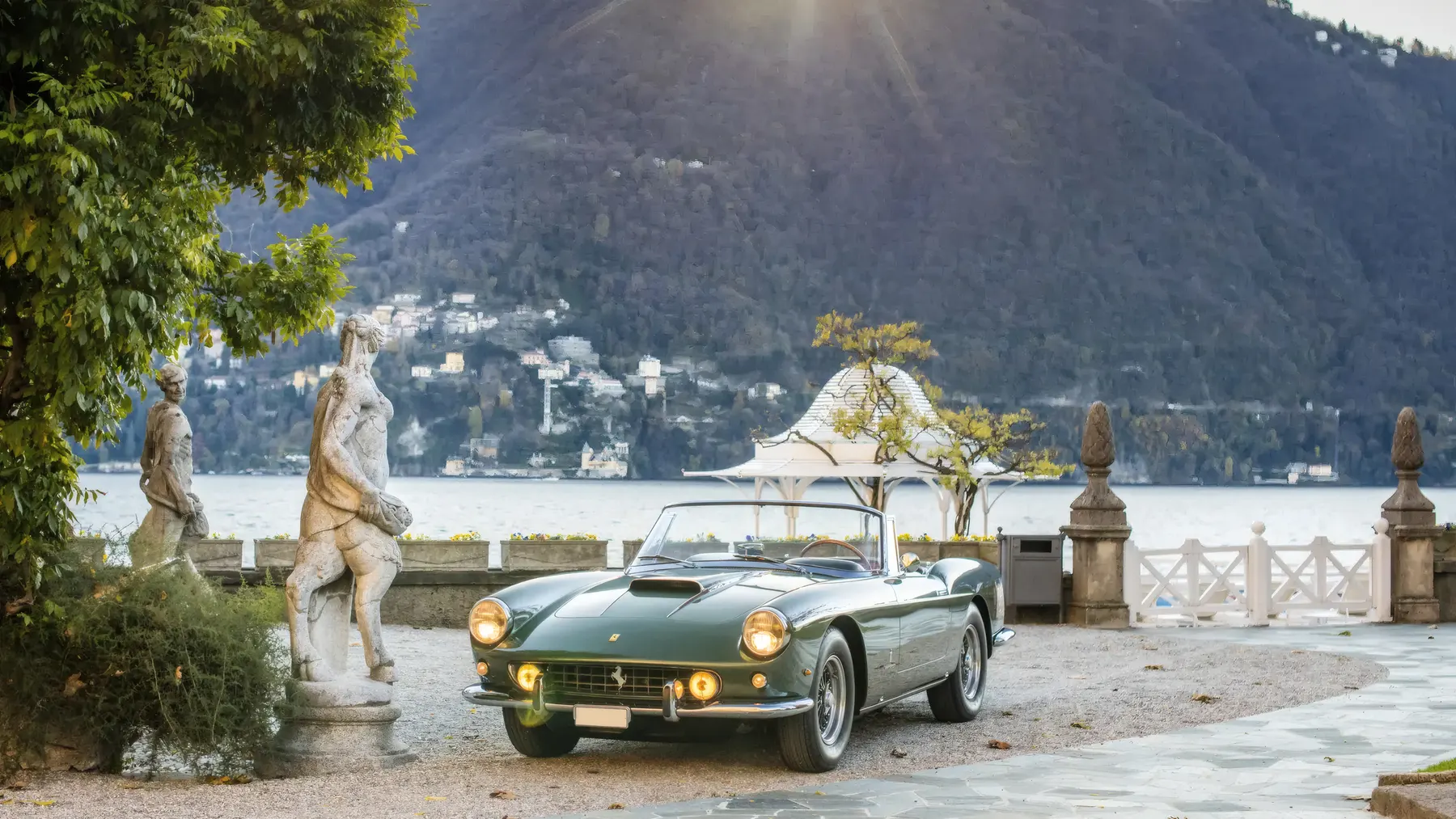
Images: Remi Dargegen / RM Sotheby's
The Ferrari 400 Superamerica arrived at the end of the 1950s carrying a specific burden: it had to be the most complete Ferrari in existence. Not the fastest, necessarily, nor the most track-focused, but the one that best expressed what the marque could become when unlimited budget, the full creative authority of Battista Farina’s Turin coachbuilding house, and Maranello’s most sophisticated engine were brought together without commercial constraint. That it succeeded - and did so in open-top form on a short wheelbase that pushed elegant proportions to their absolute limit - says something about the discipline required to make a genuinely ambitious automobile, and about the particular moment in European coachbuilding history in which it was born.
Context is essential. Ferrari had been climbing its way through the Superamerica lineage with the 375 America and then the 410 Superamerica, the latter using a large-displacement Lampredi V12 of around 5.0 litres that prioritised brute torque over mechanical refinement. The 400 Superamerica was a deliberate recalibration. Rather than chasing outright cubic capacity, Ferrari’s engineers returned to the shorter, more compact Colombo-derived V12, displacing it to approximately 3,967cc. It was a more rewarding architecture in almost every respect - lighter, more willing to rev, and more naturally suited to the close-coupled short-wheelbase chassis that Pinin Farina’s designers wanted to use as their canvas. In various states of tune, and depending on the specific carburetion setup, this engine produced somewhere in the region of 340 to 380 bhp, fed through multiple twin-choke Weber carburettors and transmitted through a four-speed manual gearbox. In the early 1960s, in a car weighing well under 1,500kg, those figures made the 400 Superamerica one of the fastest grand tourers on earth.
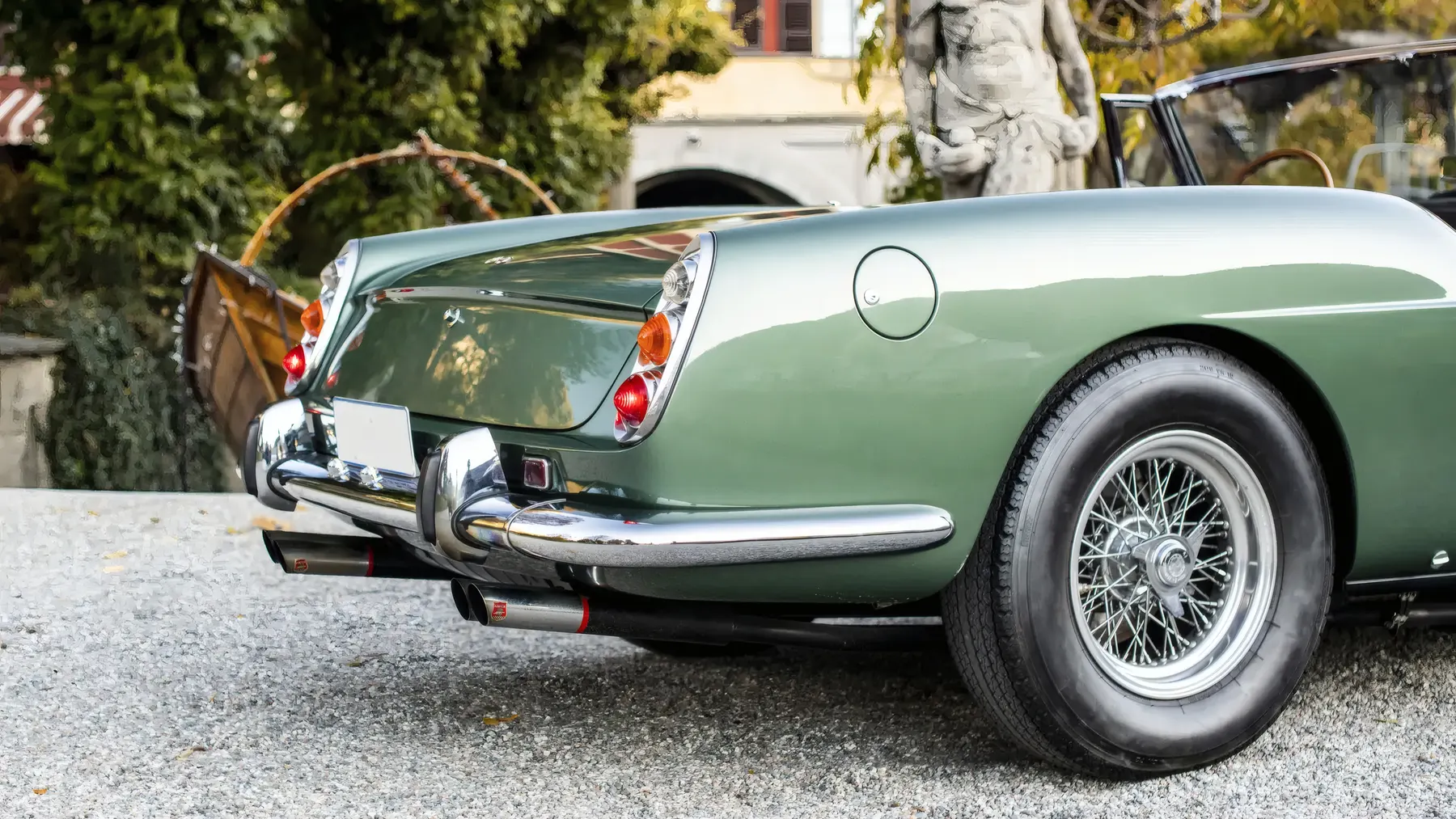
The short-wheelbase version - the Series I cars produced roughly from 1959 through to approximately 1962 - used a chassis measuring approximately 2,420mm between the axles. That dimension established a fundamental tension that Pinin Farina’s designers had to resolve: a short wheelbase with a large V12 ahead of the cockpit and a full passenger compartment to follow leaves very little room for anything to breathe. The proportions either succeed brilliantly or they look awkwardly compressed. In the cabriolet configuration, stripped of a roofline to resolve the visual mass, the challenge was more acute still. What Pinin Farina produced in response was one of the most compositionally assured open grand tourers of the postwar period. The long bonnet tapers to a low scuttle, the cockpit sits slightly rearward of centre, and the short, almost abrupt tail works because the eye has been so completely engaged by the front three-quarters that there is nothing left to object to at the rear. Some SWB cabriolet examples wore spats over the rear wheels; others did not. Specifications varied between cars because the 400 Superamerica was never a production car in any meaningful commercial sense.
It is worth noting that the coachwork was signed “Pinin Farina” rather than the consolidated form. The Farina family received official approval to adopt the combined surname “Pininfarina” in 1961, meaning the earliest SWB cars carried the older designation on their coachwork. This might read as a minor historical footnote, but it situates the car precisely at the boundary between the bespoke-coachbuilding tradition of the immediate postwar decades and the rationalised, higher-volume production philosophy that would reshape the industry by the mid-1960s. Ferrari would never again commission quite this kind of open-ended creative collaboration - where each individual body was in some sense its own exercise - on a platform positioned this high in the market.
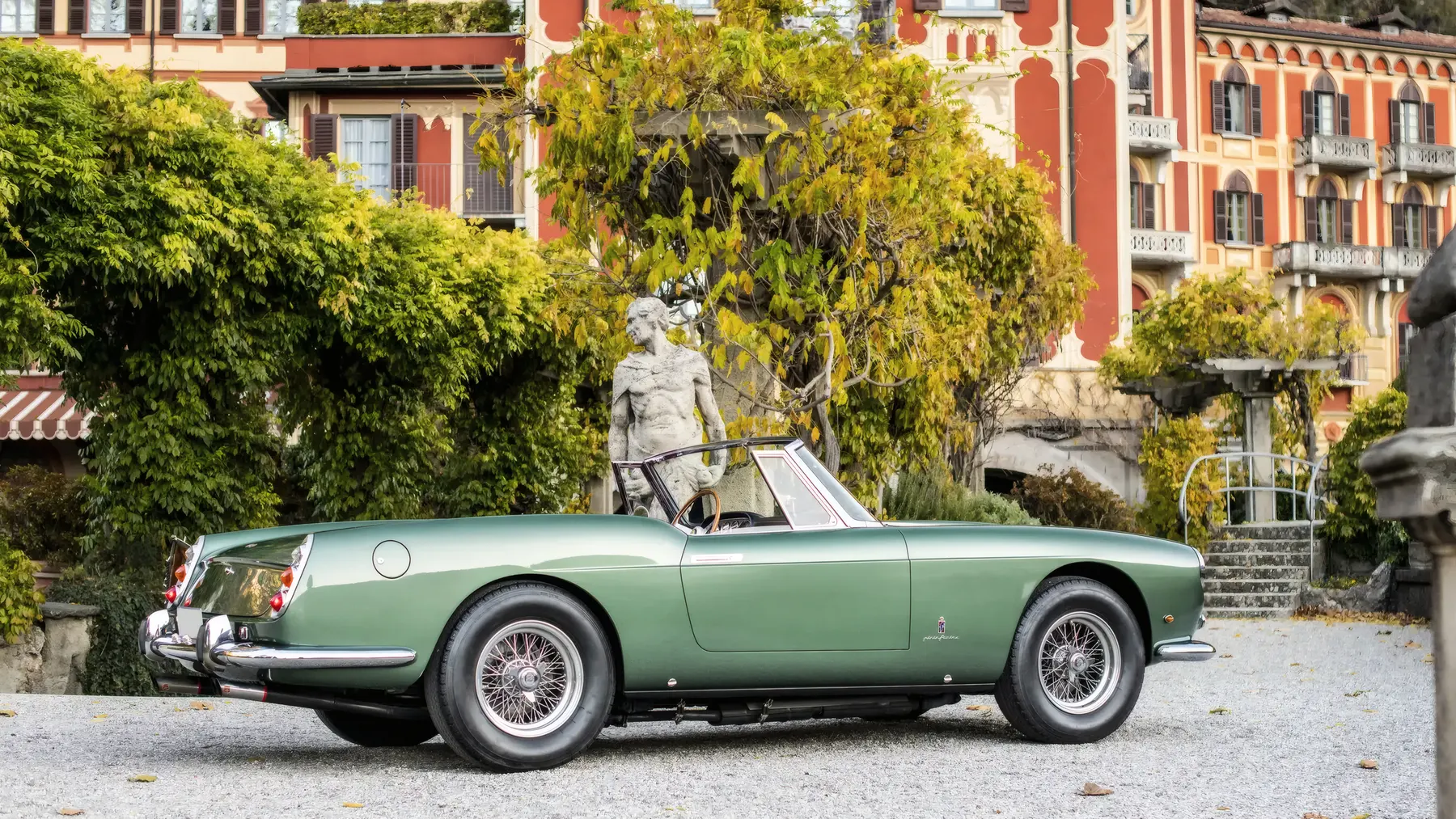
That bespoke character was both the car’s greatest distinction and its most significant operating limitation. Total production across the entire 400 Superamerica run - short-wheelbase Series I and the subsequent long-wheelbase Series II cars produced from around 1962 to 1964 - amounted to approximately forty to fifty cars across all body styles, with the cabriolet variants on the short wheelbase representing a still smaller subset. Each was essentially a custom commission, delivered to clients financially capable and personally engaged enough to specify details suited to their own requirements. The “Superamerica” name was not accidental: Ferrari’s American customers formed a substantial proportion of the expected clientele, and the car’s character - relaxed high-speed cruising, V12 acoustics, and an unmistakable visual presence - was well calibrated for a continent accustomed to long, open, fast roads.
The driving experience the 400 Superamerica SWB Cabriolet offered was one of controlled intensity rather than raw aggression. The Colombo-lineage V12 builds through its rev range with a combination of mechanical urgency and genuine smoothness that Ferrari’s larger-displacement engines of the same era could not quite replicate. Throttle response through the Weber carburettors is direct in a way that demands respect: there is no electronic buffer or torque management, just the unmediated relationship between the driver’s right foot and twelve pistons. In open-top form, with the Pinin Farina bodywork doing nothing to suppress the engine’s voice, the acoustic experience feels as carefully curated as anything else about the car.
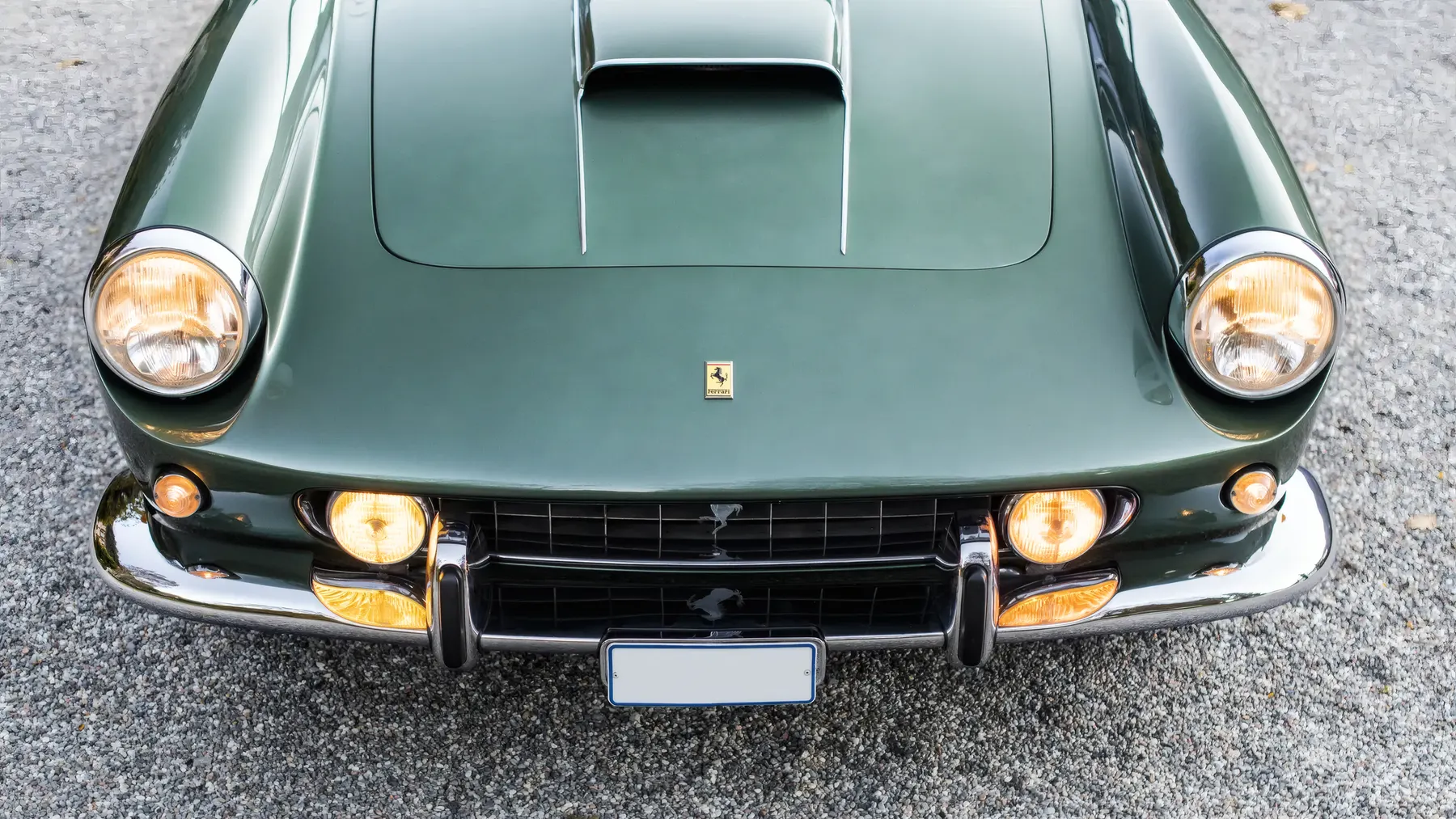
Handling was competent rather than nimble. The tubular steel spaceframe chassis and the suspension layout - independent at the front, with a live rear axle located by semi-elliptic leaf springs - were well-suited to high-speed stability on the smooth, fast roads for which the car was intended. This was not a machine designed for tight, demanding mountain stages or competitive lap times. The weight distribution, the relatively long-travel suspension tuning, and the consistent priority given to directional stability over immediate steering response all point toward continent-crossing as the core use case. For that assignment, the 400 SA was genuinely accomplished, holding pace and composure across the kind of distances that would expose any structural or dynamic weakness.
The limitations of the car must be engaged honestly, however, because they are real and they mattered in period. The earliest examples of the 400 Superamerica used drum brakes, which were inadequate for a car capable of the performance on offer. This was not an incidental omission - it represented a meaningful braking deficit on the mountain passes and fast autoroutes that formed the car’s natural environment. Even as disc brakes became available on later configurations, the transition was not applied uniformly across the production run, itself a consequence of the bespoke build process. For a car positioned at the very top of Ferrari’s range, the brake specification felt like an engineering priority that should have been resolved more consistently and far sooner.
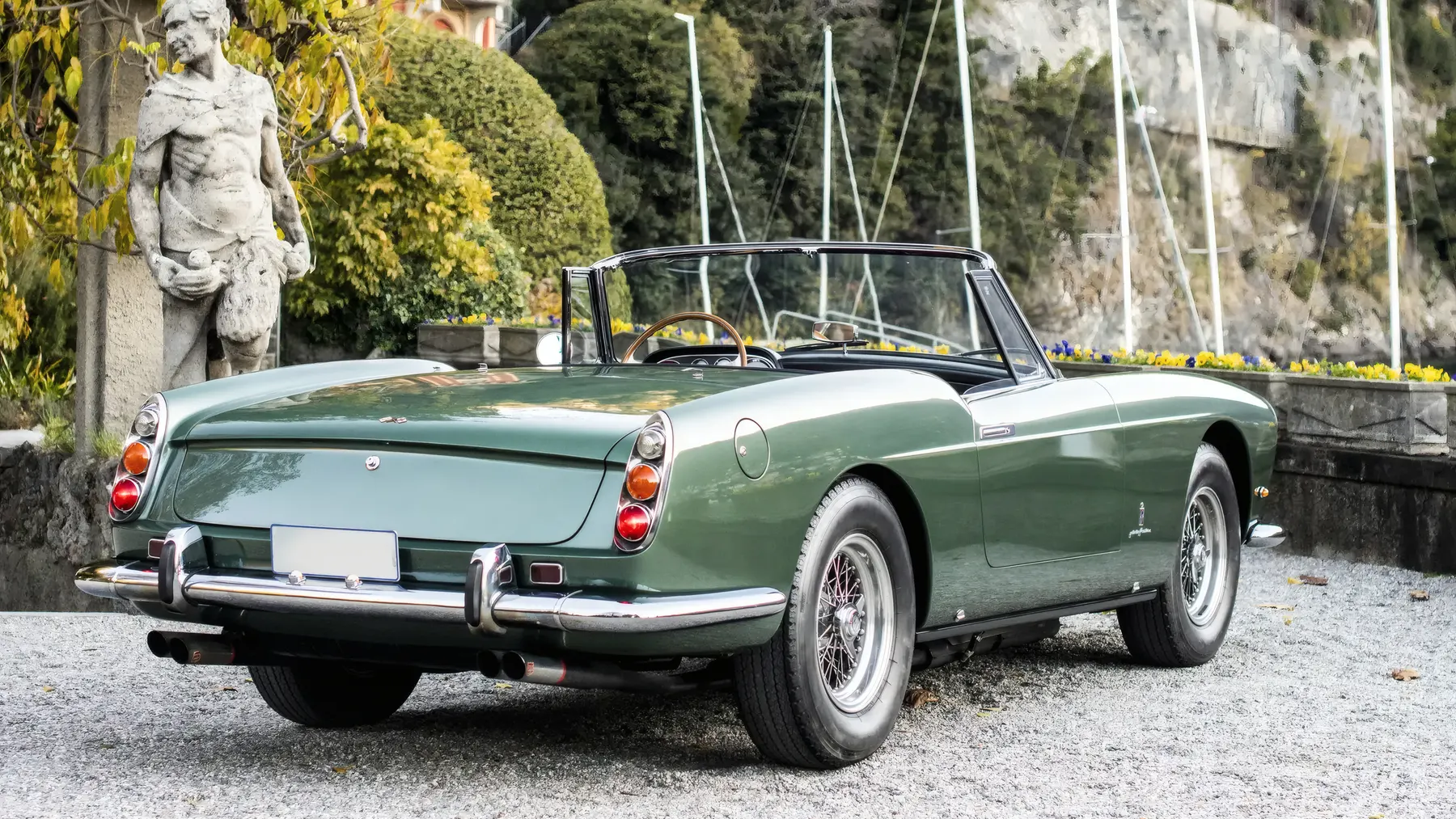
The open body of the SWB Cabriolet, for all its visual authority, carried structural trade-offs inherent to the era. The spaceframe chassis, without the stiffening contribution of a fixed roof, permitted a perceptible degree of scuttle shake over imperfect surfaces that the coupé body would not have exhibited. On a smooth Autostrada, this registered as nothing more than background texture. On anything less consistent, it served as a reminder that the tubular structure’s torsional rigidity had real limits. The interior appointments - bespoke, hand-finished, and broadly appropriate to the car’s ambitions - were not invariably superior to what other European coachbuilders were producing for comparable commissions at the same time. The cabin was purposeful and elegant but not always as deeply resolved as the exterior confidently suggested it should be.
The ownership experience itself asked for active engagement in ways that had nothing to do with performance. Carburetion that required careful warm-up attention, a gearchange that rewarded deliberate movement over hurried inputs, and cooling requirements that modern stop-start urban traffic would have seriously strained - these contributed to a relationship with the car that worked best when driver, machine, and environment were all suited to one another. In the right circumstances, it was one of the most satisfying combinations of machinery and occasion available to a road driver in the early 1960s. In the wrong circumstances, it was demanding in ways that had little to do with pleasure.
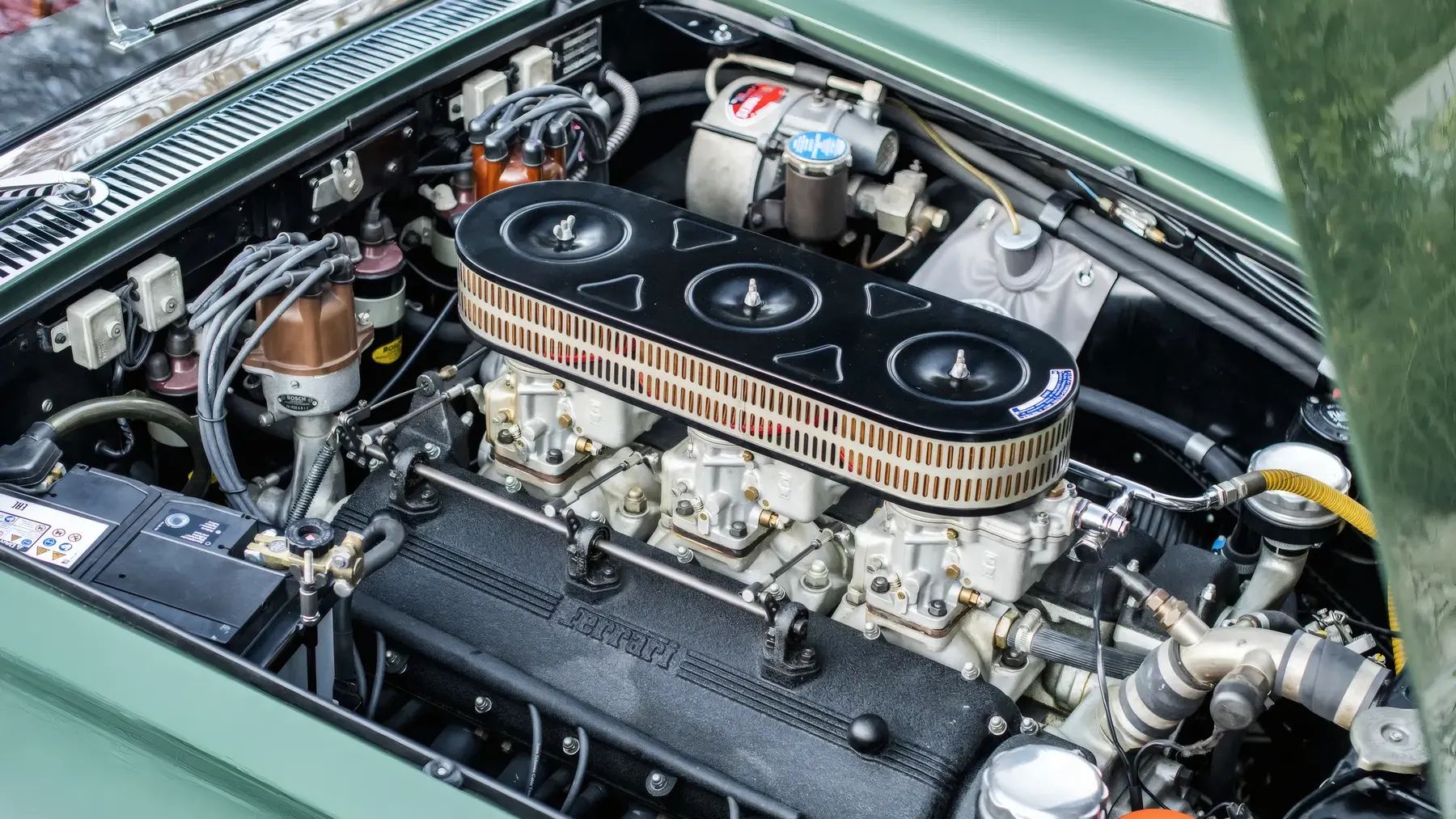
The long-wheelbase Series II cars that followed from around 1962 are often considered the more polished and mature expression of the Superamerica concept: the additional wheelbase dimension improved rear passenger space and somewhat eased the structural tension that the SWB platform imposed. In that reading, the short-wheelbase cabriolet was the more charged, more experimental realisation of the same idea - Pinin Farina working right at the edge of what the platform could accommodate without the proportions losing their sense. That the result held together as well as it did, visually and dynamically, was the product of accumulated craft and spatial instinct rather than systematic development with extensive testing resources.
The Ferrari 400 Superamerica SWB Cabriolet sits at a difficult intersection to locate: a true road car that behaved like one, not a racing machine with reluctant allowances for civility, yet one carrying enough engineering seriousness and enough pure V12 presence that it never settled into the measured pace that the era’s more comfortable grand tourers eventually assumed. Pinin Farina’s open body gave Ferrari a shape the company’s own subsequent designers would spend years attempting to equal. The near-invisibility of its production numbers meant it existed outside normal commercial logic - the kind of project Ferrari could only justify because it expressed something the marque believed was essential about what it was capable of making. That the expression remains this persuasive is not an accident of nostalgia but a product of how specifically, and how carefully, it was made.